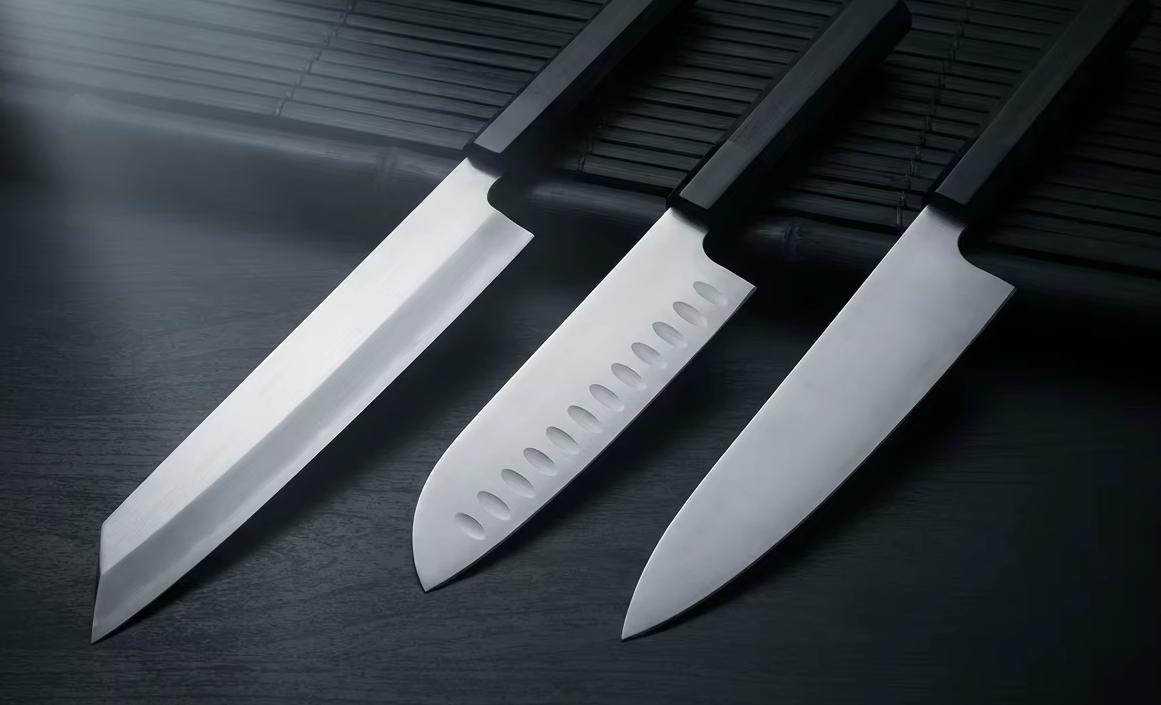
If you’re sourcing Japanese kitchen knives for your store, the kiritsuke, santoku, and gyuto are the three blade profiles that cover 80%+ of customer demand. But they serve very different buyers — and stocking the wrong mix means dead inventory or missed sales.
Der Kiritsuke-Messer combines traditional craftsmanship with precision functionality — it’s your premium upsell piece. The santoku excels at everyday prep with its compact, beginner-friendly design — it’s your volume gateway. The Gyuto offers the best all-around performance — it’s your core seller across every price tier.
This guide breaks down the real differences from a manufacturer’s perspective: blade geometry, steel selection, production cost factors, and which knife type matches which customer profile. You’ll find the insights needed to recommend the right knife and grow your sales.
What Is a Kiritsuke Knife?
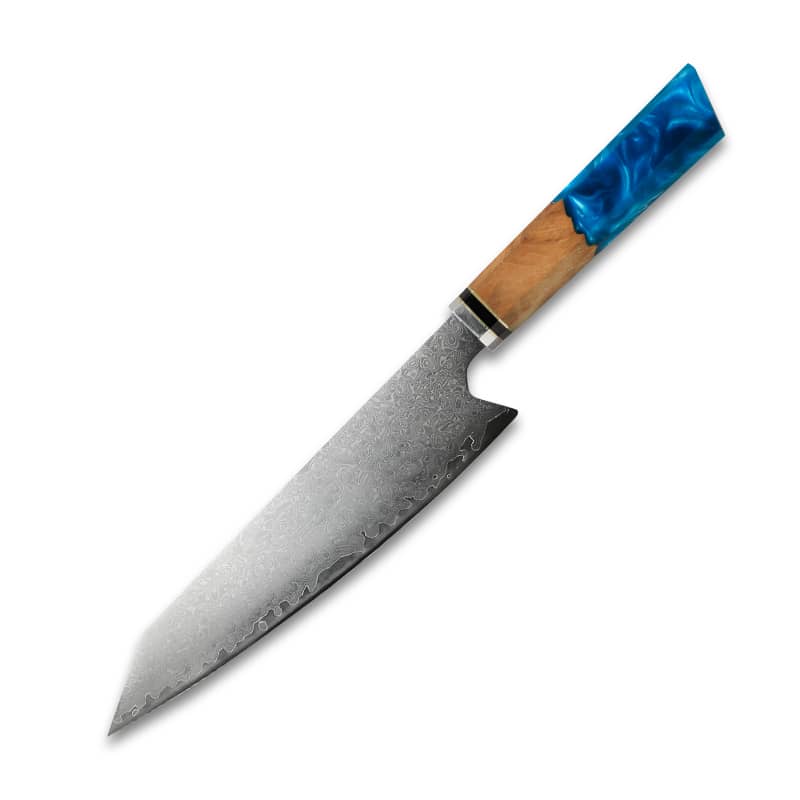
Geschichte
The kiritsuke originated as a hybrid of the Yanagiba (sashimi slicer) and usuba (vegetable knife), traditionally reserved for the head chef (itamae) in Japanese professional kitchens — a symbol of culinary mastery that junior cooks were not permitted to use.
Modern double-bevel versions, often called “kiritsuke gyuto,” have made this blade accessible to skilled home cooks worldwide.
Design
A kiritsuke knife features a long, flat blade profile with a distinctive angled tip called “K-tip.” The blade typically measures 240mm to 300mm (9.5–12 inches), providing ample length for long, smooth slicing strokes.
Technical specifications (typical 210–240mm kiritsuke):
- Wirbelsäulendicke: 2.0–3.3mm at the heel, tapering to under 1mm near the K-tip
- Gewicht: 165–235g depending on length and steel choice
- Klingenhöhe: 50–57mm
- Edge angle: Single-bevel versions ground at 10–15° on the beveled side; double-bevel versions at 12–15° per side
- HRC range: 58–65 depending on steel grade
Traditional kiritsuke knives use single-bevel edges, while modern versions like the kiritsuke gyuto feature double-bevel grinds. Some makers apply an asymmetric 70/30 grind for steering control during pull cuts. The flat edge excels at push-cutting and pull-slicing techniques, delivering clean, precise cuts.
From our production floor: The K-tip requires more precise grinding than a standard pointed tip — the angle must be exact, or the tip becomes either too fragile or too blunt. This is why kiritsuke typically costs 20–30% more than gyuto at the same steel spec: the reject rate during grinding is higher.
Hauptmerkmale
- Flaches Klingenprofil – Achieves paper-thin slices (0.5mm+); ideal for precise push cuts and pull slices
- Angled K-tip – Ground to under 1mm for detailed tip work like scoring fish skin
- Long blade length – 240–300mm handles whole fish in 1–2 continuous strokes
- Thin blade geometry – 2.0–3.3mm spine reduces wedging resistance when slicing dense ingredients
Pros and Cons
| Vorteile | Nachteile |
|---|---|
| Flat blade achieves paper-thin slices (0.5mm+); 240–300mm length handles whole fish in 1–2 strokes | Single-bevel versions require asymmetric sharpening at 10–15° — most home sharpeners can’t do this |
| Versatile for fish, vegetables, and boneless proteins | K-tip ground to under 1mm — lateral pressure can snap it |
| Elegant, traditional design with collector appeal | Flat edge cannot rock-cut — mincing herbs requires different technique |
| VG10/SG2 versions hold edge through 200+ cuts before noticeable dulling | High-carbon versions (Aogami) develop rust spots within hours if not dried immediately |
Am besten für
The kiritsuke is the right recommendation when your customer:
- Already owns a gyuto or santoku and wants a precision upgrade
- Prepares sashimi or sushi at least weekly
- Has experience maintaining single-bevel or high-hardness (60+ HRC) knives
- Values traditional Japanese craftsmanship — this is a collector and gift market
Do NOT recommend kiritsuke when the customer:
- Is buying their first Japanese knife
- Primarily does Western-style rocking cuts
- Wants a low-maintenance, dishwasher-safe option
Für Einzelhändler: Kiritsuke commands 20–30% higher margins than gyuto at similar specs due to lower production volume and specialized K-tip grinding. Kiritsuke buyers tend to be repeat customers with higher lifetime value — they often purchase multiple knives and accessories.
Was ist ein Santoku-Messer?
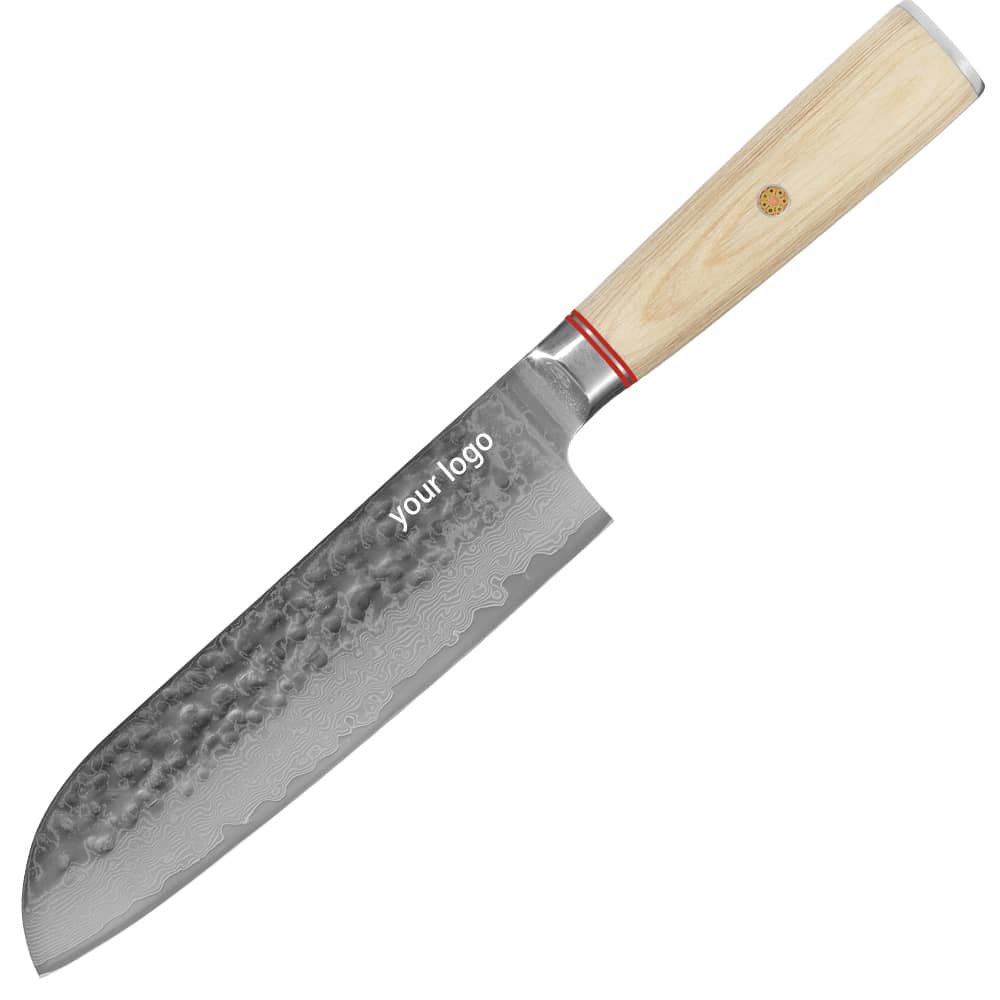
Geschichte
The santoku emerged in Japan during the 1940s as a modern adaptation of the traditional nakiri vegetable knife. The name translates to “three virtues” — representing its ability to handle meat, fish, and vegetables equally well. It quickly became the standard in Japanese home kitchens and remains one of the most recommended entry points into Japanese cutlery worldwide.
Design
A santoku knife features a compact blade ranging from 130mm to 180mm (5–7 inches) with a straight edge and rounded sheep’s-foot tip. The blade is typically taller than Western chef’s knives of similar length, providing generous knuckle clearance for comfortable chopping.
Technical specifications (typical 180mm santoku):
- Wirbelsäulendicke: 1.5–2.2mm at the heel — noticeably thinner than Western knives (2.5–3.5mm)
- Gewicht: 120–170g — roughly 30–40% lighter than a same-length Western chef knife
- Klingenhöhe: 45–55mm, providing generous knuckle clearance
- Edge angle: 12–15° per side (compared to 18–22° for Western knives), resulting in a noticeably keener edge
- HRC range: 56–62 depending on steel grade
Many santoku knives include a Granton edge — hollow indentations along the blade that create air pockets and reduce food sticking. The flat edge profile excels at push-cutting and chopping motions rather than rocking cuts.
From our production floor: The santoku’s compact blade and forgiving geometry make it the easiest of the three to produce consistently at high quality. Simpler grinding means fewer defects and faster throughput — which is partly why entry-level pricing starts lower than gyuto or kiritsuke.
Hauptmerkmale
- Sheep’s-foot tip – Rounded point reduces accidental piercing; safer for beginners learning knife control
- Compact blade length – 130–180mm ideal for small to medium hands and crowded workspaces
- Granton-Vorsprung – Air pockets prevent food from sticking — especially useful when slicing starchy vegetables like potatoes
- Flat edge profile – Optimized for straight up-and-down chopping; full blade contact with the cutting board
Pros and Cons
| Vorteile | Nachteile |
|---|---|
| 120–170g weight — 30–40% lighter than equivalent Western knife, reduces fatigue in 2+ hour prep sessions | Flat edge cannot rock-cut effectively — mincing herbs requires tap-chopping technique |
| Compact size (130–180mm) fits small kitchens and smaller hands | Shorter blade struggles with large ingredients (whole cabbage, watermelon) |
| Beginner-friendly — sheep’s-foot tip and forgiving geometry reduce injury risk | Less tip precision compared to pointed blades — limited for detailed work |
| Granton edge reduces food sticking on starchy vegetables | Not designed for breaking down large proteins or cutting through bone |
Am besten für
The santoku is perfect for home cooks, beginners, and anyone working in compact kitchen spaces. It excels at vegetable prep, slicing boneless meats, and quick everyday tasks.
Für Einzelhändler: Santoku typically sells at the lowest price point ($15–40 retail) with factory costs starting at $1.90–4.00 (5Cr15Mov). This makes it the ideal gateway product — first-time Japanese knife buyers who start with santoku often return to purchase gyuto or kiritsuke within 6–12 months.
Was ist ein Gyuto-Messer?
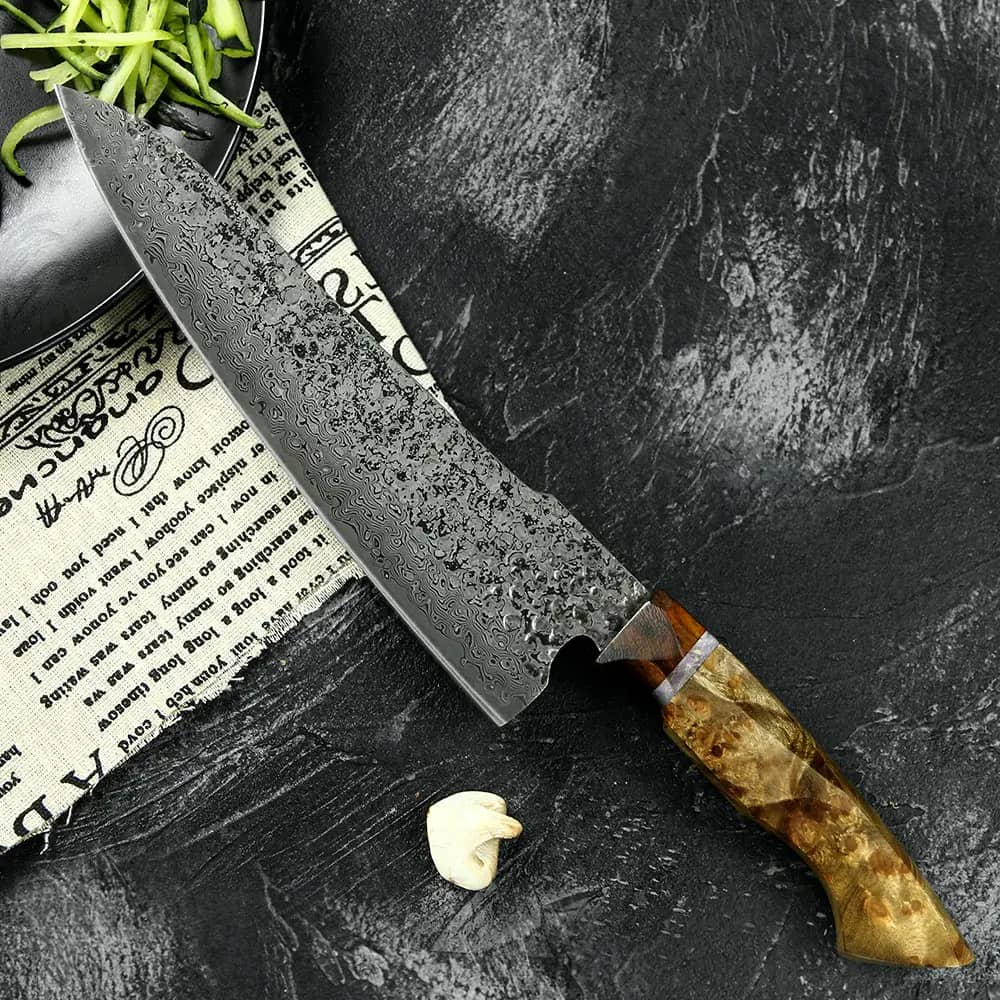
Geschichte
The gyuto — meaning “beef sword” in Japanese — was developed in the late 19th century as Japan adopted Western culinary practices during the Meiji Restoration. Originally designed for meat butchery, it evolved into the Japanese equivalent of a Western chef’s knife and is now the most popular and versatile knife in both professional and home kitchens worldwide.
Design
A gyuto knife features a pointed tip and a curved blade edge that enables smooth rocking cuts. The blade length typically ranges from 180mm to 270mm (7–11 inches), with 210mm being the most common size for general use.
Technical specifications (typical 210mm gyuto):
- Wirbelsäulendicke: 1.5–2.2mm at the heel — compared to 2.5–3.5mm on Western chef knives, creating significantly less wedging resistance
- Gewicht: 140–180g — compared to 200–260g for an equivalent Western chef knife
- Klingenhöhe: 48–52mm at the heel
- Edge angle: 12–15° per side; premium versions may use asymmetric grinds (70/30 or 80/20) for enhanced precision
- HRC range: 58–65 depending on steel grade
The double-bevel edge makes it ambidextrous and easy to sharpen. The blade profile combines Western functionality with Japanese precision — thinner geometry means vegetables split cleanly rather than being wedged apart, and onion cells are sliced rather than crushed.
From our production floor: The gyuto’s curved edge profile is the most complex of the three to grind consistently. The belly curve must flow smoothly from heel to tip — any flat spots create dead zones during rocking cuts. Despite this complexity, high production volume keeps per-unit cost competitive.
Hauptmerkmale
- Spitze – Enables precise tip work, piercing tasks, and detailed trimming
- Curved blade edge – Facilitates smooth rocking cuts; the belly curve maintains continuous board contact through the stroke
- Versatile length range – 180–270mm suits various hand sizes and tasks; 210mm is the universal sweet spot
- Double-bevel edge – Easy to maintain with standard whetstones; suitable for left or right-handed users
Pros and Cons
| Vorteile | Nachteile |
|---|---|
| Most versatile Japanese kitchen knife — handles rocking, push, and pull cuts equally well | Thinner blade (1.5–2.2mm spine) requires more careful use than Western knives — avoid twisting or prying |
| 140–180g weight balances control and power for extended prep sessions | High-carbon versions (Aogami, Shirogami) stain and rust without immediate drying |
| Suitable for beginners through professionals — grows with developing skills | May feel too light for users accustomed to 200g+ Western chef knives |
| Wide price range ($20–90 retail) covers every customer tier | Quality varies significantly — 5Cr15Mov at 56 HRC vs VG10 at 62 HRC perform very differently |
Am besten für
The gyuto is the ideal all-purpose knife for most users. It handles everything from chopping vegetables to breaking down whole chickens. The curved edge supports multiple cutting techniques, making it adaptable to any cooking style — Western rocking, Japanese push cutting, or Chinese tap-chopping.
Für Einzelhändler: Recommend the gyuto as your customers’ primary chef knife. It’s the safest choice for newcomers to Japanese knives and serves as the foundation for any complete kitchen knife set. The widest price range ($20–90 retail, $5–14 factory) gives you flexibility to stock options at every quality level.
Bringen Sie Ihre individuelle Messerlinie schneller auf den Markt mit LeeKnives
Umfassender OEM/ODM-Support – vom Entwurf bis zur endgültigen Lieferung –, damit Sie sich auf Ihr Wachstum konzentrieren können.
Unterstützt durch Lager in den USA für eine schnelle und zuverlässige Lieferung.
Kiritsuke vs Santoku vs Gyuto: Head-to-Head Comparison
Now that you understand each knife individually, let’s compare them directly across the factors that matter most to your customers.
Quick Comparison Table
| Besonderheit | Kiritsuke | Santoku | Gyuto |
|---|---|---|---|
| Klingenlänge | 240–300mm (9.5–12″) | 130–180mm (5–7″) | 180–270mm (7–11″) |
| Blade Profile | Flat with angled K-tip | Flat with sheep’s-foot tip | Curved with pointed tip |
| Spine Thickness | 2.0–3.3mm | 1.5–2.2mm | 1.5–2.2mm |
| Typical Weight | 165–235g | 120–170g | 140–180g |
| Kantenwinkel | 10–15° (single) / 12–15° (double) | 12–15° per side | 12–15° per side |
| HRC Range | 58–65 | 56–62 | 58–65 |
| Kantentyp | Single or double-bevel | Double-bevel | Double-bevel |
| Primary Cutting Motion | Push/pull slicing | Push cutting, chopping | Rocking, push, pull |
| Vielseitigkeit | ★★☆☆☆ | ★★★★☆ | ★★★★★ |
| Benutzerfreundlichkeit | ★★☆☆☆ | ★★★★★ | ★★★★☆ |
| Tip Precision | ★★★★★ | ★★★☆☆ | ★★★★★ |
| Learning Curve | Advanced | Anfänger | Beginner–Intermediate |
| Retail Price Range | $25–120+ | $15–60 | $20–90 |
| Am besten für | Precision slicing, sashimi | Everyday prep, vegetables | All-purpose cooking |
Detailed Breakdown
Vielseitigkeit: The gyuto leads as the most adaptable knife, handling nearly all kitchen tasks with its curved edge that supports rocking, push, and pull cuts. The santoku follows closely for daily prep — its flat edge excels at chopping but limits rocking motions. The kiritsuke is the most specialized, excelling at precision slicing but restricted to push-pull techniques only.
Ease of Use: The santoku is the most beginner-friendly — its 120–170g weight, compact size, and sheep’s-foot tip make it intuitive and forgiving. The gyuto requires basic knife skills but remains accessible to most users. The kiritsuke demands advanced technique and consistent cutting angles to avoid chipping the delicate K-tip.
Tip Precision: Both kiritsuke and gyuto offer excellent tip work capabilities. The kiritsuke’s K-tip (ground to under 1mm) excels at detailed tasks like scoring fish skin and making decorative cuts. The gyuto’s pointed tip handles piercing and trimming tasks. The santoku’s rounded tip is safer but less precise for intricate work.
Wartung: All three knives require regular sharpening on whetstones (not pull-through sharpeners, which can damage thin Japanese edges). The kiritsuke — especially single-bevel versions — needs the most careful attention: asymmetric sharpening at precise angles. The santoku and gyuto are easier to maintain with standard double-sided sharpening at 12–15° per side.
Key Differences: Kiritsuke vs Santoku vs Gyuto
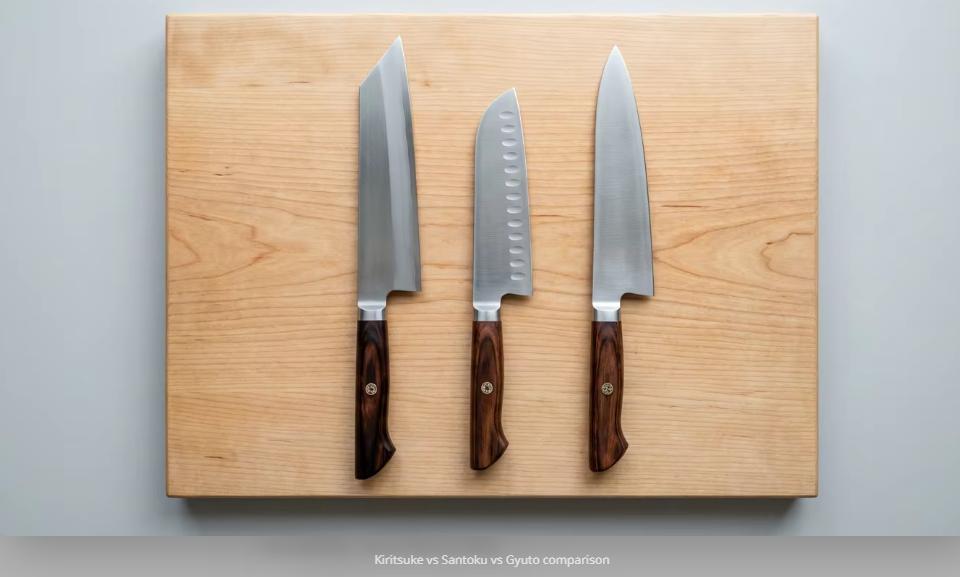
Klingenform und Geometrie
Der Kiritsuke features a long, flat blade with an angled K-tip designed for precision slicing. The spine runs 2.0–3.3mm at the heel, tapering sharply toward the tip. This geometry excels at push-pull cuts but eliminates rocking motions — the flat edge has zero belly curve. The K-tip is ground to under 1mm, making it precise but fragile.
Der Santoku has a shorter, taller blade (45–55mm height) with a rounded sheep’s-foot tip. At 1.5–2.2mm spine thickness, it’s thin enough for clean cuts but forgiving enough for beginners. The flat edge works for straight up-and-down chopping with full board contact. The rounded tip reduces accidental piercing — a safety advantage for new users.
Der Gyuto combines a pointed tip with a gently curved edge — the belly curve provides continuous board contact during rocking cuts. At 1.5–2.2mm spine (vs. 2.5–3.5mm for Western chef knives), it cuts with noticeably less resistance. The curve must flow smoothly from heel to tip; in manufacturing, any flat spots in the grind create “dead zones” that disrupt rocking rhythm.
Steel and Hardness: What Actually Matters
Not all Japanese knives use the same steel. Here’s what each grade delivers in real-world performance:
| Stahlgüte | HRC-Härte | Kantenbeständigkeit | Korrosionsbeständigkeit | Typical Use |
|---|---|---|---|---|
| 3Cr13 / 5Cr15Mov | 56–58 | ★★★☆☆ | ★★★★★ | Budget santoku, gyuto |
| 9Cr18MoV / AUS-10 | 58–60 | ★★★★☆ | ★★★★☆ | Mid-range all three types |
| VG-10 | 60–62 | ★★★★★ | ★★★★☆ | Premium santoku, gyuto |
| SG2/R2 | 63–65 | ★★★★★ | ★★★★☆ | Premium kiritsuke, gyuto |
| Aogami (Blue) #2 | 62–64 | ★★★★★ | ★★☆☆☆ | Traditional kiritsuke |
Why this matters for buyers: A VG-10 santoku at 60 HRC holds its edge approximately 2–3x longer than a 5Cr15Mov version at 56 HRC. But harder steel is also more brittle — which is why we don’t recommend high-carbon kiritsuke (62+ HRC) for beginners. One lateral twist on a bone and the edge can chip.
From our order data: VG-10 accounts for roughly 60% of our orders across all three knife types. It offers the best balance of sharpness, edge retention, and corrosion resistance for most retail customers. SG2/R2 is growing in the premium segment but requires higher retail pricing ($80+) to maintain margins.
Cutting Techniques
| Messer | Best Techniques | Vermeiden |
|---|---|---|
| Kiritsuke | Push cuts, pull slicing, detailed tip work, scoring | Rocking motions, lateral twisting, prying |
| Santoku | Push cutting, chopping, dicing, tap-chopping | Rocking cuts, heavy prying, bone cutting |
| Gyuto | Rocking, push cutting, pull slicing, mincing | Heavy bone cutting, frozen foods, hard squash |
The kiritsuke demands proper technique to prevent edge chipping. Users must maintain consistent angles and avoid lateral forces — the K-tip is ground thin enough that sideways pressure can snap it.
The santoku is forgiving and intuitive. Its flat edge and sheep’s-foot tip naturally guide users toward correct cutting motions, making it ideal for developing fundamental knife skills.
The gyuto accommodates the widest range of cutting styles, from Western rocking to Japanese push cutting. This flexibility makes it the best choice for users transitioning between different culinary traditions or developing their technique.
Size and Weight
| Spec | Kiritsuke | Santoku | Gyuto |
|---|---|---|---|
| Length range | 240–300mm | 130–180mm | 180–270mm |
| Typisches Gewicht | 165–235g | 120–170g | 140–180g |
| Klingenhöhe | 50–57mm | 45–55mm | 48–52mm |
| Board space needed | Large (18″+ board) | Small (12″+ board) | Medium (15″+ board) |
The kiritsuke’s 240–300mm length provides smooth, continuous slicing strokes — essential for sashimi work — but requires ample cutting board space. Not practical for small kitchens.
The santoku at 130–180mm is the most compact. Its lightweight design (120–170g) reduces hand fatigue during extended prep sessions. This size works well for smaller hands and crowded workspaces — a key selling point for apartment dwellers and small kitchens.
The gyuto offers the widest size range from 180–270mm. The 210mm size provides the ideal middle ground for most home cooks. Professional kitchens often prefer 240mm for volume prep work. Recommend based on hand size and typical cutting board dimensions.
Skill Level Requirements
Kiritsuke – Advanced: This knife traditionally symbolizes culinary mastery. It requires developed knife skills: consistent cutting angles, proper push-pull technique, and the discipline to avoid lateral forces on the K-tip. Not recommended as a first Japanese knife.
Santoku – Beginner: The most accessible Japanese knife for newcomers. Its compact size, lightweight build (120–170g), and sheep’s-foot tip make it intuitive and safe to learn proper technique. Customers can start using it effectively on day one.
Gyuto – Beginner to Intermediate: Suitable for beginners willing to learn basic care and sharpening. The versatile design grows with developing skills — a customer’s first gyuto at $25 can serve them for years as their technique improves.

Price and Value
Understanding the real cost behind each knife type helps you stock products that match your customers’ budgets while maintaining healthy margins.
Factory to Retail: Where Your Margins Come From
Based on pricing data from 90+ active Yangjiang suppliers on Alibaba (March 2025), here’s what each knife type actually costs at different quality tiers:
| Messertyp | Factory Price (FOB) | Budget Tier | Mittelklasse | Prämie |
|---|---|---|---|---|
| Santoku (180mm) | $1.90–7.00 | $2–5 | $6–15 | $16–30 |
| Gyuto (210mm) | $5.00–14.00 | $5–8 | $9–20 | $22–55 |
| Kiritsuke (210mm) | $4.60–15.50 | $5–10 | $11–20 | $25–80+ |
What Drives the Price?
Steel grade is the biggest cost factor:
- 3Cr13 / 5Cr15Mov: $2–5 per unit (entry-level)
- 9Cr18MoV / AUS10: $6–10 per unit (mid-range)
- VG10 / Damascus 67-layer: $12–25 per unit (premium)
Layer count adds significant cost:
- Single-layer steel: Baseline price
- 3-layer composite: +$3–5 per unit
- 67-layer Damascus: +$8–15 per unit
Griffmaterial also impacts cost:
- Plastic injection: $0.20–0.30
- Pakkawood: $0.70–1.00
- Stabilized wood: $1.50–2.50
- Premium handle materials: $2.50+
Typical Margin Path (Mid-Range Gyuto, ~$10 Factory Cost)
| Kanal | Typical Markup | Verkaufspreis | Margin % |
|---|---|---|---|
| Großhandel | 1.8x | $18 | 44% |
| Amazon / E-commerce | 2.5x | $25 | 60% |
| Specialty Retail | 4x | $40 | 75% |
Recommended Retail Price Points
For most retailers, these price points balance customer accessibility with healthy margins:
| Tier | Santoku | Gyuto | Kiritsuke |
|---|---|---|---|
| Einstiegslevel | $15–25 | $20–35 | $25–40 |
| Best-Seller | $25–40 | $35–55 | $45–70 |
| Prämie | $40–60 | $55–90 | $70–120+ |
Bringen Sie Ihre individuelle Messerlinie schneller auf den Markt mit LeeKnives
Umfassender OEM/ODM-Support – vom Entwurf bis zur endgültigen Lieferung –, damit Sie sich auf Ihr Wachstum konzentrieren können.
Unterstützt durch Lager in den USA für eine schnelle und zuverlässige Lieferung.
Cost-Specific Recommendations
For budget-conscious customers:
Stock Santoku at the $20–35 price point. The entry-level pricing ($1.90–4.00 factory) allows comfortable margins while keeping retail accessible. This is your gateway product to attract first-time Japanese knife buyers.
For core kitchen use:
Gyuto at $35–55 retail offers the best balance. The $5–14 factory cost range gives you flexibility to stock options at every quality level. This is your volume driver—gyuto typically accounts for 40–45% of Japanese knife sales.
For professionals and collectors:
Kiritsuke commands premium pricing (20–30% higher than gyuto at similar specs) due to lower production volume and specialized K-tip grinding. This is your upsell opportunity—kiritsuke buyers often purchase multiple knives and have higher lifetime value.
Packaging Adds Cost—but Value
Don’t forget to factor packaging into your landed cost:
| Packaging Type | Cost per Unit | Am besten für |
|---|---|---|
| Poly bag | $0.08–0.12 | Bulk orders, wholesale |
| Cardboard sleeve | $0.20–0.35 | Amazon, e-commerce |
| Blister card | $0.40–0.60 | Retail display |
| Gift box | $0.80–1.50 | Premium positioning |
| Magnetic box | $1.80–3.00 | Luxury tier |
The Bottom Line
- Santoku: Your entry-level workhorse. Lowest cost, widest audience.
- Gyuto: Your best-seller. Versatile pricing from $20–90 covers every customer.
- Kiritsuke: Your premium upsell. Higher price, higher AOV, collector appeal.
Stock all three to capture customers at every budget level—and watch your per-customer revenue grow as they upgrade from santoku to gyuto to kiritsuke.
Which Knife Should You Choose?
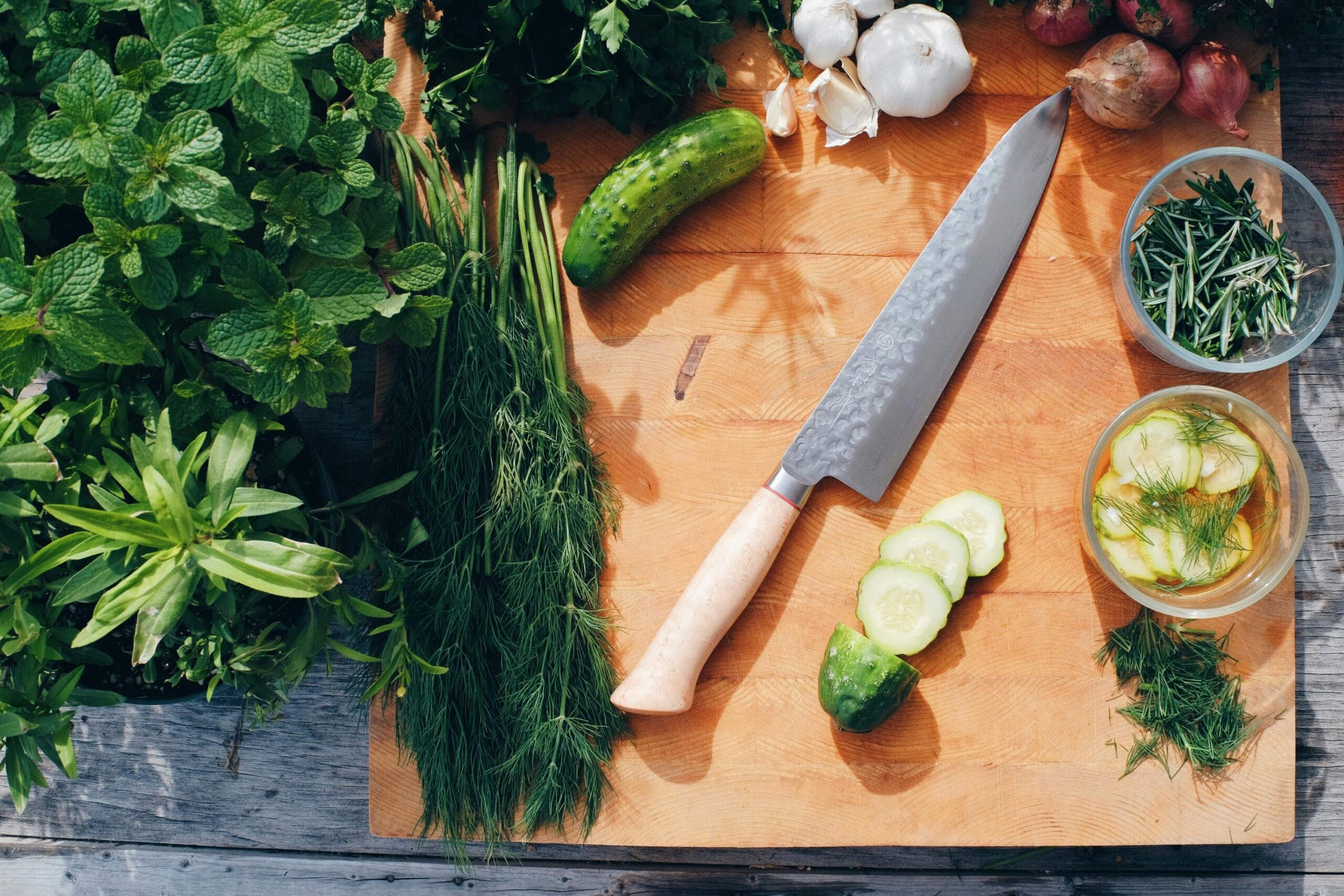
Based on your customers’ needs, here’s how to recommend the right knife.
For Home Cooks and Beginners
Recommendation: Santoku
The santoku is the ideal starting point for new home cooks. Its 120–170g weight fits comfortably in most hands, the sheep’s-foot tip is forgiving, and the intuitive flat edge naturally guides correct cutting technique.
Why recommend santoku:
- Easy to learn and use effectively on day one
- Compact size (130–180mm) fits small kitchens and smaller hands
- Budget-friendly entry point ($15–40 retail)
- Low maintenance — double-bevel edge sharpens easily at 12–15° per side
Target customer: First-time Japanese knife buyers, apartment dwellers, busy parents preparing weeknight dinners, anyone transitioning from Western knives.
For Serious Home Cooks and Culinary Students
Recommendation: Gyuto
The gyuto serves as the perfect foundation knife for those committed to improving their culinary skills. Its curved edge supports rocking, push, and pull cuts — allowing users to develop proper form across Western, Japanese, and fusion cooking styles.
Why recommend gyuto:
- Most versatile Japanese kitchen knife — handles 90%+ of kitchen tasks
- Supports all major cutting techniques (rocking, push, pull)
- Wide size range (180–270mm); 210mm is the universal sweet spot
- Grows with developing skills — a customer’s first gyuto remains useful for years
Target customer: Cooking enthusiasts, culinary students, home chefs building a quality knife collection, professionals seeking a reliable workhorse.
For Professional Chefs and Experienced Users
Recommendation: Kiritsuke or Gyuto
Professional kitchens benefit from having both. The gyuto handles general prep work efficiently, while the kiritsuke excels at precision tasks like sashimi preparation, vegetable katsuramuki, and decorative cuts.
Why recommend kiritsuke:
- Unmatched precision for slicing — the K-tip and flat blade deliver cuts other knives can’t match
- Traditional craftsmanship appeals to collectors and gift buyers
- Excellent for fish and vegetable specialists
- Statement piece for serious knife collections — commands premium pricing
Target customer: Executive chefs, sushi chefs, knife enthusiasts, collectors, culinary instructors.
By Kitchen Type
| Kitchen Type | Primary Recommendation | Secondary Option |
|---|---|---|
| Home kitchen (small) | Santoku 165mm | Gyuto 180mm |
| Home kitchen (standard) | Gyuto 210 mm | Santoku 180mm |
| Restaurant prep | Gyuto 240mm | Kiritsuke 270mm |
| Sushi restaurant | Kiritsuke 270mm | Gyuto 210 mm |
| Culinary school | Gyuto 210 mm | Santoku 165mm |
By Cooking Style
Western Cooking → Gyuto
The curved belly supports traditional rocking cuts common in Western culinary techniques. The 210mm gyuto is the most natural transition from an 8″ Western chef knife.
Japanese Cooking → Kiritsuke or Santoku
Traditional push-cutting and precise slicing align with Japanese knife philosophy. The kiritsuke excels at sashimi and katsuramuki; the santoku handles everyday Japanese home cooking.
Mixed / Fusion Style → Gyuto
Adapts to both Eastern and Western techniques, making it ideal for fusion cooking and multicultural kitchens.
Vegetarian / Vegan → Santoku or Kiritsuke
Both excel at vegetable-focused prep. The santoku is more accessible for daily chopping; the kiritsuke offers precision for advanced users doing decorative cuts and paper-thin slicing.
Seafood Preparation → Kiritsuke
The long, flat blade and K-tip excel at breaking down fish fillets and preparing sashimi. For whole fish butchery, pair with a deba.
Abschluss
Choosing between kiritsuke, santoku, and gyuto comes down to matching your customers’ skill levels, cooking styles, and kitchen setups with the right blade geometry.
Quick Summary:
- Santoku – Best for beginners and small kitchens. 120–170g, compact, intuitive, budget-friendly ($15–40 retail).
- Gyuto – Best all-around performer. 140–180g, versatile enough for any task, widest price range ($20–90 retail).
- Kiritsuke – Best for precision work and experienced users. 165–235g, traditional craftsmanship, premium positioning ($25–120+ retail).
For most knife retailers, stocking gyuto and santoku covers the broadest customer base. Add kiritsuke options as premium upsell pieces for experienced cooks and collectors — they command higher margins and attract buyers with higher lifetime value.
Ready to Expand Your Japanese Knife Collection?
At LeeKnives, we specialize in high-quality Japanese kitchen knives for wholesale buyers and retailers worldwide. Whether you’re looking to stock popular gyuto and santoku models or offer premium kiritsuke pieces to discerning customers, we can help.
Our Services:
- OEM/ODM Manufacturing – Custom designs, materials, and branding
- Wholesale Pricing – Competitive factory-direct prices
- Qualitätssicherung – Rigorous testing and inspection
- Schnelle Bearbeitungszeit – Quick production and shipping
Angebot anfordern today to discuss your knife sourcing needs. Our team can help you select the right products for your target market and create a custom knife line that stands out.
Explore our full range of Japanische Küchenmesser or learn more about knife care and maintenance to support your customers after purchase.
Häufig gestellte Fragen
Is a kiritsuke knife suitable for beginners?
Short answer: No.
The kiritsuke requires advanced knife skills due to:
- Single-bevel edge (easier to chip if misused)
- Flat blade profile (requires precise cutting angles)
- K-tip (delicate, can break if used improperly)
Recommended path for beginners:
- Transition to Kiritsuke ($50–80+) — once skills are solid
- Start with a Santoku ($15–30) — learn basic techniques
- Upgrade to a Gyuto ($30–55) — develop versatility
What should my first Japanese knife be?
Answer: Santoku (or a budget gyuto)
Reasons:
- Most forgiving blade geometry
- Lowest price point ($15–35)
- Easiest to learn proper technique
- Available in smaller sizes (165mm) for smaller hands
What to avoid as a first Japanese knife:
- Kiritsuke (too specialized)
- Single-bevel traditional blades (require expertise)
- High-carbon steel without rust care knowledge
Our recommendation for beginners: Start with a 165mm–180mm santoku in 5Cr15Mov or VG10 steel, retailing $20–40.
What three knives should every chef have?
The “Holy Trinity” of kitchen knives:
- Gyuto / Chef’s knife (180–240mm) — your workhorse for 80% of tasks
- Santoku / Petty knife (150–180mm) — for detail work and small ingredients
- Brotmesser (220–270mm) — serrated blade for baked goods
For Japanese knife collection specifically:
- Santoku (entry)
- Gyuto (core)
- Kiritsuke (specialty/upgrade)
This is why bundling strategies work — buyers who start with santoku often upgrade to gyuto within 6–12 months.
What is the most versatile kitchen knife?
The gyuto — Japanese for “beef sword” — is the most versatile Japanese kitchen knife because it combines:
- Western chef knife functionality (rocking cuts)
- Japanese precision (thin blade geometry)
- Multiple techniques (push, pull, rock)
- Wide size range (180–270mm)
It handles vegetables, proteins, fish, and fruit with equal proficiency.
Für Einzelhändler: Gyuto should be your volume driver. It typically accounts for 40–45% of Japanese knife sales across all channels.
Can a gyuto replace a santoku in my kitchen?
Yes, a gyuto can handle all tasks a santoku performs and more. The gyuto’s curved edge supports rocking cuts that the santoku cannot do effectively. However, the santoku’s compact size makes it preferable for small kitchens or users with smaller hands.
What is the main difference between single-bevel and double-bevel kiritsuke?
Single-bevel kiritsuke knives have one flat side and one beveled edge, traditional for Japanese cuisine. Double-bevel versions (kiritsuke gyuto) have symmetrical edges on both sides, making them easier to sharpen and suitable for left or right-handed users. Double-bevel is recommended for most modern kitchens.
Which knife is best for vegetable prep?
Both santoku and kiritsuke excel at vegetable preparation. The santoku offers easier handling for daily chopping and dicing. The kiritsuke provides superior precision for thin slicing and decorative cuts. For general vegetable work, the santoku is more practical for most users.
How do I choose the right blade length?
Consider your hand size, cutting board space, and typical ingredients:
- 130-165mm: Small hands, compact kitchens, detailed work
- 180-210mm: Average hands, standard home kitchens, all-purpose use
- 240-270mm: Large hands, professional kitchens, long slicing strokes
- 270-300mm: Experienced users, sashimi preparation, large cutting boards
Are Japanese knives worth the investment for retail customers?
Yes, Japanese knives offer superior sharpness, edge retention, and craftsmanship compared to most Western alternatives. Customers who invest in quality Japanese knives typically report higher satisfaction and are more likely to purchase additional pieces. The key is matching the right knife to their skill level and needs.
What steel type should I look for in these knives?
Common options include:
- VG-10: Excellent edge retention, corrosion-resistant, mid-to-high range
- SG2/R2: Premium powder steel, exceptional sharpness, higher price point
- AUS-10: Good balance of performance and affordability
- Kohlenstoffstahl: Superior sharpness but requires more maintenance
For most customers, VG-10 provides the best balance of performance and value.




 DE
DE  EN
EN  JA
JA