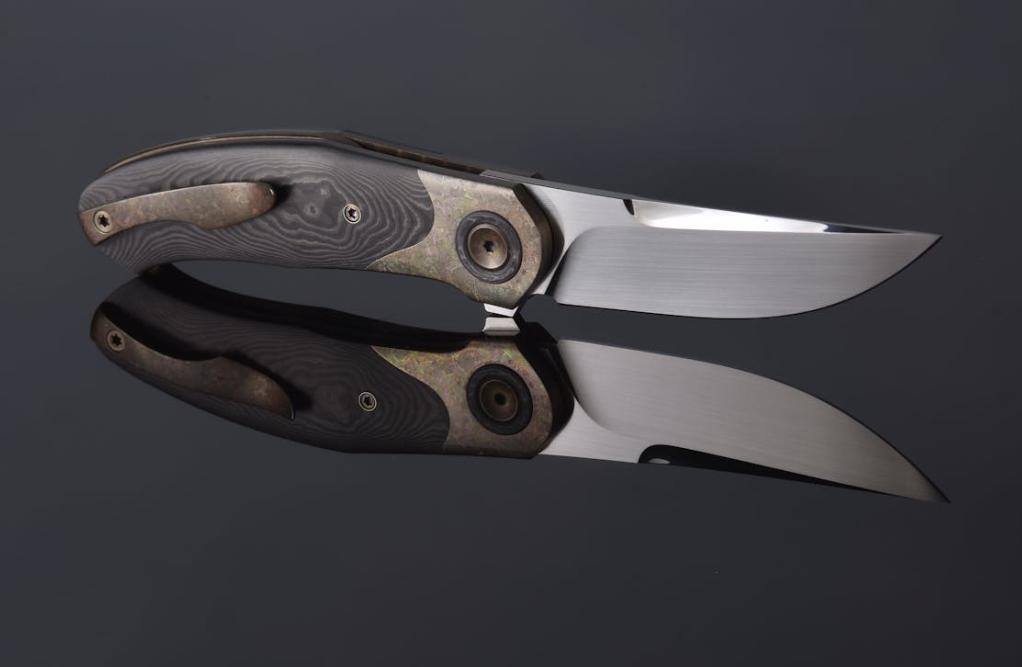
Among all the knife steels available in the mid-to-premium range, 154 cm and D2 stand out as two of the most popular choices. Both steels offer excellent performance, but they cater to different user preferences and environments.
When stocking knives for your store, understanding the differences between these two steels helps you guide your customers toward the right purchase. 154CM is a true Edelstahl developed by Crucible Industries, while D2 is a high-carbon tool steel known for its exceptional wear resistance.
Wondering which steel deserves more shelf space in your inventory? Read through the rest to find out everything you need to know about 154CM vs D2 steel, their properties, and what kind of knives can benefit from each material the most.
Quick Takeaways
- The core difference is corrosion resistance versus wear resistance: 154CM is a true stainless steel that shrugs off moisture and rust, while D2 is a semi-stainless tool steel that prioritizes edge retention and abrasion resistance at the cost of extra maintenance.
- 154CM sharpens easily and forgives impact, making it ideal for everyday users, marine environments, and first-time knife owners.
- D2 holds an edge longer but demands more care, appealing to experienced users and those cutting rope, cardboard, or strap material daily.
- D2 costs less at wholesale and offers strong margins in the budget-to-mid tier; 154CM supports higher retail price points and premium brand positioning.
- Stock both to cover the full customer spectrum: 154CM for low-maintenance reliability, D2 for hard-use performance.
What Is 154CM Steel?
154CM is a high-carbon, high-chromium martensitic stainless steel originally developed by Crucible Industries for jet engine turbine components. Over time, knifemakers adopted it for premium blades due to its well-balanced performance profile.
Today, 154CM is widely regarded as an upgrade over basic 440C stainless steel. It offers approximately 20% better edge retention than 440C while maintaining excellent corrosion resistance. Many American knifemakers, including Benchmade, have historically used 154CM as a flagship blade material.
What Is D2 Steel?
D2 is an air-hardening, high-carbon, high-chromium tool steel that sits just below the stainless threshold. With its rich alloy composition, D2 delivers outstanding wear resistance and edge retention that rivals many premium powder metallurgy steels.
Often classified as “semi-stainless,” D2 contains enough chromium to resist light corrosion but still requires occasional oiling in humid environments. Its trade names include SKD11, 1.2379, Hitachi SLD, and Uddeholm Sverker 21, depending on the manufacturer.
154CM vs D2 Steel Composition
In the comparison table below, you will find the chemical composition of 154CM and D2 steels side by side.
| Element | 154 cm | D2 |
| Kohlenstoff | 1.05% | 1.40–1.60% |
| Chrom | 14.00% | 11.00–13.00% |
| Molybdän | 4.00% | 0.70–1.20% |
| Vanadium | 0.00–0.40%* | 0.50–1.10% |
| Mangan | 0.50% | 0.10–0.60% |
| Silizium | 0,30–0,80% | 0.10–0.60% |
| Schwefel | 0.03% | ≤0,03% |
| Phosphor | 0.03% | ≤0,03% |
Quellen ZKnives – Crucible 154CM Steel; AZoM – D2 Tool Steel Technical Data
The most significant difference lies in the chromium and carbon content. 154CM contains 14% chromium, which pushes it firmly into stainless territory. D2 carries more carbon and vanadium, giving it superior wear resistance but slightly less protection against rust.
154CM vs D2 Steel Properties
The table below gives you a quick side-by-side look at how these two steels compare across the six properties that matter most to knife buyers.
| Eigentum | 154 cm | D2 | Gewinner |
| Härte | 8.0/10 (58–61 HRC) | 8.5/10 (55–62 HRC) | D2 |
| Korrosionsbeständigkeit | 9.0/10 | 6.0/10 | 154 cm |
| Kantenbeständigkeit | 7.0/10 | 8.5/10 | D2 |
| Zähigkeit | 8.0/10 | 7.0/10 | 154 cm |
| Verschleißfestigkeit | 7.0/10 | 9.0/10 | D2 |
| Einfaches Schärfen | 8.5/10 | 5.5/10 | 154 cm |
Härte
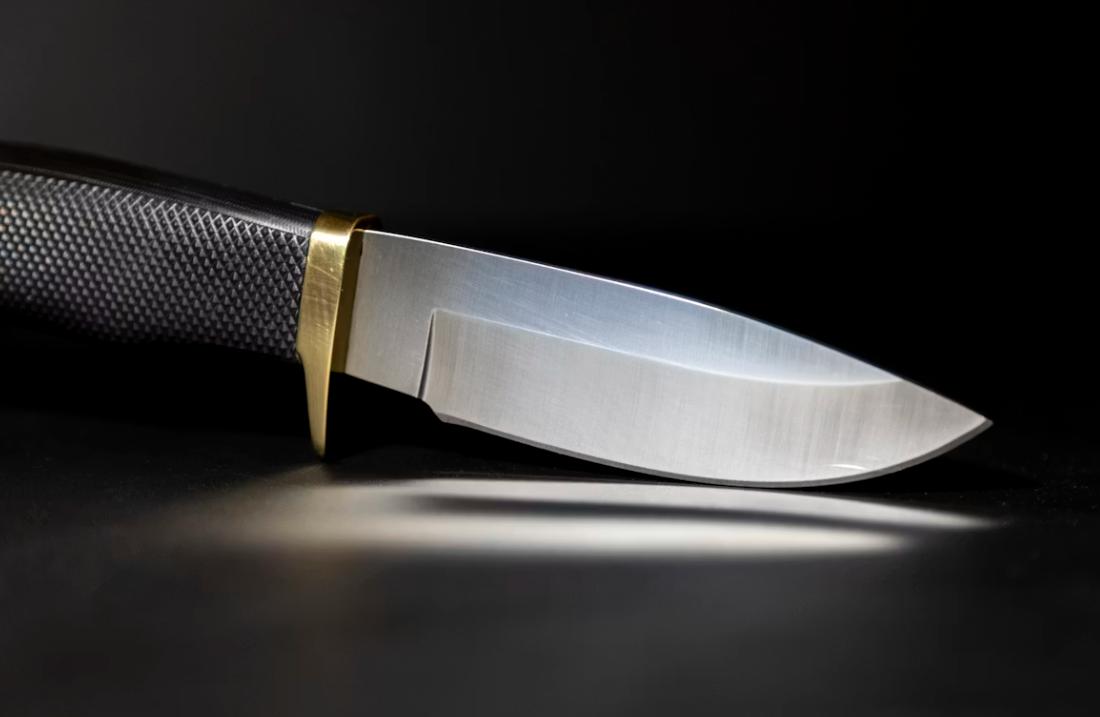
After proper heat treatment, 154CM typically achieves a hardness of 58–61 HRC. This range offers an ideal balance between edge retention and durability for most folding and fixed-blade knives.
D2 generally reaches 55–62 HRC depending on the heat treatment protocol. Some manufacturers push it higher for maximum wear resistance, though this can reduce toughness slightly.
From a retail perspective, both steels offer sufficient hardness for demanding cutting tasks. D2 has the potential for slightly higher peak hardness, which translates to better edge stability under heavy use.
Korrosionsbeständigkeit
154CM delivers excellent corrosion resistance thanks to its 14% chromium content. It qualifies as a true stainless steel and performs well in humid, wet, or even marine environments with minimal maintenance.
D2 falls into the semi-stainless category. While its 11–13% chromium provides moderate rust resistance, it cannot match 154CM in wet conditions. Your customers who live near the coast or work outdoors in rain should understand this distinction clearly.
For inventory planning, 154CM knives require less customer education about maintenance. D2 blades, on the other hand, appeal to enthusiasts who already understand basic blade care.
Kantenbeständigkeit
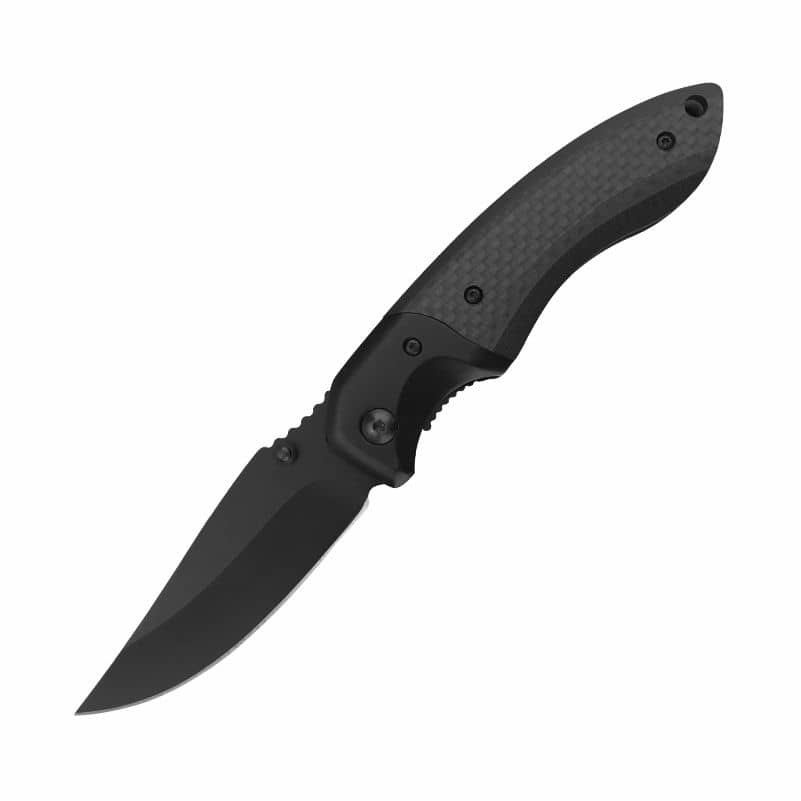
D2 G10 mit Stahlbolster-Klappmesser LKFDK10018
D2 excels in edge retention due to its higher carbon content and greater carbide volume. In abrasive cutting scenarios such as cardboard, rope, and fibrous materials, D2 blades stay sharp noticeably longer than 154CM.
154CM offers solid edge retention that sits comfortably above entry-level stainless steels like AUS-8 or 8Cr13MoV. Crucible’s own data indicates approximately 20% better edge retention than 440C, making it a respectable performer in its class.
If your customers frequently ask which steel “holds an edge the longest,” D2 is the honest answer. However, 154CM still satisfies most everyday users who do not subject their blades to extreme abrasion daily.
Zähigkeit
Both steels offer adequate toughness, but 154CM holds the advantage in impact resistance. Its more uniform carbide distribution contributes to better performance under lateral stress.
D2, while harder, is somewhat more brittle and prone to chipping under high-impact or prying loads.
For heavy-duty outdoor and tactical knives where impact resistance matters, 154CM is often the safer choice; D2 excels in wear resistance and edge retention but requires more careful use to avoid chipping.
Verschleißfestigkeit
D2 demonstrates superior wear resistance due to its high carbon and vanadium content. The abundance of hard carbides within the steel matrix allows D2 blades to maintain their geometry through thousands of cutting cycles.
154CM wears reasonably well, though it cannot match D2 in prolonged abrasive environments. The 4% molybdenum in 154CM does improve its resistance to softening at elevated temperatures during grinding.
From a business standpoint, D2 knives may generate fewer sharpening service requests over time. This can be a selling point for your customers who value low-maintenance ownership.
154CM is noticeably easier to sharpen than D2. It responds well to standard whetstones and ceramic rods, allowing users to restore a keen edge without excessive effort or specialized equipment.
D2 requires more patience and better sharpening tools due to its high carbide volume. Many users report that D2 takes a “toothier” edge compared to the “finer” edge achievable on 154CM.
If your customer base includes many first-time knife owners, 154CM offers a more forgiving sharpening experience. Experienced users often appreciate D2’s edge-holding benefits enough to accept the extra maintenance effort.
Best Use Cases
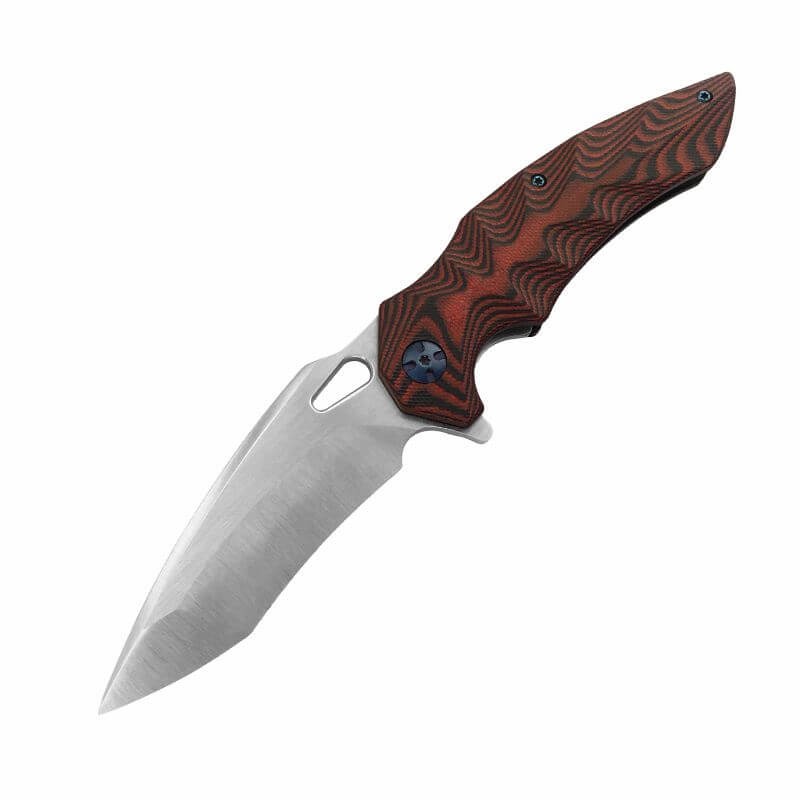
154CM Is Ideal For
- EDC Folding Knives: The corrosion resistance and balanced performance of 154CM make it perfect for everyday carry folders that face varied conditions.
- Kitchen Cutlery: Chefs and home cooks appreciate 154CM’s ability to resist staining from acidic foods while maintaining a workable edge between honing sessions.
- Marine and Outdoor Knives: The true stainless nature of 154CM handles moisture, humidity, and occasional saltwater exposure far better than D2.
D2 Is Ideal For
- Hard-Use Fixed Blades: Hunters, bushcrafters, and tactical users benefit from D2’s superior toughness and wear resistance during demanding cutting tasks.
- Budget-Friendly Performance Blades: D2 allows manufacturers to offer impressive performance at accessible price points, making it popular in the $50–$100 range.
- Work Knives and Tools: Users who need a blade that maintains its geometry through heavy cardboard, rope, and strap cutting will find D2 highly satisfactory.
154CM vs D2 Steel: Price and Supply Chain
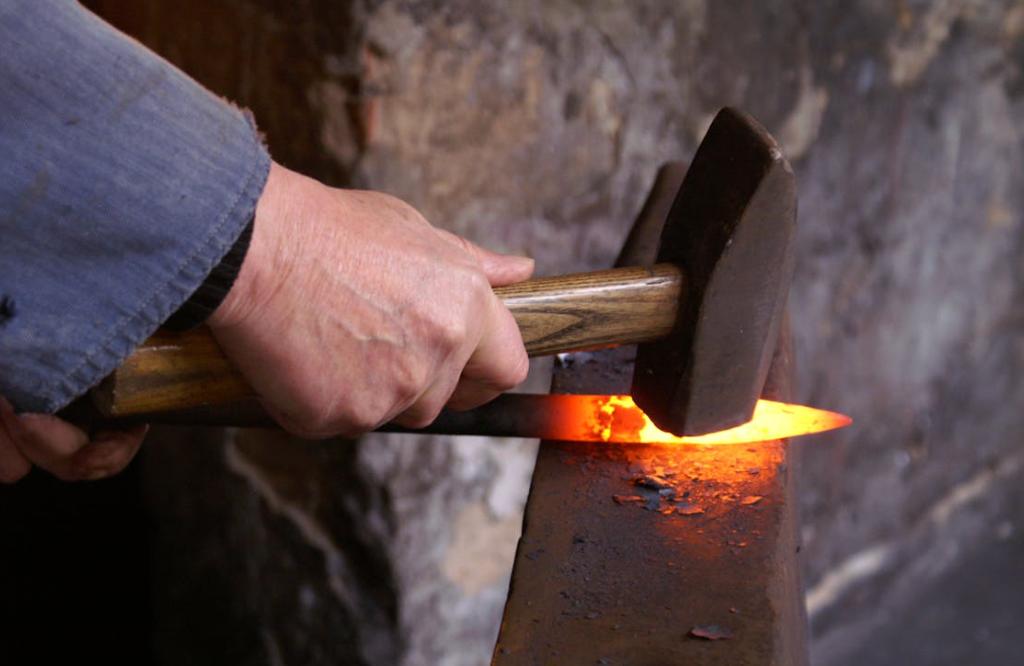
D2 costs less at the raw-material level and is easier to source in bulk. 154CM carries a premium price tag and comes from a smaller pool of suppliers.
Raw-material cost
Industry data shows D2 tool steel runs about $1–$4 per kilogram depending on volume and origin — lower for Asian bulk exports, higher for domestic distributor stock. Crucible-grade 154CM or CPM-154 typically costs 50–100% more at equivalent dimensions.
For example, a knifemaking-size bar of CPM-154 runs about $60–$100, while comparable D2 stock runs about $30–$50. That gap may seem small on a single knife, but it adds up fast when you are ordering thousands of blades.
Verfügbarkeit
Almost every major steel mill on the planet makes D2 or an equivalent grade (SKD11 in Japan, 1.2379 in Europe, K110 in Austria). Lead times are short and minimum order quantities are flexible.
154CM was historically produced by Crucible Industries in the United States. Following Crucible’s bankruptcy and closure in 2025, supply chain continuity has shifted to Niagara Specialty Metals (hot rolling and distribution) and Erasteel (powder metallurgy production in Sweden). The supplier base remains narrower than D2’s global footprint, and sourcing now involves more import logistics.
Manufacturing cost
D2 is harder on tooling and takes longer to grind and polish because of its dense carbide structure. A knifemaker will burn through more sanding belts and Schleifsteine on D2 than on 154CM.
On the flip side, 154CM requires more precise heat treatment to hit its sweet spot of 58–61 HRC. A poorly heat-treated 154CM blade underperforms, so factory QC matters more.
Retail pricing
D2 knives typically land in the $40–$70 retail range for folders and $20–$60 for fixed blades. 154CM knives usually start around $80 and climb past $150 for premium models.
For wholesale buyers, D2 offers stronger margins at the budget-to-mid tier, while 154CM supports higher price points and brand positioning.
Schlussfolgerung: Welcher Stahl ist besser für Ihren Messershop?
The corrosion resistance and ease of sharpening are where 154CM proves to be the better choice for general consumers. Since many retail customers prioritize low maintenance and all-weather reliability, 154CM often satisfies their expectations more completely.
However, the improved edge retention and toughness of D2 can make a big difference for customers using knives for work purposes, outdoor activities, or heavy-duty applications.
From a price point, D2 typically costs less at wholesale while still delivering premium-level performance. That said, both steels have loyal followings, and offering a selection of each allows you to serve a broader customer base.
Buy Wholesale Knives and Start Scaling up with Leeknives Today
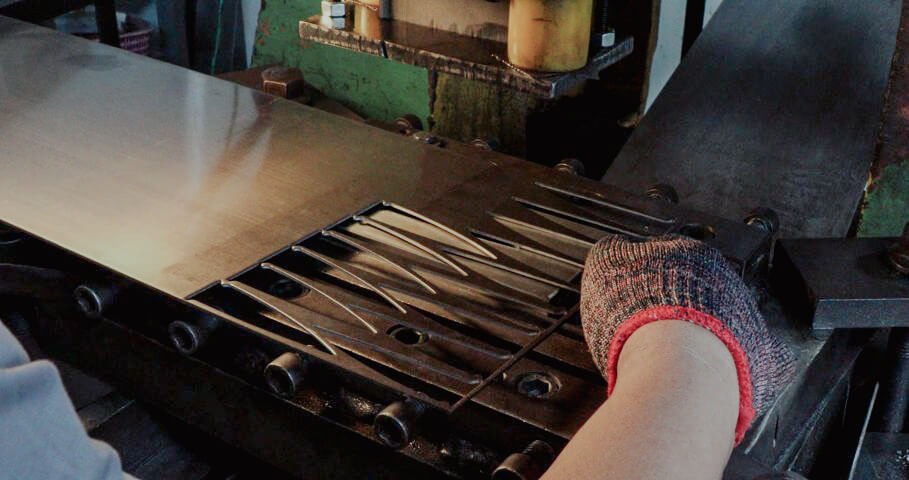
LeeKnives is a knife manufacturer based in Yangjiang City with over 30 years of experience crafting blades. We supply North American knife stores and wholesalers with OEM-Messerherstellung and custom ODM design services.
Why source from LeeKnives?
- Proven heat treatment. We run in-house vacuum furnaces with strict HRC tolerances, so every D2 and 154CM blade hits its spec.
- Certified steel sourcing. We buy direct from Crucible and other verified mills. No mystery steel, no composition guessing.
- Low MOQ, fast scaling. Start with a small private-label test run, then scale to full container loads without switching factories.
- US and China fulfillment. Our warehouses on both sides of the Pacific cut shipping times and landed costs.
- Full-service OEM/ODM. From blade steel selection and handle design to custom packaging and logo branding, we handle it under one roof.
Whether you want to stock D2 budget folders, launch a 154CM premium line, or build a full private-label collection, we can help. Angebot anfordern today and connect with a sales rep.
Bringen Sie Ihre individuelle Messerlinie schneller auf den Markt mit LeeKnives
Umfassender OEM/ODM-Support – vom Entwurf bis zur endgültigen Lieferung –, damit Sie sich auf Ihr Wachstum konzentrieren können.
Unterstützt durch Lager in den USA für eine schnelle und zuverlässige Lieferung.
Häufig gestellte Fragen
Kann 154CM leicht splittern?
No. 154CM resists chipping well during normal cutting tasks. It only becomes prone to chipping if it is heat-treated above 61 HRC and then used for heavy chopping or prying. For everyday carry folders and Küchenmesser, chipping is rarely an issue.
What is 154CM steel comparable to?
154CM is comparable to ATS-34, which is essentially the same formula produced by Hitachi. It sits in the same performance tier as VG-10 and N690, offering a balance of corrosion resistance, edge retention, and ease of sharpening. All four are considered solid mid-to-premium stainless steels.
Why don’t people like D2 steel?
The most common complaints are corrosion resistance and sharpening difficulty. D2 is only semi-stainless, so it can develop surface rust if it is left wet or stored in humid conditions. It also contains hard carbides that make sharpening slower and more labor-intensive than easier steels like 154CM or AUS-8.
Is 154CM a budget steel?
No. 154CM sits in the premium mid-range category. It costs more than entry-level steels like 8Cr13MoV, AUS-8, or 440C, but it is generally less expensive than super-premium powder metallurgy steels like S30V, S35VN, oder MagnaCut. It is a proven upgrade for buyers who want reliable performance without paying flagship prices.
What is the European equivalent of D2 steel?
The European DIN standard equivalent is 1.2379, also designated X155CrVMo12-1. In Japan the same steel is known as SKD11, and Austrian producer Bohler-Uddeholm markets it as K110. All of these share the same core composition and can be considered interchangeable for knife-making purposes.




 DE
DE  EN
EN  JA
JA