420HC und S35VN sind zwei sehr unterschiedliche Stähle auf dem Messerspektrum. 420HC ist ein erschwinglicher, leicht zu schärfender rostfreier Stahl, der sich ideal für preiswerte Messer eignet, während S35VN ist ein Premium-Pulverstahl, der für hervorragende Kantenfestigkeit und Korrosionsbeständigkeit sorgt.
Dieser direkte Vergleich schlüsselt die Zusammensetzung, die Härte und die Positionierung im Großhandel auf, damit Sie den richtigen Stahl für die Budgets Ihrer Kunden vorrätig halten können.
Die wichtigsten Unterschiede auf einen Blick
- 420HC ist ein Einstiegsmodell martensitischer Edelstahl (~13% Cr, ~0.46% C, 55-58 HRC). Es zeichnet sich durch seine Zähigkeit, Korrosionsbeständigkeit und leichte Schärfbarkeit aus - ideal für preisgünstige Messer und Einsteiger.
- S35VN ist ein hochwertiger pulvermetallurgischer Stahl (14% Cr, 1.4% C, 3% V, 0.5% Nb, 58-61 HRC). Er bietet eine deutlich bessere Schnitthaltigkeit und Verschleißfestigkeit und richtet sich an EDC- und Outdoor-Messer der mittleren bis gehobenen Klasse.
- Kantenschutzlücke: S35VN hält die Schärfe bei normalem Gebrauch etwa 2-3x länger als 420HC.
- Vorteil beim Schärfen: 420HC kann in wenigen Minuten mit einfachen Steinen ausgebessert werden; S35VN erfordert Diamant- oder Keramikschleifmittel und mehr Zeit.
- Strategie für den Großhandel: Diese Stähle bedienen völlig unterschiedliche Kundensegmente. Lagerware 420HC für preissensible Volumenverkäufe und S35VN für Premiummargen und Markenpositionierung.
Ein kurzer Hintergrund zu 420HC und S35VN
420HC: Der Einstiegsstandard
420HC gehört zur 420er-Familie martensitischer rostfreier Stähle, die seit Mitte des 20. Jahrhunderts in Bestecken verwendet werden. Die Bezeichnung “HC” steht für High Carbon und unterscheidet ihn von Norm 420 mit leicht erhöhtem Kohlenstoffgehalt zur Verbesserung der Härte.
Buck Knives führte 420HC in den 1960er Jahren ein und entwickelte proprietäre Wärmebehandlungen, die den Stahl weit über seine Grundleistung hinaus brachten und ihn als Maßstab für erschwingliche, zuverlässige Klingen etablierten. Heute ist 420HC nach wie vor ein Grundnahrungsmittel für preisgünstige Messer, Multi-Tools und Jagdmesser der Einstiegsklasse weltweit.
S35VN: Die Entwicklung der Pulvermetallurgie
Das CPM S35VN wurde 2009 von Crucible Industries in Zusammenarbeit mit Chris Reeve Knives eingeführt und baut auf dem Erfolg des revolutionären S30V. Durch die Zugabe von Niob - gekennzeichnet durch das “N” im Namen - wurde die Karbidstruktur verfeinert, um die Zähigkeit und Bearbeitbarkeit zu verbessern, ohne die Verschleißfestigkeit zu beeinträchtigen.
Der mit dem patentierten pulvermetallurgischen Verfahren von Crucible entwickelte S35VN wurde schnell zum bevorzugten Premium-Stahl für mittel- bis hochpreisige Folder und Outdoor-Messer. Er wird oft als “Goldlöckchen-Stahl” bezeichnet, weil er eine ausgewogene Kombination aus Schnitthaltigkeit, Korrosionsbeständigkeit und Langlebigkeit bietet.
Vergleich der chemischen Zusammensetzung
Das Verständnis der Chemie hinter den einzelnen Stählen erklärt, warum sie in der Praxis so unterschiedlich funktionieren.
| Element | 420HC | S35VN | Warum es wichtig ist |
|---|---|---|---|
| Kohlenstoff (C) | ~0.46% | 1,38 - 1,40% | Fördert die Härte und Karbidbildung. Der 3fache Kohlenstoffgehalt von S35VN ermöglicht eine weitaus bessere Kantenhaltung. |
| Chrom (Cr) | ~13% | 14% | Erzeugt rostfreie Eigenschaften. Beide gelten als nichtrostend, wobei S35VN einen leichten Vorsprung hat. |
| Vanadium (V) | 0.3% | 3.0% | Bildet extrem harte Vanadiumkarbide, die für Verschleißfestigkeit sorgen - ein Hauptgrund dafür, dass S35VN 420HC bei Zerspanungsaufgaben überdauert. |
| Molybdän (Mo) | Spurensuche | 2.0% | Verbessert die Härtbarkeit und die Beständigkeit gegen Lochfraßkorrosion. |
| Niob (Nb) | — | 0.5% | Verfeinert die Karbidstruktur in S35VN und verbessert die Zähigkeit und Schleifbarkeit gegenüber seinem Vorgänger S30V. |
| Mangan (Mn) | 0.4% | ~0.5% | Unterstützt die Desoxidation und die Härtbarkeit. |
| Silizium (Si) | 0.4% | ~0.5% | Trägt zur Festigkeit während der Wärmebehandlung bei. |
Quellen NJSB CPM S35VN Daten; ZKnives Stahl-Datenbank - 420HC
Wichtigste Erkenntnis: 420HC basiert auf einer einfachen, niedrig legierten Rezeptur, die die Kosten niedrig hält, aber die Leistungsgrenze begrenzt. S35VN verwendet eine komplexe, hochlegierte pulvermetallurgische Rezeptur mit niobverstärkten Karbiden - ein grundlegend anderer metallurgischer Ansatz, der eine erstklassige Schneidleistung liefert.
Tiefes Eintauchen: Leistungsanalyse 420HC vs. S35VN
Härte
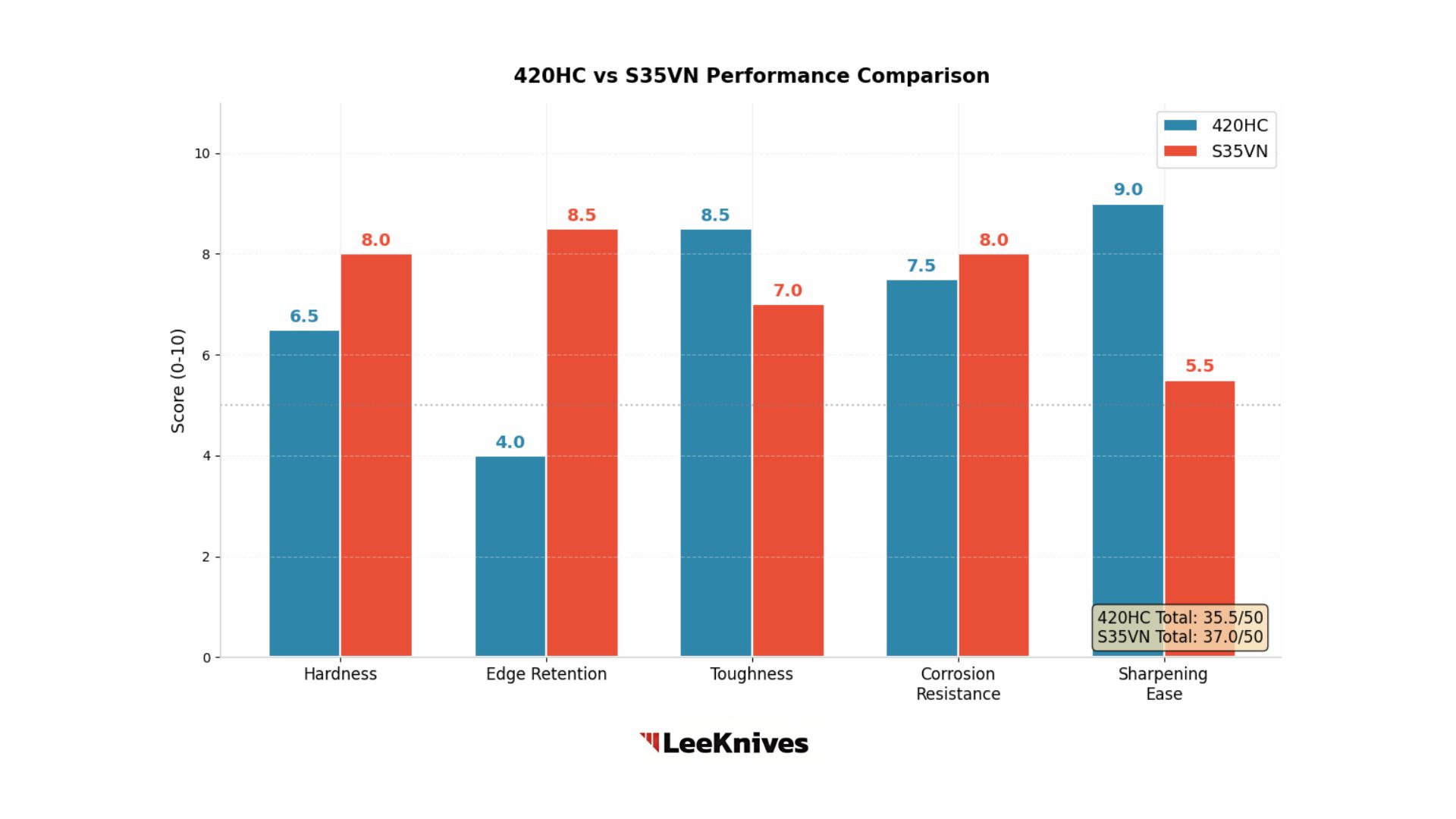
Die Härte bestimmt, wie gut eine Klinge Verformungen widersteht und ihre Schärfe unter Belastung beibehält. 420HC erreicht in der Regel 55-58 HRC in der Standardproduktion, obwohl die firmeneigene Wärmebehandlung von Buck Knives ausgewählte Modelle näher an 58-60 HRC heranführt.
S35VN, das durch das pulvermetallurgische Verfahren von Crucible hergestellt wird, erreicht durchgängig 58-61 HRC bei gleichmäßigerer Karbidverteilung.
Für Messerhersteller reduziert die geringere Härteabweichung von S35VN Qualitätsprobleme von Charge zu Charge, während das breitere Toleranzfenster von 420HC eine strengere Eingangskontrolle erfordert, wenn Sie von mehreren Lieferanten beziehen.
Schnitthaltigkeit
Bei der Schnitthaltigkeit wird der Unterschied zwischen diesen beiden Stählen für den Endanwender am deutlichsten. Der bescheidene Kohlenstoffgehalt des 420HC erzeugt relativ wenige harte Karbide, was bedeutet, dass die Schneide bei abrasiven Schneidaufgaben wie Karton oder Seil schneller abstumpft.
Das 3%-Vanadium des S35VN bildet extrem harte Vanadiumkarbide, die dem Abrieb weitaus länger standhalten, so dass die Lebensdauer der Schneide bei typischer EDC-Nutzung etwa 2-3 Mal so hoch ist wie die von 420HC.
Für die Großhändler bedeutet dies, dass die Kunden zufriedener sind und sich weniger beschweren - aber es bedeutet auch, dass für S35VN-Messer höhere Einzelhandelspreise verlangt werden, die nicht jeder Käufer zu zahlen bereit ist.
Zähigkeit
Die Zähigkeit misst die Widerstandsfähigkeit eines Stahls gegen Absplitterung und Rissbildung bei Stößen. Die geringere Härte von 420HC verleiht ihm einen inhärenten Zähigkeitsvorteil; der Stahl biegt sich eher, als dass er bricht, wenn er einer seitlichen Belastung oder einem Aufhebeln ausgesetzt ist.
S35VN behebt die traditionelle Sprödigkeit von Stählen mit hohem Kohlenstoffgehalt durch seine mit Niob veredelte Mikrostruktur, die die Zähigkeit um schätzungsweise 15-20% gegenüber seinem Vorgänger S30V verbessert.
Aus geschäftlicher Sicht eignen sich 420HC-Messer für Kunden, die ihre Werkzeuge missbrauchen, während S35VN für Anwender interessant ist, die mehr Wert auf Schnittleistung als auf Robustheit legen.
Korrosionsbeständigkeit
Beide Stähle werden als nichtrostend eingestuft, aber ihr Korrosionsverhalten in der Praxis unterscheidet sich geringfügig. Der Chromgehalt von 420HC (~13%) sorgt unter normalen Bedingungen für eine solide Rostbeständigkeit, die durch die optimierte Wärmebehandlung von Buck noch weiter verbessert wird, da sie für eine angemessene martensitische Struktur sorgt.
S35VN bietet mit 14% Chrom und 2% Molybdän eine etwas bessere Lochfraßbeständigkeit, wenngleich keiner der beiden Stähle die Salzwasserbeständigkeit von speziellen Marinestählen erreicht. Für Einzelhändler sind beide Stähle wartungsarm genug für den Mainstream-Markt in Küche und EDC.
Die Einfachheit des Schärfens hat großen Einfluss auf das Wiederkaufverhalten und die Wahrnehmung der Marke. 420HC kann mit einfachen Arkansas-Steinen oder sogar einem Keramikstab in wenigen Minuten wieder scharf geschliffen werden und ist damit ideal für Kunden, die über keine modernen Schärfgeräte verfügen.
Das hohe Karbidvolumen von S35VN erfordert Diamant- oder CBN-Schleifmittel für ein effizientes Reprofilieren, obwohl routinemäßige Nacharbeiten mit Qualitätssystemen machbar sind. Einzelhändler sollten in Erwägung ziehen, Schärfzubehör mit S35VN-Messern zu bündeln oder Schärfdienste anzubieten, um die Wartungslücke für weniger erfahrene Anwender zu schließen.
B2B-Strategie: Volumen vs. Marge
Aus Sicht der Beschaffung stellen 420HC und S35VN zwei unterschiedliche Geschäftsmodelle dar: hohe Fließgeschwindigkeit vs. Deckungsbeitragsstelle. Während 420HC durch seine schiere Robustheit den Support nach dem Verkauf minimiert, baut S35VN das Markenprestige auf und zieht Wiederholungsaufträge von der lukrativen Enthusiastengemeinde an.
| Faktor | 420HC | S35VN |
|---|---|---|
| Am besten für | Massenabsatz, Anfänger, preissensible Märkte | Margenorientierter Verkauf, Markenreputation, Stammkunden |
| Einzelhandelspreisspanne | $15 - $50 | $80 - $250+ |
| Kundenprofil | Erstkäufer, Gelegenheitsnutzer, Geschenkkäufer | EDC-Enthusiasten, Outdoorfreunde, Sammler |
| Gewährleistungsrisiko | Untere: Extrem widerstandsfähig und für den Kunden leicht zu pflegen. | Mäßig: Bei unsachgemäßer Verwendung durch unerfahrene Benutzer kann es zu Kantenabplatzungen kommen. |
Einblick in die Beschaffung: Für Großhändler, 420HC ist das “sichere” Inventar - es bewegt sich schnell mit minimalen Erträgen. S35VN ist der “Status”-Bestand - er erfordert eine höhere Anfangsinvestition, positioniert Ihre Marke aber als professionellen Anbieter. Unter LeeKnives, Um sowohl den Massenmarkt als auch das Segment der Premium-Enthusiasten zu erobern, empfehlen wir eine Aktienaufteilung von 70/30 für den allgemeinen Einzelhandel.
Beste Anwendungsfälle für jeden Stahl
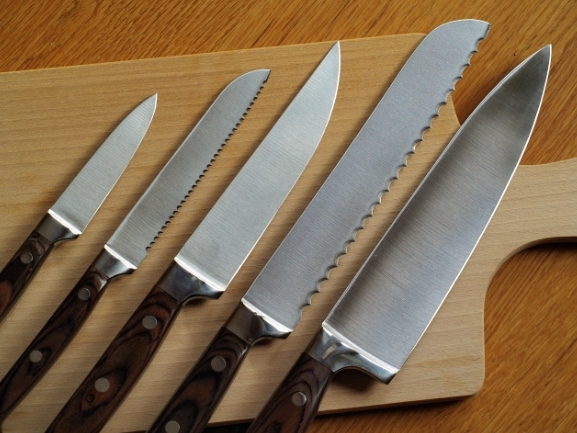
Um einen ausgewogenen Katalog zu erstellen, müssen Sie den Stahl auf die beabsichtigte Tätigkeit des Endnutzers abstimmen. Hier kann jeder Stahl wirklich glänzen:
Wann sollte man 420HC wählen?
- Multi-Tools: Da die Klingen von Multitools oft dünn sind und durch Aufhebeln oder Verdrehen beansprucht werden, verhindert die überragende Zähigkeit von 420HC ein Abbrechen, wo härtere Stähle versagen könnten.
- Einstiegslevel Jagd/Camping: Ideal für Anfänger, die das Schärfen noch nicht beherrschen. Es lässt sich vor Ort mit einem einfachen Stein oder einem Keramikstab mühelos wieder auf Messerschärfe bringen.
- Salzwasser/Nasse Umgebungen: 420HC ist zwar kein “maritimer” Stahl, aber seine hohe Korrosionsbeständigkeit macht ihn zu einer sicheren Wahl für Fischereimesser oder preiswerte Tauchwerkzeuge.
- Firmengeschenke & Souvenirs: Für Kunden, die mehr Wert auf Ästhetik und geringen Wartungsaufwand als auf extreme Schnittleistung legen.
Wann sollte man S35VN wählen?
- Premium Everyday Carry (EDC): Für Enthusiasten, die ihre Messer täglich zum Öffnen von Kisten, zum Schneiden von Seilen oder für schwere Arbeiten verwenden und wochenlang ohne Schärfen auskommen wollen.
- Professionelle Häutung/Jagd: Das S35VN kann ein ganzes Großwild verarbeiten, ohne seine Schärfe zu verlieren, und ist damit die erste Wahl für passionierte Naturliebhaber.
- Taktisch & Klappmesser: Die “Goldlöckchen”-Balance von S35VN macht es zum Industriestandard für High-End-Ordner, bei denen der Benutzer professionelle Leistung erwartet.
- Sammler- und Boutique-Linien: Wenn sich Ihre Marke an “Stahl-Snobs” oder Liebhaber richtet, ist das CPM-Label (Powder Metallurgy) eine obligatorische Marketinganforderung.
Schlussfolgerung: Welchen Stahl sollte Ihre Messerserie tragen?
Erfolg auf dem umkämpften Messermarkt entsteht nicht dadurch, dass man einen Stahl dem anderen vorzieht, sondern durch eine abgestufte Bestandsstrategie.
Verwenden Sie 420HC, um den Absatz in hohen Stückzahlen zu fördern und den Einstiegsmarkt im Einzelhandel zu erobern, während Sie S35VN nutzen, um Ihre Premium-Kollektionen zu verankern und die Markenautorität unter Liebhabern zu stärken.
Wenn Sie beides anbieten, decken Sie effektiv das gesamte Verbraucherspektrum ab und maximieren Ihren Marktanteil, ohne Ihren eigenen Umsatz zu kannibalisieren.
Partner mit LeeKnives: Skalierung Ihrer Messerlinie
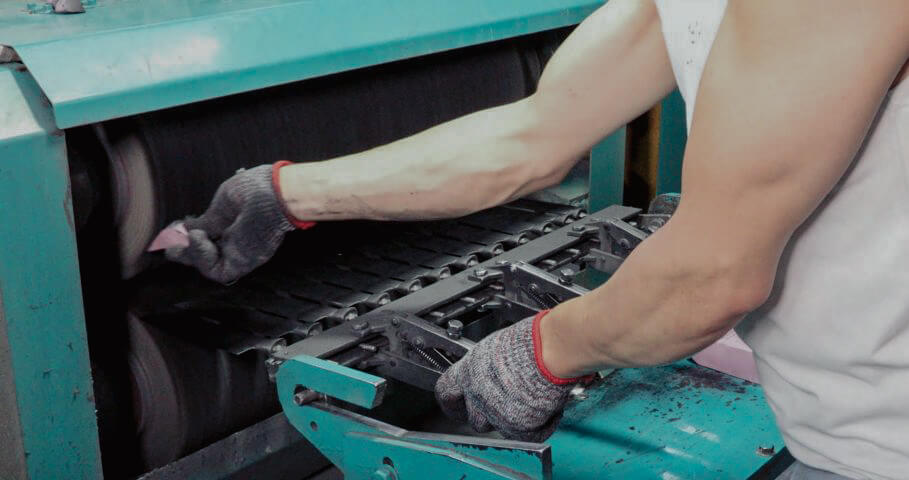
Die Wahl des richtigen Stahls ist nur die halbe Miete. Der wahre Wert liegt in der Wärmebehandlung Und Fertigungspräzision.
Bei LeeKnives, Wir helfen Ihnen, die Lücke zwischen Materialspezifikationen und Markterfolg zu schließen:
- Präzise Wärmebehandlung: Wir verwenden fortschrittliche Vakuumöfen, um sicherzustellen, dass jede 420HC- oder S35VN-Klinge den strengen HRC-Toleranzen entspricht.
- Zertifizierte Beschaffung: Wir garantieren echtes CPM S35VN von Crucible Industries, um das Risiko von “geheimnisvollem Stahl” zu vermeiden, das bei billigen OEM.
- Design-to-Delivery: Egal, ob Sie eine Serie von 500 Stück preisgünstiger 420HC-Faltblätter oder 1.000 hochwertige S35VN-Klingen benötigen, wir bieten Ihnen wettbewerbsfähige B2B-Preise und ein individuelles Branding.
Kostenloses Angebot anfordern und setzen Sie sich mit unserem Vertriebsteam in Verbindung, um Ihre Anforderungen an den Stahl, die Mindestbestellmenge und die Möglichkeiten der individuellen Gestaltung zu besprechen.
Bringen Sie Ihre individuelle Messerlinie schneller auf den Markt mit LeeKnives
Umfassender OEM/ODM-Support – vom Entwurf bis zur endgültigen Lieferung –, damit Sie sich auf Ihr Wachstum konzentrieren können.
Unterstützt durch Lager in den USA für eine schnelle und zuverlässige Lieferung.
Häufig gestellte Fragen
Ist S35VN ein hochwertiger Stahl?
Ja, S35VN gilt weithin als Messerstahl der Spitzenklasse. Er wurde von Crucible Industries mittels Pulvermetallurgie entwickelt und liegt über den gängigen rostfreien Sorten wie 440C und AUS-8 aber unter den Ultra-Premium-Optionen wie MagnaCut und M390. Für Großhändler positioniert S35VN Ihre Produkte im Bereich $80-$250, wo begeisterte Käufer bewährte Leistung erwarten.
Was ist besser als S35VN?
Mehrere Stähle übertreffen S35VN in bestimmten Kategorien, aber nur wenige erreichen seine Gesamtbilanz. MagnaCut übertrifft S35VN sowohl bei der Zähigkeit als auch bei der Korrosionsbeständigkeit, während M390 und CPM-20CV bieten eine hervorragende Verschleißfestigkeit und Kantenfestigkeit.
Für die meisten Produktionsmesser ist S35VN jedoch nach wie vor der ideale Stahl, da er eine erstklassige Leistung bietet, ohne dass die Bearbeitung schwieriger ist oder der Preis höher liegt als bei den Spitzenlegierungen.
Ist 440C-Stahl besser als 420HC-Stahl?
Ja, 440C übertrifft 420HC im Allgemeinen in Bezug auf die Kantenfestigkeit und die erreichbare Härte, da es einen höheren Kohlenstoff- (0,95-1,20% gegenüber ~0,46%) und Chromgehalt (16-18% gegenüber ~13%) aufweist.
420HC bietet jedoch eine höhere Festigkeit und lässt sich wesentlich leichter schärfen, so dass es für Gelegenheitsanwender leichter zu handhaben ist. Viele Großhändler führen beides: 420HC für Einsteiger und 440C für Kunden, die ein bescheidenes Leistungsupgrade suchen, ohne die Preise für Pulverstahl zu erhöhen.
Welches ist der haltbarste Stahl für ein Messer?
“Dauerhaftigkeit” hängt davon ab, wie man sie definiert - Zähigkeit, Verschleißfestigkeit oder Korrosionsbeständigkeit. Für reine Zähigkeit (Beständigkeit gegen Absplittern und Brechen) sind Werkzeugstähle wie CPM-3V Und Cru-Wear führen den Markt an. Für eine ausgewogene Haltbarkeit in der Praxis, die Kantenhaltbarkeit, Fleckenbeständigkeit und angemessene Zähigkeit kombiniert, ist S35VN eine der bewährtesten Entscheidungen, während 420HC sich durch ein hervorragendes Verhältnis zwischen Zähigkeit und Dollar für preiswerte Produkte auszeichnet.
Was sind die Nachteile von Messern aus Kohlenstoffstahl?
Kohlenstoffstahl Messer bieten eine hervorragende Schnitthaltigkeit und Zähigkeit, erfordern aber deutlich mehr Pflege als rostfreie Sorten wie 420HC oder S35VN. Sie neigen zu Rost, Fleckenbildung und Patina, wenn sie nach dem Gebrauch nicht getrocknet und geölt werden, was sie für Gelegenheitskäufer oder Erstkäufer weniger attraktiv macht.
Für den Einzelhandel führt dieser höhere Wartungsaufwand häufig zu mehr Kundenreklamationen und Rücksendungen, weshalb rostfreie Stähle im Massenmarkt dominieren.
Haftet ein Magnet an rostfreiem Stahl 420?
Ja, rostfreier Stahl 420 - einschließlich 420HC - ist sowohl im geglühten als auch im gehärteten Zustand magnetisch. Anders als austenitische nichtrostende Stähle wie 304 oder 316, ist 420 eine martensitische Sorte mit einer kristallinen Struktur, die auf Magnetfelder reagiert. Diese Eigenschaft hat keine negative Auswirkung auf die Leistung von Messern, aber es ist erwähnenswert, wenn Ihre Kunden nach Metalldetektoren oder magnetischen Messerstreifen fragen.






 DE
DE  EN
EN  JA
JA