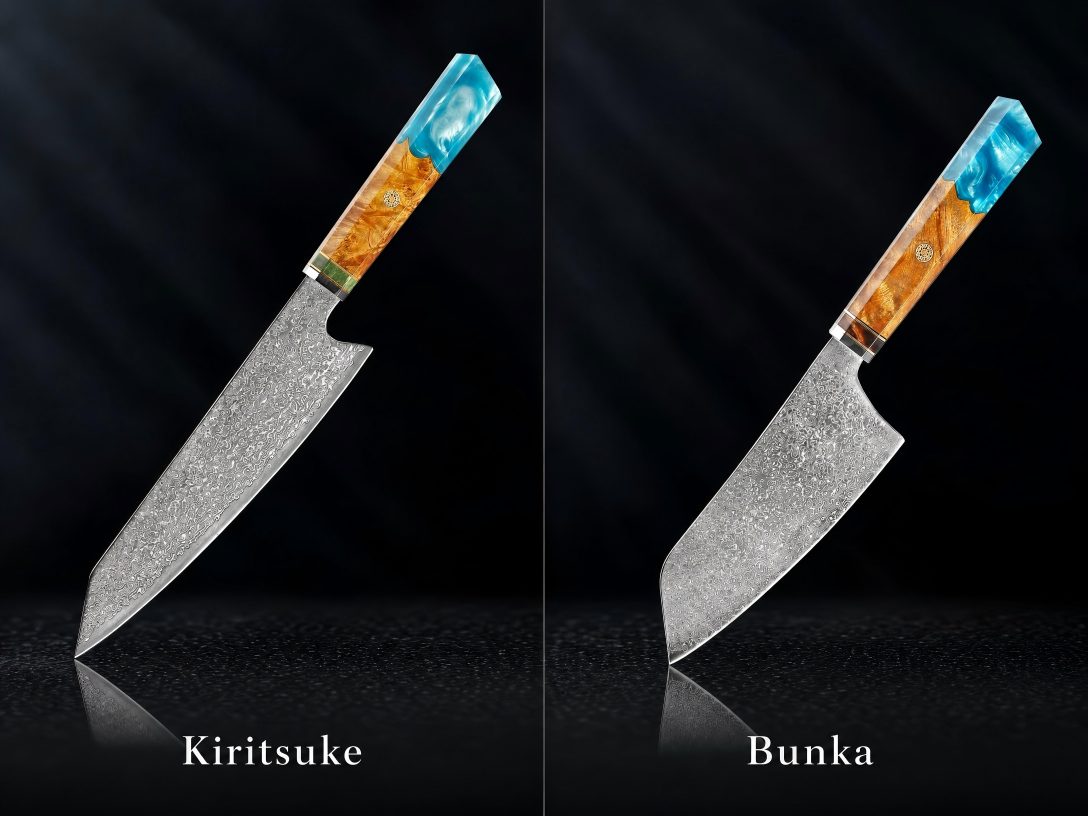
切付と文化は、の世界で最も認知度の高い形状の2つです 日本の包丁, 、どちらも印象的なKチップが特徴です。.
キリツケ 伝統的に片刃で、熟練した手のために作られた、長く力強いブレードを備えている。. 文化, 一方、両刃のコンパクトなオールラウンダーであり、次のような働きをする: 三徳 態度で.
このガイドでは、サイズ、面取りにおける本当の違いを詳しく解説します、, エッジプロファイル, 、カットのスタイルをご紹介し、それぞれの料理人にどの包丁が最適かを正確にお見せします。どの包丁があなたのお店に置く価値があるか、最後まで読んで確かめてください。.
切付 vs 文化 比較一覧
さらに詳しく見ていく前に、これら2本のKトップ(角型)日本包丁の簡単な比較をご紹介します。.
| 切付 | 文化 | |
|---|---|---|
| 起源 | 日本:薄刃と柳刃の伝統的なハイブリッド | 日本:先端の尖った三徳包丁のバリエーション(文化包丁) |
| 刃の長さ | 210 – 270 mm (8 – 10.5 インチ) | 165 – 190 mm (6.5 – 7.5 インチ) |
| 先端形状 | Kチップ(リバースタント) | Kチップ(リバースタント) |
| ベベル | 伝統的な片刃ですが、現代版は両刃です | ほとんどの場合両刃 |
| エッジプロファイル | 非常に平らで、引き締まったお腹 | わずかにお腹が出ているフラット |
| 刃の高さ | 適度 | 背が高く、50〜55 mm、ゆとりあるナックルクリアランス |
| 最適な用途 | 押し切り、スライシング、精密な先端作業 | 押し切りと刻み切り、万能な下ごしらえ |
| スキルレベル | 中級からプロフェッショナルまで | 初心者向け |
| 一般的な鋼材 | VG-10、SG2/R2、炭素鋼、60+ HRc | VG-10、AUS-10、SG2、60+ HRc |
| 価格帯 | $80 – $500+ | $40 – $300 |
切付包丁とは何ですか?
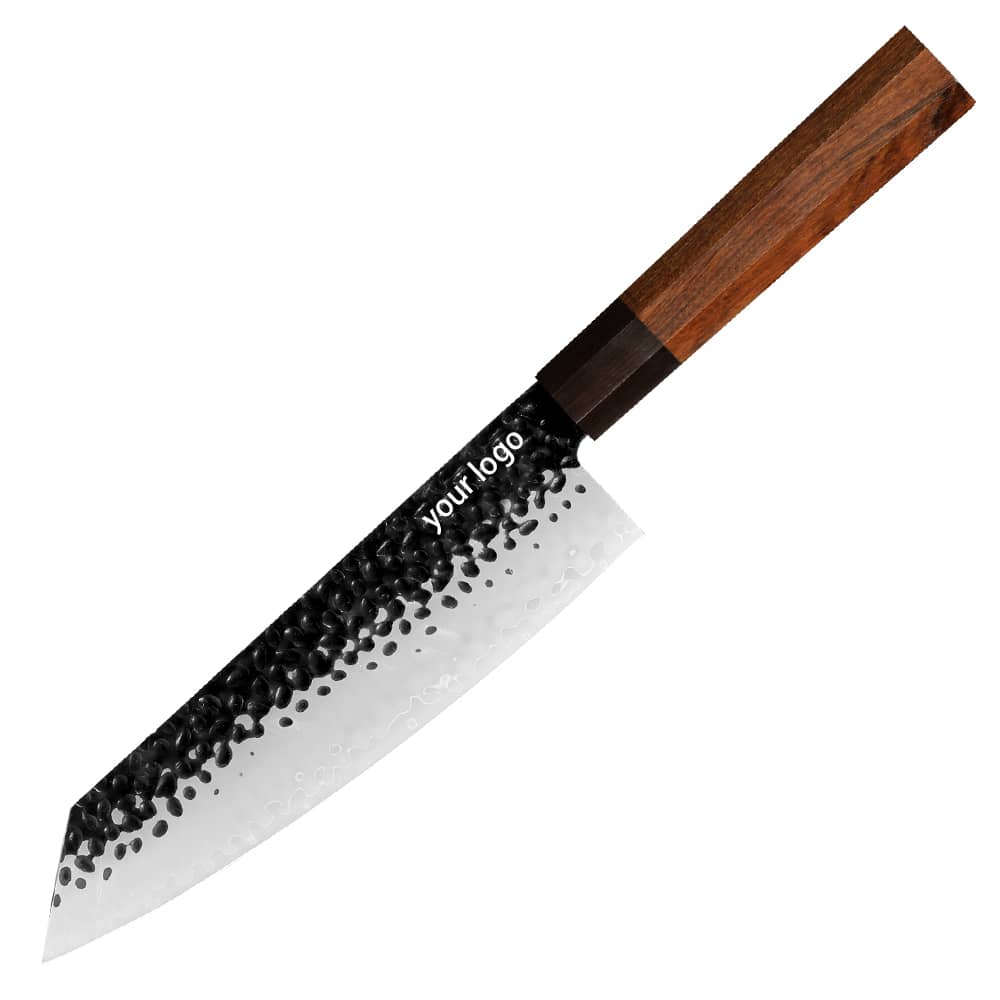
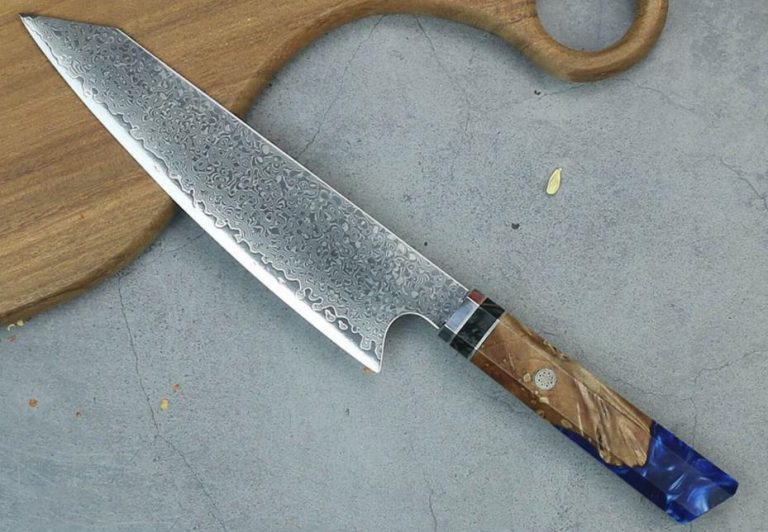
三枚打 八角ローズウッド和柄 切付 200 mm 槌目仕上げ
その きりつけ 日本発祥の最も特徴的なナイフブレードの形状の一つです。伝統的に、野菜用の直線的な薄刃包丁と、生魚をスライスするための長い柳刃包丁を融合させた片刃の包丁です。.
料理長しか使えないという古い規則は、事実というよりむしろ神話にすぎない。もっとも、片刃の研ぎには確かな技術が求められる。非対称な刃先が、切る際に包丁の方向を狂わせるからだ。.
現在目にするきりつけ包丁のほとんどは、この形状を現代風に両刃へとアレンジしたもので、本質的にはKチップ(逆伏形)です。 牛刀, 通常、長さは210〜240mmです。ドラマチックな見た目を保ちつつ、日本の和牛刀のように扱えるため、はるかに扱いやすくなっています。.
ブレードの歴史、鋼材の選択、そして販売方法についての詳細な解説は、専用の 切付ガイド.
文化とは何か
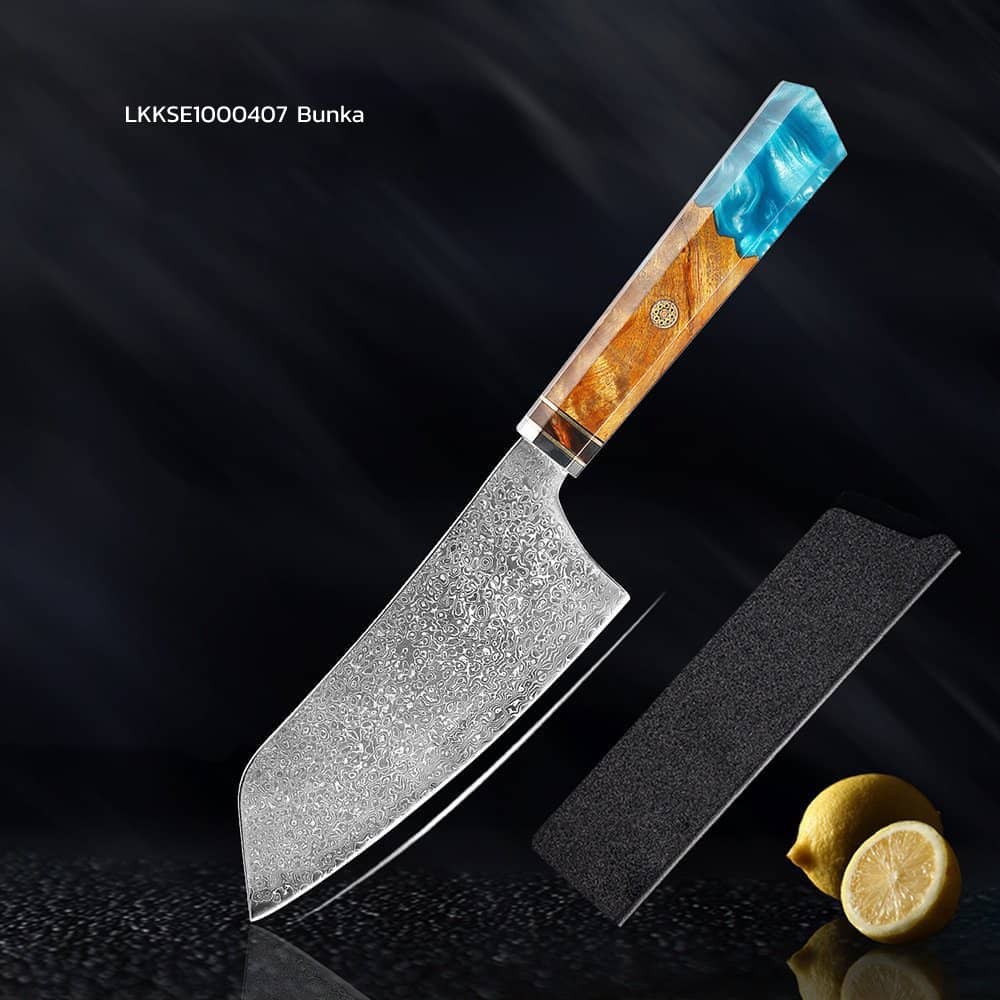
ダマスカス 10Cr15CoMoV 安定化木材 和柄ハンドル 包丁セット
文化は、 文化包丁 (「文化ナイフ」)は、本質的には切先(Kチップ)を接ぎ木した三徳包丁です。日本では、「文化包丁」と「三徳」という言葉はしばしば同義語として使われ、これら2つの包丁は同じDNAを共有しています。すなわち、肉、魚、野菜用の万能ツールとして設計された、コンパクトで身幅のある両刃のブレードです。.
文化包丁を際立たせているのは、通常、ヒール(根元)の高さが50〜55mmあるトールブレードと、あの角度のついたリバースタント(逆先丸)の先端の組み合わせです。この高さにより、調理人はまな板での作業時に指を十分に逃がすスペースを確保でき、一方で先端は、標準的な三徳包丁の先端では届かない細かい作業をこなします。.
文化包丁と三徳包丁、牛刀の違いを解説した完全版の家族写真は、当社の専用ページをご覧ください。 文化包丁 vs 三徳包丁 vs 牛刀の比較.
切付包丁と文化包丁の違い:主な特徴
表の数字が語るのは物語の一部に過ぎません。これら3つの違いこそが、料理人の手の中で包丁が実際にどう動くかを左右し、お客様が店舗に来店された際に抱く名称についての混乱の大半を説明してくれます。.
刃渡りと200mmの境界線
日本の包丁市場の公然の秘密ですが、現代の文化包丁と現代の切付包丁は、しばしば同じブレード形状のものが単に2つの名前で売られているだけです。.
非公式な境界線は、およそ200から210mmのあたりにあります。同じメーカーが、180mmのバージョンを文化包丁、210mmのバージョンを切付包丁と呼び分けており、デザインの変更は一切ありません。.
お客様への実践的なアドバイスは、名前ではなく、形とサイズで購入することです。もし誰かがKチップの見た目を気に入っているなら、唯一の本当の問題は、それをコンパクトな165〜180mmのサイズで欲しいか、それともフルレングスの210〜240mmのサイズで欲しいかということです。.
片刃 vs 両刃
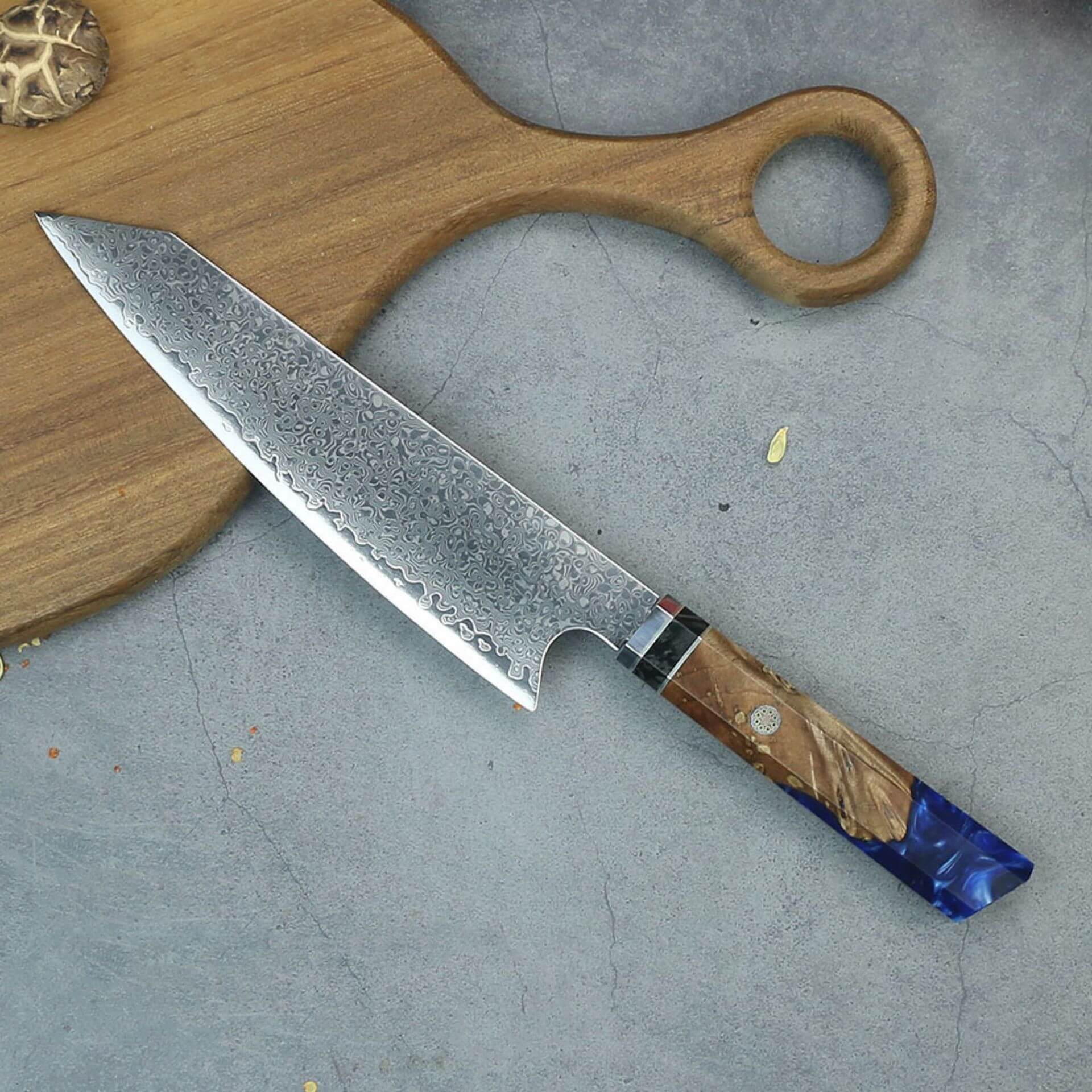
ダマスカス 10Cr15CoMoV 安定化木材 和柄 切付牛刀 205 mm
伝統的な切付包丁は 片面ベベル, ノミのように片側だけが研ぎ澄まされています。その形状により、驚くほどきれいに切れ、食材が楽に離れますが、片側に引き寄せられるため、使いこなすには慣れが必要です。また、ほとんどの場合右利き用であり、左利きのお客様にとっては重要な点となります。.
文化包丁やほぼすべての現代的なK-tip牛刀は両刃であり、通常は50対50または70対30のグラインドになっています。両刃はまっすぐ切れ、どんな砥石でも簡単に研げ、技術の未熟さをカバーしてくれます。.
小売りの品ぞろえに関して言えば、これが文化服(ぶんか)がより幅広い層に売れる最大の理由です。.
エッジの形状とブレードの高さ
切付は、お腹(刃の曲がり)が非常に少なく著しく平らな刃先を持ち、これが直下ろしの動作や押し切りに適しています。文化もかなり平らですが、ほとんどのモデルにはわずかなお腹と、はるかに背の高い(幅の広い)ブレードが備わっています。.
どちらのナイフも、通常は硬度60以上の硬い鋼材から研ぎ出されています。 ロックウェル硬度スケール, 、それが下準備の全工程を通じて平らな刃先を鋭利に保つ理由です。.
文化の高さには、さらに2つの役割があります。 それは素早い板前仕事の際に指の関節を保護し、特に槌目仕上げの場合において、スライスした野菜が離れやすくなる表面積を増やします。.
包丁使いのテクニック:押し切りか、アーク切り(刻み切り)か?
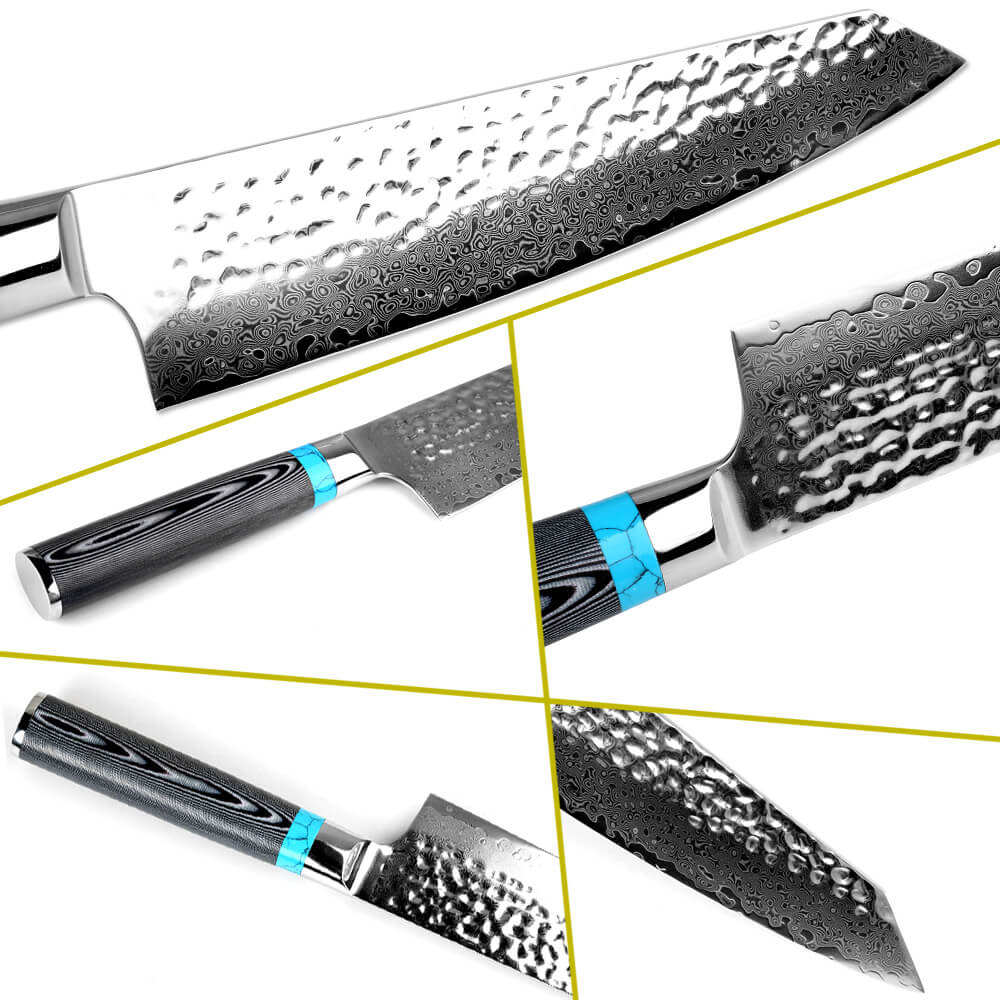
ダマスカスクラッド 10Cr15CoMoV G10ハンドル 切付牛刀 197mm 槌目仕上げ
キリツケと文化包丁の論争は、たった一つの質問でほとんど解決します:料理人は包丁を前後に揺らして切る(ロッキング法を使う)か?
ロック・チョッピング、すなわち先端をまな板につけたまま行う伝統的な西洋の動かし方には、湾曲した腹(刃先)が必要です。キリツケの平らなプロファイルは、その技法にとって最も不向きな包丁の一つであり、文化包丁でさえ緩やかなローリングを許容する程度です。ドイツ製包丁に慣れ親しんだ料理人であれば、その違いを即座に体感することでしょう。私たちが記事内で解説しているように、 日本製包丁とドイツ製包丁の比較ガイド.
どちらの包丁も、刃がまな板から完全に離れて真下に下ろされるプッシュカットやタップチョップに優れています。背が高く小回りの利く文化は、プロの厨房でのスピーディーな野菜の下ごしらえなど、このスタイルにおいてまさに働き者です。一方、切付はそのスピードの一部をリーチに譲り、魚、骨なし肉、大きな青果を通す長いスライスのストロークで輝きを放ちます。.
営業チームにとっての朗報: これらの包丁を求めるほとんどの家庭の料理人は、すでに押し切りや刻み切りをしています。顧客が何を買っているのかを理解している限り、平らなプロファイルは妥協点ではなく、セールスポイントです。.
LeeKnivesでカスタムナイフラインをより早く立ち上げましょう
設計から最終出荷まで、OEM/ODM の完全なサポートにより、成長に集中できます。
米国の倉庫に保管されているため、迅速で信頼性の高い配送が可能です。
Kチップ:実際の用途と本当の欠点
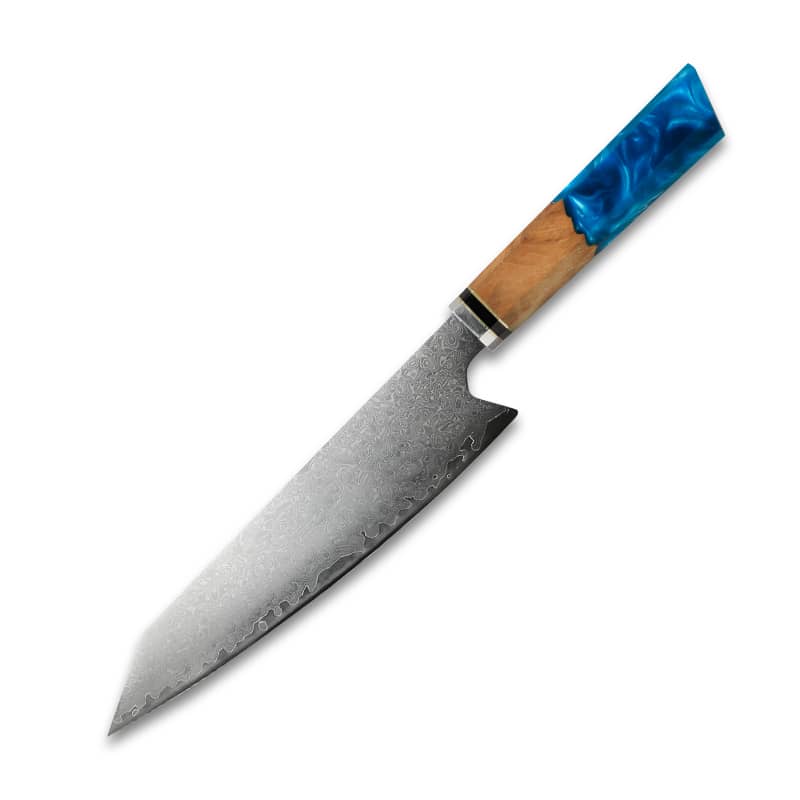
ダマスカス 9Cr18Mov 安定化木材 和ハンドル 切付牛刀 210 mm
角度のあるKチップこそが人々がこのナイフを買う理由であり、だからこそ真摯に検証する価値がある。熟練した手にかかれば、その鋭いチップは、丸みを帯びたチップでは扱いにくい作業に対してまるでメスのように機能する。
- スコアリング 調理前の鴨の皮、豚バラ肉、または魚
- トリミング 肉の銀皮と筋
- エビの背ワタ取り その他の精密タンパク質研究
- ピアスとディテールカット 付け合わせや飾り細工用
そして、ほとんどのレビューが触れていない点ですが、その先端は薄く、硬く、脆いのです。ナイフを落としたり、まな板の中で先端をひねったりすると、欠けることがあります。折れたKチップを直すには、砥石で数ミリもプロファイルを削り直す必要があり、それはブレードの形状を変えてしまうような、時間と熟練を要する作業です。.
Kチップナイフは、角度のついた先端によって実効リーチが延びるため、測定された長さよりも長く「感じられる」ことも、お客様にご了承いただく必要があります。.
これらはどれもその形状を避ける理由にはならず、販売時点で取り扱いの習慣を教え、顧客を適切なものへと導く理由になります 砥石研ぎ 繊細な先端を痛めつけるロールシャープナーの代わりに、.
切付か文化か:どちらを選ぶべきか?
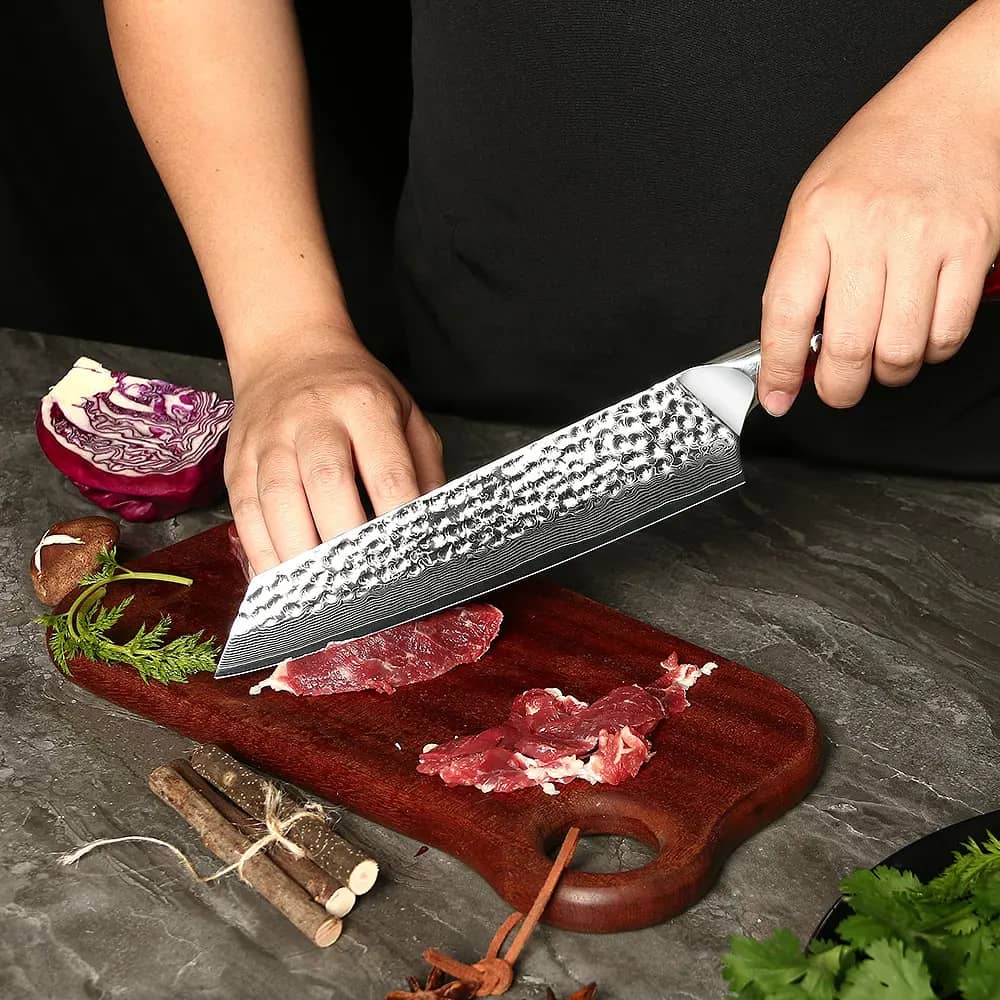
ダマスカス積層 10Cr15CoMoV 紫檀 切付牛刀 210 mm
この質問に答える最も手っ取り早い方法は、タスクごとに検討することです。顧客へのアドバイスを行う際は、このマトリックスを活用してください。.
| キッチンの作業 | より良いナイフ |
|---|---|
| 野菜の下ごしらえが素早くできる、押して刻むチョッパー | 文化 |
| 小さなキッチンと小さなまな板 | 文化 |
| 魚や骨なし肉を長く引いて切ること | 切付 |
| 鶏肉の解体 | 切付 |
| 細かい仕込み作業(切り込み、トリミング、背ワタ取り) | どちらでも — Kチップのアドバンテージは同等 |
| 岩石の切り出し | どちらでもありません。牛刀をおすすめします。 シェフナイフ |
| 初心者のための初めての日本製包丁 | 文化 |
| 愛好家のためのステートメントピース | 切付 |
顧客が1つしか買えない場合、決定打となるのは使用感とカットのスタイルです。初心者や普段自宅で料理をする人にとって、文化包丁はより高い価値をもたらします。短く、軽く、両刃で扱いやすく、三徳包丁がすでに担っている役割にそのまま当てはまります。.
自然なアップグレードの順序は、まず文化包丁、次に両刃のKチップ牛刀、そして最後に——本格的な伝統的体験を求める料理人のために——片刃の切付包丁となる。.
サイズもまた現実的な判断材料です。240mmの切付には大きなまな板と確かな包丁捌きが必要であり、狭いアパートのキッチンでは持て余してしまうことがあります。165〜180mmの文化包丁なら、ほとんどどんな場所にも適しています。.
鋼材については、ほとんどの文化包丁や現代の切付包丁に、以下のような硬いステンレス鋼が使用されています。 VG-10 または SG2 60+ HRcで、お客様はどちらの方法でも同じ優れた刃持ちを得ることができます — 私たちのガイドをご覧ください 包丁に最適な鋼 それらの選択肢を細かく分析する。.
ナイフ専門店にとって、これはどういう意味を持つのか
これら2本の包丁は、在庫の中で明らかに異なる役割を果たしています。文化包丁は売れ筋の定番であり、三徳包丁の使用者へのスムーズな提案、初めての日本製の包丁として親しみやすい選択肢、そして牛刀の隣に自然に追加される1本となります。狭いキッチンや自信を持った料理人に対応できるよう、165mmと180mmの両方のサイズを取り揃えてください。.
切付は利益率の高い商品です。基本の包丁をすでに持っている愛好家に対して、見た目や憧れで売れるものです。また、両刃のKトップ(切付型)牛刀は、家庭料理市場においては伝統的な片刃のものを何度も上回る売上を記録するでしょう。片刃の切付を仕入れるのは、顧客に現役の料理人や真剣なコレクターが含まれる場合のみにしてください。.
LeeKnivesでナイフのラインナップを充実させよう
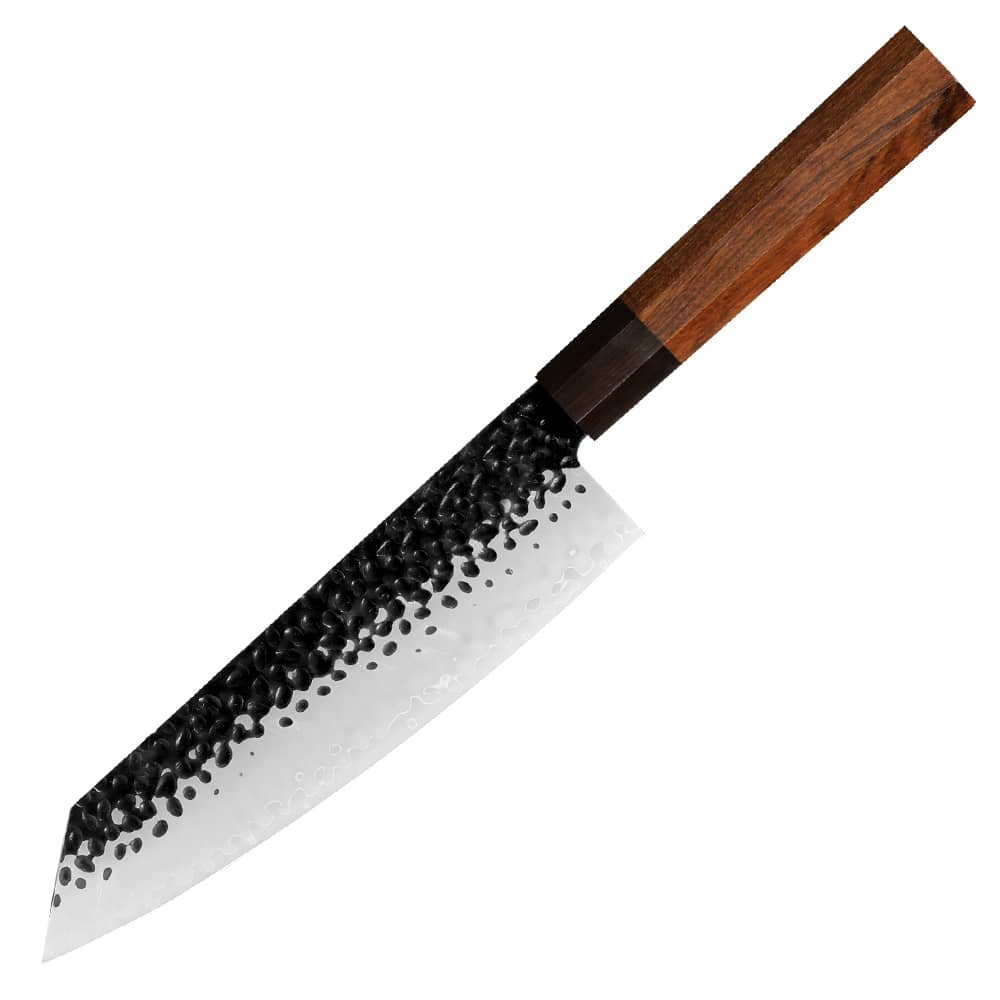
三枚打 八角ローズウッド和柄 切付 200 mm 槌目仕上げ
キリツケとぶんかの比較は、長さと経験値の違いに集約されます。小売業者にとって、これは朗報です。これら2つの形状は1つのデザインプラットフォーム、つまり同じKチップのプロファイル、同じ鋼材、同じハンドルの選択肢を共有しており、単に165mmから240mmまでサイズ展開されています。.
そのため、この2本は、コレクションとして揃えるのに最も手軽な日本の包丁の組み合わせの一つと言えます。文化包丁がエントリーモデルとして、切り付け包丁がプレミアムモデルとして、それぞれコレクションの基盤となるからです。.
LeeKnives 30年以上かけて作り上げてきた 包丁 で 揚子江市, そして現在、私たちは北米の小売業者や卸売業者を支援し、このような形状を販売可能な商品ラインへと変えています。.
自社ブランド用に手頃な価格の文化包丁シリーズ、プレミアムな切付包丁のラインナップ、あるいはKチップのセットをお探しの場合でも、弊社は OEM そして ODM チームは、ブレードの形状や鋼材の選定からブランド化されたパッケージに至るまで、あらゆる工程を手がけています。.
Kチップ包丁をカタログに追加する準備はできましたか? LeeKnivesから無料見積もりを依頼 — ご希望の仕様と価格帯をお知らせいただければ、当社の営業チームがサンプルと 卸売 あなたの市場に合わせたプラン.
LeeKnivesでカスタムナイフラインをより早く立ち上げましょう
設計から最終出荷まで、OEM/ODM の完全なサポートにより、成長に集中できます。
米国の倉庫に保管されているため、迅速で信頼性の高い配送が可能です。
よくある質問
牛刀を持っていれば、文化包丁は必要ですか?
必ずしもそうとは限りません。牛刀(ギュート)はすでに汎用的な下ごしらえをカバーしており、文化包丁(ブンカ)の用途はそれと大きく重複しています。文化包丁が重宝されるのは、指を挟まないよう刃先が立ち上がった形状と、細かい作業に適したK字型の刃先を備えているからです。多くの料理人は、手早く済ませたい作業には文化包丁を使い、大きな食材の処理には牛刀を使うという使い分けをしています。.
文化包丁はどのサイズが一番おすすめですか?
多くの家庭料理人にとって、165mmは絶妙なサイズです:取り回しが良く、まな板使いしやすく、威圧感がありません。手が大きい料理人や、より大きな まな板 多くの場合、180 mmが好まれる。これにより、ブンカのコンパクトな特徴を損なうことなくリーチを伸ばすことができるからだ。.
お客様には、まな板に合わせて刃の長さを選ぶようアドバイスしてください。ナイフの長さは、まな板の深さを超えてはいけません。.
切付と牛刀の違いは何ですか?
現代の切付は、本質的にはKティップ(逆武形)を備えた牛刀であり、刃渡りや両刃のグラインドは同じです。違いは、細かい作業のための角度がついた切先、よりフラットな刃のプロファイル、そしてその名前が持つ伝統的な片刃の系譜です。.
文化包丁と三徳包丁のどちらにすべきですか?
文化包丁は三徳包丁のバリエーションなので、選ぶ際のポイントは主に先端の形状になります。お客様が切り込みを入れる、端を切り落とす、突き通すといった細かい作業をされる場合、文化包丁のKチップ(クリップポイント)は実に重宝します。.
もっともシンプルで実績のある万能包丁を望むなら、定番の三徳包丁に勝るものはありません。弊社の 三徳包丁と菜切包丁の比較 三徳包丁のファミリーについてより詳しく解説しています。.
文化包丁で骨を切ることはできますか?
いいえ。ほとんどの硬い日本の包丁と同様に、文化包丁は60以上の硬度(HRc)を持つ薄くて硬い鋼を使用しているため、骨、冷凍食品、または種に当たると欠けます。.
文化包丁は骨なしの肉、魚、野菜を美しく切ることができますが、骨のあるものに対しては、お客様は中華包丁や西洋の骨スキ包丁を使うべきです。.
文化包丁はその価格に見合う価値がありますか?
はい、腕の良い料理人ならの話ですが。$60~$150の範囲で丁寧に作られた「ブンカ」は、価格の2倍もする包丁と同等の硬鋼の切れ味を発揮し、その形状はまな板での作業を格段にスムーズにしてくれます。.
$30以下の非常に安価なブンカは、鋼材が軟らかかったり研ぎが粗かったりすることが多いため、顧客には評判の良いメーカーの製品、あるいは熱処理が確認済みの工場直販の製品を勧めるようにしましょう。.
切付包丁はステーキに適していますか?
切付包丁は調理済みのステーキをきれいにスライスし、その姿もドラマチックですが、ステーキ専門の包丁ではありません。その長く平らな刃は、テーブル用ではなく、まな板での作業や魚を切るために設計されています。.
テーブルでステーキを切るために、お客様は専用の ステーキナイフ; キッチンで休ませたロースト肉をスライスするのには、切付包丁が実によく機能します。.




 JA
JA  EN
EN  DE
DE