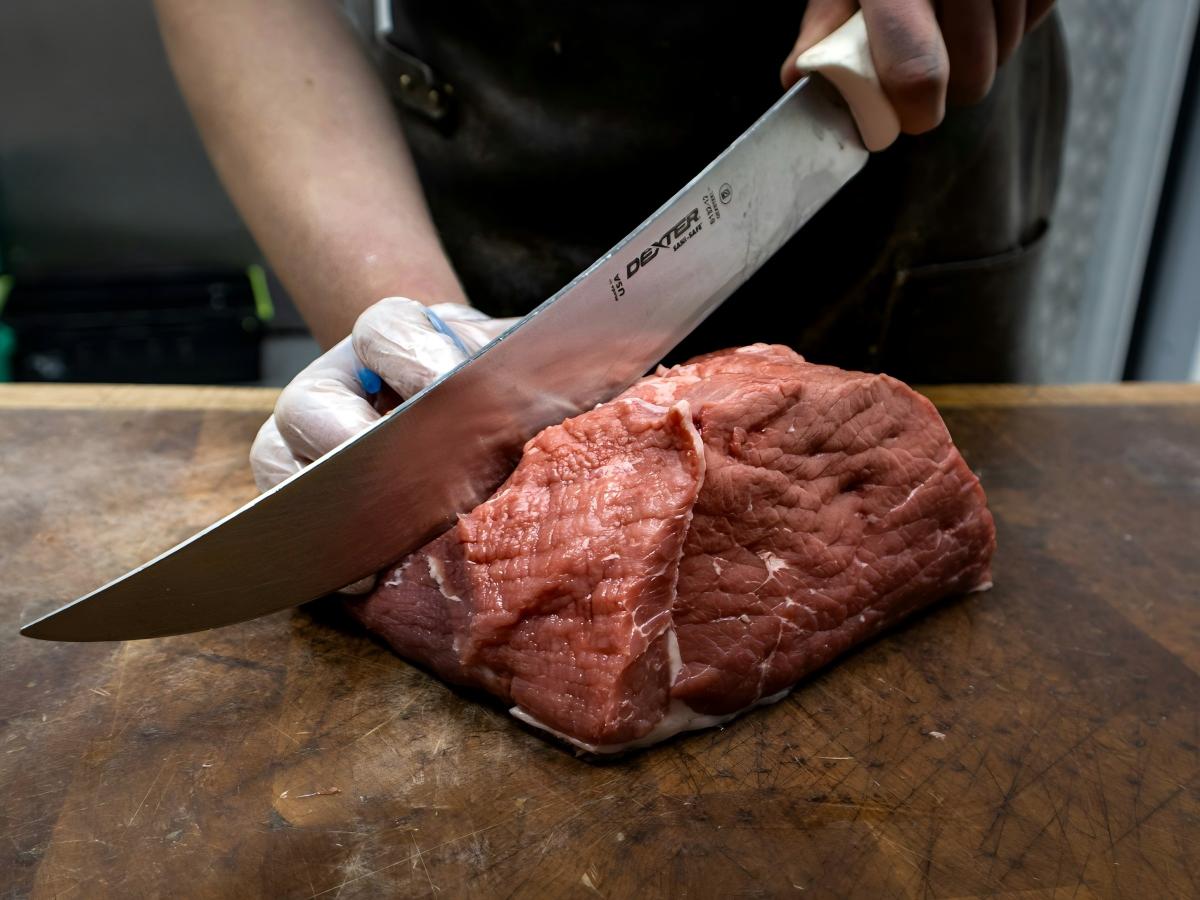
ブッチャーナイフとクリーバー(中華包丁)の疑問は、他のどの包丁の組み合わせよりも多くの買い手を悩ませます。どちらも肉用に作られた大きな刃ですが、一方は鋭さで、もう一方は重さで作業します。.
核心的な違いは、それぞれの包丁が何を切るかという点にあります。ブッチャーナイフは、リブアイロールをステーキ用に切り分けたりブリスケットをトリミングしたりといった、軟組織の作業用の長くて湾曲したスライサーです。一方、中華包丁(クリーバー)は、スペアリブを切り分けたり丸鶏を解体したりといった、硬組織の作業用の幅広で重いチョッパーです。.
このガイドでは、デザイン、重量、刃のジオメトリ、切れ味、価格の観点から2本のナイフを比較し、中華包丁が実際にどのような骨に対処できるのかを明らかにします。この対決がお客様とあなたの在庫にとって何を意味するのか、ぜひ読み進めて確かめてください。.
ブッチャーナイフとクリーバーの違い(一目でわかる比較)
以下の比較表では、ブッチャーナイフとクリーバーの主要な仕様を並べて比較しています。.
| 肉切り包丁 | クリーバー | |
|---|---|---|
| 主な役割 | 大きな肉の塊のスライス、トリミング、ポーション分け | 関節、軟骨、骨を切り裂く |
| ブレードの形状 | 細長くて曲がったお腹 | 小さな手斧のような、幅の広い長方形の刃 |
| 刃の長さ | 8 – 14インチ(8 – 10インチが一般的) | 6〜8インチ |
| 重さ | 8~15オンス | 450〜900g (450〜900g) |
| エッジ角度 | 片側約15度、非常に鋭い | 片側20〜25度、意図的に鈍角 |
| 切断動作 | 長引き切り、製材、トリミング | 制御された持ち上げて落とす刻み切り |
| その仕事は何をしますか | 切れ味と刃渡り | 重量と運動量 |
| 価格帯 | $25 – $140 | $20 – $120 |
パターンは簡単に覚えられます。ブッチャーナイフはスケールアップしたメスであり、クリーバーは刃のついたハンマーです。このガイドのその他の内容はすべて、その一つの違いから導き出されます。.
ブッチャーナイフとは何ですか?
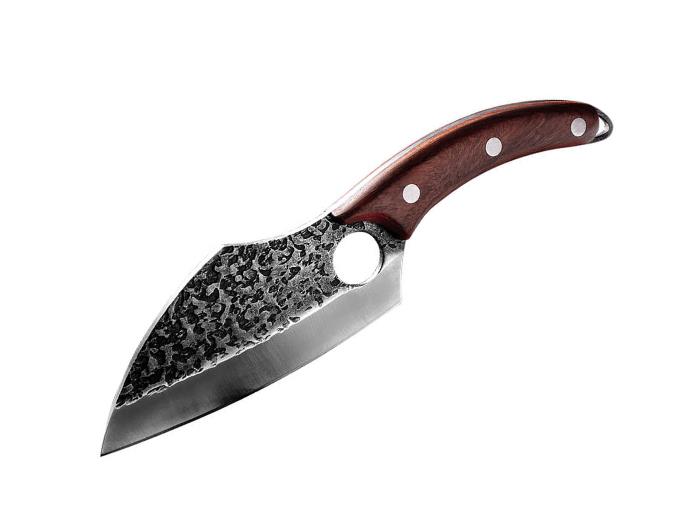
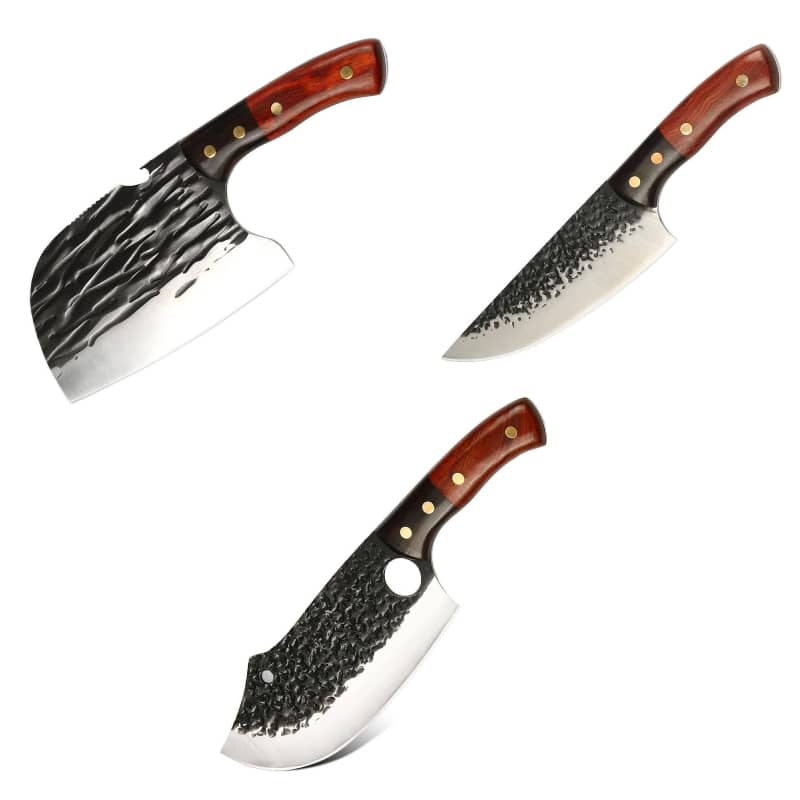
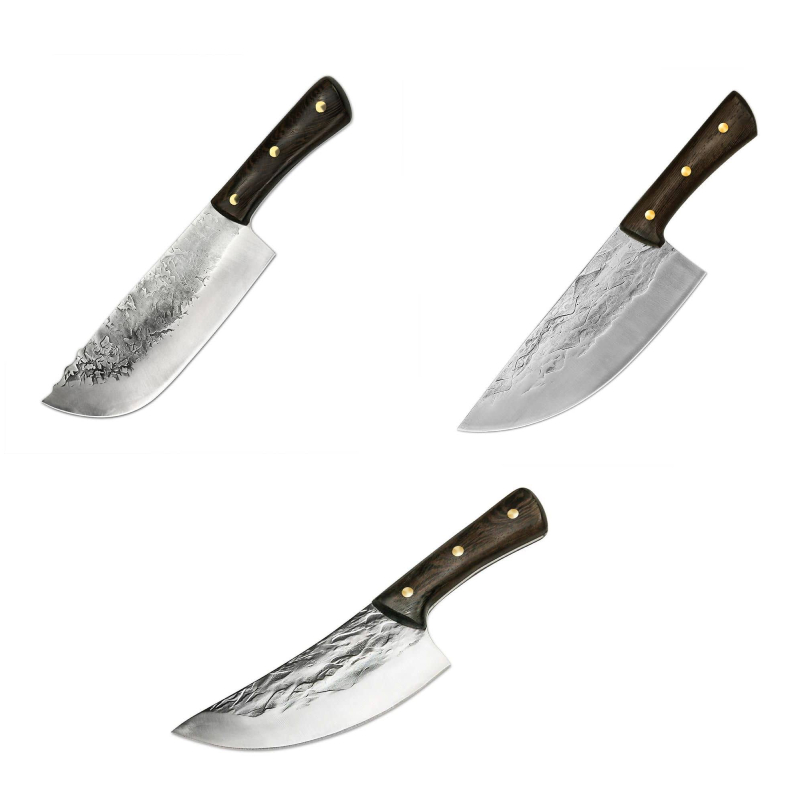
5Cr15 木製ハンドル 肉切りナイフ 146 mm 槌目仕上げ
あ 肉切り包丁 大きな塊の肉を販売用の切り身に加工するという、短くまっすぐな刃では疲弊してしまうような作業をこなすために作られた、長く湾曲した刃物です。.
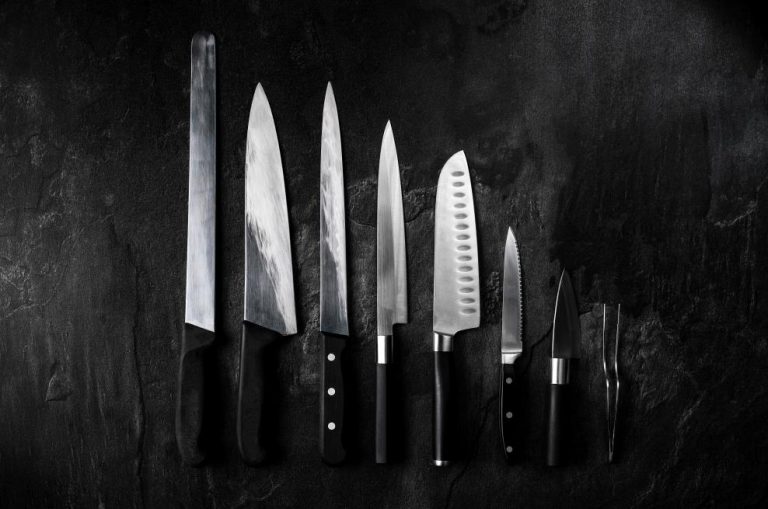
その名は、小さな働き盛りの家族を対象としています: ブレイキングナイフ 枝肉を裂く、より幅広い シミター 大きな筋肉の部分とコンパクトな 骨抜きナイフ 骨や関節の周りを処理する。職人の肉屋はこれを一つのキットとして使用している。 シャープニングスティック 入手済み.
長所:
- 長いリーチ: 1つのきれいな引き切りで大きな原木肉を切り分ける。.
- 正確なエッジ 約15度の研ぎによる刃は、筋肉、脂肪、そして銀皮を滑らかに切り裂いていく。.
- 一日中快適: 軽量さと優れたハンドルのバランスにより、疲労を軽減します。.
短所:
- ボーン作業なし: 軟骨よりも硬いものに当たると、薄い刃先は巻き上がったり欠けたりする。.
- ボードの上では不器用: 刻み仕事や細かい先端作業には長すぎて曲がりすぎている。.
- 専門家のみ: 顧客が定期的に肉を加工しない限り、ほこりを被るだけになる。.
中華包丁とは何ですか
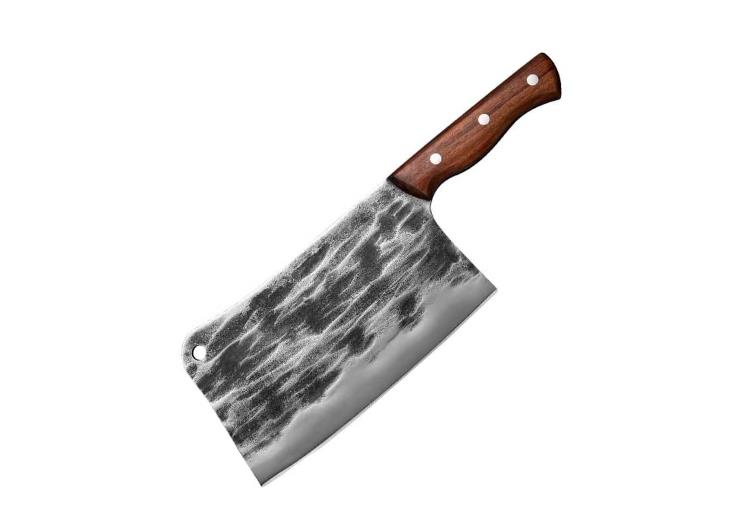
肉切り包丁は、スライスではなく「断ち切る」ために設計された、幅広で重い長方形の刃を持つ道具です。その威力は、鋭い刃先というよりも、重量と勢いから生まれます。.
ほとんどのガイドが省いている1つの違い: “「クリーバー」という言葉は、全く異なる2つの道具を指しています。.
- 西洋 肉切り包丁 関節、肋骨、家禽の骨を断つための、背が厚く重量のあるチョッパー。刃先は意図的に鈍く研がれている。.
- 中華包丁 (菜刀、または「中華包丁」) —見た目は似ていますが、薄くて軽く、野菜や骨なし肉のスライス用です。繊細な刃は骨にあたると欠けます。.
この記事において、「cleaver」とは西洋のミート・クリーバー(肉切り包丁)を意味します —下にある肉切り包丁と比較した刃。中華包丁と混同することが、このカテゴリーで最もよくある購入時の間違いです。.
長所:
- 骨組みですぐに使えるパワー: 1〜2ポンドの重みが、鶏の骨や肋骨をきれいに断ち切ります。.
- 寛容なエッジ 鋭角ではない20〜25度のグラインドはハードな接触に耐え、鋼材はすぐに元の状態に戻る。.
- 交換費用が安い: 業務用モデルは$35~$40の範囲で動作し、長年にわたる過酷な使用にも耐えます。.
短所:
- 重くて疲れる 手首の疲労がすぐに訪れる――短時間の高負荷な作業に特化した専門機。.
- 粗切りのみ: 厚すぎて先が丸いため、スライスやトリミング、細かい作業には不向きです。.
- 厄介なメンテナンス: ほとんどのシャープナーや包丁スタンドには高すぎます。.
ブッチャーナイフとクリーバー:主な違い
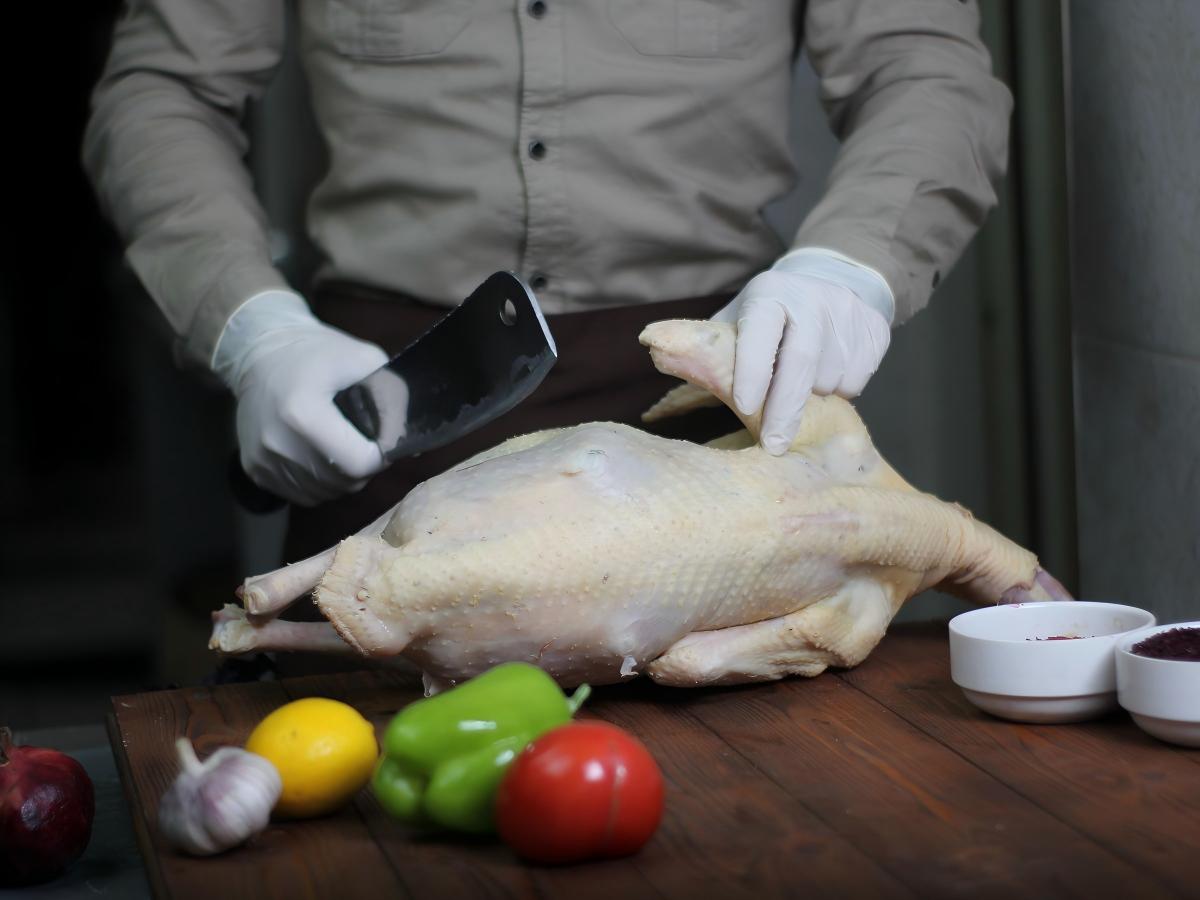
どちらのナイフも肉を扱いますが、設計上の相反するトレードオフに基づいて作られています。以下の違いはすべて、中核となる機能における1つの分岐にさかのぼるため、まずそれを明確にしておく価値があります。.
コア機能
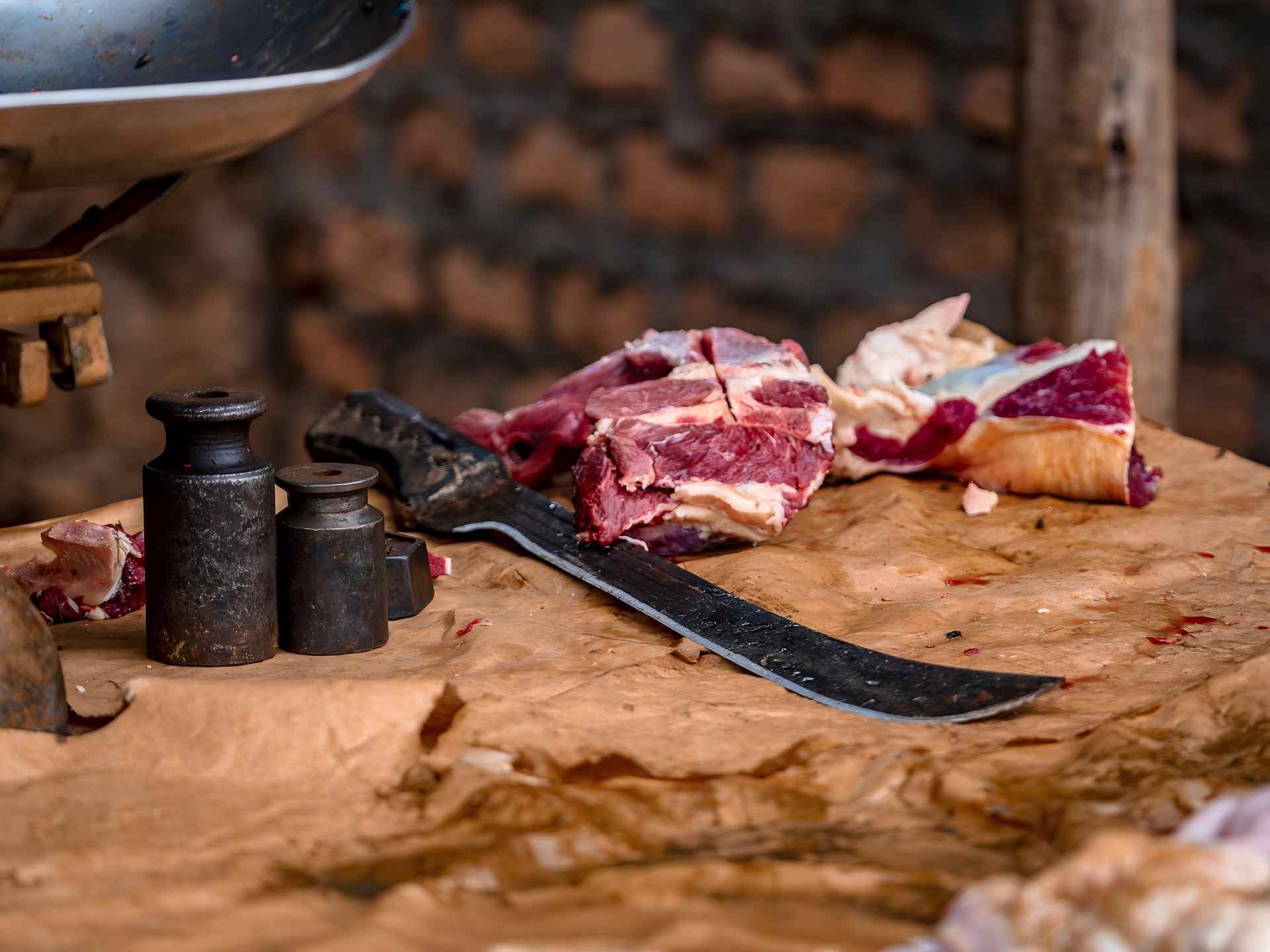
肉切り包丁は作るために存在する 軟部組織への施術が効率的 — リブアイロールをステーキに切り分ける、ブリスケットの脂肪層を切り落とす、あるいは豚ロースの銀皮を剥がすといった作業。包丁は、こうした作業を容易にするために存在するのです。 硬組織への処置に耐えられる —スペアリブの切り分け、鶏の背骨の刻み、または鴨の関節外し。.
役割を逆転させると、どちらの包丁もすぐに使い物にならなくなる。包丁はリブアイステーキをスライスするどころか、切り裂いてしまう。一方、肉切り包丁は、肋骨に当たった瞬間に刃先が丸まったり欠けたりしてしまう。どちらの包丁も互いの代わりにはなれない――肉を日常的に扱う人なら、結局は両方を揃えることになる。.
ブレードの形状と長さ
一般的な購入者にとって、肉切り包丁の長さは8~10インチが主流ですが、シメター型のものは14インチに達することもあります。この長さは、大きな塊肉をまたいで切れるように設計されており、リブアイロールを1回の滑らかな引き切りで切り分けることができます。また、刃の腹部が深い構造になっているため、切り進める間ずっと刃先が肉に密着した状態を保つことができます。.
中華包丁ははるかに短く(通常6〜8インチ)、刃から背までの高さがはるかにあります。その高さがブレードに質量を加え、指関節がまな板に当たらないようにし、チョッパーに特徴的なテコの作用を与えます。.
重量とバランス
重量の面で、2本のナイフの道は大きく分かれます。ブッチャナイフの重量は8〜15オンス(約227〜425グラム)で、長時間のスライス作業でもコントロールしやすいよう、重心は柄の近くにあります。一方、ミートクリーバーの重量は1〜2ポンド(約450〜900グラム)もあり、その重さこそがこのナイフの存在意義そのものです。.
包丁職人や肉屋が口を揃えて言うように、包丁の威力の大部分は「切れ味」ではなく「勢い」によるものです。刃を高く持ち上げ、重力の力を利用して切り下ろす――制御された「持ち上げて落とす」動作であり、決して乱暴に振り下ろすようなことはしません。.
代償は疲労であり、フォーラムのユーザーたちはそれについて絶えず警告している。フルサイズの菜刀を使った作業は、どんな薄刃包丁よりもはるかに早く手首を疲れさせるのだ。.
刃の角度と鋭さ
肉切り包丁は、一日中柔らかい組織を切るため、片側あたり約15°に研がれており、剃刀のように鋭い切れ味を持っています。一方、包丁は片側あたり20~25°に研がれており、スライサーと比べると切れ味が鈍く見えますが、より鋭い刃先なら折れたり欠けたりしてしまうような骨との接触にも耐えることができます。.
肉切り包丁の鋭い刃先は、ほとんど力を入れずに肉を滑るように切っていく。刃そのものが仕事をしてくれるのだ。一方、中華包丁の鈍角な刃は、スライスするというよりは軟部組織を押しつぶしてしまうが、全体重を乗せた打ち下ろしでは割り楔(くさび)のように働き、しかもより早く研ぎ上がり、未熟な技量をも受け入れてくれる。.
ブレード材質
鋼材の選定も同様の理屈に基づいています。市販の肉切り包丁には、ドイツ式のステンレス鋼が採用されており、例えば X50CrMoV15 (1.4116) 55~58の ロックウェル硬度スケール; クリーバーはさらに柔らかく、多くの場合420シリーズや 3Cr13/4Cr13.
どちらのナイフにも、 転がった エッジはわずか数秒で再び立ち上がり、その一方で 欠けた 1つは金属を削り落とすことなので、箱に書かれた鋼材の名前よりも、形状と熱処理の方が重要です。.
食肉加工は水分や酸を多く扱う作業であるため、ステンレスが主流となっています。. 炭素鋼 美しく研げるが、手入れが大変――ガイドはこちら: 包丁に最適な鋼 トレードオフについて。.
切断アクション
この肉切り包丁は、吊り下げられた牛の半身や、広げたプライマル、分厚い脂肪層を、長く滑らかな引き切りで切り分けることができます。また、必要に応じて、結合組織を鋸のように切り分けたり、軟骨や小さな関節を力強く切り裂いたりすることも可能です。.
中華包丁は垂直に動かします:持ち上げ、振り下ろし、繰り返す。その動きは、薄切りにするというよりは薪を割る感覚に近く、力よりも技術が重要となります。うまく狙いを定めた適度な一撃は、力任せで雑な一撃にいつでも勝ります。.
価格
どちらのカテゴリーも実用本位の市場であり、高価なものが必ずしも優れているとは限りません。業務用包丁の価格は$25~$60程度で、デクスター・ラッセル社の「サニ・セーフ 7インチ」 (約$35)やマーサーの8インチ(約$40)といった業務用包丁は、業界の定説となっています。安価で耐久性があり、摩耗したら大切に扱うのではなく、買い替えるのが一般的です。.
$80~$140の価格帯には、高級な鍛造の包丁や肉切り包丁が存在し、その外観やブランド力を売りに販売されていますが、実際に使用する購入者の圧倒的多数は、プレス成形の業務用モデルを選んでいます。.
小売業者にとって、それはこのカテゴリーをプレステージではなく、利益率、販売数量、そして買い替えサイクルに関するものにする。.
LeeKnivesでカスタムナイフラインをより早く立ち上げましょう
設計から最終出荷まで、OEM/ODM の完全なサポートにより、成長に集中できます。
米国の倉庫に保管されているため、迅速で信頼性の高い配送が可能です。
どのタスクがどのナイフに属するか
ブッチャーナイフとクリーバーの疑問を解決する一番手っ取り早い方法は、作業ごとに判断することです。カウンターで顧客にアドバイスする際は、このマトリックスを使用してください。.
| キッチンの作業 | より良いツール |
|---|---|
| ブロック肉をステーキやロースト用に切り分けること | 肉切り包丁 |
| 脂身と筋を取り除く | 肉切り包丁 |
| 調理したブリスケットやロースト肉のスライス | 肉切り包丁 |
| 丸ごとの鶏肉を解体する | 骨スキ包丁(牛刀でも代用可) |
| 家禽の骨や肋骨を断ち切る | クリーバー |
| スペポークスペアリブを切り分ける | クリーバー |
| 野菜の下処理と炒め用スライス | 中華包丁 ない 肉きり包丁 |
| 牛や豚の大腿骨/骨髄骨を切断する | どちらでもない——骨のこぎりを使え |
最後の行は、このカテゴリにおいて最もコストがかかる誤解であるため、強調するに値する。.
西洋型の肉切り包丁は、鶏肉、鴨、骨付き肉、その他同等の中小規模の骨を楽に扱えます。. 牛や豚の大腿骨、あるいは大きな骨髄骨は取り扱っていません。 —端の欠けた部分やブレードのスケートで、これらによって手が怪我をするのです。.
最も太い骨には骨のこぎりが適切な道具であり、専門の精肉店ではのこぎりやバンドソーを使ってそれらの骨を処理します。.
経験豊富な家庭用加工業者による、確かな裏技: 時折あるような硬い関節には、切断線に包丁を置き、木槌で背を叩いてください。強く振り下ろさずに、コントロールされた力を加えることができます。効果はありますが、これはあくまで一時的な対処法であり、大腿骨を切り刻んでよいという許可ではありません。.
どちらを選ぶべきか?購入ガイド
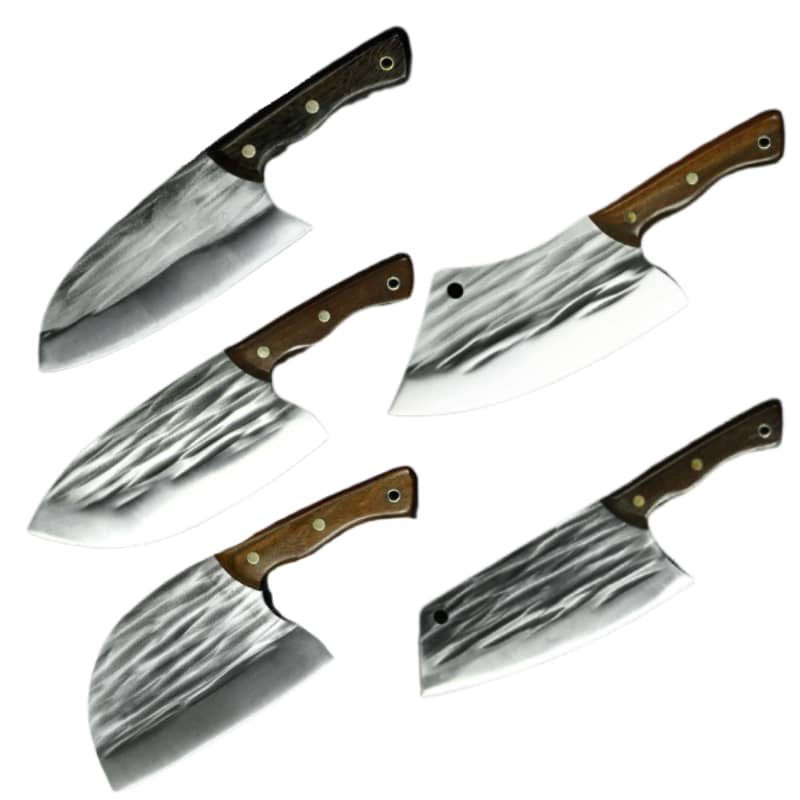
定期的に食肉を加工するお客様にとって、正直な答えは 両方 それらは代替品ではなく、補完し合うものです。プロの肉屋は常にそれらを併用してきました。筋肉にはスライサーを、関節や骨にはチョッパーを使います。.
1点のみご購入されるお客様には、簡単な周波数テストを適用してください:
- 丸ごとの鶏肉、スペアリブ、骨付き豚肉を定期的に買いますか? 肉切り包丁は、よりきれいな切り口とナイフの刃の節約によって、その価値を十分に発揮します。.
- 毎月、塊肉を切り分け、ブリスケットをトリミングし、あるいはジビエの処理をしますか? 肉切り包丁が先だ。.
- どちらでもないが、アジア料理をよく作る? 代わりに中華包丁を勧めてください――ただし、骨を切るためのものではないことを必ず理解させてください。.
実際のユーザーからの苦情に基づく、伝える価値のある2つの実用的な警告。.
まず、, ウエイト疲労は本当に存在する2ポンド(約900g)の中華包丁は、一日の長きにわたる作業用の包丁ではなく、短時間の重労働に向けた専門的な道具である。.
第二に、, 中華包丁は、ほとんどの簡易シャープナーや電動シャープナーに合いません。 —そのブレードは単に高さがありすぎます。標準的なアドバイスとしては、置き型の砥石を使うか、定期的なプロによる研ぎに出すことであり、これは販売時に説明する価値があります。.
ナイフ専門店にとって、これはどういう意味を持つのか
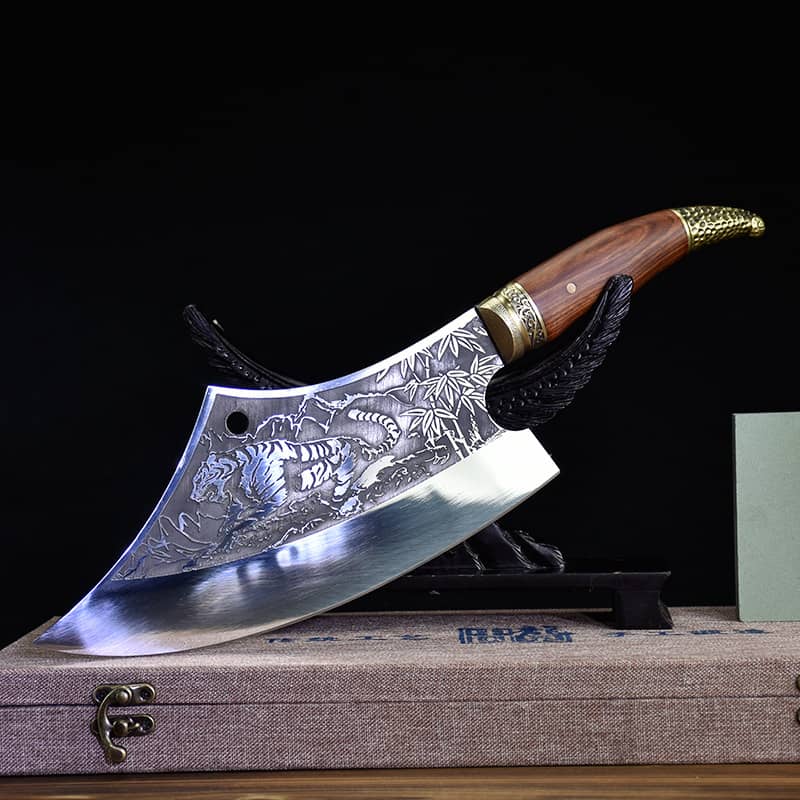
7Cr17MoV ローズウッド 手鍛造 タイガー クリーバー 270 mm
これら2つのナイフは、インベントリ内で異なる役割を果たします。ブッチャーナイフの仲間である、ブレイキングナイフ、シミター、そして 骨抜き 精肉店、食肉加工業者、BBQレストラン、ハンター、本格的な自家製加工愛好家など、購買意欲の非常に高い、厳選された買い手層にアプローチできます。.
こうした買い手は、ハンドルの握り心地、ブレードの長さ、再研磨について専門的な質問をし、ブランドではなく仕様を見て購入します。.
肉切り包丁は、絶対に一緒にマーチャンダイジング(陳列・販売)してはならない2つの異なるサブインベントリに分かれています。西洋の 肉切り包丁 外食産業向けのアカウントにおける買い替えサイクルの商品であり、そこでは滑りにくいNSFスタイルの ハンドル そして硬度55〜58 HRcの素直なステンレス鋼は、どんな時でもエキゾチック・スティール(特殊鋼)を凌駕します。.
中華包丁 アジア料理に対する西欧の高まる関心に乗じて、異なる期待を持つまったく新しい顧客層である家庭の料理人に販売する.
このカテゴリにおける3つの在庫管理の原則:
- 食肉加工においては、鋼鉄よりも握力が勝る。. 濡れて油っぽい手では、滑らかな丸みを帯びた柄が中華包丁のレビューで最大の安全上の不満点となっています。質感のある滑りにくい柄は、厳格な仕様要件であるべきです。.
- 商業バイヤーは安価で交換可能なものを選びます。. $35~$40のレストラン仕様の包丁が市場を席巻しているのには理由がある――その価格帯に合わせて仕入れれば、高価格帯のSKUではなく、利益率で勝てるのだ。.
- 違いを見極めるための教育. 肉たたき(ミートクレーバー)と中華包丁の違い、そして骨切り用ノコギリとの境界線を説明してくれる店は、大型量販店には真似できない信頼感を築き上げる。.
LeeKnivesの肉屋用ナイフと包丁を仕入れる
1本の包丁はスライスし、もう1本の包丁は刻む。そしてその違いを理解する顧客は、両方を買うのだ。.
ブッチャーナイフシリーズは、食肉加工業者、バーベキュー店、ハンター向けの購買意欲の高い専門家向けラインであり、一方、肉切り包丁は、フードサービス向けの西洋式骨切り包丁という、明確に分けられた2つの製品として陳列するのが最も効果的です。, 中華包丁 家庭の料理人向け.
刃物産業の都である中国・陽江市に位置し、30年以上の製刀実績を持つナイフ工場として、, LeeKnives 両方のカテゴリーを商業用仕様で構築:テクスチャー加工された滑り止めハンドル、信頼できる実用的な鋼材、そして実際の食肉加工用に調整されたエッジジオメトリー。.
私たちの OEM そして ODM サービスは、鋼材の選定やブレードのプロファイルからブランド化されたパッケージングまで多岐にわたっており、当社の既製デザインから始めることができます。 手作り包丁カタログ または起動する プライベートブランド商品 自分の.
ターゲットの仕様と価格帯をお知らせいただければ、サンプルと卸売プランをご提案いたします。. LeeKnivesから無料見積もりを依頼 始めましょう。
LeeKnivesでカスタムナイフラインをより早く立ち上げましょう
設計から最終出荷まで、OEM/ODM の完全なサポートにより、成長に集中できます。
米国の倉庫に保管されているため、迅速で信頼性の高い配送が可能です。
よくある質問
中華包丁は肉切り包丁ですか?
厳密に言えばその通りです。「ブッチャーナイフ」は食肉処理業で使われる包丁の総称であり、ミートクリーバーはその一種です。つまり、すべてのクリーバーは食肉処理用の道具ですが、すべてのブッチャーナイフがクリーバーであるわけではありません。.
しかし、日常の買い物用語では、「ブッチャー・ナイフ」は通常、細長い反り返ったスライサーを指し、まさにそれがブッチャー・ナイフとクリーバーの混乱が存在する理由である。.
ほとんどの肉屋が使っているナイフは何ですか?
ほとんどの現役の肉屋は、単一のナイフではなく道具一式に頼っている。部位に切り分けるためのブレイキングナイフやシメーター、関節や骨のための6インチの骨スキナイフ、力強く断ち割るための骨切り包丁、そして作業中に絶えず使用するホーニングスチール(研ぎ棒)などである。.
北米の食肉工場では、単純な 刻印ナイフ 滑りにくいハンドルを備えたビクトリノックスのフィブロックスは、デクスター・ラッセル、F.ディック、ムンディアルとともに業界標準となっており、濡れた手でも安全で、研ぎ直しが容易で、安価に買い換えられることから市場を席巻しています。.
骨切り包丁の穴は何のためですか?
多くの肉切り包丁のブレードの上部角付近にある小さな穴には、2つの目的があります。実用的な面では、それは吊り下げ用の穴です。肉屋や忙しい厨房では、ほとんどの包丁立てやマグネットストリップにはブレードが高すぎて重すぎるため、肉切り包丁を壁のフックに掛けて保管するのです。.
それはまた、振動をわずかに和らげ、深く切り込んだ刃を無理やり引き抜く際に刃が挟まる傾向を軽減します。そうではないもの:グリッピングポイントや指を置く場所。.
肉きり包丁は骨を切ることができますか?
そうでもありませんし、そのようにも作られていません。肉切り包丁は、いざとなれば軟骨や小さめの家禽の関節を切断することもできますが、骨に何度も当たると、薄く鋭い刃が巻き込んだり欠けたりします。それがまさに、中華包丁(骨スキ包丁)が存在する理由全体なのです。.
お客様が日常的に骨を切る必要がある場合、購入すべきなのは骨切り包丁です。1本の包丁で両方の作業をこなそうとすると、通常はスライサーがダメになってしまいます。.
骨を切るのに最も適したナイフは何ですか?
ツールを骨に合わせます。家禽の骨、リブのラック、小さな関節には、西洋のミートクリーバーが適しています。その重量と鈍い刃はまさにそのために作られています。.
牛や豚の大腿骨や大きな骨髄骨には、包丁は間違いです。プロの肉屋が使っているように、骨用ノコギリを使いましょう。お客様への良い目安として、骨が親指よりも太ければ、ノコギリを手に取ってください。.
ブッチャーナイフ(肉切り包丁)とシェフナイフ(牛刀)の違いは何ですか?
要するに、シェフナイフはまな板の上のあらゆる食材に対応する万能包丁であるのに対し、ブッチャーナイフは大きめの肉の塊を切り分けることに特化した専門包丁である。.
ブッチャーナイフはより長く、重く、引き切り用に湾曲しており、シェフナイフはより短く、押し引き切りや細かい作業のためにバランスが取られています。この比較については、以下の記事で詳しく解説しています 肉きり包丁対シェフナイフ ガイド.




 JA
JA  EN
EN  DE
DE