
Man nehme ein Nakiri und lege es neben ein chinesisches Hackmesser, und die Debatte beginnt von selbst: zwei hohe, rechteckige, flach geschmiedete Klingen, die fast identisch aussehen. Kunden gehen davon aus, dass sie denselben Zweck erfüllen – und sie haben zur Hälfte recht.
Beides sind Gemüsemesser, die für den Wiegeschnitt ausgelegt sind – die Flachkanten-Geometrie, die die meisten Japanische Küchenmesser. Aber der eine ist Japans dedizierter Blattschneider, und der andere ist Chinas Allzweck-Pendant zum Kochmesser. Der Unterschied in Größe, Gewicht und Arbeitsbereich entscheidet, zu welchem Ihre Kunden täglich greifen werden.
Dieser Leitfaden analysiert die tatsächlichen Unterschiede, ordnet jeder Klinge bestimmte Aufgaben zu und schließt mit Ratschlägen zur Sortimentsgestaltung für Ihr Messergewebe ab.
Nakiri vs. Chinesisches Kochmesser im Überblick
Hier ist der gesamte Vergleich in einer einzigen Tabelle zusammengefasst. Die folgenden Abschnitte erklären, wie sich diese Zahlen auf dem Schneidebrett anfühlen.
| Nakiri | Chinesisches Beil (Cai Dao) | |
|---|---|---|
| Herkunft | Japan — das spezielle Gemüsemesser | China — das Allzweck-Küchenmesser |
| Typische Länge | 165 – 180 mm (6,5 – 7 Zoll) | 180 – 220 mm (7 – 8,7 Zoll) |
| Klingenhöhe | 45 – 55 mm | 90 – 110 mm |
| Gewicht | 150 – 250 g | 280 – 360 g |
| Rand | Flacher, beidseitiger Anschliff (50/50) | Flach, beidseitig geschliffen |
| Härte | Normalerweise 60 – 62 HRc, dünn hinter der Wate | Normalerweise 56 – 62 HRc, dünn hinter der Wate |
| Schneidbewegung | Drücken, schneiden, tippen, hacken | Schubschnitt, Hebehacke, Schöpfen und Quetschen |
| Knochenloses Fleisch | Möglich, nicht seine Aufgabe | Ja — gehört zur täglichen Pflicht |
| Knochen | NEIN | Nein (das ist das Gu Dao, ein anderes Messer) |
| Lernkurve | Fast niemand | Ungefähr eine Woche tägliche Nutzung |
| optimaler Preis | $40 – $120 | $20 – $60 |
| Idealer Käufer | gemüselastige Köche, pflanzliche Ernährung | Pfannengericht-Köche, Ein-Messer-Haushalte |
Was ist ein Nakiri?
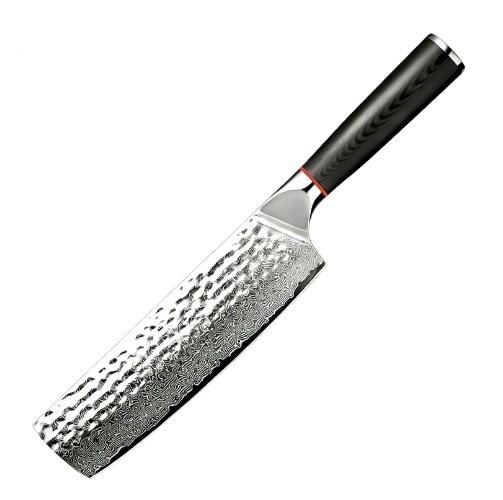
Damaskus plattiert 10Cr15CoMoV G10 Griff Nakiri 172 mm gehämmertes Finish
Der Nakiri (Nakiri, “Gemüsemesser”) ist Japans Gemüsemesser für die Haushaltsküche: eine dünne, leichte, rechteckige Klinge mit einer geraden Schneide, die von der Ferse bis zur Spitze auf dem Brett aufliegt.
Ein weit verbreitetes Missverständnis sollte von vornherein richtiggestellt werden – das Nakiri ist beidseitig geschliffen; sein einseitig geschliffenes Pendant ist das Usuba, ein professionelles Werkzeug.
Für einen tieferen Einblick, unser vollständiger Nakiri-Führer behandelt seine Geschichte, seine Verwendungen und wie es im Vergleich zum Santoku abschneidet.
Was ist ein chinesisches Hackmesser?
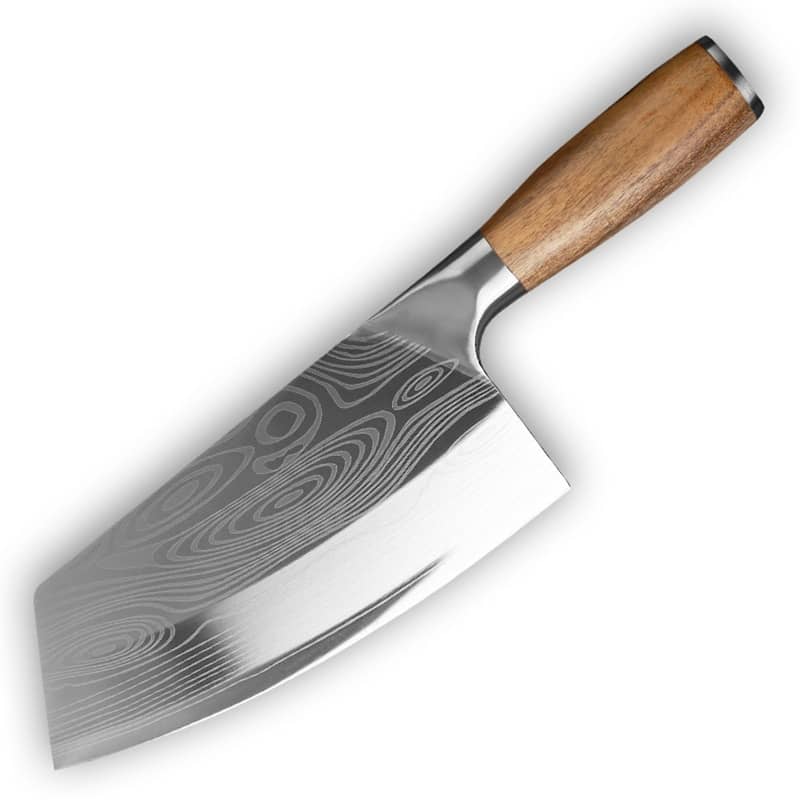
4Cr13-Küchenmesser aus Rosenholz mit chinesischem Gemüsemesser-Design, 200 mm, Lasermuster
Der Chinesisches Hackmesser — der Alltag cai dao (Fleischmesser, “Gemüsemesser“) – sieht aus wie ein vergrößertes Nakiri, spielt aber eine größere Rolle: Es ist das einzige Messer, auf das eine chinesische Küche angewiesen ist. Es schneidet Fleisch, zerkleinert Kohl, zerdrückt Knoblauch mit der Klinge und schaufelt das Schnittgut direkt in den Wok.
Der Name umfasst tatsächlich drei Werkzeuge – das dünne Pian-Dao-Messer, das Allzweck-Zhan-Qie-Dao und das schwere Gu-Dao-Knochenbeil –, und nur das letzte berührt Knochen.
Unser engagiertes Chinesisches Beil Anleitung behandelt die Familie im Detail – und wenn Ihre Kunden sie mit einem westlichen Klassiker vergleichen, sehen Sie sich unsere Chinesisches Hackmesser vs. Chefkochmesser Vergleich.
Nakiri vs. Chinesisches Spickmesser: Die wichtigsten Unterschiede
Gleiche Silhouette, gleiche flache Klinge – warum fühlt sich die Handhabung dieser Messer dann so unterschiedlich an? Fünf praktische Unterschiede entscheiden das Duell, plus ein Pflegeunterschied, von dem die meisten Käufer nie hören.
Zweck und Inhaltsstoffe
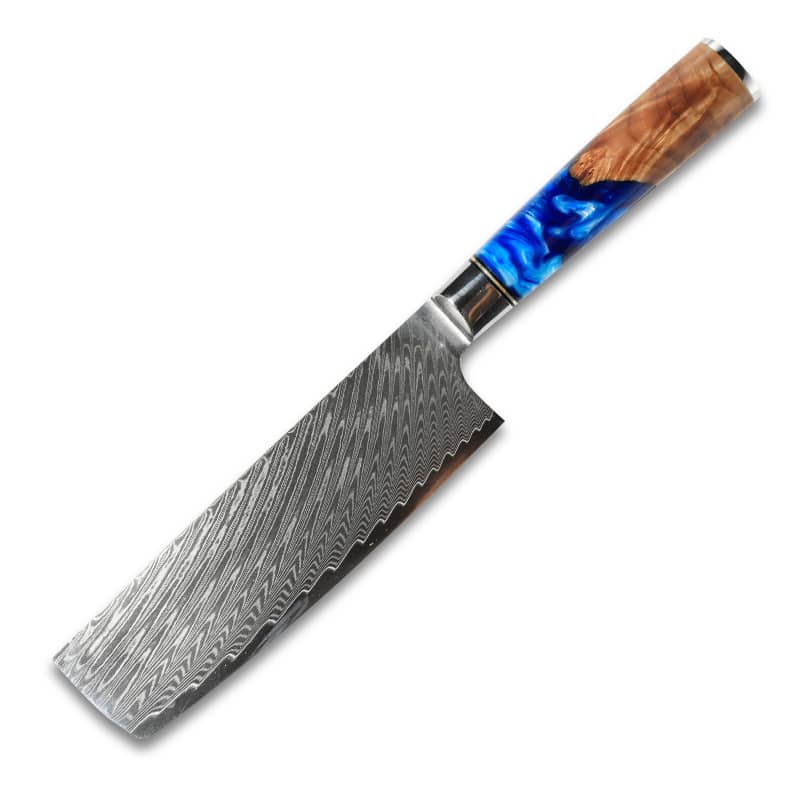
Damast plattiertes 9Cr18Mov Oval stabilisiertes Holz Nakiri 180 mm
Das Nakiri hat eine einzige Aufgabe: liefern. Seine dünne, leichte Klinge behandelt empfindliche Zutaten schonend – Blattgemüse, Kräuter, Tomaten –, und schneidet, ohne zu quetschen oder zu zerdrücken. Es eignet sich für Kunden, deren Schneidebrett fast nie Fleisch sieht.
Das Cai Dao deckt alles ab, was eine chinesische Hausküche an einem Tag schneidet: Gemüse, knochenloses Fleisch, Fisch und Kräuter, mit zusätzlicher Reichweite für großes Schnittgut wie ganze Kohlköpfe und Moschuskürbisse. Kurz gesagt: Das Nakiri ist ein Gemüsespezialist; das Cai Dao ist ein Allzweckmesser mit einer Spezialisierung auf Gemüse.
Größe und Klingenhöhe
Ein Nakiri ist 165 bis 180 mm lang und etwa 45 bis 55 mm hoch. Ein Cai Dao erstreckt sich auf 180 bis 220 mm mit einer Klingenfläche von 90 bis 110 mm – fast doppelt so hoch. Diese zusätzliche Fläche verwandelt das Beil in eine Schaufel, eine Knoblauchpresse und eine bewegliche Wand, die hohe Stapel von Schnittgut am Umfallen hindert.
Das kompakte Format des Nakiri ist die Kehrseite dieses Kompromisses. Es passt auf kleine Schneidbretter, in kleine Küchen und für kleine Hände – und es fühlt sich nie wie mit Kanonen auf Spatzen geschossen an, wenn die Arbeit aus zwei Lauchzwiebeln statt aus einem ganzen Kohlkopf besteht.
Gewicht und Erschöpfung
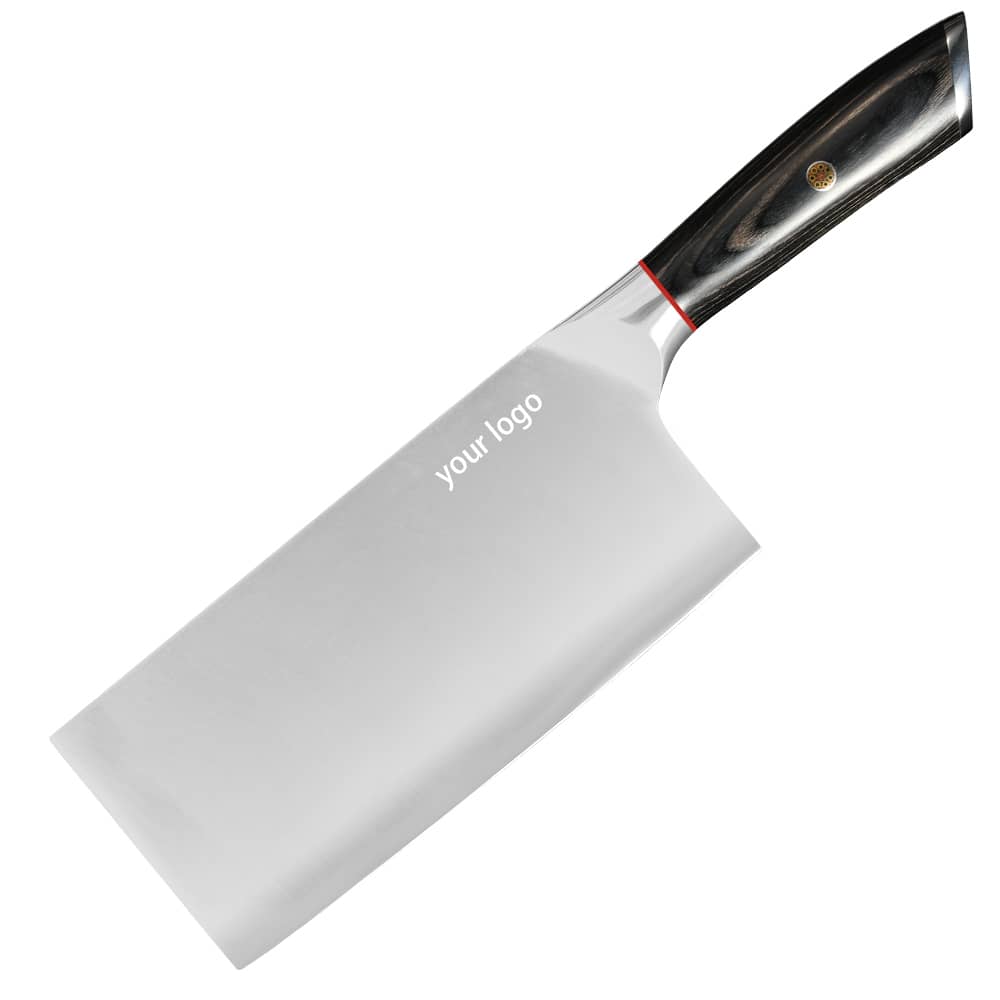
5Cr15MoV Pakkaholz Chinesisches Gemüsemesser 207 mm
Ein typisches Nakiri wiegt 150 bis 250 Gramm; ein Cai Dao bringt 280 bis 360 Gramm auf die Waage. Bei einer einzigen Zwiebel merkt das niemand.
Bei einer sonntäglichen Vorbereitungssitzung summiert sich der Unterschied – erfahrene Anwender beschreiben das Nakiri als “agiler und weniger ermüdend”, während die klingenlastige Masse des Hackmessers bei festem Gemüse einen Teil der Arbeit für Sie erledigt.
Für Ihre Kunden ist dies eine Passformfrage, keine Qualitätsfrage. Stimmen Sie das Messer auf das Zubereitungsvolumen ab, nicht auf die Kraft.
Schneidebewegung und Schöpf-Faktor
Beide Messer schneiden im Druckschnitt: gerade nach unten, mit einem leichten Vorschub. Das Cai Dao fügt zwei Bewegungen hinzu, an die das Nakiri nicht heranreichen kann — das rasche Hubschrauber für das Hochvolumen-Schneiden, und die Schaufeltransfer das ein Brett mit gehacktem Schnittgut in einem Arbeitsgang in die Pfanne befördert. Köche, die umsteigen, nennen die Schaufel allein oft lebensverändernd.
Das Nakiri kontert mit Präzision. Seine kürzere, leichtere Klinge lässt sich leichter durch feine Kräuterarbeiten und hauchdünne Scheiben steuern – jene Aufgaben, bei denen die zusätzliche Höhe des Beils unhandlich wird.
Vielseitigkeit und die Fleischfrage
Bei der Vielseitigkeit scheitert die Idee des “oversized nakiri”. Ein Nakiri kann gelegentlich knochenloses Fleisch oder Fisch schneiden – aber es bleibt eine Nebensache. Die tägliche Zubereitung von Proteinen ist das Revier des Cai Dao, und genau dieser Arbeitsbereich unterscheidet einen Gemüsespezialisten von einer All-in-One-Lösung.
Die gemeinsame Grenze ist wichtiger: weder Messer hackt Knochen. Beide laufen hart, dünne Kanten um 56 – 62 auf der Rockwell-Härteskala dieser Knochensplitter, Tiefkühlkost und harte Schalen.
Wenn ein Kunde ein chinesisches Beil für Knochenarbeiten benötigt, ist dieses Messer das Gu Dao und nicht das Cai Dao – ein Unterschied, den man in jeder Produktbeschreibung deutlich machen sollte, denn ein für Knochenarbeiten verkauftes Allzweckmesser kommt mit einer ausgebrochenen Klinge zurück.
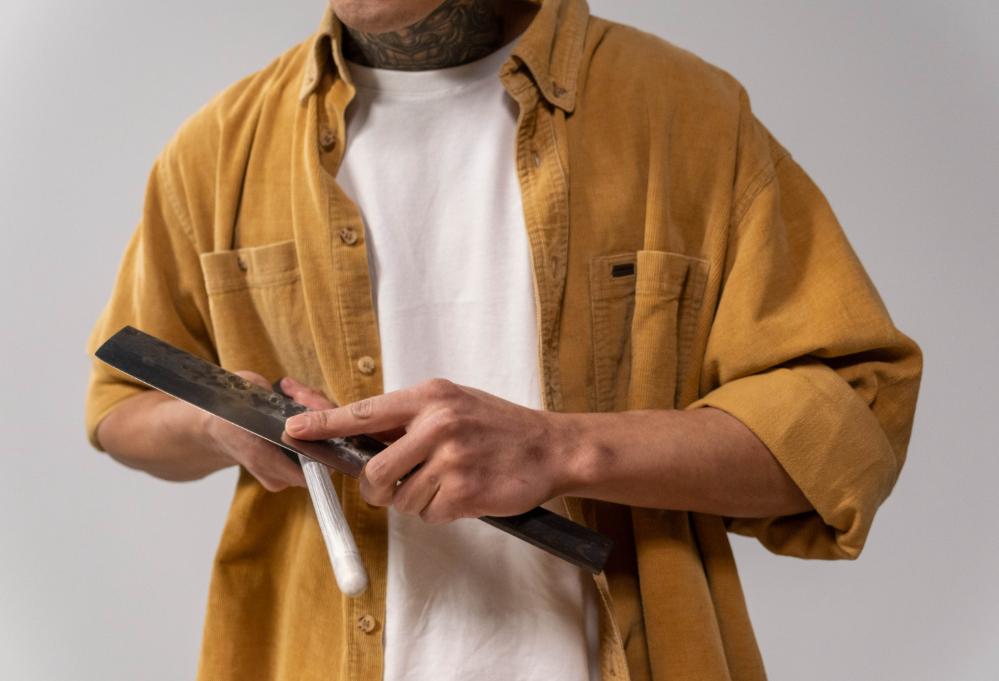
Entgegen der Intuition ist das kleinere Messer einfacher zu pflegen. In Messerforen wird das Nakiri übergemeißelt als eines der am einfachsten zu schärfenden Messer bezeichnet – eine flache Schneide sorgt für eine gleichmäßige Kontaktlinie auf dem Stein, ohne dass man einem Klingenbauch folgen muss. Die hohe Klinge des Cai Dao macht es schwieriger, einen gleichmäßigen Winkel zu halten, insbesondere bei flachen Winkeln.
Beide belohnen ein einfaches Set: ein mittlere Wetzstein für die Kante Einstellung und ein Keramik-Wetzstab zur Pflege zwischen den Schleifvorgängen — ein günstiges Kombi-Angebot neben jedem Messer.
Bringen Sie Ihre individuelle Messerlinie schneller auf den Markt mit LeeKnives
Umfassender OEM/ODM-Support – vom Entwurf bis zur endgültigen Lieferung –, damit Sie sich auf Ihr Wachstum konzentrieren können.
Unterstützt durch Lager in den USA für eine schnelle und zuverlässige Lieferung.
Welche Aufgaben gehören zu welchem Messer?
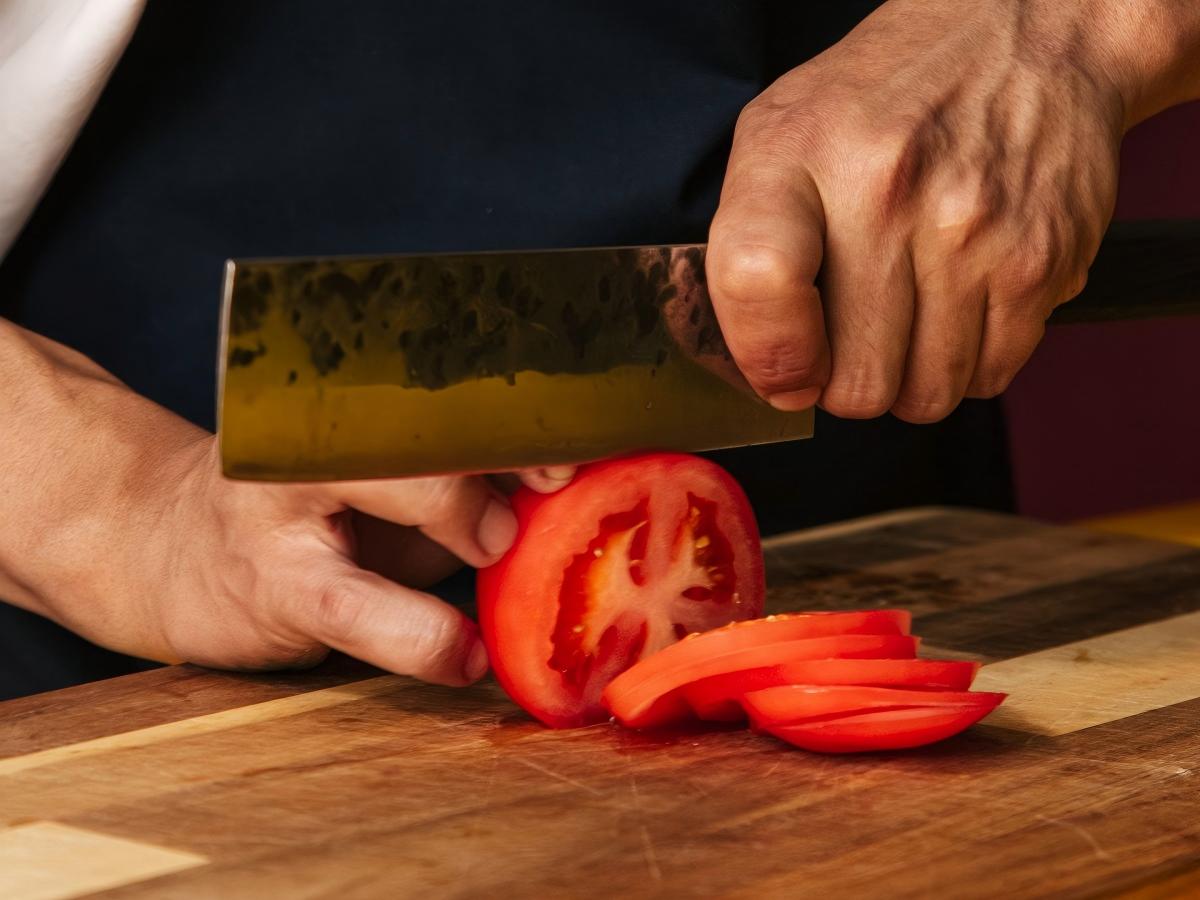
Der schnellste Weg, einen Kunden zu beraten, ist Schritt für Schritt. Diese Matrix erledigt die Arbeit.
| Vorbereitungsaufgabe | Nakiri | Chinesisches Hackmesser |
|---|---|---|
| Kräuter und feines Hacken | ✅ Wendig, präzise | ⚠️ Fähig, aber ungeschickt |
| Großes Gemüse (Kohl, Melone, Kürbis) | ⚠️ Klinge läuft leer | ✅ Dafür gemacht |
| Gemüsevorbereitung auf Vorrat | ✅ Leicht, schnell, ermüdungsarm | ✅ Schneller, aber schwerer |
| Die Zubereitung in die Pfanne geben | ❌ Klingenfläche zu klein | ✅ Das Killer-Feature |
| Knoblauch und Ingwer zerdrücken | ❌ Kein breites Gesicht zum Zertrümmern | ✅ Ein Schlag mit der flachen Hand |
| Knochenloses Fleisch und Fisch | ⚠️ Gelegentlicher Nebenjob | ✅ Tägliche Pflicht |
| Klößchenfüllung (zweihändig gehackt) | ❌ Zu wenig Klinge für diese Aufgabe | ✅ Die klassische Technik |
| Knochen oder Tiefkühlkost | ❌ Kante wird absplittern | ❌ — gu dao oder Fleischerbeil |
Ein Muster, das es sich lohnt, Kunden zu vermitteln: Je größer der Zutatenhaufen, desto stärker spricht das für das Beil. Je feiner der Schnitt, desto stärker spricht das für das Nakiri.
Welche sollten Sie wählen?
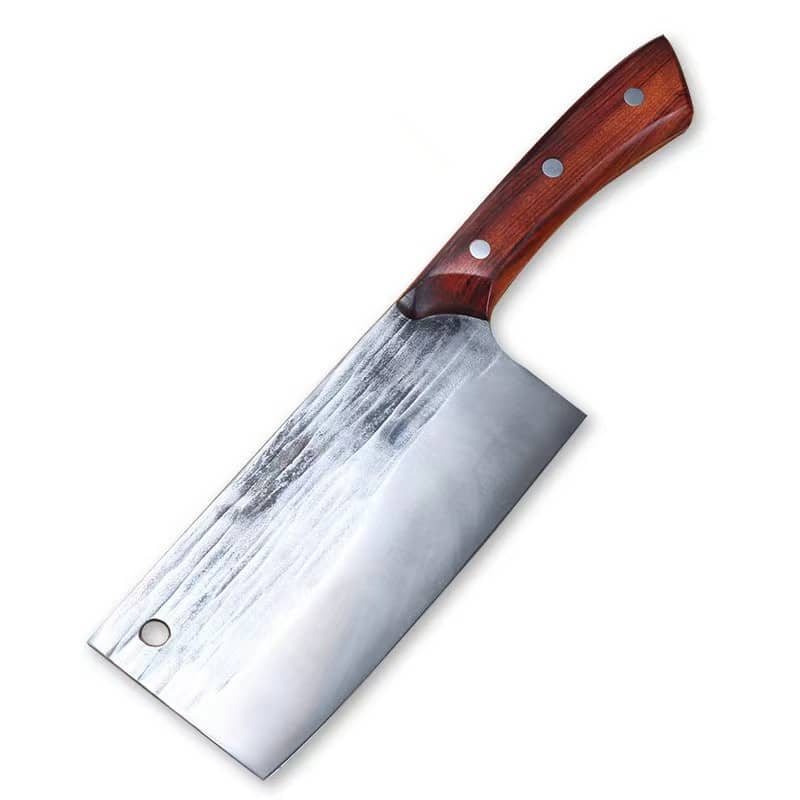
8Cr13MoV-Küchenmesser aus Rosenholz für chinesisches Gemüse, 170 mm
Entscheiden Sie nach Kochstil, nicht nach dem, welcher Messerröhre beeindruckender wirkt. Wenn Gemüse den Großteil der Schneidearbeit ausmacht – pflanzliche Ernährung, salatreiche Wochen, Vorratsschneiden am Wochenende –, hat sich das Nakiri innerhalb von fünf Minuten nach dem ersten Gebrauch seinen Platz verdient.
Wenn ein Messer Gemüse schneiden muss Und Tägliche Fleischvorbereitung, das Cai Dao ist das einzige der beiden, das dafür gebaut ist.
Größenhinweise, die Sie an Käufer weitergeben können:
- Nakiri165 mm passt in die meisten Haushaltsküchen; wählen Sie 180 mm für große Schneidebretter und große Hände.
- Chinesisches HackmesserEin kleines Format (das “kleine Beil” im CCK-Stil) eignet sich für Anfänger; die volle Größe von 200 mm und mehr eignet sich für erfahrene Köche und die Restaurantvorbereitung.
Und eine Erwartung, die man ehrlich kommunizieren sollte: Das Nakiri fühlt sich vom ersten Tag an natürlich an, während das Cai Dao etwa eine Woche braucht. Kunden, die das im Voraus wissen, behalten das Messer. Viele Köche besitzen am Ende beide – die beiden überschneiden sich im täglichen Gebrauch weit weniger, als sie es im Regal tun.
Was das für Ihr Messergeschäft bedeutet
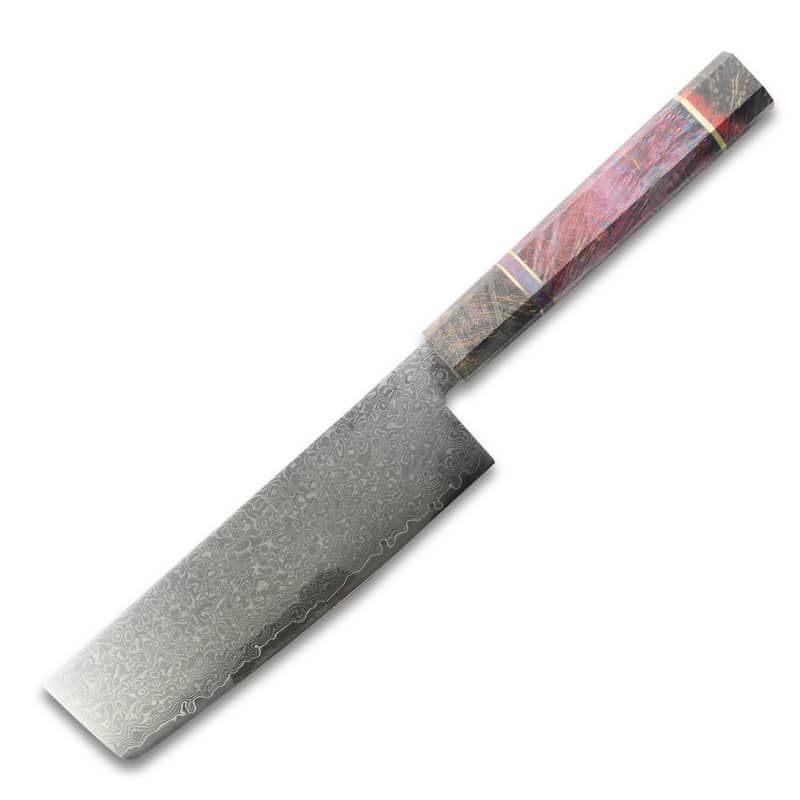
Damastklingenbeschichtung 9Cr18Mov Oktagonales stabilisiertes Holz Wa Griff Nakiri 180 mm
Diese beiden Messer verankern die Kategorie der Gemüsemesser von entgegengesetzten Enden aus. Das Nakiri ist Ihr japanischer Einsteigerspezialist: eine einfache Ergänzung für Santoku Und Gyuto Inhabers, und die natürliche Empfehlung für pflanzenbasierte Kunden.
Das Cai Dao ist die Wachstumsstory – die asiatische Küche erweitert kontinuierlich ihren Käuferkreis, und die Regalkonkurrenz ist außerhalb von Spezialgeschäften nach wie vor gering.
Die Bündelung als Paar neutralisiert zudem den häufigsten Einwand vor dem Verkauf. Wenn ein Kunde fragt: “Sind das nicht dieselbe Messer?”, haben Sie eine aus zwei Sätzen bestehende Antwort und zwei verschiedene Preisstufen im Angebot. Für die breitere Sortimentslogik siehe unsere Übersicht über Japanische Küchenmesser.
Schnell-Inventur-Faustregel: Führt das Nakiri in 165 und 180 mm sowie die Beil-Familie in einem kleinen Aufschnittmesser und einem großen Cai Dao. Haltet das Gu Dao für Knochenarbeiten deutlich gekennzeichnet, damit es niemals als Gemüsemesser verkauft wird.
Nakiri-Messer und chinesische Hackmesser im Sortiment mit LeeKnives

8Cr13MoV Palisander Chinesisches Gemüsebeil 200 mm
Die Frage Nakiri gegen chinesisches Beil hat keinen klaren Sieger – und genau darin liegt die Chance für Ihr Geschäft. Die beiden Formen haben zwar eine ähnliche Silhouette, bedienen aber unterschiedliche Käufer, Preisklassen und Küchen, sodass ein Sortiment, das beide führt, Kunden von beiden Seiten der Debatte überzeugt.
LeeKnives fertigt beide Messer in Yangjiang Stadt — die Heimatschmiede des Cai Dao und heute ein bedeutender Hersteller japanischer Klingen. Ein Lieferant, ein Qualitätsstandard für beide Seiten dieses Vergleichs, mit Ihrer Wahl aus Stähle, Griffstile, und Preisstufen für das Paar.
Beschaffen Sie sie so, wie Ihr Unternehmen arbeitet: vorgefertigte Modelle von unserer Küchenmesser-Katalog beim Großhandel Preise, kundenspezifische Spezifikationen durch unsere OEM Und ODM Dienstleistungen oder Ihre eigene Markenlinie über unsere Eigenmarkenprogramm.
Planen Sie Ihr nächstes Gemüsemesser-Sortiment? Fordern Sie ein kostenloses Angebot von LeeKnives an. — Muster, gestaffelte Preise und ein Pairing-Plan für Ihren Markt, kommen Sie damit zurück.
Bringen Sie Ihre individuelle Messerlinie schneller auf den Markt mit LeeKnives
Umfassender OEM/ODM-Support – vom Entwurf bis zur endgültigen Lieferung –, damit Sie sich auf Ihr Wachstum konzentrieren können.
Unterstützt durch Lager in den USA für eine schnelle und zuverlässige Lieferung.
Häufig gestellte Fragen
Ist ein Nakiri einfach nur ein kleiner chinesischer Hackbraten?
Nein. Sie haben eine gerade Klinge und ein rechtwinkliges Profil, aber sie wurden für unterschiedliche Aufgaben entworfen: Das Nakiri ist auf Gemüse spezialisiert, während das Cai Dao ein Allzweckmesser ist, das auch die tägliche Fleischzubereitung abdeckt. Der Größenunterschied – etwa 100 Gramm und fast die doppelte Klingenhöhe – ist Absicht, kein Zufall.
Braucht man wirklich ein Nakiri-Messer?
Der Begriff „Bedarf“ ist hier fehl am Platz – niemand braucht zwingend einen Spezialisten. Das Nakiri macht dann Sinn, wenn Gemüse beim Schneiden dominiert, wenn Kundinnen und Kunden Gemüsevorschnitte in größeren Mengen vorbereiten oder wenn sie bereits ein Hauptmesser besitzen und einen dedizierten Partner dafür suchen. Für Gelegenheitsköche decken ein Kochmesser oder ein Santoku denselben Bereich ab.
Lohnt sich ein chinesisches Beil?
Ja, für Köche, die asiatische Gerichte oder große Mengen Gemüse zubereiten – es ersetzt gleich mehrere Küchenutensilien auf einmal, und seine Klingenfläche dient gleichzeitig als Schaufel und Zerkleinerer. Einsteigermodelle aus Kohlenstoffstahl von namhaften Herstellern kosten zwischen $20 und $60, das Risiko ist also gering. Planen Sie etwa eine Woche Übung ein, bis Sie den richtigen Umgang mit der nach vorne verlagerten Klingenbalance gefunden haben.
Kann man mit einem Nakiri Fleisch schneiden?
Ja, in Grenzen: Knochenloses Fleisch und Fisch lassen sich mit einem Nakiri sauber schneiden, und es kann sogar ein Hühnchen an den Gelenken zerlegen. Was es nicht kann, ist der Kontakt mit Knochen, gefrorenen Lebensmitteln oder harten Kernen – die harte, dünne Kneifkante bricht leicht aus. Bei der täglichen Fleischzubereitung hat das chinesische Beil die Nase vorn.
Welches ist besser, Nakiri oder Santoku?
Für rein pflanzliche Arbeiten ist das Nakiri schneller; für die gemischte Vorbereitung mit Fleisch und Fisch machen die spitz zulaufende Klinge und der leichte Bauch des Santoku es zum besseren Allmesser. Unser vollständiges Nakiri vs. Santoku Vergleich geht im Detail auf die Entscheidung ein.
Welches Messer ist für alles am besten geeignet?
Kein Messer gewinnt diesen Titel objektiv – jedes “Alles-könner”-Design ist ein Kompromiss, das auf eine bestimmte Küche abgestimmt ist. Das geschwungene Kochmesser hat sich diese Rolle im Westen erarbeitet; das flache Cai Dao hat es in China geschafft. Der ehrliche Rat für Kunden: Wählen Sie dasjenige, das am besten zu dem passt, was Sie am häufigsten kochen, nicht das mit dem lautesten Marketing.




 DE
DE  EN
EN  JA
JA