
肉切り包丁とシェフナイフのどちらを選ぶべきかという疑問は、本格的なキッチンナイフを探している人なら誰しもが直面するものです。どちらも長く優れた刃を持っていますが、用途は大きく異なります。.
あ シェフナイフ 万能な働き者で、まな板の上のあらゆる食材のスライス、ダイス、刻みに使われます。 肉切り包丁 専門の包丁で、より長く、より重く、大きな肉のかたまりを切り分けるために設計されています。.
このガイドでは、デザイン、切れ味、鋼材、最適な用途を比較し、お客様が実際に必要としているのはどちらなのかを解説します。この対決があなたの店舗にとって何を意味するのか、ぜひ読み進めてご確認ください。.
ブッチャーナイフとは何ですか?
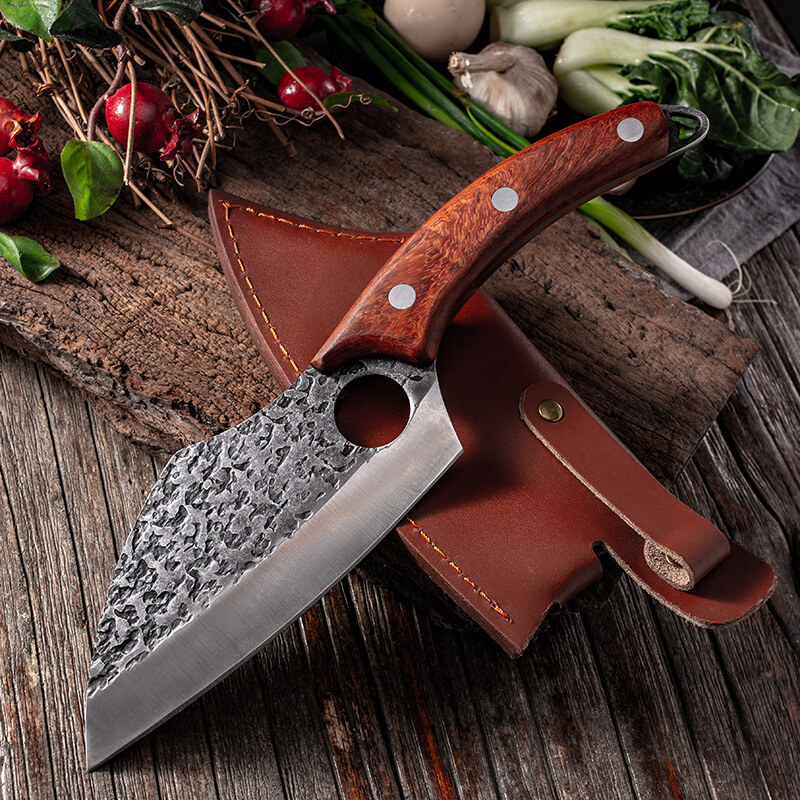
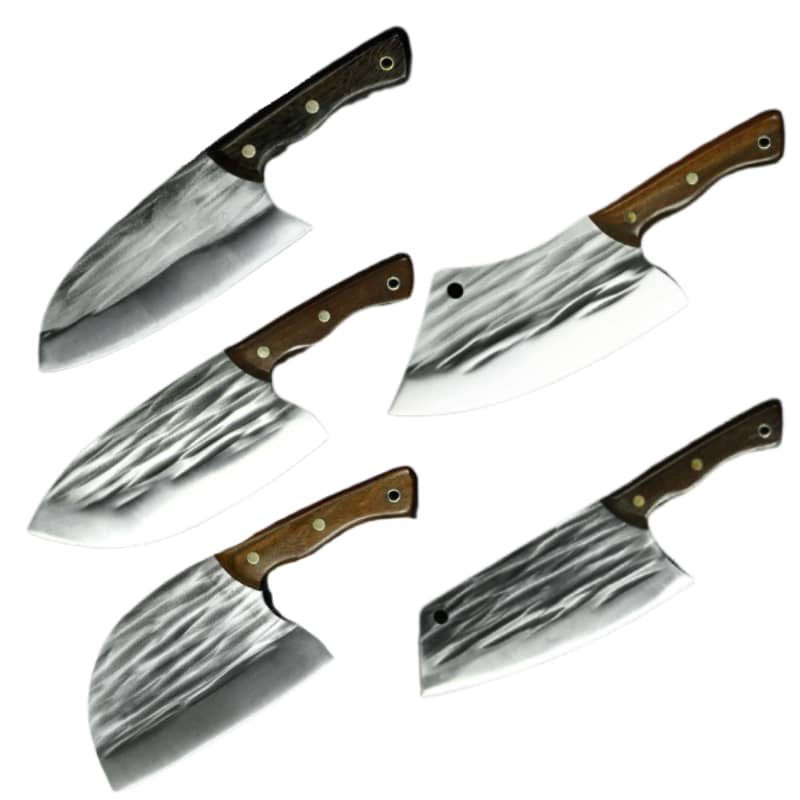
5Cr15 木製ハンドル 肉切りナイフ 146 mm 槌目仕上げ
ブッチャーナイフは、大きな肉の塊を切り分けるという一つの目的のために作られた、長く重い刃物である。それは、より軽い刃物ではすぐに疲弊してしまうような作業である。.
その名前は実際には小さな一連のツールを指しています: ブレイキングナイフ 枝肉を分割するには、より幅が広く、より長い シミター 大きな筋肉の小分けや、コンパクトな 骨抜きナイフ 骨や関節の周りの作業をスムーズにするために.
食肉解体職人は長いナイフの1つを 骨抜きナイフ そして シャープニングスティック, 、シフトによってそれらを切り替える。.
長所
- パワー 長く重いブレードが、しなることなく、密集した肉、脂肪、結合組織を力強く切り裂く
- リーチ 深い曲線を描く刃が、一撃で大きな切り口を切り開く
- 簡単なメンテナンス 柔らかい鋼はホーニングスチールで素早く研ぎ直すことができ、スピードが求められる商業用厨房に最適です
- 値 価格設定が低いため、プロや愛好家の購入がしやすくなっています
短所
- 不器用 野菜のさいの目切りやハーブの微塵切りといった細かいまな板での作業には、重すぎて扱いにくい
- 限られた精度 丸みを帯びた先端や鈍い先端は、突き刺す作業や細かい作業を制限します
- ニッチな需要 ほとんどの家庭の料理人は、使うとしてもごく稀である。
- エッジの保持: 柔らかい鋼材のシェフナイフは、硬い鋼材のものよりも早く切れ味が悪くなります。
シェフナイフとは何ですか?

ダマスカス積層 10Cr15CoMoV G10ハンドル シェフナイフ 200 mm
その シェフナイフ それは厨房の万能選手であり、世界中で最も売れている単一のナイフの種類です。その湾曲した刃はロッキング・チョップ(揺り切り)を想定して作られており、肉、魚、野菜のスライス、ダイス、刻み、みじん切りをこなすことができ、いざという時には軽い解体作業にも対応します。.
日本のバージョンは 牛刀 硬い鋼材とよりフラットなプロファイルという同様の哲学に従い、当社の 日本刀とドイツ製包丁の比較ガイド.
長所
- 汎用性: 野菜、魚、骨なし肉、ハーブを同様に手軽にこなす、キッチンで最も適応力の高い一本の刃
- 精度 湾曲した刃と鋭い先端により、揺らし切りと細かいディテールワークが可能になります。
- 快適さ 軽量化により、長時間の調理準備中の疲労が軽減されます。
- エッジの保持: 硬い鋼材ほど、研ぎ直しの間に鋭い刃先がより長く持続します。
- ボリュームプレイ 普遍的な需要があるため、どの在庫にとっても最も確実な選択肢となります。
短所
- 出力不足 大きな塊肉の解体、脂のトリミング、軟骨の切断には薄すぎて軽すぎる
- もろさ 硬度の高い鋼は、骨や冷凍肉に対して誤った使いかたをすると、刃が欠けることがあります。
- 脆弱性のヒント: 尖った先端は、偶発的な破損を防ぐため、より慎重な取り扱いが必要です。
- 価格のじりじりした上昇 プレミアムモデルは予算を重視する買い手を締め出す可能性がある
ブッチャーナイフ対シェフナイフ:主な違い
本質的な違いは、規模と耐久性に行き着きます。肉切り包丁は 大きくて、密度が高く、丈夫な素材 —ブロック肉、枝肉、分厚い脂肪、腱、関節。また、 大きくて硬い農産物 カボチャやメロンのように、繊細さよりも純粋な重さと刃の長さが重要になる場合。.
シェフナイフの柄 お肉も —骨なしの切り身、薄切り、角切りなど—しかし本当の強みは あらゆる面での汎用性野菜、ハーブ、魚、そして細かくて反復的な作業が アジリティとエッジ形状 数えてみてください。それは、素材が抵抗してくるときではなく、作業が多岐にわたるときに手に取るナイフです。.
目的におけるその違い――力任せの解体か、万能の精密さか――が、2本のナイフのその他のあらゆる特徴を形作っています。続く4つの設計上の違いによって、それぞれのナイフが実際に手に取った時にどのような挙動をするかが決まります。.
刃の長さと形状
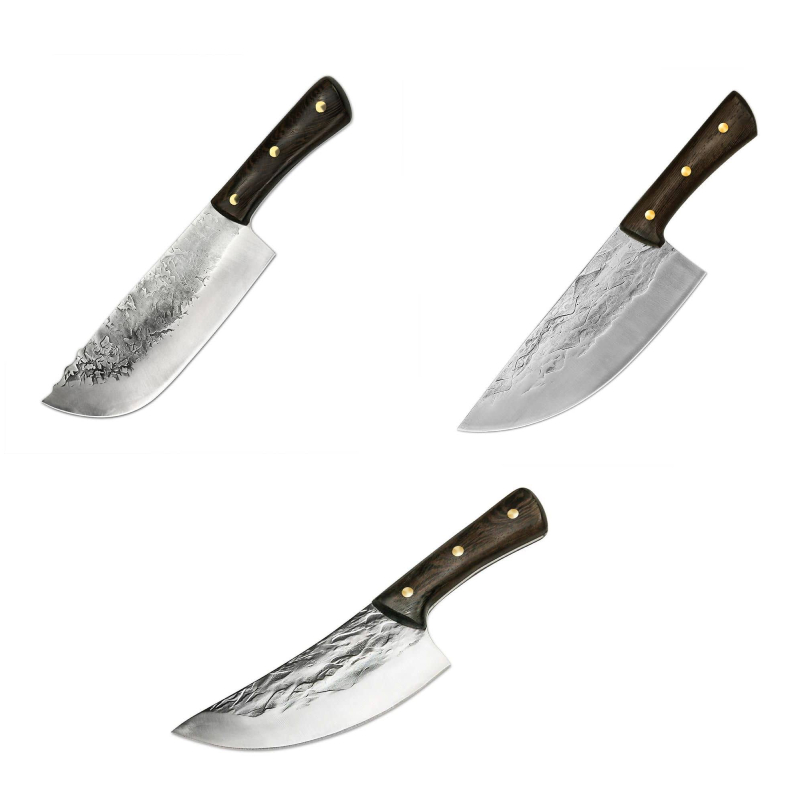
ブッチャーナイフの刃渡りは長く、8〜10インチが標準で、シミター型では14インチに達するものもあります。この長さがあるのは、大きな肉の塊を切り分けるためです。リブアイロール全体や豚肩肉などは、前後にのこぎりのように引くのではなく、一太刀の滑らかなストロークで切り分けられなければなりません。深く反った刃腹により、引き切りする間ずっと刃が肉に接した状態を保つことができます。.
シェフナイフは、ほとんどの購入者にとって約8インチが上限であり、まな板での作業向けにややきついカーブが作られています。その尖った先端は突き刺しや細かい切断を行う一方、ブッチャーナイフの先端は、突き刺すことがめったにない作業であるため、しばしば丸みを帯びているか鈍利な形状をしています。.
ブレードの厚さと重量
2本のナイフを置いて 背骨 背骨に対して、そして肉切り包丁は明らかに厚みが増しています。多くの場合、牛刀の鋼材の厚みのほぼ2倍近い厚さがあります。その厚みにより、しなることなく、関節を切り離し、密度が高く冷たい肉を切り進めるために必要な重量と剛性が加わります。.
トレードオフとなるのは俊敏性だ。一般的なシェフナイフの重さは6〜9オンスで下ごしらえの作業にすんなりと馴染むが、10インチのシミター(大型肉きり包丁)は14オンスを超えることもあり、まな板の上では扱いにくく感じられる。フォーラムのユーザーたちは率直にこう指摘している。「本格的な解体用包丁は、まな板での刻み作業にはあまり役立たない」“
切断アクション
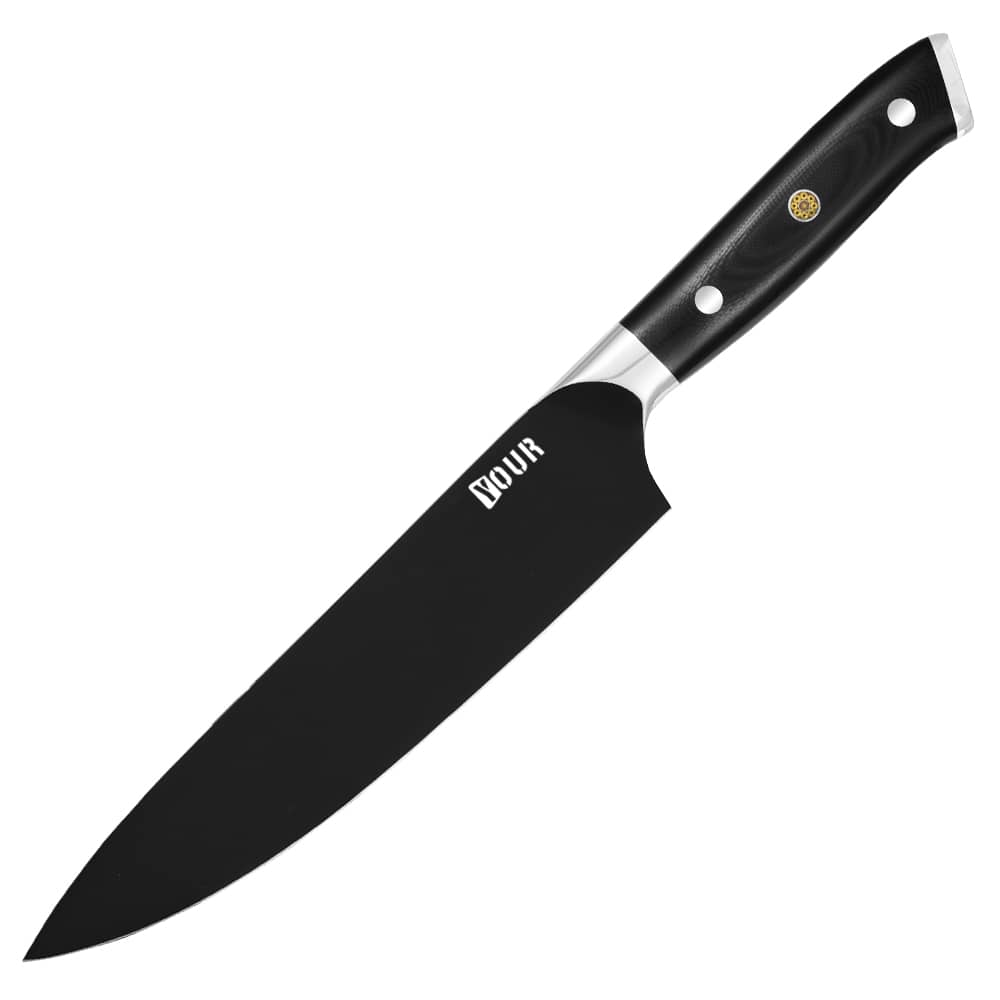
シェフナイフの湾曲した刃は、ロッキングチョップや細かなプッシュカット(素早く、反復的で精密なまな板上の作業)のために作られています。技術が活かされ、長時間の仕込みでも疲労を軽減します。.
ブッチャーナイフは力技のために作られており、吊るされた肉や並べられた肉を長く引いてスライスし、結合組織をのこぎりのように切り裂き、軟骨や小さな関節を断ち切る。どちらのナイフも互いの動きの代わりにはならないため、プロの厨房では両方が備えられているのである。.
鋼材、硬度、および研ぎ
これはほとんどの買い手が決して耳にしない違いです。商業用包丁は意図的に より柔らかい ステンレス鋼, 通常は55〜58 ロックウェル硬度スケール. 肉屋は15〜20分ごとにスチール棒で研ぐため、刃持ちの良さよりも、簡単に刃先を真っ直ぐに戻せることの方が重要である。.
プレミアムなシェフナイフは58〜62以上のHRc(ロックウェル硬さ)を備え、切れ味がはるかに長持ちしますが、本格的な研ぎ直しには時間がかかります。.
どちらのタイプも乱暴に扱えばすぐに切れ味が落ちますが、手入れのペースはまったく異なります。お客様から鋼材の選択について尋ねられた場合は、私たちのガイドをご参照ください。 包丁に最適な鋼 トレードオフについて詳しく網羅しています。.
LeeKnivesでカスタムナイフラインをより早く立ち上げましょう
設計から最終出荷まで、OEM/ODM の完全なサポートにより、成長に集中できます。
米国の倉庫に保管されているため、迅速で信頼性の高い配送が可能です。
どのタスクがどのナイフに属するか

肉切り包丁と牛刀の議論に決着をつける最も早い方法は、作業ごとに検証することです。顧客にアドバイスする際は、このマトリックスを使用してください。.
| キッチンの作業 | より良いナイフ |
|---|---|
| 毎日のスライス、サイコロ切り、みじん切り | シェフナイフ |
| ハーブや野菜のみじん切り | シェフナイフ |
| 鶏一羽の解体 | シェフナイフ(骨スキ包丁ならなお良い) |
| ブリスケットやポークバットのトリミング | 肉切り包丁 |
| 大分割肉をステーキ用に切り分けること | 肉切り包丁 |
| 皮引きと銀皮取り | 肉切り包丁 |
| 骨を切る | どちらでもない — を使う 包丁 |
| 極細ペン先の作業とピアッシング | シェフナイフ |
プロの精肉職人やBBQコンテストの参加者からの、飾らない率直なアドバイス: 家庭での肉のトリミング作業の約95%は、シェフナイフと6インチの骨抜きナイフでこなされています。12インチのシメターは、その見た目に惹かれて購入されるものの、実際にはほとんど使われないナイフです。.
お客様へ:おすすめのナイフ
顧客が1本しか買えない場合、答えは常にシェフナイフです。それはすべての作業をそつなくこなし、ほとんどの作業をうまくこなし、日常的な実用性において他のどの刃物も足元にも及びません。.
肉切り包丁は、顧客が簡単な頻度のテスト(大型のブロック肉、丸ごとの家畜、あるいは競技用バーベキューなどを月に数回以上さばいているか)をパスすれば、賢い2番目の買い得品となる。
はいの場合、その長い湾曲した刃は実際の時間とよりきれいな部分を節約します。いいえの場合、それはほこりを集めるでしょう。.
カウンターで伝えるべき実用的な購入のポイント:
- 食肉加工においては、鋼鉄よりも握力が勝る。. 濡れて油っぽい手は滑りやすくなります ハンドル 危険:高級な鋼材よりも、質感のある滑りにくいハンドルのほうが重要です。.
- 簡潔さを心がけてください。. 8から10インチのブッチャーナイフならほぼ全ての作業をこなせますが、12インチ以上のシミター(曲刃包丁)には、大きなまな板と熟練した手さばきが必要です。.
- 高価な鋼材を省く。. A $30 – $60の肉切り包丁は、堅実な55~58 HRcのステンレス鋼を使用しており、その価格以上の性能を発揮します。これは実用的な道具であり、単なる飾り物ではありません。.
在庫補充のヒント:種類別の保管方法
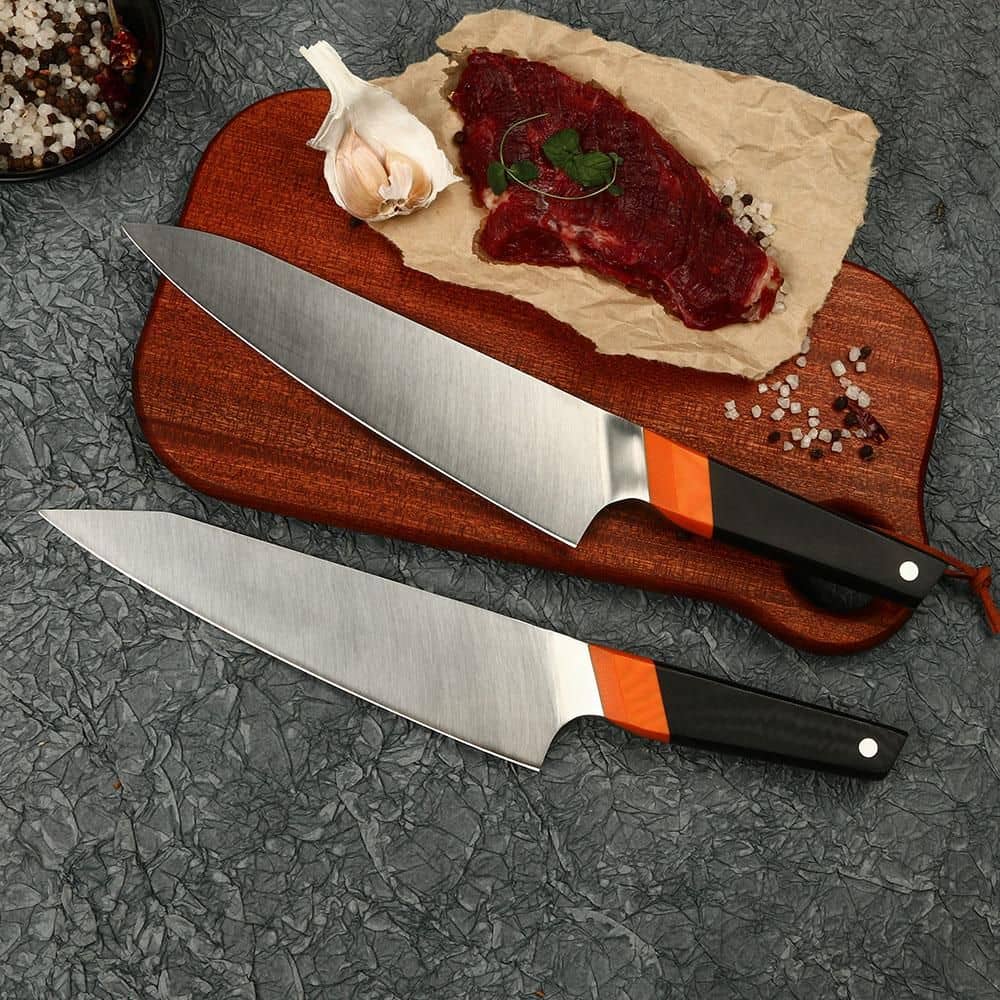
これら2本の包丁は、在庫管理において全く異なる役割を果たしています。シェフナイフは、量販商品であり、お客様を呼び込むきっかけとなる商品です。どの厨房にも1本は必要であり、スターターセットの基盤となり、あらゆる価格帯でリピート客を呼び込みます。 VG-10 ミドルレンジからプレミアム ダマスカス.
ブッチャーナイフは、精肉店、食肉加工業者、バーベキューレストラン、ハンティングおよびアウトドアの愛好家、そして本格的なホームクックといった、絞り込まれた購入層をターゲットにした、ニッチなマージンを狙える製品です。.
これらの購入者は、エキゾチックな鋼材よりも、グリップの質感、スタンプ(抜き打ち)刃の価格設定、そして簡単な再研磨を重視しています。まさに、工場直販の調達が利益率の面で優位に立てる仕様プロフィールです。ファミリーを論理的に品揃えすること(ブレッキングナイフ、シミター、そして 骨抜きナイフ それぞれ2つの長さで)遅い回転率のSKUに資本を眠らせることなく、商業用アカウントをカバーします。.
簡単な在庫の経験則: シェフ対精肉職人の比率が3対1であれば、ほとんどの小売需要に対応できます。専門のジビエやバーベキューの店を経営している場合は、それを2対1、あるいは1対1に反転させます。.
肉切り包丁 vs シェフナイフ:小売業者のためのクイックリファレンス
ブレードの形状から品揃えの比率に至るまで、これまでに網羅したすべての内容は、1つの早見表に凝縮されます。フロアスタッフのトレーニングや棚のレイアウトの計画にご活用ください。.
| 肉切り包丁 | シェフナイフ | 小売りのヒント | |
|---|---|---|---|
| 主な役割 | 大きな肉の塊を切り分けて小分けにすること | 万能な下ごしらえ:スライス、さいの目切り、刻み、みじん切り | 肉切包丁の近くに研ぎ棒を、シェフナイフの近くには まな板 |
| 刃の長さ | 6 ~ 14 インチ(通常 8 ~ 10 インチ) | 6~12インチ(8インチが最も一般的) | 8インチと10インチのシミターを定番(アンカー)として在庫し、12インチ以上のシミターは回転が遅い(売れ行きが遅い) |
| ブレードの形状 | 大きく張り出した湾曲した腹部を持ち、先端は鋭いか、あるいは鈍い。 | 明確な尖った先端を持つ湾曲したエッジ | お客様が違いを実感できるように、お腹の輪郭(プロファイル)を並べて表示する |
| 刃の厚さ | より厚く、しばしばほぼ2倍の厚さ | より薄く、より洗練された | 厚み=知覚される耐久性:食肉加工業界のバイヤーに向けてこれを強調する |
| 切断動作 | スライス、切断、ハッキング、トリミング | 押し切り、引き切り、薄切り | 発泡スチロールや肉のプロップで肉切り包丁を実演し、野菜でシェフナイフを実演する |
| 重さ | より重く、通常8〜15オンス | ライター、通常6〜9オンス | 包丁において重量は強みである―力とコントロール感を強調する |
| 一般的な鋼材 | 軟らかめのステンレス鋼、硬度約55~58 HRc、主に打ち抜き加工(スタンピング) | 56 – 60+ HRc, 偽造または刻印 | softer steel = easier to resharpen; a strong upsell angle for commercial buyers |
| 価格帯 | $20 – $140(主にプレス成形、手頃な価格) | $25 – $300+(プレミアム範囲が広い) | シェフナイフは、#1のボリュームSKUです。3つの価格帯で在庫があります。 |
| 最適な用途 | 精肉店、食肉加工、BBQ、ハンター | レストラン、家庭の料理人、すべてのキッチン | 肉切り包丁はニッチマージンの勝負、シェフナイフは玄関口となる製品 |
LeeKnivesで両方のナイフを在庫する
ブッチャーナイフとシェフナイフの比較には明確な結論があります。シェフナイフは万能なベストセラーであり、ブッチャーナイフは商業ユーザーや愛好家が積極的に買い求める目的特化型の専門ナイフです。賢明な小売業者なら両方を仕入れ、それぞれの真のターゲット層に合わせて仕様を定めます。.
LeeKnives 3年以上製造に費やしてきた 包丁 で 陽江 北米の小売業者、卸売業者、飲食店向け業者に供給する都市。.
信頼性の高いシェフナイフのシリーズ、滑りにくいハンドルと酷使に耐える鋼材を備えた業務用ブッチャーナイフのファミリー、あるいは自社ブランドのための統一されたコレクションのいずれが必要であっても、当社は OEM そして ODM サービスは、ブレードの形状や鋼材の選定からブランド化されたパッケージングに至るまで、すべてを手掛けます。.
当社の 手作り包丁カタログ 即納デザイン、または プライベートブランド商品 あなたの市場に合わせて調整された.
カタログに肉切り包丁とシェフナイフを追加する準備はできましたか? LeeKnivesから無料見積もりを依頼 — ご希望の仕様と価格帯をお知らせいただければ、当社の営業チームがサンプルと 卸売 ビジネス向けに構築されたプラン.
LeeKnivesでカスタムナイフラインをより早く立ち上げましょう
設計から最終出荷まで、OEM/ODM の完全なサポートにより、成長に集中できます。
米国の倉庫に保管されているため、迅速で信頼性の高い配送が可能です。
よくある質問
牛刀で肉を切ってもいいですか?
はい――骨なし肉のスライス、さいの目切り、トリミングはシェフナイフの得意範囲であり、丸ごとの鶏肉を関節ごとに切り分けることさえできます。限界が現れるのは、大きな大型肉の塊、厚い脂肪の層、そして骨に関わるあらゆる作業です。その作業には刃が短すぎ、薄すぎ、軽すぎます。そこでブッチャーナイフの出番となります。.
なぜ肉切り包丁と呼ばれるのですか?
その名前は、それが作られた目的である「食肉処理(ブッチング)」に由来しています。長く湾曲した刃は、精肉店やパッキング工場で枝肉を解体し、肉を切り分けるために特別に開発されました。.
興味深いことに、英語の「butcher」という単語自体は古フランス語にさかのぼる。 ブーシェ, 、 ヤギ, 、ヤギを意味する—もともとはヤギを屠殺する人のこと。.
ほとんどの肉屋が使っているナイフは何ですか?
ほとんどの現役の食肉解体職人は、1本のナイフではなくいくつかのナイフを組み合わせて使っています。部分カットにはブレイキングナイフやシミター、関節や骨には6インチのボーニングナイフ、そして作業中に絶えず使用するホーニングスチール(研ぎ棒)です。.
北米の食肉加工工場では、ビクトリノックスのファイブロックスが業界標準となっており、デクスター・ラッセル、F・ディック、ムンディアルなどと共に、滑りにくいグリップ付きの単純な打ち抜きナイフが主流となっています。これらは濡れた手でも安全で、研ぎ直しが容易で、安価に交換できるためです。.
誰もが持っておくべき3つの包丁は何ですか?
定番の答えは、一般的な下準備用のシェフナイフ、細かい作業用のペティナイフ、そして 鋸歯状のナイフ パン用。牛刀は当然の4本目のナイフである —— 1本目は スペシャリスト —大きな肉の塊を日常的に扱うすべての人へ。小売業者にとって、この3点プラス1の構成は、スターターセットを作り、アップセルの道筋を築く実証済みの方法です。.
最高の肉切り包丁のブランドは何ですか?
「#1」という単一のブランドは存在しませんが、業界の共通認識は明確です。ヴィクトリノックス、デクスター・ラッセル、F.ディック、ムンディアルの各社が、ほとんどのプロの精肉店に製品を供給しており、通常、1本あたりの価格は$25~$65となっています。.
ヴェストホフのようなブランドのプレミアムな鍛造オプションも存在しますが、ほとんどの精肉業者にとって、作業用のナイフにその追加費用は不必要だと考えられています。.
ロゴよりも仕様が重要です。滑りにくいハンドル、硬度55〜58 HRcのステンレス製ブレード、そしてNSF規格の衛生性能こそが注目すべき点であり、これが多くの小売業者が仕様のしっかりしたプライベートブランド(PB)商品で成功を収めている理由でもあります。.
すでにシェフナイフを持っている場合、ブッチャーナイフ(肉切り包丁)は必要ですか?
おそらくないでしょう、大きな肉の塊を定期的に処理するのでなければ。シェフナイフと6インチの骨スキ包丁があれば、丸ごとの鶏肉を解体することを含め、家庭での肉仕事の大部分をカバーできます。.
頻度テストを適用してみよう。もし月に2回以上、大分割肉の切り分け、コンペティション用ブリスケットのトリミング、あるいはジビエの処理を行うなら、ブッチャーナイフは時間とよりきれいな断面の面で十分に元が取れるはずだ。.
肉切り包丁は中華包丁の代わりになりますか?
一部分しかできません。肉切り包丁はスライス、トリミング、軟骨や小さな関節の切断には使えますが、その薄く硬い刃は太い骨用ではありません。.
肉切り包丁の分厚く重みのある刃は、肋骨を切り分けたり骨を断ち切ったりするのに最適な道具です。多くのお客様にはガイダンスが必要です。これらは補完し合うものであり、代わりになるものではありません。.
肉切り包丁とシェフナイフの利益率の違いはどのくらいですか?
シェフナイフは、激しい競争とオンラインでの価格透明性のため、一般的に利益率が低め(小売価格ベースで15~25%)です。一方、肉切り包丁、特に業務用スタンピング加工モデルは、購入者がブランドよりも機能性を重視し、他社製品との比較検討を行う可能性が低いため、多くの場合、より高い利益率(25~40%)が見込めます。.
工場から直接調達することで、ストアブランドやプライベートブランドの肉切り包丁は、利益率をさらに高めることができます。.
肉切包丁はセットにして販売すべきですか、それとも単品で販売すべきですか?
まずは単品で販売してください。包丁の買い手は通常、自分に必要なものを正確に把握しています。個別の販売データが集まったら、業務用顧客向けに「ブッチャーズ・スターターセット」(ブレーキングナイフ+骨スキ包丁+シャープニングスティック)を、愛好家向けに「BBQトリミングキット」(シメーター+骨スキ包丁+カッティングボード)を作成してください。セット商品は入口ではなく、アップセルとして最も効果を発揮します。.




 JA
JA  EN
EN  DE
DE