How do you become a knife dealer? Here’s the short answer: there is no special federal “knife dealer license” in the United States. You register a business, get a state resale certificate, choose a supplier — an authorized brand program, a wholesale distributor, or a factory-direct manufacturer — and follow the knife laws where you sell.
This guide walks through every step: the legal paperwork, the three supplier paths with real requirements and numbers, realistic startup budgets, where you can (and can’t) sell, and a 90-day launch checklist.
Wichtigste Erkenntnisse
- Legal: No federal license is required to sell knives in the US. The document that actually unlocks dealer pricing is your state resale certificate (sales tax permit). Knife-specific laws restrict what you sell and to whom, not whether you can become a dealer.
- Suppliers: There are three paths — authorized brand dealer (strictest: storefront, MAP, minimums), wholesale distributor (lowest barrier: ~$100 minimums), and factory-direct (best unit economics and private label options, typical MOQ ~200 pcs).
- Costs: Expect $100–$500 for a distributor-first start, $500–$2,000+ for brand programs, and $1,000+ for a first factory-direct order, plus basic business setup costs.
- Channels: Your own website gives the most control. Marketplaces restrict knives heavily (Facebook bans them outright; eBay bans automatics and balisongs). Some premium brands require a physical store.
- Trust: Legitimate suppliers will always ask for your resale certificate or business proof. If a “wholesaler” sells to anyone with a credit card, it’s retail in disguise.
What Does a Knife Dealer Actually Do?

A knife dealer is a business that buys knives at trade (wholesale) prices and resells them to end customers — through a physical store, an e-commerce site, marketplaces, trade shows, or a mix of all four.
It helps to separate three roles that often get blurred:
- Hersteller — makes the knives (e.g., Benchmade, or an OEM factory in Yangjiang, China).
- Vertriebspartner — buys in bulk from many manufacturers and resells to dealers (e.g., Blue Ridge Knives, which carries 800+ brands).
- Dealer (you) — buys from manufacturers or distributors and sells to the public.
As a dealer, your job is curation, compliance, and customer trust. You decide which products to stock, you handle age verification and local regulations, and you build the audience that manufacturers and distributors can’t reach on their own. That’s why suppliers vet dealers — and why the right paperwork matters, which brings us to licensing.
Do You Need a License to Sell Knives?

For most standard knives — kitchen knives, hunting knives, manual folding knives — no specialized “knife license” exists in the US. What you need is ordinary business paperwork, plus awareness of knife-specific laws that vary by state.
Step 1: Register your business
Form an LLC or register as a sole proprietor in your state. An LLC is the common choice because it limits personal liability — worth having when your inventory is sharp. State filing fees typically run $50–$500 depending on the state.
Step 2: Get an EIN
Apply for a Federal Tax ID (EIN) on the IRS website. It’s free and takes about ten minutes online. Suppliers and banks will ask for it.
Step 3: Get a resale certificate (sales tax permit)
This is the single most important document for a knife dealer. Issued by your state’s revenue department (free or nearly free in most states), it proves you buy inventory for resale — which lets you purchase tax-free and is what unlocks genuine wholesale pricing. Without it, most distributors and brand programs won’t open an account for you.
Step 4: Check the knife laws where you sell
Knife laws in the US are a patchwork:
- Federal: The Federal Switchblade Act (15 U.S.C. §1241–1245) restricts interstate sale and shipment of Springmesser Und automatische Messer, including OTF knives, with narrow exceptions.
- State and local: Rules vary widely. California’s Penal Code §16590, for example, bans the sale of disguised knives (belt buckle, lipstick, pen knives), ballistic knives, and cane swords, and heavily restricts balisongs and switchblades with blades of 2 inches or more. Other states are far more permissive. Check the rules for every state you plan to sell and ship to.
- Age: Most jurisdictions prohibit selling knives to minors — 18+ is the standard threshold, and platforms like Spyderco’s dealer network enforce it explicitly.
Outside the US: In England and Wales, no dealer licence is required, but selling knives to anyone under 18 is illegal and age-verification rules apply to online sales. Scotland is stricter: dealing in non-domestic knives and swords requires a knife dealer’s licence from the local authority (kitchen knives are exempt).
This section is general information, not legal advice. Regulations change — confirm requirements with your state and local authorities.
Three Ways to Become a Knife Dealer
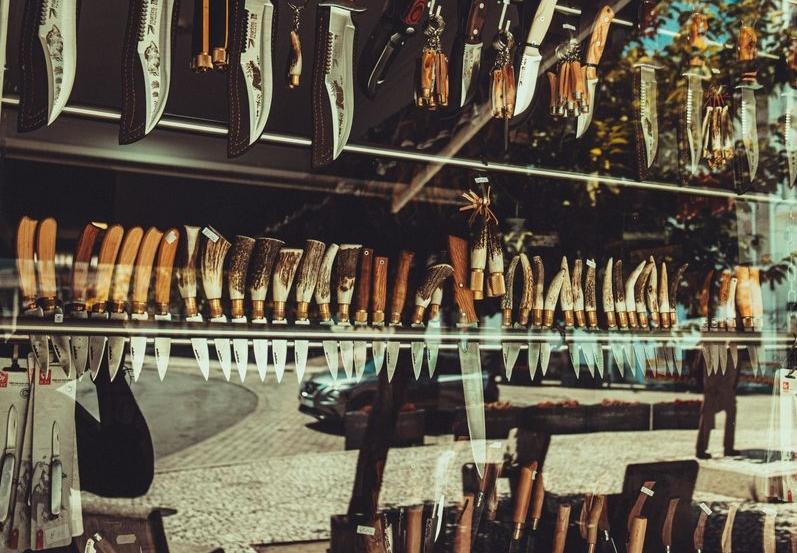
Every knife dealer sources inventory through one of three paths. They differ enormously in barrier to entry, cost, and how much control you have over what you sell.
| Authorized Brand Dealer | Wholesale Distributor | Factory-Direct | |
|---|---|---|---|
| Barrier to entry | Hoch | Niedrig | Medium |
| Storefront required? | Often yes | NEIN | NEIN |
| Typical first order | $500+ opening order | $100–$500 | ~200 pcs per order |
| Pricing control | MAP-enforced | Some policies | Your own pricing |
| Product range | One brand | Hundreds of brands | Your designs or factory catalog |
| Private label option | NEIN | NEIN | Yes (OEM) |
| Am besten geeignet für | Established retailers | Beginners, variety seekers | Brand builders, online sellers |
Carrying premium brands (Benchmade, Spyderco, Microtech, Case, Buck) means applying to each brand’s dealer program and accepting its rules. Requirements published on official brand pages include:
| Marke | Key requirements (per official pages, September 2026) |
|---|---|
| Benchmade | Physical storefront with business license; sales rep approval; minimum SKU/dollar commitment; MAP policy compliance |
| CRKT | Physical storefront; credit application; dealer agreement; separate Internet Authorization Program to sell online; 5–10 business days processing |
| Buck Messer | $500 minimum opening order; maintain $1,500/year purchase level; display authorized dealer branding |
| Case | 18+ years old, US resident, dealer application form |
| Spyderco | Annual reseller pre-authorization; MAP; strict marketplace rules — no Amazon FBA without written approval, no reselling to other resellers |
| Microtech | Dealer application required; minimums not published |
Two things stand out. First, these requirements aren’t new — dealers were discussing storefront mandates and five-figure opening orders on forums back in 2010. Second, notice how many brands restrict Wo you can sell: Benchmade and CRKT want a physical store, and Spyderco’s agreement tightly controls online marketplaces. If your plan is an online-only business, brand-authorized dealing is the hardest door to open.
Vorteile: Recognizable brands that customers search for by name; dealer locator listings; marketing assets; warranty backing.
Nachteile: Storefront and credit requirements; MAP limits your pricing flexibility; minimum annual commitments; online restrictions.
Path 2: Buying through a wholesale distributor
Distributors aggregate hundreds of brands under one account. Blue Ridge Knives, the largest US knife distributor, requires only your state resale license to apply, with minimum orders of $100 (US) or $500 (international). One application gives you access to 800+ brands — the lowest-friction way to become a knife dealer, and the classic starting point for new sellers. For a vetted list, see our guide to Taschenmesser Großhändler.
The trade-off, as working dealers point out, is margin: distributor pricing sits between factory cost and retail, so your profit per unit is thinner than buying direct. Watch case packs too — some distributors force you to buy 12 units of a single SKU.
Vorteile: Lowest startup cost; huge selection; no storefront needed; fast approval.
Nachteile: Thinner margins; case-pack requirements; you compete with every other dealer carrying the same brands.
Kaufen Sie Messer im Großhandel und starten Sie noch heute mit uns ins Wachstum
Kontaktieren Sie uns und verbinden Sie sich mit einem Vertriebsmitarbeiter, um ein kostenloses Angebot zu erhalten.
Path 3: Going factory-direct with a manufacturer
The third path skips both brand programs and distributors: you buy directly from the factory. This is how most private-label knife brands and many successful online sellers actually operate. Chinese knife manufacturers — especially in Yangjiang, the country’s historic blade-making city — produce for a large share of the global market, and many OEM knife manufacturers accept orders starting around 200 pieces.
Factory-direct changes the economics: no middleman markup, your own logo and specifications through Eigenmarkenproduktion, and no MAP policy or storefront requirement — you set your own prices and sell wherever it’s legal. The barrier is higher per-order commitment (hundreds of units instead of hundreds of dollars) and the need to vet suppliers yourself.
Vorteile: Best unit economics; your own brand; pricing freedom; OEM/custom designs; no storefront or MAP.
Nachteile: Higher per-order quantity; you handle import logistics; supplier vetting is on you.
How Much Does It Cost to Become a Knife Dealer?
Less than most people assume. Here’s a realistic startup budget by path:
| Cost item | Distributor start | Brand dealer | Factory-direct |
|---|---|---|---|
| Business registration (LLC) | $50–$500 (state fee) | $50–$500 | $50–$500 |
| EIN + resale certificate | Free | Free | Free |
| First inventory order | $100–$500 | $500–$2,000+ | ~$1,000–$3,000 (200 pcs) |
| Website / sales channel | $0–$300 | $0–$300 (+ store lease if required) | $0–$300 |
| Basic liability insurance | $300–$600/yr | $300–$600/yr | $300–$600/yr |
| Realistic total to start | ~$500–$1,500 | ~$1,000–$4,000+ | ~$1,500–$4,500 |
(Figures are planning estimates based on published supplier minimums and typical US state fees; your state and supplier quotes will vary.)
What about profit? Knife retail traditionally runs on healthy margins — dealers commonly buy at 40–55% of retail price depending on the path, with factory-direct at the favorable end and distributor pricing at the thinner end (these are industry-typical ranges, not guaranteed figures; confirm with your supplier’s actual price list). A $100 distributor test order is a cheap way to learn what sells before committing serious inventory money.
Where Can You Sell Knives?

- Your own website — maximum control and margin, and the only channel with no platform knife policy. This is where most successful online dealers end up. For platform comparisons (WooCommerce vs. Shopify and their knife rules), see our online knife selling guide.
- Brick-and-mortar — required by some brand programs, and still effective for hunting, EDC, and gift buyers who want to handle a knife before buying.
- Marketplaces — restricted territory. eBay allows manual folding knives and fixed blades but bans automatics, balisongs, gravity knives, and disguised knives (eBay UK is stricter still). Facebook Marketplace bans knives entirely. Amazon allows many knives but prohibits automatics in most states. Read each platform’s weapons policy before listing.
- Trade shows, gun shows, and flea markets — a proven low-cost channel, especially for new dealers testing demand. Some states even issue “show and entertainment” resale certificates specifically for this. See our roundup of globale Messershows for the events worth attending.
- Dropshipping — a no-inventory variant where your supplier ships directly to your customer. It’s the lowest-risk way to test the market; we cover the model in detail in our guide on how to dropship knives.
One more compliance note: shipping knives has its own carrier rules (USPS, UPS, and FedEx treat knives differently, and automatics have federal shipping restrictions). Read kannst du ein Messer verschicken before your first shipment.
Your First 90 Days: A Step-by-Step Checklist
- Week 1–2: Legal setup. Register your LLC, get your free EIN from the IRS, and apply for your state resale certificate.
- Week 2: Knife-law check. Review federal, state, and local rules for every type of knife you plan to stock and every state you’ll ship to.
- Week 3: Pick your supplier path. Distributor for the cheapest start, brand program if you have (or can borrow) a storefront, factory-direct if you’re building a brand.
- Week 3–4: Apply. Have your business proof, resale certificate, and (for brands) photos of your store or website ready. Suppliers may also ask for credit references.
- Week 4–6: Test order first. Never lead with a big commitment. A $100–$200 distributor order or factory samples tell you more than any spreadsheet.
- Week 6–10: List and sell. Set up your channel, photograph inventory properly, and publish. Comply with MAP where applicable, verify age at checkout, and follow carrier shipping rules.
- Week 10–13: Review and reorder. Double down on what sold; drop what didn’t. Then scale your orders.
Three pieces of hard-won advice from working dealers:
- Can’t afford a storefront but want a brand account? Rent counter or shelf space inside an established local hardware, gun, or outdoor store. It satisfies many brands’ physical-presence requirement at a fraction of a lease.
- Start part-time. Dealers who keep their day job while testing the market overwhelmingly recommend it — a resale certificate plus a distributor account plus eBay or a simple website is the cheapest real start there is.
- Know what you’re signing up for. Your hobby becomes your job: sourcing, compliance, shipping, and customer service follow you home. The dealers who thrive treat it as a business first and a passion second.
Become a LeeKnives Dealer

If the factory-direct path fits your plans, LeeKnives is built for exactly that. We’ve been forging knives in Yangjiang, China since 1993, and we work with retailers, e-commerce sellers, and brand owners worldwide:
- Factory-direct wholesale pricing with no middleman markup
- Manageable minimums — typically 200 pcs per order, with sample orders available before you commit
- OEM and private label — custom designs, logos, and materials for dealers building their own brand
- Dropshipping fulfillment if you’d rather sell online without holding inventory
- Global shipping by air, sea, rail, or express, with a dedicated support rep for your account
- Dropshipping fulfillment if you’d rather sell online without holding inventory
- A US-amerikanisches Lager so you can store inventory stateside and ship domestically, cutting delivery times and customs friction
Ready to start? Become a LeeKnives dealer oder get a free wholesale quote — tell us what you want to sell and we’ll take it from there.
So, Which Path Should You Take?
- If you have a physical store and want premium US brands → apply for authorized dealer programs (Benchmade, CRKT, Buck) and budget for MAP compliance and annual minimums.
- If you’re starting small or part-time → open a distributor account, place a $100–$200 test order, and learn what your customers actually buy.
- If you want your own brand, the best margins, or an online-only business → go factory-direct with an OEM manufacturer.
- If you want zero inventory risk → start with dropshipping and reinvest profits into stock later.
Whichever path you choose, the sequence never changes: business registration, resale certificate, supplier, then sales. Get the paperwork right and the rest is just practice.
Häufig gestellte Fragen
Do I need a license to sell knives?
No specialized knife license exists in the US. You need a general business registration, an EIN, and a state resale certificate to buy wholesale tax-free. Knife-specific laws restrict certain types (automatics, disguised knives) by state, and most jurisdictions ban sales to minors. Scotland separately requires a knife dealer’s licence for non-domestic knives.
How much does it cost to become a knife dealer?
A distributor-based start can cost $500–$1,500 total, including a $100–$500 first order and basic business setup. Brand dealer programs typically require $500+ opening orders plus annual commitments. Factory-direct orders start around 200 pieces. Business registration, EIN, and resale certificates are free or under $500 in most states.
Is selling knives profitable?
It can be. Dealers typically buy at roughly 40–55% of retail price depending on supplier path, with factory-direct sourcing offering the widest margins. Profitability depends on niche selection, channel, and compliance costs — treat early orders as market tests, and verify actual margins against your supplier’s price list before scaling.
Is it legal to sell knives on eBay or Facebook Marketplace?
eBay allows manual folding knives, fixed blades, and kitchen cutlery, but bans automatic knives, balisongs, gravity knives, and disguised blades; eBay UK is more restrictive. Facebook Marketplace prohibits knives entirely under its weapons policy — violations risk a permanent account ban. Always check the platform’s current weapons policy before listing.
How do I become a dealer for a specific brand like Case, Buck, or Benchmade?
Apply through each brand’s official dealer page. Typical requirements: a registered business with resale certificate, often a physical storefront (Benchmade, CRKT), an opening order commitment (Buck: $500), and MAP policy compliance. Online-only sellers should check each brand’s internet authorization rules — Spyderco, for example, restricts marketplace sales.
Do you need a license to sell homemade knives?
Generally no special license — homemade and craft knives follow the same rules: business registration, sales tax permit, and compliance with state knife laws and age restrictions. Liability insurance is strongly recommended since you manufactured the product. If you make automatic or otherwise restricted knife types, additional state and federal rules apply.
How do you become a knife and sword dealer?
The process is identical to knife dealing: business registration, resale certificate, and a supplier account. The extra step is legal review — swords and non-domestic blades face stricter rules in some jurisdictions (Scotland, for instance, licenses dealers of swords and non-domestic knives), and most marketplaces restrict them. Verify local law before stocking.





 DE
DE  EN
EN  JA
JA