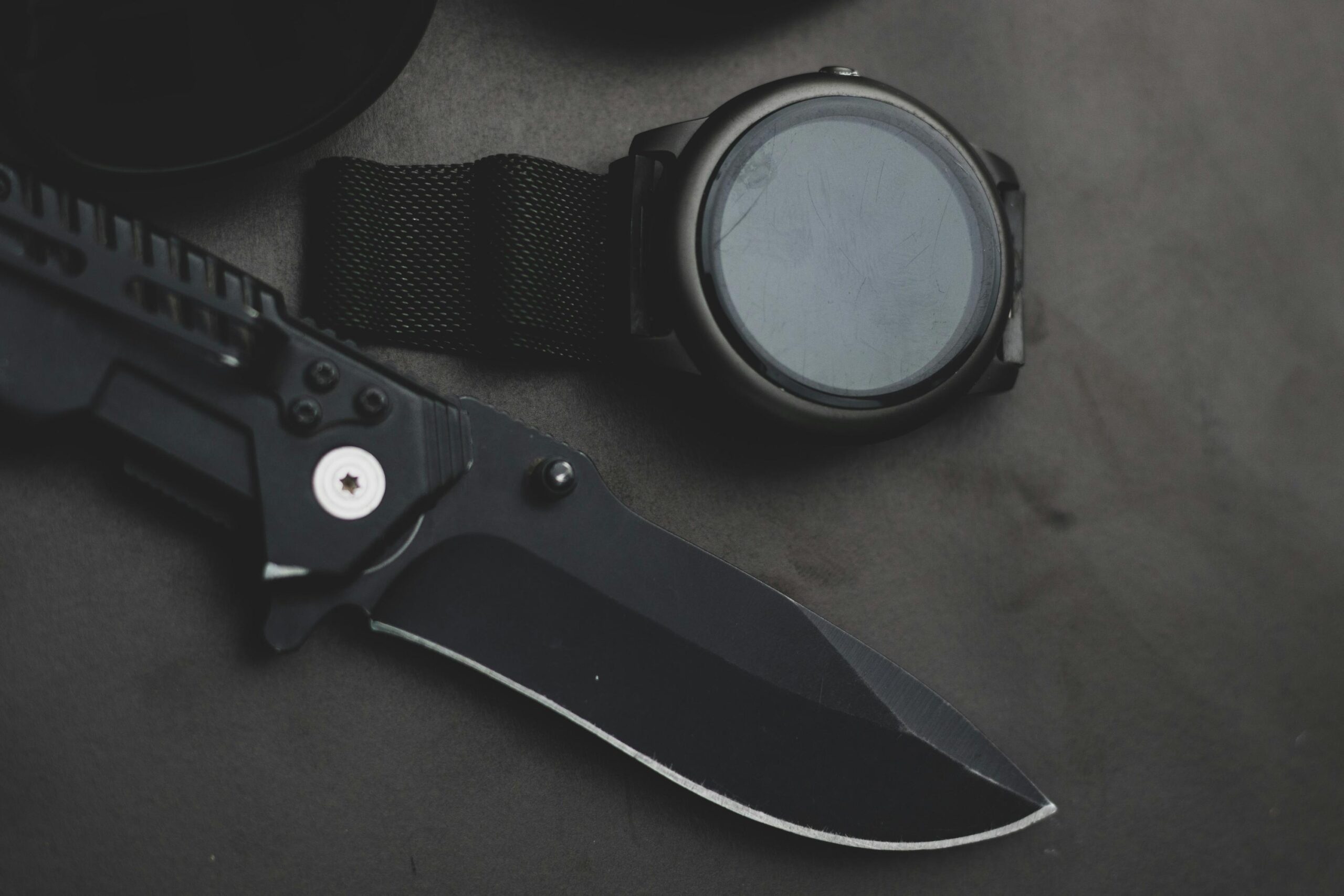
A blade coating is a thin layer of material—metal, ceramic, carbon, or polymer—applied to a knife blade’s surface to improve corrosion resistance, wear resistance, friction, or appearance.
Coatings protect the blade’s surface but never replace good steel: the sharpened edge remains exposed metal and still needs basic care.
Quick Facts: Knife Blade Coatings at a Glance
| Frage | Antwort |
|---|---|
| Most durable coating | Zusatzinhalt (highest scratch resistance, premium cost tier) |
| Best color variety | PVD (gold, black, silver, champagne) |
| Best for outdoor/marine | Cerakote (corrosion protection + matte colors) |
| Lowest friction | PTFE (Teflon) Und Zusatzinhalt |
| Budget option | Powder coating oder black oxide |
| Typical thickness | 1–5 microns (PVD/DLC); thicker for powder/Cerakote |
| Does coating replace good steel? | NEIN — edge stays exposed metal |
What Is a Blade Coating on a Knife?
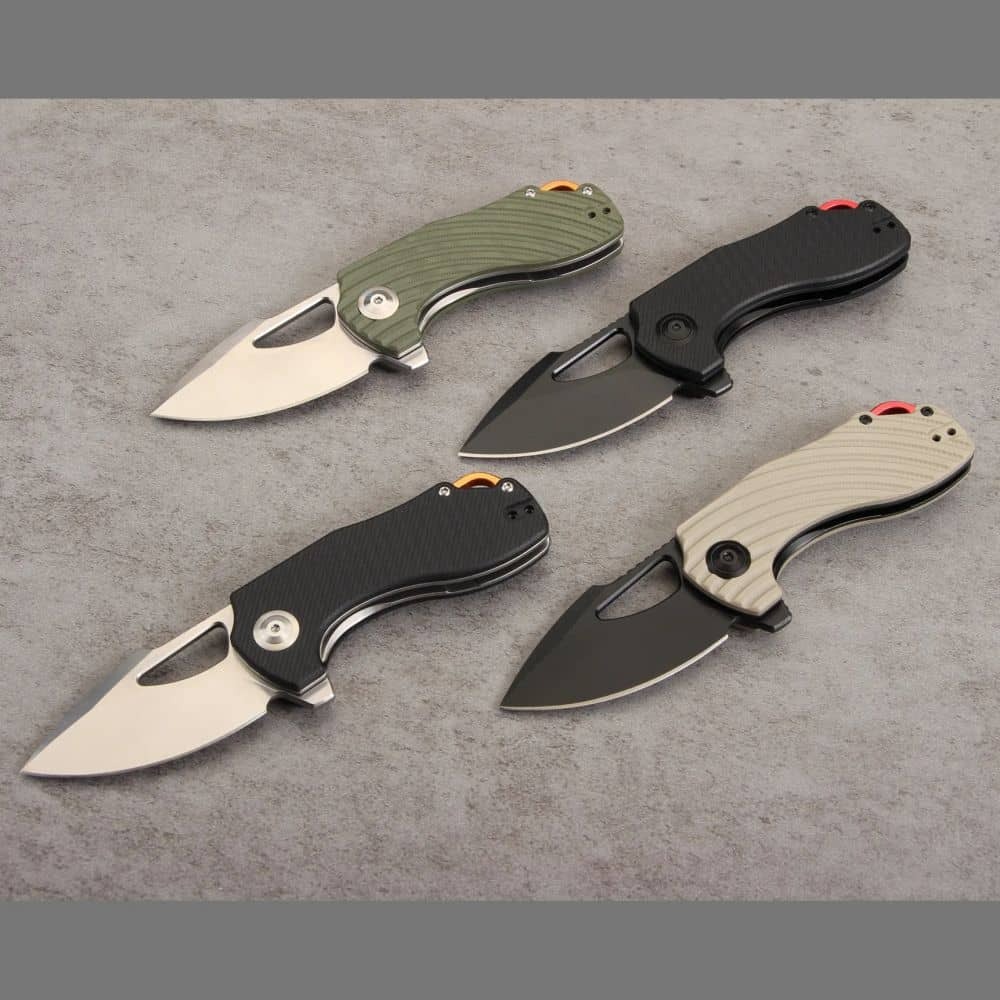
A blade coating is a thin layer of material added to a knife or tool blade to protect it and improve how it performs.
The layer can be metal, ceramic, carbon, or polymer based, and it is applied by spraying, baking, electrostatic curing, or vacuum deposition.
The most common knife coatings are DLC (Diamond-Like Carbon), PVD coatings such as TiN Und TiCN, Cerakote, black oxide, PTFE (Teflon), Und powder coating.
Done well, a coating does not compromise the inherent properties of the steel underneath.
One distinction matters before you compare options—buyers and even some suppliers mix these terms up:
| Term | What It Actually Is | Knife Example |
|---|---|---|
| Fertig | The final texture of the steel surface itself | Satin, mirror polish, stonewash, bead blast |
| Beschichtung | A deposited or cured layer on top of the steel | DLC, PVD, Cerakote, TiN, powder coat, paint |
| Treatment | A chemical change to the surface, no added layer | Black oxide, Parkerizing, acid wash |
This guide covers coatings Und conversion treatments. Oberflächen like stonewash are steel-surface textures, not coatings—an important difference when you write product specs, because finishes and coatings fail differently and carry different warranty expectations.
What Are the Benefits of Blade Coatings?
Coatings do more than change how a blade looks—they measurably improve how a knife performs and lasts in your customers’ hands.
- Corrosion protection. Coatings create a barrier against moisture, salts, and acids, keeping blades rust-free even in humid conditions or when cutting acidic foods.
- Enhanced wear resistance. Hard coatings such as DLC and PVD nitrides resist scratches and scuffs far better than bare steel, so products look newer for longer on the shelf and in use.
- Lower friction. Slick coatings like PTFE and DLC reduce surface drag, so blades glide through material with less sticking—useful in high-volume prep or packaging work.
- Glare reduction. Matte black coatings eliminate reflections, a functional requirement for tactical and hunting knives.
- Aesthetic customization. Coatings come in colors and finishes that bare steel cannot achieve, letting you differentiate SKUs and match a brand’s visual identity without changing the blade design.
For knife sellers, the right coating directly affects product durability, customer satisfaction, and the perceived value of your lineup.
What Are the Main Types of Knife Blade Coatings?
Each coating method uses different materials and processes, detailed in the sections below. This table compares the options side by side on the dimensions buyers actually ask about—plus two you should always raise with suppliers: thickness Und cost tier.
| Beschichtung | Scratch Resistance | Reibung | Colors | Shows Wear? | Dicke | Kostenstufe |
|---|---|---|---|---|---|---|
| Zusatzinhalt | Sehr hoch | Very low | Black only | Very low | 1–5 µm | $$$ |
| PVD (TiN / TiCN / ZrN / CrN) | Hoch | Niedrig | Gold, black, silver, champagne & more | Niedrig | 1–5 µm | $$ |
| Cerakote | Medium | Medium | Any, matte | Medium | ~25 µm baked film | $$ |
| PTFE (Teflon) | Low–medium | Very low | Mostly black | Medium–high | Thin film | –$ |
| Powder Coating | Medium | Hoch | Beliebig | Hoch | Thick, 50–150 µm | $ |
| Black Oxide / Parkerizing | Niedrig | Medium | Black / gray-green | Hoch | None (conversion) | $ |
| Malen | Niedrig | Medium | Beliebig | Sehr hoch | Thin but soft | $ |
Ratings are relative, based on typical knife-grade applications; real-world results depend heavily on the applicator’s process control—one more reason to request test data before a batch order (see the OEM specification section below).
- Choose DLC if scratch resistance and a premium black finish drive your positioning.
- Choose PVD if you need color variety at a moderate cost tier.
- Choose Cerakote if corrosion protection and matte field colors matter more than edge-area wear.
- Choose black oxide or powder coat if the line is value-priced.
Kaufen Sie Messer im Großhandel und starten Sie noch heute mit uns ins Wachstum
Kontaktieren Sie uns und verbinden Sie sich mit einem Vertriebsmitarbeiter, um ein kostenloses Angebot zu erhalten.
What Is DLC Coating?
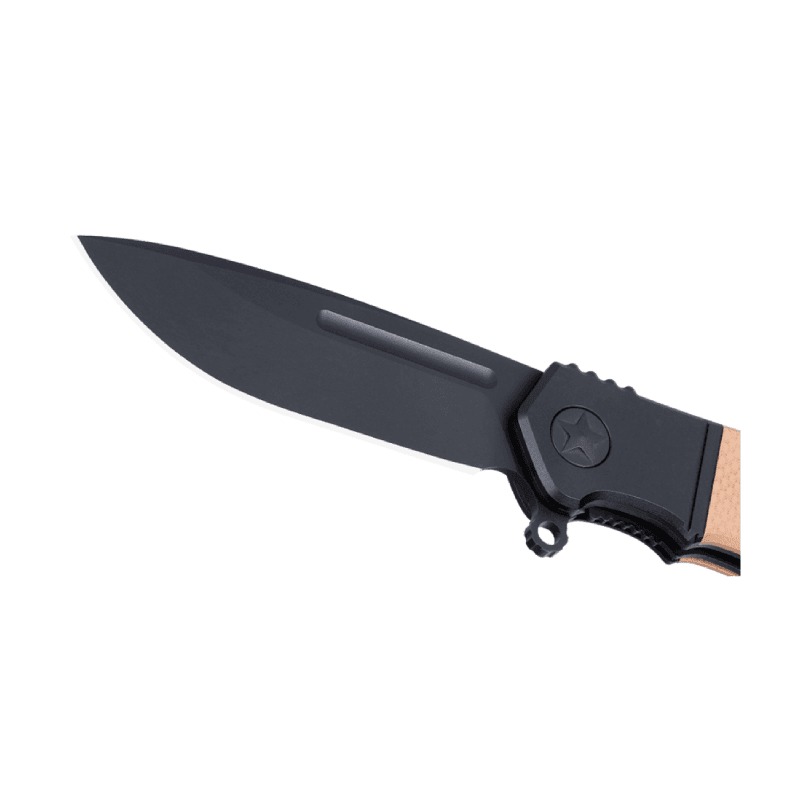
DLC (Diamond-Like Carbon) is an amorphous carbon coating that combines diamond-like hardness with graphite-like slickness, applied in a vacuum chamber. It is widely considered the most durable, scratch-resistant coating available for production knives, and it produces the deep black finish buyers associate with premium blades.
In the vacuum process, carbon is deposited atom by atom and bonds at the molecular level—so a well-applied DLC layer does not peel or flake like a paint film; it wears only gradually at contact points. One note for buyers: “DLC” covers several carbon formulations with different hardness-toughness balances, so ask a supplier which type they apply and what hardness range they guarantee.
- Uses: Premium EDC folders, tactical knives, flagship fixed blades.
- Vorteile: Highest wear and scratch resistance of common knife coatings; very low friction; chemically inert and corrosion resistant.
- Nachteile: Premium cost tier; black-to-dark-gray only; degrades above roughly 300–400°C; harder to strip and recoat than PVD.
What Is PVD Coating?
PVD (Physical Vapor Deposition) is a vacuum process that bonds a thin, hard film—typically 1–5 microns—onto the blade. It is not one coating but a family: TiN (gold), TiCN (gray-black), ZrN (champagne), and CrN (silver) are the common knife options. PVD nitrides reach roughly 2,000–3,000 HV in microhardness—far harder than the blade steel itself—which is why they resist scratching so well.
The color comes from the coating material itself, not from dyes, so a PVD finish will not fade like paint. And because the film is only microns thick, it mirrors the surface underneath: a mirror-polished blade comes out glossy, a bead-blasted blade comes out matte. Specify the base finish, and you control the final look.
- Uses: EDC folders, kitchen knives, gift knives, industrial cutting tools.
- Vorteile: Hard and scratch resistant; very thin, so blade geometry is preserved; low friction; wide color range; chemically stable.
- Nachteile: Higher cost than conversion finishes; deep scratches expose the steel beneath; quality depends heavily on the applicator’s surface preparation.
What Is Cerakote?
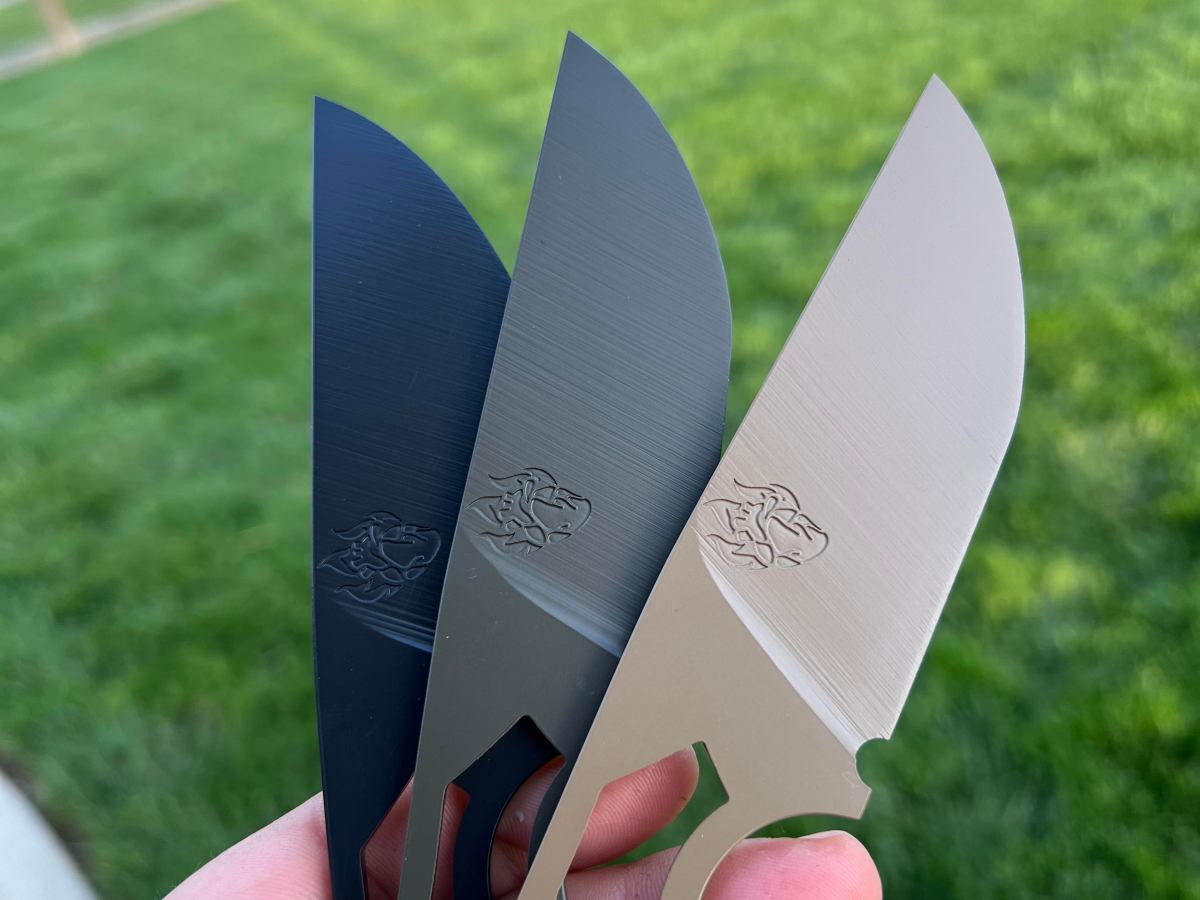
Cerakote is a baked-on ceramic-polymer composite coating known for strong corrosion resistance and a huge matte color palette. It dominates hunting, outdoor, and tactical applications where environmental protection and color matching matter.
Originally developed for firearms, Cerakote is sprayed on and then oven-cured into a thin ceramic-polymer shell—built for rain, sweat, and salt. Any color is possible, which makes it the go-to for brands building colored or camouflage lines. And unlike DLC, it can be stripped and reapplied, which is useful if your line ever needs refinishing.
- Uses: Hunting knives, field and survival blades, tactical pieces, colored utility lines.
- Vorteile: Excellent corrosion and chemical resistance; the widest color selection of any coating; more affordable than DLC.
- Nachteile: Wears visibly at the edge and high-contact points; thicker than PVD; not the first choice for food-prep blades.
What Are Black Oxide and Parkerizing?
Both are conversion treatments that chemically change the steel’s surface rather than adding a separate layer. Black oxide turns the outer surface into magnetite for a low-glare, mildly rust-resistant finish. Parkerizing applies a phosphate layer that holds oil and resists rust, common on military-style and work knives.
Because nothing is added on top of the steel, these treatments add virtually no thickness and cannot chip or peel—there is no layer to fail. The protection is modest, though: think of them as glare control plus a rust delay, backed up by regular oiling rather than a true barrier.
- Uses: Budget tactical knives, work blades, military-style designs.
- Vorteile: Very cost-effective; reduces glare; Parkerizing holds protective oil well.
- Nachteile: Minimal scratch protection; wears at friction points like sheath contact; industrial appearance.
What Is Teflon (PTFE) Coating?
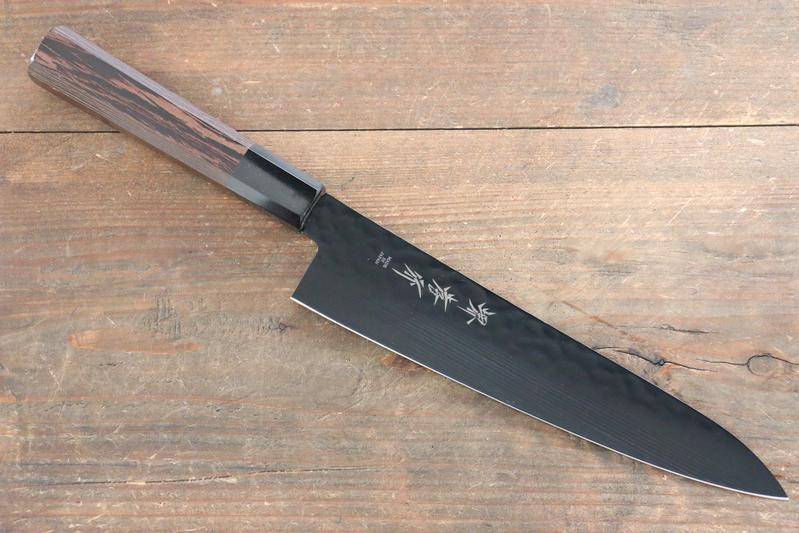
PTFE is a smooth, non-stick polymer coating—the same material family used in non-stick cookware. On a blade, it prevents food, tape, and sticky materials from clinging, and its low friction makes each cut feel smoother.
The trade-off is durability: PTFE is a soft polymer that wears with use, so treat it as a functional coating for working blades, not a long-term cosmetic finish.
- Uses: Utility knives, kitchen knives, industrial blades that cut adhesive or fibrous materials.
- Vorteile: Easiest to clean; lowest friction of the budget options.
- Nachteile: Less durable than metal coatings and wears off over time; not suitable for high-temperature applications. (See how it compares to bare steel in non-stick vs stainless steel surfaces.)
What Is Powder Coating?
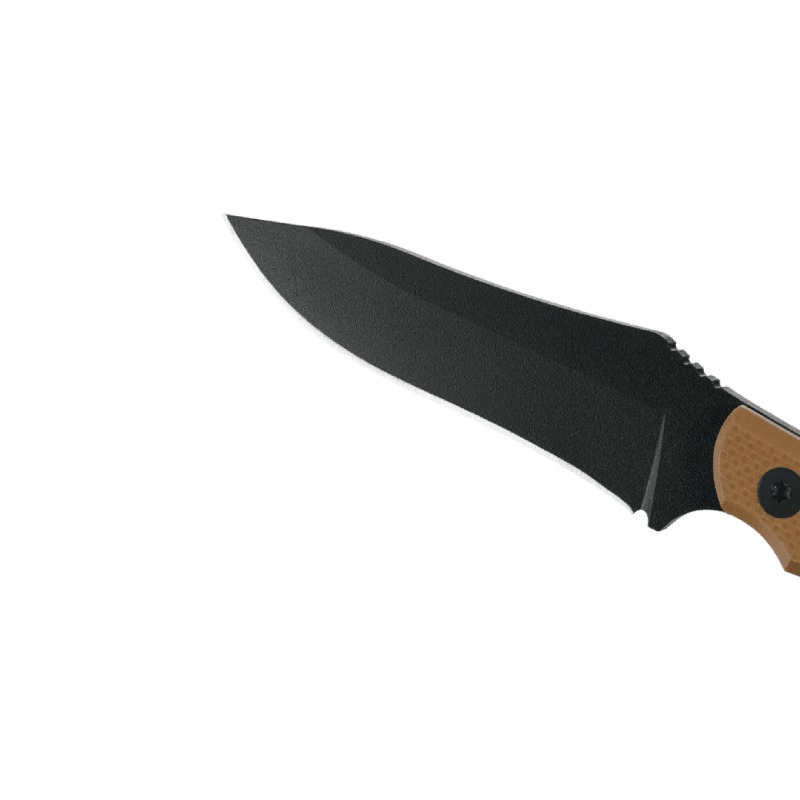
Powder coating sprays a dry powder onto the blade, then bakes it into a tough protective shell. It is thicker than PVD or DLC, and that thickness is both its strength and its weakness.
The powder is charged electrostatically so it wraps evenly around the blade before curing, which is why powder-coated blades shrug off scratches, moisture, and chemicals—but feel slightly “draggy” in a cut. For hard-use outdoor knives at value price points, the toughness per dollar is hard to beat.
- Uses: Outdoor, camping, and tactical value lines.
- Vorteile: Tough against scratches, chips, moisture, and chemicals; many matte color options.
- Nachteile: The thicker film adds drag when cutting; can chip under rough impact.
What About Paint?
Some entry-level blades use paint for a colorful finish, sprayed or brushed on and air-dried or baked. Paint offers the widest color freedom at the lowest cost, but it is the least durable option—it scratches and fades quickly. Think of paint as a color treatment rather than a protective coating, best suited to display pieces or novelty knives rather than working blades.
PVD vs DLC vs Cerakote: Which Should You Choose?
These three dominate mid-to-premium knife programs, and buyers ask about them together for good reason. The honest answer: they solve different problems.
- Hardness & scratch resistance: DLC leads; hard PVD nitrides are close; Cerakote is tougher against chipping but scratches more easily.
- Color: PVD offers metallic colors (gold, champagne, silver, black); Cerakote offers any matte field color; DLC is black only.
- Heat tolerance: PVD nitrides handle the highest temperatures; DLC degrades above roughly 300–400°C; Cerakote sits between them for typical knife use.
- Cost tier: PVD is the volume-friendly middle; DLC sits highest; Cerakote is competitive for colored runs.
- The dual-strategy play: many brands launch a standard PVD version for volume and a DLC version as the premium flagship—same blade, two price points, no redesign.
DLC / PVD / Cerakote Blade Coating Comparison
| Evaluation Item | Zusatzinhalt | Hard PVD Nitrides | Cerakote |
|---|---|---|---|
| Hardness & Scratch Resistance | ★★★★★ | ★★★★☆ | ★★★☆☆ (Better chipping resistance, scratches easier) |
| Color Selection | ★☆☆☆☆ (Only black) |
★★★★☆ (Metallic: gold, champagne, silver, black) |
★★★★★ (Any matte field color) |
| Hitzetoleranz | ★★☆☆☆ (Degrades ~300–400°C) |
★★★★★ | ★★★☆☆ (Middle range for typical knife use) |
| Anti-Chipping / Impact Resistance | ★★★☆☆ | ★★☆☆☆ | ★★★★★ |
| Production Cost (Lower cost = higher star) | ★☆☆☆☆ (Highest cost) |
★★★★☆ (Volume-friendly mid tier) |
★★★☆☆ (Competitive for colored batches) |
Does a Coating Make a Blade Sharper or Rust-Proof?
No—and honest answers here build buyer trust. Two myths need correcting:
Coatings do not improve edge retention. Sharpness comes from the blade steel and its heat treatment, not from a micron-thin surface layer. What coatings do add is lower friction, so the blade feels like it cuts more smoothly because material sticks less. Never market a coating as “stays sharper longer”—that claim will not survive a knowledgeable customer.
Coated blades can still rust. Most coatings stop before the edge or are ground away during sharpening, leaving exposed steel at the apex. A coated high-carbon blade still needs basic carbon steel blade care, and the choice between carbon vs stainless steel still matters. The coating complements the steel; it never replaces it.
Which Coating Fits Your Knife Line?
For wholesale buyers and brand owners, the coating decision is really a product-positioning decision. Match the coating to what your end customer values:
| Knife Line | Recommended Coating | Warum |
|---|---|---|
| Kitchen knives (Kochmesser) | PVD (ZrN/CrN) or uncoated stainless | Food-contact confidence, easy cleaning |
| EDC Klappmesser | Black PVD or DLC | Pocket-wear resistance vs cost balance |
| Taktische Messer | Zusatzinhalt | Maximum hardness, low glare |
| Im Freien Messer mit feststehender Klinge | DLC or Cerakote | Corrosion protection in wet climates |
| Gift & collector knives | PVD TiN gold | Visual impact at gift-tier cost |
| Value/camping lines | Powder coat or black oxide | Protection at entry-level cost |
For wholesale buyers: coating choice translates directly to sell-through—DLC’s scratch resistance cuts “worn look” complaints on EDC lines, while Cerakote’s corrosion protection reduces returns in humid coastal markets. Get batch pricing for your target coating and volume.
Kaufen Sie Messer im Großhandel und starten Sie noch heute mit uns ins Wachstum
Kontaktieren Sie uns und verbinden Sie sich mit einem Vertriebsmitarbeiter, um ein kostenloses Angebot zu erhalten.
Which Blade Steels Take Coatings Best?
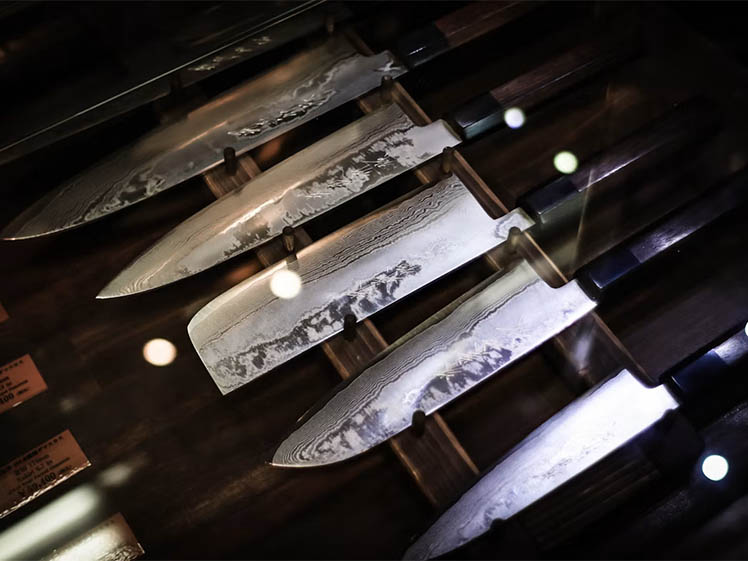
Stainless steels bond most reliably with PVD and DLC; high-carbon steels need extra surface preparation. Getting this match wrong is one of the most expensive lessons in coated-knife sourcing.
- Rostfreie Stähle (9Cr18MoV, 14C28N, VG-10, S35VN—see our beste Taschenmesserstähle breakdown) take coatings consistently and predictably.
- High-carbon and tool steels (D2, 65Mn) coat well but demand stricter cleaning and prep to avoid adhesion failures.
- Hardness matching matters. Very hard, brittle coatings perform best on blades hardened to the upper 50s HRC; on softer blades, a hard coating over a soft substrate can crack under impact.
Based on LeeKnives’ 30+ years of OEM production in Yangjiang, most coating failures we see trace back to surface preparation, not the coating itself. We specify base finishes before coating—mirror-polished blades yield glossy PVD, bead-blasted blades yield matte—and we hold blade hardness to spec because a hard DLC layer over an under-tempered blade (see Rockwell-Härte (HRC)) risks cracking under impact. Ask any coating supplier for adhesion test data and salt-spray hours before approving a batch; a supplier who cannot provide both is a red flag.
How Do You Specify Blade Coatings When Ordering from an OEM?
A complete coating specification has seven elements, and missing any one of them invites batch disputes. Use this checklist when you request quotes:
- Coating material and color — name the exact system (e.g., “TiCN black PVD,” not just “black coating”).
- Base surface finish — mirror, satin, or bead-blast; this determines the final gloss.
- Coating thickness — typically 1–5 microns for PVD/DLC; state your target range.
- Adhesion standard — request the test method and acceptance criteria in writing.
- Corrosion testing — specify salt-spray hours as your acceptance benchmark.
- Coverage scope — single side or both sides; whether the edge bevel is masked.
- Sample validation — approve physical samples before committing to production volume.
Commercial terms follow the same discipline: confirm [MOQ], [lead time], and [price range] per coating option in the quote stage, since coating cost tiers vary with blade size, volume, and masking complexity. Our OEM knife service walks through this specification process with every custom and Eigenmarke program.
How Do You Care for Coated Blades?
Clean coated blades with mild soap and water, dry them immediately, and keep abrasives away from the surface. Coated blades are lower maintenance, not maintenance-free:
- Cleaning. Use a soft cloth with mild soap and water. Avoid abrasive pads and harsh chemicals that wear the coating, and dry the blade immediately after washing.
- Handling. Minimize contact with hard surfaces like ceramic and stone that can chip hard coatings. Store and transport blades with protective coverings.
- Storage. Keep blades dry with good airflow; for long-term storage, a light coat of oil on the exposed edge protects the uncoated steel.
- Sharpening. Normal sharpening removes coating only from the edge bevel—the rest of the blade stays protected. Understanding Honen vs. Schärfen helps customers maintain edges without unnecessary grinding.
Häufig gestellte Fragen
What is the best coating for a knife blade?
DLC (Diamond-Like Carbon) is widely considered the best all-around knife blade coating because it combines extreme surface hardness, high scratch resistance, and very low friction. That said, the right choice depends on the knife’s job. DLC or black PVD fits tactical and EDC knives, Cerakote suits hunting and outdoor blades that need color and corrosion protection, and PVD TiN or CrN works well for kitchen and gift knives. For pure food prep, uncoated stainless steel is still the safest default.
What is the black coating on knife blades?
The black coating on most knives is one of four finishes: DLC, black PVD (such as TiCN), Cerakote, or black oxide. DLC is a premium carbon coating with the highest scratch resistance and a deep black look. Black PVD offers similar styling at a lower cost tier. Cerakote is a baked-on ceramic-polymer layer with strong corrosion protection, and black oxide is a chemical conversion finish that mainly reduces glare with mild rust resistance. You can often tell them apart by sheen: DLC looks satin-black, Cerakote matte, and black oxide slightly gray.
What is PVD coating on knife blades?
PVD (Physical Vapor Deposition) is a vacuum process that vaporizes a solid coating material and bonds it to the blade as a thin, hard film, typically just 1–5 microns thick. Common PVD coatings for knives include TiN (gold), TiCN (gray-black), ZrN (champagne), and CrN (silver). PVD coatings add scratch resistance, corrosion protection, and colors that bare steel cannot achieve, while being thin enough to preserve the blade’s geometry. Quality depends heavily on surface preparation and process control, which is why supplier experience matters.
Is ceramic coating good for knives?
Yes—with one important clarification: ceramic coatings like Cerakote are very different from ceramic blades. A ceramic coating is a thin ceramic-polymer layer applied to a steel blade, and it works well for hunting, outdoor, and tactical knives because it adds strong corrosion resistance and color options. Its trade-offs are visible wear at the edge and contact points, and it is not the first choice for food-prep knives. Solid ceramic blades are a separate product entirely, covered in our ceramic vs steel knives Vergleich.
What are the disadvantages of DLC coating?
DLC’s main disadvantages are cost, color choice, and repairability. It sits in a higher cost tier than standard PVD or Cerakote, which affects margins on volume orders. It only comes in black to dark gray, so it cannot support colorful product lines. DLC can also chip under sharp impacts, degrades at high temperatures above roughly 300–400°C, and is difficult to strip and recoat compared with PVD. Finally, coating quality varies widely between applicators, so always request adhesion test data before committing to a production run.
Does the black coating on knives come off?
Yes, all black coatings wear eventually—but where and how fast depends on the coating type and use. The cutting edge loses its coating first because sharpening removes it from the bevel; pocket-clip contact points and sheath friction zones follow. Quality DLC and PVD hold up for years of normal carry, while Cerakote and black oxide show wear sooner at high-contact points. This is normal and cosmetic. What should not happen is flaking or peeling across the blade flats, which signals poor surface preparation at the factory.
Do ceramic coated knives stay sharp?
A ceramic coating does not make a knife stay sharp longer. Edge retention is decided by the blade steel and its heat treatment, not by the coating, which is only microns thick and sits on the blade’s flats. The sharpened edge is exposed steel either way. What a coating does add is lower cutting friction and better corrosion protection on the blade surface, so the knife feels smoother and looks newer for longer. Judge sharpness claims by steel choice, not coating.
Conclusion: The Right Coating Is a Product Decision
Blade coating makes a real difference: it protects against wear and corrosion, reduces friction, kills glare, and opens up colors bare steel cannot offer. But there is no single winner—DLC, PVD, Cerakote, and the value options each fit different knife lines and price points.
The spec that works is the one matched to your target market: what your customers cut, where they carry, and what they are willing to pay. Get the coating, steel, and base finish specified together, validate with samples, and the coating becomes a selling point instead of a warranty claim.
Source Coated Knives Directly from the Manufacturer
LeeKnives manufactures coated kitchen, EDC, and outdoor knives in Yangjiang, China for brands, wholesalers, and retailers worldwide. OEM/ODM, private label, and custom steel, coating & handle options available. Request a Free Quote.
Kaufen Sie Messer im Großhandel und starten Sie noch heute mit uns ins Wachstum
Kontaktieren Sie uns und verbinden Sie sich mit einem Vertriebsmitarbeiter, um ein kostenloses Angebot zu erhalten.




 DE
DE  EN
EN  JA
JA