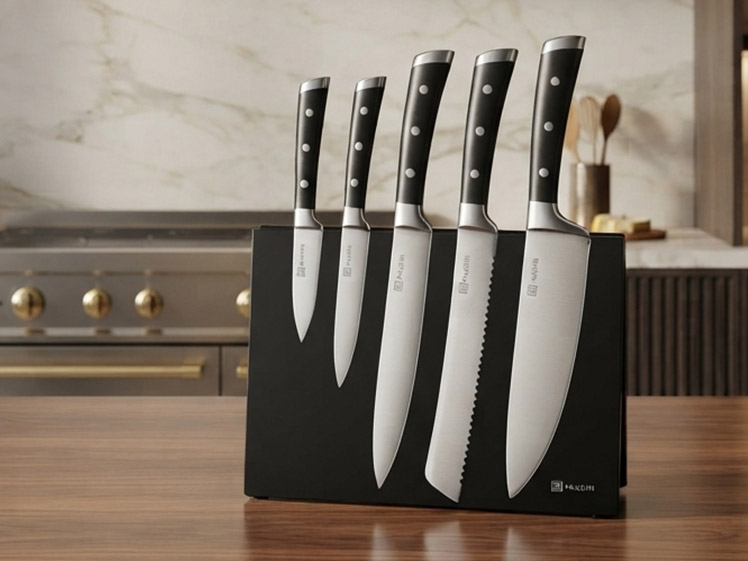
Paudin knives are made in Yangjiang, China. The “German steel” and “Japanese steel” on the packaging describe the alloy formula — not where the knives are built.
This guide lays out the evidence behind Paudin’s origin claims, explains how to read steel labels, and draws sourcing lessons for anyone building a cutlery brand.
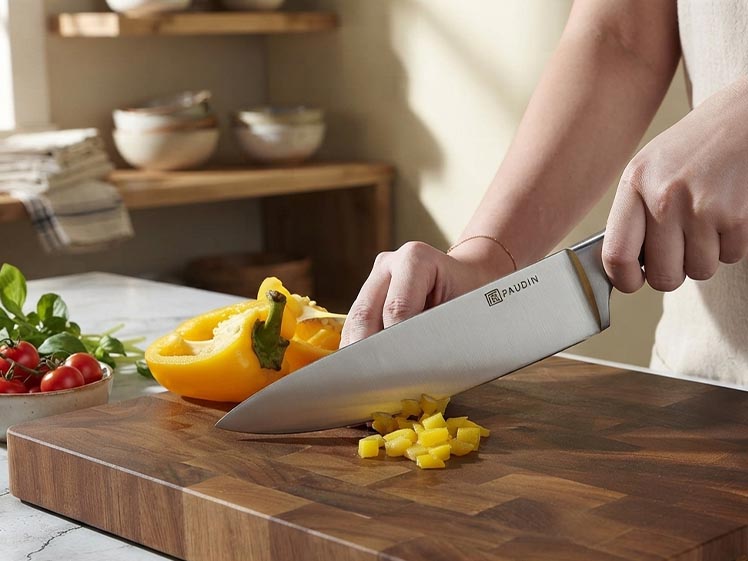
Where Are Paudin Knives Made?
The real facts are open for everyone to see. Paudin Knives states that its knives are produced in Yangjiang, China.
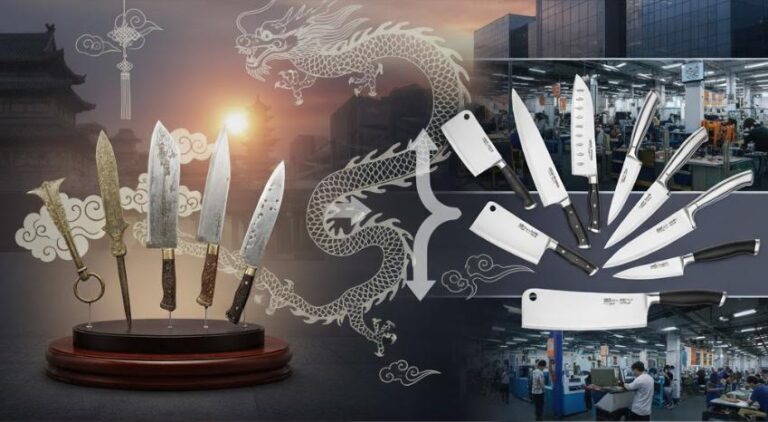
To show you the full picture, official statements and public retail listings point to the same manufacturing hub. Its blades are stamped in Yangjiang, a city with 1,400 years of blade-crafting history.
The company also notes that it sources steel alloys from Germany and Japan depending on the product line.
The table below compares these public sources:
| Claim | Source Type | What It Says | Evidence Class | Einschränkung |
|---|---|---|---|---|
| Brand FAQ | Paudin official site | Blades stamped in Yangjiang, China; steel imported from Germany and Japan | Brand statement | Names the city, not the exact factory |
| Marketplace data | Amazon listing | Country of origin: China | Marketplace paperwork | Applies to the specific listing checked |
| Reviewer spec table | NothingButKnives (2024) | “Made in: China” on the Universal 14-piece set | Hands-on review | Tested on one product set |
Paudin names its manufacturing city but keeps its factory partner private — standard practice for direct-to-consumer knife labels.
We also track production origins for other popular kitchen cutlery lines, including where Imarku knives are made, where Seido knives are made, Und where Matsato knives are made.
German Steel, Japanese Steel, and Where Are Paudin Knives Made
When shopping for kitchen cutlery, you will often spot 3 different statements sitting together on the same product page. Because these terms sound so similar, they frequently blur together in a shopper’s mind. However, each term answers a separate question about the knife in your hand.
To understand what you are buying, look closely at what these product descriptions mean:
| Product Claim | What It Really Tells You | What to Ask the Seller |
| German steel / Japanese steel (1.4116, X50CrMoV15, VG10, AUS-10) | The origin of the steel alloy formula | The exact metal grade written down per model |
| Japanischer Stil | The blade profile, edge geometry, and handle finish | Nothing; choose the right shape for your cutting board |
| Country of origin | The location where the knife was stamped and assembled | The printed origin label on the packaging |
Paudin labels its materials model by model, which makes these distinctions easy to check. Three details are worth remembering:
- Alloy Choices Shift by Model: Testing by NothingButKnives (November 2024) found that the Universal Collection 14-piece set uses 5Cr15MoV steel with a laser-etched pattern, not true Damascus layers.
- Hardness Differs Across Lines: ChefsResource (2024) identified Paudin’s 6-inch boning knife as 1.4116 German steel treated to 58 HRC.
- Origin Differs from Build Quality: A factory address names a place; verified material certificates define performance.
Modern workshops in Yangjiang handle both budget blades and high-end OEM projects, as our guides to chinesische Messerhersteller highlight.
Always request the steel alloy in writing before ordering, because paperwork confirms what the marketing leaves out.
Customize steel grades, blade profiles, handles, branding and packaging with LeeKnives OEM & ODM. Confirm the details through samples and written specifications before bulk production.

What “Stamped in Yangjiang” Really Means for Your Cutlery
When a manufacturer marks a blade as stamped in Yangjiang, they describe how they make the knife, not how well it performs.
To see how modern production works, consider the following factory facts:
- The Cutlery Capital: Yangjiang has produced blades for more than 1,400 years. Today, its factories make cutlery across every budget, from mass-market stamped sets to high-end custom orders, as detailed in our guide to Messerherstellung in Yangjiang.
- Stamped Versus Forged Blades: A stamped knife starts as a blank cut from cold sheet steel, while a forged blade is hammered into shape from red-hot steel bars. Both methods can produce dependable kitchen tools. The heat treatment, edge grinding, and blade balance matter far more than the initial cutting method.
- Origin Versus Quality: A factory location tells you where workers boxed the knife, but it reveals little about performance. True cutting performance comes from verified steel grades, computer-controlled tempering, and strict shop-floor quality control.
Honest brands state their origins openly, but you should not guess at a specific factory: Paudin does not name its manufacturing partner, and no public documents tie the brand to a particular plant.
When evaluating any knife line, rely on documented steel specs and heat-treat records rather than marketing claims.
Are Paudin Knives Any Good? What Real Reviews Reveal
Customer feedback for Paudin is mostly positive, but buyers also report a few specific flaws worth noting before you spend money.
- Documented Long-Term Use: Paudin holds a 4.5 out of 5-star rating on Trustpilot across 32 reviews, retrieved November 2026. Several verified buyers note using their knives for over 4 years, with customer service sending free replacement blades when wooden handles cracked.
- Replacement Policy: Paudin’s official FAQ and warranty page state a 12-month policy that replaces defective products rather than offering repairs.
- Reported Quality Flaws: Independent testers at NothingButKnives tested the Paudin 14-Piece Universal Collection Knife Set. At the same time, they liked the comfortable grip and sharp bread knife. They noted uneven edge grinds and sharp, unpolished spines. Community members on BladeForums have also questioned whether entry-level steel justifies premium marketing claims.
A country of origin does not determine quality on its own. Judge each knife model on its stated steel grade and verified owner experiences, not on broad marketing.
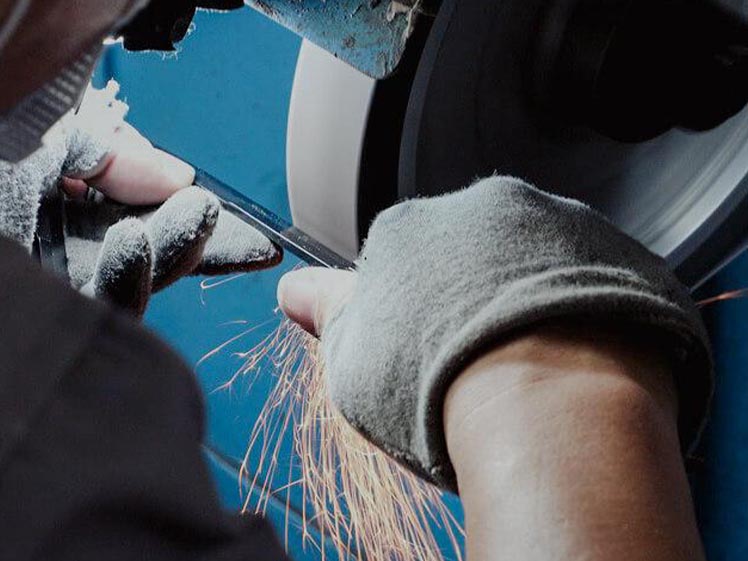
The Business Behind Paudin Knives
Paudin demonstrates how a manufacturing base in Yangjiang can build an In under a decade, Paudin turned a Yangjiang manufacturing base into an international kitchen business. For anyone planning a private cutlery label, the operating model offers practical lessons:
- Multi-Channel Sales: Founded in 2017, Paudin sells kitchen cutlery across six regional Amazon marketplaces — the US, Canada, UK, Germany, France, and Spain — and through its own web storefronts, including its official brand store .
- A Tiered Steel Ladder: One supply base supports several price tiers: budget 5Cr15MoV block sets at the entry level, 1.4116 German stainless tools in the middle, and VG10 and AUS-10 Damascus lines at the top.
- Straightforward Origin Statements: The brand states its Chinese manufacturing base plainly on its FAQ page, avoiding the public backlash that hits sellers who obscure their origins.
- Missing Technical Records: Paudin does not publish its partner factory’s name, third-party heat-treat reports, or mill test certificates on product listings.
The playbook works, and it is repeatable. A new brand that publishes full metallurgical spec sheets and factory inspection records from day one can go a step further and earn even greater customer trust.
Customize steel grades, blade profiles, handles, branding and packaging with LeeKnives OEM & ODM. Confirm the details through samples and written specifications before bulk production.
Build Your Own Knife Line: Paperwork Is the Product
A new cutlery brand succeeds or fails based on whether its paperwork matches the physical product in the box.
We manufacture custom runs matched to your handle materials, blade geometries, and branded packaging, offering order minimums as low as 200-300 units. Every client receives factory samples for testing before volume manufacturing begins, backed by global shipping and domestic U.S. warehouse storage.
More importantly, each completed shipment includes verified spec sheets that your brand can quote directly.
Contact us and get a free quote →
Häufig gestellte Fragen
Are Paudin knives made in China?
Yes, Paudin knives are made in China. Paudin states on its official FAQ that its blades are stamped in Yangjiang, China. In addition, its Amazon product listings consistently list China in the official country-of-origin field. You can verify this origin by checking the legal import label printed right beside the barcode on the retail box.
Are Paudin knives made in Germany or Japan?
No, Paudin knives are not made in Germany or Japan. While several product lines use German or Japanese steel formulas, that describes the raw material recipe rather than the manufacturing plant. Paudin finishes and boxes all its knives in Yangjiang, China, per the brand’s FAQ. To verify production origin accurately, inspect the physical box label rather than the blade etchings.
Are Paudin knives any good?
Most consumer reviews are quite positive. Verified buyers on Trustpilot report using the blades for over four years, and the company honors its 12-month replacement policy for damaged wooden handles. However, hands-on tests from NothingButKnives noted uneven factory edge grinds on one budget block set. Because knife quality varies across price points, always evaluate each specific model carefully before ordering.
What steel are Paudin knives made of?
The blade alloy depends on which specific model you choose. Paudin utilizes several different metals across its catalog, including German 1.4116, entry-level 5Cr15MoV, VG10, and Japanese AUS-10 stainless steel. Entry-level block sets sharpen easily, whereas premium Japanese-core lines hold an edge longer. To protect your purchase, ask the seller to confirm the steel grade in writing before you buy.
Is Paudin a German brand?
No, Paudin is not a German company. It is an international direct-to-consumer knife brand established in 2017. Paudin manufactures its kitchen cutlery in Yangjiang, China, and ships products internationally through regional websites and major online marketplaces like Amazon. Words like German steel on the packaging describe the imported metal recipe rather than European company headquarters or German workshop craftsmanship.
Are Paudin Damascus knives real Damascus?
It depends on the specific knife series you purchase. Independent testing by NothingButKnives revealed that the budget Paudin 14- Piece Universal Collection Knife Set features a laser-etched surface pattern instead of genuine folded metal. Conversely, Paudin also sells higher-tier lines built around layered VG10 steel cores. To ensure you receive genuine pattern-welded steel, ask the seller for an official material specification sheet before purchasing.
Why do Paudin knives say German steel if they are made in China?
The phrase Paudin German steel describes the origin of the metal recipe, not where technicians made the knife. In modern cutlery, material source, assembly location, and knife shape represent three different claims. Many Chinese factories import European alloy coils to stamp finished blades locally. You can make smarter buying choices by looking past blade slogans and verifying the printed box label.




 DE
 EN
 JA