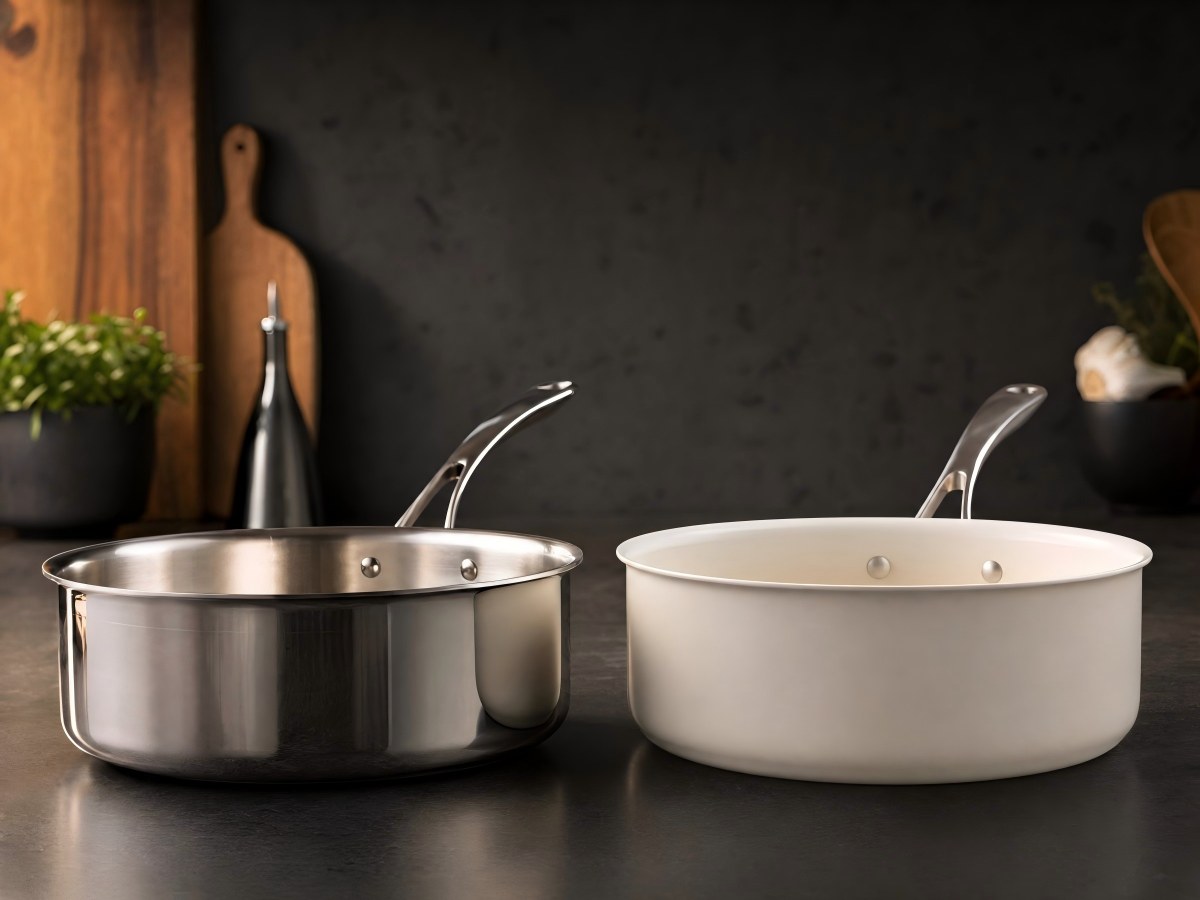
Stainless steel and ceramic are two of the most popular cookware materials today, and they could not be more different. Stainless steel is the decades-long workhorse of professional kitchens, while ceramic has surged as the PFAS-free alternative to traditional nonstick.
The difference comes down to trade-offs. Stainless wins on heat tolerance, searing power, and a lifespan measured in decades. Ceramic counters with effortless food release and low-oil cooking, at least while its coating lasts.
In this guide, we compare stainless steel vs ceramic cookware on performance, durability, safety, and — critically for buyers — manufacturing cost and market positioning. Read on to find out which material deserves a spot in your product line and inventory strategy.
What Is Stainless Steel Cookware?
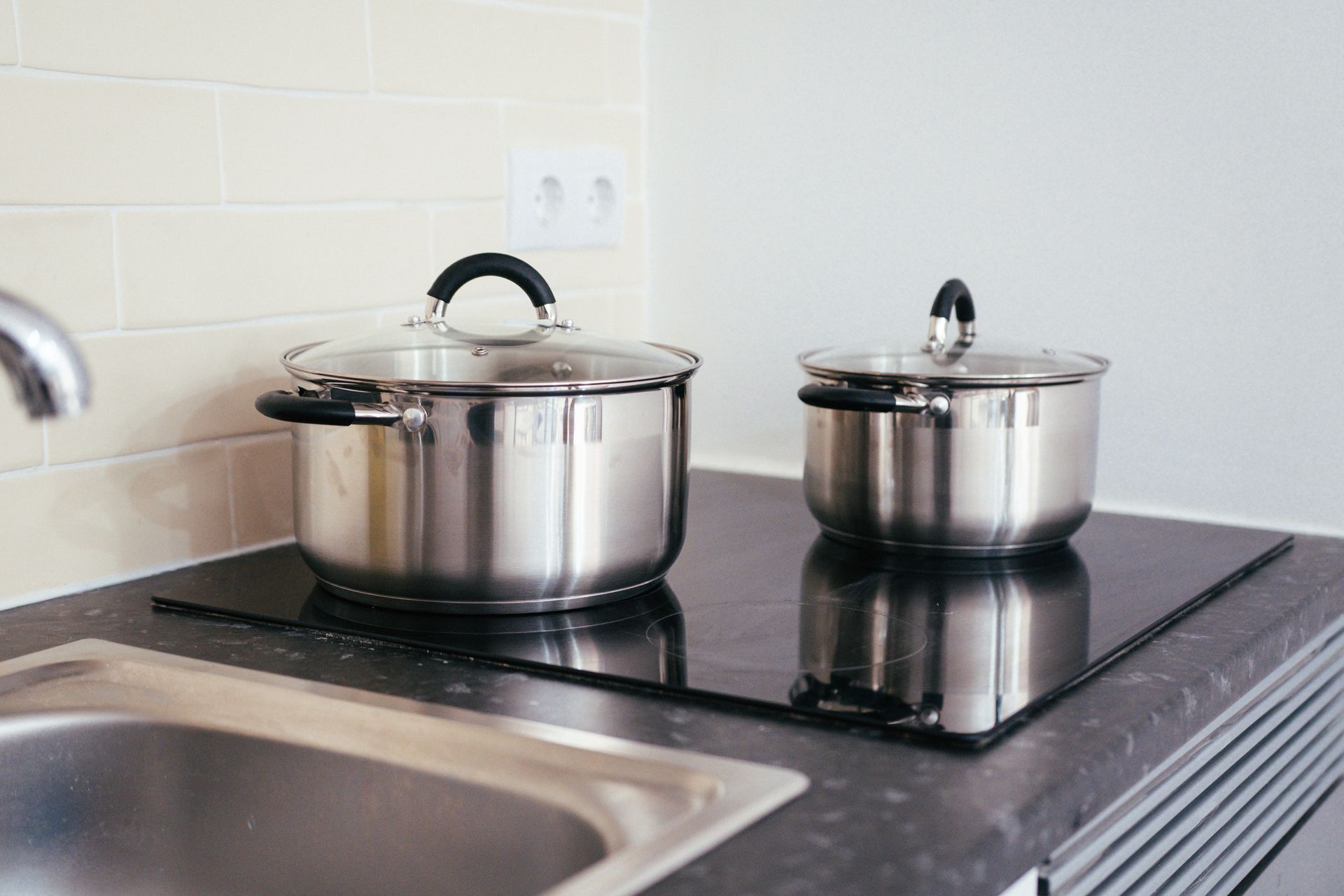
Edelstahl cookware is made from an iron-based alloy containing chromium, usually stamped as 18/10 or 18/8. Those numbers refer to the percentages of chromium and nickel, which give the steel its corrosion resistance and shine.
Because plain steel conducts heat poorly, quality pans bond an aluminum or copper core between layers of steel, known as tri-ply or 5-ply fully-clad construction.
This construction is what separates a $30 disc-bottom pan from cookware that heats evenly edge to edge. It is also why professional kitchens rely on stainless for nearly everything.
Vorteile
- Haltbarkeit: A well-made clad pan lasts decades, with no coating to wear out, chip, or peel.
- High-heat performance: Searing, browning, and oven use up to 500-800°F are all safe.
- Nicht reaktive Oberfläche: Tomato sauce, wine, and lemon won’t pick up metallic flavors.
- Einfache Wartung: Dishwasher safe and tough enough for metal utensils and stacking.
Nachteile
- Kleben: Eggs and delicate fish stick without proper preheating and enough oil.
- Lernkurve: Beginners need some practice before food releases naturally.
- Higher cost: Quality clad pans cost more, while cheap thin ones heat unevenly and warp.
- Cosmetic wear: Rainbow tint and water spots appear over time, though they clean off easily.
Was ist Keramikkochgeschirr?
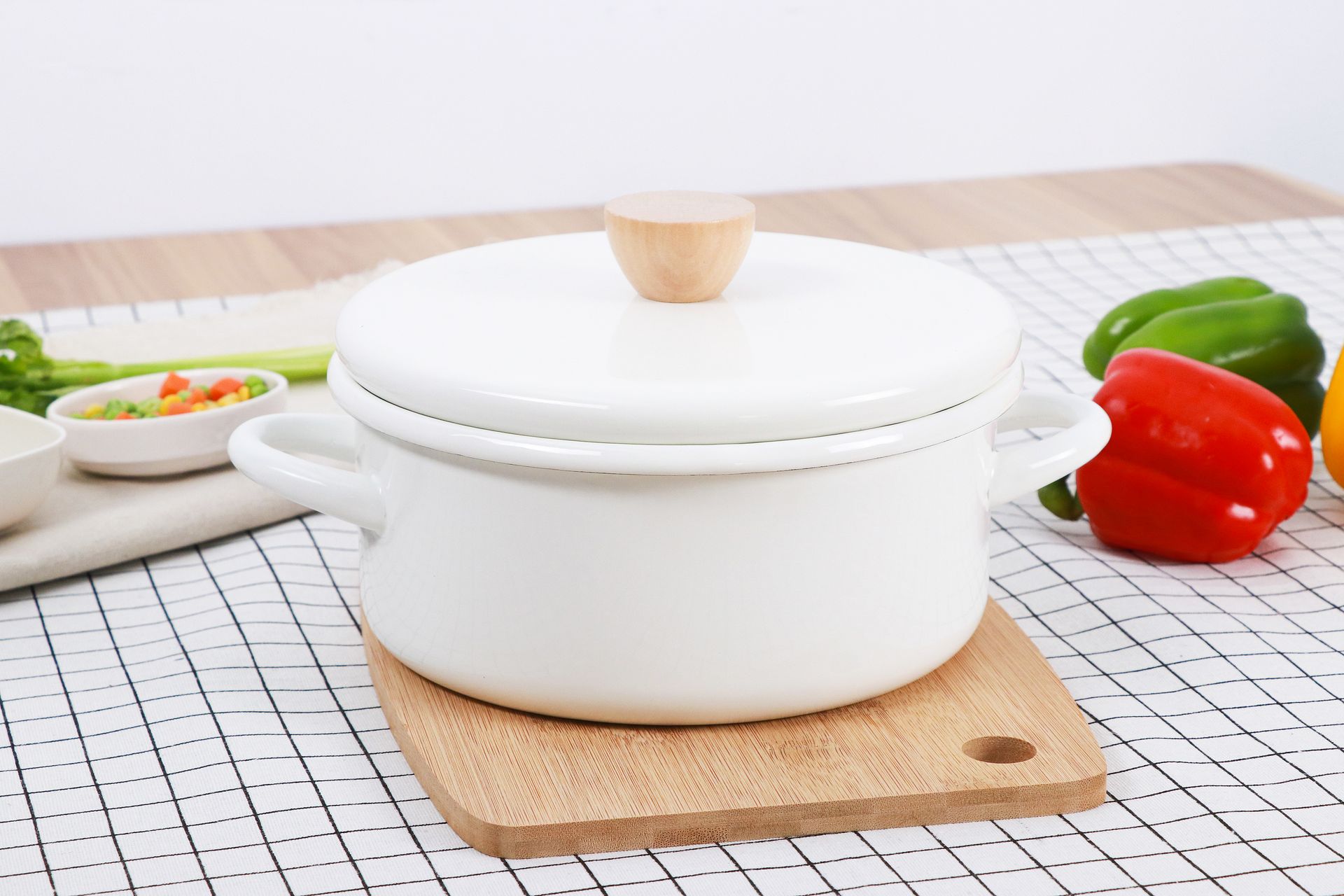
The term “ceramic cookware” covers two very different products, and mixing them up causes most of the confusion in this debate. Pure ceramic cookware is made entirely from kiln-fired clay, like the pans from Xtrema. It is heavy, uncommon, and handles high heat well.
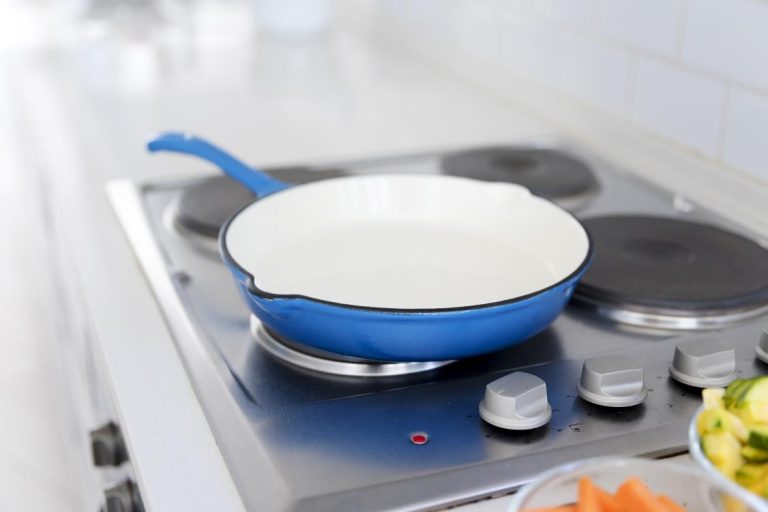
What most people mean is keramikbeschichtetes Kochgeschirr: an aluminum pan coated with a thin layer of sand-derived minerals (silica) that is baked at high temperature into a hard, glass-like surface. Think of it as giving the pan a smooth ceramic skin — not actual clay pottery, but the same family of materials.
It is naturally slick when new, needs no oil to fry an egg, and contains no PTFE or PFOA. That “PFAS-free” label is the entire reason brands like Kümmel and GreenPan built their market share.
Vorteile
- Effortless food release: Eggs, pancakes, and fish slide right off with minimal oil.
- PFAS-free: The sol-gel coating contains no PTFE or PFOA — the main reason shoppers choose it.
- Fast heating: The aluminum body responds quickly, ideal for low-to-medium heat cooking.
- Shelf appeal: Matte finishes and pastel colors stand out in retail displays and social media.
Nachteile
- Short nonstick lifespan: Most coatings lose their slickness within one to two years of regular use.
- No high heat: Searing, broiling, and dry preheating quickly destroy the coating.
- Fragile coating: Metal utensils, stacking, and dishwashers cause chips and scratches.
- Consumable product: Replacing a $60-$90 pan every couple of years adds up fast.
Stainless Steel vs Ceramic Cookware: Quick Comparison
In the comparison table below, you’ll find the features, pros, and cons of stainless steel and ceramic cookware at a glance.
| Edelstahl | Ceramic (Coated) | |
|---|---|---|
| Bauwesen | 18/10 steel with aluminum or copper core | Aluminum body with sol-gel coating |
| Nonstick | No, requires technique | Yes, excellent when new |
| Hitzetoleranz | 500–800°F, broiler safe | ~450–550°F, no broiler |
| Lebensdauer | 10–30+ years | 1–3 years typical |
| Spülmaschinenfest | Ja | Not recommended |
| Metal Utensils | Ja | NEIN |
| Induktion | Yes, if base is magnetic | Only with bonded steel base |
| Typical Price (10–12″ pan) | $50–$200 | $30–$100 |
| Production Cost | Higher material cost, lower per-unit at scale | Lower material cost, coating adds process steps |
| MOQ-Flexibilität | Moderate; existing dies lower floor | Moderate; color matching raises floor |
| Customization Space | Laser logo, polish/brushed finish, handle design | Colorways, matte/pastel finishes, brand-matched coatings |
| Warranty/Return Risk | Low; minimal defect rate | Higher; coating failure drives returns |
Both materials cover the everyday basics, but they fail in different ways. Stainless fails as a technique problem; ceramic fails as a materials problem. The sections below explain what that means in practice — and what it means for your sourcing decision.
Cooking Performance
Heat Conductivity and Retention
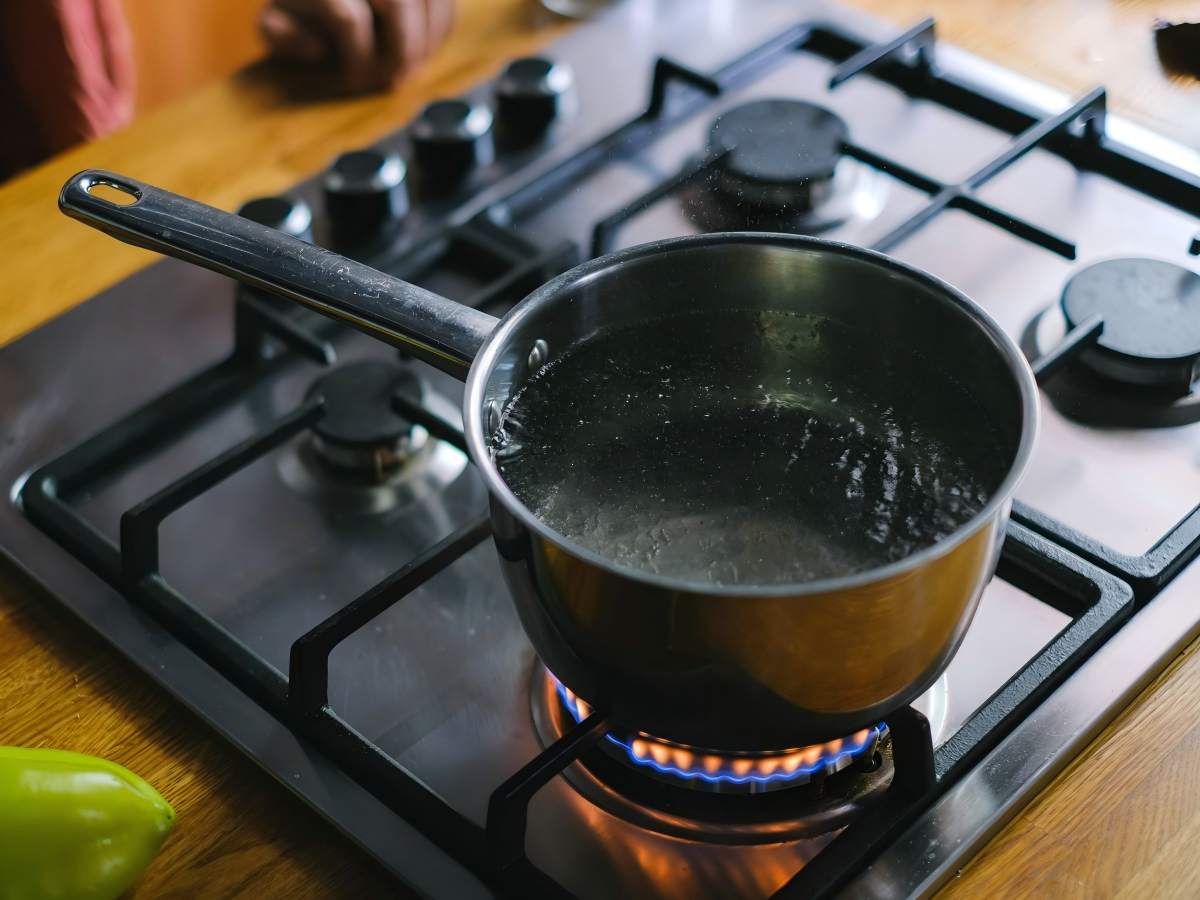
Fully-clad stainless spreads heat evenly thanks to its aluminum or copper core, then holds that heat steadily.
Ceramic-coated pans also use aluminum, so they heat quickly, but their thin bodies lose heat fast when cold food hits the surface. For consistent results across a full pan of food, clad stainless has the edge.
For retailers, this translates to fewer customer complaints about hot spots and burnt food with stainless SKUs, while ceramic SKUs win on impulse purchases from shoppers who want immediate, effortless results.
Searing and Browning
Searing is where the stainless steel vs ceramic cookware debate ends for many cooks. The Maillard reaction needs sustained high heat, and stainless delivers it — plus fond, the browned bits that become pan sauces. Ceramic coatings actively discourage this kind of cooking, since high heat destroys them.
Food Release and Cooking Eggs
Flip the dish, and the verdict flips too. Eggs are the number-one pain point for stainless steel owners, and the most common reason people buy a ceramic pan in the first place.
A new ceramic pan fries an egg with a drop of oil and zero skill. Stainless can do the same, but only after your customers learn to preheat the pan, add fat, and wait for the proteins to set before flipping.
Durability, Lifespan & Maintenance
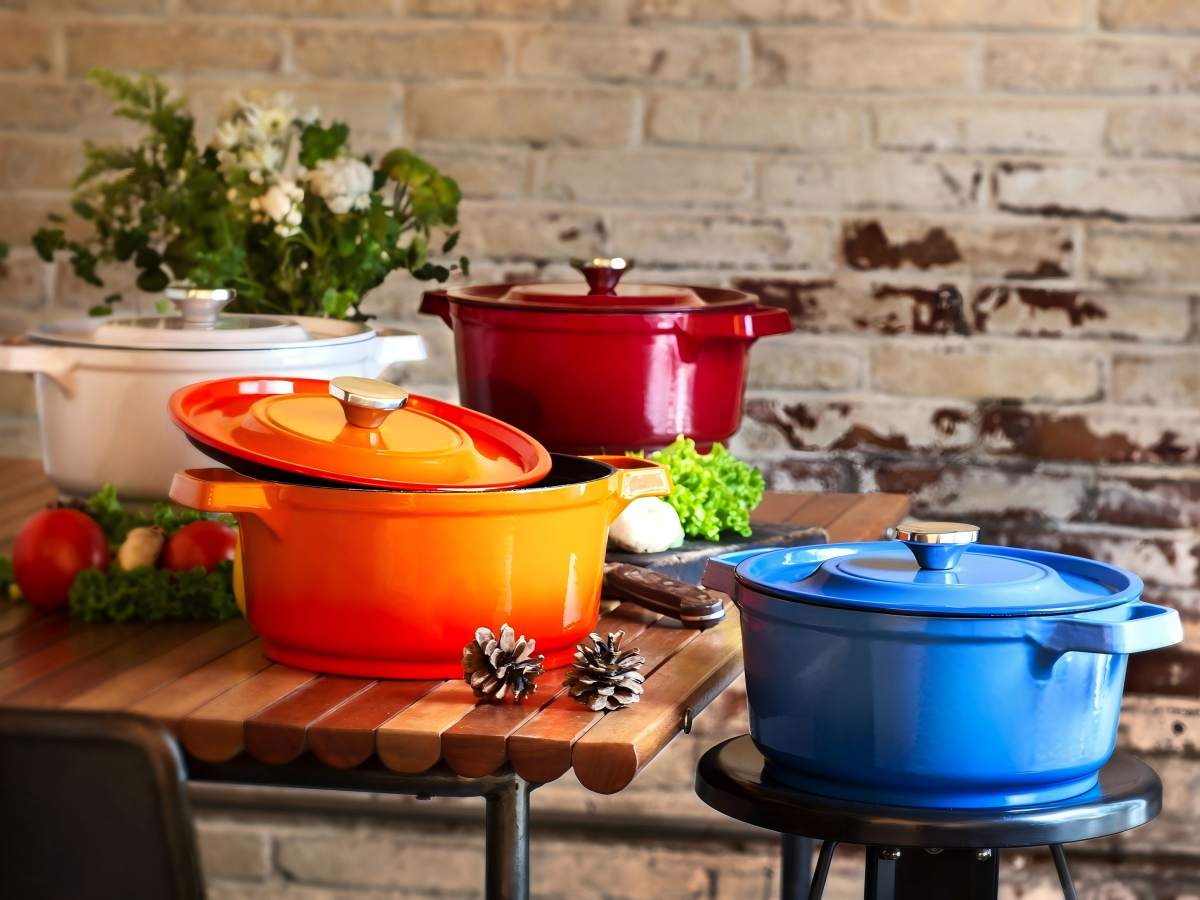
A quality stainless pan is a buy-it-for-life purchase. There is no coating to fail, and cosmetic issues like discoloration scrub off with a powdered cleanser.
It goes in the dishwasher, takes metal scrubbers, and recovers from burnt-on messes with Bar Keepers Friend or diluted vinegar. No seasoning is needed. Warping is the main risk, and it mostly affects thin, cheap pans hit with thermal shock.
Ceramic-coated cookware lives on a much shorter clock. Across user reports, the nonstick effect typically fades within 6 to 24 months. Once eggs start sticking, the pan is functionally done.
Hand washing, soft sponges, and low-to-medium heat can stretch lifespan to three years, but most users will not follow those rules.
That difference changes the real price of each option — and your brand’s after-sales cos. Here is a simple 10-year cost comparison for a 12-inch skillet:
| Stainless Clad | Keramikbeschichtet | |
|---|---|---|
| Pan price | $120 | $70 |
| Replacements over 10 years | 0 | 3–4 |
| 10-year total cost | ~$120 | ~$280–$350 |
For retailers, stainless anchors premium, low-return-rate inventory. Ceramic drives repeat purchases but also generates warranty claims and negative reviews when the coating fails.
Scratched ceramic with flaking or peeling coating should be retired, since the exposed aluminum underneath reacts with acidic food.
Kaufen Sie Kochgeschirr im Großhandel und starten Sie noch heute mit uns ins Wachstum
Kontaktieren Sie uns und verbinden Sie sich mit einem Vertriebsmitarbeiter, um ein kostenloses Angebot zu erhalten.
Health, Safety & Compliance
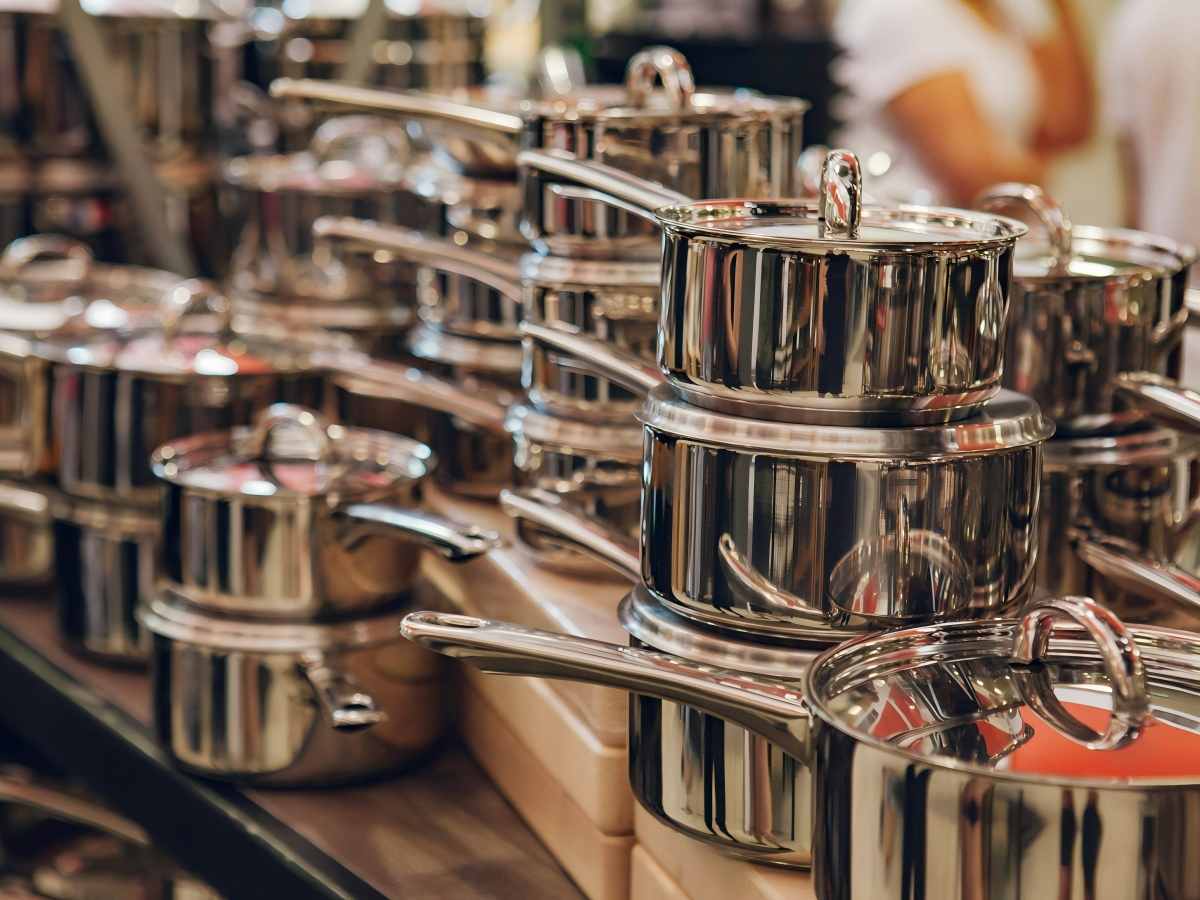
Both materials are genuinely safe when sourced from certified manufacturers. Neither contains PTFE, and neither releases fumes when used normally.
For stainless steel, the issue is nickel and chromium leaching. Small amounts migrate into food during long, acidic simmers — relevant mainly for the roughly 10–15% of people with nickel sensitivity. For everyone else, the amounts are well within safe limits, and 18/10 food-grade steel remains the professional standard.
For ceramic cookware, pure ceramic glazes from unverified makers can contain lead or cadmium, so reputable, certified brands matter. For ceramic-coated pans, the risk appears at end of life: once the sol-gel layer wears through, the exposed aluminum core can migrate into acidic dishes.
Compliance for Export Markets
- FDA (US): Both stainless steel (304/316L) and ceramic coatings require food-contact material compliance. Stainless is straightforward; ceramic coatings need migration testing for lead and cadmium.
- LFGB (EU/Germany): Stricter than FDA on heavy-metal migration. Ceramic coatings must pass LFGB sensorial and chemical tests. Stainless 18/10 generally passes without issue.
- California Prop 65: Ceramic-coated pans sold in California must disclose any trace chemicals. Reputable manufacturers provide third-party test reports (SGS, Intertek, BV) covering both the coating and the aluminum substrate.
- CE Marking: Only applies to electric cookware (induction bases with integrated electronics). Plain stainless or ceramic pans do not require CE.
B2B Sourcing & Manufacturing Guide
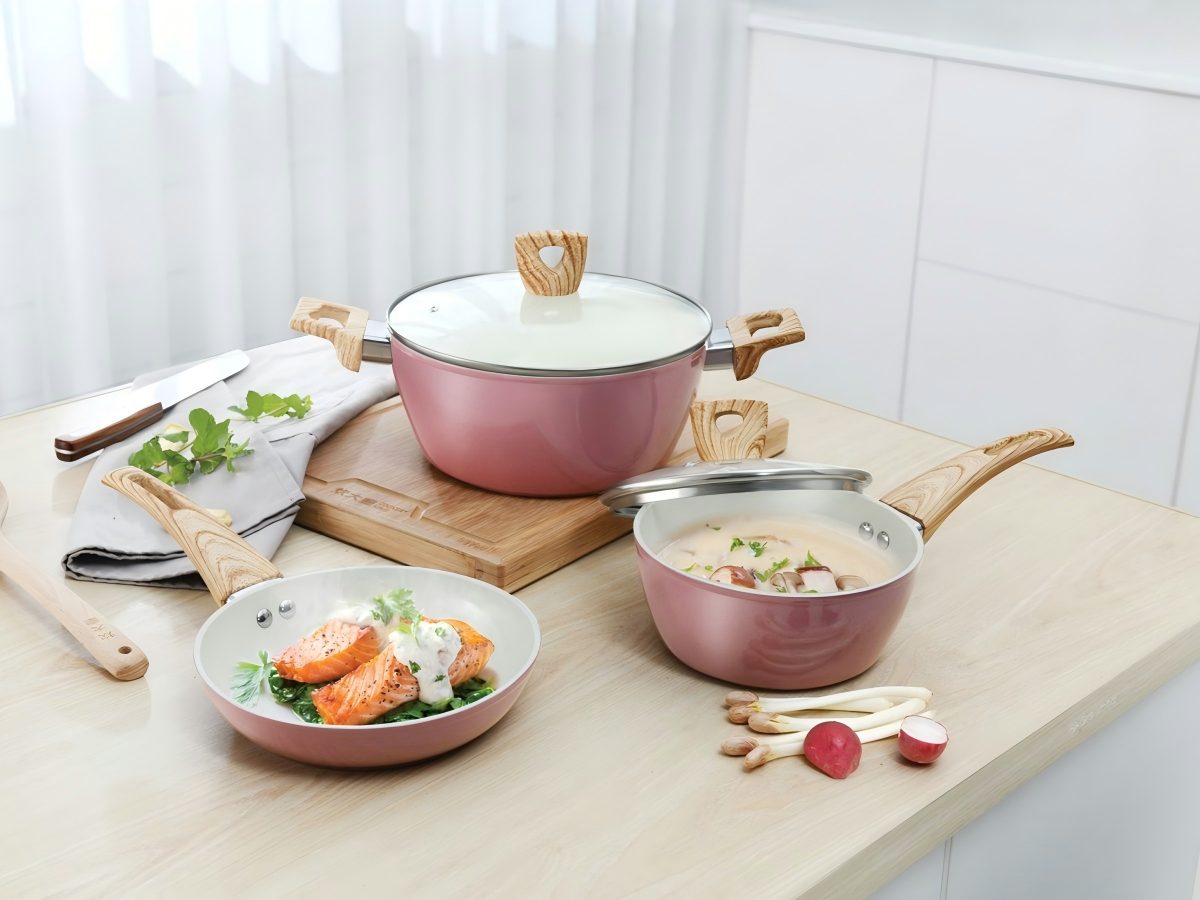
If you are sourcing cookware for retail, private label, or corporate gifting, the manufacturing realities behind each material matter as much as the end-user performance. Here is what factory quotes actually look like.
Material & Manufacturing
Kochgeschirr aus Edelstahl starts as cold-rolled coils of 304 or 430 grade. The body is formed through deep drawing or stamping, with tri-ply or 5-ply construction bonded via impact cladding or high-frequency brazing.
Handle attachment uses TIG welding or riveting. The process is mature, with high repeatability and low defect rates.
Ceramic-coated cookware begins with an aluminum body formed by die-casting or drawing. The sol-gel coating is sprayed on and cured at high temperature.
Color matching between batches requires careful process control, and coating thickness directly affects nonstick lifespan. Each additional colorway adds setup time and raises MOQ.
Cost Structure for Buyers
| Cost Driver | Edelstahl | Keramikbeschichtet |
|---|---|---|
| Rohstoff | Higher (304/316L sheets) | Lower (aluminum + sol-gel) |
| Tooling / molds | Moderate; dies for drawing | Moderate; casting molds + spray fixtures |
| Surface finish | Polishing, brushing, passivation | Coating application + curing |
| Verpackung | Standard carton | Often requires protective inserts to prevent coating damage |
| Landed cost (sea) | Higher weight = higher freight | Lighter weight = lower freight |
Stainless steel wins on per-unit durability economics. Ceramic wins on lower upfront unit cost and lighter shipping weight — but the hidden cost is warranty exposure and shorter repurchase cycles.
Customization & Branding
- Stainless steel: Laser engraving, etched logos, brushed or mirror polish, custom handle shapes, and rivet colors. Packaging can range from simple hang-tags to premium gift boxes.
- Ceramic-coated: Color matching to Pantone, matte or glossy finishes, gradient coatings, and custom lid designs. The visual differentiation potential is stronger than stainless for Instagram-driven brands.
Which Should Your Brand Stock?
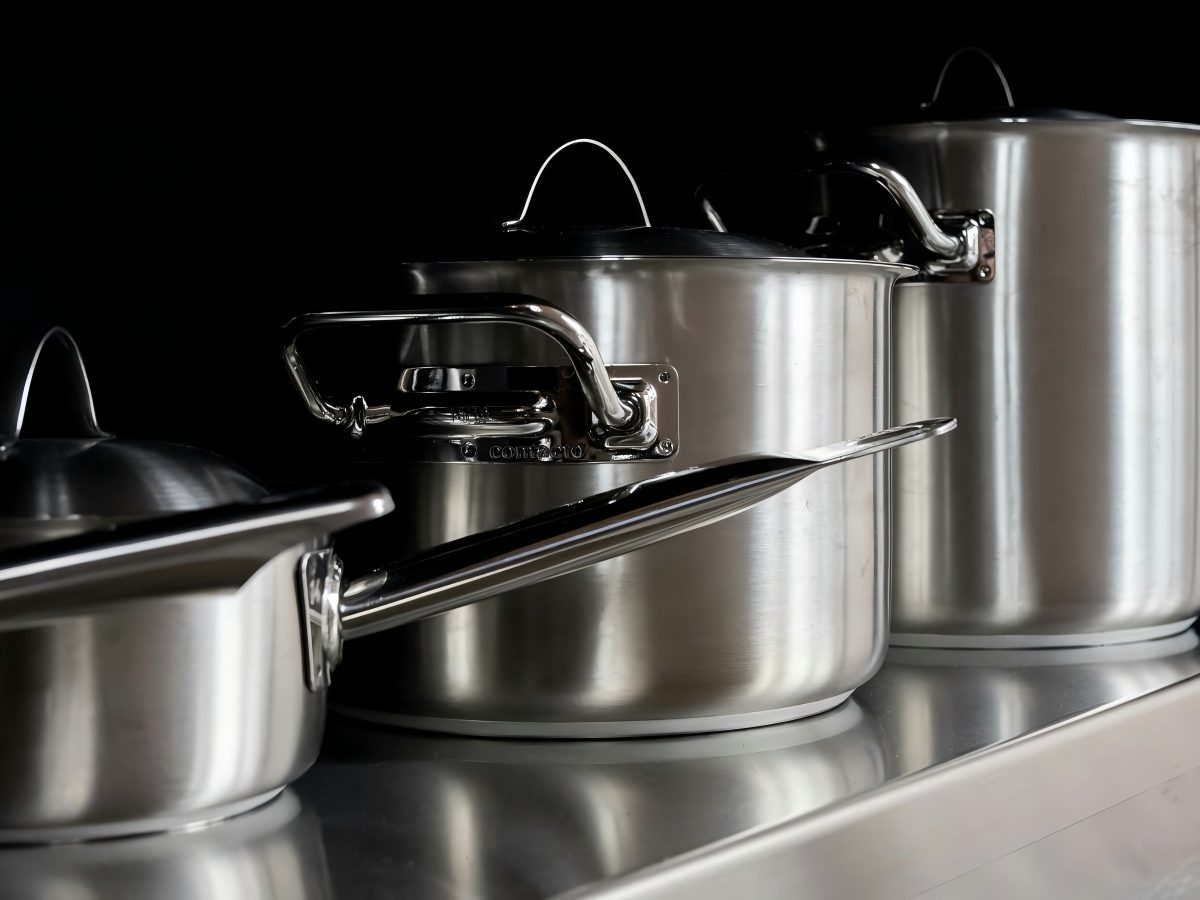
The right answer depends on your target customer and margin structure. It is rarely one material for everything.
| Segment | Best Fit | Warum |
|---|---|---|
| Premium & professional lines | Edelstahl | Higher price points, fewer returns, builds long-term brand reputation |
| Entry-level & health-conscious | Ceramic-coated | Lower upfront cost, strong PFAS-free narrative, visual appeal for social |
| Corporate gifting / subscription boxes | Ceramic (mass market) or stainless (executive tier) | Ceramic wins on unit cost and color; stainless wins on perceived value |
| Nickel-sensitive markets | Certified ceramic, or 430 / 18/0 stainless | Avoids nickel leaching concerns entirely |
The setup most experienced retailers land on: stainless steel as the workhorse line plus one ceramic nonstick SKU for eggs and delicate foods. Stainless handles searing, sauces, and oven work; the ceramic pan drives repeat traffic as a consumable replacement SKU.
Before placing your first order, verify two specs:
- Induction compatibility: Stainless works if a magnet sticks to the base. Ceramic-coated pans need a bonded steel plate; pure ceramic does not work on induction at all.
- Oven-safe temperature: Stainless typically handles 500–800°F. Ceramic-coated pans top out around 450–550°F depending on brand.
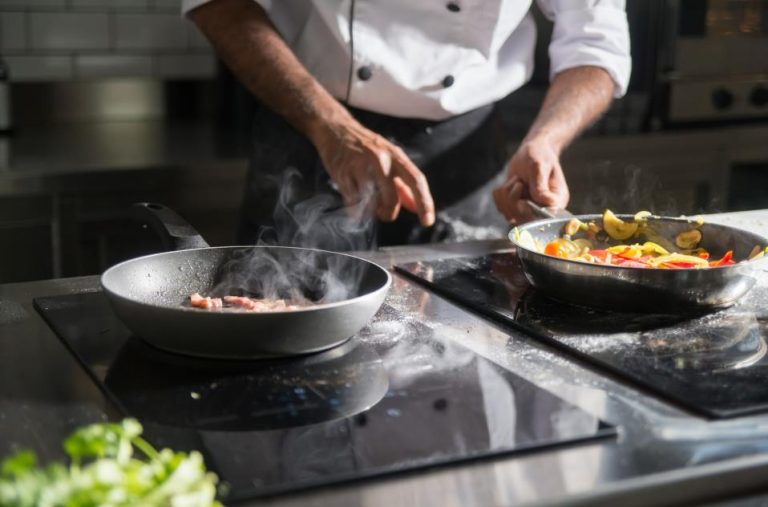
Professional kitchens run on stainless for a reason — they need pans that survive high heat, metal utensils, and thousands of wash cycles.
Stock the Right Cookware with LeeKnives
In short, stainless steel wins on heat tolerance and decades-long durability, while ceramic-coated cookware offers easy, PFAS-free nonstick — for a year or two at a time. Most kitchens do best with stainless as the foundation plus one replaceable egg pan.
Whichever direction your customers lean, sourcing quality product is what makes the difference. LeeKnives is a kitchenware manufacturer mit Sitz in Yangjiang Stadt with over 30 years of experience crafting kitchen products.
We supply retailers and wholesalers worldwide with stainless steel kitchen knives, Kochgeschirr, Und Messerzubehör, backed by OEM Und ODM services and fulfillment centers in the US and China.
Whether you are expanding an existing line or launching a Eigenmarke through our custom knife and kitchenware program, we can help you source the right materials for your market.
Request a free quote from LeeKnives today → and connect with a sales rep to discuss wholesale pricing, MOQ, and sampling timelines.
Kaufen Sie Kochgeschirr im Großhandel und starten Sie noch heute mit uns ins Wachstum
Kontaktieren Sie uns und verbinden Sie sich mit einem Vertriebsmitarbeiter, um ein kostenloses Angebot zu erhalten.
Häufig gestellte Fragen
What foods should not be cooked in a stainless steel pan?
Almost nothing is truly off-limits, since stainless steel is non-reactive. The practical exceptions are eggs and delicate fish, which stick without proper preheating and oil. Also avoid adding salt to cold water — it can cause small pits in the surface. Bring the water to a boil first, then salt.
What should you not cook in a ceramic pan?
Avoid anything that needs high heat: searing steaks, stir-frying over a hard flame, or broiling. Dry preheating an empty ceramic pan is equally damaging. Stick to low-to-medium heat dishes like eggs, pancakes, and gentle sautés, and the coating will last much longer.
Does stainless steel give off microplastics?
No. Stainless steel is a solid metal alloy with no plastic content, so it cannot release microplastics. Microplastic concerns in the kitchen come from plastic utensils, cutting boards, and degrading synthetic coatings — not from metal cookware.
What is healthier, ceramic or nonstick?
Ceramic-coated cookware is generally considered the healthier pick because its sol-gel coating contains no PTFE, PFOA, or other PFAS. Modern PTFE nonstick is safe below about 500°F, but overheating it can release polymer fumes. Ceramic trades that safety margin for a shorter lifespan.
Do professional chefs use ceramic pans?
Rarely. Restaurant kitchens run on stainless steel, carbon steel, and aluminum because they survive high heat, metal utensils, and constant dishwashing. Some chefs keep a small nonstick pan for eggs, but ceramic-coated cookware’s short lifespan makes it impractical for commercial use.
Which pans should you stay away from?
Skip scratched or flaking nonstick of any kind, and be cautious with unbranded ceramic glazes that carry no safety certification, as they can contain lead or cadmium. Ultra-thin, lightweight stainless pans are also worth avoiding — they warp quickly and burn food with their uneven heat.
What brand makes 100% ceramic cookware?
Xtrema is the best-known brand making cookware from 100% pure ceramic, with no metal core and no synthetic coating. Remember that popular names like Caraway and GreenPan are ceramic-coated aluminum, a different product entirely. Pure ceramic is heavier and less common, but it handles high heat and ovens well.




 DE
DE  EN
EN  JA
JA