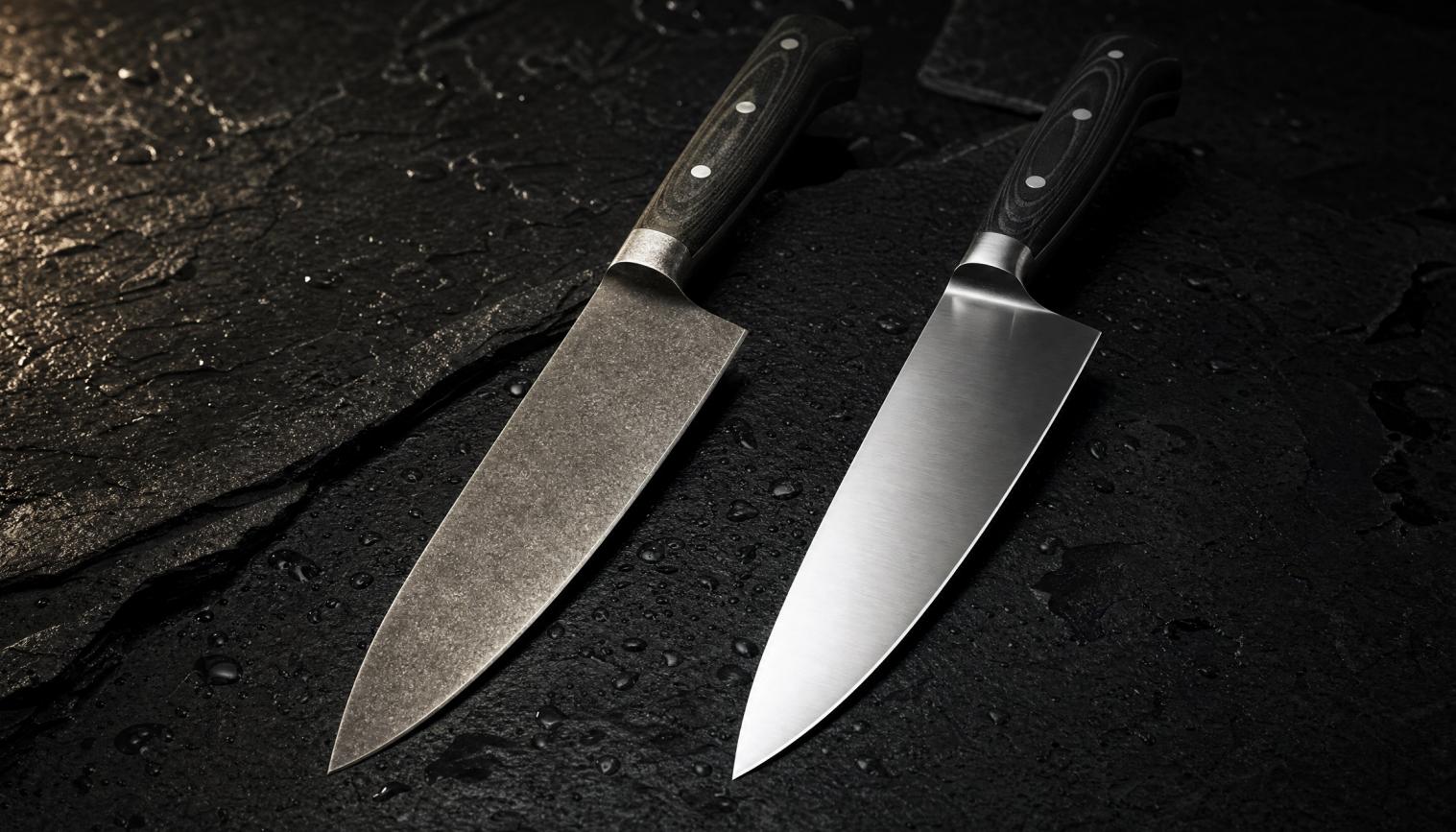
For knife manufacturing, 1095炭素鋼 offers superior edge retention and sharpness, making it ideal for kitchen and pocket knives. 65Mn manganese steel provides exceptional toughness and impact resistance, making it the preferred choice for machetes, axes, and OEM mass production in Yangjiang.
| ユースケース | Better Choice | なぜ |
|---|---|---|
| 包丁 | 1095 | Holds a razor edge longer, easier to sharpen |
| Pocket knives / EDC | 1095 | Better edge retention for daily tasks |
| Hunting knives | 1095 | Clean cuts, reliable edge |
| Machetes | 65Mn | Absorbs impact without breaking |
| Survival / bushcraft tools | 65Mn | Toughness under abuse |
| Swords / katanas | Depends | 1095 for traditional sharpness; 65Mn for sparring durability |
| Mass-market OEM production | 65Mn | Lower cost, easier supply from Yangjiang |
The rest of this guide explains the science behind these choices and what they mean for your OEM product line.
What Are 1095 and 65Mn Steels?
Both 1095 and 65Mn are non-stainless tool steels commonly used in knives. The key difference is in their alloying: 1095 is a high-carbon steel, while 65Mn is a manganese-alloyed spring steel.
What Is 65Mn Manganese Steel?
65Mn is a spring steel with about 0.62–0.70% carbon and 0.90–1.20% manganese. It is sometimes called “manganese steel” in the knife trade, but it is not the same as industrial Hadfield steel (11–14% manganese), which is used in mining equipment and railway parts—not blades.
65Mn is valued for its elasticity. It flexes under stress and springs back. It does not hold an edge as long as 1095, but it is much harder to break.
What Is 1095 Carbon Steel?
1095 carbon steel is a high-carbon iron alloy with little or no chromium. It is one of the most common reference steels in knives.
1095 contains about 0.90-0.95% carbon. It hardens to a high, uniform hardness (typically 55-58 HRC, up to 60+ HRC). This allows it to take and hold a very fine, razor-sharp edge.
The downside is brittleness. Hit a bone, twist the blade in hardwood, or pry with it, and the edge can chip or crack. It also rusts quickly without care.
1095 vs 65Mn: Chemical Composition
65Mn Manganese Steel
- 炭素: 0.62-0.70%
- マンガン: 0.90-1.20%
- シリコン: 0.17-0.37%
- クロム: ≤0.25%
- 硫黄: ≤0.035%
- リン: ≤0.035%
1095 Carbon Steel
- 炭素: 0.90-0.95%
- マンガン: 0.30-0.50%
- リン: ≤0.040%
- 硫黄: ≤0.050%
- クロム: ≤0.15%
- シリコン: ≤0.15%
What the Numbers Mean
1095 has ~0.3% more carbon. That drives better edge retention and hardness. 65Mn has ~0.7% more manganese. That improves hardenability, toughness, and grain structure.
Both contain almost no chromium, so neither resists rust well. For independent material specifications, see AZOM.
1095 vs 65Mn: Blade Performance Comparison
| パフォーマンス指標 | 1095 Carbon Steel | 65Mn Manganese Steel | 勝者 |
|---|---|---|---|
| エッジ保持 | Excellent. Holds a sharp edge for a long time. | Fair. Dulls faster in standard slicing. | 1095 |
| Maximum Sharpness | Very high. Can be ground to a fine edge. | Moderate. Harder to achieve a razor edge. | 1095 |
| Toughness / Impact Resistance | Low to moderate. Edge can chip under impact. | Excellent. Flexes and absorbs shock. | 65Mn |
| 研ぎやすさ | Very easy. Responds quickly to whetstones. | Moderate. Slightly more effort required. | 1095 |
| 耐食性 | Poor. Rusts quickly without care. | Poor. Rusts without care. | ネクタイ |
| 耐摩耗性 | Good. Handles abrasive materials well. | Moderate. Wears faster under heavy abrasion. | 1095 |
| Manufacturing Fit | Requires modern equipment and tighter process control. | Works well with traditional heat treatment setups. | 65Mn |
LeeKnivesでカスタムナイフラインをより早く立ち上げましょう
設計から最終出荷まで、OEM/ODM の完全なサポートにより、成長に集中できます。
米国の倉庫に保管されているため、迅速で信頼性の高い配送が可能です。
1095 vs 65Mn: Properties Explained
硬度
1095 reaches 55-58HRC standard, with premium heat treatment pushing toward 60~62HRC. 65Mn reaches 56~60HRC, with some batches up to 62 HRC.
In our Yangjiang facility, we value 65Mn as a practical compromise between hardness and toughness. Under normal production conditions, it reaches a useful hardness level while still absorbing impact. In our experience, pushing 65Mn beyond 60 HRC increases the risk of chipping, so we keep it in the 58-60 HRC range for the best balance.
Despite similar numbers, 1095 feels harder in cutting. Its higher carbon content forms harder carbides, which resist dulling better. That hardness, however, is not the same as cutting feel.
65Mn is spring steel, so it has a smoother, easier-to-control cutting feel. The blade flexes slightly on contact. That flex soaks up vibration and makes heavy cuts feel steadier.
Our grinding team says it "bites and slides" with less chatter than harder steels. 1095 feels more direct and rigid, which is good for precise slicing but can feel harsher when the blade hits resistance.
For more context, see our Rockwell hardness guide.
エッジ保持
1095 wins clearly. 1095 blades stay sharp through extended cutting sessions. 65Mn needs more frequent touch-ups.
For kitchen and EDC knives, this difference matters to end users. For machetes and chopping tools, edge retention matters less than durability.
強靭さ
65Mn wins clearly. 65Mn’s spring-steel nature lets it flex and absorb impact without snapping. 1095 becomes brittle above 60 HRC.
This is why 65Mn is preferred for machetes, heavy cleavers, and impact tools. It can hit bone, wood, or hard materials without catastrophic failure.
耐食性
Neither steel resists rust. Both require drying and oiling. 1095 rusts slightly faster due to lower chromium. 65Mn may develop a patina slightly slower, but the difference is marginal.
For retail sales, include care instructions. For OEM buyers, consider protective coatings for either steel.
Both are easier to sharpen than high-alloy stainless steels like CPM20CV または M390. 1095 is slightly easier because it responds quickly to stones. 65Mn takes a bit more work but is still manageable.
Manufacturing and Heat Treatment
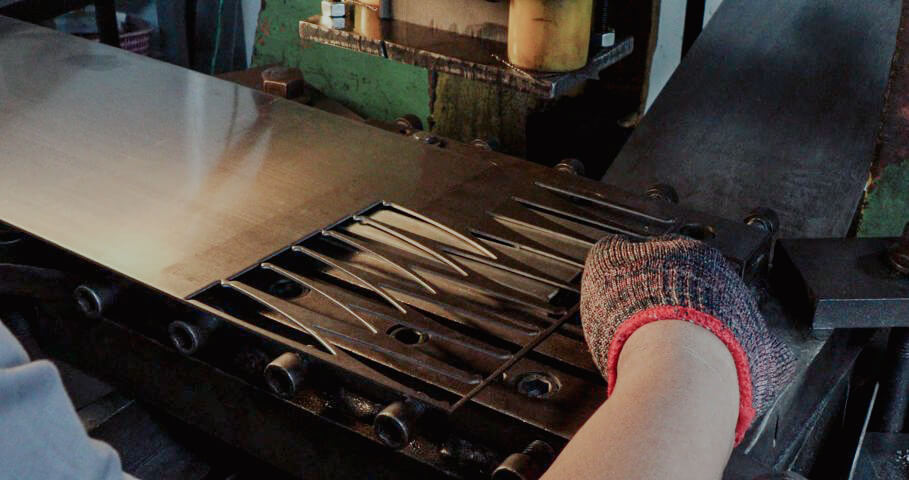
65Mn adapts well to traditional heat treatment equipment. Its extra manganese improves hardenability, so the steel is less sensitive to small temperature changes. A skilled operator using a conventional furnace can hit consistent 58-60 HRC across large batches by watching color, soak time, and quench speed. The process still needs attention and experience, but it does not need programmable controls.
1095 demands more precise process control. It performs best with modern furnaces that hold tight temperature windows. Without that equipment, 1095 is easier to overheat or under-treat, leading to soft spots or brittle edges.
| Manufacturing Factor | 65Mn Manganese Steel | 1095 Carbon Steel |
|---|---|---|
| Heat Treatment Equipment | Traditional setups, operator skill matters | Modern equipment preferred |
| Process Window | Forgiving | Tighter, more critical |
| Machining / Grinding | Faster | Similar to slightly slower |
| Volume Stability | Reliable in Yangjiang supply chain | More dependent on supplier |
| Defect Risk | Low with good practice | Higher without strict QC |
LeeKnivesでカスタムナイフラインをより早く立ち上げましょう
設計から最終出荷まで、OEM/ODM の完全なサポートにより、成長に集中できます。
米国の倉庫に保管されているため、迅速で信頼性の高い配送が可能です。
Factory Insight: Working With 65Mn and 1095 at LeeKnives
Our heat treatment team in Yangjiang, has processed both steels across thousands of blades. Here is what we have learned from production:
- 65Mn is our go-to spring steel for impact blades. It gives us high practical hardness without sacrificing the toughness needed for machetes, axes, and cleavers.
- We limit 65Mn to 58-60 HRC. Pushing it above 60 HRC improves edge retention but increases the risk of chipping under shock. For machetes, axes, and cleavers, 58-60 HRC is the sweet spot.
- 65Mn feels excellent in the hand. Blades made from this steel have a smooth, controllable cutting feel and re-sharpen quickly after hard use.
- 1095 requires tighter control. We use modern furnaces for 1095 to maintain consistent hardness and avoid brittleness. The results are excellent, but the process is less forgiving than 65Mn.
- Rust is the shared enemy. Both steels need protective coatings or clear care instructions. We routinely add oil coatings or recommend regular drying and oiling for OEM orders.
Which Knife Types Use 1095 or 65Mn?
包丁に最適な鋼材
1095 chef knives, gyutos, and petty knives benefit from long edge retention and easy sharpening. Professional cooks and enthusiasts value the razor edge.
65Mn works for budget kitchen knives but needs more frequent sharpening. See our guide to best kitchen knife steels for more options.
Best Steel for Pocket Knives and EDC
のために daily carry blades, edge retention and ease of sharpening matter most. 1095 performs better for opening packages, cutting rope, and routine tasks.
Best Steel for Hunting Knives
Skinning and field dressing require a sharp, precise edge. 1095 delivers. However, hunters must maintain the blade in wet conditions.
Best Steel for Machetes
Machetes and brush-clearing tools need impact toughness. 65Mn flexes on contact with wood and bone without snapping.
Best Steel for Axes
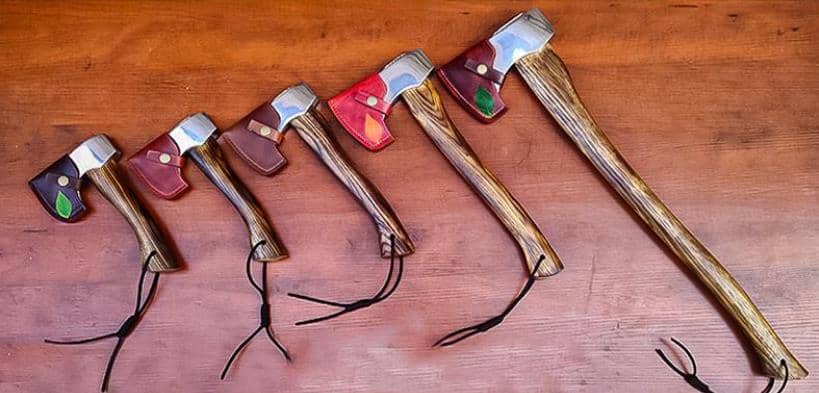
Axes and hatchets take heavy impacts. The head must endure repeated strikes without chipping or cracking. 65Mn manganese steel is the better choice because it absorbs shock and flexes rather than fracturing.
If your product line includes 軸 or outdoor tools, 65Mn offers a good balance of toughness, cost, and manufacturability in Yangjiang.
Best Steel for Swords and Katanas
- Traditional display / cutting swords: 1095 or 1060 high-carbon steel for sharpness and hamon.
- Sparring / functional swords: 65Mn for toughness and resistance to breaking on impact.
This answers the common question: is 65Mn good for swords? Yes, for functional and sparring swords where toughness matters more than razor sharpness.
Best Steel for OEM Production
For wholesalers and brands ordering in volume, 65Mn offers stable supply and a heat treatment process that fits traditional production lines. It is the practical choice for most OEM knife lines focused on tough, impact-resistant blades.
LeeKnivesでカスタムナイフラインをより早く立ち上げましょう
設計から最終出荷まで、OEM/ODM の完全なサポートにより、成長に集中できます。
米国の倉庫に保管されているため、迅速で信頼性の高い配送が可能です。
65Mn Manganese Steel: Pros and Cons
長所
- Hard enough to cut, tough enough to absorb impact. Achieves useful hardness without becoming brittle.
- Forgiving heat treatment. Works well with traditional equipment and skilled operators.
- Good cutting feel. Smooth and controllable during use.
- Easy to re-sharpen. Restores a working edge quickly after hard use.
- Good for heavy-duty tools. Ideal for machetes, axes, cleavers, and impact blades.
短所
- Lower edge retention. Dulls faster than 1095.
- Cannot achieve a razor edge as easily. Less appealing for precision knives.
- Poor corrosion resistance. Rusts quickly without care, just like 1095.
- Confusing name. Buyers may mistake it for Hadfield steel.
1095 Carbon Steel: Pros and Cons
長所
- 優れたエッジ保持力。 Stays sharp longer.
- Very fine edge. Popular with chefs, hunters, and custom makers.
- 研ぎやすい。 Responds well to standard whetstones.
- Strong market recognition. Trusted in outdoor and custom knife communities.
短所
- Brittle at high hardness. Edges can chip on bone or hardwood.
- High rust risk. Requires drying and oiling.
- Tighter heat treatment requirements. Needs modern equipment for consistent results.
結論あなたのナイフ・ラインにはどの鋼材が適しているか?
選ぶ 1095炭素鋼 if your product line focuses on:
- 包丁
- Pocket knives / EDC
- Hunting knives
- Premium custom blades
選ぶ 65Mn manganese steel if your product line focuses on:
- Machetes and chopping tools
- Axes and hatchets
- Survival / bushcraft tools
- Functional swords and sparring blades
- Budget to mid-range OEM knives
For most OEM buyers sourcing from Yangjiang, 65Mn is the practical default. It balances cost, toughness, and manufacturability. Reserve 1095 for product lines where edge retention and premium positioning justify the higher cost.
Source OEM Knives in Both Steels from LeeKnives
LeeKnives is a knife manufacturer in Yangjiang with over 30 years of OEM and ODM experience. We produce knives in 65Mn manganese steel, 1095 carbon steel, and many other blade materials.
Our services include custom blade profiles, handle materials, logos, packaging, and heat treatment optimization. Whether you need a budget kitchen line in 65Mn or a premium outdoor collection in 1095, we can match the steel to your market.
Ready to choose the right steel for your next product line? 無料見積もりをリクエスト and our engineering team will guide you through material selection, sampling, and bulk production.
よくある質問
What is the difference between 1095 and 65Mn steel?
For knives, 1095 steel is a high-carbon steel with ~0.95% carbon and ~0.4% manganese. 65Mn steel is a spring steel with ~0.65% carbon and ~1% manganese. 65Mn is tougher, more flexible, and cheaper—ideal for heavy-use tools. 1095 takes a sharper edge and holds it longer, making it better for precision cutting knives. Both rust easily without care.
Is 1095 vs 65Mn a fair comparison for knives?
Yes, it is a fair comparison. Both 65Mn and 1095 are non-stainless tool steels commonly used in budget to mid-range knives. They differ mainly in carbon and manganese content. 1095 prioritizes edge retention and sharpness. 65Mn prioritizes toughness and cost. Your choice depends on whether the knife will cut or take impact.
Which is better for knives, 1095 or 65Mn?
For most knives, 1095 carbon steel is better. It holds a sharper edge longer and is easier to sharpen, which matters for kitchen, pocket, and hunting knives. Choose 65Mn manganese steel for tools that take heavy impacts, such as machetes, cleavers, and sparring swords.
Is 65Mn good for swords?
Yes, but only for certain swords. 65Mn is excellent for functional and sparring swords because it flexes on impact and resists breaking. For traditional cutting swords or katanas, 1095 or 1060 high-carbon steel is preferred because it takes a sharper edge and can hold a hamon. Note that industrial Hadfield steel is not used for swords.
1095 vs 65Mn: which is better for a katana?
For display and cutting katanas, 1095 or 1060 carbon steel is better. These steels take a very sharp edge and produce a visible hamon. For practice and sparring katanas, 65Mn manganese steel is safer because it absorbs impact and resists breaking. Match the steel to how the katana will be used.
Is 65Mn heavier than 1095?
No. The weight difference is negligible. Both 65Mn and 1095 are iron-based alloys with a density of roughly 7.8 g/cm³. Blade weight depends far more on size, grind, and handle material than on the steel type.
Is 65Mn the same as Hadfield steel?
No. 65Mn is a spring steel with about 1% manganese, used for knives, springs, and tools. Hadfield steel contains 11-14% manganese and is an industrial alloy for mining equipment, crusher jaws, and railroad parts. They are completely different materials despite both being called “manganese steel.”
Which steel is better for OEM knife production, 1095 or 65Mn?
For most OEM knife orders, 65Mn is better. It costs less, is widely available in Yangjiang, and has forgiving heat treatment—ideal for high-volume production. 1095 is better for premium niche lines where edge retention and traditional carbon steel appeal justify higher costs and tighter quality control.
Can LeeKnives produce custom knives in both 1095 and 65Mn?
Yes. LeeKnives offers OEM and ODM services for 65Mn manganese steel, 1095 carbon steel, and many other blade materials. We can customize blade profiles, heat treatment, handles, logos, and packaging for your market. お問い合わせ プロジェクトについて話し合うために。.





 JA
JA  EN
EN  DE
DE