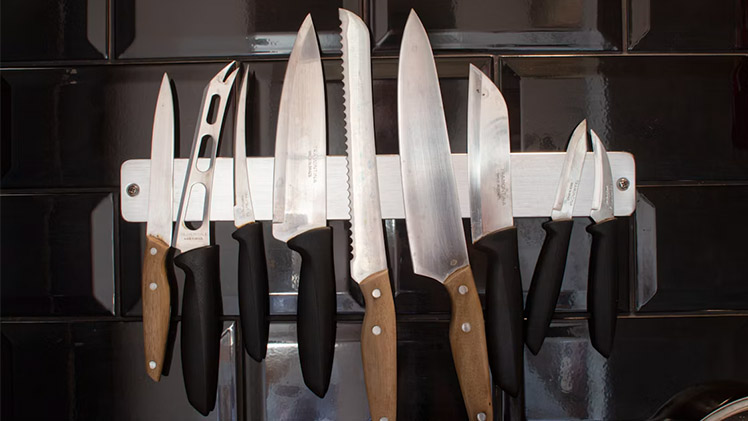
Not sure whether your knife budget covers a blade or a finished product? When you ask how much it costs to make a knife, you need two answers.
For a home build, use $15-40 as a rough materials budget, not a full project price. Blade blanks and handle materials are sold separately, so your choices matter.
のために factory orders, treat $3-8 for basic knives, $7-24 for everyday carry models, and $40 or more for titanium builds as planning estimates, not confirmed quotes.
You will also learn how order size, setup fees, and shipping shape your business budget. You’ll see what each price includes and what costs extra.
How Much Do Knife Materials Cost for DIY?
A basic knife costs about $15-40 for raw materials, assuming you already have access to tools. The knife production cost breakdown, based on figures published by knifemaking communities and schools:
- スチール: $10-15 for a basic high-carbon blank such as 1095. Premium steels like マグナカット または ダマスカス billets can push the steel line to $35-75 or more.
- ハンドルの材質: $10-15 for standard wood, Micarta, or G10 scales. Stabilized burls and exotic materials run $4-250.
- Pins and Epoxy: $2-5 for brass rods, mosaic pins, and a structural epoxy like G-Flex.
Materials are not the whole spend, though. For many hobby builds, the consumables end up costing more than the knife’s materials:
- Grinding Belts: $5-15 per knife, since ceramic belts wear out fast (Bushcraft USA forums).
- Outsourced Heat Treatment: $10-25 per blade, and most beginners should outsource it, per Tharwa Valley Forge’s published figures.
- Shop Supplies: Another $10-20 for sandpaper, drill bits, and etching solutions.
Equipment is where real money goes, and it scales into three tiers:
- $15–50: Files, a hacksaw, and sandpaper.
- $300–500: An entry-level belt sander, an angle grinder, and a drill press.
- $2,000–10,000+: A serious setup with a 2×72 grinder and a heat-treat kiln.
For a one-off project, the alternative is a class: basic forging sessions cost $20-100, and multi-day Damascus courses average $650-998, based on published course pricing.
That is the complete answer for a hobbyist. The rest of this article is for brand owners.
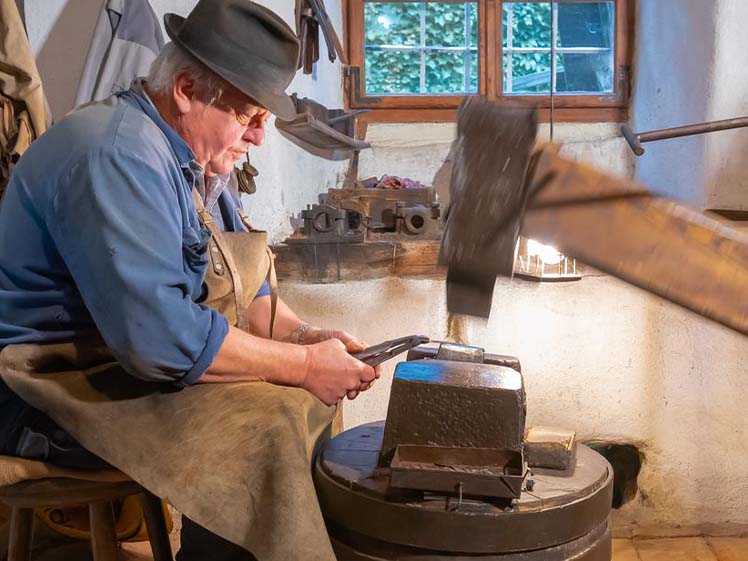
Making a Knife vs. Manufacturing Knives
When you ask how much it costs to make a knife, most online results focus on solo bladesmiths. But if you run a brand, you need a different answer. You need to know what a factory charges per unit and what else hits your overall budget.
These two production styles work in opposite ways:
- Custom pricing is labor-driven. You pay directly for a maker’s time. The Noblie custom knife price guide shows a smith spends about 20 shop hours on a solid working knife and 120+ hours on an elite art piece.
- Factory pricing is amortization-driven. You divide the costs of materials, machinery, and overhead across thousands of identical tools. For example, BLADE Magazine reports that a folding knife costing $100 to produce in the USA costs about $25 to make in China.
Neither price tag is wrong. They answer different questions. Everything below focuses on the factory math you need to build your business.
Skip rough estimates. LeeKnives breaks down steel, tooling, packaging, freight and duties for your OEM / private-label knife project.
How Much Does It Cost to Make a Knife by Factory Type?
Factory pricing falls into clear brackets based on your materials and specs. Current quotes from 陽江, the world’s leading knife manufacturing hub, show a direct link between your requirements and your cost.
Here is a quick look at standard factory unit costs:
| Knife Type and Build | Unit Estimate | 最適なサイズ | Main Price Drivers |
| Stamped kitchen knife, 3Cr13–5Cr15MoV | $3-8 | Volume retail | Steel, construction, handle |
| Premium chef knife, VG-10 | $14-25 | Premium kitchen brands | Steel, shaping, finish |
| Basic folder, 3Cr13, liner lock | $3-8 | Promotions, entry-level retail | Lock, steel, hardware |
| Mid-range everyday carry folder, D2/14C28N, bearings, G10 | $10-24 | EDC brands, gifts | Steel, machining, bearings, coatings |
| Flagship folder, M390, titanium frame | $45-85+ | Collector lines | Steel, titanium machining, fit |
| Damascus or premium fixed blade | $22-40 FOB (entry damascus from $10 for basic etched pattern) | Outdoor and collector lines | Blade, handle, sheath, finish |
Ask each supplier to quote the same build to compare factory knife quotes:
- 材料: Name the blade steel and handle material.
- Build: Specify the lock, finish, and packaging.
- Quantity: Request prices at several order sizes.
- Checks: Ask for heat-treatment records and inspection terms.
A low quote deserves questions, not an automatic rejection. Check what changed before assuming the supplier skipped a quality step.
Watch out for sudden bargains. If a factory quotes you a price far below these normal ranges, it is a red flag. They cut a major corner to get there. They likely skipped 熱処理, downgraded raw steel, or dropped a quality-control pass.
What’s Inside a Factory Quote?
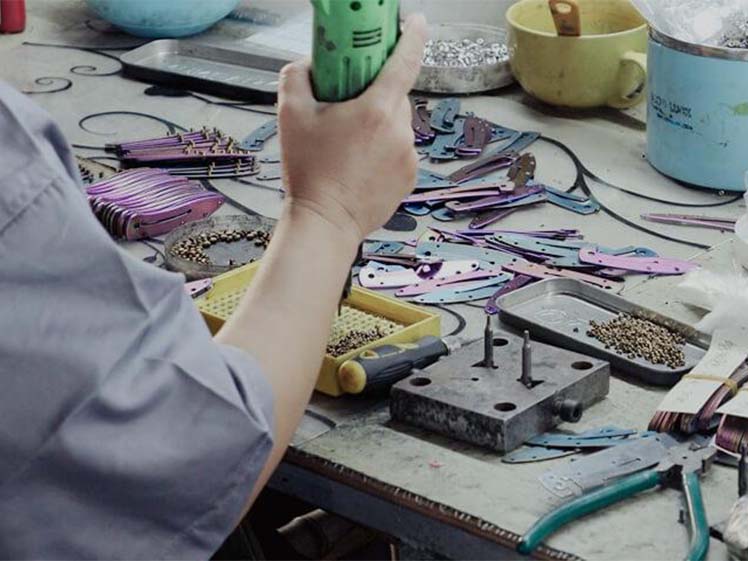
A factory quote is a stack of six cost lines, and two of them do most of the moving. No factory publishes its internal bill of materials, so treat the breakdown below as an illustrative build for starting a folding knife line at 1,000 units.
Here is a modeled breakdown for an $8.50 knife build:
| Cost Item | Estimated Cost | What Changes It |
| Blade Steel & Heat Treatment | $1.50 | The exact steel you choose |
| Handle, Liners, & Hardware | $2.00 | ハンドルの素材とデザイン |
| Grinding, Machining, & Assembly | $2.00 | How complex the design is |
| Finishing & Quality Control | $0.80 | Your desired finish level |
| Logo & Basic Packaging | $0.70 | Your branding choices |
| Factory Overhead & Margin | $1.50 | The factory’s quality tier |
| Total Estimated Price | $8.50 |
Notice where you have the most leverage:
- The raw materials. Your blade steel and handle materials swing the price more than everything else combined. A handle can be molded from cheap plastic or milled from expensive titanium.
- The hidden steps. Heat treatment sits inside the steel cost. A solo hobbyist pays an outside service $10 to $25 to heat treat a single blade. But inside a huge factory with continuous ovens, it shrinks to just pennies.
This hidden factory efficiency is why a folding knife might cost $25 to make in China but $100 in the US. By understanding these levers, you can control your final invoice.
Skip rough estimates. LeeKnives breaks down steel, tooling, packaging, freight and duties for your OEM / private-label knife project.
How Order Quantity Changes Your Unit Price
Quantity controls your budget more than most first-time buyers expect. Three main forces change your final invoice based on how many knives you buy:
最小注文数量(MOQ)
You cannot just order five factory knives. Entry-level minimums usually sit at 100 to 500 pieces per model.
- Logo OEM: Adding your brand to a standard design typically starts around 300 units per SKU.
- プライベートラベル: Using existing factory molds can push the minimum down to 100 units. For example, our standard LeeKnives MOQ is 200 pieces, but we sometimes drop it to 100.
- Kitchen Knife Sets: These run higher, often requiring 500 to 2,000 sets.
Below these minimums, the factory cannot recover the cost of setting up the production lines and furnaces.
Volume Price Breaks
Buying more drops your unit cost. You can verify this on almost any current factory quotation. Budget and mid-range knives typically drop 10% to 30% when you move from the smallest order tier to 1,000 pieces.
- Mid-Range Example: あ D2鋼 folder might cost $12.00 if you order 200 to 1,199 pieces. That drops to $10.20 for 1,200 to 2,999 pieces, and hits $9.00 at 3,000 pieces. That is a solid 25% drop.
- Damascus Example: A premium Damascus fixed blade might fall from $38 for a small 100-piece batch down to $35 for a 1,000-piece run.
- Premium Exception: High-end builds behave differently. An M390 titanium folder might only move from $87 down to $85 across its tiers. At that level, the expensive raw titanium and powdered steel dominate the price, making factory setup costs less important.
Custom parts carry a one-time tooling charge. If you want a special molded handle or a proprietary blade shape, you pay for the factory to cut new steel molds.
Industry standards for simple tooling run from $200 to $1,500 per model. Full custom tooling for complex folding knives often costs $500 to $5,000 or more.
The math after that is simple. If a new handle mold costs $600:
- 300 Units: Tooling adds $2.00 to every knife.
- 1,000 Units: Tooling adds $0.60 to every knife.
- 3,000 Units: Tooling adds $0.20 to every knife.
At 300 units, that mold costs more than the blade steel itself. At 3,000 units, it becomes a rounding error. That is why experienced buyers either order deep into a high-quantity tier or design around existing factory molds.
For the wider purchasing playbook, from payment terms to supplier vetting, check out our complete guide to buying wholesale knives.
The Steel Cost Ladder
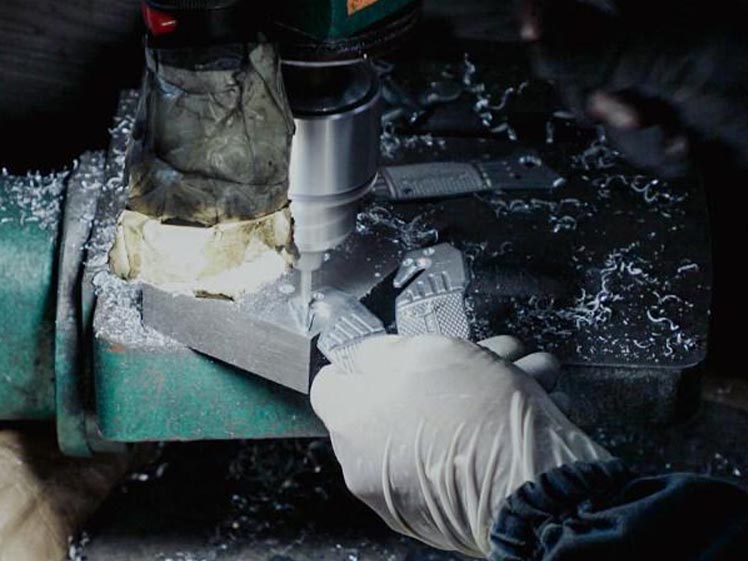
Blade steel swings your factory quote more than any other part of the build. When you look at an actual Chinese knife manufacturer‘s pricing for a standard 8-inch chef knife, you see how raw materials drive your budget.
| 鋼材グレード | FOB Factory Price (8″ Chef Knife) |
| 3Cr13 | $2-$4 |
| 5Cr15MoV | $3.50-$6 |
| 7Cr17MoV | $5-$9 |
| AUS-8 | $8-$14 |
| AUS-10 / VG-10 | $12-$25 |
The pattern here is clear. Stepping up one steel tier usually bumps your factory unit cost by 15% to 50%. Bigger jumps multiply it quickly. Industry guides show that 440-series steels cost roughly 2-3 times more than the basic 3Cr13 baseline.
However, remember that steel is only one line on the factory invoice. Upgrading your steel and heat treatment might add $0.80 to a $5.00 knife. That means the total build cost only rises by about 15%.
For practical buying, the main steel tiers look like this:
- 3Cr13: The budget baseline for basic promotional items.
- 4Cr13 and 5Cr15MoV: The everyday volume of workhorses. As we outline in our 4Cr13 vs. 5Cr15 guide, 5Cr15MoV costs roughly 20% to 30% more than 4Cr13 but holds a sharper edge.
- 14C28N and D2: The mid-range sweet spot for pocket knives.
- VG-10 and S35VN: The premium tier for high-end collections.
ナイフハンドルの素材 climb a similar ladder. You start with basic molded plastic or plain G10, step up to warm woods or Micarta, and finish at expensive titanium or carbon fiber.
Skip rough estimates. LeeKnives breaks down steel, tooling, packaging, freight and duties for your OEM / private-label knife project.
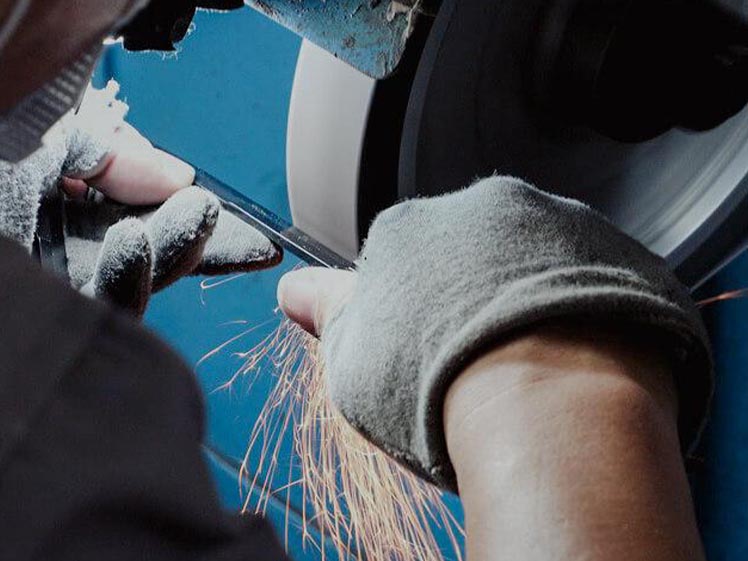
The factory quote is not your final bill. For first-time importers, hidden expenses usually add 30% to 60% to the total budget. To get your true number, you must add these extra lines to the factory price.
- Sampling Fees: You always need a physical sample first. This costs $100 to $150 per model, which the factory usually credits back to your bulk order later. Expect 7 to 15 days to get the sample. After you approve it, full production takes 25 to 45 days.
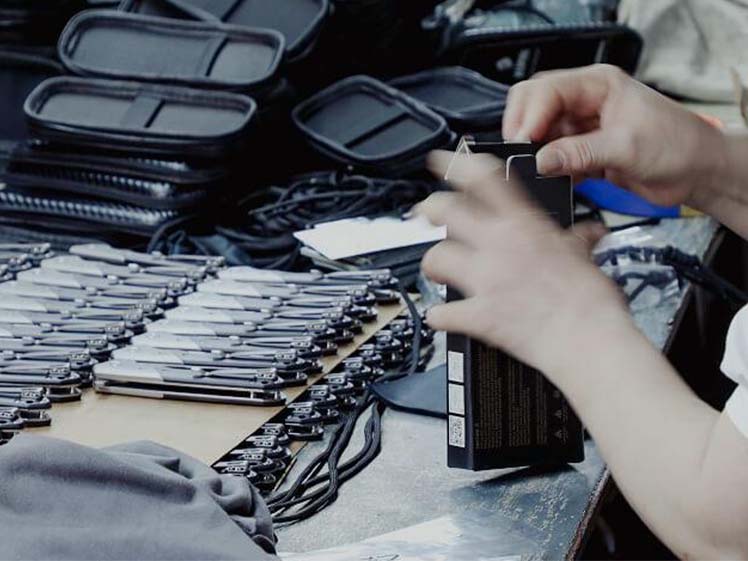
- Custom Packaging: Basic cardboard boxes are free, but retail packaging costs extra. A custom-printed single-knife box runs from $1.20 to $1.70. A premium gift set box costs $2.70 to $4.50. You will also pay a one-time charge of $70 to $155 for the box cutting molds.
- Third-Party Inspection: This is cheap insurance for your brand. Budget $200 to $350 for a professional to check your knives before they ship. For example, V-Trust charges a flat $268 per person-day in Guangdong, while QIMA starts around $309.
- Lab Testing: カスタムキッチンナイフ require food-safety proof. In the US, you need FDA compliance reports. Europe requires strict LFGB testing. A single migration test costs $200-$400. A full LFGB lab report runs from $500 to $1,500 per SKU.
- Duties and Freight: This is a massive expense for US buyers. As of October 2026, Chinese-made knives face stacked tariffs. You pay the standard 4.6% to 6.8% rate, plus a 25% Section 301 duty and a 25% Section 232 steel duty. That totals roughly 55% to 60% of the customs value.
Always verify your exact 10-digit HTS code before ordering. To budget safely, you need the landed cost. This is the final price to get one finished knife into your warehouse.
Landed Cost = Factory Price + Tooling + Packaging + Freight + Duties + Fees
Let’s run the math on our $8.50 mid-range folding knife. Add $0.60 for handle mold amortization and $0.80 for a custom retail box. Your new customs value is $9.90. US duties at 55% add $5.45. Freight and port fees add another $0.50.
That “$8.50 knife” actually lands at $15.85. Since mid-range ポケットナイフ retail for $75 to $200, you still have a very healthy profit margin. But that only works if you planned for the real costs upfront.
How Much Does It Cost to Start a Knife Brand?
When you add up factory prices, packaging, and shipping, realistic launch budgets fall into three main tiers. These numbers give you a solid target to plan your business around.
| Launch Path | Estimated Initial Budget | What You Actually Get |
| Factory Model with Your Logo (100–300 units) | $1,000 – $4,000 | A quick market test with zero tooling risk. |
| Private Label Launch (500–1,000 units) | $4,000 – $12,000 | Real inventory, custom packaging, and lower unit prices. |
| Full Custom Design | $5,000 – $20,000+ | Custom molds, multiple sampling rounds, and a totally unique blade. |
Let’s check the math in the first tier. Buying 200 units of a $3-$6 folding knife easily fits within that $1,000-$4,000 window, even after you pay for samples and shipping. Just remember that custom tooling, lab testing, and heavy ocean freight fees add to your base product cost.
For most new founders, the safest move is the first tier. You can test the waters by putting your branding on a proven factory model from a reliable private-label knife manufacturer before you commit a massive budget to custom development.
Skip rough estimates. LeeKnives breaks down steel, tooling, packaging, freight and duties for your OEM / private-label knife project.
How to Lower Your Per-Unit Cost
When you calculate how much it costs to make a knife, you can shrink that final number. You can pull six practical levers to reduce your factory invoice. Each choice comes with a clear trade-off.
- Drop one steel grade. Moving from D2 to 5Cr15MoV, or from VG-10 to 14C28N, cuts material costs while keeping solid performance. The trade-off is a measurable loss in edge retention.
- Use existing molds. Designing around a factory’s current handle mold erases the custom tooling fee. The trade-off is that your knife shares a basic silhouette with other brands. Suppliers like LeeKnives let you use their existing designs to skip these fees.
- Simplify the locks. A basic liner lock costs far less to build than a complex custom mechanism. Every CNC machine step you remove saves cash. However, you get fewer talking points for knife enthusiasts.
- Hit the quantity breaks. If a factory price drops to 1,000 units, ordering 950 is an expensive mistake. You save per unit, but you take on more inventory risk.
- Share parts across SKUs. Using one identical blade blank across three handle types spreads out the initial setup costs. The trade-off is less variety inside your own product line.
- Right-size your packaging. Ship in simple bulk setups for B2B buyers. Save the expensive printed gift boxes for retail only.
By pulling these levers, you protect your margins while still building a highly capable tool.
Working with LeeKnives: Turn Your Cost Estimates into Reality
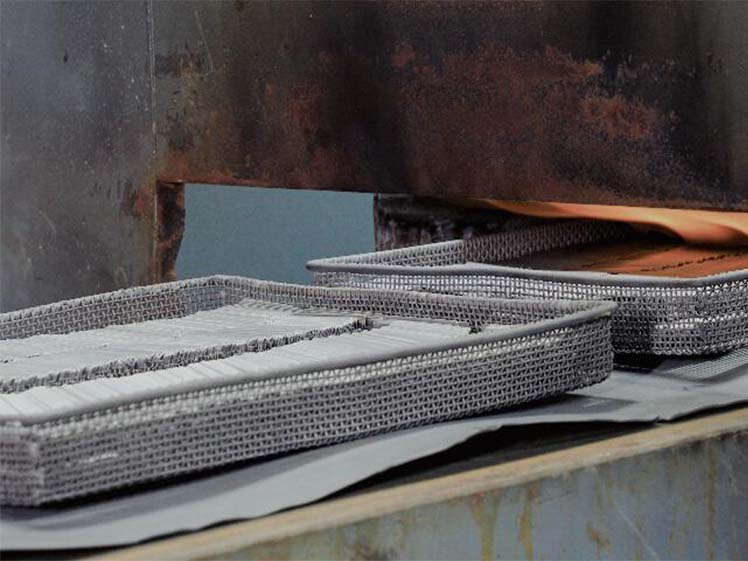
Having a direct manufacturing partner helps you avoid unexpected budget shocks. Located in Yangjiang, China, a hub where smiths have forged blades for centuries, LeeKnives has produced cutting tools since 1993. We build pocket folders, multi-style kitchen knives, cutting boards, and sharpeners.
To help your project succeed, our operations provide clear advantages:
- Flexible Production: Access ODM and OEMナイフ製造業者 with an accessible entry MOQ of 200 units.
- Physical Verification: Test pre-production samples before full manufacturing begins.
- Smooth Logistics: Ship worldwide via air, sea, rail, or express, backed by a US-based warehouse for faster fulfillment.
- Direct Guidance: Work with a dedicated account representative from blueprint review to delivery.
To get a firm, transparent quote instead of rough estimates, supply five core specifications:
- Design Files: Provide technical CAD drawings, physical reference samples, or a factory catalog number.
- Material Specs: Name your exact blade steel and handle material.
- Batch Size: State your target quantity per SKU to lock in volume price breaks.
- Branding Choice: Pick laser engraving, screen printing, or acid etching.
- Packaging Style: Choose bulk cartons, custom single boxes, or full retail sets.
For ongoing retail lines, our wholesale knife service supports repeat volume runs and inventory staging.
Skip rough estimates. LeeKnives breaks down steel, tooling, packaging, freight and duties for your OEM / private-label knife project.
Match Knife Manufacturing Costs in China to Your Goal
Your final budget depends on your current goal. Here is a quick cheat sheet to match your next step with the right numbers:
- The Hobbyist: Want to craft just one blade? Take a local class for $20 to $100, or buy basic garage gear for $300 to $500. A factory is the wrong fit because of strict minimum order rules.
- The Brand Tester: Testing a new business idea? Put your logo on a proven factory model. A batch of 100 to 300 units costs roughly $1,000 to $4,000. Prove people will buy it before paying for custom molds.
- The Growth Scaler: Scaling a proven winner? Step into the next quantity tier. Mid-range and budget knives usually drop 10% to 30% in price when you buy them in bulk.
- The Custom Builder: Building a unique product? Budget $5,000 to $20,000+. Always get a physical sample first, and spread your tooling fees across a larger initial order.
- The Smart Comparer: Unsure about importing knives from China? Run the landed-cost formula from Section 8 against local prices.
Before you spend a dime, check our guides on ポケットナイフ卸売業者 そして becoming a knife dealer to map your exact path forward.
Get an Accurate Cost for Your Knife Line
The cost ranges in this guide help you plan your initial budget. However, your final figure depends on your exact blueprints, handle materials, and order size. You only get that true number from an itemized factory invoice, not an online article.
At LeeKnives, we’ve been building blades in Yangjiang since 1993. Send your design, target quantity, market, and deadline, and we’ll return a complete breakdown covering steel, machining, packaging, tooling, and freight. We also provide hands-on samples before production starts.
よくある質問
How much does it cost to make a knife?
A single DIY build runs $15-40 in materials for a basic knife, plus consumables and equipment. At a factory, a basic kitchen knife or folder typically runs $2-6 per unit at production quantities; a mid-range EDC folder, $7-24; and a Damascus fixed blade, $8–40 FOB, before tooling, shipping, and duties.
How much do knife materials cost?
A basic build uses $10-15 in 1095 steel, $10-15 in handle material, including wood, Micarta, or G10, and $2-5 in pins and epoxy, for about $15-40 total. Premium steels like MagnaCut or Damascus raise the steel line alone to $35-75+, and exotic handle materials can reach $40-250.
How much does it cost to manufacture knives in bulk?
At a 1,000-unit order, an illustrative mid-range folding knife comes to about $8.50 per unit ex-factory, including steel and heat treatment, handle and hardware, machining, finishing, packaging, and factory margin. Comparable D2/G10 folders list at $6-9 at volume, which includes margin. Tooling, freight, and duties are on top of that.
What is the MOQ for custom knives?
Published OEM knife services put entry minimums at 100-500 pieces per model. LeeKnives typically requires 200 pieces per order, sometimes as low as 100. Kitchen knife sets run higher, often 500-2,000 sets. Samples and small test runs are priced separately because they cannot absorb line setup costs.
How much does a custom knife cost compared with a factory-made one?
A custom maker’s knife typically costs $50-300 or more because the price is labor-driven: around 20 shop hours for a working knife, 120+ for an art piece. A factory version of a similar design may cost $7-45 per unit at volume because setup and labor are amortized across hundreds or thousands of pieces.
How long does it take to manufacture a knife order?
Published manufacturer timelines run about 7-15 days for sampling and 25-45 days for mass production after sample approval, longer for complex custom projects. Sea freight to the US adds several weeks; air freight cuts transit to days but costs more per unit. Plan on 2-4 months from sample approval to warehouse delivery for a first order.
How much money do you need to start a knife brand?
Three planning tiers: roughly $1,000-4,000 for an existing factory model with your logo at 100-300 units, $4,000-12,000 for a private-label launch at 500-1,000 units, and $5,000-20,000+ for a custom design including development. Freight, duties, and certification testing apply to every tier.




 JA
 EN
 DE