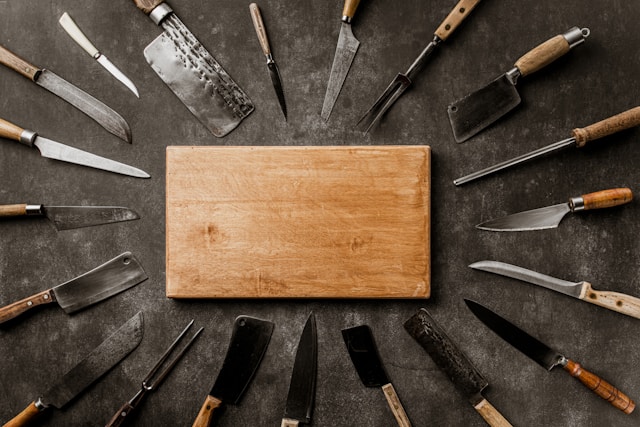
In knife marketing, manganese steel and carbon steel describes two related families of blade steel. Both are technically carbon steels — they contain iron and carbon as their base — but they differ in manganese content and what they are optimized for.
“Carbon steel” knives usually mean plain high-carbon steels like 1095, 1084, and 1055, with 0.5-1.0% carbon and only small amounts of manganese. “Manganese steel” knives usually mean 65Mn, which is also a high-carbon steel but with about 0.9-1.2% manganese added. That extra manganese makes 65Mn tougher and more elastic, while plain high-carbon steels take a sharper, longer-lasting edge. For a direct comparison of two common grades, see our guide on 1095 vs 65Mn steel.
クイックアンサー
Choose plain high-carbon steel for kitchen knives, EDC, and hunting blades where sharpness and edge retention matter. Choose 65Mn manganese spring steel for machetes, axes, swords, and heavy-duty tools where toughness and impact resistance matter.
Key point: 65Mn is technically a high-carbon steel. The difference is that it contains more manganese than plain carbon grades, giving it better toughness and flexibility. Knife-grade “manganese steel” is not industrial Hadfield steel, which contains 11-14% manganese and is not used for blades.
| 要素 | Plain Carbon Steel (1095 / 1084 / 1055) | 65Mn Manganese Spring Steel |
|---|---|---|
| 最適な用途 | Kitchen knives, EDC, hunting knives | Machetes, axes, swords, choppers |
| Primary Strength | 硬度と刃持ち | Toughness and impact resistance |
| Typical Hardness | 55 – 64 HRC | 58 – 62 HRC |
| エッジ保持 | Better | 良い |
| 強靭さ | 良い | Better |
| 耐食性 | 貧しい | 貧しい |
What Is Manganese Steel?
In knife manufacturing, “manganese steel” usually refers to 65Mn, a high-carbon spring steel standardized under GB/T 1222. It contains about 0.62-0.70% carbon and 0.90-1.20% manganese.
Because its carbon content falls in the high-carbon range, 65Mn is technically a type of carbon steel. The “manganese steel” label simply highlights that it has more manganese than plain carbon grades like 1095.
The manganese in 65Mn improves:
- Hardenability — the steel hardens deeply and evenly during heat treatment
- 強靭さ — the blade resists chipping and cracking under impact
- Elasticity — the blade can flex without breaking
- 耐摩耗性 — the surface resists deformation in abrasive conditions
65Mn is commonly used for outdoor knives, machetes, survival blades, utility knives, swords, and spring-loaded tools. Its biggest advantage is delivering a good balance of hardness and toughness with a favorable cost-performance ratio for high-volume production.
Not Hadfield steel
工業 Hadfield steel contains 11-14% manganese and is used for crusher liners, excavator buckets, and railway components. It is extremely tough but difficult to machine and sharpen, and it is not used for knives. When knife suppliers talk about manganese steel blades, they mean 65Mn or similar manganese-alloyed carbon steels.
炭素鋼とは何ですか?
炭素鋼 is a broad family of steels where carbon is the main strengthening element. Nearly all carbon steels also contain small amounts of manganese, silicon, sulfur, and phosphorus.
In the knife trade, “carbon steel” usually means plain high-carbon steel with minimal intentional alloying beyond residual manganese. Popular grades include:
| 鋼鉄 | 炭素含有量 | 一般的な用途 |
|---|---|---|
| 1055 | 0.50 – 0.60% | Swords, axes, machetes, camp knives |
| 1084 | 0.80 – 0.90% | Custom knives, bushcraft blades |
| 1095 | 0.90 – 1.03% | Survival knives, hunting knives, EDC |
Higher carbon content generally provides higher hardness, better edge retention, and stronger cutting ability. However, very high hardness can reduce toughness and make the edge more brittle.
For knife wholesalers, carbon steel grades like 1095 are familiar to end users and widely accepted for premium cutting performance.
Manganese Steel vs Carbon Steel: Chemical Composition
Carbon steel composition (1095 example)
組成データ 1095炭素鋼 is documented in ASTM A29 / AISI 1095 and summarized by MakeItFrom そして AZoM.
- 炭素: 0.90 – 1.03%
- マンガン: 0.30 – 0.50%
- シリコン: ≤ 0.15%
- 硫黄: ≤ 0.050%
- リン: ≤ 0.040%
- 鉄:バランス
65Mn manganese spring steel composition
組成データ 65Mn spring steel is documented in GB/T 1222-2016 / GB/T 1222-2007 and referenced by Otai Special Steel.
- 炭素: 0.62 – 0.70%
- マンガン: 0.90 – 1.20%
- シリコン: 0.17 – 0.37%
- 硫黄: ≤ 0.035%
- リン: ≤ 0.035%
- クロム: ≤ 0.25%
- ニッケル: ≤ 0.25%
- 銅: ≤ 0.25%
What the numbers mean
Carbon steel like 1095 has more carbon, which drives hardness and edge retention. 65Mn has less carbon but significantly more manganese, which improves toughness, hardenability, and impact resistance. Both contain almost no chromium, so neither resists rust well.
Manganese Steel vs Carbon Steel: Blade Performance Comparison
硬度
Carbon steels can reach a wide range of hardness depending on the grade and heat treatment:
| 鋼鉄 | Typical Knife Hardness |
|---|---|
| 1055 | 55 – 58 HRC |
| 1084 | 58 – 62 HRC |
| 1095 | 58 – 64 HRC |
| 65Mn | 58 – 62 HRC |
Higher-carbon steels like 1095 can achieve the highest edge hardness. 65Mn matches 1084 and mid-range carbon steels in hardness but does so with better toughness and flexibility.
For 65mn, Our factory heat treatment data shows steady performance between 58–60 HRC, while hardness levels above 60 HRC raise the risk of edge chipping under heavy impact
Winner: Depends on grade. 1095 can exceed 65Mn; 1055 usually falls below it.
エッジ保持
Carbon steel generally holds an edge longer, especially in higher-carbon grades like 1095. The dense carbon structure allows more carbide formation, which slows edge wear during cutting.
65Mn has good edge retention for general use, but it dulls faster than 1095 during extended slicing. For precision cutting tasks, carbon steel is the better choice.
Winner: Carbon steel, especially 1095 and 1084.
強靭さ
Toughness measures how well a blade resists chipping, cracking, and breaking under impact.
65Mn performs very well here. The manganese content strengthens the steel while maintaining flexibility. Under heavy impact, 65Mn is more likely to bend or roll slightly rather than fracture.
Carbon steel is tough enough for normal cutting but becomes more brittle as hardness increases. A 1095 blade at 60+ HRC can chip if it hits bone, hardwood, or frozen material.
Winner: Manganese spring steel (65Mn).
LeeKnivesでカスタムナイフラインをより早く立ち上げましょう
設計から最終出荷まで、OEM/ODM の完全なサポートにより、成長に集中できます。
米国の倉庫に保管されているため、迅速で信頼性の高い配送が可能です。
耐食性
Neither manganese steel nor traditional carbon steel is stainless. Both contain very little chromium and will rust quickly if exposed to moisture, acids, or humid air.
For your customers, this means blades made from either steel need clear care instructions: wipe dry after use, store in a dry place, and apply a light oil coating.
Winner: Tie. Both require the same maintenance routine.
Both steels are easier to sharpen than most premium stainless steels. Carbon steel responds beautifully to whetstones and can be refined to a very sharp, toothy edge.
65Mn is also easy to sharpen but can feel slightly more stubborn on stones due to its elasticity and abrasion resistance. Deburring may take a bit more effort.
Winner: Carbon steel, by a small margin.
耐摩耗性
Carbon steel offers better wear resistance in cutting applications where hardness matters. The higher carbon content slows material loss during abrasive cutting.
65Mn offers good wear resistance under impact and deformation, especially in tools that benefit from work hardening during use.
Winner: Carbon steel for slicing; manganese steel for impact-wear conditions.
Comparison Table: Manganese Steel vs Carbon Steel
| 特徴 | Carbon Steel (1095 / 1084 / 1055) | Manganese Spring Steel (65Mn) |
|---|---|---|
| 炭素含有量 | 0.50 – 1.03% | 0.62 – 0.70% |
| Manganese Content | 0.30 – 0.90% | 0.90 – 1.20% |
| 硬度(HRC) | 1095 > 65Mn ≈ 1084 > 1055 | 58~62歳 |
| エッジ保持 | 1095 > 65Mn ≈ 1084 > 1055 | 良い |
| 強靭さ | 1055 ≈ 65Mn > 1084 > 1095 | Better |
| 耐食性 | 貧しい | 貧しい |
| シャープニングの容易さ | 1055 > 1095 ≈ 65Mn | 良い |
| 耐摩耗性 | 1095 > 65Mn > 1055 | 良い |
| 柔軟性 | 65Mn > 1055 > 1084 > 1095 | Better |
| 製造コスト | 適度 | Economical |
| 最適な用途 | Kitchen knives, EDC, hunting | Machetes, axes, swords, choppers |
Rankings assume typical knife heat treatments and are approximate. Exact performance depends on the specific grade, hardness target, and heat treatment process.
長所と短所
炭素鋼
長所:
- Better edge retention. Blades stay sharp longer, reducing how often end users need to sharpen.
- Higher maximum sharpness. Can be ground to a very fine edge.
- Well-known grades. 1095, 1084, and 1055 are familiar to many knife buyers.
- 研ぎやすい。 Responds quickly to stones and strops.
短所:
- More brittle under impact. Higher hardness increases chipping risk under heavy use.
- Poor corrosion resistance. Rusts easily without maintenance.
- Higher cost for premium grades. 1095 is generally more expensive than 65Mn.
Manganese spring steel (65Mn)
長所:
- Superior toughness. Absorbs impact without chipping or snapping.
- Better flexibility. Can bend under load without breaking.
- Forgiving heat treatment. Behaves predictably in batch production.
- cost-optimized for mass production. Popular for high-volume OEM knives from Yangjiang suppliers.
After our factory’s long-term production testing, Its biggest advantage is delivering a well-balanced combination of hardness and toughness ideal for consistent large-batch knife production.
短所:
- Lower edge retention than high-carbon steel. Blades dull faster during extended cutting.
- Lower maximum sharpness. Harder to achieve a razor-fine edge compared to 1095.
- Poor corrosion resistance. Like carbon steel, 65Mn rusts easily without care.
Manganese Steel and Carbon Steel Suitable Applications
Carbon steel is ideal for
- 包丁: Chef knives, santoku, and utility knives where long-lasting sharpness matters.
- EDCポケットナイフ: Daily carry blades that benefit from good edge retention.
- Hunting knives: Clean cuts and reliable edge performance in the field.
- Bushcraft and carving tools: Precision cutting where edge stability is critical.
Manganese spring steel (65Mn) is ideal for
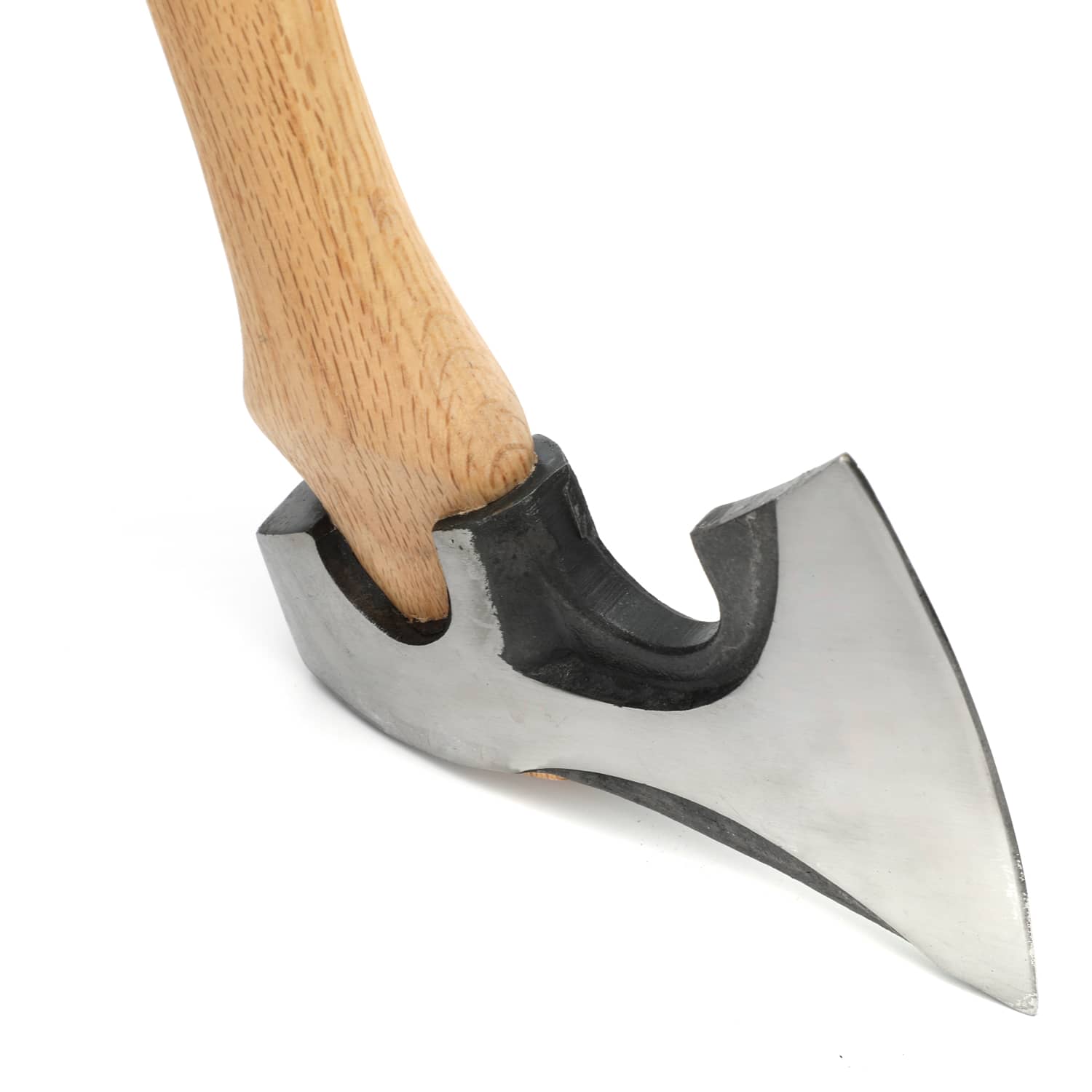
- Machetes and brush cutters: Toughness helps the blade survive repeated impacts against wood and brush.
- Axes and hatchets: Shock absorption is more important than maximum sharpness.
- Swords and training blades: The steel flexes and absorbs stress without snapping.
- Heavy cleavers and choppers: Impact resistance matters more than razor-like slicing.
- Mass-market outdoor tools: Stable heat treatment outcomes and balanced performance make 65Mn consistent for high-volume OEM orders.
Manganese steel vs carbon steel for swords
For swords, the choice between manganese spring steel and carbon steel depends on how the sword will be used.
65Mn is often preferred for functional swords, training blades, and sparring weapons. Its spring-like toughness allows the blade to flex and absorb impact without snapping. This makes it a safer choice for blades that will see contact, bending, or repeated stress.
Carbon steel like 1095 is preferred for display swords, cutting-focused blades, and traditional-style swords where sharpness and edge performance matter. These blades hold a cleaner edge and cut more cleanly, but they are more prone to chipping if used for heavy contact.
For sword wholesalers, 65Mn is usually the safer choice for functional training and impact blades, while 1095 suits customers who want a sharp, traditional cutting sword.
Heat Treatment and Manufacturing Notes
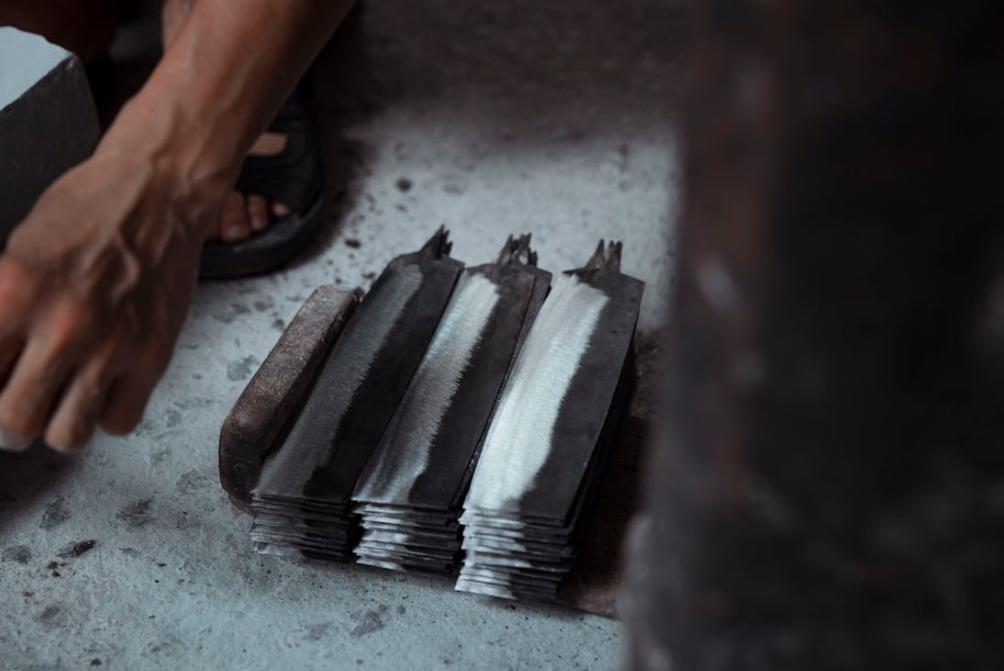
At LeeKnives, we work with both plain carbon steels and 65Mn across different product lines. Our production experience shows that matching the steel to the right heat treatment and end use matters more than the grade name alone.
炭素鋼 requires precise heat treatment to balance hardness and toughness. For kitchen and EDC knives using 1095 or 1084, we typically target 58~60HRC for a good mix of edge retention and edge stability. Pushing much higher increases the risk of micro-chipping under lateral stress. Higher-carbon grades like 1095 also need careful normalization before hardening to prevent cracking during the quench.
65Mn is more forgiving. It responds predictably to standard quench-and-temper processes and reaches a useful hardness range of 58~60HRC without the same brittleness risk as higher-carbon steels. This makes it a practical choice for buyers who need reliable results across large batches, especially for impact tools.
It runs smoothly on conventional heat treatment machinery with less stringent technical operation requirements.
Both steels have poor corrosion resistance, so we always recommend including care instructions with finished products. For coastal or high-humidity markets, some manufacturers add protective coatings to extend blade life.
For OEM production, many factories choose 65Mn for value-oriented survival knives, machetes, and tactical-style blades. Brands targeting enthusiasts often choose 1095, 1084, or upgraded alloy steels like CPM20CV for better cutting performance.
結論:どの鋼材を選ぶべきか?
Both carbon steel and manganese spring steel have important roles in the knife market. The choice depends on your target customers and product positioning.
Choose carbon steel if:
- Your customers prioritize sharpness and edge retention
- You are producing kitchen knives, EDC blades, or hunting knives
- You want a steel that can be refined to a very fine edge
- Your market values recognized grade names like 1095
Choose manganese spring steel (65Mn) if:
- Your customers need toughness, flexibility, and impact resistance
- You are producing machetes, axes, swords, or heavy cleavers
- You want a more forgiving heat treatment process
- You are sourcing high-volume OEM orders and need competitive material costs
For most knife wholesalers, carbon steel is the better choice for kitchen knives and EDC blades, while 65Mn is the better choice for outdoor tools and impact blades. Both steels require maintenance to prevent rust, so include clear care instructions with your products.
Looking for Reliable Knife Manufacturing Partners?
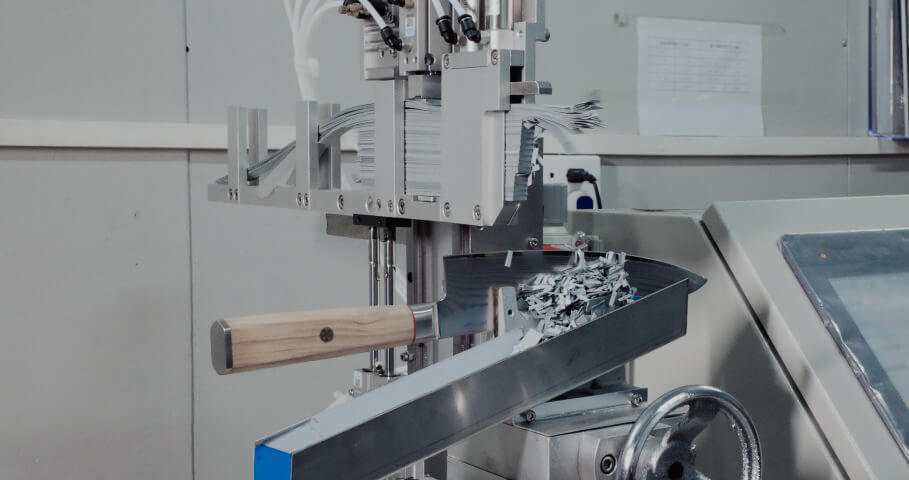
Whether you’re producing sharp kitchen knives with carbon steel or rugged outdoor tools with manganese spring steel, LeeKnives offers comprehensive OEM/ODM services to bring your product line to life.
With over 30 years of experience in steel selection, heat treatment optimization, and quality control, we help you balance cost and performance for your target market. Our team provides consistent steel sourcing, precise heat treatment, and competitive pricing for wholesale orders.
次のナイフ製作プロジェクトを始める準備はできましたか? 無料見積もりをリクエスト 今すぐご連絡ください。当社の専門家が、お客様の製品ラインに最適な鋼材選びをお手伝いいたします。.
よくある質問
Is manganese steel the same as carbon steel?
Yes and no. In metallurgy, 65Mn knife steel is technically a high-carbon steel because it contains about 0.65% carbon. The “manganese steel” label means it has more manganese than plain carbon grades — about 0.9-1.2% Mn in 65Mn compared to 0.3-0.5% Mn in 1095. So 65Mn is a manganese-alloyed carbon steel, not a separate category.
Is manganese steel harder than carbon steel?
Not necessarily. Higher-carbon steels like 1095 can reach higher hardness and hold a sharper edge than 65Mn. However, 65Mn can reach similar hardness levels to mid-range carbon steels like 1084 while offering better toughness.
Which steel is better for knives?
It depends on the application. Carbon steel is better for kitchen knives, EDC blades, and hunting knives that need edge retention. Manganese spring steel (65Mn) is better for machetes, axes, swords, and heavy-duty outdoor tools that need impact resistance.
Does manganese steel rust?
Yes. 65Mn contains no meaningful chromium, so it rusts quickly without maintenance. The same is true for carbon steel.
Is 65Mn a high-manganese steel?
65Mn has about 0.90-1.20% manganese, which makes it a manganese-alloyed spring steel. It is not the same as industrial Hadfield steel, which contains 11-14% manganese.
Is manganese steel good for swords?
Yes. 65Mn is a good choice for functional swords, training blades, and sparring weapons because it combines good hardness with excellent toughness and flexibility. It can absorb impact without snapping, which is important for blade safety.
For display swords or cutting-focused blades where sharpness matters more, carbon steel like 1095 is often preferred.
Which is easier to sharpen, carbon steel or manganese steel?
Carbon steel is generally easier to sharpen to a very fine edge. 65Mn is also sharpenable but can feel slightly more stubborn on stones due to its toughness and elasticity.
Which steel is more economical for OEM production?
65Mn usually offers better material economy than premium carbon steels like 1095, making it popular for mass-market outdoor knives and tools produced in Yangjiang.




 JA
JA  EN
EN  DE
DE