Bei der Beschaffung von Messern in großen Mengen taucht immer wieder die Debatte 14C28N vs. AR-RPM9 auf - und das aus gutem Grund. Beide Stähle dominieren den Markt für Produktionsmesser im mittleren Preissegment, beide sind in der chinesischen OEM-Fertigung weit verbreitet, und beide werden als hochwertige rostfreie Optionen vermarktet.
Sie unterscheiden sich jedoch erheblich in Bezug auf Widerstandsfähigkeit, Transparenz der Lieferkette und Marketinggenauigkeit. Dieser Leitfaden bietet Großhandelskäufern, Eigenmarken und Amazon-Verkäufern ein realistisches Bild - damit Sie eine Entscheidung treffen können, die Ihre Gewinnspannen, Ihre Bewertungen und Ihre Marke schützt.
Wichtige Erkenntnisse
- 14C28N ist der stärkere Standard für Küchenmesser und Eigenmarkenprogramme - seine durch Stickstoff verbesserte Zähigkeit, die rückverfolgbare Lieferkette und die Bekanntheit der Marke Sandvik bieten OEM-Käufern eine saubere, risikoärmere Stahlgeschichte.
- AR-RPM9 ist ein Funktionsstahl ursprünglich als pulvermetallurgisch vermarktet - eine Behauptung, die später von Artisan Cutlery zurückgenommen wurde, nachdem eine unabhängige metallurgische Analyse bestätigt hatte, dass es sich um ein Spritzgussprodukt und nicht um ein PM-Produkt handelt.
- Beide Stähle bieten eine vergleichbare Kantenfestigkeit und Korrosionsbeständigkeit zu ihren jeweiligen Preisen - das Hauptunterscheidungsmerkmal ist die Widerstandsfähigkeit und die Überprüfbarkeit der Lieferkette.
- Für das Private Labeling, 14C28N birgt ein geringeres Reputationsrisiko: Das Datenblatt wurde veröffentlicht, die Zusammensetzung wurde überprüft, und es gibt keine Kontroversen um die Vermarktung.
Was ist 14C28N-Stahl?
14C28N ist ein martensitischer Edelstahl entwickelt von Sandvik (jetzt Alleima), einem schwedischen Metallurgieunternehmen, das speziell für Messeranwendungen entwickelt wurde. Es wurde auf Anfrage von Kershaw Knives als Upgrade zu 13C26 entwickelt, das 0.11% Stickstoff - ein wichtiges Unterscheidungsmerkmal, das die Korrosionsbeständigkeit verbessert und eine höhere Härte ermöglicht, ohne die Zähigkeit zu beeinträchtigen.
Es wird als zertifizierter Bandstahl mit einem vollständig veröffentlichten Datenblatt geliefert, was es zu einem der am besten rückverfolgbaren Haushaltsprodukte macht. Messerstähle verfügbar.
Was ist AR-RPM9-Stahl?
AR-RPM9 ist ein proprietärer Stahl, entwickelt von Artisan Cutlery/CJRB, eingeführt im Jahr 2020. Ursprünglich wurde er als pulvermetallurgisch hergestellter Stahl mit “Seltenen Erden” vermarktet - Behauptungen, die später zurückgenommen wurden, nachdem eine unabhängige metallurgische Analyse von Dr. Larrin Thomas (Knife Steel Nerds, Mai 2024) bestätigt hatte, dass er über Sprühformtechnik, nicht PM.
Seine Zusammensetzung ist im Wesentlichen 9Cr18MoV mit einer Spur von 0,30% Kobalt Zusatz. Ein funktionaler Stahl, aber mit einer dokumentierten Marketing Kontroverse Käufer sollten sich bewusst sein.
Chemische Zusammensetzung: 14C28N gegenüber AR-RPM9
| Element | 14C28N | AR-RPM9 | Hauptunterschied |
|---|---|---|---|
| Kohlenstoff (C) | 0.62% | 0.90% | AR-RPM9 härteres Potenzial, geringere Zähigkeit |
| Chrom (Cr) | 14.00% | 18.00% | Ähnliche Korrosionsbeständigkeit wie in der realen Welt |
| Molybdän (Mo) | — | 1.00% | Nur AR-RPM9; unterstützt die Korrosionsbeständigkeit |
| Mangan (Mn) | 0.60% | 0.45% | Vernachlässigbarer Unterschied |
| Silizium (Si) | 0.20% | 0,20-0,80% | Vernachlässigbarer Unterschied |
| Stickstoff (N) | 0.11% | — | Der Hauptvorteil von 14C28N - Härte und Zähigkeit ohne Kohlenstoffverlust |
| Vanadium (V) | — | 0.10% | Nur AR-RPM9; zu niedrig, um von Bedeutung zu sein |
| Kobalt (Co) | — | 0.30% | Nur AR-RPM9; zu niedrig, um von Bedeutung zu sein |
| Nickel (Ni) | — | <0,40% | Nur AR-RPM9; zu niedrig, um von Bedeutung zu sein |
| Phosphor (P) | max 0,025% | — | Verunreinigung; fälschlicherweise als eines der “9 Elemente” gezählt” |
| Schwefel (S) | max 0,010% | — | Verunreinigung; fälschlicherweise als eines der “9 Elemente” gezählt” |
Quellen Alleima 14C28N Offizielles Datenblatt · AR-RPM9 Zusammensetzung - Messerstahl Nerds OES Analyse
14C28N vs. AR-RPM9: Wichtige Eigenschaften im Vergleich
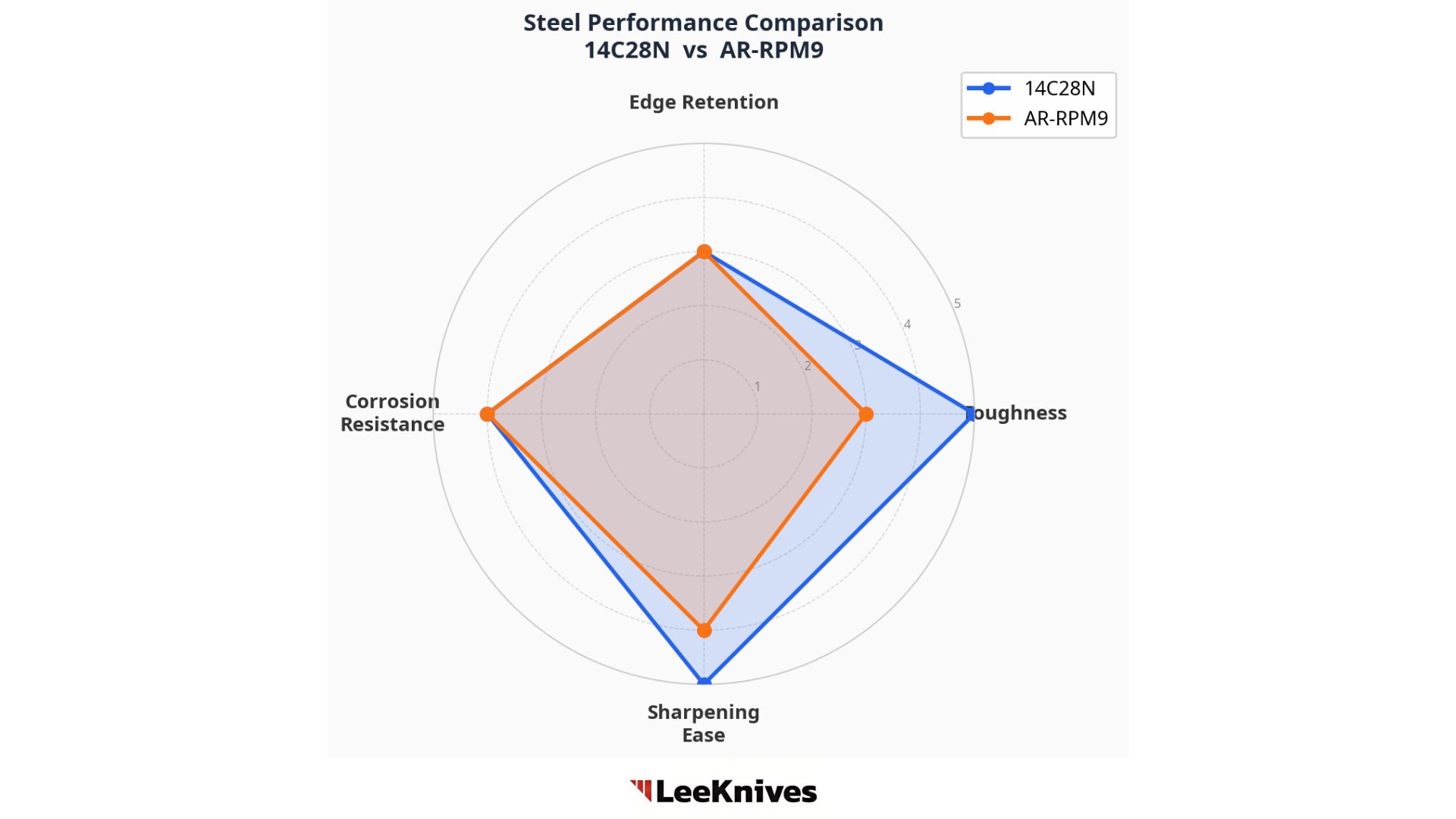
Zähigkeit: 14C28N gewinnt klar
Dies ist der größte praktische Unterschied. Die mit Stickstoff angereicherte Mikrostruktur von 14C28N erzeugt deutlich höhere Zähigkeit als Stähle der Klasse 9Cr18MoV. Dies ist wichtig für:
- Küchenmesser die einer seitlichen Belastung ausgesetzt sind (z. B. Aufstemmen, Schaufeln)
- Outdoor/Jagdmesser Einsatz unter anspruchsvollen Feldbedingungen
- Vermeiden von Spitzenbrüchen - eine häufige Beanstandung bei preiswerten rostfreien Messern
Das AR-RPM9-Spritzgussverfahren verbessert zwar die Zähigkeit gegenüber herkömmlichem 9Cr18MoV, schließt aber nicht die Lücke zu 14C28N.
Korrosionsbeständigkeit: ungefähr gleich, unterschiedliche Gründe
AR-RPM9 hat mehr Chrom (18% gegenüber 14%), aber 14C28N hat weniger Kohlenstoff - ein entscheidender Faktor. Ein hoher Kohlenstoffgehalt “verbraucht” Chrom durch die Bildung von Chromkarbiden, wodurch das freie Chrom, das zur Bildung der passiven Schutzschicht zur Verfügung steht, verringert wird. Der Stickstoffzusatz von 14C28N erhöht die Korrosionsbeständigkeit, ohne dass dies zu Lasten des Kohlenstoffs geht.
In der Praxis - in der Küche, bei der Lagerung in feuchter Umgebung und bei leichter Belastung im Freien - schneiden beide Stähle vergleichbar ab. AR-RPM9 kann aufgrund des Rohchromgehalts in salzhaltigen Umgebungen einen leichten Vorteil haben, aber die Ergebnisse in der Praxis sind ähnlich.
Kantenhaltung: Ähnlich in dieser Kategorie
Keiner der beiden Stähle ist kantenerhaltend. Beide sitzen im moderaten Bereich geeignet für Küchenmesser, allgemeine EDC, und Wert Taschenmesser. Für Käufer, deren Kunden Wert auf einfaches Nachschärfen und nicht auf lange Intervalle zwischen den Schärfungen legen, sind beide geeignet.
Wenn die Beibehaltung des Vorsprungs das wichtigste Kriterium für die Beschaffung ist, sollten Sie sich überlegen, ob Sie nicht auf VG-10, D2, oder Pulverstähle wie S35VN - über die wir in unserem Ultimativer Leitfaden zum besten Stahl für Küchenmesser.
Beide Stähle lassen sich mit preiswerten Geräten leicht schärfen - wichtig für die Erfahrung des Endkunden. Keiner der beiden Stähle hat nennenswerte Vanadiumkarbide, die spezielle Schleifmittel erfordern würden. Der 14C28N lässt sich aufgrund seines geringeren Kohlenstoffgehalts und der feineren Karbidverteilung etwas schneller wieder auf eine Arbeitskante bringen.
Härte: Höhere Obergrenze, anderer Ansatz
14C28N kann mit einer kryogenen Behandlung 62+ HRC erreichen, was den Herstellern mehr Flexibilität bei der Wahl der Wärmebehandlung bietet. AR-RPM9 wird bei Produktionsmessern in der Regel in einem engeren Bereich von 58-59 HRC wärmebehandelt.
Eine höhere Härte bedeutet jedoch nicht automatisch eine bessere Leistung - 14C28N erreicht seine Höchsthärte durch Stickstoffzugabe und nicht durch Kohlenstoffbeladung, wodurch die Zähigkeit erhalten bleibt.
Kosten und Lieferkette: Ein Realitätscheck der Beschaffung
Weltweit von Alleima bezogen
Gebunden an Artisan Besteck / CJRB Ökosystem
Jeder Messerhersteller kann es spezifizieren
Nur über den Kauf von Fertigmessern (CJRB / Artisan)
Von Alleima auf Anfrage
Nicht verfügbar für Dritte
Feinschneidbar, minimaler Werkzeugverschleiß
Spritzgussstahl ist teurer in der Herstellung
Über OEM-Fabriken
Begrenzt auf bestehende CJRB / Artisan SKUs
$13-$57 / Stück Großhandel
(Alibaba, Fabrik-direkt)
$40-$120+ Einzelhandel
(CJRB / Artisan Cutlery gebrandmarkt)
Die wichtigsten Erkenntnisse für Käufer
14C28N ist ein Massenstahl mit offenem Angebot. Es wird von Alleima (Schweden) hergestellt und weltweit vertrieben - jede OEM-Messerfabrik in Yangjiang, Dalian oder anderswo kann es in Bandform beziehen.
Sie können ein Werkszertifikat anfordern, die Zusammensetzung abgleichen und die Wärmebehandlung unabhängig überprüfen. So haben Sie die volle Kontrolle über Spezifikationen und Kostenverhandlungen.
AR-RPM9 ist an die Lieferkette gebunden. Es ist eine geschützte Bezeichnung, die von Artisan Cutlery / CJRB kontrolliert wird. Keine dritte OEM-Fabrik bietet es unabhängig - wenn Sie AR-RPM9 wollen, kaufen Sie fertige Messer von CJRB oder Artisan Cutlery.
Es gibt keine Möglichkeit, AR-RPM9 für Ihr eigenes Eigenmarkenprogramm zu spezifizieren, ein Werkszertifikat anzufordern oder mit einem alternativen Stahllieferanten zu verhandeln. In der Praxis sind AR-RPM9-Messer eine Entscheidung für die Marke, nicht für den Stahl.
Feinschneidbarkeit = geringere Stückkosten im Maßstab. Der niedrigere Kohlenstoffgehalt des 14C28N verringert den Werkzeugverschleiß beim Schneiden und Schleifen - den Arbeitsschritten mit hohem Volumen bei der Messerherstellung. Bei OEM-Aufträgen über 500 Stück bedeutet dies einen messbaren Kostenvorteil pro Stück im Vergleich zu Stählen mit höherem Kohlenstoffgehalt und gleicher Qualität.
Welcher Stahl ist besser für die Beschaffung von OEM- und Großhandelsmessern geeignet?
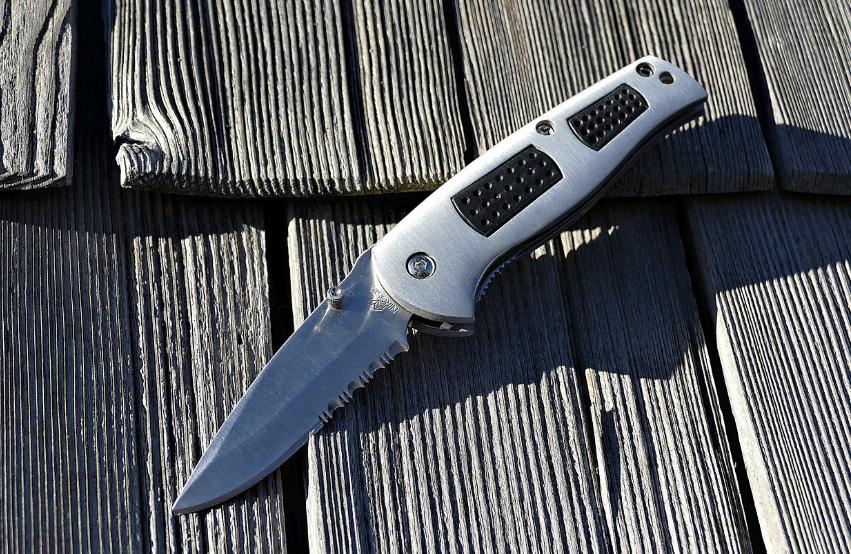
Als B2B-Messereinkäufer sollten Sie bei Ihren Entscheidungen folgende Aspekte berücksichtigen: Produktqualität, Zuverlässigkeit der Lieferkette, Kundenerwartungen und rechtliche und Marketingrisiken.
Wählen Sie 14C28N, wenn
- Sie produzieren Küchenmesser - Die Widerstandsfähigkeit ist von entscheidender Bedeutung; in der Küche gibt es seitliche Belastungen, Stürze und Unfälle in der Spülmaschine.
- Sie bauen eine Händlermarke die eine überprüfbare, seriöse Stahlgeschichte benötigt - “Sandvik/Alleima 14C28N” ist eine glaubwürdige, vom Verbraucher anerkannte Angabe
- Ihr Endkunden in Nordamerika, Europa oder Japan sind, wo der Bekanntheitsgrad von Sandvik einen Mehrwert darstellt
- Sie wollen einen Stahl mit einer veröffentlichtes Datenblatt die Sie mit den Einkäufern des Einzelhandels oder den Compliance-Teams der Plattformen teilen können
- Sie benötigen Feinschneidbarkeit - Geringere Herstellungskosten pro Einheit sind in großem Maßstab wichtig
- Sie beschaffen Outdoor-, Jagd- oder Überlebensmesser wo Zähigkeit kostspielige Garantierückgaben verhindert
Wählen Sie AR-RPM9, wenn
- Sie beschaffen gezielt CJRB- oder Artisan-Besteck-Messer - dies ist ihr Hausstahl und die Wärmebehandlung ist für ihre Klingen optimiert
- Ihre Käufer sind bereits vertraut mit dem CJRB Ökosystem und haben positive Erfahrungen mit diesem Stahl
- Sie benötigen eine EDC-Mappe mit hohem Chromanteil und mit der tatsächlichen Identität des Stahls (Spritzform 9Cr18MoV) vertraut sind
Der Risikofaktor B2B
Dieser Punkt ist vor allem für Private-Label- und OEM-Käufer von Bedeutung: Wenn Sie Messer mit einer eigenen Marke versehen und sie unter Verwendung der ursprünglichen ’Pulvermetallurgie“ von AR-RPM9 vermarkten, tragen Sie Reputations- und Compliance-Risiko.
Das Problem der falschen Werbung wurde von einem anerkannten Metallurgen öffentlich dokumentiert, in allen Messergemeinschaften aufgegriffen und von Artisan Cutlery bestätigt. Jeder nachgeschaltete Kunde, der den Stahl recherchiert, wird dies finden.
Mit 14C28N verfügen Sie über ein von Alleima veröffentlichtes Datenblatt, eine nachprüfbare Zusammensetzung und eine über 60-jährige Erfolgsbilanz in der kommerziellen Messerproduktion. Für OEM- und Handelsmarkenarbeiten ist diese Rückverfolgbarkeit ein echter Vorteil.
Wie sich dies auf Ihre Beschaffungsstrategie auswirkt
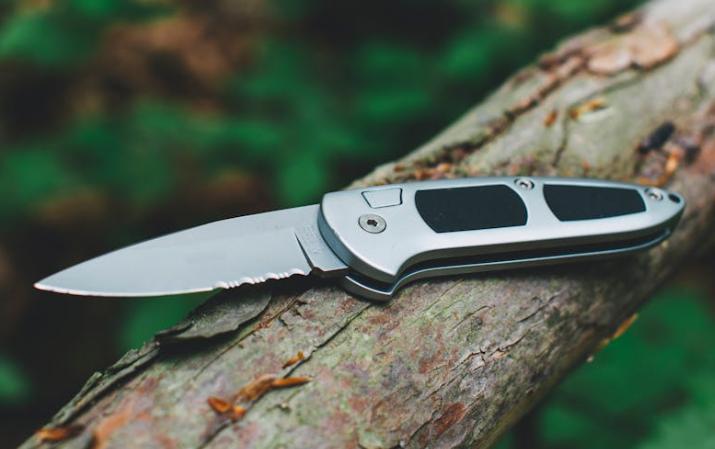
Für Messergroßhändler
Wenn Sie fertige Messer unter bestehenden Marken im Großhandel vertreiben:
- CJRB-Messer in AR-RPM9 sind legitime Produkte, die eine angemessene Leistung erbringen. Halten Sie sie vorrätig, wenn eine Nachfrage besteht. Seien Sie nur bereit, sachkundige Fragen zur Vermarktungsgeschichte des Stahls zu beantworten.
- Messer in 14C28N (Kershaw, Morakniv, viele chinesische OEM Küchenmesser) haben eine sauberere Stahlgeschichte und eine höhere Zähigkeit.
Für Eigenmarken- und OEM-Käufer
Für kundenspezifische Messerprogramme empfehlen wir 14C28N als Standard für Küchen- und Mehrzweckmesser. Wenn Sie mit Ihrem OEM-Hersteller über Stahloptionen sprechen, überprüfen Sie diese:
- Der Stahl ist echtes Alleima/Sandvik-Band (fragen Sie nach Werkszeugnissen)
- Die Wärmebehandlung zielt auf 58-62 HRC ab, je nach Messertyp
- Das Anlassen erfolgt unter 450°C, um die Korrosionsbeständigkeit zu erhalten (gemäß den Sandvik-Härtungsrichtlinien)
Wir von LeeKnives arbeiten mit geprüften Stahllieferanten zusammen und können Ihnen die Dokumentation für Ihre Anforderungen an die Einhaltung der Vorschriften oder die Partnerschaft mit dem Einzelhandel zur Verfügung stellen. Erfahren Sie mehr darüber, wie wir mit Prüfung und Verifizierung der Messerqualität und unsere OEM-Messerfertigungsdienste.
Für Amazon und E-Commerce-Verkäufer
Stahl ist einer der wichtigsten Filter, die Käufer in der Messerkategorie von Amazon verwenden. “14C28N” als Suchbegriff hat sich bei den Käufern etabliert - Kershaws Marketing über ein Jahrzehnt hat dieses Bewusstsein geschaffen.
Wenn Sie eine Liste erstellen, wirkt sich die Wahl des Stahls sowohl auf die Relevanz Ihrer Schlüsselwörter als auch auf den Verlauf Ihrer Bewertungen aus (härterer Stahl ohne Zähigkeit = mehr Beschwerden über Chips; das Zähigkeitsprofil des 14C28N bedeutet in der Regel weniger negative Bewertungen durch gelegentlichen Missbrauch).
Schlussfolgerung: Das praktische Urteil für B2B-Einkäufer
Für die meisten B2B-Beschaffungsentscheidungen, 14C28N ist die sicherere und vertretbarere Wahl.
Er bietet nachgewiesene Zähigkeit und eine rückverfolgbare Lieferkette, die durch das von Alleima veröffentlichte Datenblatt gestützt wird - eine Stahlidentität, die auch bei genauer Prüfung Bestand hat. AR-RPM9 erbringt eine angemessene Leistung, aber seine zurückgezogene pulvermetallurgische Angabe ist dokumentiert und durchsuchbar - ein unnötiges Risiko für Handelsmarken.
Die Quintessenz:
- Wählen 14C28N wenn Sie Wert auf Robustheit, Transparenz der Lieferkette und markensichere Stahldokumentation legen
- Wählen AR-RPM9 wenn Sie ausschließlich innerhalb des CJRB/Artisan Cutlery-Ökosystems einkaufen und die Leistung zum Preis das einzige Kriterium ist
Für die meisten Großabnehmer und Eigenmarkenprogramme ist das 14C28N in jeder Hinsicht ein Gewinn, der über das Messer selbst hinausgeht.
Sind Sie bereit für die Beschaffung von Messern mit LeeKnives?
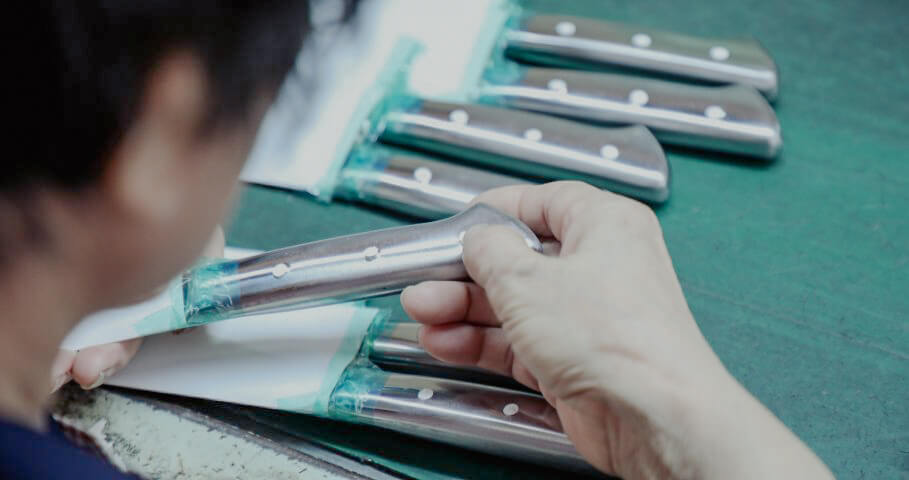
LeeKnives ist auf die OEM-Messerherstellung mit vollständiger Stahldokumentation, Werkszertifikaten und kundenspezifischen Spezifikationen spezialisiert - damit Ihr Eigenmarkenprogramm auf einer Lieferkette aufbaut, hinter der Sie stehen können.
Was wir anbieten:
- Individuelle Klingengeometrie, Griffmaterial, und Branding
- MOQ-flexible Großhandelsprogramme für Amazon-Verkäufer und Einzelhandelskunden
- Dedizierte OEM-Projekt Management von der Spezifikation bis zur Lieferung
Kostenloses OEM-Angebot anfordern.
Bringen Sie Ihre individuelle Messerlinie schneller auf den Markt mit LeeKnives
Umfassender OEM/ODM-Support – vom Entwurf bis zur endgültigen Lieferung –, damit Sie sich auf Ihr Wachstum konzentrieren können.
Unterstützt durch Lager in den USA für eine schnelle und zuverlässige Lieferung.
Häufig gestellte Fragen
Ist AR-RPM9 besser als 14C28N?
Nicht für die meisten B2B-Beschaffungsentscheidungen. AR-RPM9 bietet eine vergleichbare Kantenfestigkeit und Korrosionsbeständigkeit, aber 14C28N hat aufgrund seiner durch Stickstoff verbesserten Mikrostruktur einen klaren Vorteil bei der Zähigkeit.
Noch wichtiger ist, dass 14C28N mit einem veröffentlichten Alleima-Datenblatt und einer offenen Lieferkette geliefert wird - AR-RPM9 ist mit dokumentierten Marketing-Kontroversen verbunden und hat keine Zertifizierung durch eine dritte Fabrik. Für Eigenmarkenprogramme ist 14C28N die risikoärmere Wahl.
Taugt AR-RPM9-Stahl etwas?
Ja - als Funktionsstahl leistet AR-RPM9 in Produktionsmessern angemessene Dienste. Er bietet eine solide Korrosionsbeständigkeit (18% Chrom, 1% Molybdän) und eine angemessene Schnitthaltigkeit für seine Preisklasse. Das Problem ist nicht die Leistung - es ist die zurückgezogene Pulvermetallurgie Anspruch.
Wenn Sie CJRB- oder Artisan Cutlery-Messer in deren eigenem Ökosystem kaufen, ist das AR-RPM9 eine legitime Option im mittleren Preissegment. Wenn Sie eine Eigenmarke um es herum aufbauen, schafft die Marketinggeschichte ein unnötiges Risiko.
Was sind die Nachteile von 14C28N-Stahl?
- Geringerer Kohlenstoffgehalt bedeutet, dass die Schärfe nur mäßig erhalten bleibt - nicht geeignet für Käufer, deren Kunden längere Intervalle zwischen den Schärfungen verlangen
- Kein Premium-Stahl - für die Positionierung von hochwertigen Eigenmarken ist eine Erhöhung auf VG-10, S35VN oder ähnliches besser geeignet
- Weichere Höchsthärte ohne kryogene Behandlung - eine Standard-Wärmebehandlung ergibt normalerweise 58-60 HRC
- Weniger Chrom als hochchromhaltige Stähle - in extremen Salzsprühnebel-Umgebungen sind Optionen mit höherem Chromgehalt wie H1 oder LC200N besser geeignet
Für Küchenmesser und EDC-Messer der mittleren Preisklasse sind diese Punkte selten ein Problem, aber für die richtige Anwendung wichtig.
Ist der AR-RPM9 schwer zu schärfen?
Nr. AR-RPM9 lässt sich mit Standardgeräten leicht schärfen - Schleifsteine, Durchziehschleifgeräte oder geführte Stangensysteme funktionieren alle effektiv. Seine Karbidstruktur erfordert keine Diamantschleifmittel oder Spezialwerkzeuge.
Dies macht es verbraucherfreundlich, was ein Vorteil für Großhändler und E-Commerce-Verkäufer ist, deren Endkunden möglicherweise keine erfahrenen Schärfer sind. 14C28N ist aufgrund des geringeren Kohlenstoffgehalts und der feineren Karbidverteilung etwas leichter zu schärfen, aber der praktische Unterschied ist minimal.
Welcher Stahl ist besser als 14C28N?
Bei Küchenmessern und allgemeinen Produktionsmessern gehören zu den üblichen Upgrades:
- VG-10 - höhere Kantenfestigkeit, ähnliche Korrosionsbeständigkeit, beliebt in Küchenmesser im japanischen Stil
- AUS-10 - vergleichbar mit VG-10, etwas günstiger, weit verbreitet in OEM-Küchenmesserprogrammen
- S35VN - Pulvermetallurgischer Stahl mit deutlich besserer Schnitthaltigkeit und Zähigkeit, geeignet für hochwertige EDC- und Outdoor-Messer
- MagnaCut - Moderner PM-Stahl mit außergewöhnlicher Korrosionsbeständigkeit und Zähigkeit, der sich für hochwertige Küchenmesser eignet
Für B2B-Käufer sollte die Entscheidung für ein Upgrade von den Erwartungen der Endkunden und der Preisklasse abhängen - der 14C28N ist zu diesem Preis nach wie vor die beste Option.
Welche Körnung ist die beste für 14C28N?
Für die routinemäßige Wartung und Ausbesserung, 1.000-2.000 Körnung reicht aus, um eine funktionierende Kante bei 14C28N wiederherzustellen. Zum Reprofilieren oder Reparieren einer beschädigten Kante, beginnen Sie bei 400-600er Körnung bevor Sie zu feineren Körnern übergehen.
Für eine polierte, raffinierte Kante, beenden Sie bei 3.000-6.000 Körnung. Die feine Karbidstruktur von 14C28N spricht über den gesamten Körnungsbereich gut an - es sind keine Diamantschleifmittel erforderlich. Keramik, Aluminiumoxid und Standard-Wassersteine arbeiten alle effektiv.
Ist der Stahl 14C28N sein Geld wert?
Ja - zu seinem Preis ist 14C28N einer der günstigsten Messerstähle auf dem Markt. Er bietet eine seltene Kombination aus Zähigkeit, Korrosionsbeständigkeit und leichter Schärfbarkeit, die die meisten preisgünstigen rostfreien Stähle nicht erreichen.
Für OEM- und Großhandelskäufer bieten die offene Lieferkette, das veröffentlichte Datenblatt und der Bekanntheitsgrad der Marke Alleima einen Mehrwert bei der Beschaffung, der über die physikalischen Eigenschaften des Stahls hinausgeht.
Wenn Ihr Programm im mittleren Marktsegment angesiedelt ist und Sie einen Stahl benötigen, der zuverlässig funktioniert und eine klare Markenbotschaft vermittelt, bietet der 14C28N einen hohen ROI.




 DE
DE  EN
EN  JA
JA