
The ceramic vs. steel honing rod debate shows up at every knife counter. Both keep knives sharp between sharpenings, yet they treat the edge differently — and the wrong match can damage a hard blade. Neither is “better” in the abstract; the right choice depends on blade hardness.
In this guide, we break down how each rod treats an edge, compare them spec by spec, and finish with a simple hardness-based framework your sales team can use at the counter. Read to the end to see which rod deserves shelf space next to your kitchen knife lineup.
The Quick Answer
Short on time? Here is the ceramic vs. steel honing rod decision in one breath:
- Soft Western knives (54 – 58 HRc) — a steel honing rod is the classic, durable choice.
- Hard Japanische Messer (60+ HRc) — a ceramic rod is the safer match.
- Diamond rods — occasional repair tools, not daily hones.
Wondering why hardness decides everything? Keep reading.
Ceramic vs. Steel Honing Rod: Comparison Table
Before the details, here is how the two rod types compare across the factors that matter.
| Steel Honing Rod | Ceramic Honing Rod | |
|---|---|---|
| How it works | Mostly realigns and burnishes the edge | Mildly abrasive — removes a small amount of metal |
| Grit equivalent | Smooth: none (burnishing); grooved: very coarse | Roughly 800 – 3000 grit, depending on the rod |
| Best knife hardness | 54 – 58 HRc (German/Western blades) | 60+ HRc (hard Japanese blades) |
| Haltbarkeit | Nearly indestructible; decades of service | Brittle — one drop on tile can snap it |
| Surface wear | Grooves slowly flatten over years | Can load with metal or wear smooth |
| Wartung | Wipe clean; that’s about it | Needs periodic cleaning with an eraser |
| Typical lifespan | 10+ years, often a lifetime | About 2 – 7 years of regular use |
| Preisklasse | $15 – $40 | $25 – $60 |
Honing vs. Sharpening: What a Rod Actually Does
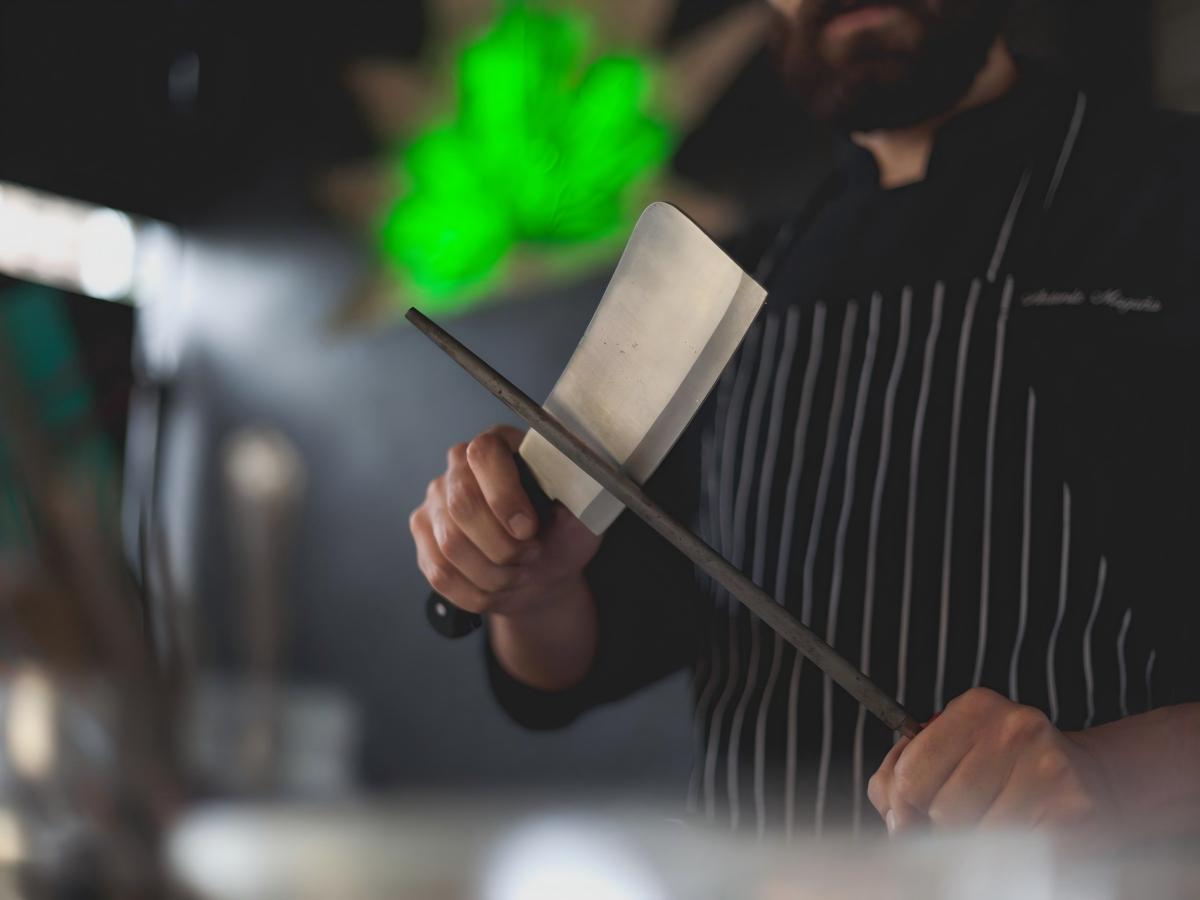
Every edge degrades in two ways. The thin cutting line can Rolle to one side like a bent wire, and it can wear down as microscopically small amounts of metal are lost. Honing addresses the first problem; sharpening addresses the second.
Here is the honest truth, backed by electron microscope studies: every rod removes a little metal. Even a smooth steel rod burnishes a micro-bevel onto the edge rather than simply pushing it straight. The difference between rods is a matter of degree — steel removes the least, ceramic a bit more, and diamond the most.
This is why honing sits between full sharpenings in any maintenance routine. When honing no longer restores the bite, the edge is worn rather than rolled, and it is time for a proper whetstone sharpening.
Steel Honing Rods: The Traditional Workhorse
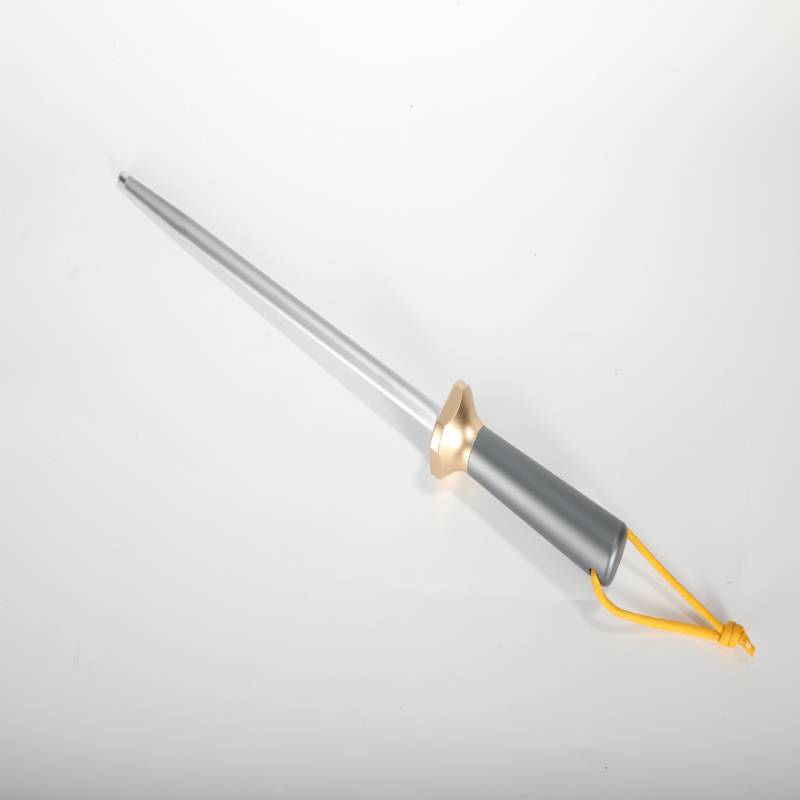
12″ Honing Steel with Zinc Alloy Handle
A honing steel is simply a hardened rod of high-carbon or stainless steel, usually harder than the knives it services. It has been the standard tool in butcher shops and professional kitchens for centuries.
Smooth vs. grooved is the real decision here. Grooved (ridged) steels bite aggressively and straighten rolled edges fast on soft steel — but that same bite concentrates pressure and can chip hard, thin blades.
Many knife enthusiasts flatly call most grooved steels junk. Smooth and fine-cut steels, like the classic F. Dick polish and micro cuts, realign edges gently and are far more forgiving.
Their one hard limit: most steel rods top out around 62 – 63 HRc. That makes them a poor match for the hardest Japanische Küchenmesser, which often run 60 – 67 HRc.
Ceramic Honing Rods: The Gentle Sharpener
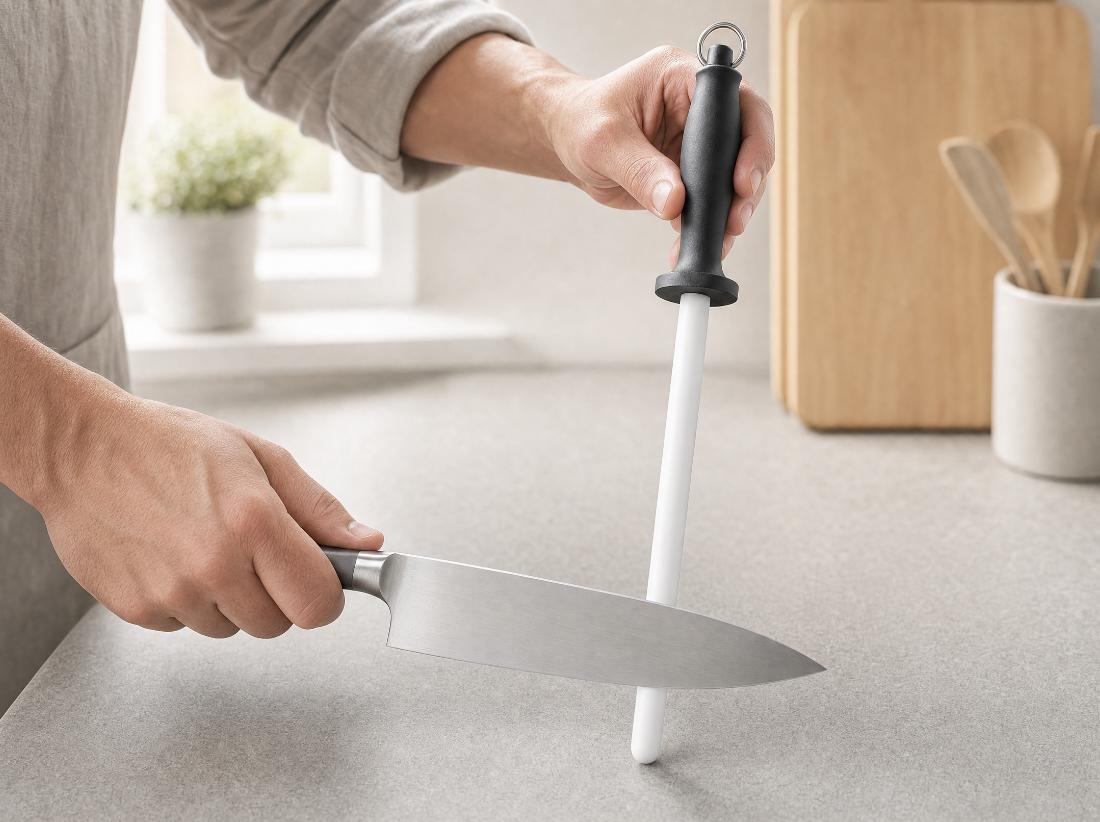
A ceramic rod is essentially a round sharpening stone. Made from alumina ceramic far harder than any blade steel, it lightly abrades the edge while it realigns — which is why knives feel noticeably sharper after a few strokes on ceramic.
Grit varies more than most buyers realize. Common white rods sit around 1000 – 3000 grit, black ceramic rods (like the well-known MAC) run finer near 2000+, and budget rods can be as coarse as 700 – 800 grit.
For daily maintenance, finer is better; coarse ceramic plus heavy pressure is a recipe for a fat burr and a knife that feels duller than before.
Steel vs. Ceramic: Side-by-Side Comparison
How They Treat the Edge
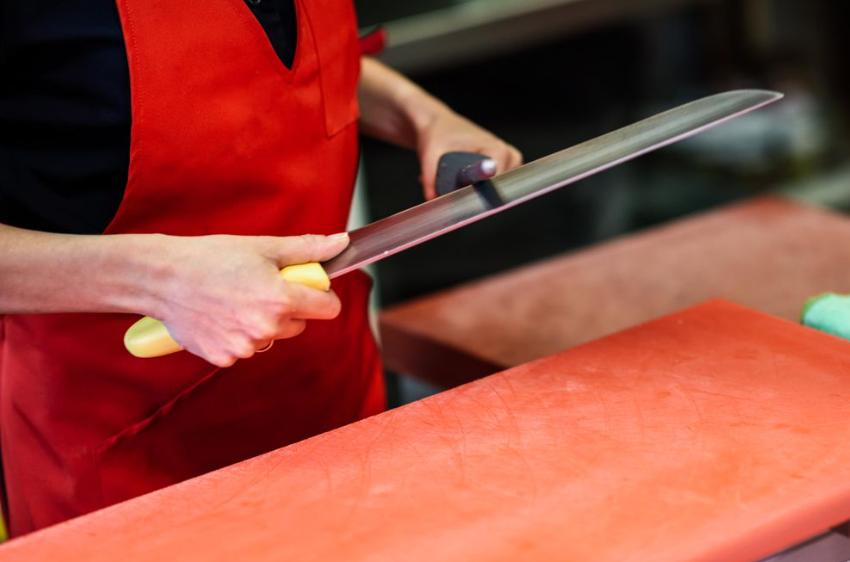
Steel rods realign and burnish. Even a smooth steel rod does not simply push the edge straight — it burnishes a micro-bevel onto the surface. The metal loss is microscopic, but it is not zero.
On soft steel, this burnishing is enough to restore the bite. On very hard steel, the rod may skate across the edge rather than realign it.
Ceramic rods actively abrade. They are essentially round sharpening stones, which is why a knife feels noticeably sharper after a few strokes. The trade-off is that ceramic removes more metal with each session than steel does.
For daily maintenance, this difference is small. Over months of over-honing, it adds up — which is why ceramic rods pair better with hard, wear-resistant steels that can handle the abrasion.
What They Feel Like in Hand
Beyond the specs, the two rods feel completely different at the counter — and your customers will notice.
| Dimension | Steel Rod | Ceramic Rod |
|---|---|---|
| Geschwindigkeit | 3–5 quick strokes | 5–10 slower, deliberate strokes |
| Sound | Distinct metallic “ring” | Near-silent |
| Gewicht | Heavier, solid feel | Lighter, more fragile feel |
| Feedback | Edge “bites” back into alignment | Smooth, glass-like glide |
A steel rod is fast and audible: the edge “bites” back into alignment with a satisfying ring, and three to five strokes are usually enough on soft Western steel.
A ceramic rod is smooth and subtle: the near-silent, glass-like glide can make beginners doubt they are doing anything until they test the edge and feel the renewed bite. It demands lighter pressure and more strokes.
This sensory gap is why some customers default to steel even when ceramic is the better match for their knife. Your sales team can close that gap by letting them feel both rods side by side.
The Real-World Risks
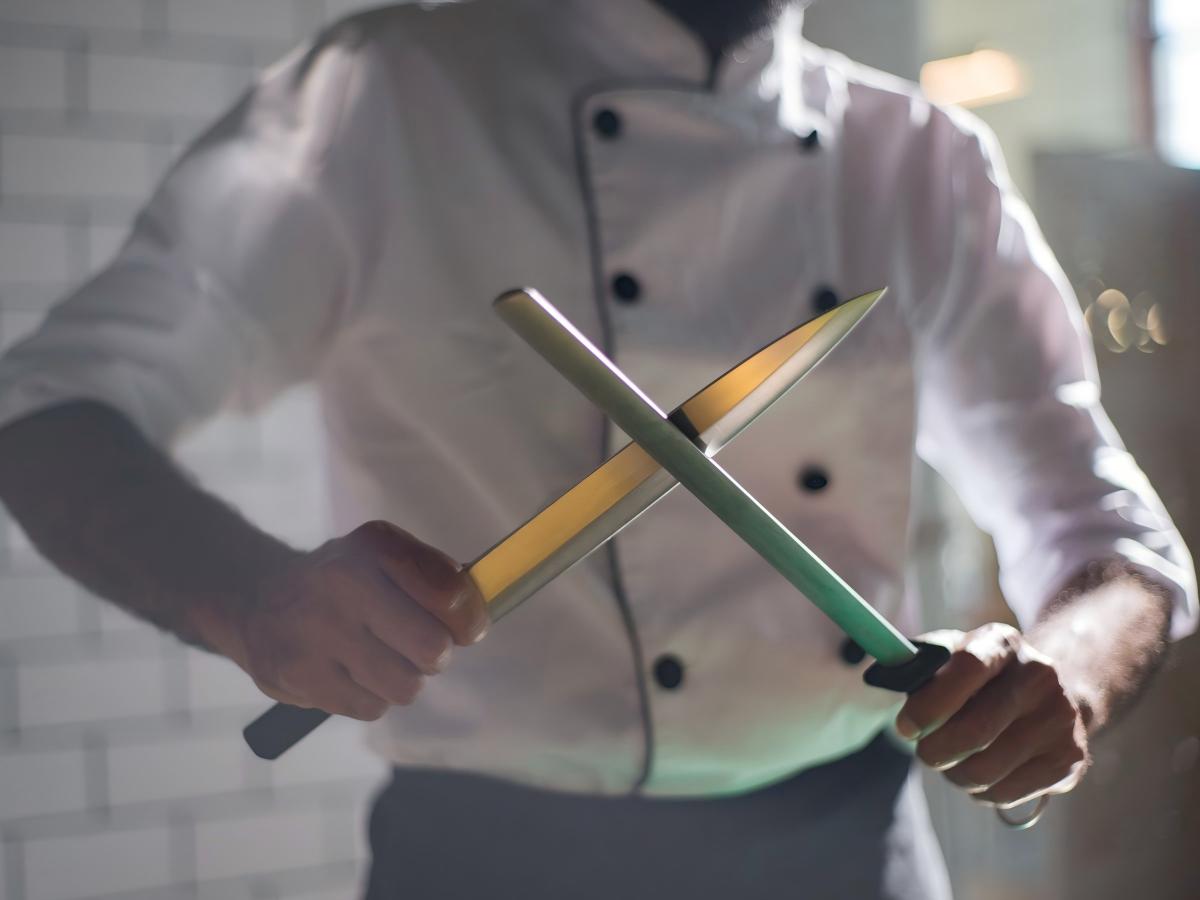
Steel risk: The wrong steel on the wrong knife. A grooved steel on a thin 63 HRc Japanese edge concentrates pressure and chips the blade. Even smooth steels struggle to realign very hard steel effectively — the rod may simply skate across the edge, leaving the cook frustrated and the knife still dull.
Ceramic risk: User error and physics. Coarse ceramic plus heavy pressure leaves a fat burr and a knife that feels duller than when the customer started. And one drop onto tile ends the rod’s life instantly — a $40 ceramic rod becomes a $40 lesson in physics.
In short: steel risks damaging the Messer when misapplied; ceramic risks damaging the rod when mishandled.
Honing Rod Care and Lifespan
Rod care is the topic nearly every comparison article ignores — and the one your customers will ask about a year later.
Steel rods need almost nothing. Wipe the rod after use (magnetized rods collect fine steel dust), and it will outlast most of the knives in the block. Decades of service is normal.
Ceramic rods need occasional cleaning. Dark gray streaks are removed knife steel clogging the surface, and a loaded rod hones poorly.
A pink pencil eraser handles routine buildup; stubborn loading comes off with a melamine “super eraser” or a dab of Bar Keepers Friend. Store ceramic rods hanging on a hook oder in a protective sleeve/case — never loose in a drawer or knife roll where a bump can snap them.
Expect a steel rod to last a lifetime and a ceramic rod to last roughly 2 – 7 years of regular use before the surface wears smooth. That lifespan difference is worth a mention at the point of sale, especially for commercial buyers.
Bringen Sie Ihre individuelle Messerlinie schneller auf den Markt mit LeeKnives
Umfassender OEM/ODM-Support – vom Entwurf bis zur endgültigen Lieferung –, damit Sie sich auf Ihr Wachstum konzentrieren können.
Unterstützt durch Lager in den USA für eine schnelle und zuverlässige Lieferung.
The Hardness Rule: Match the Rod to the Knife
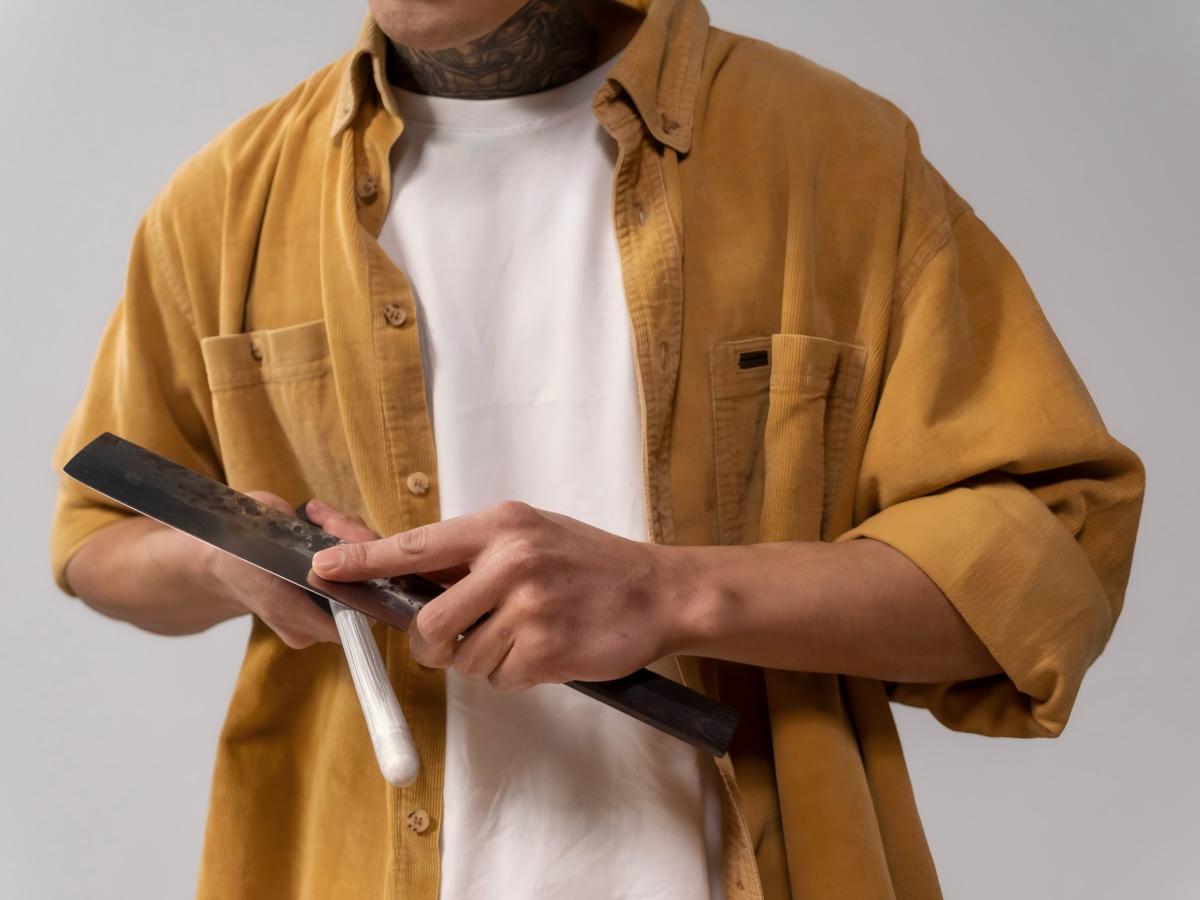
If your customers remember one thing, make it this: the rod must be harder than the blade, and the thinner the edge, the gentler the rod.
| Your knife | Typical hardness | Recommended rod |
|---|---|---|
| German chef’s knives (Wüsthof, Henckels, Victorinox) | 54 – 58 HRc | Steel rod, smooth or fine-cut |
| Butcher and boning knives | 54 – 58 HRc | Steel rod — grooved is traditional here |
| Mainstream Japanese knives (VG-10, AUS-10) | 59 – 61 HRc | Fine ceramic rod, light pressure |
| Hard Japanese knives (SG2, Kohlenstoffstähle) | 62 – 67 HRc | Fine ceramic rod or leather strop |
| Ceramic knives (Zirconia) | 70+ HRc | Ceramic or diamond rod only — never steel |
Ceramic knives are the exception. Their blades are harder than any steel rod and will damage the rod surface. If your store stocks ceramic kitchen knives, pair them exclusively with ceramic or diamond honing rods.
You may notice a genuine debate online.Controlled edge-tester tests have found steel rods actually outperform ceramic ones, dismissing the idea that steel cannot hone hard blades as a myth.
Forum veterans on Kitchen Knife Forums counter that grooved steels chip hard, thin Japanese edges in real-world use.
Both are right: a smooth steel rod on a moderately hard blade is fine, but a grooved steel on a thin 63 HRc edge is where chips happen. When in doubt, check where a blade sits on the Rockwell-Härteskala and choose from the table above.
How to Hone a Knife Properly
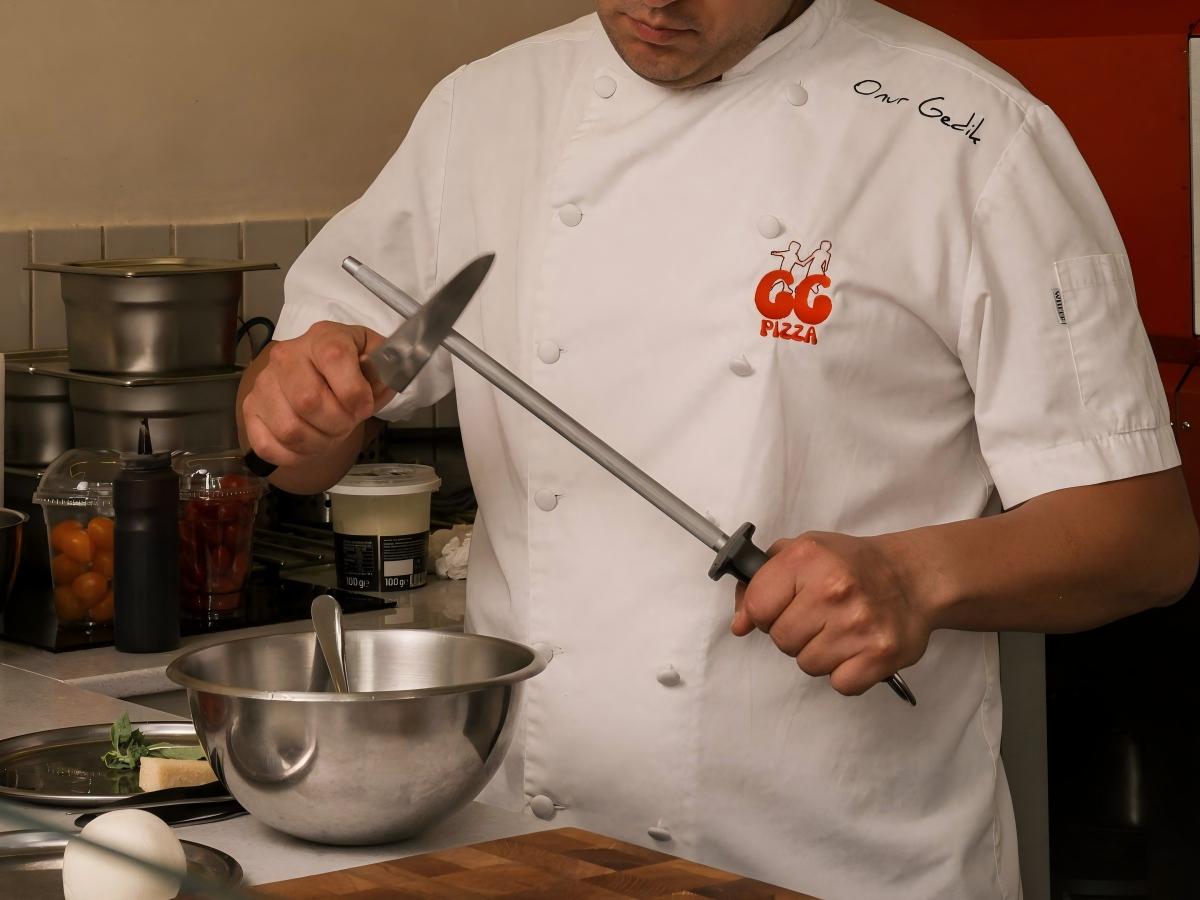
Rod length matters. A 12-inch rod suits 8–10-inch Kochmesser; a 10-inch rod works for 6–8-inch blades. Stocking both covers 90% of kitchen knife lineups.
Technique matters more than the rod material. The flashy, fast “steel whipping” you see on cooking shows works fine on soft German steel, but on hard, thin Japanese edges it concentrates pressure and risks chipping. Here is the method professionals actually recommend for all blade types:
- Plant the rod vertically, tip down on a towel or cutting board.
- Set the angle at 15 – 20 degrees — about the width of a matchbook between spine and rod.
- Use feather-light pressure. Let the weight of the knife do the work, especially on ceramic.
- Stroke heel to tip, alternating sides, 2 – 5 slow strokes per side.
- Wipe the blade before cutting to remove any microscopic metal dust.
As for frequency, home cooks need not hone after every use; professionals often touch up before each service. The key is light pressure and the right rod, not frequency alone.
Hone when you feel drag on a tomato or paper test — for a home cook that is usually once every few uses. Over-honing with an abrasive rod simply wears the blade down faster, as our honing vs sharpening guide explains in the broader maintenance context.
What About Diamond Rods and Strops?
Two adjacent tools round out the picture, and both make smart add-on sales.
Diamond rods are coated in abrasive diamond grit and remove metal fast. They are excellent for rescuing a neglected edge, but too aggressive for daily honing — used casually, they chip hard edges and shave years off a blade. Position them as an occasional repair tool, ideally followed by a few strokes on ceramic.
Leather strops are the gentlest option of all: pure realignment and polishing with virtually no metal removal. Enthusiasts love them for hard Japanische Stähle, though they are impractical mid-service in a busy kitchen. A rod wins on speed; a strop wins on edge preservation.
Ceramic or Steel: What This Means for Your Store
Price and Margin Snapshot
Steel rods land in the $15–$40 retail range with near-zero return rates. Ceramic rods retail at $25–$60 and carry higher margins, but factor in breakage replacements. For bundles, a $25 steel rod pairs well with entry-level German sets; a $45 ceramic rod belongs beside 60+ HRC Japanese knives.
Two Customer Profiles, Two Stocking Strategies
Steel rods are your volume seller. They pair naturally with German-style knife sets, butcher and boning programs, and any customer who values indestructible tools. Bundle one with every wholesale boning, Hackmesser, and butcher knife order and the attach rate takes care of itself.
Ceramic rods are your margin accessory for Japanese lines. Every 60+ HRc knife you sell is a ceramic rod waiting to be recommended — and the “a steel rod can chip this blade” conversation is an easy, honest upsell. The brittleness and 2 – 7 year lifespan also mean replacement sales, unlike steel rods that customers buy once.
Counter Script for Your Team
“Is this for a German knife or a Japanese knife? German — go with the steel rod, it’ll last forever. Japanese over 60 Rockwell — the ceramic rod is safer and keeps the edge sharper longer.”
Stock the Right Rods with LeeKnives
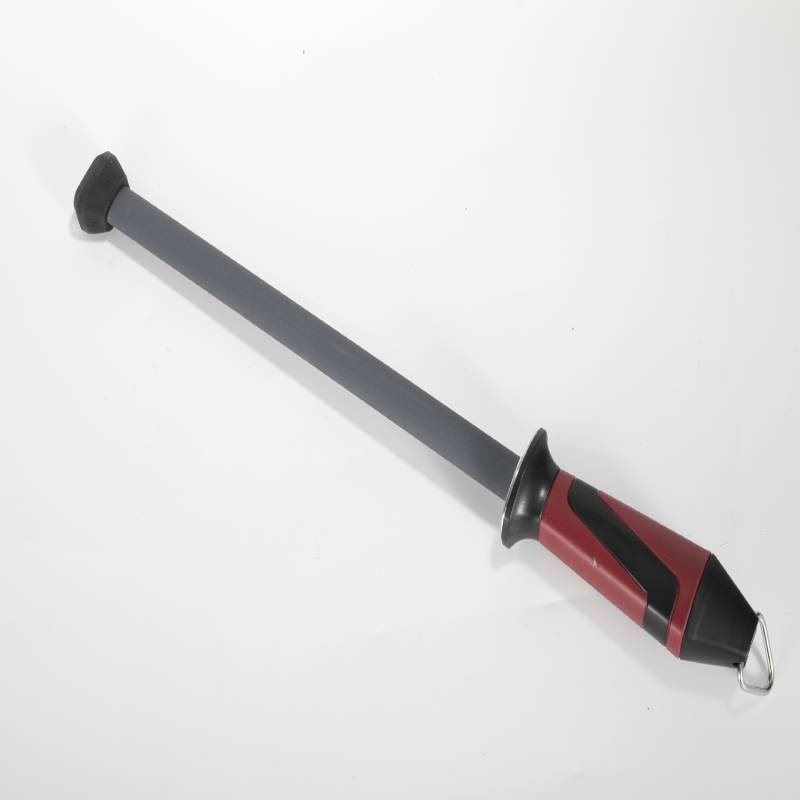
The ceramic vs. steel honing rod question has a clean answer: steel for soft Western blades, ceramic for hard Japanese ones, and diamond reserved for repairs.
For your store, that means both rods earn shelf space — they serve different customers, carry different margins, and sell best as companions to the knives you already stock.
LeeKnives has spent over 30 years manufacturing knives and Küchenwerkzeuge in Yangjiang City, supplying retailers and wholesalers across North America.
Whether you need German-style chef’s knives bundled with honing steels, hard Japanese blades paired with fine ceramic rods, or a full private-label maintenance line, our OEM Und ODM teams handle specs, samples, and packaging end to end.
Ready to build a knife-and-care bundle your customers will actually use? Fordern Sie ein kostenloses Angebot von LeeKnives an. — tell us your target price points, and our sales team will come back with samples and a wholesale plan tailored to your market.
Bringen Sie Ihre individuelle Messerlinie schneller auf den Markt mit LeeKnives
Umfassender OEM/ODM-Support – vom Entwurf bis zur endgültigen Lieferung –, damit Sie sich auf Ihr Wachstum konzentrieren können.
Unterstützt durch Lager in den USA für eine schnelle und zuverlässige Lieferung.
Häufig gestellte Fragen
Why does my knife feel dull after honing?
Because honing only fixes a rolled edge — it cannot replace metal that has worn away. If a few light strokes no longer restore the bite, the edge is rounded off at a microscopic level and needs real sharpening. At that point, reach for a whetstone rather than honing harder or more often.
Why does my ceramic rod turn black or gray?
That is removed knife steel loading the surface — a sign the rod is working. A loaded rod hones poorly, so clean it with a pink pencil eraser and it will perform like new. Stubborn buildup may need a melamine eraser or a dab of Bar Keepers Friend.
Can I use a ceramic rod on a serrated knife?
No. Serrated edges need a tapered round file or a specialized serrated sharpener. Ceramic and steel rods will flatten the scallops and ruin the bite.
How long will a honing rod last?
A steel honing rod lasts decades — many butchers use the same steel for an entire career. A ceramic rod typically serves 2 – 7 years before the surface loads up or wears smooth, though regular cleaning with an eraser extends its life considerably. Ceramic rods also break if dropped, so storage matters as much as use.
Should I hone or sharpen first?
Hone first, always. Honing is quick daily maintenance that realigns the edge, while sharpening removes metal and should happen only a few times a year. If honing does not bring the edge back within a few strokes, that is your signal to sharpen.
What do butchers sharpen their knives with?
Traditionally, a grooved steel honing rod — and for good reason. Butcher knives use softer steel (around 54 – 58 HRc) whose edges roll constantly during breakdown work, so frequent aggressive realignment is exactly what they need. You will see the steel hanging from a butcher’s belt for mid-shift touch-ups, with a proper sharpening done off the line.




 DE
DE  EN
EN  JA
JA