
Gebogen und gerade Ausbeinmesser dienen in Profiküchen unterschiedlichen Zwecken. Eine gebogene Klinge folgt mit einer natürlichen, geschwungenen Bewegung den Gelenken und Konturen, wodurch weniger Umpositionieren erforderlich ist und weniger Abfall entsteht. Eine gerade Klinge ermöglicht kontrollierte, präzise Schnitte bei Rind- und Schweinefleisch sowie bei größeren Braten und bietet dabei eine bessere Hebelwirkung.
Ihre Kunden – ob Metzger, Köche oder Fischhändler – benötigen die richtige Form für die jeweilige Proteinart und den jeweiligen Schneidestil. In diesem Leitfaden werden beide Ausführungen hinsichtlich Handhabung, Schärfen, Pflege und gewerblicher Nutzung verglichen, damit Sie Messer führen können, die sich tatsächlich verkaufen.
Wichtigste Erkenntnisse
- Gebogene Klingen besonders geeignet für Geflügel, Fisch und kleine Fleischstücke, bei denen das Mitführen der Knochenkonturen die Ausbeute erhöht.
- Gerade Klingen den Markt für die Rind- und Schweinefleischverarbeitung mit schärferen Spitzen, einfacherem Schärfen und größerer Attraktivität für die Käufer dominieren.
- Wichtige Hinweise zur Wartung: Gerade Kanten lassen sich auf herkömmlichen Schleifsteinen schnell schärfen; bei gebogenen Kanten ist eine abschnittweise Vorgehensweise erforderlich, was mit höheren Wartungskosten verbunden ist.
- Lagerstراتيجية: Gerade Ausbeinmesser verkaufen sich im allgemeinen Einzelhandel schneller; gebogene Klingen erzielen in den Nischenmärkten für Meeresfrüchte und Geflügel höhere Gewinnspannen.
- Bewährte Vorgehensweisen für Großhändler: Führen Sie beide Ausführungen im Sortiment – gerade Klingen für mehr Volumen und gebogene Klingen für gewerbliche Spezialkunden.
Was ist ein gebogenes Ausbeinmesser?
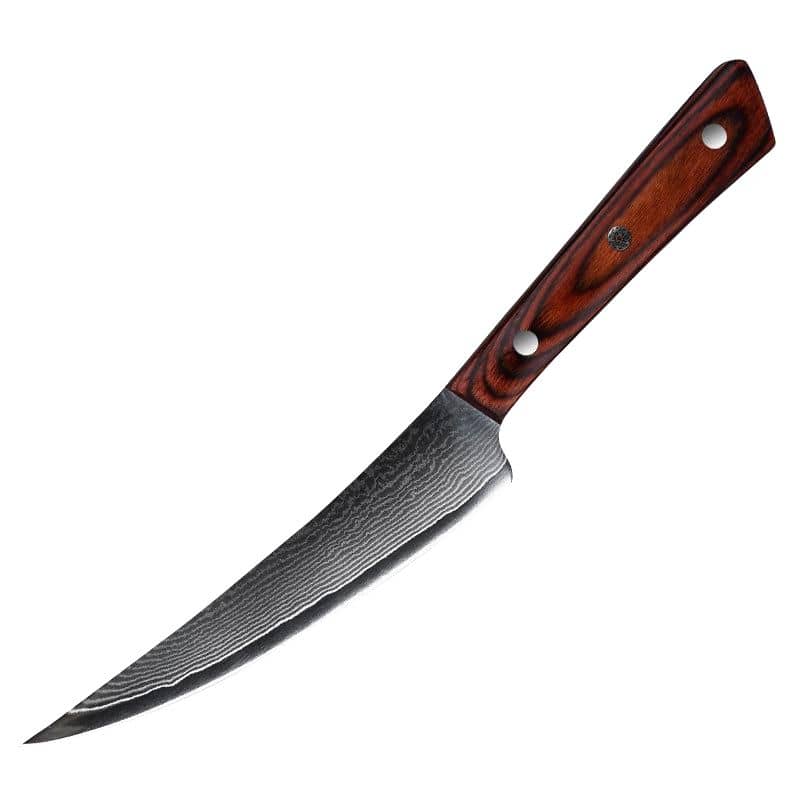
Damast-beschichtetes 10Cr15CoMoV Pakkaholz-Bonning-Messer 140 mm KKDA0370
Ein gebogenes Ausbeinmesser verfügt über eine Klinge, die vom Klingenansatz bis zur Spitze einen ausgeprägten Bogen beschreibt. Die Schneide ist zum Klingenrücken hin nach innen gewölbt, wodurch ein konkaves Profil entsteht, das sich beim Gebrauch an die Knochenoberflächen anschmiegt.
Wichtigste Merkmale:
- Klingenform: Ausgeprägter Bogen mit konkaver Schnittbahn
- Typische Länge: 12–15 cm (5–6 Zoll)
- Tipp-Stil: Feine, flexible Spitze
- Bekannt für: Anpassung an die Knochenkonturen und Reduzierung der Repositionierung
Was ist ein gerades Ausbeinmesser?
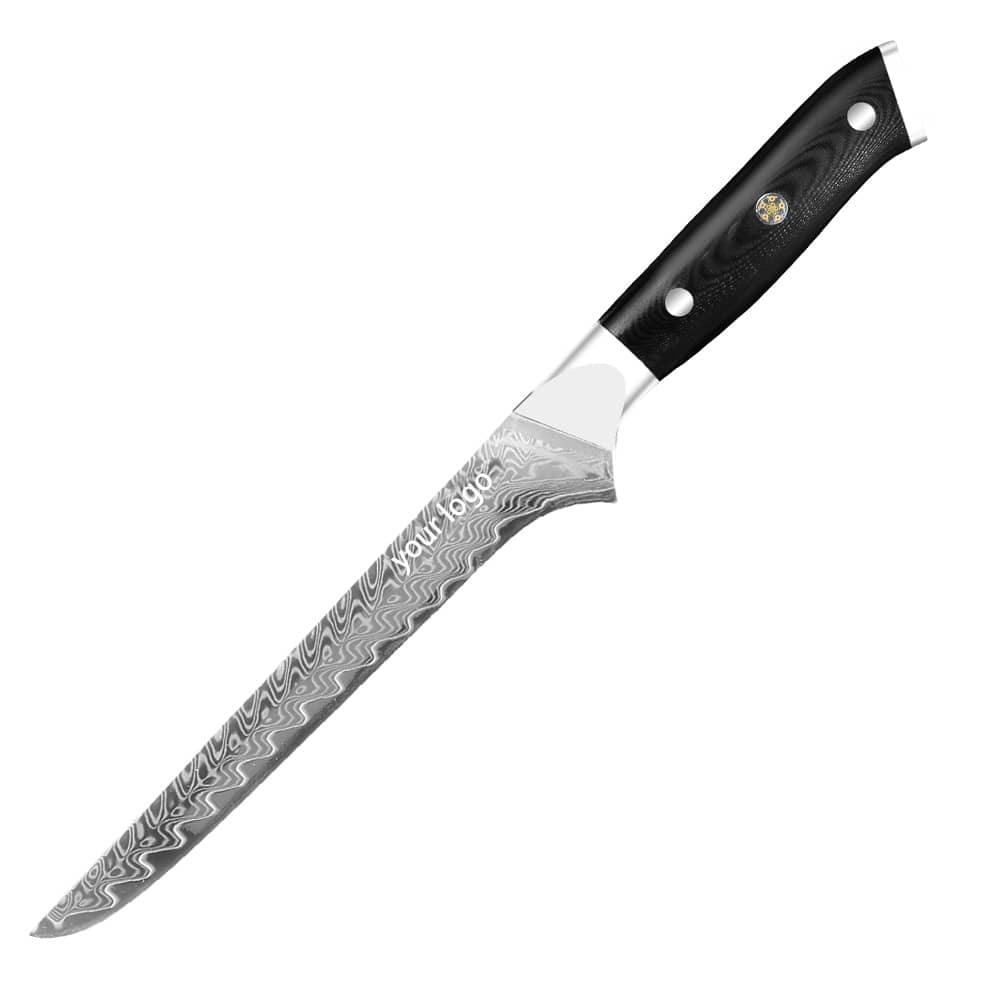
Ausbeinmesser mit Damast-Griff aus 10Cr15CoMoV und G10, 140 mm, KKDA0441
Ein gerades Ausbeinmesser hat eine flache oder nahezu flache Schneide, die direkt vom Griffende bis zur Spitze verläuft. Die lineare Klingenform sorgt für eine stabilere, steifere Spitze und einen vorhersehbaren Schnittverlauf.
Wichtigste Merkmale:
- Klingenform: Flache oder nahezu flache lineare Kante
- Typische Länge: 15–18 cm (6–7 Zoll)
- Tipp-Stil: Stärkere, verstärkte Spitze
- Bekannt für: Präzise, gleichmäßige Schnitte und einfachere Pflege
Gebogenes vs. gerades Ausbeinmesser: Die wichtigsten Unterschiede
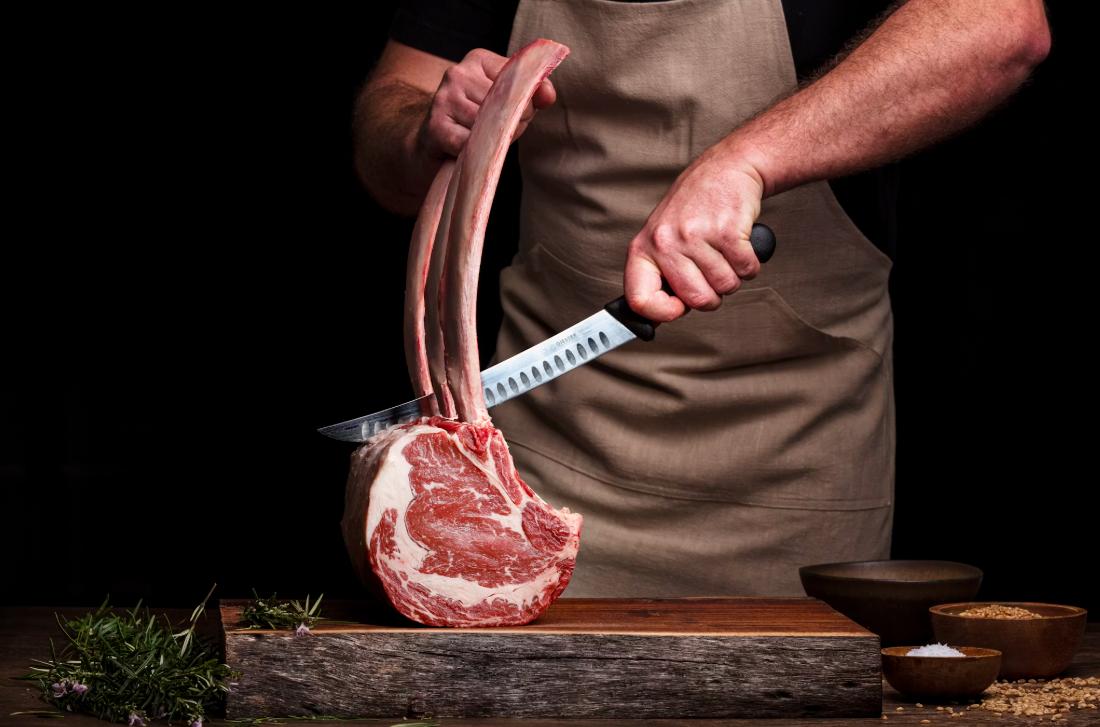
In der folgenden Vergleichstabelle finden Sie die wichtigsten Unterschiede zwischen gebogenen und geraden Ausbeinmessern, die Ihnen bei der Beratung Ihrer Kunden helfen sollen.
| Gebogenes Ausbeinmesser | Gerades Ausbeinmesser | |
| Klingendesign | Geschwungene Kante, fein zulaufende Spitze | Flache Kante, stärkere Spitze |
| Am besten für | Geflügel, Fisch, Rippchen, Fleischstücke | Rindfleisch, Schweinefleisch, große Braten |
| Wesentlicher Vorteil | Passt sich in einem Arbeitsgang den Knochenkonturen an | Kontrollierte gerade Schnitte, mehr Hebelwirkung |
| Einschränkung | Schwieriger zu schärfen, weniger vielseitig | Erfordert mehr Nachjustierungen an den Gelenken |
| Schärfung | Abschnitt-für-Abschnitt-Methode | Standardverfahren mit Schleifstein |
| Typische Länge | 12–15 cm / 5–6 Zoll | 15–18 cm / 6–7 Zoll |
Klingenausführung und -geometrie
Der wesentliche Unterschied liegt im Klingenprofil. Ein gebogenes Ausbeinmesser verfügt über eine nach innen gerichteter Bogen wodurch eine konkave Schnittführung entsteht. Diese Form eignet sich hervorragend, um Fleisch in einer einzigen Bewegung von runden Knochen abzuschaben. Die Spitze ist in der Regel dünner und flexibler, sodass sich die Klinge an engen Gelenken leicht biegen lässt.
Ein gerades Ausbeinmesser verfügt über eine gerade Kante mit einer dickeren, verstärkten Spitze. Die flache Geometrie sorgt für eine maximale Kontaktlänge bei großen, flachen Oberflächen wie Rinderrippen oder Schweinelenden. Der starre Rücken verhindert ein Verbiegen unter Druck und ermöglicht so sauberere Schnitte durch dichtes Bindegewebe.
Schneidetechnik und Effizienz
Die geschwungenen Klingen verringern die Ermüdung der Hand durch eine schwungvolle Bewegung, während gerade Klingen den Durchsatz auf vorhersehbare Weise steigern Push-Pull-Schnitte. Ein gebogenes Messer gleitet in einem durchgehenden Bogen am Knochen entlang, wodurch sich wiederholende Arbeiten bei der Geflügelverarbeitung auch während langer Schichten weniger anstrengend werden.
Eine gerade Klinge schneidet in gleichmäßigen Zügen durch das Fleisch und eignet sich ideal zum Entfernen von Fett oder zum Zerlegen großer Muskelpartien. In Metzgereien mit hohem Durchsatz ermöglicht die gleichmäßige Schnittführung der geraden Klinge eine schnellere Verarbeitung von Standardstücken.
Gerade Ausbeinmesser lassen sich deutlich leichter pflegen. Die flache Kante liegt gleichmäßig auf einem Schleifstein oder einem Wetzstahl auf, wodurch sich der Winkel vom Klingenfuß bis zur Spitze gleichmäßig kontrollieren lässt. Mit den meisten Schleifgeräten lässt sich eine gerade Klinge auch ohne spezielle Vorkenntnisse erzielen.
Bei gebogenen Klingen ist ein abschnittweiser Ansatz erforderlich. Der Schleifer muss die Klinge in Abschnitten über den Schleifstein hin- und herbewegen, um der sich ändernden Krümmung Rechnung zu tragen. Dies erhöht den Zeit- und Fachaufwand für die Wartung. Für Ihre B2B-Kunden bedeuten gerade Klingen geringere Kosten für den Schleifservice und weniger Ausfallzeiten.
Spitzenfestigkeit und Haltbarkeit
Das gerade Ausbeinmesser punktet mit einer höheren Haltbarkeit der Spitze. Die verstärkte Spitze kann zähen Knorpel und Bänder durchdringen, ohne dass die Gefahr besteht, dass sie sich verbiegt oder bricht. Damit ist sie die erste Wahl für das Zerlegen großer Tiere.
Die feine Spitze des gebogenen Ausbeinmessers ist empfindlicher. Es eignet sich zwar hervorragend für Präzisionsarbeiten, kann jedoch brechen, wenn es zum Aufhebeln oder als Hebel gegen schwere Knochen eingesetzt wird. Händler sollten ihren Kunden raten, die Festigkeit der Spitze an den jeweiligen Verwendungszweck anzupassen: gerade Klingen für Kraft, gebogene Klingen für Feinheit.
Welches Ausbeinmesser eignet sich besser für verschiedene gewerbliche Anwendungen?
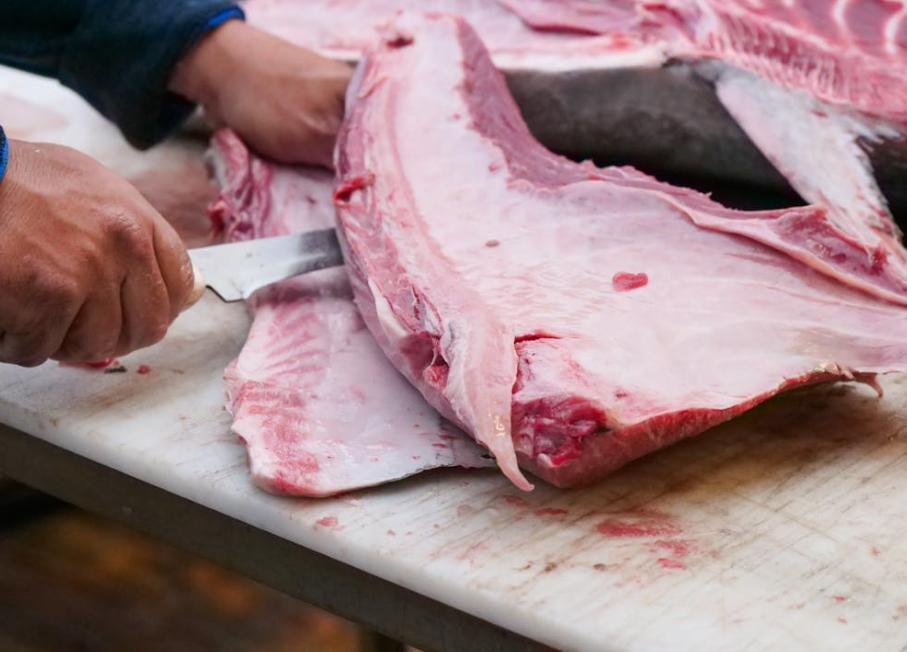
Die richtige Klingenform hängt davon ab, was Ihre Kunden täglich verarbeiten. Im Folgenden finden Sie eine Übersicht darüber, welches Ausbeinmesser für die jeweilige gewerbliche Umgebung am besten geeignet ist.
| Anwendung | Topform | Hauptgrund |
| Geflügel- und Fischverarbeitung | Geschwungen | Passt sich den Knochenkonturen an, höhere Ausbeute |
| Verarbeitung von Rind- und Schweinefleisch | Heterosexuell | Stärkere Spitze, höherer Durchsatz |
| Restaurants mit gemischter Speisekarte | Beide | Umfassende Berichterstattung über die Vorbereitungen, Upselling-Potenzial |
| Einzelhandel für Hausmannskost | Heterosexuell | Einfacher in der Bedienung und Wartung |
Geflügel- und Fischverarbeitung
Gebogene Ausbeinmesser sind die bessere Wahl für die Geflügel- und Fischverarbeitung, da sich der Bogen den natürlichen Konturen der Knochen anpasst und so nur minimaler Verschnitt entsteht. Die geschwungene Klinge gleitet um Brustkörbe und Wirbelsäulengelenke herum, ohne das empfindliche Fleisch zu zerreißen.
Fischhändler und Geflügelverarbeiter erzielen eine höhere Ausbeute, da die gebogene Klinge während des gesamten Schnitts dicht am Knochen bleibt. Für Großhändler bedeutet dies, dass gebogene Klingen auf den Märkten für Meeresfrüchte und Geflügel sehr gefragt sind.
Rind- und Schweinefleischverarbeitung
Gerade Ausbeinmesser sind bei der Verarbeitung von Rind- und Schweinefleisch den gebogenen Klingen überlegen, da sie eine höhere Strapazierfähigkeit an der Spitze und einen besser vorhersehbaren Schneidvorgang bieten. Der starre Rücken und die flache Schneide übertragen mehr Kraft auf dichtes Muskel- und Bindegewebe.
Metzger können damit Fett abschneiden und große Fleischstücke in gleichmäßigen Schnitten zerlegen, ohne dass sich die Klinge verbiegt. Gerade Klingen halten zudem einem intensiven täglichen Einsatz stand und sind daher die erste Wahl für Fleischbetriebe mit hohem Durchsatz.
Restaurants mit gemischter Proteinauswahl
Restaurants, in denen verschiedene Fleischsorten verarbeitet werden, benötigen beide Klingenformen, um ihr gesamtes Zubereitungsspektrum effizient abzudecken. Eine gebogene Klinge eignet sich für die Zubereitung von Fisch am Vormittag und das Zerlegen von Geflügel am Nachmittag, während eine gerade Klinge für die Portionierung von Rind- und Schweinefleisch am Abend zum Einsatz kommt.
Das Angebot beider Formen an Restaurantkunden schafft Upselling-Möglichkeiten durch Kombi-Sets. Viele Großküchen verlangen ausdrücklich aufeinander abgestimmte Bestände, um einen reibungslosen Arbeitsablauf zwischen den einzelnen Arbeitsstationen zu gewährleisten.
Hausmannskost – Einzelhandel
Gerade Ausbeinmesser sind für Hobbyköche im Einzelhandel die sicherere Wahl, da sie sich leichter handhaben und pflegen lassen. Die flache Klinge lässt sich mit einem handelsüblichen Schleifstein schnell schärfen. Wetzstein, und die vorhersehbare Funktionsweise erleichtert Gelegenheitsnutzern den Einstieg.
Geschwungene Klingen eignen sich zwar hervorragend für Profis, können jedoch Anfänger, denen die richtige Technik fehlt, vor Probleme stellen. Händler, die über den Haushaltswarenhandel große Mengen absetzen, sollten gerade Ausbeinmesser in ihrem Kernsortiment priorisieren.
So wählen Sie das richtige Ausbeinmesser für Ihr Unternehmen aus
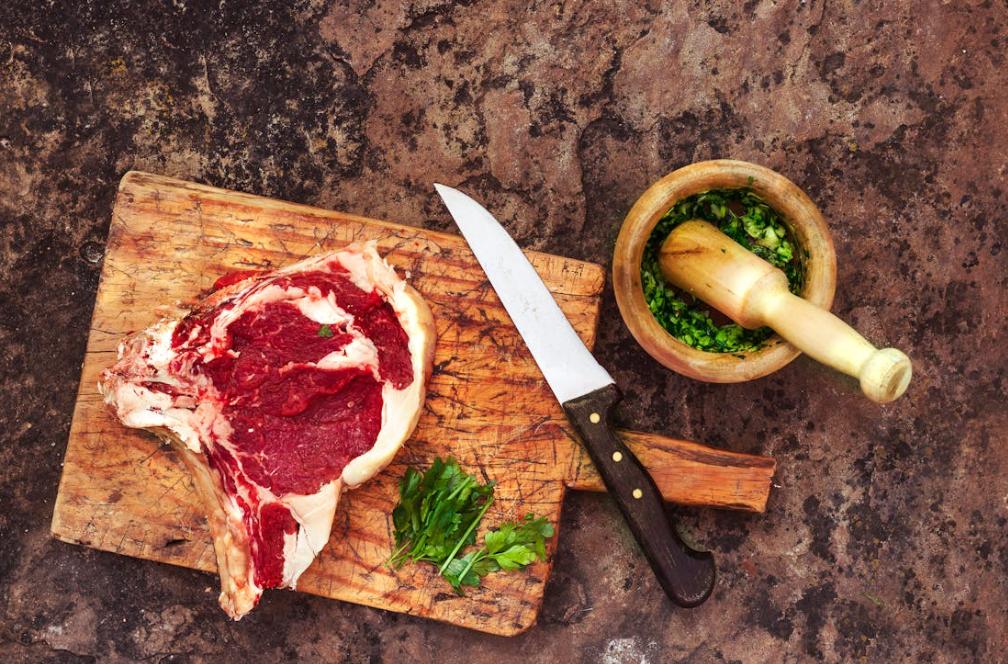
Wenn Sie Ihr Sortiment um Ausbeinmesser erweitern, ist die Wahl der richtigen Spezifikationen entscheidend für Ihre Gewinnmargen. Orientieren Sie sich an den folgenden Leitfäden, um zu entscheiden, welche Optionen am besten zu Ihrem Markt passen.
1. Die Wahl des richtigen Stahls für Ihr Preisniveau
Der Klingenstahl bestimmt sowohl die Qualität als auch den Verkaufspreis. Die Abstimmung des Stahls auf die Bedürfnisse Ihrer Kunden ist der erste Schritt bei der Beschaffung.
| Qualitätsstufe | Stahlgüte | Am besten für | Verkaufsargument |
| Budget | 3Cr13 / 5Cr15MoV | Küchenartikel für zu Hause, große Geschenksets | Hervorragendes Preis-Leistungs-Verhältnis, leicht zu schärfen |
| Standard | Deutsch 1.4116 | Metzgereien, Gastronomiebedarf | Rostbeständig, professionelle Haptik |
| Hochwertig | 7Cr17MoV | Gourmetküche, Fachgeschäfte | Dauerhaft scharfe Klingen |
| Prämie | Japanisch AUS-10 | Profiköche, Luxusmarken | Höchste Standzeit, Spitzenklasse |
2. Individuelle Optionen für Ihre Marke
Wenn Sie Eine eigene Messermarke aufbauen, können Sie verschiedene Funktionen individuell anpassen, um sich von der Konkurrenz abzuheben:
- Klingenflexibilität: Sie können Folgendes beantragen steif Messer für zähes Fleisch oder flexibel Klingen für die schonende Fischzubereitung.
- Auswahl des Griffs: Gummi/TPE Griffe bieten in feuchten Küchen die beste Sicherheit und den besten Halt. G10 oder Holz Griffe eignen sich besser für einen hochwertigen Einzelhandelsauftritt.
- Logo & Verpackung: Die meisten Hersteller können Ihr Logo per Laser oder Prägung aufbringen und maßgeschneiderte Verpackungen liefern, sodass das Produkt “verkaufsfertig” ist.”
3. Sicherheits- und Qualitätsstandards
Professionelle Abnehmer (wie Hotels und Fleischverarbeitungsbetriebe) legen oft Wert auf bestimmte Sicherheitsmerkmale:
- Leicht zu reinigen: Achten Sie auf “nahtlose” Designs an der Verbindungsstelle zwischen Griff und Klinge. So wird verhindert, dass Lebensmittel dort hängen bleiben, und das Messer bleibt hygienisch.
- Lebensmittelsicherheit: Stellen Sie sicher, dass die Griffmaterialien sind BPA-frei und hitzebeständig, sodass sie in gewerblichen Geschirrspülmaschinen gereinigt werden können.
4. Wie viel sollte man auf Lager halten?
Um “Lagerüberhänge” zu vermeiden, ist es hilfreich zu wissen, welche Messertypen sich in den verschiedenen Märkten schneller verkaufen. Hier finden Sie eine Empfehlung für die Lagerbestandsquote, die auf Ihrer Zielgruppe basiert:
| Ihre Zielgruppe | Gebogene Messer | Gerade Messer | Warum? |
| Metzgereien | 30% | 70% | Metzger brauchen die Stärke gerader Klingen. |
| Meeresfrüchte-/Fischmärkte | 80% | 20% | Gebogene Klingen eignen sich besser für die präzise Zubereitung von Fisch. |
| Haushaltsküche, Einzelhandel | 40% | 60% | Anfängern fällt der Umgang mit geraden Klingen leichter. |
| Professionelle Kochsets | 50% | 50% | Köche möchten in der Regel von jeder Sorte eine, um flexibel sein zu können. |
Fazit: Das richtige Werkzeug für den richtigen Schnitt
Bei der Wahl zwischen gebogenen und geraden Ausbeinmessern geht es nicht darum, eine überlegene Klinge zu finden – vielmehr darum, das Werkzeug an die spezifischen Arbeitsanforderungen Ihrer Kunden anzupassen.
Für Spezialisten für Geflügel und Meeresfrüchte ist die gebogene Klinge ist ein unverzichtbares Gerät für hohe Erträge, das Abfall reduziert und die Arbeitsbelastung verringert. Für die industrielle Fleischverarbeitung und Metzgereien mit hohem Durchsatz ist das gerades Messer bietet die erforderliche Langlebigkeit und Geschwindigkeit, um den reibungslosen Ablauf einer schnell laufenden Produktionslinie zu gewährleisten.
Als Großhändler liegt Ihr Wettbewerbsvorteil darin, ein vielfältiges Sortiment anzubieten, das diesen Feinheiten gerecht wird. Indem Sie beide Geometrien auf Lager haben, decken Sie nicht nur den gesamten Vorbereitungsbedarf ab, sondern erschließen auch erhebliche Upselling-Möglichkeiten durch professionelle Kombi-Sets.
Wie LeeKnives Großhändlern hilft, bessere Ausbeinmesser zu beschaffen
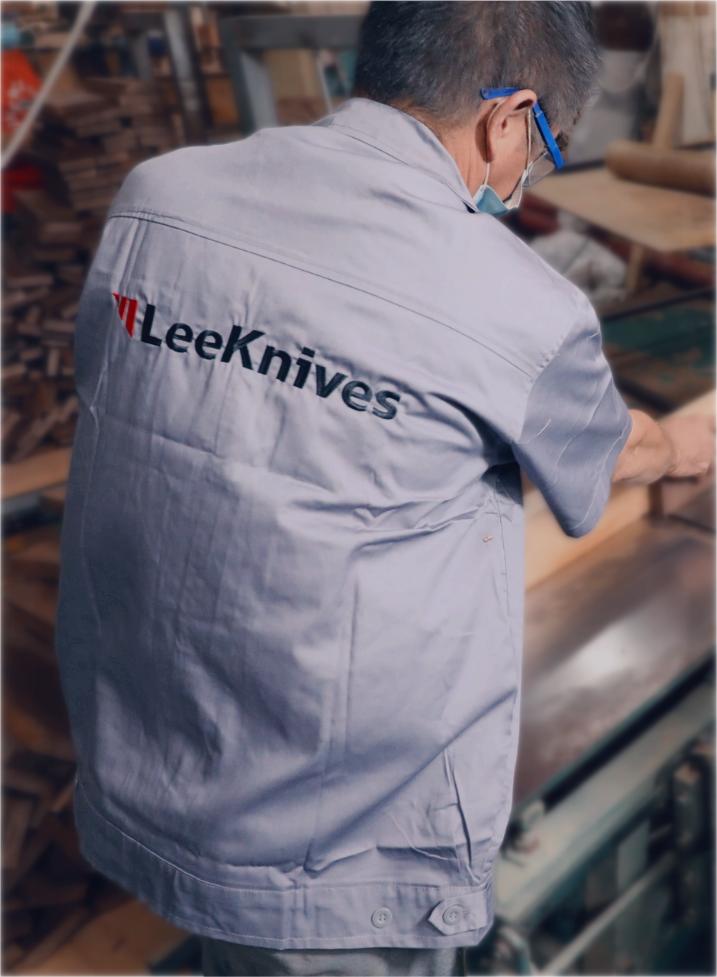
LeeKnives ist ein Messerhersteller mit Sitz in Yangjiang Stadt mit über 30 Jahren Erfahrung in der Herstellung von Klingen. Wir beliefern unzählige nordamerikanische Messerfachgeschäfte und Großhändler mit Ausbeinmesser, Küchenmesser, Und Schneidebretter. Dank unserer günstigen Preise und unserer gleichbleibenden Qualität helfen wir Unternehmen dabei, ihren Lagerbestand zu vergrößern, ohne dabei ihre Gewinnmargen zu beeinträchtigen.
Wir bieten umfassende Dienstleistungen an, die sowohl OEM Und ODM Optionen mit weltweiten Versand- und Fulfillment-Zentren in den USA und China. Ganz gleich, ob Ihre Kunden gebogene Klingen für die Geflügelverarbeitung oder starre, gerade Klingen für die Rindfleischverarbeitung benötigen – wir passen Klingenformen, Griffmaterialien und Stahlsorten individuell an ihre genauen Anforderungen an.
Sind Sie bereit, Ihr Sortiment an Ausbeinmessern zu erweitern? Kostenloses Angebot anfordern Nehmen Sie noch heute Kontakt mit unserem Vertriebsteam auf, um Ihre Großhandelsanforderungen zu besprechen.
Bringen Sie Ihre individuelle Messerlinie schneller auf den Markt mit LeeKnives
Umfassender OEM/ODM-Support – vom Entwurf bis zur endgültigen Lieferung –, damit Sie sich auf Ihr Wachstum konzentrieren können.
Unterstützt durch Lager in den USA für eine schnelle und zuverlässige Lieferung.
Häufig gestellte Fragen
Wie benutzt man ein gebogenes Ausbeinmesser?
Halten Sie das gebogene Ausbeinmesser in einem flachen Winkel und führen Sie es mit einer sanften, schwungvollen Bewegung entlang des Knochens. Dank der gebogenen Klinge lässt sich das Fleisch in vielen Fällen in einem einzigen Durchgang abtrennen, was den Abfall reduziert und die Zubereitungszeit verkürzt. Für Ihre gewerblichen Kunden bedeutet dies eine höhere Ausbeute und einen schnelleren Service in Stoßzeiten.
Was sind die Nachteile von gebogenen Klingen?
Gebogene Klingen lassen sich aufgrund ihrer Wölbung schwerer gleichmäßig zu schärfen und sind für gerade Schneidearbeiten weniger vielseitig einsetzbar. Übermäßig flexible gebogene Modelle können zudem unter starkem Druck verrutschen. Händler sollten beachten, dass gebogene Messer für ihre Kunden möglicherweise einen höheren Pflegeaufwand erfordern.
Sollte eine Ausbeinleiste nach innen oder nach außen gebogen sein?
Die meisten gebogenen Ausbeinmesser sind nach innen in Richtung des Rückgrats gebogen. Diese konkave Form schmiegt sich an die Knochenoberfläche an und löst das Fleisch sauber vom Knochen. Nach außen gebogene Messer sind bei Ausbeinmessern selten und kommen eher bei Häutemessern vor. Achten Sie bei der Beschaffung darauf, dass die Biegerichtung den üblichen Erwartungen von Metzgern entspricht.
Brauche ich wirklich ein Ausbeinmesser?
In Großküchen und Metzgereien ist ein spezielles Ausbeinmesser für eine optimale Ausbeute und Arbeitssicherheit. Hobbyköche können stattdessen ein Kochmesser verwenden, Profis setzen jedoch auf Ausbeinmesser, um den Verschnitt zu minimieren. Das Sortiment an Ausbeinmessern richtet sich an den hochwertigen Profimarkt.
Wie heißt ein Ausbeinmesser auf Japanisch?
Das japanische Äquivalent ist das Honesuki, ein Geflügelausbeinmesser mit dreieckiger Klinge. Im Gegensatz zu den gebogenen Ausbeinmessern aus dem westlichen Raum verfügt das Honesuki über einen steifen Rücken und eine spitze Klinge, die speziell für das Zerlegen von Hähnchen und Enten konzipiert ist. Es spricht Köche an, die Wert auf Präzision legen, und ist ein starkes Nischenprodukt für Fachhändler für Küchenmesser.




 DE
DE  EN
EN  JA
JA