
Among budget-friendly knife steels, 4Cr13 and 5Cr15 are widely used in entry-level kitchen knives and EDC tools. Both offer solid corrosion resistance and cost efficiency, making them popular choices for manufacturers targeting price-sensitive markets.
The key difference is carbon and chromium content: 5Cr15 (≈0.45–0.50% C, 14.5–15% Cr) delivers higher hardness and better edge retention (54–57 HRC), while 4Cr13 (≈0.36–0.45% C, 12–14% Cr) is tougher and easier to sharpen (52–54 HRC). In short, choose 5Cr15 for better performance and edge life, and 4Cr13 for easier maintenance and durability.
Want to decide which steel fits your product line best? Below, we break down composition, performance, pros and cons, and ideal applications for each.
What is the composition of 4Cr13 and 5Cr15 steel?
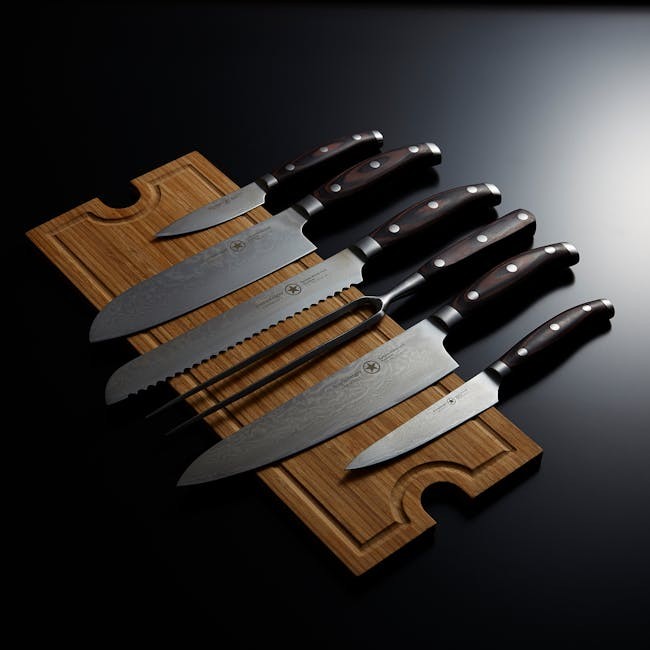
Understanding the chemical makeup of these steels helps explain their performance differences. Both are martensitic stainless steels produced in China, with similar naming conventions that reveal their approximate composition.
Composition data for 4Cr13 steel and 5Cr15 steel is documented in the zknives.com knife steel database, one of the most comprehensive public references for knife steel specifications.
4Cr13 steel composition
- Carbon: 0.36-0.45%
- Chromium: 12.00-14.00%
- Silicon: ≤ 1%
- Manganese: ≤ 0.80%
- Phosphorus: ≤ 0.040%
- Sulfur: ≤ 0.030%
- Nickel: ≤ 0.60%
5Cr15 steel composition
- Carbon: 0.45-0.50%
- Chromium: 14.50-15.00%
- Manganese: ≤ 0.40%
- Vanadium: ≤ 0.10%
- Molybdenum: ≤ 0.60% (trace amounts in some variants)
The naming convention reveals the key differences: “4” in 4Cr13 indicates approximately 0.4% carbon, while “5” in 5Cr15 indicates approximately 0.5% carbon. Similarly, “13” and “15” represent the approximate chromium percentages.
4Cr13 vs 5Cr15 steel properties comparison
Hardness
4Cr13 steel typically achieves a hardness range of 52-54 HRC after proper heat treatment, while 5Cr15 can reach 54-57 HRC. This 2-point difference may seem small, but it has noticeable effects on blade performance.
The higher carbon content in 5Cr15 (0.45-0.50% vs 0.36-0.45%) allows it to achieve greater hardness during quenching. For knife manufacturers, this means 5Cr15 blades will hold their edge longer but may be slightly more brittle.
Edge retention
5Cr15 offers better edge retention compared to 4Cr13 due to its higher hardness and carbon content. The 2-point HRC advantage (54-57 vs 52-54) translates to a meaningful real-world difference: Knife Steel Nerds’ metallurgical research confirms that every 2 HRC points of hardness difference typically accounts for approximately 10% of edge retention performance.
For your customers, this means less frequent sharpening and better long-term satisfaction with 5Cr15 blades. However, both steels are considered entry-level in terms of edge retention compared to premium options like VG10 or S30V.
Corrosion resistance
Both steels offer decent corrosion resistance for their price range. 5Cr15 has a slight advantage with its 15% chromium content compared to 4Cr13’s 12-14%. The higher chromium forms a more robust protective oxide layer.
In kitchen environments where knives encounter water, acidic foods, and humidity regularly, both steels perform adequately. However, neither matches the corrosion resistance of high-chromium steels like M390 or CPM20CV. Proper maintenance and drying after use are still recommended.
Toughness
4Cr13 demonstrates slightly better toughness compared to 5Cr15. The lower carbon content makes 4Cr13 less brittle and more resistant to chipping under impact.
This makes 4Cr13 a better choice for applications where the blade may encounter lateral stress or occasional misuse. For budget-conscious customers who need a “workhorse” knife, 4Cr13 offers reliable durability.
Both 4Cr13 and 5Cr15 are relatively easy to sharpen compared to high-end powder metallurgy steels. 4Cr13 is slightly easier due to its lower hardness, making it more forgiving for end users who sharpen at home.
Standard sharpening stones work well on both steels. For knife retailers, this is a selling point: customers won’t need expensive diamond sharpeners to maintain their blades.
Wear resistance
5Cr15 offers better wear resistance than 4Cr13, thanks to its higher carbon and chromium content. The increased carbide formation provides better resistance to abrasion during cutting.
For kitchen knives that regularly slice through fibrous vegetables, frozen foods, or cardboard packaging, 5Cr15 will maintain its edge geometry longer. This is an important consideration for commercial kitchen applications.
Comparison table: 4Cr13 vs 5Cr15
In the comparison table below, you’ll find the features, pros, and cons of 4Cr13 and 5Cr15 steel.
| Feature | 4Cr13 Steel | 5Cr15 Steel |
|---|---|---|
| Carbon Content | 0.36-0.45% | 0.45-0.50% |
| Chromium Content | 12-14% | 14.5-15.0% |
| Hardness (HRC) | 52-54 | 54-57 |
| Edge Retention | 5/10 | 6/10 |
| Toughness | 7/10 | 6/10 |
| Corrosion Resistance | 6/10 | 7/10 |
| Sharpening Ease | 8/10 | 7/10 |
| Wear Resistance | 5/10 | 6/10 |
| Price Point | Budget | Budget to Mid-range |
Pros and cons
4Cr13 steel
Pros:
- Lower cost for high-volume production. 4Cr13 is one of the most affordable knife steels available, making it ideal for budget product lines and promotional items.
- Better toughness reduces chipping risk. The lower carbon content makes 4Cr13 more forgiving under lateral stress, suitable for customers who may misuse blades.
- Easier to sharpen for end users. Your customers can maintain their knives with basic sharpening tools, no need for expensive diamond stones.
- Good corrosion resistance for the price. With 12-14% chromium, 4Cr13 provides adequate rust protection for kitchen and everyday use.
Cons:
- Limited edge retention compared to 5Cr15. 4Cr13 blades will require more frequent sharpening, which may affect customer satisfaction over time.
- Lower hardness means softer edges. At 52-54 HRC, 4Cr13 edges may roll or deform under heavy use conditions.
- Not suitable for premium market positioning. The budget nature of 4Cr13 limits its appeal to cost-conscious segments only.
5Cr15 steel
Pros:
- Better edge retention for the price. The higher carbon content (0.50-0.60%) provides noticeably longer edge life compared to 4Cr13.
- Higher hardness (54-57 HRC) for improved cutting performance. 5Cr15 blades maintain their edge geometry better through extended use.
- Superior corrosion resistance with 15% chromium. Better protection against rust and staining in humid kitchen environments.
- Still affordable for mass production. While slightly more expensive than 4Cr13, 5Cr15 remains budget-friendly for wholesale buyers.
Cons:
- Slightly more difficult to sharpen. The higher hardness requires more effort during sharpening sessions, though still manageable for most users.
- Reduced toughness compared to 4Cr13. 5Cr15 blades may chip if subjected to prying or twisting forces.
- Still considered entry-level steel. For customers seeking premium performance, 5Cr15 won’t compete with VG10, AUS10, or powder steels.
4Cr13 and 5Cr15 steel suitable applications
4Cr13 is ideal for
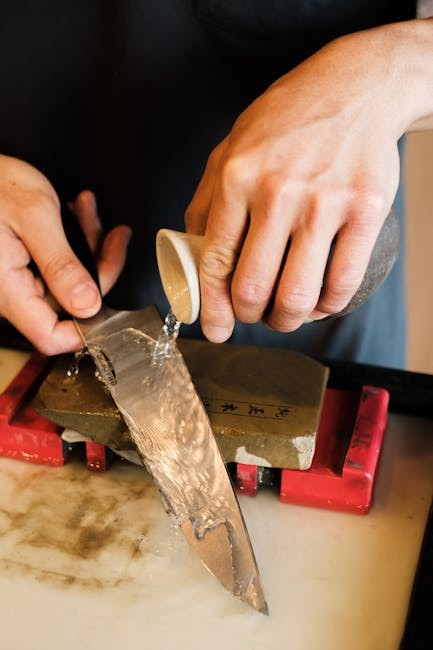
- Budget kitchen knife sets: 4Cr13 is an excellent choice for entry-level kitchen knife sets targeting price-sensitive consumers. The steel’s adequate corrosion resistance and easy sharpening make it suitable for home cooks who prioritize affordability over premium performance. For wholesalers, 4Cr13 allows competitive pricing in the budget segment.
- Promotional and giveaway knives: When producing knives for promotional campaigns, corporate gifts, or bundle deals, 4Cr13 offers the lowest cost while maintaining acceptable quality. Your B2B clients can offer branded knives without significant investment.
- Heavy-duty utility knives: The better toughness of 4Cr13 makes it suitable for utility knives that may encounter rough handling. Warehouse workers, mechanics, and outdoor enthusiasts benefit from blades that resist chipping under misuse.
- Educational and training knives: Culinary schools and training programs appreciate 4Cr13’s easy sharpening characteristics. Students can learn proper sharpening techniques without damaging expensive blades.
5Cr15 is ideal for
- Mid-range kitchen cutlery: 5Cr15 strikes a balance between cost and performance, making it ideal for “step-up” product lines. Customers willing to pay slightly more than budget prices will appreciate the improved edge retention and hardness.
- Everyday carry (EDC) pocket knives: The combination of decent edge retention and corrosion resistance makes 5Cr15 suitable for budget EDC blades. Your customers get reliable daily performance without premium pricing.
- Outdoor and camping knives: 5Cr15’s improved edge retention and corrosion resistance perform well in outdoor conditions. While not as tough as dedicated survival steels, it handles general camping tasks adequately.
- Specialty kitchen knives: Boning knives, fillet knives, and slicing knives benefit from 5Cr15’s ability to hold a finer edge. The steel takes a decent polish and maintains sharpness through precision cutting tasks.
Price and value analysis
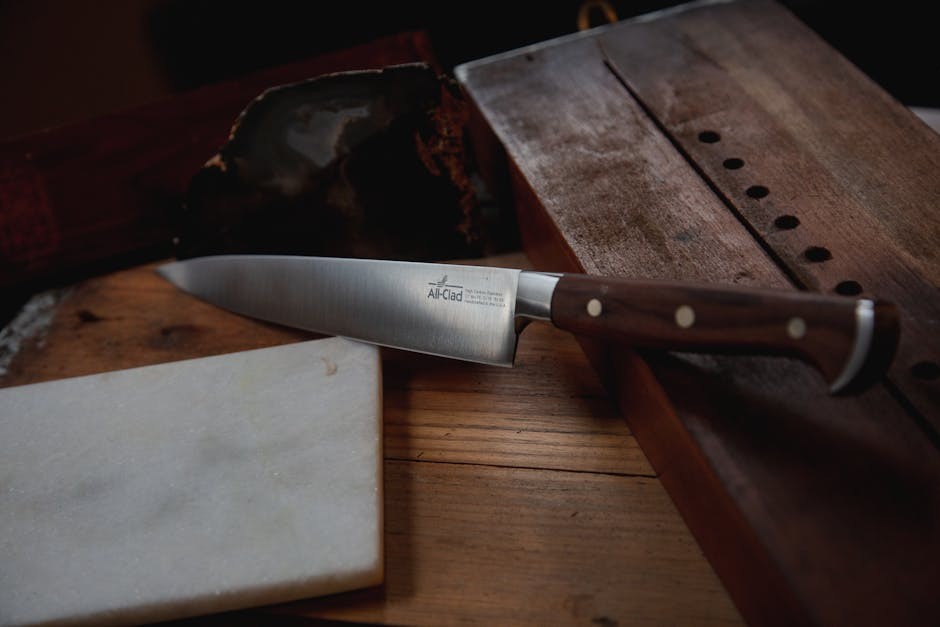
Stainless steel pricing is not static. Key cost drivers include nickel prices (expected to stabilize between $15,000–$20,000 per tonne), chromium supply uncertainty, and ongoing trade policy shifts — all of which directly affect alloy surcharges and final material costs.
Surcharges are typically updated on a monthly basis, fluctuating with changes in nickel, chromium, and molybdenum prices. For live benchmarks, we recommend monitoring Fastmarkets and requesting mill quotes for your specific order volume.
What stays consistent is the relative gap: 5Cr15 carries a 20–30% price premium over 4Cr13 at equivalent volumes, driven by its higher chromium and carbon specification — not commodity swings.
| 4Cr13 | 5Cr15 | |
|---|---|---|
| Price premium | Baseline | ~20–30% higher |
| Target segment | Ultra-budget, promotional | Value-tier, kitchen, EDC |
| Retail margin | Thin | Moderate |
For most product lines, the 5Cr15 premium pays for itself: better edge retention supports a higher retail price, improving margin per unit.
Conclusion: Which steel should you choose?
Both 4Cr13 and 5Cr15 serve important roles in the budget knife market. The choice between them depends on your target customers and product positioning.
Choose 4Cr13 if:
- You’re targeting the lowest price point possible
- Your customers prioritize durability over edge retention
- You need high-volume production at minimal cost
- The knives will be used for promotional or entry-level purposes
Choose 5Cr15 if:
- You want to offer better performance at a still-affordable price
- Your customers value edge retention and are willing to pay slightly more
- You’re positioning products in the “value” rather than “budget” segment
- The knives will see regular kitchen or EDC use
For most knife wholesalers and manufacturers, 5Cr15 represents the better overall value. The modest price increase delivers noticeable performance improvements that customers will appreciate, leading to higher satisfaction and repeat purchases.
Looking for reliable knife manufacturing partners?
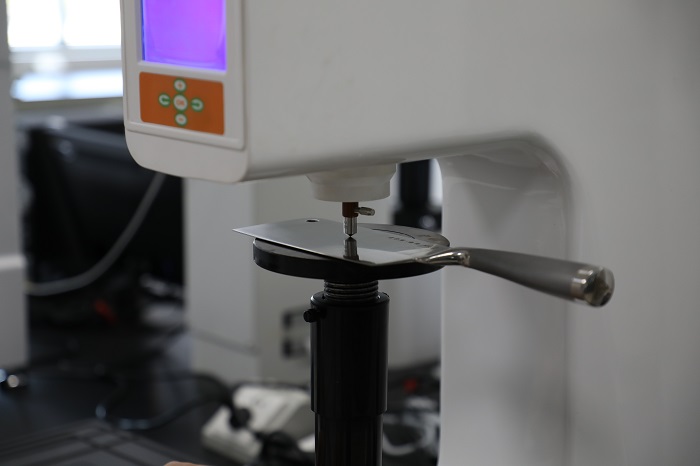
Whether you’re producing budget-friendly kitchen knives with 4Cr13 or value-oriented blades with 5Cr15, LeeKnives offers comprehensive OEM/ODM services to bring your product line to life.
With years of experience in steel selection, heat treatment optimization, and quality control, we help you balance cost and performance for your target market. Our team provides consistent steel sourcing, precise heat treatment, and competitive pricing for wholesale orders.
Ready to start your next knife project? Request a free quote today and let our experts help you choose the right steel for your product line.
Launch Your Custom Knife Line Faster with LeeKnives
Complete OEM/ODM support—from design to final shipment—so you can focus on growth.
Backed by warehouses in the U.S. for fast, reliable delivery.




 EN
EN  JA
JA  DE
DE