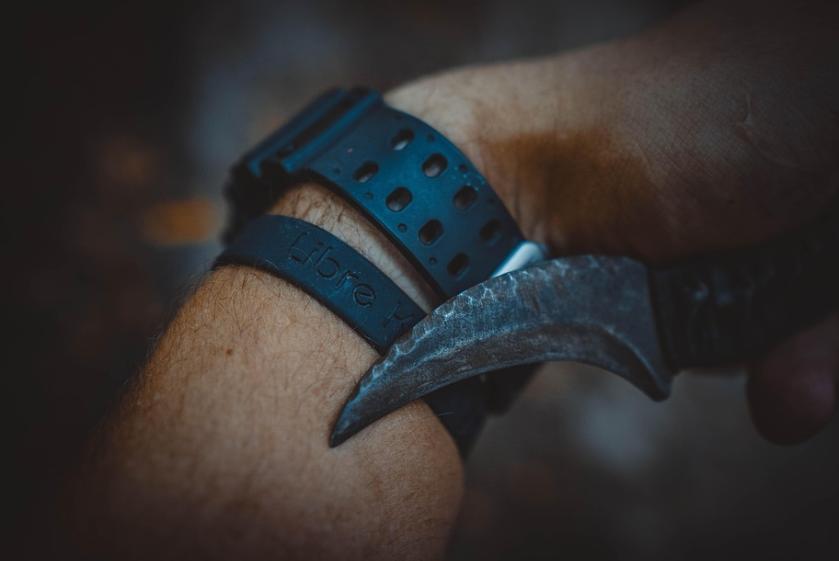
The tiger-claw silhouette of the Southeast Asian curved blade is unmistakable, but many still wonder: What is a Karambit knife? Originally an Indonesian agricultural tool, this 600-year-old design has evolved into a high-demand tactical icon. For retailers, the karambit represents a high-margin category driven by its popularity in martial arts, EDC, and gaming culture.
This guide explores the karambit’s unique anatomy, legal status, and market tiers. Whether you are a collector or a wholesale buyer looking to optimize your inventory with Yangjiang-sourced OEM designs, understanding this blade’s versatile utility and profitability is essential for success.
What Exactly Is a Karambit Knife?
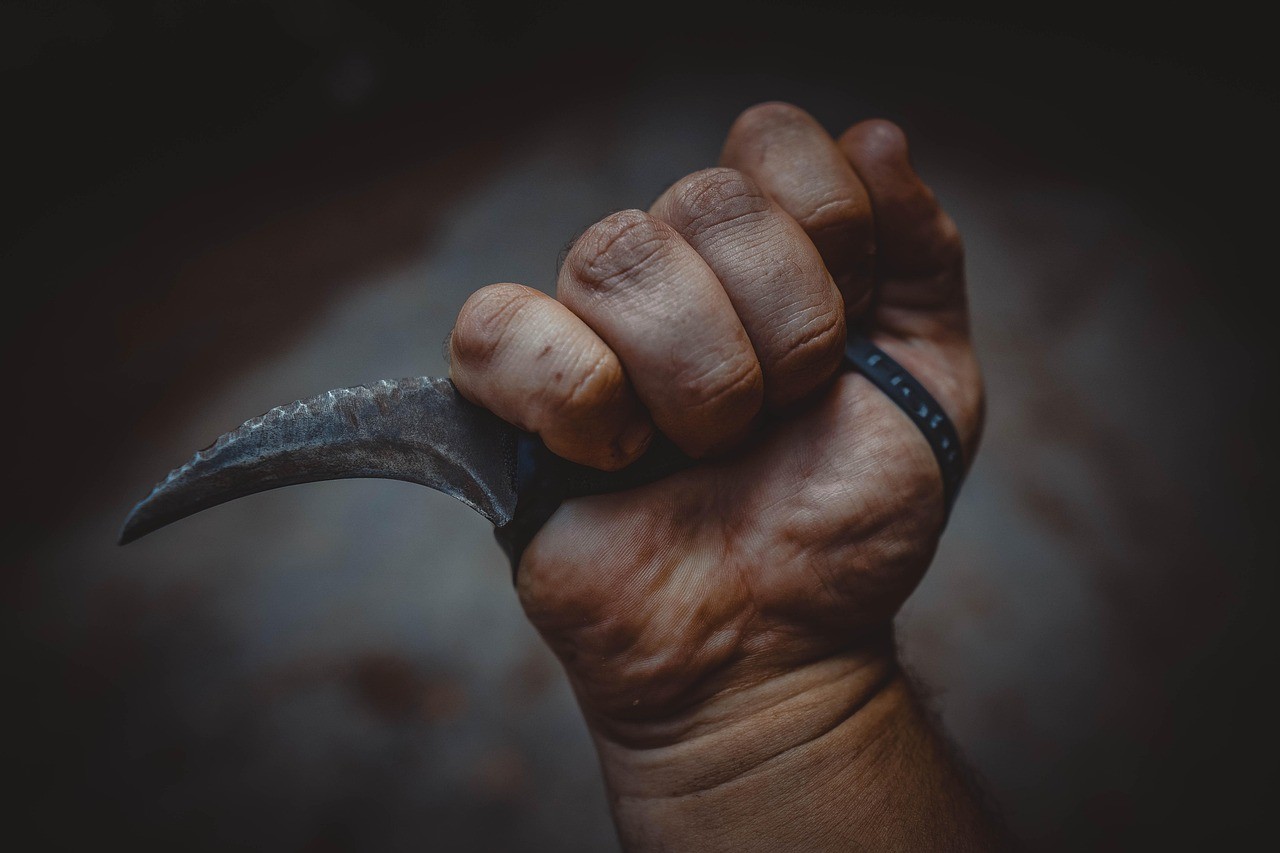
A karambit knife is a curved blade originating from Indonesia, characterized by its distinctive tiger-claw shape and finger ring or guard at the handle’s end. The blade typically curves inward, allowing for powerful slashing motions while maintaining secure grip control.
The defining features that set karambits apart from other knives include:
- Curved blade design – Resembles a tiger’s claw with inward curvature for enhanced cutting efficiency
- Finger ring or guard – Provides exceptional grip security and prevents the knife from slipping during use
- Compact size – Most karambits range from 6 to 12 inches in total length, making them easy to conceal and carry
- Versatile grip options – Can be held in forward or reverse grip depending on the task
Unlike traditional fixed blade knives, the karambit’s unique geometry requires specialized handling techniques. The curved blade excels at hooking, slicing, and controlled cutting motions rather than stabbing or piercing actions.
For knife retailers, the karambit represents a growing market segment. Tactical enthusiasts, martial arts schools, and outdoor adventurers all seek different variations of this blade, creating diverse inventory opportunities for wholesale buyers.
The Origin and History of Karambit Knives
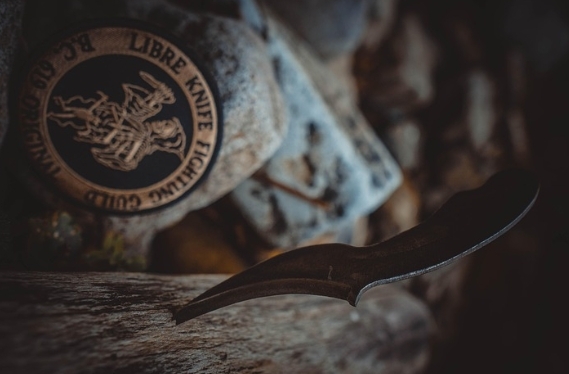
The karambit knife traces its roots back to 14th century Indonesia, specifically the islands of Sumatra, Java, and Bali. Historical evidence suggests the blade was initially designed as an agricultural tool for harvesting crops like rice and wheat.
From Farming Tool to Martial Arts Weapon
Early Indonesian villagers used the karambit’s curved blade for daily farming tasks. The inward-curved design made it ideal for reaping grain stalks and cutting through dense vegetation. Over time, villagers recognized its potential as a defensive weapon.
The transition from farm implement to combat tool happened naturally. Farmers already carried the karambit daily, and its compact size made it easy to conceal. When threatened, they discovered the curved blade could deliver devastating slashing attacks in close quarters.
By the 15th century, the karambit had become integrated into Pencak Silat, the traditional martial art of Indonesia and Malaysia. Silat masters developed specialized techniques that maximized the blade’s unique geometry, creating fighting styles that remain practiced today.
Cultural Significance in Southeast Asia
The karambit’s importance extends beyond practical use. Ancient temple walls in Sumatra and Java feature carvings depicting warriors wielding curved blades resembling the modern karambit. These artifacts confirm the weapon’s cultural significance in Southeast Asian history.
For knife store owners interested in historical blade reproductions, the karambit offers a compelling story to share with customers. Its evolution from agricultural tool to tactical weapon provides rich context that enhances perceived value.
Key Features That Define a Karambit
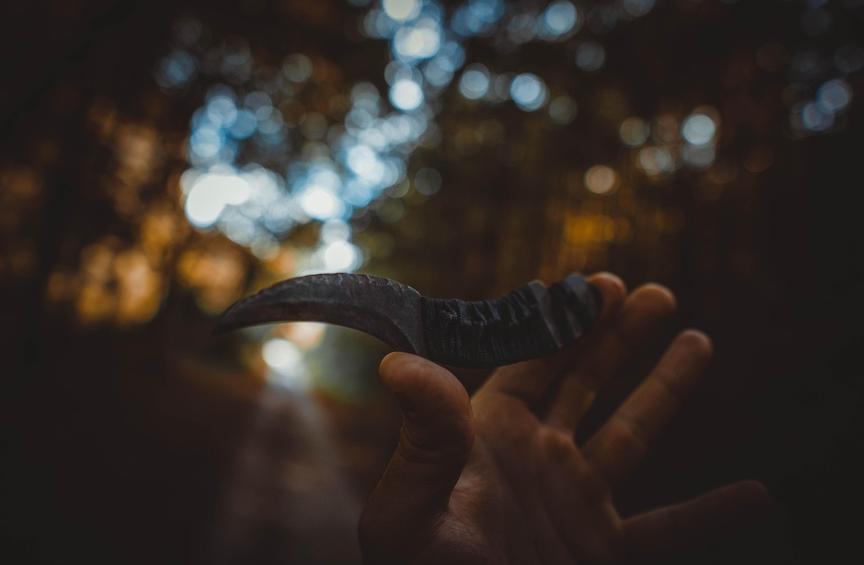
Understanding the core characteristics of a karambit knife helps you identify quality pieces and explain their value to customers. Let’s break down the essential features that make this blade unique.
Blade Shape and Geometry
The karambit’s blade curves inward at approximately 30-45 degrees, creating a hook-like profile. This geometry serves multiple purposes:
- Enhanced slicing power – The curved edge concentrates force along a smaller contact area
- Hooking capability – Can catch and control opponent’s limbs or weapons
- Natural cutting angle – Aligns with wrist motion for ergonomic use
Most karambit blades measure between 2 to 4 inches in cutting edge length. The blade thickness typically ranges from 3mm to 5mm, balancing durability with concealability.
Finger Ring and Guard Design
The signature finger ring distinguishes the karambit from virtually all other knife designs. This ring serves critical functions:
| Function | Benefit |
|---|---|
| Grip security | Prevents knife from dropping during vigorous use |
| Retention | Makes disarming extremely difficult |
| Index reference | Provides tactile feedback for proper grip orientation |
| Leverage point | Enables advanced manipulation techniques |
Some modern variations replace the full ring with an extended guard or finger groove. These alternatives offer similar retention benefits while reducing the learning curve for new users.
Handle Materials and Construction
Quality karambits use handle materials that balance grip comfort with durability. Common options include:
- G10 fiberglass – Excellent grip texture, weather-resistant, widely used in tactical models
- Aluminum – Lightweight, durable, allows for intricate machining patterns
- Wood – Traditional aesthetic, comfortable grip, requires more maintenance
- Polymer – Cost-effective, moldable into ergonomic shapes
For wholesale buyers, offering variety in handle materials helps capture different market segments. Tactical customers prefer G10 or aluminum, while traditionalists often seek wood handles for historical reproductions.
Steel Types Used in Karambit Blades
The steel type significantly impacts performance and price point. Common choices include:
- 440C Stainless – Budget-friendly, decent corrosion resistance, suitable for entry-level models
- D2 Tool Steel – Excellent edge retention, semi-stainless, popular mid-range option
- VG-10 – Premium Japanese steel, superior sharpness, ideal for high-end collectors
- 1095 Carbon – Traditional choice, easy to sharpen, requires maintenance to prevent rust
Understanding these steel options helps you position karambits at appropriate price points for your target customers.
Types of Karambit Knives: Fixed vs Folding
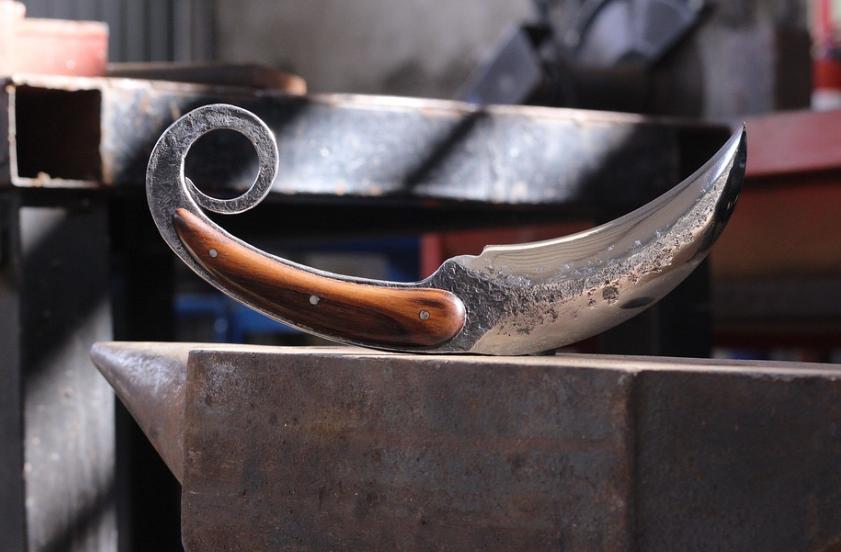
Modern karambits come in two primary configurations: fixed blade and folding. Each type offers distinct advantages depending on your intended use case.
Fixed Blade Karambits
Fixed blade karambits feature a solid, non-moving blade permanently attached to the handle. This traditional design offers several benefits:
Advantages:
- Maximum structural strength – No moving parts to fail under stress
- Faster deployment – Ready to use immediately upon drawing
- Easier maintenance – Fewer components to clean and lubricate
- Traditional aesthetic – Closer resemblance to historical designs
Disadvantages:
- Larger carry profile – Requires sheath for safe transport
- Reduced concealability – More difficult to carry discreetly
- Weight considerations – Typically heavier than folding equivalents
Fixed blade karambits appeal to martial artists, outdoor professionals, and collectors who prioritize authenticity and reliability.
Folding Karambit Knives
Folding karambits incorporate a pivot mechanism that allows the blade to retract into the handle. Modern engineering has produced folding designs that maintain the karambit’s characteristic functionality.
Advantages:
- Compact carry – Folds to approximately half its extended length
- Enhanced concealability – Easier to carry discreetly in pockets
- Safety features – Many include locking mechanisms for secure transport
- Modern appeal – Attracts EDC enthusiasts and tactical users
Disadvantages:
- Mechanical complexity – More components that can wear or fail
- Slower deployment – Requires opening action before use
- Maintenance requirements – Pivot points need regular cleaning and lubrication
Folding karambits dominate the everyday carry market. Their convenience makes them popular among professionals who want tactical capability without bulk.
Fixed vs Folding: Quick Comparison
| Feature | Fixed Blade | Folding |
|---|---|---|
| Strength | ★★★★★ | ★★★☆☆ |
| Portability | ★★★☆☆ | ★★★★★ |
| Deployment Speed | ★★★★★ | ★★★☆☆ |
| Concealability | ★★☆☆☆ | ★★★★★ |
| Maintenance | ★★★★★ | ★★★☆☆ |
| Price Range | $30-$200 | $40-$300 |
For wholesale buyers, stocking both types maximizes market coverage. Tactical customers often prefer fixed blades, while EDC enthusiasts gravitate toward folding designs.
Common Uses of Karambit Knives
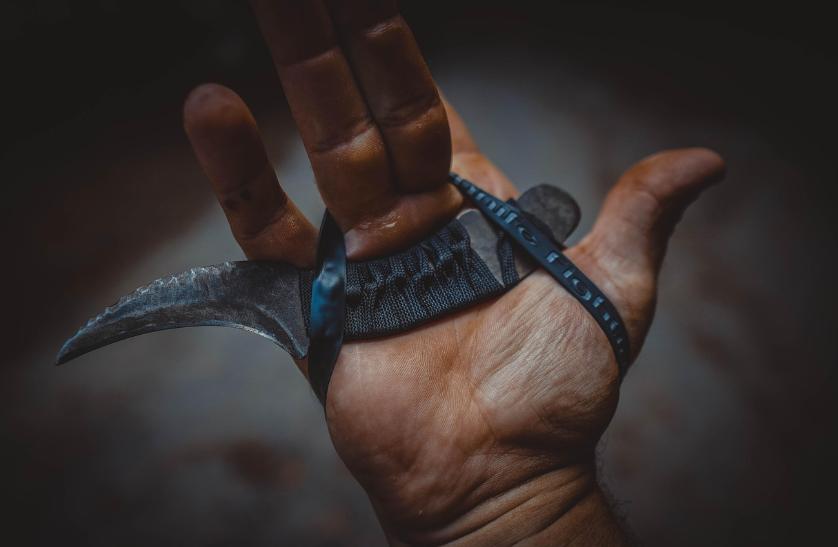
The karambit’s versatility explains its enduring popularity across multiple user groups. Let’s explore the primary applications that drive demand for these curved blades.
Self-Defense and Tactical Applications
The karambit has gained significant traction in the self-defense community. Its compact size and retention features make it attractive for personal protection scenarios.
Tactical advantages include:
- Close-quarters effectiveness – Excels in confined spaces where longer blades become cumbersome
- Difficult to disarm – The finger ring ensures the knife stays in your hand even during struggle
- Intimidation factor – The distinctive appearance can deter potential threats
- Quick deployment – Folding karambits with assisted opening allow rapid response
For retailers marketing tactical karambits, emphasize training requirements. Responsible sellers should always recommend professional instruction alongside any self-defense knife purchase.
Martial Arts Training
Pencak Silat practitioners consider the karambit an essential training tool. Modern martial arts schools worldwide incorporate karambit techniques into their curricula, creating consistent demand for training-safe models.
Training karambits often feature:
- Blunt edges for safe practice
- Rubber or aluminum construction for sparring
- Full-size dimensions for realistic muscle memory development
Knife store owners near martial arts academies can benefit from stocking dedicated training models alongside functional blades.
Utility and Everyday Tasks
Despite its tactical reputation, the karambit excels at everyday utility tasks. The curved blade proves particularly effective for:
- Opening boxes and packages
- Cutting rope or cordage
- Preparing kindling for camping
- Harvesting garden produce
Many users carry karambits as work knives rather than tactical tools. This practical application expands your potential customer base beyond self-defense enthusiasts.
Hunting and Outdoor Activities
Hunters and campers appreciate the karambit’s specialized capabilities. The curved blade works well for:
- Skinning game – Curved edge follows animal contours naturally
- Processing fish – Precise cuts without damaging meat
- Camp chores – Cutting cord, preparing tinder, general utility
For outdoor enthusiasts, a karambit often serves as a secondary knife alongside a larger fixed blade. This complementary role creates opportunities for bundle sales and cross-promotion.
How to Hold and Use a Karambit Safely
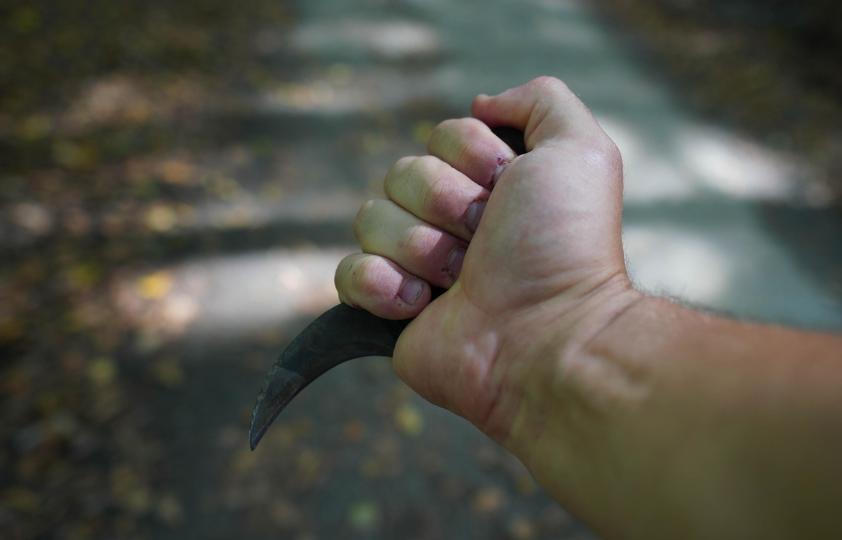
Proper grip technique forms the foundation of safe karambit use. Unlike traditional knives, the karambit requires specialized handling methods that maximize its unique design.
Forward Grip Technique
The forward grip is the most intuitive holding method for beginners. Here’s how to execute it properly:
- Insert your index finger through the finger ring
- Curl your remaining fingers around the handle
- Position the blade extending from the thumb side of your hand
- Keep the cutting edge facing downward
This grip provides excellent control for utility tasks and defensive scenarios. The blade naturally aligns with punching motions, making it intuitive for users with basic striking training.
Reverse Grip Technique
Advanced users often prefer the reverse grip for enhanced maneuverability. To achieve this position:
- Insert your index finger through the ring
- Rotate your wrist so the blade extends from the pinky side
- The cutting edge now faces upward toward your body
- Use wrist rotation to generate cutting power
The reverse grip excels at hooking and trapping techniques. Martial artists favor this position for its versatility in close-quarters engagements.
Essential Safety Tips
Safe karambit handling requires discipline and awareness. Follow these guidelines to minimize accident risk:
- Always train with supervision – Never practice advanced techniques without experienced oversight
- Start with training knives – Use rubber or wooden replicas before handling live blades
- Maintain proper finger placement – Keep fingers away from the cutting edge during manipulation
- Store securely – Use locked cases or safes, especially in households with children
- Know local laws – Karambit legality varies significantly by jurisdiction
Are Karambit Knives Legal?
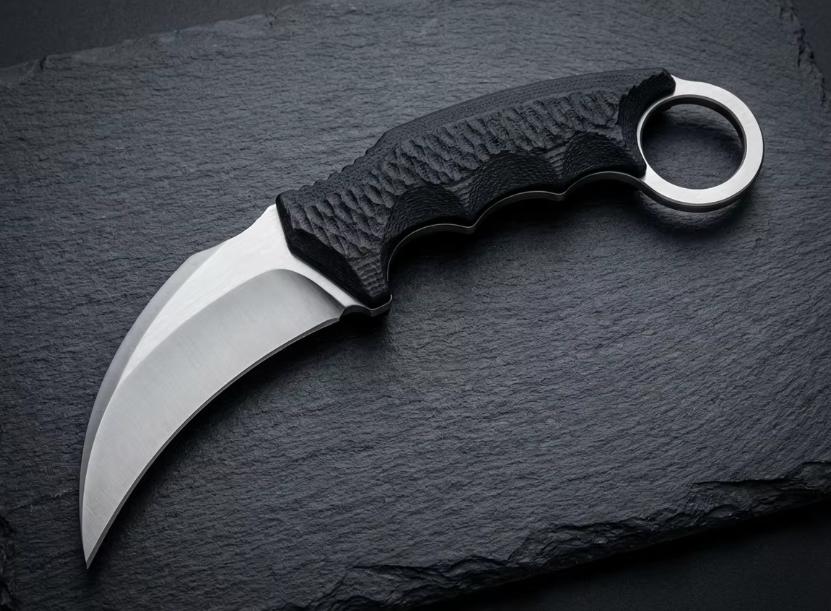
The short answer is: Yes, karambit knives are legal to own in most U.S. states, but they are subject to strict carrying regulations. Whether a karambit is “legal” for you depends entirely on three factors: its blade length, whether it’s a fixed or folding blade, and whether you carry it openly or concealed.
State-Specific Restrictions: The California Example
In many jurisdictions like California, the law (PC 21310) distinguishes between ownership and carry:
- Fixed-Blade Karambits: Legal to own at home, but illegal to carry concealed on your person. They must be carried openly in a sheath at the waist.
- Folding Karambits: Generally legal to carry concealed as long as they are in the folded position.
The “Concealed Carry” Risk
A major point of discussion among enthusiasts on Reddit is the “concealment trap.” Even a legal knife can lead to criminal charges if it is partially hidden by a shirt or jacket.
In the eyes of the law, the karambit’s safety ring makes it “nearly impossible to disarm,” which often classifies it as a combat weapon rather than a utility tool in some legal interpretations (Quora).
Key Legal Factors to Check
- Blade Length: Many major cities (like Los Angeles or San Francisco) cap legal carry at 3 inches.
- Double-Edged Blades: Sharpening the back edge of a karambit often reclassifies it as a “dagger,” which is illegal to carry in many areas.
- Automatic Mechanisms: “Switchblade” karambits are heavily restricted or banned in states like New York and Hawaii.
Pro Tip from LeeKnives: Because knife laws change frequently and vary by municipality, always verify your local codes before carrying a karambit in public.
Karambit vs Other Knives: Key Differences Explained
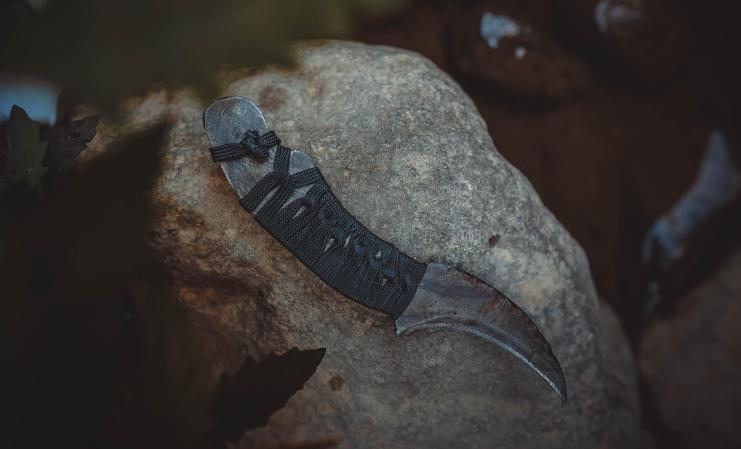
With so many knife types on the market, you might wonder how the karambit compares to other popular blades. Understanding these differences helps you make informed decisions whether you’re buying for personal use or retail inventory.
Karambit vs Traditional Knife
Traditional knives – such as chef knives or hunting knives – feature straight or slightly curved blades with conventional handles. The karambit differs fundamentally in several ways:
| Feature | Karambit | Traditional Knife |
|---|---|---|
| Blade shape | Inward curved (tiger claw) | Straight or outward curved |
| Grip style | Finger ring retention | Standard handle |
| Primary motion | Pull-cutting, hooking | Push-cutting, slicing |
| Cutting angle | Edge faces downward | Edge faces forward |
| Best use case | Close-quarters, tactical | General purpose, kitchen |
When karambit excels:
- Close-quarters self-defense scenarios
- Tasks requiring hooking or trapping motions
- Situations demanding maximum grip security
When traditional knives excel:
- General utility tasks like food preparation
- Precision cutting requiring fine control
- Extended cutting sessions where ergonomics matter
For knife retailers, traditional knives appeal to broader audiences, while karambits serve niche tactical and martial arts markets.
Talon Knife vs Karambit
The talon knife has gained popularity through gaming culture, particularly Counter-Strike. When comparing talon knife vs karambit, both feature claw-inspired designs but serve different purposes.
Talon Knife vs Karambit: Quick Comparison
| Feature | Talon Knife | Karambit |
|---|---|---|
| Blade shape | Straight claw with point | Continuous curved claw |
| Handle | Standard ergonomic | Finger ring retention |
| Primary use | Precision cuts, stabbing | Slashing, hooking |
| Training required | Minimal | Extensive |
| Everyday utility | ★★★★☆ | ★★☆☆☆ |
| Grip security | ★★★☆☆ | ★★★★★ |
| Price range | $40-$250 | $30-$300 |
Key differences:
- Blade geometry – Talon knives have a straighter, more aggressive claw shape with a prominent point. Karambits feature smoother, continuous curvature optimized for slashing.
- Handle design – Talon knives use standard ergonomic handles without finger rings. Karambits include the signature finger ring for retention.
- Cutting style – Talon knives excel at precision cuts and stabbing motions. Karambits specialize in slashing, hooking, and controlled pulling cuts.
- Learning curve – Talon knives are more intuitive for beginners. Karambits require dedicated training to master proper techniques.
- Versatility – Talon knives handle everyday tasks more naturally. Karambits excel in specialized tactical applications.
Talon Knife Advantages:
- More intuitive for daily utility tasks
- Lighter and simpler design
- Easier transition from conventional knives
- Popular among gamers and collectors
Karambit Advantages:
- Superior grip security with finger ring
- Better retention during struggle
- Deeper slashing cuts due to curvature
- Rich historical and martial arts heritage
Want to dive deeper? Read our detailed talon knife vs karambit comparison for comprehensive analysis on which blade suits your needs.
For wholesale buyers, both designs attract different customer segments – talon knives appeal to younger, gaming-influenced buyers, while karambits attract traditional martial arts practitioners.
Karambit vs Butterfly Knife (Balisong)
Both karambit and butterfly knife (balisong) originate from Southeast Asian cultures and have gained tactical followings. However, they differ significantly in operation and application.
Karambit vs Butterfly Knife: Quick Comparison
| Feature | Karambit | Butterfly Knife (Balisong) |
|---|---|---|
| Deployment | One-hand (folding/sheath) | Two-hand flipping |
| Mechanism | Fixed or folding pivot | Dual rotating handles |
| Learning focus | Grip technique | Flipping manipulation |
| Legal restrictions | Moderate | High (many regions ban) |
| Concealability | ★★★☆☆ | ★★★★☆ |
| Tactical readiness | ★★★★★ | ★★☆☆☆ |
| Price range | $30-$300 | $40-$400 |
Design comparison:
- Blade deployment – Butterfly knives require two-handed flipping motion to open. Karambits deploy with one hand via folding mechanism or draw from sheath.
- Complexity – Balisongs feature dual handles that rotate around the blade pivot. Karambits use simpler fixed or folding constructions.
- Learning curve – Butterfly knives demand extensive practice for safe flipping. Karambits focus on grip technique rather than deployment tricks.
- Legal status – Balisongs face stricter regulations in many regions due to association with street culture. Karambits often have more lenient treatment as utility tools.
Butterfly Knife Advantages:
- Impressive flipping techniques for enthusiasts
- Compact when folded (handles conceal blade)
- Strong collector and hobbyist community
- Satisfying manipulation for stress relief
Karambit Advantages:
- Faster tactical deployment
- Simpler, more reliable mechanism
- Better suited for actual combat scenarios
- Less legal restriction in most areas
For retailers: Butterfly knives appeal to hobbyists who enjoy manipulation skills, while karambits attract serious tactical users and martial artists. Stocking both captures different market segments.
Quick Summary: Which Should You Choose?
| Priority | Recommended Choice |
|---|---|
| Self-defense | Karambit (retention + slashing) |
| Everyday utility | Traditional knife or Talon |
| Martial arts | Karambit (Silat training) |
| Collection/Hobby | Talon or Butterfly knife |
| Legal compliance | Traditional knife (least restricted) |
| Grip security | Karambit (finger ring advantage) |
Choosing the Right Karambit for Your Needs
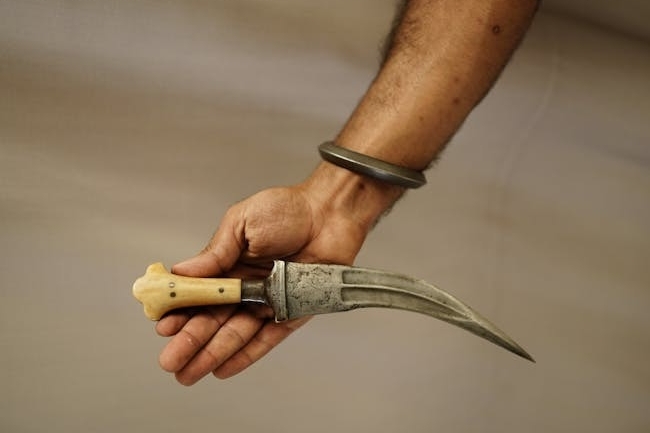
Selecting the appropriate karambit depends on your intended application, experience level, and budget. Here’s how to match the right blade to your specific requirements.
For Self-Defense Applications
Self-defense karambits should prioritize:
- Reliable deployment – Choose assisted-opening or fixed blade for quick access
- Secure retention – Ensure the finger ring fits properly for your hand size
- Appropriate size – 2.5 to 3.5 inch blades balance concealability with effectiveness
- Quality steel – D2 or VG-10 provides reliable edge retention for critical moments
Recommended: Fixed blade karambits with Kydex sheaths for dedicated carry systems.
For Martial Arts Training
Training karambits need different characteristics:
- Safety-first design – Blunt edges and rounded tips for sparring
- Accurate weight – Should match live blade weight for proper muscle development
- Durable construction – Aluminum or high-impact polymer withstands repeated contact
- Affordable pricing – Training tools experience more wear than display pieces
Many schools purchase multiple training knives for student use. Bulk pricing appeals to martial arts academy owners.
For Utility and EDC
Everyday carry karambits should emphasize:
- Compact folding design – Fits comfortably in pockets without printing
- Smooth opening action – One-handed deployment for convenience
- Corrosion resistance – Stainless steels like 440C or VG-10 reduce maintenance
- Comfortable ergonomics – Textured handles prevent slipping during extended use
For customers interested in pocket knives, folding karambits offer a unique alternative to traditional designs.
For Collectors and Enthusiasts
Collectors often seek:
- Premium materials – Damascus steel, exotic wood handles, custom engraving
- Historical accuracy – Reproductions based on antique Indonesian designs
- Limited editions – Numbered runs from renowned makers
- Display quality – Presentation cases and certificates of authenticity
High-end karambits can command prices exceeding $500. This segment appeals to serious collectors willing to invest in artisan craftsmanship.
Wholesale and Bulk Considerations
For knife store owners, Amazon FBA sellers, and tactical gear retailers, the karambit represents a high-margin category with consistent demand. However, success in this niche requires a deep understanding of the sourcing costs and margin structures.
Sourcing Insights & Cost Breakdown
As a brand with our own manufacturing facilities in Yangjiang, LeeKnives has extensive supply chain experience in producing and exporting tactical blades.
Based on our internal production data and historical export costs, we have compiled a detailed cost breakdown across three primary market tiers:
| Cost Component (Per Unit) | Budget (3Cr13 / plastic handle) | Mid-range (8Cr14MoV / aluminum / G10) | Premium (D2 / 154CM / custom OEM) |
|---|---|---|---|
| Blade + assembly (factory cost) | $1.00 – $2.50 | $4.00 – $8.00 | $12.00 – $22.00 |
| Packaging | $0.06 – $0.20 (poly bag / kraft box) | $0.30 – $0.90 (custom printed cardboard) | $0.90 – $1.99 (rigid gift box, magnetic lid) |
| Inland freight (CN factory → port) | $0.10 – $0.20/unit | $0.15 – $0.30/unit | $0.20 – $0.40/unit |
| Ocean/air freight (CN → US/EU) | $0.30 – $0.80/unit (sea, 500+ pcs) | $0.50 – $1.20/unit | $1.00 – $3.00/unit (air or small batch) |
| Import duty (US HTS ~3%) | $0.05 – $0.10 | $0.15 – $0.30 | $0.40 – $0.80 |
| Quality inspection / misc. | $0.10 – $0.20 | $0.20 – $0.40 | $0.30 – $0.60 |
| Total Landed Cost | ~$1.60 – $4.00 | ~$5.30 – $11.10 | ~$14.80 – $28.79 |
Margin Analysis: Wholesale vs Retail
To maintain a healthy business, the “Rule of Thumb” for karambit retail is to set the minimum viable retail price at 4–5x the landed cost. This covers platform fees (like Amazon FBA’s 15% referral fee), marketing (CAC), and fulfillment while returning a 30%+ net margin.
| Channel | Budget tier | Mid-range tier | Premium tier |
|---|---|---|---|
| Landed cost | $2.00 | $8.00 | $22.00 |
| Wholesale price | $4 – $6 | $14 – $18 | $35 – $50 |
| Wholesale margin | 50 – 67% | 43 – 56% | 36 – 56% |
| Retail price (Amazon/DTC) | $12 – $18 | $25 – $40 | $60 – $120 |
| Retail gross margin | 78 – 89% | 68 – 80% | 63 – 82% |
| Retail net margin (after ads, fulfillment, returns ~30%) | ~48 – 59% | ~38 – 50% | ~33 – 52% |
Note: These figures are based on LeeKnives' internal supply chain benchmarks and real-world performance data from our global B2B clients.
Rule of Thumb
- Minimum viable retail price = landed cost × 4–5 (to cover platform fees, ads, and still return 30%+ net)
- Mid-range karambit at $8 landed cost → target retail $32–$40 minimum on Amazon
- Premium custom OEM at $22 landed → target retail $88–$110 to justify margins
Key Drivers for Profitability
- Blade Steel Grade: Moving from 3Cr13 to D2 steel can increase factory costs by 5–8x, but it disproportionately lifts the perceived value and retail ceiling.
- MOQ Strategy: Orders below 100 pcs often see a 30–60% jump in unit cost. Unlocking the best pricing typically requires a 500+ unit commitment.
- Shipping Mode: For budget SKUs, sea freight is critical to keep the “freight-to-value” ratio low.
Navigating these technical specifications and cost levers can be complex. At LeeKnives, we simplify the process by providing comprehensive OEM and private label services.
Whether you are looking to develop a budget-friendly EDC karambit or a premium D2 steel tactical blade with custom branding, our manufacturing expertise ensures your inventory meets both quality standards and margin targets.
Conclusion: Is a Karambit Knife Right for You?
The karambit knife has evolved remarkably from its Indonesian farming origins to become a modern tactical icon. Its distinctive curved blade and finger ring design offer unique advantages for self-defense, martial arts, and utility applications.
Key takeaways for buyers:
- The karambit’s curved blade excels at slicing and hooking motions
- Finger ring provides exceptional grip security and retention
- Both fixed and folding options serve different use cases effectively
- Proper training is essential before carrying for self-defense
- Legal restrictions vary by location – always verify local regulations
For retailers and wholesale buyers:
The karambit market continues growing as tactical enthusiasts and martial artists discover this versatile blade. Stocking diverse karambit options – from budget-friendly training models to premium collector pieces – positions your store to capture this expanding demand.
Ready to add karambit knives to your inventory? Request a quote from LeeKnives for wholesale pricing on our available models. Our OEM services can also create custom designs that differentiate your brand in the competitive knife market.
Launch Your Custom Knife Line Faster with LeeKnives
Complete OEM/ODM support—from design to final shipment—so you can focus on growth.
Backed by warehouses in the U.S. for fast, reliable delivery.
Frequently Asked Questions
Why is karambit so popular?
The karambit’s popularity stems from three key factors. First, its distinctive tiger-claw design makes it instantly recognizable and visually appealing to collectors.
Second, gaming culture – especially Counter-Strike – introduced the karambit to millions of players worldwide, creating demand for real-life versions.
Third, its practical advantages like superior grip retention and close-quarters effectiveness attract martial artists and tactical enthusiasts seeking specialized tools.
Is karambit good for self-defense?
Yes, the karambit excels at self-defense when used by trained individuals. Its curved blade delivers powerful slashing cuts, while the finger ring prevents disarming during struggle.
The compact size allows easy concealment and close-quarters maneuverability. However, proper training is essential – an untrained user faces significant risks. Always verify local laws before carrying any knife for self-defense purposes.
Is the karambit the deadliest knife?
No knife can be objectively labeled “the deadliest” – effectiveness depends entirely on the user’s training, situation, and intent. The karambit offers advantages in close-quarters scenarios due to its retention features and slashing geometry.
However, it lacks the reach of longer blades and requires specialized techniques. Calling any tool “deadliest” oversimplifies combat dynamics where skill, awareness, and circumstances matter far more than blade shape.
Can beginners use a karambit safely?
Yes, but proper training is essential. Beginners should start with rubber or wooden training knives under qualified supervision.
Never attempt advanced manipulation techniques with a live blade until you’ve mastered basic grip and safety fundamentals.




 EN
EN  JA
JA  DE
DE