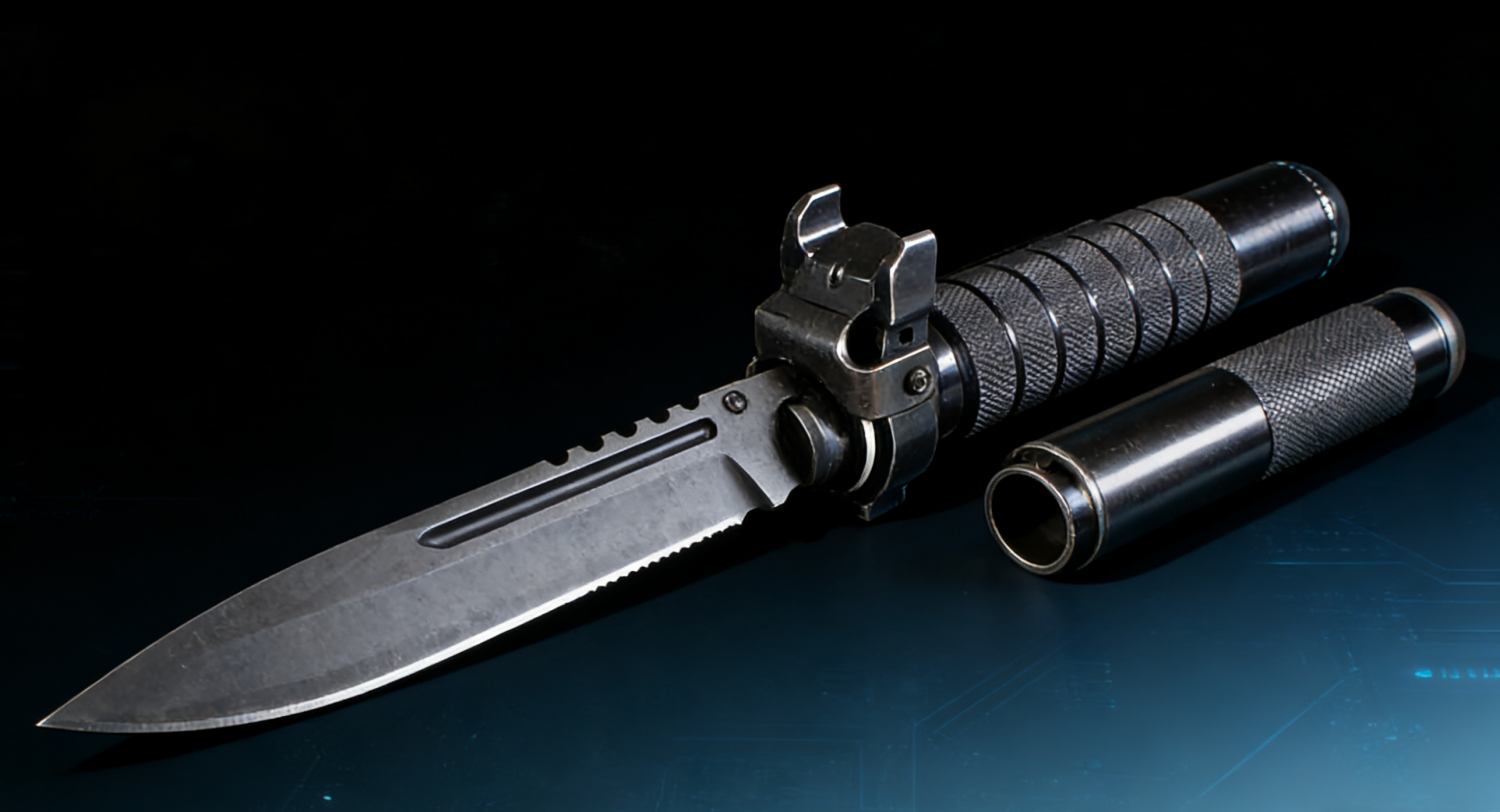
Ballistic knives have long been shrouded in controversy and intrigue—far more than just a “regular knife,” these weapons blur the line between melee tools and projectile devices. Unlike traditional knives that rely on manual deployment and close-quarters use, ballistic knives feature a detachable blade propelled by mechanical force, making them both unique and highly dangerous. In this guide, we’ll answer the critical question “what is a ballistic knife,” trace its history, explain how it works, break down its legal status worldwide to help you understand.
What Is a Ballistic Knife?
A ballistic knife is a specialized weapon defined by its detachable blade, which can be launched or propelled toward a target via an internal mechanism—typically a spring, compressed gas, or (in rare military-grade models) explosive charge. Unlike standard folding or fixed-blade knives, the defining feature of a ballistic knife is its ability to deliver the blade at a distance, converting a close-range tool into a mid-range projectile weapon.
Key characteristics of ballistic knives include:
- A detachable blade designed for propulsion (not just folding or retracting)
- A built-in propulsion system (spring, CO2, or explosive)
- Trigger or activation mechanism to release the blade
- Effective range of 10–20 feet (3–6 meters) for most civilian-grade models
- Minimal control over the blade once launched
Common misconceptions:
- Ballistic knives are not “gun-knives”—they do not use gunpowder (most rely on springs or gas).
- They differ from switchblades/auto-knives: Switchblades deploy a fixed blade automatically but do not launch it; ballistic knives detach and propel the blade as a projectile.
Buy Wholesale Knives and Start Scaling up with Us Today
Contact us and connect with a sales rep to get a free quote.
History & Evolution of Ballistic Knives
The origins of the ballistic knife trace back to the Cold War era, with the first known prototypes developed for military and spy use. The Soviet Union’s special forces (Spetsnaz) are widely credited with pioneering the design in the 1950s and 1960s, as a compact, silent weapon for covert operations. These early military models used spring-loaded mechanisms, allowing operators to launch the blade quietly at short distances—ideal for stealth missions where firearms might be too loud.
By the 1970s and 1980s, ballistic knives began to spread beyond military circles, with unauthorized civilian versions appearing in Europe and North America. As demand grew among criminal networks (drawn to their lethal range and concealability), manufacturers adapted the design:
- Spring-loaded models became the most common (affordable and easy to produce).
- Gas-powered variants (using compressed CO2) emerged, offering higher blade velocity but lower availability.
- Explosive-assisted models (military-grade) were phased out due to safety risks and strict regulation.
The decline of legitimate use followed as civilian versions proved to have no practical application—instead, they became linked to violent crimes, prompting global legal crackdowns.
How Does a Ballistic Knife Work? (Step-by-Step Mechanism)
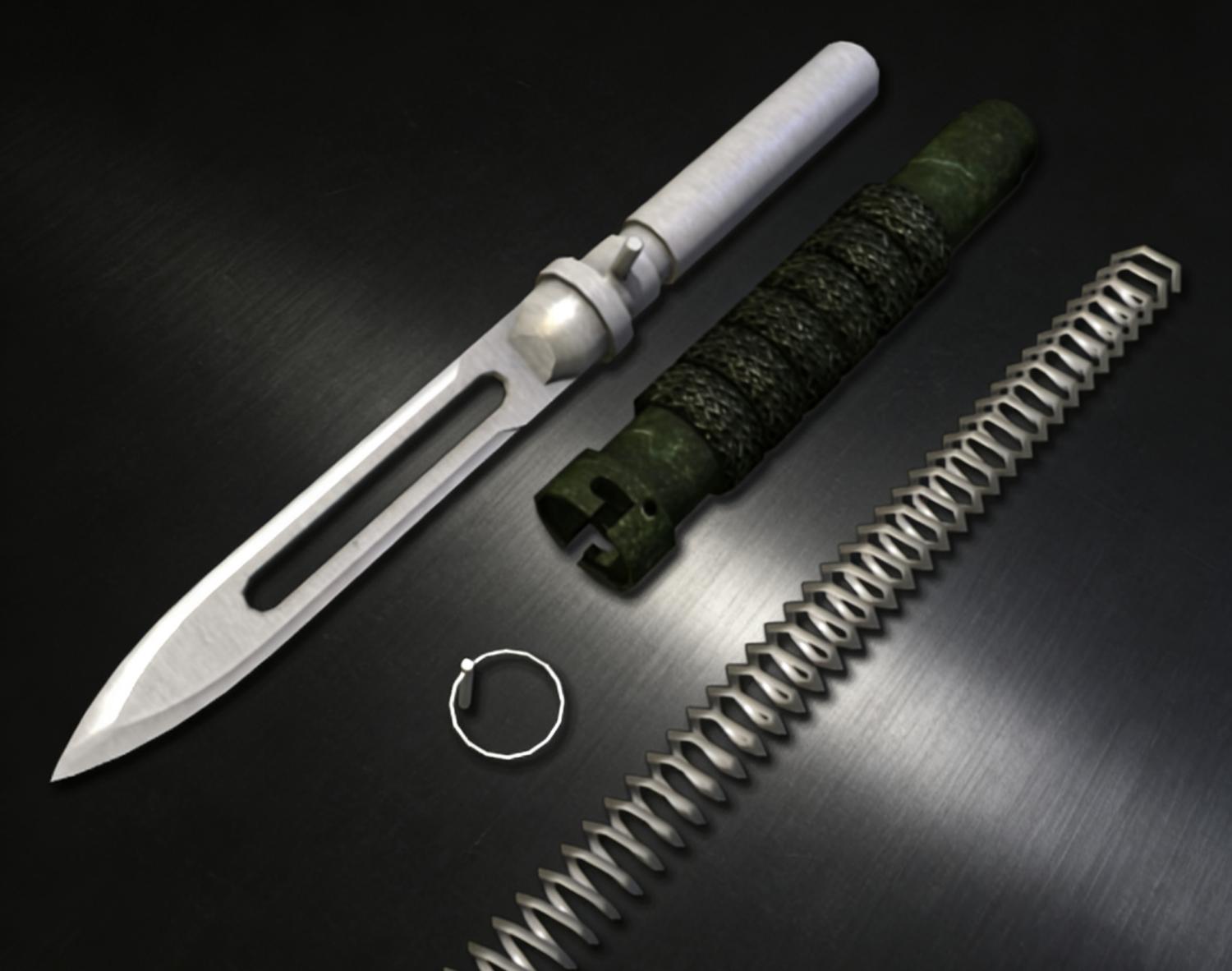
The operation of a ballistic knife relies on stored energy (from a spring or compressed gas) to propel the detachable blade. Here’s a step-by-step breakdown of its mechanism:
Core Components
- Detachable Blade: Typically 3–6 inches long, with a sharpened edge and sometimes a grooved shaft to fit the housing.
- Propulsion System: Spring (coil or leaf) or CO2 cartridge.
- Activation Mechanism: Trigger, button, or sliding switch on the handle.
- Housing/Handle: Contains the propulsion system and blade storage.
- Safety (Rare): Some models have a safety switch to prevent accidental discharge, but most civilian versions lack this feature.
Step-by-Step Operation
- Cocking: The user retracts the blade into the handle, compressing the spring (or charging the CO2 cartridge) to store energy. The blade locks into place until activated.
- Aiming: The user points the handle toward the target (the blade is aligned with the housing’s front opening).
- Activation: Pressing the trigger or switch releases the locking mechanism, allowing the stored energy to propel the blade forward.
- Propulsion: The blade travels 10–20 feet (3–6 meters) at a velocity of 30–60 mph, depending on the propulsion system.
- Retrieval: Most ballistic knives are single-use for the projectile blade—once launched, the blade cannot be reloaded without disassembling the weapon. Some high-end models allow reloading, but this is rare.
Velocity & Impact
A launched ballistic knife blade carries enough force to penetrate clothing, skin, and even soft tissue. Unlike a thrown traditional knife, the ballistic knife’s blade follows a relatively straight trajectory but is difficult to aim accurately, increasing the risk of unintended harm.
Buy Wholesale Knives and Start Scaling up with Us Today
Contact us and connect with a sales rep to get a free quote.
Ballistic Knife vs. Traditional Knives
To understand why ballistic knives are banned, it’s critical to compare them to traditional knives (fixed-blade, folding, switchblades):
| Feature | Ballistic Knife | Traditional Knife (Fixed/Folding/Switchblade) |
|---|---|---|
| Deployment | Mechanical propulsion (launched blade) | Manual or automatic deployment (blade stays attached) |
| Range | Mid-range (10–20 feet) | Close-quarters (0–3 feet) |
| Lethality | High (uncontrolled projectile, lethal at distance) | Moderate (controlled by user, lethal only at close range) |
| Legality | Almost universally banned | Widely legal (with minor restrictions on switchblades) |
| Utility | No legitimate civilian use | Practical (hunting, camping, cooking, self-defense) |
| Control | Low (blade trajectory is hard to predict) | High (user controls blade movement) |
Buy Wholesale Knives and Start Scaling up with Us Today
Contact us and connect with a sales rep to get a free quote.
Why Are Ballistic Knives Illegal? (Safety & Legal Risks)
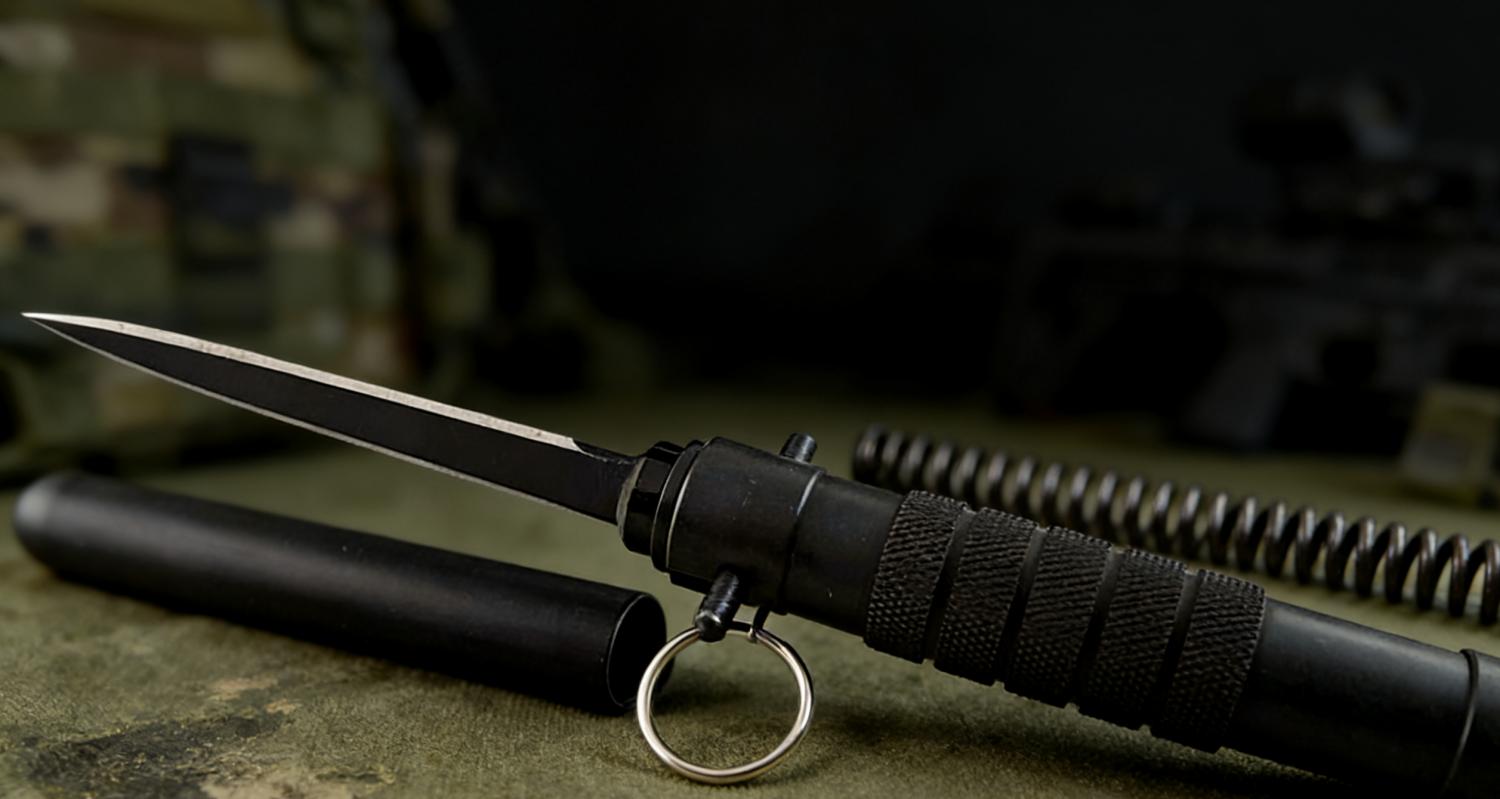
Ballistic knives are banned in nearly every country due to overwhelming public safety hazards and a complete lack of legitimate civilian utility. Here’s a detailed breakdown of the reasons:
1. Public Safety Hazards
- Unpredictable Trajectory: Launched blades are difficult to aim, increasing the risk of hitting bystanders—even trained users struggle to control the blade’s path.
- Lethal at a Distance: Unlike traditional knives, which require close contact, ballistic knives can kill or injure from 10+ feet away, turning a potential melee into a lethal projectile attack.
- Easy Misuse: No training is required to operate a ballistic knife, making them accessible to minors, criminals, and individuals with malicious intent.
- Accidental Discharge: Poorly designed civilian models often lack safety features, leading to accidental launches that harm the user or others.
2. No Legitimate Civilian Use
There is no practical purpose for a ballistic knife in civilian life. Traditional knives serve all necessary functions (hunting, camping, self-defense, household tasks) more safely and effectively. Ballistic knives offer no unique benefit—only increased risk.
3. Ties to Violent Crime
Law enforcement data worldwide links ballistic knives to robberies, assaults, and homicides. Their concealability (they look like regular knives) and lethal range make them a favorite tool for criminals seeking to avoid close contact with victims.
Buy Wholesale Knives and Start Scaling up with Us Today
Contact us and connect with a sales rep to get a free quote.
Global Legal Status of Ballistic Knives
Ballistic knives are classified as prohibited weapons in nearly every country. Here’s the legal status in key regions:
United States
- Federal Law: Banned under the 1986 Firearms Owners Protection Act (FOPA), which classifies ballistic knives as “destructive devices” and prohibits their manufacture, sale, possession, or importation for civilians.
- State Laws: All states enforce the federal ban, with additional penalties for violations. Some states (e.g., California, New York, Texas) have explicit laws criminalizing ballistic knife possession, carrying fines up to $10,000 and imprisonment for 1–10 years.
- Exceptions: Limited to military and law enforcement agencies (with strict authorization).
European Union
- Banned under the EU Weapons Directive (91/477/EEC), categorized as “Category A” weapons—no civilian ownership, sale, or importation is permitted. Member states (e.g., Germany, France, UK) enforce this with severe penalties.
Canada
- Classified as a “prohibited weapon” under the Canadian Criminal Code. Possession, manufacture, or sale carries fines up to $500,000 and imprisonment for up to 10 years.
Australia
- Banned nationwide under the National Firearms Agreement. Classified as a “prohibited offensive weapon,” with no exceptions for civilians.
Other Regions
- Russia: Banned for civilians (military use only).
- Asia: Banned in China, Japan, Singapore, and most Southeast Asian countries—penalties include imprisonment.
- South America: Banned in Brazil, Argentina, and Chile, with strict law enforcement.
Buy Wholesale Knives and Start Scaling up with Us Today
Contact us and connect with a sales rep to get a free quote.
Frequently Asked Questions
Are ballistic knives illegal in the US?
Whoever possesses or uses a ballistic knife in the commission of a Federal crime of violence shall be fined as provided in title 18, or imprisoned not less than five years and not more than ten years, or both.
Can I own a ballistic knife for self-defense?
No. Even for self-defense, ballistic knives are illegal in the US and most countries. They offer no safety advantage over legal alternatives (e.g., pepper spray, legal knives) and pose greater risks to bystanders.
What’s the difference between a ballistic knife and a switchblade?
A switchblade automatically deploys a fixed blade (but does not launch it), while a ballistic knife detaches and propels the blade as a projectile. Switchblades are legal in some US states (with restrictions), but ballistic knives are universally banned.
How far can a ballistic knife shoot?
Most civilian models have an effective range of 10–20 feet (3–6 meters). Gas-powered models may reach slightly farther, but accuracy declines beyond 15 feet.
Conclusion
Ballistic knives are dangerous, controversial weapons defined by their detachable, projectile blade and mechanical propulsion system. From their Cold War military origins to their modern status as illegal civilian weapons, they offer no legitimate use—only unnecessary risk to public safety. Their near-universal ban reflects the global consensus that these weapons have no place in civilian life.
If you’re seeking a tool for cutting, camping, or self-defense, stick to legal alternatives: traditional fixed-blade knives, folding knives (compliant with local laws), or non-lethal options like pepper spray. Possessing a ballistic knife not only endangers others but also carries severe legal consequences, including fines and imprisonment.
Stay safe, stay legal—choose weapons that prioritize control and responsibility over unnecessary lethality.





 EN
EN  JA
JA  DE
DE