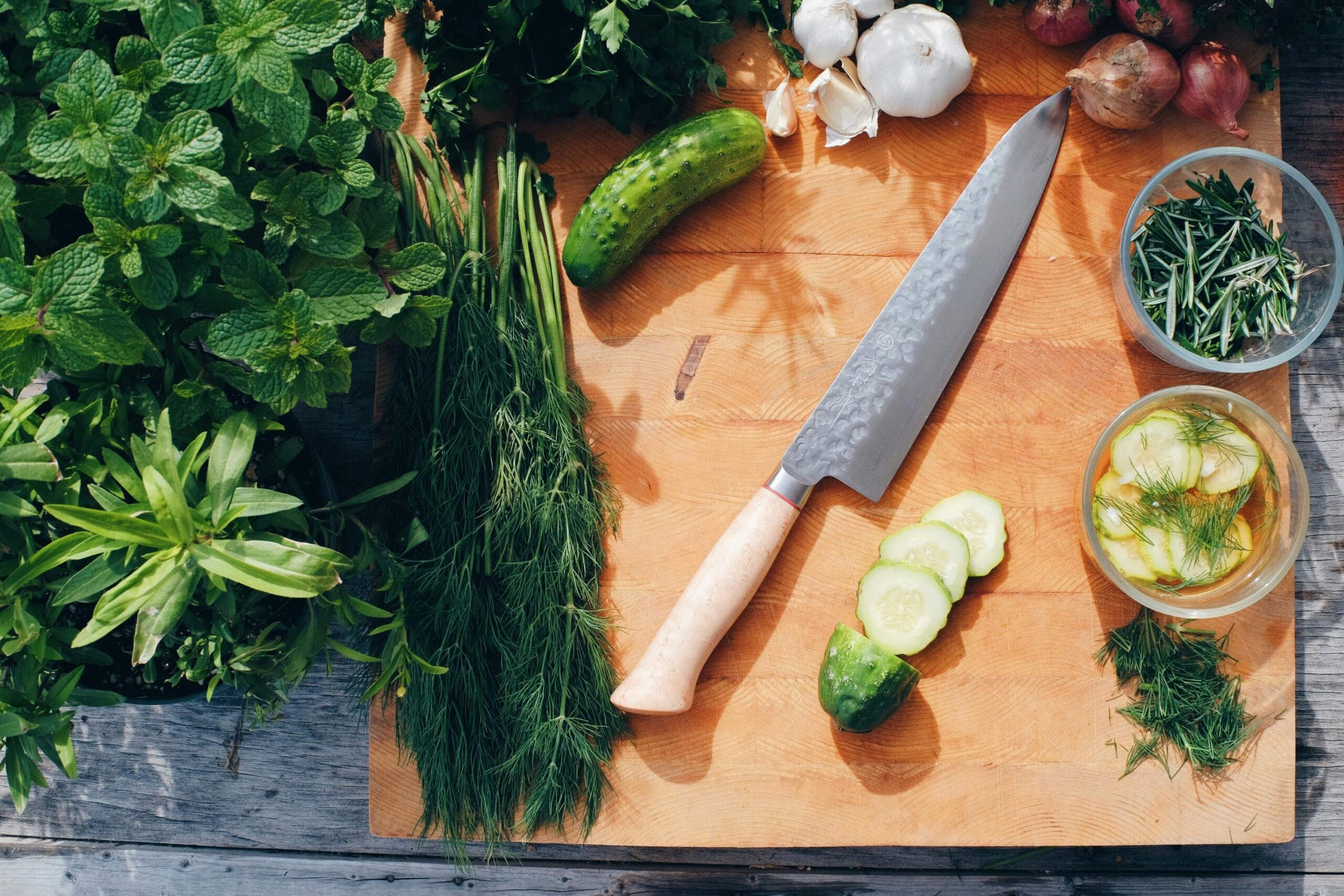
If you invest in Japanese knives, storage is not an add-on decision. These knives come with very sharp edges and require proper protection. The way you store a knife directly affects edge retention, microchipping risk, corrosion rate, and long-term structural integrity.
Japanese knives are made differently from normal Western knives. Higher hardness, thinner geometry, and lower toughness margins demand storage solutions that minimise edge contact, humidity exposure, and impact stress.
In this blog, we will discuss the best ways to store your Japanese kitchen knife like a chef, using steel behaviour, hardness data, and real professional kitchen workflows rather than generic advice. Let’s get started!
Why Japanese Knife Storage Requires a Different Approach
Most Japanese kitchen knives are hardened between HRC 58 and 66+, while Western knives usually sit between HRC 54 and 58. That difference changes everything.
Harder steel holds an edge longer but sacrifices toughness. Toughness is the ability to absorb impact without chipping. Key characteristics that affect Japanese knives storage requirements are:
- Thin edge geometry often under 0.3 mm behind the edge
- Higher carbon content increases corrosion sensitivity
- Lower impact tolerance compared to Western knives
- Sharper apex angles, typically 10 to 15 degrees per side
After buying Japanese Knives, you must properly take care of them. If you are keeping your blade in contact with hard surfaces, other blades, or even metal hardware, then they are constantly under stress and may show signs of damage soon.
6 Best Ways To Store Your Japanese Knives Like a Chef
The optimal way to store your blade will vary with the type of steel, relative humidity, and other environmental factors. But here are the top six tools chefs use to store their Japanese knives safely:
1. Wall Magnetic Strip
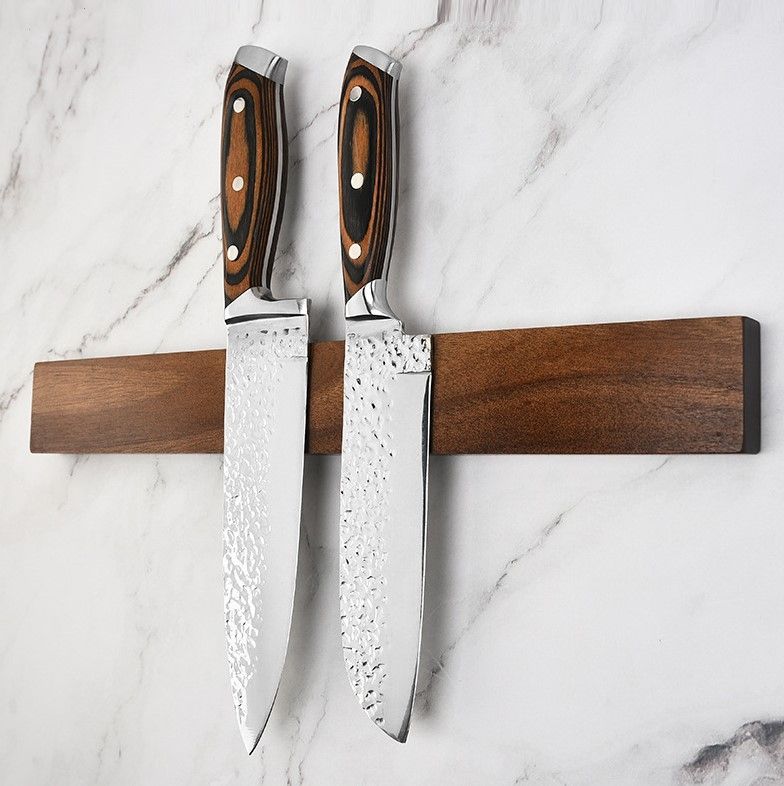
A wall-mounted magnetic knife block or strip stores knives vertically using magnetic force rather than mechanical slots. In professional kitchens, this method is favored because it eliminates edge contact entirely when used correctly. For Japanese knives hardened to HRC 60 to 65, reducing repeated micro-impact is critical for edge stability.
How to Use a Wall Magnetic Strip Properly?
- Mount the strip at chest height to maintain control during placement
- Place the spine on the magnet first, then rotate the blade flat
- Remove by rotating the spine away before lifting
- Use wooden-faced or silicone-buffered magnetic rails to prevent sudden snap contact
2. Wooden Saya Knife Sheath
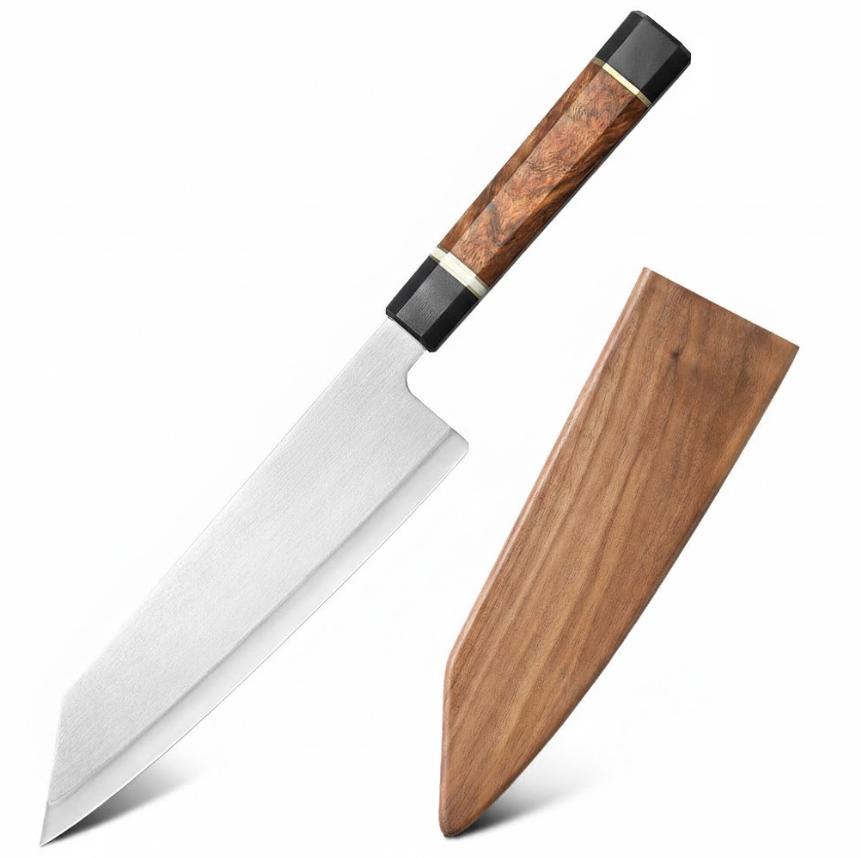
A saya is a Japanese traditional wooden blade cover to keep Japanese knives in good condition. It is typically made of magnolia or ho wood and keeps the blade apart from surfaces while allowing it to breathe. This is particularly crucial for high carbon steels which will rust with moisture and condensation.
For thin Japanese grinds, a saya protects both the edge and the tip geometry during storage and transport.
How to Use a Wooden Saya Properly?
- Fully dry the blade before inserting
- Insert spine first to avoid edge scraping
- Secure with a pin if transporting
- Store in a drawer with proper airflow
3. Blade Guards
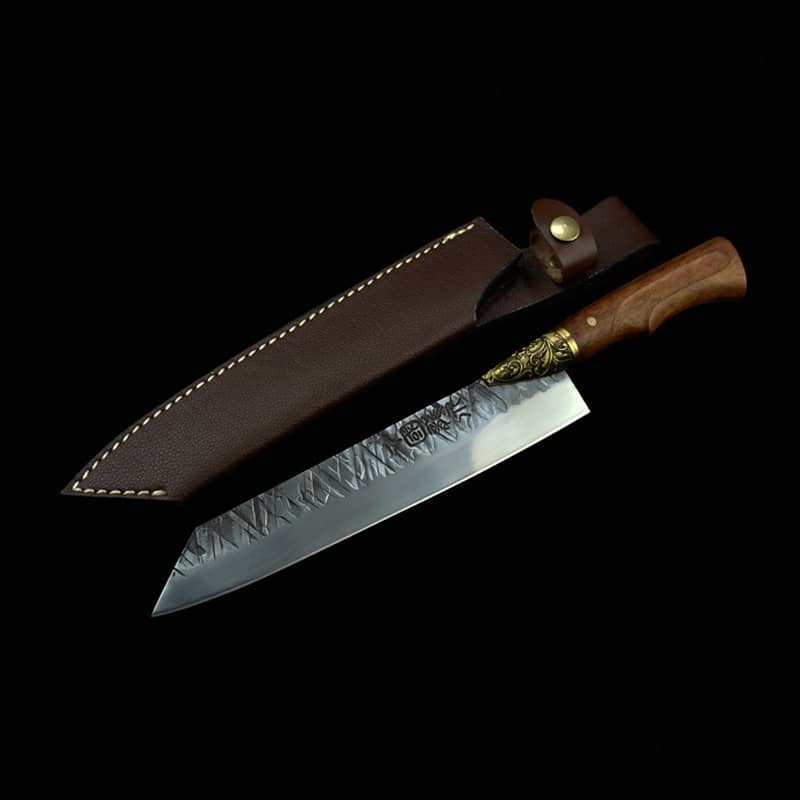
Blade guards are leather, wooden, or plastic sleeves that cover the cutting edge of a knife. They are commonly used as secondary protection rather than a standalone solution. For Japanese knives, blade guards prevent immediate edge contact but do not manage moisture or impact prevention. They are best viewed as a temporary layer.
How to Use Blade Guards Properly?
- Use for short term storage or transport
- Fully dry blades before insertion
- Pair with a knife roll or drawer tray
- Replace worn guards promptly
4. Knife Roll and Bags With Individual Compartments
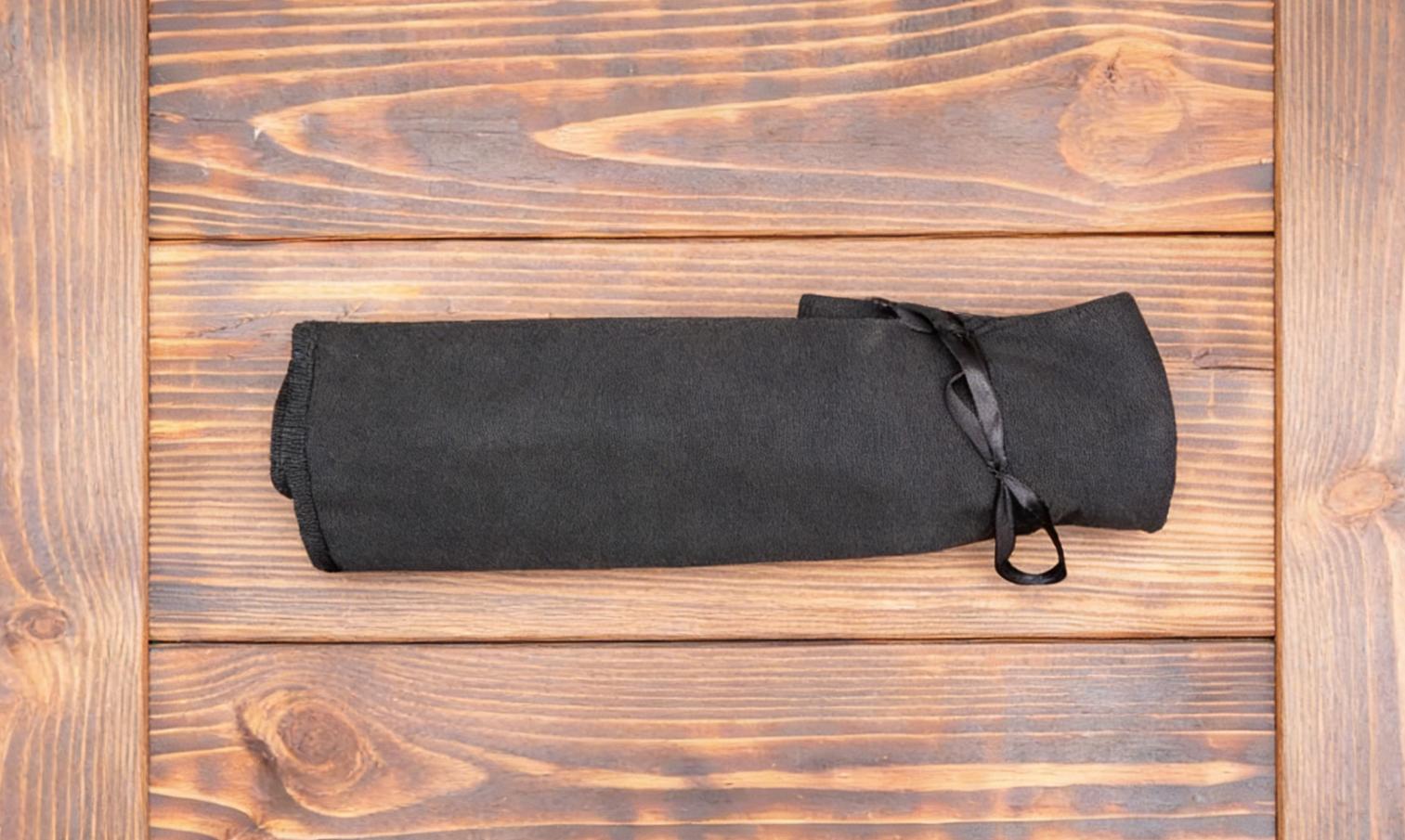
Japanese knife bags or rolls are designed for transport rather than permanent storage. Professionals use them when moving between kitchens or travelling with tools. For Japanese knives, a roll must never be the first layer of protection. Use a knife guard of sheath before putting them into the roll or bag compartment. Without internal rigidity, knife rolls allow blade movement that can cause microchipping during transit.
How to Use Knife Rolls and Bags Properly?
- Always use a saya or blade guard first
- Insert knives spine down
- Keep rolls dry and ventilated
- Unroll and air dry after use
5. In Drawer Vertical Knife Block
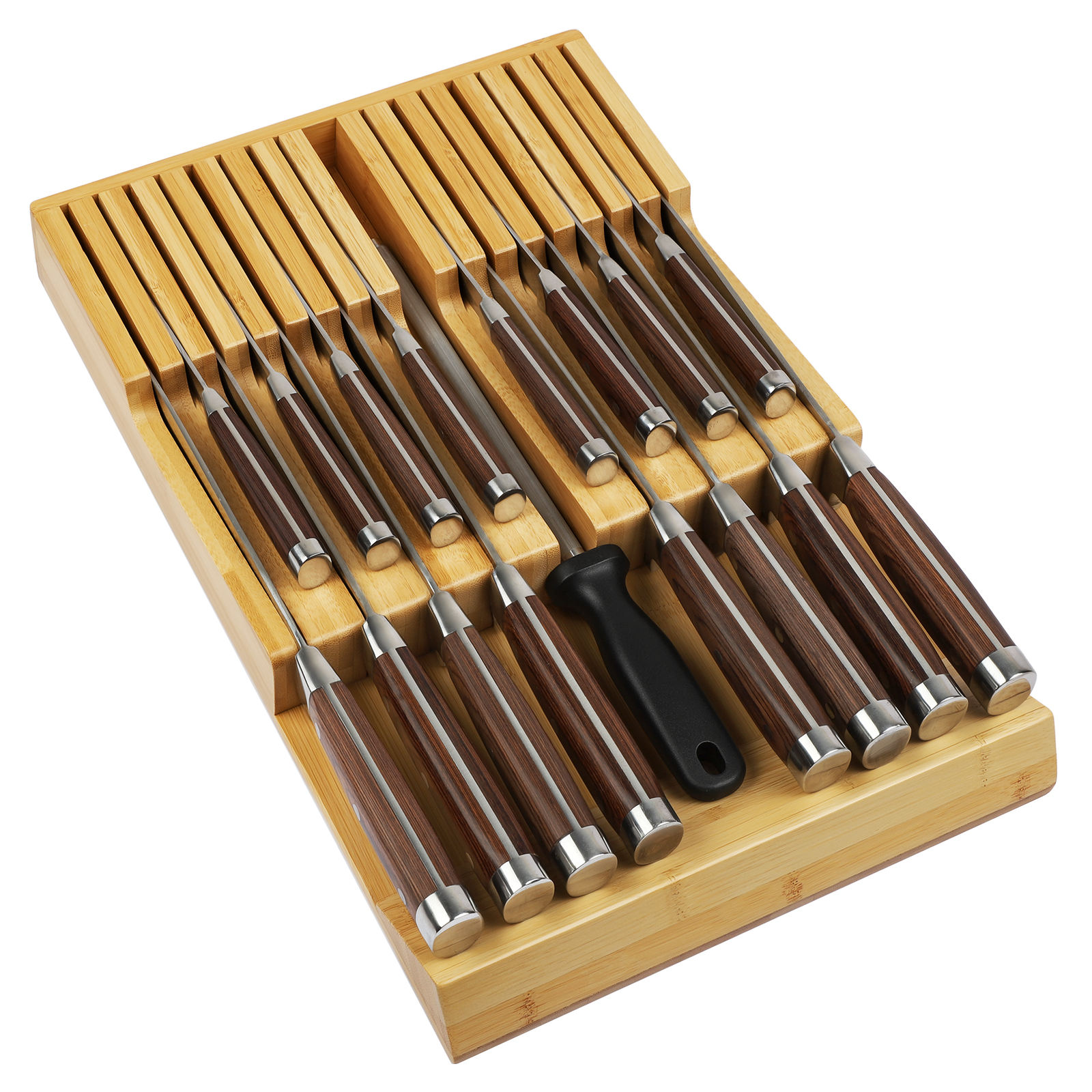
Vertical in-drawer blocks store knives upright inside the drawer, saving counter space while keeping knives hidden. When made properly for the right fit, they can be a good choice for storing Japanese knives. Just make sure to insert the knives carefully without sliding them on the block.
How to Use Knife Blocks Properly?
- Insert knives spine down only
- Use blocks with wide, smooth channels
- Clean debris from slots regularly
- Avoid tight friction fits
6. Controlled Open Shelf Knife Storage
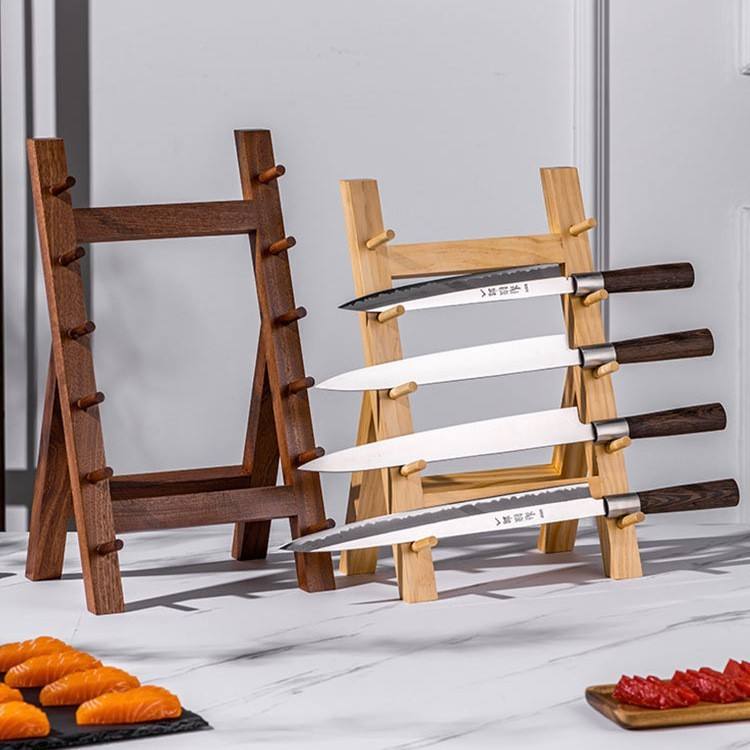
Some professional kitchens use open shelving with knife stands or soft rests. This method prioritises airflow and visibility but requires disciplined handling. It works best in low humidity and controlled environments. This option is not perfect, but effective when managed correctly. You can even go for a custom-made knife storage system to match your furniture and atmosphere.
How to Use a Knife Storage Tray Properly?
- Use soft wood or rubber rests
- Maintain strict cleaning routines
- Keep knives separated
- Control ambient humidity in the area
What You Should Never Do When Storing Japanese Knives
Many storage failures occur not because of poor tools, but because of poor habits. These mistakes are common even among experienced home cooks.
You should never:
- Store knives loosely in a drawer where edges collide
- Allow the edge to rest on metal, stone, or ceramic surfaces
- Store knives wet or partially damp
- Keep knives near dishwashers or steam vents
- Stack knives directly on top of each other
Each of these practices introduces either impact stress or prolonged moisture exposure. On hard Japanese steel, the damage compounds quietly and becomes visible only after edge failure.
Wrapping it Up
The best way to store Japanese knives is the method that minimises edge contact, controls humidity, and respects high hardness steel behaviour. Magnetic strips and sayas consistently outperform generic storage solutions when used correctly.
If you treat storage as a technical decision rather than just a convenience, your knives will hold their edge longer, chip less, and maintain structural integrity for years.
FAQs
Can I store Japanese knives in the refrigerator or freezer?
No. Cold storage causes condensation when the knife returns to room temperature. This creates ideal conditions for corrosion, especially on carbon steel.
Do stainless Japanese knives require regular oiling?
Stainless steels do not need to be oiled in general, but a light protective coat during long term storage is always recommended and can help prevent oxidation at the edge.
Are knife blocks safe for Japanese knives?
Most traditional blocks are not ideal. If used, knives must be inserted spine down only and the block must be kept dry and clean.




 EN
EN  JA
JA  DE
DE