
One wrong cookware manufacturer can leave you with hundreds of warped pans, peeling nonstick coatings, or loose handles. By the time customers start leaving one-star reviews, you’ve already paid for inventory that may be difficult to sell or return.
For wholesale buyers and private-label brands, a cookware manufacturer is a factory that produces pots, pans, and other cooking vessels in bulk, either from existing designs or according to your specifications through OEM manufacturing.
The right supplier depends on your product material, order volume, customization needs, and target market. In this guide, we’ve shortlisted 11 cookware manufacturers in the US and China, comparing their specialties, minimum order quantities (MOQs), production lead times, and certifications to help you find a suitable sourcing partner.
Key Takeaways
- US manufacturers are worth considering for domestic production. West Bend offers a documented private-label program, while Lodge specializes in American-made cast iron.
- China offers extensive OEM manufacturing capacity. Manufacturers such as Linkfair, Shanghai Guanhua, and Zhejiang Sanhe specialize in stainless steel and nonstick cookware.
- MOQs vary significantly. Large factories may require 1,000 or more pieces per design, while flexible sourcing partners such as LeeKnives support runs typically starting at 200–300 units per SKU, depending on the product and customization.
- Production timelines depend on customization. Published lead times range from 2–4 weeks at Purecook to 3–9 months for West Bend’s private-label projects.
- Food-contact compliance requires verification. Request relevant test reports for your exact cookware specifications and destination market, including applicable FDA, EU, and California requirements.
Best Cookware Manufacturers at a Glance
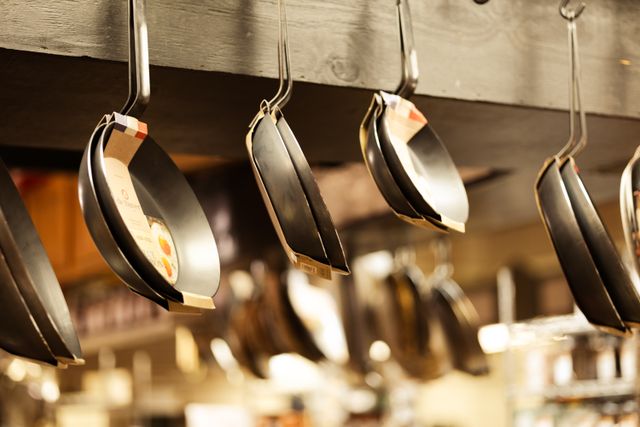
Different cookware manufacturers serve different types of buyers. Some specialize in large-volume production, while others offer flexible minimum orders or custom manufacturing programs.
Here’s our quick shortlist based on what you’re looking to source.
| Best For | Manufacturer | Why We Recommend Them |
| US private-label cookware | West Bend | Established US manufacturing with dedicated private-label and custom cookware programs. |
| US-made cast iron | Lodge | American cast-iron specialist with foundry capabilities and an established dealer network. |
| Large-volume stainless steel | Linkfair | Large-scale Chinese manufacturer producing stainless steel cookware for major retail programs. |
| Premium European-brand OEM | Shanghai Guanhua | Experienced OEM manufacturer with documented production relationships involving European cookware brands. |
| High-volume nonstick cookware | Zhejiang Sanhe | Specializes in aluminum nonstick cookware with substantial manufacturing and coating capacity. |
| Small brands and low MOQs | LeeKnives | LeeKnives supports cookware sourcing and customization with MOQs typically at 200–300 units per SKU. |
| Enameled cast iron | Sancong | Specializes in enameled cast-iron cookware, including Dutch ovens and custom designs. |
These are starting points for your supplier shortlist. Before committing, we recommend comparing samples, confirming current MOQs and production capacity, and reviewing food-contact test reports for your target market.
Buy Wholesale Cookware and Start Scaling up with Us Today
Contact us and connect with a sales rep to get a free quote.
Cookware Manufacturer vs. Custom Manufacturer vs. Wholesale Distributor
These three supplier types serve different sourcing needs. Understanding the difference helps you avoid contacting factories that cannot support your order size, customization requirements, or delivery schedule.
Cookware manufacturer: A company that produces pots, pans, and other cookware, typically offering existing designs for bulk orders. This is a good option if you’re comfortable selling established product designs and want to source directly from the factory.
Custom cookware manufacturer (OEM/ODM): A factory that produces cookware according to your specifications, including materials, thickness, coatings, handles, logos, and packaging. Custom orders generally require higher MOQs, longer development times, and potentially additional tooling costs. If you’re building your own brand, our guide to custom cookware manufacturers explains the process in more detail.
Wholesale cookware distributor: A business that purchases finished cookware from manufacturers or brands and resells it to retailers. Distributors typically offer ready-stock products, smaller order quantities, and faster replenishment, although customization is limited. Check our guide to cookware wholesale distributors if immediate inventory availability is your priority.
In this article, we’re focusing on cookware manufacturers and their B2B capabilities to help you compare potential production partners.
Types of Cookware a Manufacturer Can Make
Before contacting manufacturers, we recommend narrowing down the material and construction you want to sell. Most cookware factories specialize in certain materials or production methods, which affects their pricing, customization options, and quality control.
Here are the main cookware types you’ll encounter when sourcing.
1. Cast Iron Cookware
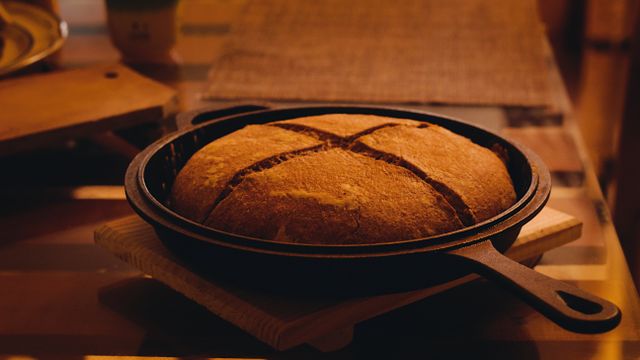
Cast iron cookware is made by pouring molten iron into molds. Manufacturers typically offer two finishes:
- Bare cast iron: Usually pre-seasoned with oil to help protect against rust and develop a cooking surface over time. Common products include skillets, griddles, and woks.
- Enameled cast iron: Features a glass-like enamel coating that protects the iron and eliminates the need for seasoning. Popular for Dutch ovens and casserole dishes.
For buyers, enamel consistency, casting defects, and weight are important quality checks. Enameled cookware also requires appropriate food-contact and heavy-metal migration testing.
Read our comparison of enameled cast iron vs. cast iron to understand which suits your product line.
2. Carbon Steel Cookware
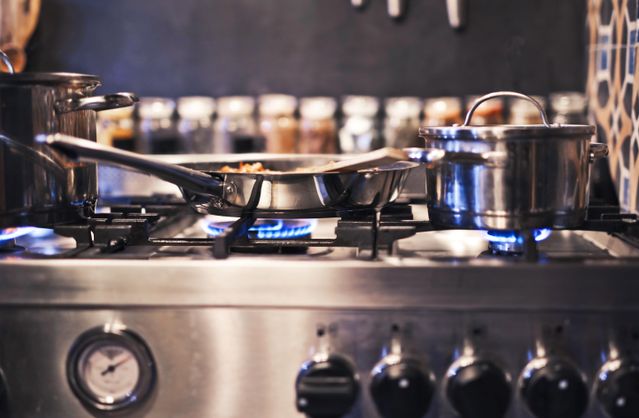
Carbon steel cookware is typically formed from steel sheets through stamping, spinning, or pressing. It’s commonly used for woks, frying pans, and professional kitchen cookware.
Like bare cast iron, carbon steel generally requires seasoning and proper drying to prevent rust. It’s also typically lighter than cast iron of comparable size, making it attractive for commercial kitchens.
When sourcing, check the steel thickness, handle attachment, and surface finish. Thin carbon steel can be more susceptible to warping under high heat.
Read our guide: Is Carbon Steel Safe for Cooking?
3. Stainless Steel Cookware
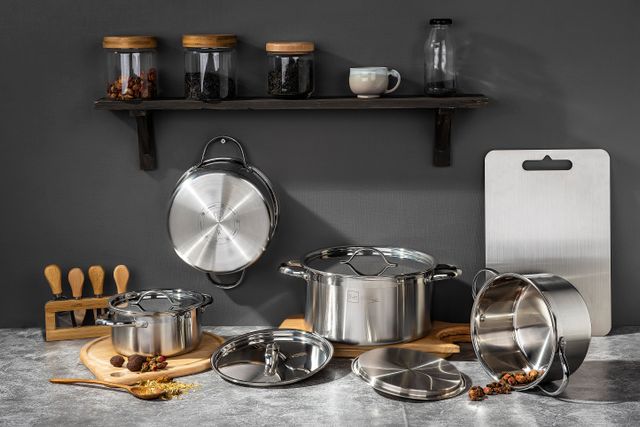
Stainless steel is a popular choice for commercial kitchens and premium cookware brands because of its corrosion resistance, durability, and relatively low maintenance.
Manufacturers commonly use 18/8 or 18/10 stainless steel for food-contact surfaces. However, the construction determines much of the cookware’s heating performance.
- Impact-bonded base: A stainless steel body with an aluminum heat-distribution disc bonded to the bottom. Generally more economical to manufacture.
- Tri-ply clad: Three bonded metal layers, typically stainless steel surrounding an aluminum core, extending across the cookware body.
- 5-ply clad: Five bonded layers designed to provide specific heat-distribution and durability characteristics, depending on the metals and thicknesses used.
For private-label sourcing, ask manufacturers to specify each layer’s material and thickness. Two products advertised as tri-ply can have different heating performance and production costs.
Cast Iron vs. Stainless Steel Cookware: How Do They Compare?
4. Aluminum and Nonstick Cookware
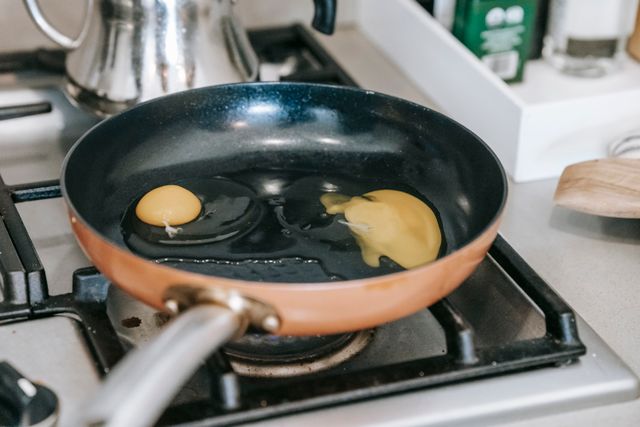
Aluminum conducts heat efficiently and can be manufactured into different shapes using several production methods.
| Construction | Characteristics |
| Pressed aluminum | Formed from aluminum sheets; commonly used for lightweight, economical cookware. |
| Forged aluminum | Shaped under pressure; allows manufacturers to create thicker bases and reinforced designs. |
| Die-cast aluminum | Molten aluminum is poured or injected into molds, allowing complex shapes and integrated features. |
| Hard-anodized aluminum | Aluminum treated electrochemically to create a harder, more corrosion-resistant surface. |
Aluminum cookware may also feature PTFE-based or ceramic nonstick coatings. PTFE is known for strong food-release properties, while ceramic coatings are often selected for PFAS-free product positioning, provided the formulation is verified.
For buyers, coating adhesion, abrasion resistance, and consistent application matter as much as the aluminum construction itself.
Our guide to the best nonstick pan materials explains the differences in more detail.
5. Induction-Compatible Cookware
Induction compatibility is a specification you should confirm with your manufacturer, regardless of the cookware material.
Induction cooktops require a suitable magnetic base. Cast iron and compatible magnetic stainless steel constructions generally work, while ordinary aluminum requires an added induction-compatible layer or disc.
If you’re developing cookware for multiple markets, include induction compatibility in your RFQ and request testing on the finished product.
For more information on how cookware materials perform on different cooking surfaces, see our guide to the best cookware materials for gas stoves.
The 11 Best Cookware Manufacturers in 2026
We’ve shortlisted 11 cookware manufacturers in the US and China based on their product specialties, manufacturing capabilities, and B2B sourcing programs. We’ve also included LeeKnives as an additional option for buyers who need cookware customization alongside kitchen knives.
The table below compares their published minimum order quantities (MOQs), production lead times, certifications, and ideal sourcing applications.
| Manufacturer | Location | Specialty | MOQ | Lead Time | Certifications / Standards | Best For |
| West Bend | Wisconsin, USA | Clad stainless steel, nonstick | ~1,000 pcs/shape | 3–9 months | ISO 9001:2015 | US private label |
| Vollrath | Wisconsin, USA | Commercial cookware, aluminum | Inquire | Inquire | NSF (applicable lines) | Foodservice and white label |
| Lodge | Tennessee, USA | Cast iron | Inquire | Inquire | Inquire | Cast iron and foundry work |
| Linkfair | Guangdong, China | Stainless steel, nonstick | 500–2,000 sets | Inquire | ISO 9001/14001, NSF, TÜV | Large-volume production |
| Shanghai Guanhua | Shanghai, China | Premium stainless steel OEM | 1,000 pcs/size; 500 trial | 45–55 days | BSCI, ISO 9001, GMP | Premium private label |
| Master Group | Guangdong, China | Stainless steel, aluminum, appliances | Inquire | Inquire | ISO 9001, TÜV, GS, BSCI | Multi-category sourcing |
| Zhejiang Sanhe | Zhejiang, China | Aluminum nonstick cookware | High-volume; inquire | Inquire | ISO 9001/14001, FDA testing, TÜV | Large nonstick orders |
| Jiangmen Changwen | Guangdong, China | Stainless steel, tri-ply | ~1,000 pcs (reported) | ~45 days | ISO 9001, CE (reported) | Mid-size stainless sourcing |
| Purecook | Guangdong, China | Stainless steel, tri-ply | Trial orders accepted | 2–4 weeks | ISO 9001, BSCI, LFGB | Small brands and fast turns |
| Sancong | Zhejiang, China | Enameled cast iron | Low/no MOQ claimed for stock | Inquire | ISO 9001, BSCI (claimed) | Enameled cookware OEM |
| LeeKnives | Yangjiang, China | Custom cookware and kitchen knives | Typically 200–300 units/SKU | Inquire | Market-specific food-contact reports | Small/mid-size custom programs |
Note: MOQ, lead-time, and certification information comes from supplier-published or third-party-reported information available in October 2026. Confirm current terms and request valid certification documents for your exact products before ordering.
US Cookware Manufacturers
1. West Bend: Best for US Private-Label Cookware
West Bend is a Wisconsin-based cookware manufacturer with a manufacturing history dating back to 1911. Operating under Regal Ware, the company offers domestic production for brands looking to develop stainless steel, titanium, and nonstick cookware.
Its dedicated private-label program is particularly relevant for businesses that want American-made products with their own branding.
B2B manufacturing capabilities
West Bend offers three-ply and five-ply clad stainless steel, PTFE nonstick, and ceramic-coated cookware. Buyers can use existing designs or pursue contract manufacturing with custom tooling.
The company publishes an approximate MOQ of 1,000 pieces per shape, with project timelines of three to nine months from approved design to delivery.
West Bend also holds ISO 9001:2015 certification. According to the company’s own published comparison, its manufacturing costs are approximately 10–20% higher than offshore production.
Pros:
- Established US production with a formal private-label program.
- Existing tooling options can reduce development costs.
- Published MOQs, timelines, and ISO 9001:2015 certification.
Cons:
- Longer development timelines may not suit brands launching quickly.
- Domestic manufacturing costs can be higher than offshore alternatives.
Ideal for: Premium cookware brands prioritizing domestic manufacturing and Made in USA positioning.
2. Vollrath: Best for Commercial and White-Label Cookware
Vollrath is an American manufacturer founded in 1874 and headquartered in Sheboygan, Wisconsin. It specializes in commercial kitchen equipment and cookware, making it particularly relevant to restaurants, foodservice distributors, and hospitality suppliers.
The company offers manufacturing services alongside its established commercial cookware catalog.
B2B manufacturing capabilities
Vollrath’s Manufacturing Services division supports custom OEM manufacturing, private-label and white-label programs, and wholesale distribution. Its offerings include branding, packaging customization, stocking arrangements, and certain drop-shipping services.
Its US manufacturing operations include Wear-Ever aluminum, carbon steel, and commercial foodservice products. However, some consumer cookware lines are manufactured in China, so buyers should confirm the country of origin for each SKU.
Vollrath offers NSF-certified products for commercial foodservice applications. Public MOQs and production lead times are not specified and require a direct inquiry.
Pros:
- Established commercial cookware manufacturing expertise.
- Multiple B2B options, including white label and stocking programs.
- Suitable for foodservice buyers requiring NSF-certified products.
Cons:
- Manufacturing origin varies by product line.
- MOQ and lead-time information requires direct confirmation.
Ideal for: Restaurant suppliers, hospitality distributors, and retailers developing commercial-grade cookware collections.
3. Lodge: Best for American-Made Cast Iron Cookware
Lodge has manufactured cast iron in South Pittsburg, Tennessee, since 1896. It’s one of the most established names in American cast-iron cookware, producing skillets, griddles, Dutch ovens, and other cast-iron products.
For B2B buyers, Lodge offers both an established retail brand and industrial casting capabilities.
B2B manufacturing capabilities
Lodge operates its own iron foundries and provides OEM contract casting services for businesses requiring custom iron components. Its manufacturing operations include automated molding equipment and metallurgical quality-control capabilities.
However, its OEM foundry program shouldn’t be confused with a standard private-label cookware service. Buyers wanting Lodge-branded cookware for resale should explore its dealer network.
Another distinction is that Lodge’s enameled cast-iron cookware is manufactured in China. FINEX, acquired by Lodge in 2019, is also part of the Lodge business rather than a separate independent manufacturer.
MOQ, lead time, and applicable product-specific certification details require direct confirmation.
Pros:
- Long-established American cast-iron manufacturing.
- Dedicated foundry operations with contract casting capabilities.
- Strong brand recognition for retail distribution.
Cons:
- OEM casting services aren’t equivalent to private-label Lodge cookware.
- Enameled cast iron is manufactured overseas.
Ideal for: Retailers stocking established cast-iron brands and businesses requiring custom iron foundry manufacturing.
China Cookware Manufacturers
4. Linkfair: Best for Large-Volume Stainless Steel Cookware
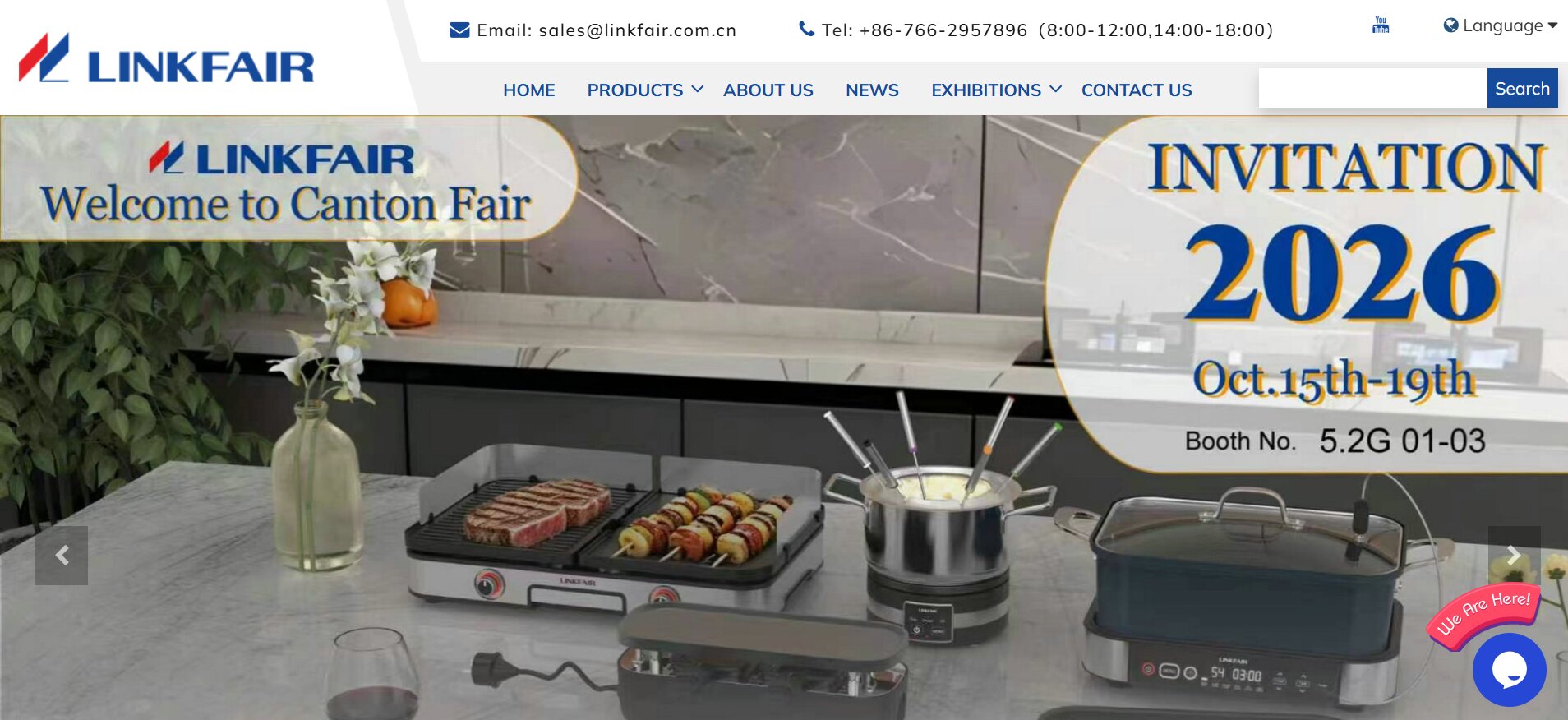
Linkfair is associated with Guangdong’s Lingfeng Group, established in 1993 in Xinxing County, Yunfu. The group operates large-scale manufacturing facilities producing stainless steel cookware, aluminum nonstick products, and bakeware.
Its reported manufacturing footprint includes seven factories, approximately 400,000 square meters of production space, and more than 3,000 employees.
B2B manufacturing capabilities
Linkfair supports OEM and ODM cookware manufacturing for large international buyers. Its capabilities cover stainless steel cookware sets, nonstick pans, and additional kitchenware categories.
The company also owns the German cookware brands Carl Schmidt Sohn and CS-Kochsysteme, giving it experience with both manufacturing and branded product development.
Published export listings indicate MOQs of approximately 500–2,000 sets, although requirements depend on the product. Its reported certifications include ISO 9001, ISO 14001, NSF, and TÜV, while production lead times require direct confirmation.
Pros:
- Extensive manufacturing capacity for large orders.
- Broad product range covering multiple cookware materials.
- Established quality-management and export-oriented operations.
Cons:
- High-volume manufacturing may be less suitable for small test orders.
- MOQ requirements can vary significantly between product lines.
Ideal for: Large retailers, wholesalers, and cookware brands requiring consistent production at container scale.
5. LeeKnives: Best for Custom Cookware and Kitchen Knife Bundles
Full disclosure: LeeKnives is us.
We’re based in Yangjiang, Guangdong, one of China’s major knife-manufacturing centers. Alongside our knife manufacturing services, we help businesses source and customize cookware through partner factories specializing in stainless steel, cast iron, and nonstick aluminum products.
You can explore our cookware collection or learn about our cast iron cookware manufacturing service.
Our focus is on helping brands manage cookware sourcing, particularly when their order volumes don’t meet the minimum requirements of large cookware factories.
B2B sourcing and customization capabilities
We support OEM and ODM cookware projects, including product specifications, branding, packaging, and supplier coordination.
Our cookware MOQs typically range from 200–300 units per SKU, depending on the product and customization requirements. More complex projects may need higher quantities. This gives buyers access to factory-level customization at trader-level MOQs.
We can also coordinate food-contact testing documentation based on your destination market, including applicable FDA, LFGB, and California Prop 65 requirements.
Pros:
- Flexible MOQs, typically 200–300 units per SKU, depending on the project.
- Integrated sourcing for kitchen knives and cookware.
- OEM/ODM customization with coordinated supplier and compliance documentation.
Cons:
- Cookware production is handled through partner factories rather than our own knife-manufacturing facility.
- Large buyers sourcing undifferentiated commodity cookware at container scale may find better economies of scale by working directly with high-volume factories.
Ideal for: Private-label kitchenware brands, retailers developing knife-and-cookware bundles, and mid-size importers requiring customization without large factory MOQs.
Have a product specification or design in mind? Request a cookware sourcing quote and we’ll help assess the available manufacturing options.
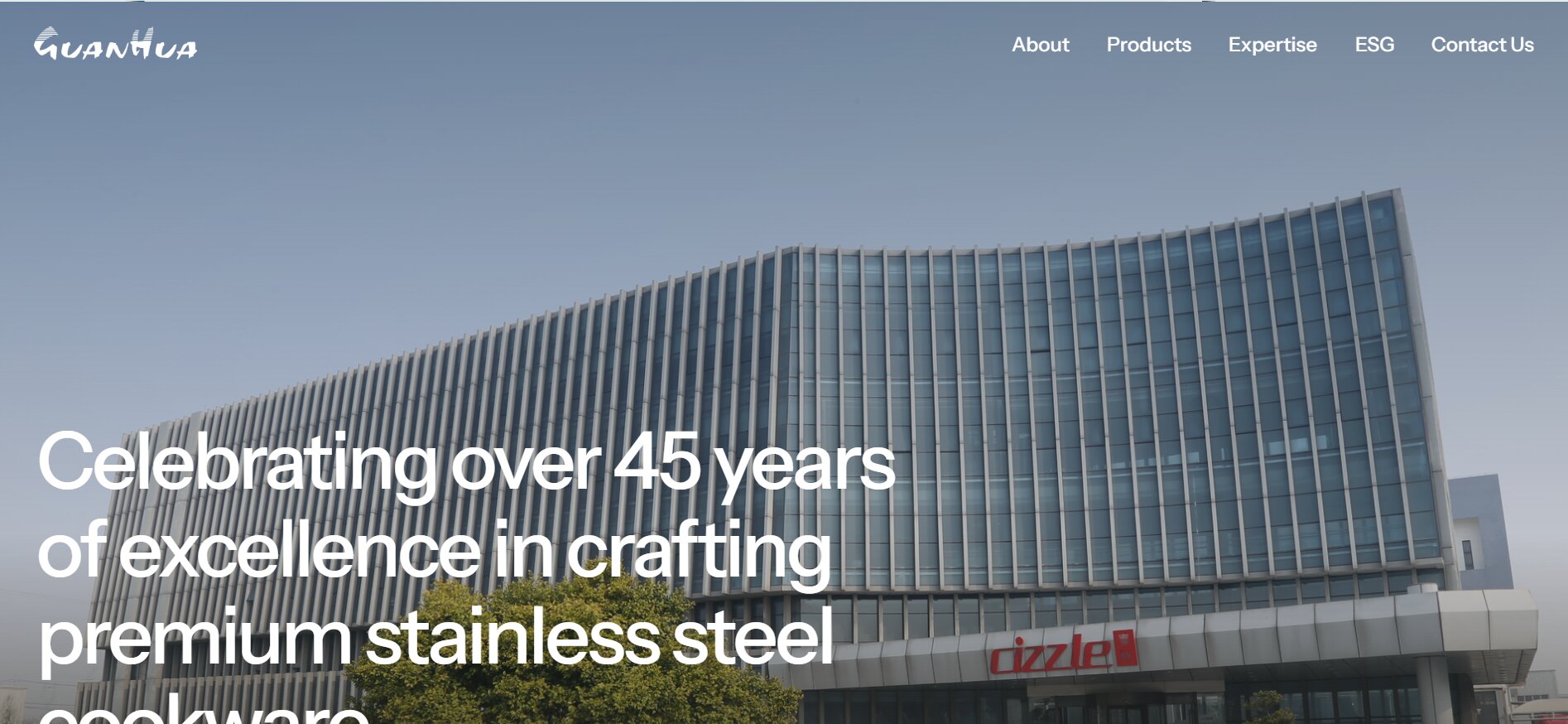
Shanghai Guanhua is a Chinese cookware manufacturer with production operations dating back to the late 1970s. Based in Shanghai’s Chongming district, the company specializes in stainless steel cookware for international markets.
Its documented manufacturing relationships include well-known brands such as WMF, IKEA, Rösle, and Fissler.
B2B manufacturing capabilities
Guanhua produces stainless steel cookware through OEM arrangements, supporting product customization for buyers with specific design and quality requirements.
Its published MOQ is approximately 1,000 pieces per size, although 500-piece trial orders may be accepted. Sample development typically takes 7–15 days, while stated production lead times are 45–55 days.
The company reports ISO 9001, BSCI, and GMP-related credentials. Buyers should request the relevant audit and certification documents for the intended manufacturing facility.
Pros:
- Established manufacturing relationships with international cookware brands.
- Published production timelines and trial-order options.
- Suitable for detailed quality and compliance requirements.
Cons:
- Standard MOQs may be restrictive for smaller brands.
- Premium product requirements can increase manufacturing complexity and development costs.
Ideal for: Private-label brands developing premium stainless steel cookware for European and international retail markets.
7. Master Group: Best for Multi-Category Cookware Manufacturing
Master Group, also known as Wanshitai, is a cookware manufacturer based in Xinxing County, Guangdong. Founded in 1988, the company produces stainless steel cookware, aluminum cookware, glass lids, and selected kitchen appliances.
Its reported production facilities cover approximately 230,000 square meters, with a workforce of around 3,000 employees.
B2B manufacturing capabilities
Master Group supports OEM manufacturing across multiple cookware and kitchenware categories. Its production range includes clad-bottom stainless steel cookware, aluminum products, lids, and small appliances.
The group also markets its own cookware brands, including Momscook, alongside manufacturing for other businesses.
Reported credentials include ISO 9001, TÜV, GS, and BSCI. Publicly available MOQ and production lead-time figures are limited, so buyers should request product-specific quotations.
Pros:
- Broad product range for consolidated kitchenware sourcing.
- Established manufacturing operations in Guangdong’s stainless steel cluster.
- Experience with branded products and international manufacturing requirements.
Cons:
- Limited current English-language documentation.
- Large-scale operations may be less flexible for smaller customization projects.
Ideal for: Importers and retail chains sourcing cookware, lids, and related kitchen products through one manufacturer.
8. Zhejiang Sanhe: Best for High-Volume Nonstick Cookware
Zhejiang Sanhe is a cookware manufacturer established in 2004 and based in Cixi, Ningbo. Operating under the SANHO brand, it specializes in aluminum and nonstick cookware.
The company reports four production bases covering approximately 290,000 square meters and an annual production capacity of around 36 million units.
B2B manufacturing capabilities
Sanhe focuses on nonstick cookware manufacturing, including aluminum pan production and coating applications. It reports experience with licensed Teflon coating processes and involvement in drafting Chinese nonstick cookware standards.
Its product development capabilities and large manufacturing footprint make it particularly relevant to buyers sourcing nonstick cookware at scale.
Reported certifications and compliance credentials include ISO 9001, ISO 14001, FDA-related testing, and TÜV. The company is volume-oriented, but specific MOQs and lead times require direct confirmation.
Pros:
- Specialized nonstick coating and aluminum cookware production.
- Extensive production capacity for large retail orders.
- Established technical expertise in cookware coatings.
Cons:
- Less suitable for brands requiring very small production runs.
- Buyers must verify coating chemistry and destination-market compliance for each product.
Ideal for: Retail chains, importers, and established brands sourcing large volumes of aluminum nonstick cookware.
9. Jiangmen Changwen: Best for Mid-Size Stainless Steel Cookware Programs
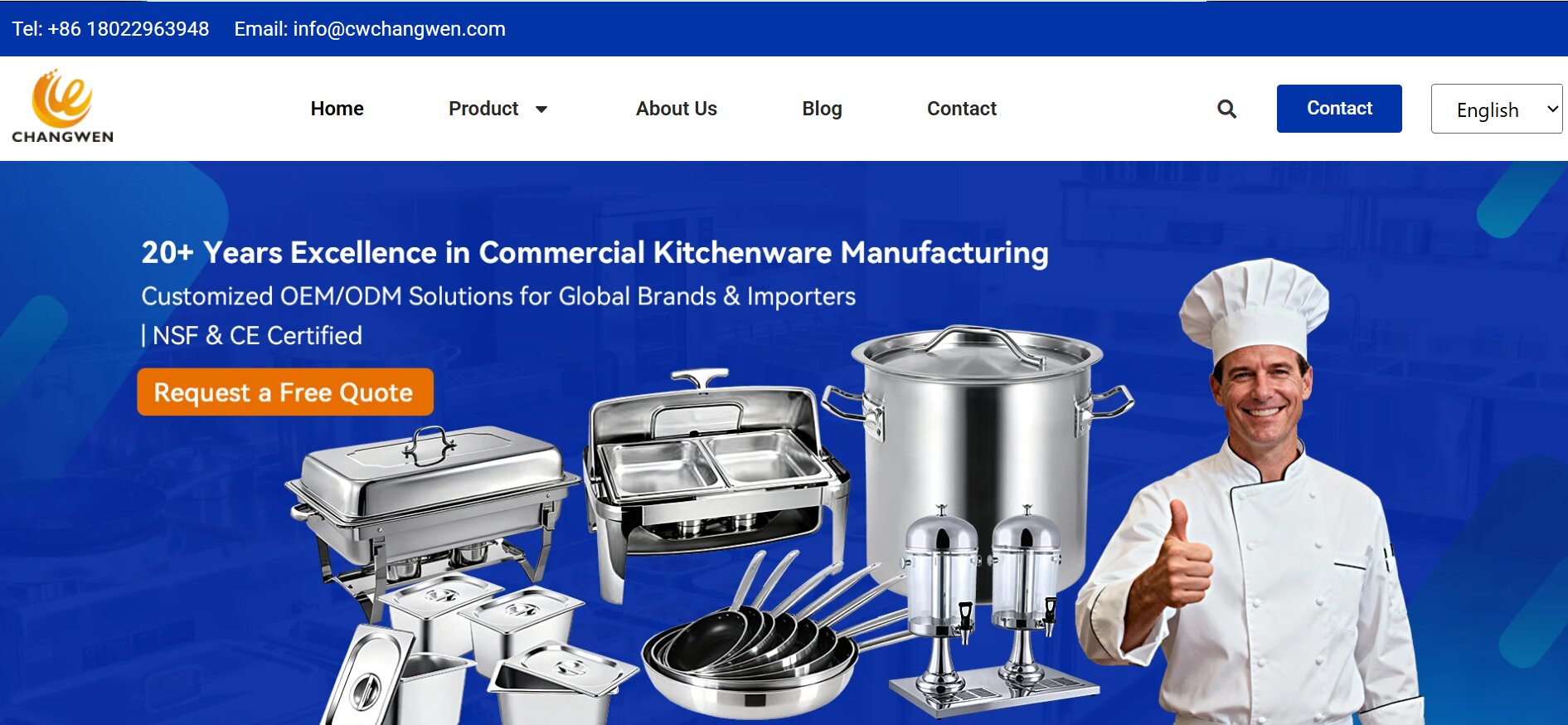
Jiangmen Changwen is a cookware manufacturer established in 2002 in Xinhui District, Jiangmen, Guangdong. Its main products include stainless steel cookware sets, tri-ply cookware, stockpots, and kettles.
The company focuses on export markets and has participated in international trade exhibitions, including the Canton Fair.
B2B manufacturing capabilities
Changwen offers OEM cookware manufacturing with customization options for stainless steel products. Its catalog includes cookware sets and individual pots and pans suitable for retail and wholesale distribution.
Third-party supplier listings report MOQs of approximately 1,000 pieces, while the company advertises a standard delivery window of around 45 days.
Reported certifications include ISO 9001 and CE-related documentation. Some company websites publish inconsistent factory details, so we recommend verifying its business license, production facilities, and certification scope before placing an order.
Pros:
- Specialized stainless steel and tri-ply cookware manufacturing.
- Export experience and international trade-show participation.
- Published delivery timelines for procurement planning.
Cons:
- MOQ figures rely partly on third-party supplier listings.
- Inconsistent company information requires additional due diligence.
Ideal for: Mid-size importers and private-label brands looking for an export-oriented stainless steel cookware manufacturer.
10. Purecook: Best for Small Cookware Brands and Trial Orders
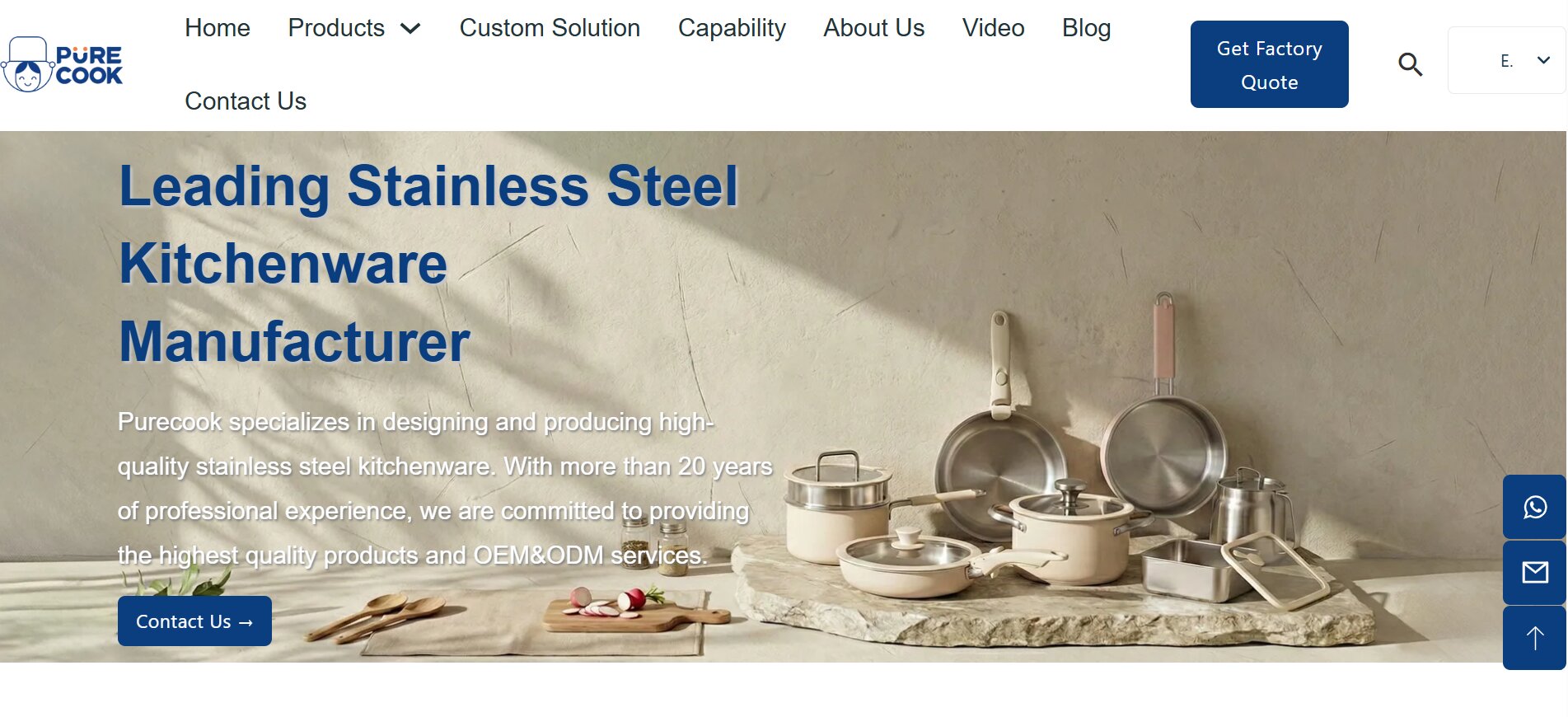
Purecook is associated with Guangdong Huanghe Hardware, a cookware manufacturer operating in Caitang, Chaozhou. The company specializes in stainless steel cookware, including tri-ply products and honeycomb-style cooking surfaces.
Unlike many volume-focused manufacturers, Purecook combines factory manufacturing with distribution services designed for smaller brands.
B2B manufacturing capabilities
Purecook supports OEM cookware production and accepts trial orders, allowing buyers to test products before committing to larger quantities.
Its published sample lead times are approximately 3–7 days, with mass production estimated at 2–4 weeks. The company also advertises US warehousing and dropshipping support.
Reported certifications include ISO 9001, BSCI, and LFGB, alongside FDA-related testing support. Buyers should confirm which services, inventory, and compliance documents apply to their specific products.
Pros:
- Trial-order flexibility for smaller brands.
- Relatively short published production timelines.
- US warehousing and dropshipping options for inventory testing.
Cons:
- Exact MOQs still depend on product design and customization.
- Buyers should confirm whether orders are fulfilled from existing stock or factory production.
Ideal for: New cookware brands, ecommerce sellers, and importers testing stainless steel products before scaling.
11. Sancong: Best for Enameled Cast Iron OEM Manufacturing
Zhejiang Sancong Kitchenware was established in 2004 in Wuyi County, Zhejiang. The manufacturer specializes in enameled cast iron, including Dutch ovens, casseroles, and related cookware.
Its product range also extends to enameled carbon steel and other cookware categories.
B2B manufacturing capabilities
Sancong offers OEM and ODM manufacturing, including custom cookware shapes, enamel colors, handles, logos, and packaging.
The company describes manufacturing processes involving iron casting, enamel application, and finishing. It also advertises ready-stock arrangements with flexible order minimums, although these terms should be confirmed for each product.
Sancong claims ISO 9001 and BSCI credentials. Since much of its publicly available manufacturing information is self-reported, we recommend requesting factory audit records, certification documents, and physical samples before committing to a custom order.
Pros:
- Specialized enameled cast-iron manufacturing capabilities.
- Customization options for colors, designs, and branding.
- Advertised ready-stock flexibility for smaller buyers.
Cons:
- Limited independent verification of some manufacturing claims.
- Custom enamel designs may have different MOQs from stock products.
Ideal for: Cookware brands developing private-label Dutch ovens, enameled casseroles, and coordinated cast-iron collections.
Where Cookware Is Made: Manufacturing Clusters That Matter
China’s cookware manufacturing industry is concentrated in several regional clusters, each specializing in different materials and production methods. For buyers, these locations matter because factories often share networks of steel suppliers, coating specialists, handle manufacturers, and packaging providers.
For example, a stainless steel manufacturer in Jiangmen may have easier access to suppliers experienced in multi-layer cookware construction, while a nonstick cookware factory in Ningbo benefits from the region’s aluminum processing and coating capabilities.
Here’s where the major cookware manufacturing clusters are located and what they mean for your sourcing decisions.
| Manufacturing Cluster | Main Specialty | Manufacturers From Our List | What It Means for Buyers |
| Xinxing, Yunfu, Guangdong | Stainless steel cookware, clad-bottom construction | Linkfair, Master Group | Established stainless steel supply chains and large production facilities make the area suitable for high-volume cookware programs. |
| Jiangmen / Xinhui, Guangdong | Stainless steel, tri-ply cookware | Jiangmen Changwen | Access to metalworking expertise and supporting component suppliers makes this region worth exploring for multi-layer stainless steel cookware. |
| Chaozhou / Caitang, Guangdong | Stainless steel pots, pans, steamers, kitchenware | Purecook | Dense stainless steel processing networks offer buyers options for standard cookware designs and flexible manufacturing arrangements. |
| Chongming, Shanghai | Premium stainless steel OEM | Shanghai Guanhua | Established manufacturers serving international brands can support detailed specifications and export compliance requirements. |
| Cixi / Ningbo, Zhejiang | Aluminum and nonstick cookware | Zhejiang Sanhe | Aluminum forming and coating expertise make the region relevant for large-scale nonstick cookware production. |
| Wuyi, Zhejiang | Enameled cast iron and metal cookware | Sancong | Buyers developing Dutch ovens and enameled cookware can explore specialized casting and finishing capabilities. |
| Yangjiang, Guangdong | Kitchen knives and kitchenware sourcing | LeeKnives | Particularly useful for brands combining cookware with kitchen knives, custom packaging, and coordinated sourcing. |
| Yongkang, Zhejiang | Aluminum cookware, nonstick pans, woks | — | A major hardware manufacturing center worth exploring for aluminum cookware and related metal products. |
| Hebei, China | Cast iron cookware and foundry products | — | Established iron casting operations make the region relevant for bare and enameled cast-iron cookware sourcing. |
| Wisconsin / Tennessee, USA | Stainless steel, commercial cookware, cast iron | West Bend, Vollrath, Lodge | Established domestic manufacturers offer US production options, although customization, minimum orders, and product origin vary by supplier. |
Our sourcing advice: Start with the manufacturing cluster that specializes in your target material, then compare factories within that region. This can make supplier evaluation more efficient, especially when you need custom handles, lids, coatings, or packaging.
However, location alone doesn’t guarantee manufacturing quality. We still recommend checking each factory’s actual production capabilities, subcontracting arrangements, and food-contact compliance before placing an order.
US vs. China Cookware Manufacturing: How to Choose
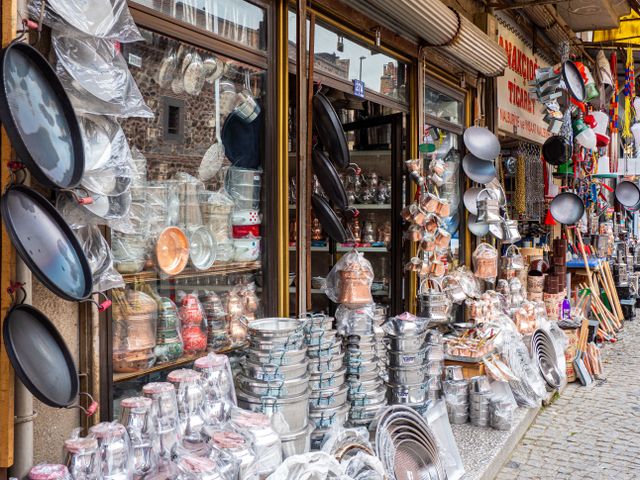
Should you manufacture cookware in the US or China? The answer depends on your order volume, target customers, customization needs, and total landed cost.
We recommend comparing both options across five factors before requesting quotes.
| Factor | US Manufacturers | China Manufacturers |
| Manufacturing cost | Generally higher production costs, but lower domestic freight and no import tariffs on US-made goods sold domestically | Often more competitive factory pricing, but import duties, tariffs, and freight add to costs |
| Minimum order quantity | West Bend starts around 1,000 pieces per shape | Large OEMs may require 1,000+ pieces; flexible suppliers accept smaller orders |
| Lead time | West Bend publishes 3–9 months for private-label projects | Published examples range from 2–4 weeks to 45–55 days, excluding international shipping |
| Branding and customization | Domestic-origin positioning and established private-label programs | Extensive OEM/ODM options across materials, coatings, handles, and packaging |
| Compliance and logistics | Easier domestic coordination, though product compliance still applies | Importers must manage customs, product documentation, and destination-market requirements |
1. Manufacturing Cost and Import Tariffs
China often offers competitive manufacturing costs because of its established cookware supply chains and large production capacity. However, US importers need to calculate the full landed cost before comparing suppliers.
West Bend states that US-made stainless steel cookware can cost approximately 10–20% more per unit than offshore alternatives, depending on product specifications and order volume. The company also notes that freight, tariffs, and inventory costs can narrow that difference.
Cookware imported from China may face additional US Section 301 tariffs, depending on its Harmonized Tariff Schedule (HTS) classification. Buyers should verify the applicable rates and exclusions.
Our recommendation: Compare the landed cost per sellable unit, including manufacturing, freight, duties, customs clearance, and expected inspection expenses. A lower factory quote doesn’t always produce a better profit margin.
2. Minimum Order Quantities (MOQs)
MOQs affect how much inventory you must finance before making your first sale. Large manufacturers generally favor production runs that justify equipment setup and material purchasing.
For example:
- West Bend: Approximately 1,000 pieces per shape.
- Shanghai Guanhua: Around 1,000 pieces per size, with 500-piece trial orders accepted.
- Purecook: Accepts trial orders, although exact minimums depend on the product.
- LeeKnives: Supports cookware sourcing and customization with MOQs typically at 200–300 units per SKU.
For a new brand testing two or three cookware designs, smaller initial orders can reduce inventory exposure. If you’ve already established demand, larger factories may offer better economies of scale.
Buy Wholesale Cookware and Start Scaling up with Us Today
Contact us and connect with a sales rep to get a free quote.
3. Production Lead Times
Manufacturing lead times depend on whether you’re ordering existing designs, modifying established products, or developing completely new cookware.
Published supplier timelines illustrate the differences:
- West Bend: 3–9 months from approved design.
- Shanghai Guanhua: Approximately 45–55 days for production.
- Purecook: Approximately 2–4 weeks for mass production.
These timelines aren’t directly comparable because the scope of customization varies. New molds, coating development, sample revisions, and production scheduling can extend either domestic or overseas projects.
China orders also require international transportation, customs clearance, and potential inland delivery.
Our recommendation: Ask suppliers to separate sample development, tooling, production, inspection, and shipping timelines. This makes it easier to plan a launch date and identify potential delays.
4. Branding, Customization, and Intellectual Property
US manufacturing can be attractive when domestic production is central to your brand positioning. A legitimate “Made in USA” claim may help differentiate premium cookware, but it must satisfy applicable origin-labeling requirements.
China offers a broad range of OEM and ODM capabilities, including custom cookware construction, handles, coatings, colors, and retail packaging.
However, custom designs require additional intellectual property precautions. Before sharing proprietary drawings or funding new molds, clarify tooling ownership, confidentiality obligations, and whether the factory can reuse your designs for other customers.
We recommend documenting these terms in your manufacturing agreement, regardless of where the factory operates.
5. Food-Contact Compliance and Quality Control
Cookware sold in the US must meet applicable food-contact safety requirements regardless of where it’s manufactured.
Domestic sourcing may simplify factory communication and inspection visits. However, US manufacturing doesn’t automatically guarantee that every product meets all applicable requirements.
When importing from China, buyers also need to coordinate customs documentation, country-of-origin marking, and appropriate food-contact testing.
For example, stainless steel cookware, ceramic-coated pans, and enameled cast iron may require different supporting documentation based on their materials and intended markets.
Our recommendation: Request test reports for your exact cookware specifications and destination market before approving mass production. A factory’s general certification doesn’t establish compliance for every product it manufactures.
Which Manufacturing Strategy Should You Choose?
For premium brands built around domestic production, a US manufacturer may be worth the higher initial manufacturing cost.
For brands requiring extensive customization, multiple cookware categories, or competitive production at scale, Chinese manufacturers offer a wider range of sourcing options.
There’s also a practical hybrid approach: source ready-stock cookware from a domestic distributor while developing your own private-label line with a Chinese OEM partner.
This allows you to test customer demand and generate sales while your custom products move through sampling, production, and international shipping.
Certifications That Matter When Sourcing Cookware
Cookware safety depends on the materials that come into contact with food, including metal surfaces, nonstick coatings, and enamel finishes. When sourcing cookware, we recommend checking product-specific food-contact compliance alongside the manufacturer’s quality certifications.
A factory may hold ISO 9001 certification and still produce cookware that doesn’t meet your destination market’s food-contact requirements.
Here’s what to look for.
| Standard or Regulation | Market | What Buyers Should Verify |
| FDA / 21 CFR | United States | Applicable food-contact material requirements, particularly for coatings and other regulated substances |
| California Prop 65 | California, USA | Whether chemical exposure requires consumer warnings |
| EC 1935/2004 | European Union | General food-contact safety and migration requirements |
| LFGB | Germany | Applicable German food-contact requirements and supporting test reports |
| DGCCRF | France | Relevant French food-contact requirements and testing guidance |
| ISO 4531:2022 | International | Metal migration testing for enameled cookware, including lead and cadmium |
| ISO 9001 | International | Factory quality-management systems |
| BSCI / SEDEX | International | Social compliance audits and responsible manufacturing practices |
US: FDA Food-Contact Requirements and Proposition 65
The FDA regulates substances used in food-contact applications, including cookware coatings. Relevant requirements appear in Title 21 of the Code of Federal Regulations (21 CFR), although the applicable provisions depend on the material and intended use.
For example, certain PTFE-based nonstick coatings are regulated under 21 CFR §177.1550.
California’s Proposition 65 separately requires warnings when products cause exposures to listed chemicals above applicable thresholds without qualifying for an exemption. It isn’t a general cookware certification.
What to request: Material specifications, applicable FDA compliance documentation, coating test reports, and a California Prop 65 assessment when relevant.
EU: EC 1935/2004, LFGB, and DGCCRF
Cookware sold in the European Union must comply with Regulation (EC) No 1935/2004, which requires food-contact materials to meet safety standards under their intended use.
Manufacturers must also follow applicable good manufacturing practices under Regulation (EC) No 2023/2006.
Germany’s LFGB framework and France’s DGCCRF requirements may introduce additional national considerations. However, an LFGB test report isn’t a universal certification covering every cookware material or every European market.
What to request: Food-contact test reports identifying the exact material, tested substances, migration results, and applicable EU or national requirements.
Enameled Cookware: Heavy-Metal Migration Testing
Enameled cast iron requires particular attention because pigments and enamel formulations can contain metals that may migrate into food.
ISO 4531:2022 provides testing methods and release limits for metals from enameled food-contact articles, including lead and cadmium.
If you’re sourcing Dutch ovens or enameled casseroles, request migration test results for the actual enamel formulation and relevant colors.
Testing a single sample doesn’t automatically establish compliance for every coating formulation or production batch.
PFAS Restrictions: What Cookware Buyers Need to Know in 2026
PFAS regulations deserve particular attention if you’re sourcing nonstick cookware.
PTFE, commonly used in traditional nonstick coatings, belongs to the PFAS family. Although certain PTFE food-contact applications are permitted under federal FDA rules, individual states have introduced additional restrictions.
As of November 2026:
- Minnesota: Prohibits sales of cookware containing intentionally added PFAS, effective January 1, 2025, subject to the law’s scope and exceptions.
- Maine: Introduced a cookware sales prohibition for intentionally added PFAS effective January 1, 2026.
- California: AB 1200 requires certain chemical disclosures for cookware, including applicable online and product-label information. This is a disclosure framework, not a blanket PTFE cookware ban.
- European Union: Broader PFAS restrictions are under regulatory consideration, so buyers should monitor developments rather than assume a universal cookware ban is already in force.
If you’re sourcing ceramic nonstick cookware marketed as PFAS-free, request documentation supporting that claim. For PTFE cookware, ask the manufacturer to identify the coating chemistry and confirm where the finished product can legally be sold.
Factory Certifications: ISO 9001, BSCI, and SEDEX
Food-contact testing establishes whether a product meets relevant safety requirements. Factory certifications help you assess how consistently the manufacturer manages production.
- ISO 9001: Evaluates the manufacturer’s quality-management system, including documented processes and corrective actions.
- amfori BSCI: Provides a social compliance assessment of working conditions and labor practices.
- SEDEX / SMETA: Supports supply-chain transparency and ethical trade auditing. Sedex membership alone shouldn’t be treated as an audit certification.
For larger orders, we recommend requesting current certificates and audit reports, checking their scope, and confirming that
How to Verify a Cookware Manufacturer Before You Pay a Deposit
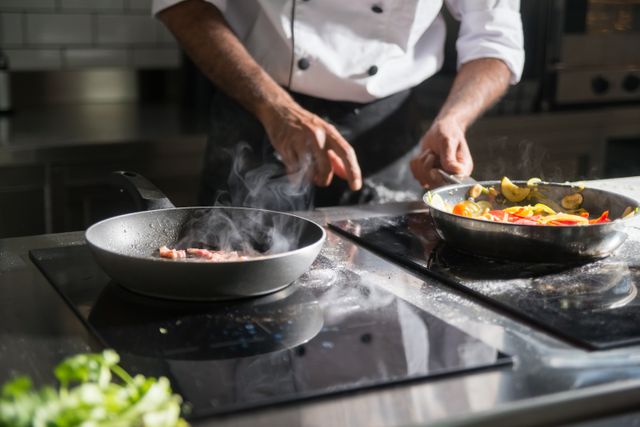
A professional website and an impressive product catalog don’t guarantee that a supplier can manufacture cookware to your specifications. Before paying a deposit, we recommend verifying the factory’s identity, production capabilities, and quality-control processes.
Here are seven checks worth completing before placing your first order.
1. Verify the Business License
Some suppliers advertise themselves as manufacturers but operate primarily as trading companies. This isn’t necessarily a problem, but you should know who will actually produce your cookware.
For Chinese suppliers, request their business license (营业执照) and check the registered company name, address, and business scope.
Look for manufacturing-related terms such as 生产 (production/manufacturing) or 制造 (manufacturing). A business scope focused on 贸易 (trading) may indicate an intermediary, although registration wording alone doesn’t prove whether a factory operates its own production lines.
2. Request Product-Specific Food-Contact Test Reports
A generic FDA or LFGB certificate doesn’t establish that every product a supplier makes meets your requirements.
Ask for reports covering your exact cookware materials, coatings, and intended destination market. For example, an enameled Dutch oven requires different testing considerations from a PTFE-coated aluminum frying pan.
Check the laboratory name, report date, tested product description, and applicable standards. If the report covers a different material or coating, request additional testing.
3. Audit the Manufacturing Facility
A factory audit helps verify whether the supplier has the equipment, staff, and quality-control processes needed to fulfill your order.
For initial screening, request a live video walkthrough covering production lines, coating or finishing operations, inspection areas, and packaging facilities.
For larger orders, consider hiring a third-party inspection company such as SGS, TÜV, or QIMA. Confirm which processes the factory handles internally and which are subcontracted.
4. Test Samples Before Approving Production
Cookware defects often become visible only after repeated use, heating, or cleaning. A visually acceptable sample may still have weaknesses that lead to customer complaints.
Depending on the material and construction, we recommend checking:
- Coating adhesion: Does the nonstick or enamel finish remain properly bonded under appropriate testing?
- Handle strength: Can the handle and its attachment withstand the required mechanical load?
- Thermal shock: Does the cookware tolerate relevant temperature changes without cracking or damage?
- Corrosion resistance: Does the metal resist rusting, staining, or deterioration under expected use conditions?
- Base flatness: Does the bottom remain sufficiently flat after heating and cooling?
Agree on the test methods and acceptance criteria before production. For significant orders, use an independent laboratory where appropriate.
5. Check Trade-Show Participation
Established cookware manufacturers often participate in industry exhibitions such as the Canton Fair in China or Ambiente in Frankfurt.
Search official exhibitor directories and compare the listed company details with the supplier’s registration and website.
Trade-show participation can help confirm that a company has an established commercial presence. However, it doesn’t independently prove manufacturing ownership or product quality.
6. Review Export and Shipment Records
Shipment records can help establish whether a supplier has experience exporting cookware to your target market.
Platforms such as ImportGenius and Panjiva may provide information about shipment history, product descriptions, and trading relationships, depending on data availability.
Look for consistent shipments of relevant cookware products rather than relying on a single large export claim. Remember that a trading company can also have extensive shipment records.
7. Watch for Inconsistent Company Information
Before approving a supplier, compare its business license, website, catalogs, quotations, and payment details.
Potential warning signs include:
- Different factory addresses or company names across websites.
- Conflicting production capacity or employee figures.
- Certification documents issued to unrelated companies.
- Factory photographs reused across multiple supplier profiles.
- Requests to pay an unrelated individual or company without a documented explanation.
Some legitimate manufacturers operate multiple websites or use separate export companies. The concern is when they cannot clearly explain the relationships.
Send the Same RFQ to Every Shortlisted Manufacturer
Once you’ve verified potential suppliers, send each one the same request for quotation (RFQ). Otherwise, you could end up comparing a thin, impact-bonded stainless steel pan against a fully clad version with a completely different manufacturing cost.
Your RFQ should include:
| Specification | What to Include |
| Material | Stainless steel grade (such as 18/10), cast iron, aluminum, or carbon steel |
| Thickness | Body, base, and individual layer thicknesses where applicable |
| Construction | Tri-ply, 5-ply, impact-bonded, forged, die-cast, or pressed |
| Coating | PTFE, ceramic, enamel, or uncoated; include required formulations and tests |
| Sizes and pieces | Diameter, capacity, dimensions, and number of pieces per set |
| Handles and lids | Material, attachment method, lid type, and design |
| Induction compatibility | Required or not; specify performance expectations |
| Branding | Logo placement, engraving, printing, and retail packaging |
| Order quantity | Quantity per model, size, and color |
| Samples and tooling | Sample price, mold/tooling charges, and ownership terms |
| Lead time | Sampling, production, inspection, and delivery schedule |
| Shipping terms | FOB port, packaging dimensions, and carton quantities |
| Compliance | Required food-contact reports and destination-market standards |
Our recommendation: Ask every supplier to quote against the same specifications and clearly list any deviations. This makes it easier to identify differences in materials, production costs, tooling charges, and quality requirements before committing to a deposit.
For custom cookware, we also recommend confirming the payment milestones, approved production sample, inspection arrangements, and defect-resolution terms in writing before production begins.
Why Some Names Aren’t on This List
Not every company appearing in a “best cookware manufacturers” list operates a verified cookware factory. Some are legitimate brands or distributors, while others have limited independent evidence supporting their manufacturing claims.
When building our shortlist, we looked for evidence such as company registration details, manufacturing facilities, trade-show participation, import records, and documented OEM or private-label programs.
Here are five names we excluded and why.
| Company | Why It Didn’t Make Our List |
| Dongguan Flair Kitchen | The company claims OEM/ODM capabilities, but we couldn’t independently establish its factory registration or manufacturing capacity. |
| Goldensea / GS Kitchenware | A cookware supplier with published factory information, but much of the available evidence is company-provided. |
| Jiangmen Banyan Metal (BMA) | A legitimate metal housewares manufacturer whose main product categories extend beyond cookware. |
| FINEX | Acquired by Lodge in 2019, making it part of an existing manufacturer on our list. |
| BergHOFF | A Belgian cookware brand and private-label development partner, rather than a clearly documented standalone cookware factory. |
What Buyers Should Know About These Companies
Dongguan Flair Kitchen: Its website advertises stainless steel, aluminum, and nonstick cookware manufacturing, including OEM/ODM services. However, we couldn’t independently confirm its claimed manufacturing capacity or establish sufficient factory-level evidence. That doesn’t prove the business is nonexistent, but we’d require a verified business license and factory audit before recommending it.
Goldensea: The company publishes detailed information about its stainless steel cookware operations and OEM/ODM services. However, its online manufacturing claims rely heavily on its own websites. We’d want independent factory verification and export records before placing it alongside manufacturers with stronger documented sourcing histories.
Jiangmen Banyan Metal: BMA is an established metal products supplier in Jiangmen, Guangdong. Its primary categories include barware, coffee tools, kitchen accessories, and other household products, making it a better fit for general kitchenware sourcing than our cookware-focused shortlist.
FINEX: FINEX is a premium American cast-iron cookware brand acquired by Lodge in 2019. We’ve included it under Lodge rather than presenting it as a separate independent manufacturing group.
BergHOFF: BergHOFF is a Belgian cookware and kitchenware brand with an established design and distribution business. Its BergHOFF Creations division also offers private-label product development, but buyers seeking direct factory production should distinguish that service from independently verified manufacturing capacity.
How LeeKnives Can Help You Source Cookware
Finding the right cookware manufacturer takes time, especially when you’re comparing factories, managing customization, and verifying product quality.
At LeeKnives, we help retailers, wholesalers, and private-label brands source cookware through our partner factories in China. Our OEM/ODM services cover product selection, materials, custom designs, branding, packaging, and coordination of food-contact compliance documentation.
We also manufacture kitchen knives, allowing you to source knives and cookware through one partner instead of managing separate suppliers for each product category.
With cookware MOQs typically at 200–300 units per SKU, we’re particularly suited to smaller and mid-size brands that need customization without committing to large production runs.
Have a cookware design or product list ready? Request a free sourcing quote to discuss your requirements and available manufacturing options.
You can also contact our team if you need help choosing materials, planning a private-label collection, or combining cookware with kitchen knives.
Ready to get started? Request a quote and tell us what you’re looking to manufacture.
FAQs
Who makes the best cookware in the USA?
Some of the best-known cookware brands in the US market include All-Clad, Made In, Smithey, Heritage Steel, HexClad, and Caraway. They serve different categories, from premium stainless steel to cast iron and nonstick cookware.
However, these are primarily consumer-facing brands, and their manufacturing arrangements vary. If you’re looking for a US-based manufacturing partner rather than finished branded cookware, West Bend and Vollrath offer documented B2B programs worth exploring.
What is the minimum order quantity for private-label cookware?
Private-label cookware MOQs vary depending on the manufacturer, product material, and customization requirements.
Flexible sourcing partners may support orders of 100–500 pieces, while larger factories often require 500–1,000 or more pieces per design. Developing new molds or specialized coatings can increase minimums further.
We recommend asking for separate MOQs for existing designs, logo customization, and fully custom products. Our guide to custom cookware manufacturers explains these options.
How long does cookware manufacturing take?
Cookware manufacturing can take a few weeks to several months, depending on the order.
Ready-stock cookware generally has the shortest fulfillment time. OEM production using existing molds may take approximately 2–8 weeks, while fully custom cookware can require additional months for tooling, sampling, and approvals.
These are planning estimates, not guaranteed supplier timelines. We recommend confirming when the production clock starts and allowing extra time for quality inspections, international shipping, and customs clearance.
Is cookware made in China safe?
Yes, cookware manufactured in China can meet the same applicable food-contact safety requirements as products made elsewhere.
Safety depends on the materials, coatings, production controls, and compliance testing. For example, a Chinese factory supplying the European market must meet the relevant European food-contact requirements.
Before importing, request product-specific test reports and verify the factory’s quality-control procedures. Our guide, Is Cookware Made in China Safe?, explains what buyers should check
What’s the difference between private-label and wholesale cookware?
Private-label cookware is produced or branded for your business, while wholesale cookware typically involves purchasing existing products for resale.
Private labeling gives you more control over branding, packaging, and potentially product specifications, but usually involves production minimums and development time. Wholesale sourcing offers faster access to existing inventory with fewer customization options.
For more details, compare our guides to custom cookware manufacturers and cookware wholesale distributors.
Which cookware material should my brand start with?
We recommend choosing your first cookware material based on your target customer, product positioning, and available budget.
Stainless steel is a practical option for brands targeting everyday durability and premium kitchenware. Cast iron suits traditional cooking and gift-oriented collections, although its weight increases shipping costs. Nonstick aluminum can appeal to a broader everyday market but requires careful coating selection and regulatory checks.
Start with a focused product range and validate demand before expanding into additional materials.
Do I need PFAS-free cookware to sell in the US?
There is no single nationwide requirement that all cookware sold in the US must be PFAS-free. However, individual states have introduced restrictions that affect nonstick cookware.
Minnesota prohibited cookware containing intentionally added PFAS beginning in January 2025, and Maine introduced restrictions in January 2026. California’s AB 1200 establishes chemical disclosure requirements rather than a blanket PFAS ban.
If you’re selling nationwide, confirm the coating composition, request supporting documentation, and review the requirements in every state where you plan to sell.





 EN
 JA
 DE