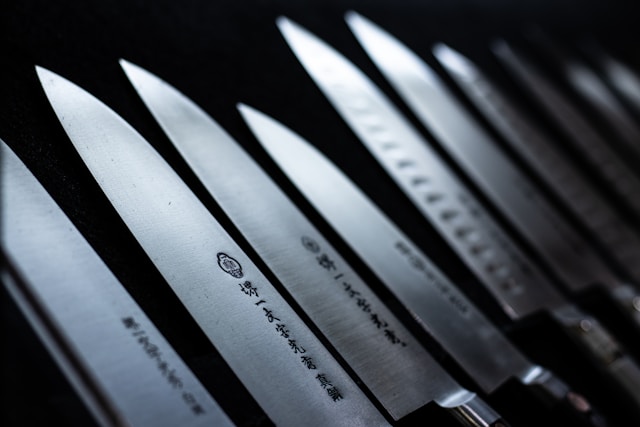
Among the dozens of Japanese knife types, three multi-purpose blades stand out: the Santoku, the Gyuto, and the Bunka. But what are the real differences, and how do you choose the right one for your brand or kitchen?
As a leading OEM/ODM knife manufacturer, we’re here to provide a definitive guide from a maker’s perspective.
Quick Answer — Which Japanese Knife Should You Choose?
The core difference comes down to blade tip, length, and cutting style:
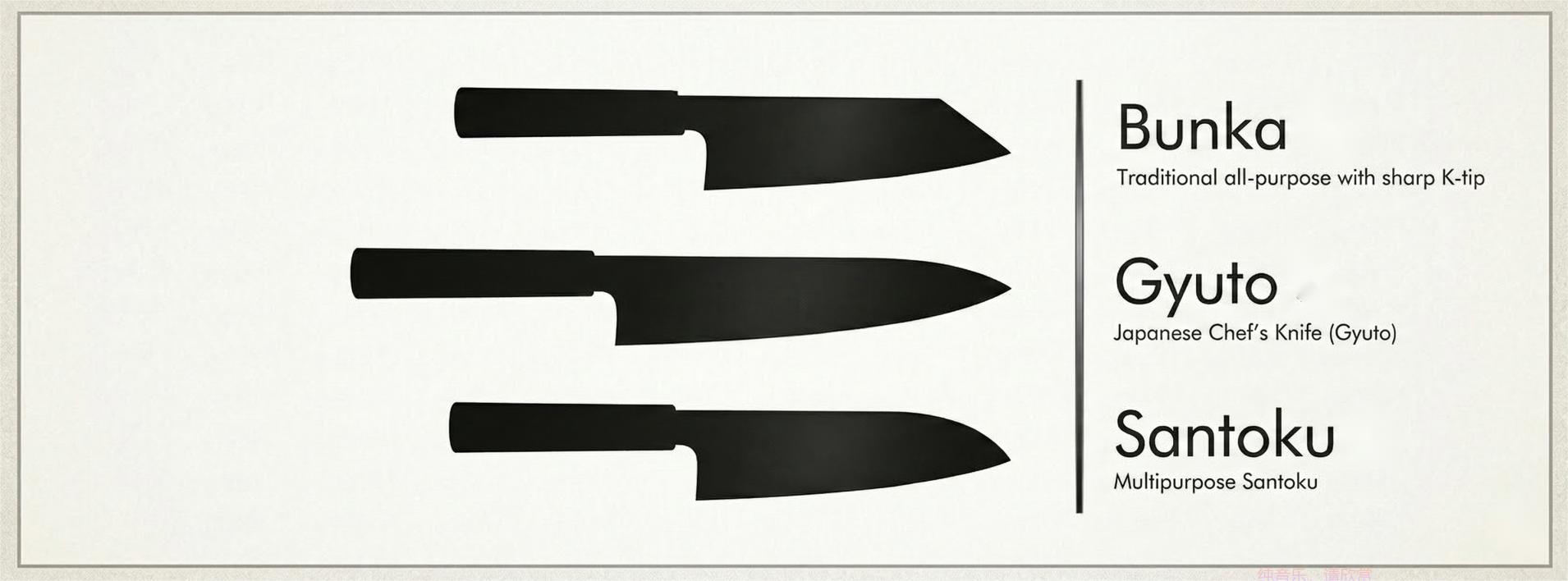
- Bunka has a distinctive K-tip (reverse tanto point), runs 160-190mm long, and excels at precision work and push cutting.
- Santoku has a sheep’s foot tip with a gentle curve, runs 150-180mm long, and works best for home cooks who cut lots of vegetables.
- Gyuto has a pointed tip with a pronounced belly curve, runs 210-270mm long, and functions as Japan’s answer to the Western chef’s knife. Some people think it the most balanced all-purpose Japanese knife you can buy.
Quick Comparison Scorecard
| Feature | Bunka | Santoku | Gyuto |
|---|---|---|---|
| Blade Length | 160-190mm | 150-180mm | 210-270mm |
| Tip Design | K-tip / Reverse Tanto | Sheep’s Foot | Pointed |
| Primary Technique | Push cut, precision | Push cut, tap chop | Rock chop, slicing |
| Vegetables | ⭐⭐⭐⭐ | ⭐⭐⭐⭐⭐ | ⭐⭐⭐ |
| Meat & Protein | ⭐⭐⭐ | ⭐⭐⭐ | ⭐⭐⭐⭐⭐ |
| Precision Work | ⭐⭐⭐⭐⭐ | ⭐⭐⭐ | ⭐⭐⭐⭐ |
| Beginner Friendly | ⭐⭐⭐ | ⭐⭐⭐⭐⭐ | ⭐⭐⭐⭐ |
| Common Steels | VG-10, AUS-10 | VG-10, AUS-8 | VG-10, SG2, Damascus |
- Choose Bunka if you want maximum precision and love decorative cuts.
- Choose Santoku if you cook mostly at home, cut lots of vegetables, and want the easiest learning curve.
- Choose Gyuto if you work with large cuts of meat regularly, prefer Western rocking techniques, and need a longer blade.
For OEM buyers and knife brands: You can order all three knife types with your choice of steel grades, handle materials, blade geometry, and branding. Request a free OEM quote.
What Are Bunka, Santoku, and Gyuto Knives?
Knowing the history and design behind each knife helps explain why they cut differently. All three evolved from traditional Japanese cutlery, but each serves a distinct purpose based on its unique shape.
For a full overview of all Japanese knife categories, check out our Japanese knife types guide.
What Is a Gyuto Knife?
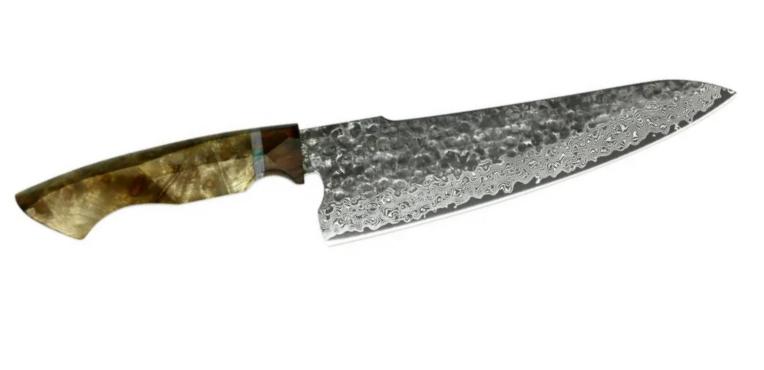
The Gyuto (牛刀, literally “cow sword” or “beef knife”) first appeared during Japan’s Meiji period (1868-1912). When Japan opened its borders to foreign trade, the old ban on eating beef ended. Cooks suddenly needed knives that could handle larger cuts of meat—and the Gyuto filled that gap.
Key characteristics of Gyuto knives:
- Blade length: 210-270mm (8.2″-10.6″). The 210mm and 240mm sizes sell best.
- Blade profile: A curved belly that lets you rock the blade back and forth.
- Tip design: Sharp and pointed for piercing and detail work.
- Spine thickness: Usually 2.0-2.5mm at the heel, thinner toward the tip.
- Primary grind: Double-beveled, often 50/50 or 70/30.
The Gyuto blends Western chef’s knife function with Japanese blade-making traditions. You get a thinner blade, harder steel (typically 58-62 HRC), and sharper edge angles (15-18° per side instead of the 20-25° you find on German knives).
In our factory, Gyuto knives make up about 35% of Japanese knife orders. Western buyers most often request the 210mm size in VG-10 steel.
Learn more: Complete Gyuto knife guide | Gyuto vs Chef’s Knife comparison
What Is a Santoku Knife?
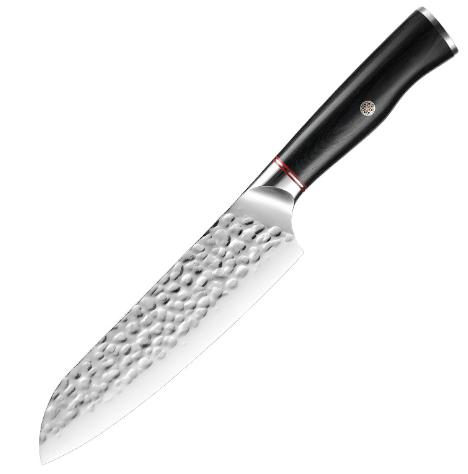
The Santoku (三徳, meaning “three virtues”) first showed up in the 1940s during Japan’s Showa period. The “three virtues” name points to either:
- Three cutting moves: slicing, dicing, and mincing
- Three food types: meat, fish, and vegetables
Nobody agrees on which meaning came first—and that ambiguity actually fits the knife’s purpose. Santoku aims for versatility, not specialization.
Key traits of a Santoku:
- Blade length: 150-180mm (5.9″-7.1″). The 165mm and 180mm sizes sell best.
- Blade profile: Much flatter than Gyuto, with less belly curve.
- Tip design: Sheep’s foot shape (the spine curves down to meet the edge in a rounded tip).
- Spine thickness: 1.8-2.2mm, often thinner than Gyuto.
- Blade height: Taller than most knives, giving you good knuckle clearance.
Santoku evolved from the traditional Nakiri (vegetable knife) but added a pointed tip area for more versatility. Its shorter length and lighter weight make it easy to handle—especially for home cooks and people with smaller hands.
Learn more: Gyuto vs Santoku | Santoku vs Chef’s Knife | Nakiri vs Santoku
What Is a Bunka Knife?
The Bunka (文化包丁, Bunka-bōchō, meaning “culture knife”) got its name during a time when “bunka” also meant “modern” or “contemporary.” The full Japanese name often appears as 文化三徳 (Bunka Santoku). So technically, Bunka is a type of Santoku—but with design changes big enough to treat it as its own category.
Key traits of a Bunka:
- Blade length: 160-190mm (6.3″-7.5″), similar to Santoku.
- Blade profile: Straighter edge than Santoku. Great for push cutting.
- Tip design: K-tip (Kiritsuke-style) or reverse tanto—angular and aggressive.
- Spine thickness: 2.0-2.3mm, giving the blade good stability.
- Blade height: Medium profile, taller at the heel and tapering to the pointed tip.
The K-tip sets Bunka apart from Santoku. Where Santoku curves gently downward at the tip (sheep’s foot), Bunka keeps a straighter spine that ends in an aggressive point. This shape gives you:
- Better precision for detail work and scoring
- Solid piercing ability
- A striking “sword-like” look
- More control at the tip for decorative cuts
Bunka sits in a unique middle ground—more aggressive than Santoku, more compact than Gyuto, and arguably the most balanced all-purpose Japanese knife you can buy.
Learn more: Complete Bunka knife guide | Kiritsuke guide (for K-tip comparison)
Bunka vs Santoku vs Gyuto — Key Differences Explained
Blade Shape & Profile
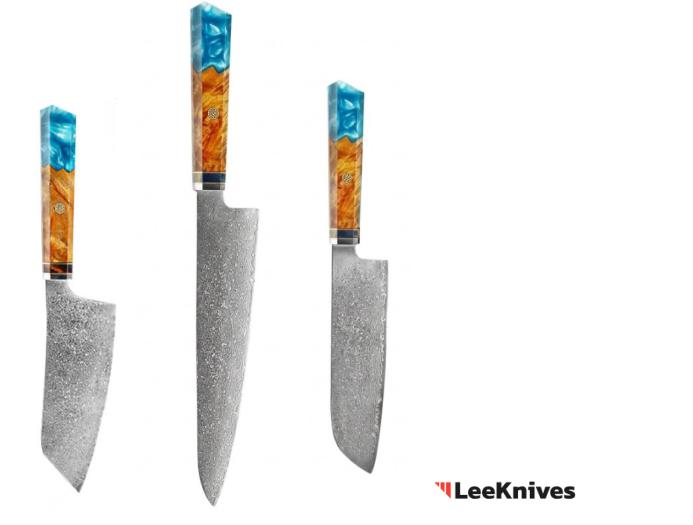
Gyuto has the most curved blade of the three. A pronounced “belly” starts about one-third from the tip and continues to the heel. This curve helps you rock the blade back and forth. The spine runs fairly straight before curving down to meet the edge at a pointed tip.
Santoku has a much flatter profile. The edge runs nearly straight from heel to mid-blade, then curves gently up toward the tip. The spine curves down to meet it, creating that “sheep’s foot” look. This shape keeps more of the blade edge touching the cutting board when you push cut.
Bunka falls between these two but sits closer to Santoku in overall flatness. The big difference shows up at the tip. Instead of a rounded curve, Bunka keeps a straighter spine that meets an angled edge line—creating that K-tip or reverse tanto point.
| Blade Region | Bunka | Santoku | Gyuto |
|---|---|---|---|
| Heel area | Moderate curve | Slight curve | Moderate curve |
| Mid-blade | Nearly flat | Very flat | Curved (belly) |
| Tip area | Angular K-tip | Rounded sheep’s foot | Pointed tip |
| Overall flatness | 85% flat | 90% flat | 65% flat |
Tip Design
Tip design creates the biggest functional difference between these three knives.
Sheep’s Foot Tip (Santoku)
The rounded tip curves down from the spine, creating a blunt, safe profile. You won’t accidentally poke yourself or damage ingredients easily. This design:
- Keeps maximum edge contact for push cutting
- Feels less intimidating for beginners
- Limits piercing and detail work
- Works great for tap-chopping vegetables
K-Tip / Reverse Tanto (Bunka)
The angular tip looks like a traditional Kiritsuke or tanto blade. The spine stays straight until the final 15-25mm, where it angles sharply to meet the edge. This design:
- Gives you excellent piercing ability
- Lets you do precise tip work and scoring
- Creates a striking “sword-like” appearance
- Needs more careful handling near the point
- Shines for decorative cuts and fine work
Pointed Tip (Gyuto)
Like a Western chef’s knife, the Gyuto tip comes to a sharp point through gradual curving of both spine and edge. This design:
- Balances piercing ability with safety
- Works well for breaking down proteins
- Helps when removing silver skin
- Handles both push and rock techniques
Learn more: Kiritsuke vs Gyuto vs Chef’s Knife
Launch Your Custom Knife Line Faster with LeeKnives
Complete OEM/ODM support—from design to final shipment—so you can focus on growth.
Backed by warehouses in the U.S. for fast, reliable delivery.
Blade Length & Weight
Here are standard sizes for each knife type:
| Specification | Bunka | Santoku | Gyuto |
|---|---|---|---|
| Short | 160mm | 150mm | 210mm |
| Medium (most popular) | 170-180mm | 165-180mm | 240mm |
| Long | 190mm | 180mm | 270mm |
| Typical weight | 130-170g | 120-160g | 150-220g |
| Balance point | Mid-blade | Heel/handle junction | Mid-blade to heel |
Gyuto’s longer blade makes it great for big jobs—breaking down whole chickens, slicing roasts, working with large vegetables like cabbage or watermelon. But that extra length can feel clumsy in tight kitchens or on small cutting boards.
Bunka and Santoku both offer a compact size that fits limited workspace—a common situation in home kitchens. Bunka usually weighs 10-15g more than Santoku (because of a thicker spine near the tip), giving you slightly more heft for push cutting.
Cutting Technique Compatibility
Different blade shapes work better with different cutting methods:
Push Cutting
- Bunka ⭐⭐⭐⭐⭐
- Santoku ⭐⭐⭐⭐⭐
- Gyuto ⭐⭐⭐
You move the blade forward and down at the same time. Flat blade profiles work best here because more edge touches the board at once. Both Bunka and Santoku excel at this. Gyuto needs more deliberate motion to get full board contact.
Rock Chopping
- Bunka ⭐⭐
- Santoku ⭐⭐
- Gyuto ⭐⭐⭐⭐⭐
You keep the tip on the board while pivoting the blade up and down. Gyuto’s curved belly makes it the best knife for rocking. Bunka and Santoku can rock, but they need more effort and won’t feel as smooth.
Tap Chopping
- Bunka ⭐⭐⭐⭐
- Santoku ⭐⭐⭐⭐⭐
- Gyuto ⭐⭐⭐
You lift the entire blade and bring it straight down. Santoku’s flat profile and sheep’s foot tip make it perfect for fast tap chopping of herbs and vegetables.
Draw Cutting
- Bunka ⭐⭐⭐
- Santoku ⭐⭐⭐
- Gyuto ⭐⭐⭐⭐⭐
Long, pulling slices through proteins. Gyuto’s length gives you enough stroke distance. Shorter knives need multiple cuts to finish the same job.
Precision Tip Work
- Bunka ⭐⭐⭐⭐⭐
- Santoku ⭐⭐
- Gyuto ⭐⭐⭐⭐
Scoring, piercing, fine detail cuts. The Bunka K-tip was built for exactly this. Gyuto’s pointed tip comes second. Santoku’s rounded tip limits what you can do.
Steel Types & Hardness Options
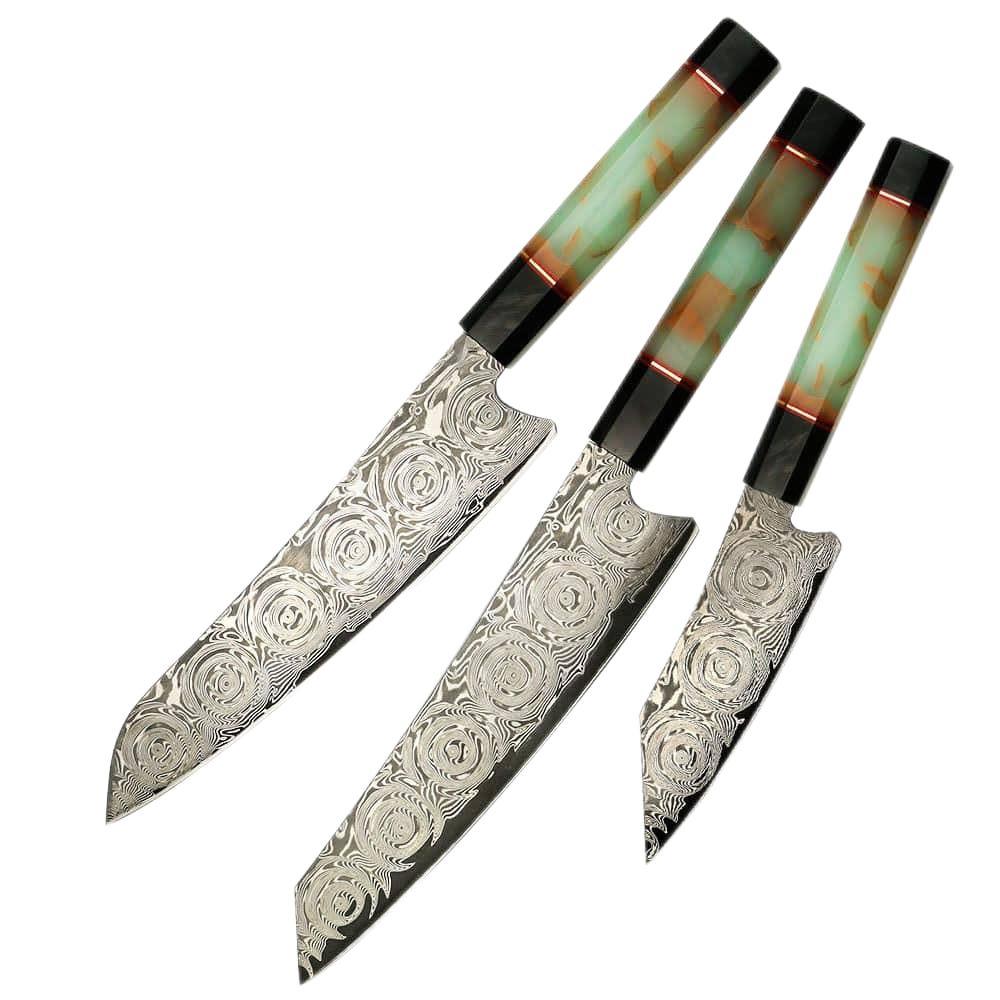
Your steel choice affects edge retention, sharpening ease, rust resistance, and overall performance. Here’s what we commonly produce for each knife type:
Stainless Steel Options
| Steel Grade | Hardness (HRC) | Edge Retention | Rust Resistance | Common Uses |
|---|---|---|---|---|
| VG-10 | 60-62 | Excellent | Very Good | Premium Gyuto, Santoku, Bunka |
| SG2/R2 | 62-64 | Outstanding | Good | High-end Gyuto |
| AUS-10 | 59-61 | Very Good | Excellent | Mid-premium all types |
| AUS-8 | 57-59 | Good | Excellent | Entry-premium Santoku |
| German 1.4116 | 55-57 | Moderate | Excellent | Budget-friendly options |
Carbon Steel Options
| Steel Grade | Hardness (HRC) | Edge Retention | Reactivity | Traditional Use |
|---|---|---|---|---|
| White Paper #2 | 60-63 | Excellent | High | Traditional Japanese |
| Blue Paper #2 | 62-64 | Outstanding | High | Professional grade |
| Blue Paper Super | 64-67 | Exceptional | Moderate-High | Ultra-premium |
Damascus Cladding
We make Damascus-clad versions of all three knife types. These feature VG-10 or SG2 cutting cores with 67-layer or 33-layer stainless Damascus cladding. Damascus construction offers:
- Visual appeal for premium product lines
- Cladding that protects reactive cores
- Marketing value for brand positioning
For OEM/wholesale buyers: We offer all the steels listed above with adjustable hardness specs within manufacturer-recommended ranges. Custom Damascus patterns and layer counts are available for orders above standard MOQ. Contact our wholesale team →
Handle Types & Materials
Handle design affects grip comfort, balance, and look. You can get Japanese (Wa-handle) or Western styles for all three knife types.
Wa-Handle (Japanese Traditional)
- Octagonal (八角): Most traditional, stops the knife from rotating, excellent grip
- D-shaped: Ergonomic, made for right or left hands
- Oval: Neutral, comfortable for any grip style
- Materials: Magnolia wood, burnt chestnut, ebony, stabilized wood, composites
Wa-handles weigh less and push the balance point forward (toward the blade). They give you excellent feedback for precise cutting.
Western Handle
- Full tang construction: Blade steel runs through the entire handle
- Riveted scales: G10, Micarta, Pakkawood, natural woods
- Bolster options: Full bolster, half bolster, no bolster
Western handles weigh more and shift balance toward your hand (some cooks prefer this for control). They often hold up better in commercial dishwashers—though hand-washing always works best.
| Handle Style | Best For |
|---|---|
| Wa-handle (octagonal) | Traditional Japanese technique, professionals |
| Wa-handle (D-shaped) | Pinch grip users, home cooks who like Japanese style |
| Western handle | People moving from German knives, commercial kitchens |
Detailed Head-to-Head Comparison Table
This table covers every practical factor when picking between these three knives:
| Category | Bunka | Santoku | Gyuto |
|---|---|---|---|
| BLADE SPECS | |||
| Standard lengths | 160-190mm | 150-180mm | 210-270mm |
| Most popular size | 170mm | 165mm | 210mm / 240mm |
| Typical weight | 130-170g | 120-160g | 150-220g |
| Spine thickness (heel) | 2.0-2.3mm | 1.8-2.2mm | 2.0-2.5mm |
| Blade height | Medium (40-48mm) | Tall (45-50mm) | Medium (45-55mm) |
| GEOMETRY | |||
| Tip style | K-tip (angular) | Sheep’s foot | Pointed |
| Edge profile | 85% flat | 90% flat | 65% flat |
| Belly curve | Minimal | Minimal | Pronounced |
| Primary grind | Convex/flat | Flat | Convex/flat |
| Edge angle (per side) | 12-15° | 12-15° | 12-18° |
| CUTTING PERFORMANCE | |||
| Vegetables | ⭐⭐⭐⭐ | ⭐⭐⭐⭐⭐ | ⭐⭐⭐ |
| Meat & proteins | ⭐⭐⭐ | ⭐⭐⭐ | ⭐⭐⭐⭐⭐ |
| Fish | ⭐⭐⭐⭐ | ⭐⭐⭐ | ⭐⭐⭐⭐ |
| Herbs (mincing) | ⭐⭐⭐⭐ | ⭐⭐⭐⭐⭐ | ⭐⭐⭐⭐ |
| Precision/detail work | ⭐⭐⭐⭐⭐ | ⭐⭐ | ⭐⭐⭐⭐ |
| Large ingredient prep | ⭐⭐ | ⭐⭐ | ⭐⭐⭐⭐⭐ |
| TECHNIQUE FIT | |||
| Push cutting | ⭐⭐⭐⭐⭐ | ⭐⭐⭐⭐⭐ | ⭐⭐⭐ |
| Rock chopping | ⭐⭐ | ⭐⭐ | ⭐⭐⭐⭐⭐ |
| Tap chopping | ⭐⭐⭐⭐ | ⭐⭐⭐⭐⭐ | ⭐⭐⭐ |
| Draw cutting/slicing | ⭐⭐⭐ | ⭐⭐ | ⭐⭐⭐⭐⭐ |
| USER FACTORS | |||
| Beginner friendly | ⭐⭐⭐ | ⭐⭐⭐⭐⭐ | ⭐⭐⭐⭐ |
| Professional appeal | ⭐⭐⭐⭐ | ⭐⭐⭐ | ⭐⭐⭐⭐⭐ |
| Visual impact | ⭐⭐⭐⭐⭐ | ⭐⭐⭐ | ⭐⭐⭐⭐ |
| Small kitchen friendly | ⭐⭐⭐⭐⭐ | ⭐⭐⭐⭐⭐ | ⭐⭐⭐ |
| OEM SPECS | |||
| Common steel grades | VG-10, AUS-10 | VG-10, AUS-8 | VG-10, SG2, Damascus |
| Handle options | Wa or Western | Wa or Western | Wa or Western |
| Market demand | Growing | Stable-high | Highest |
Which Knife Is Best for You?
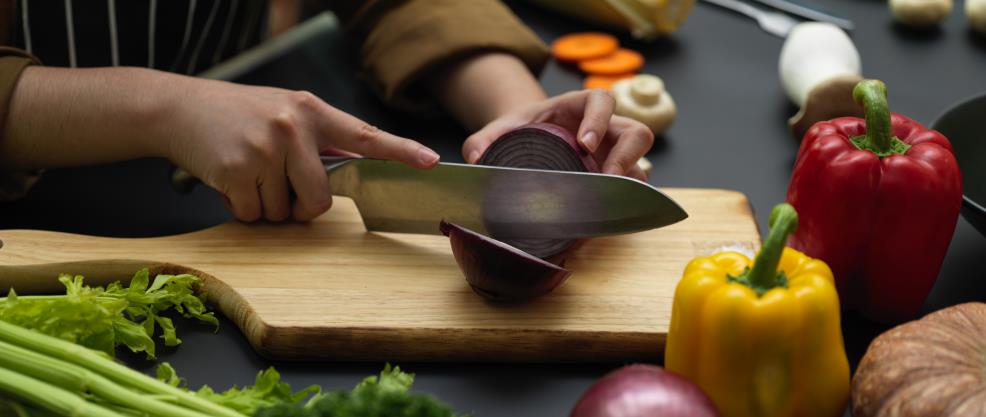
Best for Home Cooks: Santoku
Our top pick for a first Japanese knife in home kitchens.
Santoku puts ease of use first:
- Compact size (165-180mm) fits any cutting board and drawer
- Light weight (120-160g) reduces arm fatigue during long prep sessions
- Sheep’s foot tip makes accidental pokes unlikely
- Tall blade keeps your knuckles clear of the board
- Flat profile suits the push/tap cutting most home cooks already do
If you cook mostly vegetables, do moderate protein prep, and want a knife that performs well without demanding perfect technique, Santoku gives you the best value.
You’ll love Santoku if you:
- Cook mostly vegetables
- Have limited knife experience
- Have smaller hands or less grip strength
- Work in a compact kitchen
- Care more about ease of use than peak performance
Best for Professional Chefs: Gyuto
The workhorse of professional Japanese kitchens.
When you need to handle volume and variety, Gyuto delivers what smaller knives can’t:
- Long blade (210-270mm) handles large proteins and vegetables fast
- Curved belly lets you rock the blade—a technique many Western-trained chefs know well
- Pointed tip pierces, breaks down, and portions with control
- More mass helps power through dense ingredients
- Professional cred — everyone recognizes Gyuto as the Japanese chef’s knife
For line cooks, caterers, and serious home cooks who prep in big batches, Gyuto’s speed gains justify its bigger size.
You’ll love Gyuto if you:
- Break down whole chickens or portion large roasts often
- Do high-volume prep work
- Prefer Western rocking technique
- Have a big cutting board
- Want efficiency and professional-level reach
Best for Precision & Detail Work: Bunka
The specialized all-rounder for technique-focused cooks.
Bunka’s K-tip shape opens up possibilities that neither Santoku nor Gyuto can match:
- Angular K-tip gives you surgical precision for scoring, piercing, and decorative cuts
- Flat blade profile shines with the push-cutting technique used in traditional Japanese cooking
- Compact length offers excellent control
- True balance handles meat, fish, and vegetables equally well
- Striking looks — the sword-like shape appeals to knife enthusiasts
If you value precision over raw speed, appreciate traditional Japanese techniques, or just want a knife that stands out, Bunka makes an excellent choice.
You’ll love Bunka if you:
- Enjoy precise cutting techniques
- Work with delicate ingredients (sashimi-style cuts, fine garnishes)
- Appreciate a distinctive look
- Don’t mind regular knife maintenance
- Want balance over specialization
Best All-Around Japanese Knife: It Depends
Each knife can serve as your main blade, but with different trade-offs:
| “Best” Goal | Winner | Why |
|---|---|---|
| Most balanced across all tasks | Bunka | Doesn’t lean toward vegetables or meat—truly neutral |
| Easiest to learn | Santoku | Most forgiving shape for beginners |
| Most versatile for pros | Gyuto | Handles the widest range of ingredient sizes |
If you can only buy one knife:
- Cook more vegetables than meat → Santoku 165-180mm
- Cook more meat than vegetables → Gyuto 210mm
- Cook equal amounts and want precision → Bunka 170mm
Best for OEM/Wholesale Buyers: Market Positioning
For knife brands, distributors, and retailers sourcing Japanese knives, each type fills a different spot in your lineup:
Gyuto — High Volume, Universal Appeal
- Highest search volume and consumer awareness
- Must-have for any Japanese knife product line
- Multiple lengths (210/240/270mm) let you expand SKUs
- Price range: entry ($30-60) through premium ($150-300+)
Santoku — Accessible Entry Point
- Gateway knife for newcomers to Japanese cutlery
- Strong gift market sales
- Popular with female consumers
- Price range: entry ($25-50) through mid-range ($80-150)
Bunka — Differentiation & Premium Positioning
- Growing enthusiast demand (roughly 25% search growth year over year)
- Buyers see higher value because of distinctive design
- Less price sensitivity
- Good opportunity for premium/limited editions
- Price range: mid-range ($60-100) through premium ($150-250+)
Our suggestion: Lead with Gyuto and Santoku for volume. Add Bunka for margin and differentiation.
OEM Manufacturing Notes: What Makes Each Knife Different to Produce
We’ve made Japanese knives for brands across North America and Europe. Here’s what we’ve learned about producing each type:
Bunka Production
The K-tip shape requires careful grinding control. The transition from spine to tip involves an angular break—not a gradual curve—so tolerances must stay tight during shaping. We pay close attention to blade thickness at the tip area. Too thick and you lose precision. Too thin and you risk chipping.
Common custom requests:
- K-tip angle variations (more or less aggressive)
- Blade height adjustments
- Damascus cladding with contrasting core steel
- Wa-handles with exotic wood options
Santoku Production
Santoku’s forgiving shape makes it a great starting point for brands building Japanese knife lines. The sheep’s foot tip needs less precision than K-tip or pointed profiles. The flat blade profile also simplifies grinding.
Common custom requests:
- Hollow ground edges (dimples) for food release
- Granton/scalloped edge options
- Western handles for easier market entry
- Lighter weight specs for ergonomics
Gyuto Production
Gyuto uses the most steel per knife and takes the longest grinding time—but it also commands the highest retail prices. The curved profile requires skilled grinding to keep geometry consistent from heel to tip. The longer blade length also makes proper heat treatment more important to prevent warping.
Common custom requests:
- Multiple length options within product lines
- SG2 or Damascus for premium tiers
- Custom blade thickness profiles
- Balance point adjustments through handle weight
Ready to Source Quality Japanese Knives?
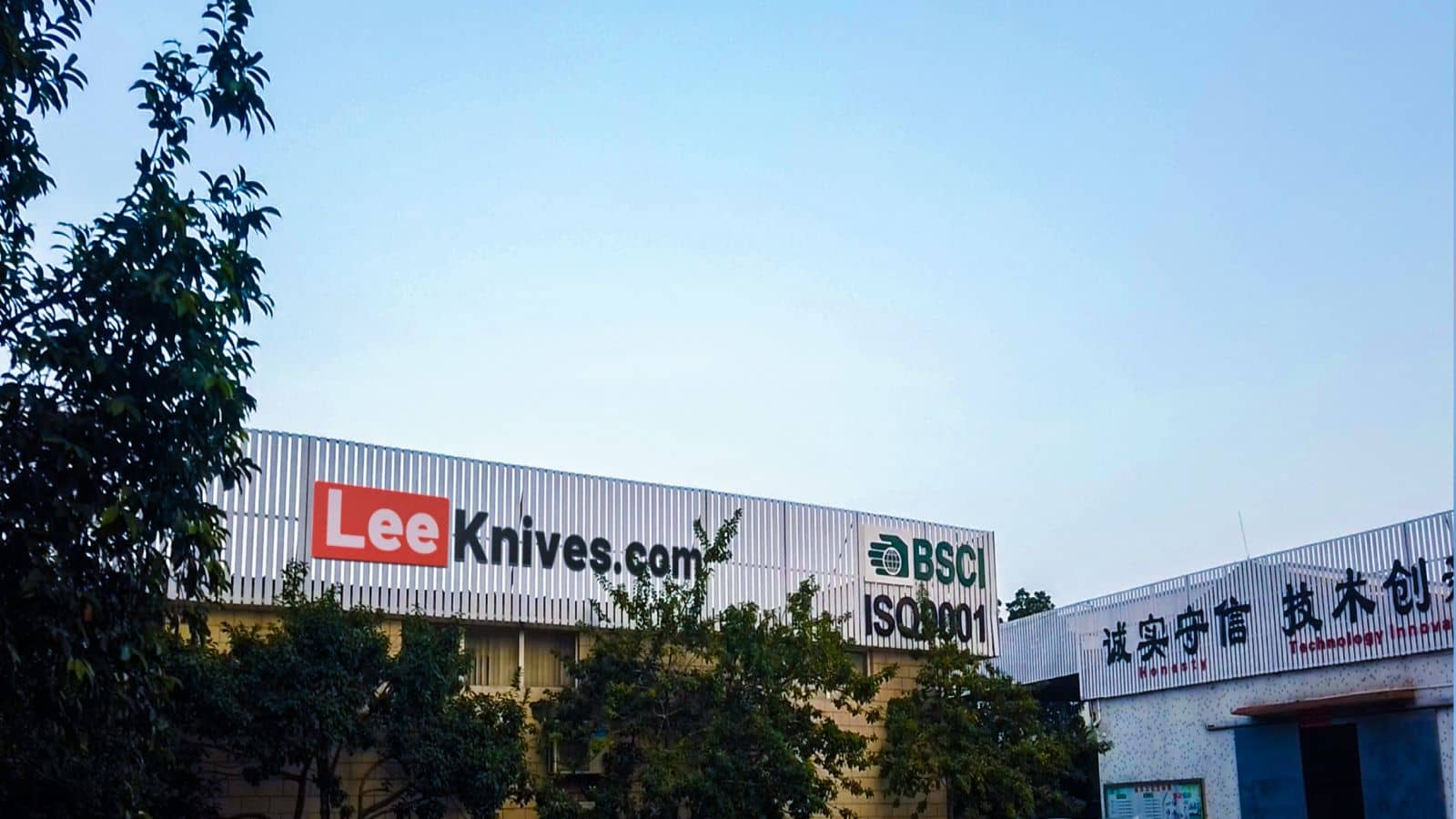
Leeknives offers OEM, ODM, private label, and wholesale services for knife brands worldwide. Here’s what we can do:
OEM Services
- Build knives to your exact specs
- Choose from our full steel lineup (VG-10, SG2, AUS-10, Damascus, carbon steels)
- Pick Wa-handle or Western handle styles
- Customize blade geometry and finish
- Learn more about OEM
Private Label Services
- Select from our existing designs
- Add your branding, logos, and packaging
- Lower MOQ than full custom orders
- Faster turnaround
- Learn more about private label
ODM Services
- Work together on design development
- We handle engineering and prototyping
- Create exclusive designs for your brand
- Learn more about ODM
Wholesale Services
- Stock products at competitive prices
- Established shipping partnerships
- Flexible order sizes
- Learn more about wholesale
Get a free quote or sample consultation: Contact our team




 EN
EN  JA
JA  DE
DE