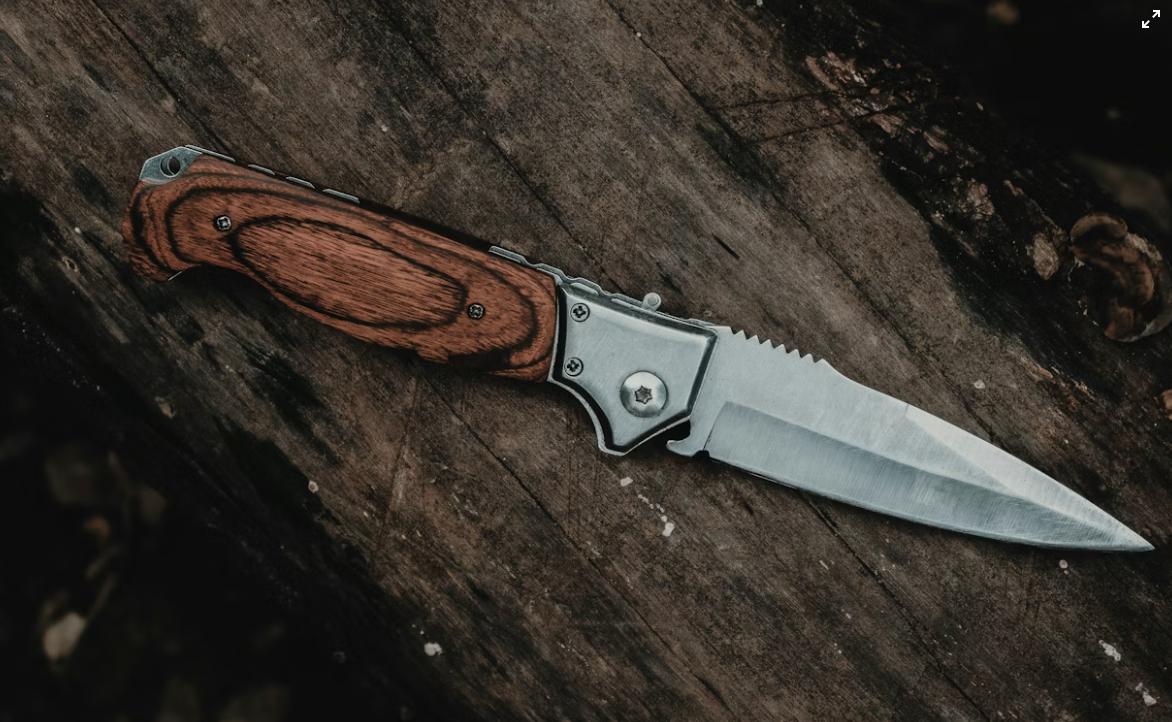
When evaluating S110V vs MagnaCut for premium knives, the choice depends on your priorities. S110V from Crucible Industries delivers exceptional wear resistance and edge retention. MagnaCut from Carpenter & Technology offers superior toughness, better corrosion resistance, and easier heat treatment at a lower cost.
This comparison covers chemical composition, mechanical properties, heat treatment requirements, manufacturing costs, and ideal use cases to help knife manufacturers and wholesalers make informed material decisions.
S110V vs MagnaCut: Quick Comparison
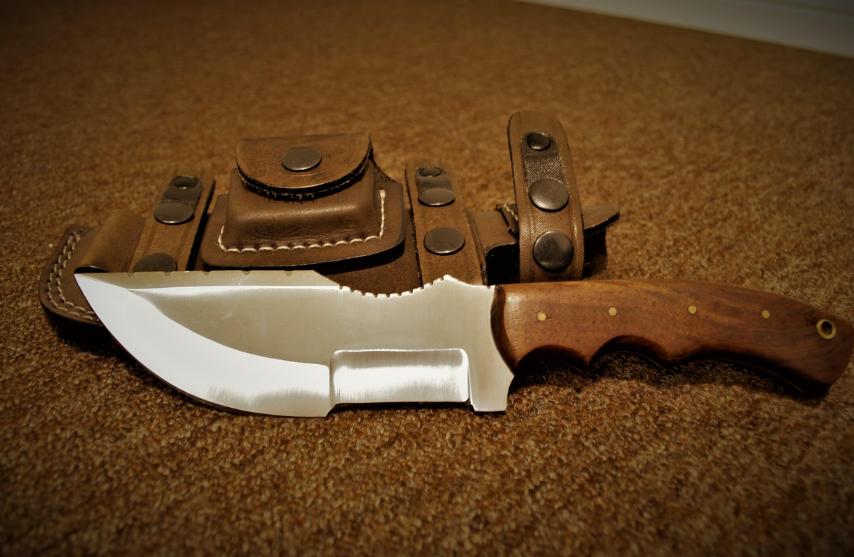
Below is a quick comparison of CPM S110V and MagnaCut steels, covering their chemical composition (data sourced from Zknives) and key properties.
Composition Comparison
| Element | CPM S110V | MagnaCut | Primary Function |
|---|---|---|---|
| Carbon (C) | 2.80% | 1.15% | Provides hardness and forms carbides |
| Chromium (Cr) | 15.25% | 10.70% | Improves corrosion resistance and hardenability |
| Vanadium (V) | 9.00% | 4.00% | Enhances wear resistance and refines grain |
| Molybdenum (Mo) | 2.25% | 2.00% | Boosts hardenability and strength |
| Niobium (Nb) | 3.00% | 2.00% | Refines grain structure and improves toughness |
| Manganese (Mn) | — | 0.50% | Enhances hardenability and strength |
| Silicon (Si) | — | 0.40% | Improves strength and oxidation resistance |
| Cobalt(Co) | 2.50% | — | Increases hardness potential and improves high-temperature strength |
| Nitrogen(N) | — | 0.20% | Enhances corrosion resistance and strengthens the steel matrix |
Features Comparison
| CPM S110V | MagnaCut | |
|---|---|---|
| Key Features | • Exceptional wear resistance • High vanadium carbide content • Excellent edge retention | • Superior toughness for its hardness • Excellent corrosion resistance • Balanced performance profile |
| Pros | • Industry-leading wear resistance • Long-lasting edge • Ideal for high-end applications | • Better toughness than most premium steels • Easier heat treatment • More cost-effective |
| Cons | • Difficult to machine and sharpen • Complex heat treatment required • Higher material cost | • Lower wear resistance than S110V • Newer steel with less track record • Limited availability in some regions |
Performance Properties Comparison
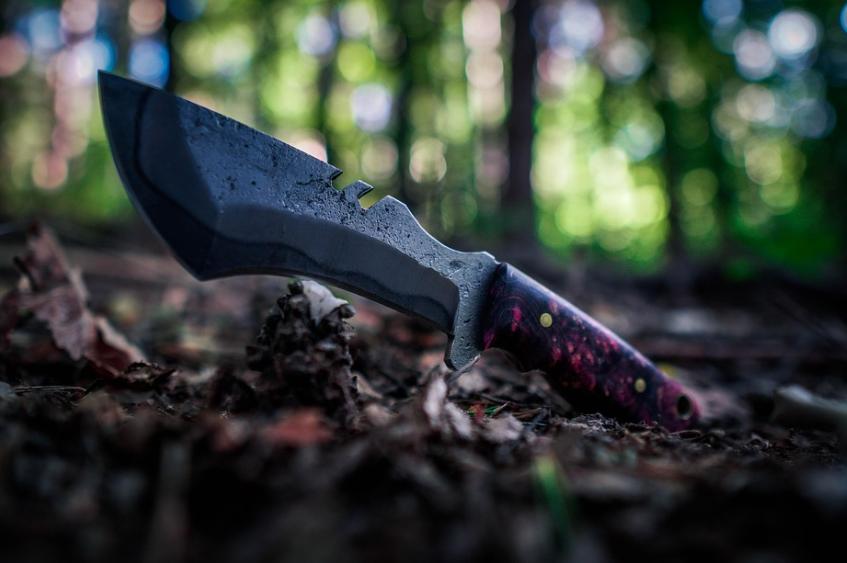
Properties Comparison Overview
| Property | CPM S110V | MagnaCut |
|---|---|---|
| Manufacturer | Crucible Industries | Carpenter & Technology |
| Steel Type | Powder Metallurgy | Powder Metallurgy |
| Hardness Range | 58-61 HRc | 59-62 HRc |
| Toughness | ⭐⭐☆☆☆ | ⭐⭐⭐⭐⭐ |
| Edge Retention | ⭐⭐⭐⭐⭐ | ⭐⭐⭐⭐☆ |
| Corrosion Resistance | ⭐⭐⭐⭐☆ | ⭐⭐⭐⭐⭐ |
| Wear Resistance | ⭐⭐⭐⭐⭐ | ⭐⭐⭐⭐☆ |
| Ease of Sharpening | ⭐☆☆☆☆ | ⭐⭐⭐⭐☆ |
| Price Range | $$$$ (High cost, difficult to machine) | $$$ (High cost, easier to machine) |
| Best For | Premium EDC, Custom Knives | EDC, Outdoor, Kitchen Knives |
Hardness
Both S110V and MagnaCut are capable of achieving high hardness levels when properly heat treated. The typical hardness of S110V ranges between 58-61 HRc, while MagnaCut can reach 59-62 HRc with optimal heat treatment.
MagnaCut’s slightly higher achievable hardness comes from its refined carbide structure and niobium addition, which allows for finer grain size. However, S110V’s higher carbon content provides excellent hardness retention at elevated temperatures.
For knife manufacturers, both steels offer sufficient hardness for premium applications. Learn more about knife steel hardness testing in our comprehensive guide.
Corrosion Resistance
Corrosion resistance is where these two steels show significant differences. S110V, with its 15.25% chromium content, offers good corrosion resistance for a high-carbon tool steel. However, MagnaCut punches above its weight class despite having only 10.7% chromium.
The secret lies in MagnaCut’s microstructure. The niobium addition creates fine carbides that leave more chromium in the matrix to fight corrosion. In salt spray tests, MagnaCut performs comparably to steels with 13-15% chromium content.
Corrosion Resistance Rating:
- S110V: 7/10 (Good, but requires maintenance)
- MagnaCut: 9/10 (Excellent, near-stainless performance)
For applications requiring maximum corrosion resistance, consider exploring best stainless steel for knives.
Edge Retention
Edge retention is where S110V truly shines. The massive 9% vanadium content creates an abundance of hard vanadium carbides, giving S110V some of the best edge retention in the knife industry.
MagnaCut, while not matching S110V’s extreme edge retention, still performs admirably. Its balanced carbide structure provides good edge stability without the extreme wear resistance that makes S110V difficult to work with.
Edge Retention Rating:
- S110V: 9/10 (Exceptional, among the best)
- MagnaCut: 8/10 (Very Good, competitive with premium steels)
For users prioritizing long-lasting sharpness, S110V is the clear winner. However, MagnaCut offers a more practical balance for everyday use.
Toughness
Toughness represents a steel’s ability to resist chipping and cracking under impact. This is where MagnaCut’s engineered microstructure shows its advantages.
S110V, despite its other impressive properties, has moderate toughness. The high volume of hard carbides, while excellent for wear resistance, creates potential weak points for crack propagation. Using S110V knives vigorously can result in edge chipping.
MagnaCut, designed specifically to balance toughness with other properties, performs significantly better. The niobium carbides are finer and more evenly distributed, reducing stress concentration points.
Toughness Rating:
- S110V: 5/10 (Moderate, suitable for controlled use)
- MagnaCut: 8/10 (Good, versatile for various applications)
For outdoor and survival knives requiring high toughness, check our guide on best steel for survival knives.
Wear Resistance
Wear resistance measures how well a steel withstands abrasive forces during cutting. This property directly relates to edge retention but focuses on the material’s surface durability.
S110V is the undisputed champion in wear resistance. The 9% vanadium forms extremely hard vanadium carbides (approximately 2800 HV), making it highly resistant to abrasive wear. This makes S110V ideal for cutting abrasive materials like cardboard, rope, and fibrous materials.
MagnaCut offers good wear resistance, though not at S110V’s extreme level. Its 4% vanadium content still provides substantial wear resistance for most practical applications.
Wear Resistance Rating:
- S110V: 10/10 (Industry-leading)
- MagnaCut: 8/10 (Very Good)
Ease of Sharpening
The flip side of excellent wear resistance is difficulty in sharpening. S110V’s extreme hardness and carbide content make it challenging to sharpen, requiring quality abrasives and patience.
MagnaCut, while still a premium steel, is noticeably easier to sharpen. The finer carbide structure responds better to sharpening stones, and the lower overall carbide volume means less material to remove.
Sharpening Ease Rating:
- S110V: 4/10 (Difficult, requires diamond/CBN abrasives)
- MagnaCut: 7/10 (Moderate, manageable with quality stones)
Heat Treatment: Key Differences
Heat treatment is where S110V and MagnaCut show some of their most significant differences. While both are premium powder metallurgy steels, their heat treatment requirements vary considerably in terms of complexity, temperature, and forgivability.
Key Differences at a Glance
| Factor | S110V | MagnaCut |
|---|---|---|
| Austenitizing Temperature | 1205-1230°C (High) | 1079-1121°C (Moderate) |
| Equipment Required | Vacuum furnace preferred | Standard furnace acceptable |
| Cryogenic Treatment | Highly recommended | Optional |
| Number of Tempers | 2-3 cycles | 2 cycles |
| Decarburization Risk | High | Moderate |
| Process Forgivability | Low — precise control needed | High — tolerant of variations |
| Energy Consumption | ~15% higher | Lower |
| Scrap Rate Risk | Higher (5-8%) | Lower (2-4%) |
S110V Heat Treatment
S110V is among the most demanding knife steels to heat treat. The high alloy content requires vacuum furnace or protective atmosphere to prevent decarburization. Cryogenic treatment is strongly recommended to achieve optimal hardness and dimensional stability.
Final Hardness: 58-61 HRc depending on tempering temperature
Bottom Line: S110V demands professional heat treatment equipment and expertise. It’s not suitable for DIY or small-scale operations without specialized facilities.
MagnaCut Heat Treatment
MagnaCut was engineered for ease of processing — a key advantage for manufacturers. It can be heat treated in standard atmosphere furnaces with good results. Cryogenic treatment is optional, making the process simpler and more cost-effective.
Final Hardness: 59-62 HRc depending on tempering temperature
Bottom Line: MagnaCut is accessible to a wider range of heat treaters, including smaller operations. Its forgiving nature reduces production risks and costs.
What This Means for Knife Manufacturers
S110V: Limited vendor options, higher processing costs, and increased scrap risk due to warping and decarburization.
MagnaCut: More vendor flexibility, ~15% lower energy costs, and better dimensional stability for consistent results.
Manufacturing Cost Analysis: S110V vs MagnaCut
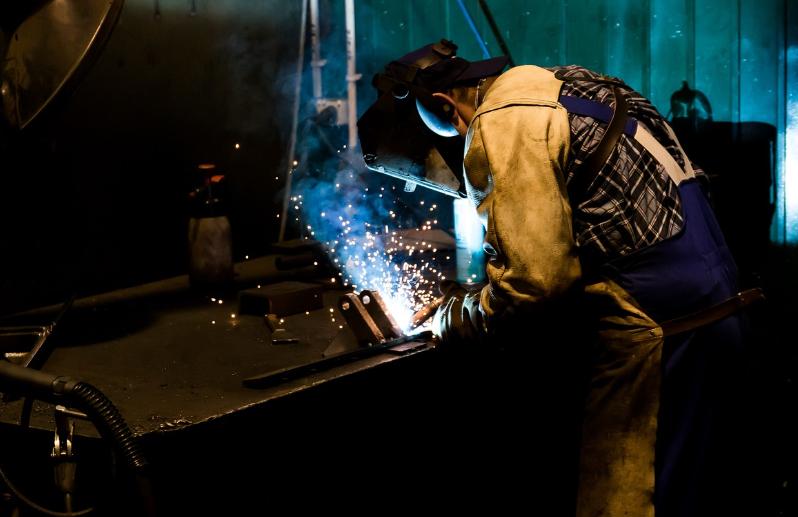
For knife manufacturers and wholesalers, steel selection directly affects production efficiency, yield, and margin. Based on Leeknives’ sourcing experience and feedback from our supplier network, MagnaCut typically reduces total per-blade manufacturing cost by 15–25% compared to S110V — a gap driven by three compounding factors.
Cost Breakdown
| Cost Factor | S110V | MagnaCut | Impact |
|---|---|---|---|
| Raw material | Higher baseline (~25–35% premium) | Lower baseline | S110V patent-protected until 2028; single-source dependency |
| Grinding & abrasive consumption | ~2–3× standard steels | Comparable to CPM-154 at coarse stage | S110V significantly increases belt cost per blade |
| Heat treatment | Narrow window, higher energy | Wider window, more consistent | S110V requires tighter furnace control |
| Scrap rate | 8–12% | 5–8% | MagnaCut delivers better batch yield |
| Tooling wear | High | Moderate | S110V’s carbide density accelerates tool wear |
Based on Leeknives' internal production data accumulated across years of factory partnerships.
To put this in concrete terms: for a standard folding knife blade at mid-production volume, our factory partners estimate an all-in per-blade cost of approximately $48–55 for S110V versus $38–44 for MagnaCut — a $10–12 gap per unit that scales quickly at order quantities of 500+.
Why the Gap Exists
S110V’s ~9% vanadium carbide content is what makes it an edge-retention outlier — and what makes it expensive to process. Those same hard carbides resist abrasive belts, slow feed rates, and demand tighter heat treatment control (austenitizing at 1900–1950°F with little tolerance for deviation).
The result: more abrasive consumption, longer cycle times, and a scrap rate nearly double that of MagnaCut.
MagnaCut was deliberately engineered with a finer carbide microstructure — eliminating coarse chromium carbides in favor of smaller vanadium and niobium carbides.
In practice, this makes it noticeably easier to grind, more forgiving in heat treatment (2050°F with a wider process window), and more consistent across large production batches.
Market Positioning Implication
The cost structure maps directly to positioning:
- S110V belongs in ultra-premium, limited-run contexts — collectors, sprint releases, high-end enthusiast segments — where the cost premium is absorbed into retail pricing.
- MagnaCut supports competitive pricing with healthy margins, making it better suited for EDC, professional-use, and scalable catalog production.
For most B2B buyers, MagnaCut offers a stronger cost-to-performance ratio at production scale. S110V remains the right choice only when maximum wear resistance is the non-negotiable priority and volume is limited.
Conclusion: Which Steel is Better for Your Knife Business?
After examining the chemical composition, mechanical properties, heat treatment requirements, and manufacturing costs, the choice between S110V and MagnaCut depends on your specific business needs and target market.
Quick Summary
| Factor | Winner |
|---|---|
| Wear Resistance | S110V |
| Edge Retention | S110V |
| Toughness | MagnaCut |
| Corrosion Resistance | MagnaCut |
| Ease of Heat Treatment | MagnaCut |
| Manufacturing Cost | MagnaCut |
| Overall Value | MagnaCut |
Choose S110V if: You target the ultra-premium market, need maximum wear resistance, and have access to specialized heat treatment.
Choose MagnaCut if: You need balanced performance, cost efficiency, easier manufacturing, and lower scrap rates for production knives.
For most knife manufacturers, MagnaCut offers better overall value in 2026. Its balanced properties and lower total cost make it ideal for production knives. S110V remains the top choice for ultra-premium applications where wear resistance is the priority.
LeeKnives is a professional knife manufacturer based in Yangjiang City with over 30 years of experience crafting high-quality blades. We supply countless North American and European knife stores, wholesalers, and brands with premium steel knives including S110V, MagnaCut, M390, and more.
Our Services:
- ✅ OEM/ODM customization
- ✅ Multiple steel options (S110V, MagnaCut, M390, S35VN, etc.)
- ✅ Quality control and inspection
- ✅ Global shipping and fulfillment
- ✅ Competitive wholesale pricing
- ✅ Low MOQ for new partners
Whether you’re looking to launch a new premium knife line or expand your existing product range, we can help your business scale up with reliable supply and consistent quality.
Contact us and connect with a sales representative to discuss your steel requirements, get pricing, and learn how we can support your knife business.
Launch Your Custom Knife Line Faster with LeeKnives
Complete OEM/ODM support—from design to final shipment—so you can focus on growth.
Backed by warehouses in the U.S. for fast, reliable delivery.
Frequently Asked Questions
What knives use S110V steel?
S110V is commonly used by premium knife manufacturers including Benchmade, Spyderco, Chris Reeve Knives, and various custom knife makers. It’s typically found in high-end folding knives, custom fixed blades, and limited production runs.
What knives use MagnaCut steel?
MagnaCut has been adopted by numerous manufacturers including Benchmade, Spyderco, ZT, Kershaw, and many custom makers. It’s increasingly popular in EDC folding knives, hard-use fixed blades, and even kitchen knives due to its balanced properties.
How does S110V compare to M390?
S110V offers better wear resistance than M390 due to higher vanadium content (8% vs 4%), but M390 has superior corrosion resistance with 20% chromium. S110V is more difficult to heat treat and machine compared to M390.
How does MagnaCut compare to S35VN?
MagnaCut outperforms S35VN in most categories including toughness, edge retention, and corrosion resistance. Both steels are relatively easy to heat treat, but MagnaCut represents a newer generation of powder metallurgy steel with improved properties.
What is the best steel for EDC knives in 2026?
There’s no single “best” steel, but MagnaCut is an excellent choice for EDC knives due to its balanced properties, easier maintenance, and reasonable cost. Other strong contenders include S35VN, 20CV, and Maxamet depending on specific use cases and budget.




 EN
EN  JA
JA  DE
DE