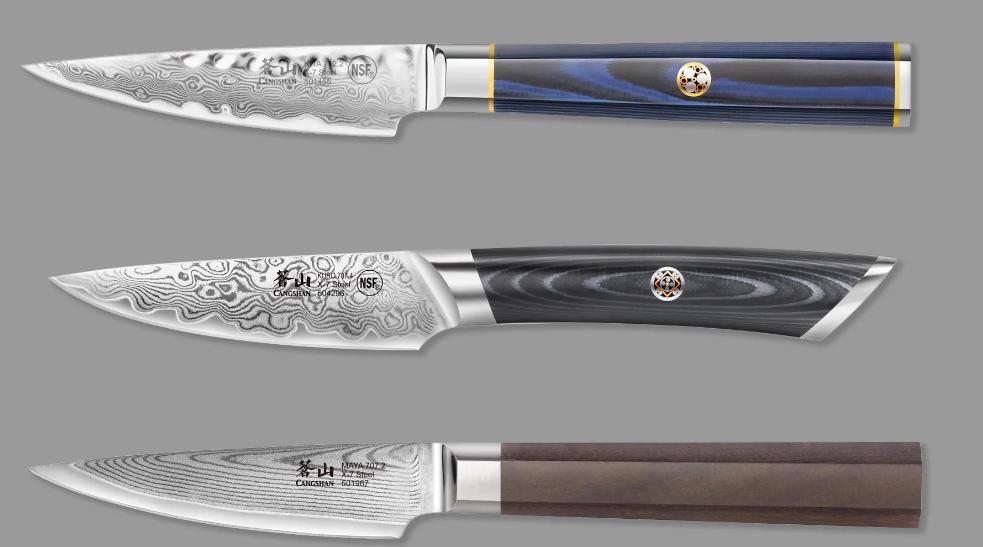
For hospitality procurement managers and retailers, the central pain point remains the same: sourcing high-performance equipment that protects profit margins without compromising the rigorous standards of professional kitchens. Success depends on selecting tools that bridge the gap between aesthetic excellence and industrial durability.
This strategic review of Cangshan knives examines how the brand utilizes premium Swedish and German steels to deliver edge retention scores (601-850 TCC) that often exceed legacy competitors. By analyzing their diverse product lines through a commercial lens, we evaluate the long-term ROI and operational value these award-winning tools offer to your enterprise.
Key takeaways
- Cangshan knives outperform many premium brands in sharpness tests with ICP scores of 130-151 and edge retention scores of 601-850
- The brand offers over two dozen series with different steel types including German X50CrMoV15, Swedish 14C28N, and proprietary X-7 Damascus steel
- While Cangshan knives have minor quality issues, they provide strong performance-to-price value for retailers serving customers who want design and functionality
About the Cangshan brand
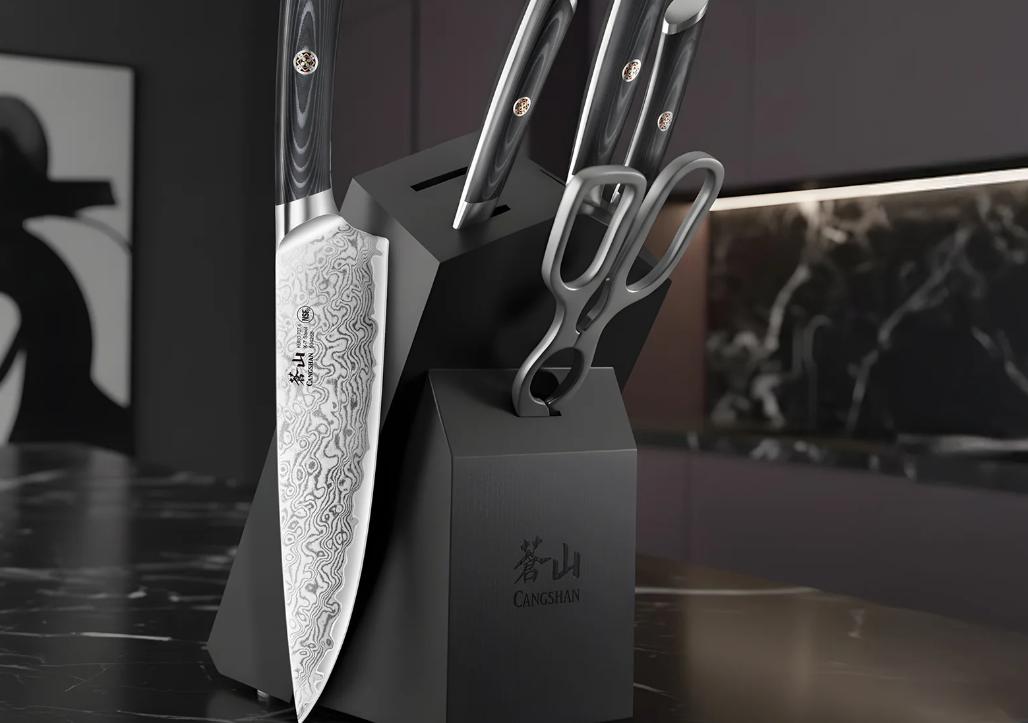
Cangshan Cutlery was founded in 2015 and takes its name from a mountain in Southern China. The company produces its knives in Yangjiang, a Chinese city known for knife-making for over 1,500 years.
Brief history
Cangshan Cutlery combines Eastern and Western knife-making traditions to create high-end kitchen knives. The founder, Henry, was born in China where he ran a successful cutlery company for 11 years before moving to the United States.
When he started Cangshan in 2015, he brought a different vision focused on innovation and design. The company quickly gained recognition in the culinary world.
Cangshan has won several awards, including multiple RedDot awards. Their A-Series won The Gourmet Retailers Editors’ Pick award. In 2019, the Thomas Keller Collection won a RedDot Award after the company collaborated with the Michelin Star chef.
Where are Cangshan knives made?
Cangshan knives are manufactured in Yangjiang, located in Guangdong province, China. This region has produced cutlery for more than 1,500 years.
The company sources materials from various countries across Europe and Asia. For example, some knife lines use Swedish Sandvik 14C28N steel, while others feature German X-7 Damascus steel.
Cangshan focuses heavily on design, materials, and user experience in their production process. Each blade goes through a six-stage heat treatment process. The company spent over two years perfecting the right temperatures for this process to achieve optimal hardness and sharpness.
Cangshan knives review: Quality, performance, and value
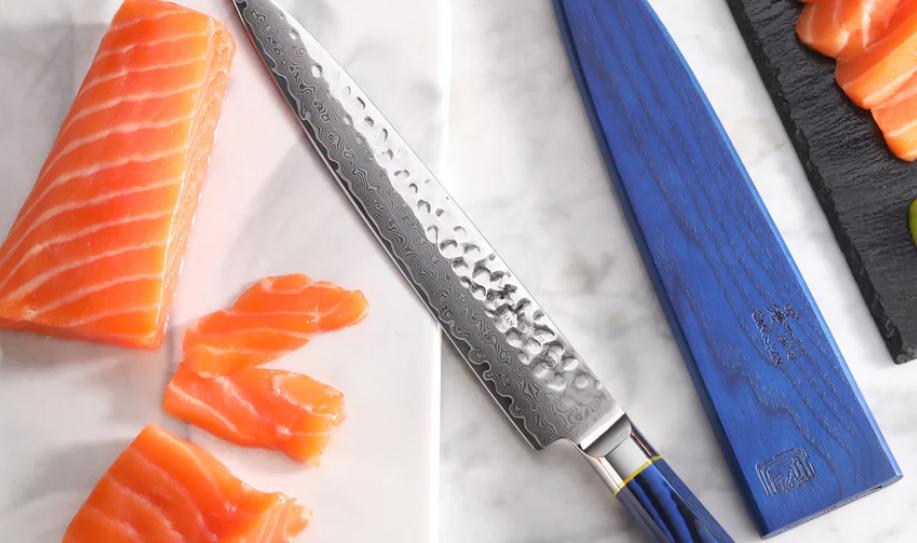
Cangshan combines premium materials like German X50CrMoV15 steel and Swedish Sandvik 14C28N with thoughtful design elements across their 20+ knife series. The brand delivers solid performance at various price points, though some buyers may question the value given the China manufacturing origin.
Design & ergonomics
Cangshan offers diverse handle designs to match different cooking styles and preferences. The Helena series features curved polymer handles with steel butt ends that fill your palm comfortably. These Western-style handles work well for larger hands.
For those who prefer traditional Japanese aesthetics, the Yari series includes octagonal handles made from G10 fiberglass material. The textured angles provide excellent grip during wet prep work. The Haku series uses African blackwood handles that resist scratches and moisture while offering subtle wood grain patterns.
The Thomas Keller Signature Collection has an ergonomic handle that tapers at the end to cradle your pinky finger. This handle features a single rivet with Keller’s signature and curves more than most Western-style designs. The N1 series takes a unique approach with hollow all-steel handles that reduce weight but require cleaning inside the handle cavity.
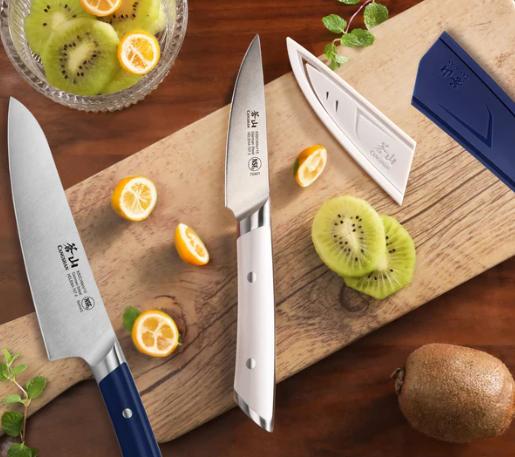
Most Cangshan knives include custom-fit magnetic sheaths that protect the blade during storage. This feature adds safety and convenience compared to traditional knife blocks.
Blade material
Cangshan uses several types of high-quality steel to optimize performance across different price ranges. The German X50CrMoV15 steel contains 0.5% carbon and 15% chromium, creating a balance of sharpness and durability. This high-carbon stainless steel reaches about 58 on the Rockwell hardness scale and appears in the Helena, Elbert, and TN1 series.
The Swedish Sandvik 14C28N steel includes added nitrogen (0.11%) that boosts hardness to 60 Rockwell and improves corrosion resistance. Cangshan uses this steel in the Oliv, TC, and TS series. The fine grain structure delivers better edge retention than softer German steels.
For premium options, the Thomas Keller series uses Swedish Damasteel RWL34. This powdered steel achieves up to 62 Rockwell hardness with exceptional strength and corrosion resistance. The X-7 steel, used in Haku and Yari series, matches VG10 hardness (around 61 Rockwell) with 67 folded layers creating Damascus patterns.
Each steel type undergoes careful heat treatment to maximize performance. The variety lets you choose based on your budget and performance needs.
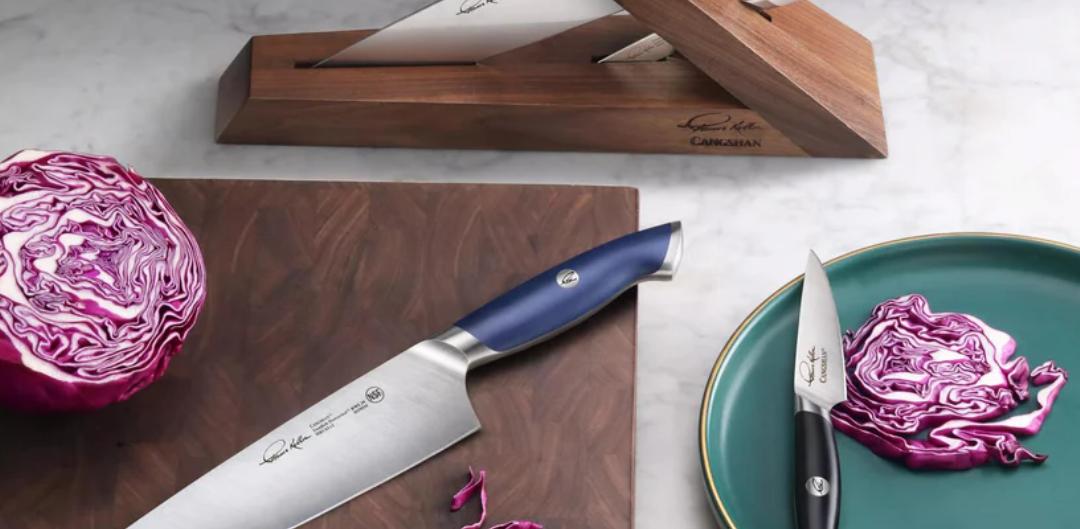
Cangshan sharpens each blade to a 16° angle per side, matching the sharp edge found on premium Japanese knives. Initial Cutting Performance testing shows Cangshan X50CrMoV15 blades score 130, while 14C28N blades score 151. For comparison, high-end German knives score between 62-88, and high-end Japanese knives score 100-108.
The knives slice effortlessly through soft tomatoes and tough squash right out of the box. You can cut vegetables into thin, even matchsticks or slice potatoes into chip-sized pieces without applying excessive pressure.
Edge retention proves equally impressive. Total Card Cut testing measures how long blades stay sharp through heavy use. Cangshan’s X50CrMoV15 steel scored 601 TCC, while their 14C28N steel reached 850 TCC. High-end German knives scored 303-481, and high-end Japanese knives scored 487-514.
However, harder steels like 14C28N and Damasteel RWL34 (over 60 HRC) become more prone to chipping. You need to avoid bones and other hard ingredients when using these premium series.
Construction & durability
Most Cangshan series feature full tang construction where the blade extends through the entire handle. This design provides better balance and durability compared to partial tang knives. The Helena and Thomas Keller series show exposed tangs with visible rivets for traditional Western styling.
The forged blades undergo multi-stage heat treatment processes to achieve optimal hardness. The Thomas Keller series receives a 6-stage heat treatment to reach 61 Rockwell hardness. This careful tempering balances edge retention with toughness.
Some buyers notice minor imperfections in fit and finish. Handle gaps may appear uneven, and blade grinds can show slight asymmetry. These cosmetic issues don’t affect performance but stand out on premium-priced series.
Cangshan launched in 2015, making it a relatively new brand without decades of proven durability. The long-term performance remains uncertain compared to established German and Japanese manufacturers. The knives come with lifetime warranties, but real-world testing over many years hasn’t occurred yet.
Western-style Cangshan knives often weigh over 9 ounces, which can strain your wrist during extended prep sessions.
Price & value
Cangshan prices vary significantly across their 20+ series. Entry-level options with German X50CrMoV15 steel compete with affordable brands. Premium series using Swedish Damascus steel cost substantially more.
The China manufacturing leads some buyers to question the pricing on higher-end series. Other Chinese-made brands with similar histories charge less for comparable materials and construction. However, the rigorous heat treatment and quality control justify higher prices for many users.
The brand offers arguably the best value-for-money ratio in the mid-to-premium market. The cutting performance rivals knives costing twice as much. Testing data shows Cangshan outperforms established German and Japanese brands in sharpness and edge retention metrics.
Knife block sets provide better value than individual knives. Sets often include acacia wood blocks or walnut knife blocks with multiple pieces at discounted prices. Some buyers prefer magnetic knife bars for storage instead.
The custom-fit magnetic sheaths included with individual knives add value compared to brands that charge extra
Popular Cangshan knife series in the market
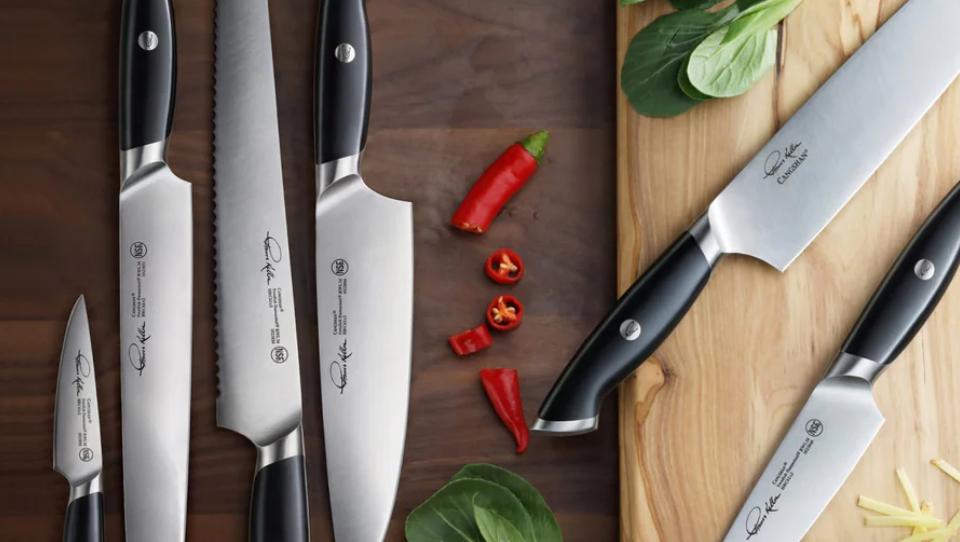
Cangshan offers over two dozen different knife series, each designed with specific materials and features. The most popular series include the S1, N1, and TS collections, which feature German or Swedish steel blades.
Series overview
| Series | Steel | HRC | Price Tier | Typical Price | Key Features |
|---|---|---|---|---|---|
| S1 Series | German X50CrMoV15 | 58+ | Mid-Range | $40 – $100 | ULTRA6 heat treatment, full tang, classic Western design |
| N1 Series | German Alloy Steel | 56-58 | Entry-Level | $30 – $70 | All-steel hollow handle, ice-hardened, minimalist style |
| TS Series | Swedish Sandvik 14C28N | 60 | Premium | $70 – $150 | Slender design, high toughness, excellent balance |
| Thomas Keller | Swedish Damasteel RWL34 | 61-62 | Luxury | $150 – $350 | 6-stage heat treatment, master-level ergonomics |
| Haku / Yari | X-7 Damascus Steel | 61 | Premium+ | $120 – $250 | 67-layer Damascus, Japanese aesthetics |
The Cangshan S1 Series stands out as one of the top-selling collections you’ll find. These knives use tight-grain German steel with full tang construction. You get a 58+ Rockwell hardness rating across the series.
Each S1 knife goes through the ULTRA6 heat treatment process. This makes them exceptionally sharp and resistant to stains. The series includes a chef’s knife, paring knife, bread knife, santoku knife, boning knife, serrated utility knife, steak knives, and kitchen shears.
The Cangshan N1 series features high-alloy German steel blades with ice-hardening technology. Your knives come with a 56-58 hardness rating. The 17-piece set includes eight different blade types plus six 5-inch steak knives.
The Cangshan TS Series uses Swedish Sandvik steel instead of German steel. You’ll notice these knives have a sleeker, slimmer design compared to the S1 series. The TS collection offers the same variety of blade types in both 17-piece and smaller sets.
The Thomas Keller Signature Collection represents the brand’s luxury offering. These knives utilize Swedish Damasteel RWL34 powdered steel and undergo a rigorous 6-stage heat treatment to reach 61-62 Rockwell hardness. Designed for professional use, they feature superior ergonomics and high-performance edge retention.
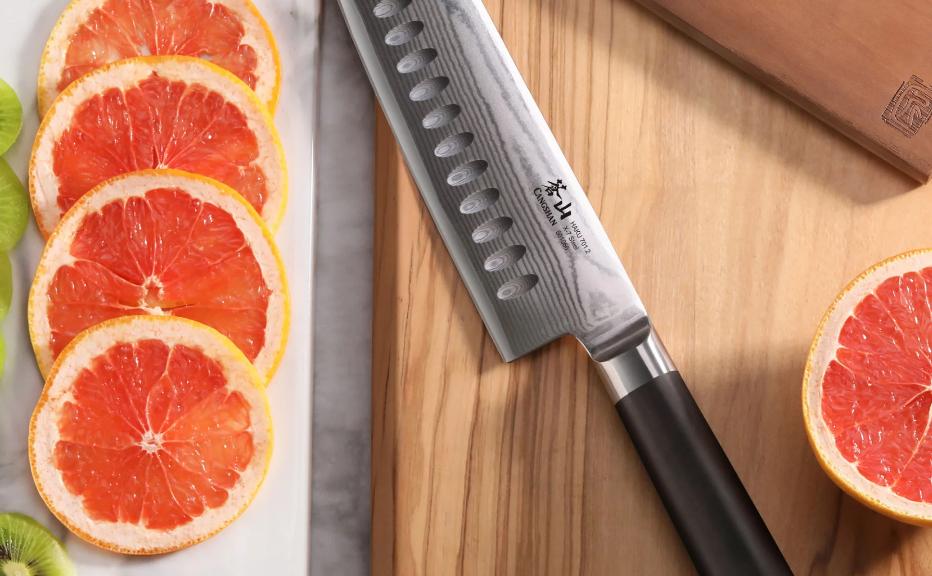
For those seeking traditional aesthetics, the Haku and Yari series feature X-7 Damascus steel. Each blade consists of 67 layers of folded steel, achieving a 61 Rockwell hardness rating. These collections blend Japanese-inspired design with modern manufacturing to provide a high-end experience for specialty retailers.
Pros and cons of Cangshan knives
Pros
- Elite Cutting Performance: Scores 130-151 on ICP tests, surpassing many legacy brands in initial sharpness. Cangshan knives deliver exceptional sharpness right out of the box. Their X50CrMoV15 steel scores 130 on Initial Cutting Performance tests, while the 14C28N steel reaches 151, outperforming many legacy German and Japanese brands.
- Superior Edge Retention: Reaches up to 850 on TCC testing, ensuring long-lasting performance in professional settings. The edge retention is equally impressive, with the 14C28N steel scoring 850 on Total Card Cut testing. Most knives also include custom-fit magnetic sheaths to protect the blade and ensure safety in busy kitchens.
- Extensive Variety: Offers over two dozen series featuring premium materials like African Blackwood and G10 fiberglass. Buyers benefit from extensive variety, with over two dozen series ranging from Western designs to traditional Japanese handles. The use of premium materials like African Blackwood and G10 fiberglass ensures professional-grade durability.
Cons
- Significant Physical Heft: Western-style models often exceed 9 ounces, potentially leading to wrist strain and fatigue during extended prep sessions. While the weight provides stability for heavy-duty tasks, it may not suit users who prefer the nimble feel of lightweight cutlery. This substantial heft can become a disadvantage in high-volume commercial kitchens where speed and agility are paramount.
- Quality Control Variances: Fit and finish issues occasionally occur, including uneven handle gaps and asymmetrical blade grinds. These cosmetic inconsistencies can be disappointing for premium-priced collections. Furthermore, harder steels exceeding 60 HRC are prone to chipping if they strike bone or hard surfaces, requiring disciplined handling.
- Market Positioning & Longevity: Certain series are priced higher than other high-quality Chinese-manufactured competitors, which might affect the overall value proposition. Because the brand was established in 2015, its long-term structural durability hasn’t been tested over multiple decades. This lack of historical data makes it harder to compare them directly to century-old heritage brands.
Cangshan knives vs. other brands
Cangshan competes with established knife makers through lower prices and modern designs, while brands like Wüsthof and Henckels offer proven German craftsmanship. The main differences come down to blade hardness, sharpness angles, construction methods, and overall cost.
Overview comparison chart
| Feature | Cangshan | Wüsthof | Henckels |
|---|---|---|---|
| Founded | 2015 | 1814 | 1731 |
| Country of Origin | China | Germany | Global |
| Market Position | Mid-Premium | Heritage | Mass Market |
| Margin | High | Moderate | High |
| Blade Material | German/Swedish | X50CrMoV15 | German Steel |
| Blade Hardness (HRC) | 56-62 | 58 | 57 |
| Edge Retention | 601-850 TCC | 303-481 TCC | 300+ TCC |
| Production Scale | Large | Large | V. Large |
| OEM/ODM | Yes | No | Mixed |
| MOQ | 500+ | 1000+ | 2000+ |
| Lead Time | 60-90 Days | 90+ Days | 30-60 Days |
| Feature | Shun | Zwilling | Dalstrong |
|---|---|---|---|
| Founded | 1908 | 1731 | 2012 |
| Country of Origin | Japan | Germany | China |
| Market Position | Luxury | Premium | Value Modern |
| Margin | Moderate | Moderate | High |
| Blade Material | VG-MAX/VG10 | German Steel | Various |
| Blade Hardness (HRC) | 60-61 | 57 | 56-62 |
| Edge Retention | 487-514 TCC | 400+ TCC | 400+ TCC |
| Production Scale | Medium | Large | Large |
| OEM/ODM | No | No | Yes |
| MOQ | 500+ | 1000+ | 200+ |
| Lead Time | 90+ Days | 60-90 Days | 45-75 Days |
Cangshan vs. Henckels
Founded in 1731, Henckels is a global leader in mass-market cutlery. While its legacy is unmatched, Cangshan competes by offering modern steel diversity that traditional Henckels lines often lack.
- Margin & Pricing Strategy: Henckels International targets high-volume, low-margin retail. Cangshan occupies the mid-to-premium space, offering higher perceived value and better margin potential for specialty retailers.
- Material Diversity: While Henckels relies on standard German stainless steel (57 HRC), Cangshan integrates Swedish and Japanese alloys, reaching 60-62 HRC for superior edge retention.
- Manufacturing Precision: Henckels mass-produces stamped blades for its entry lines. Cangshan prioritizes multi-stage heat treatment even for mid-range series, offering better edge geometry.
Which is better for your business: Choose Henckels for high-volume, price-sensitive distribution; choose Cangshan for customers seeking premium performance at a competitive wholesale price point.
Cangshan vs. Wüsthof
Wüsthof, established in 1814 in Solingen, Germany, represents the pinnacle of heritage craftsmanship. The brand is a staple for professional procurement managers who prioritize consistency above all else.
- Supply Chain Stability: Wüsthof’s “Made in Germany” label carries significant brand weight. However, Cangshan’s Chinese manufacturing allows for more agile production cycles and aggressive cost structures.
- Performance Metrics: Wüsthof uses a uniform 14-degree angle for elite sharpness. Cangshan counters with 16-degree angles and diverse heat treatments that often lead to higher TCC edge retention scores.
- Procurement Flexibility: Wüsthof maintains rigid wholesale structures suited for established chains. Cangshan offers more adaptable partnership terms for emerging premium retailers.
Which is better for your business: Wüsthof is ideal for prestige branding; Cangshan is the strategic choice for businesses looking to maximize ROI without sacrificing technical specifications.
Cangshan vs. Shun
Shun is the premier brand for Japanese-style cutlery, owned by the Kai Group (est. 1908). It targets the luxury culinary niche with high-end Damascus aesthetics and VG-MAX steel cores.
- Aesthetic Differentiation: Shun’s D-shaped handles and Damascus patterns are iconic but costly. Cangshan offers similar aesthetics (like the Haku series) at a significantly lower wholesale entry point.
- Maintenance & Durability: Shun knives are brittle and require professional care. Cangshan’s use of Swedish 14C28N steel provides a more durable “workhorse” alternative for commercial environments.
- Cost-Efficiency: Shun’s pricing includes a significant luxury brand tax. Cangshan delivers comparable technical performance (HRC 60+) at a price point that facilitates higher inventory turnover.
Which is better for your business: Shun serves the ultra-premium specialty market; Cangshan provides a more versatile, high-margin alternative for professional and home gourmet segments.
Cangshan vs. Zwilling
Zwilling represents the premium tier of the Zwilling J.A. Henckels group. It is the benchmark for German engineering, focusing on full-forged construction and ergonomic stability.
- OEM/ODM Flexibility: As a heritage brand, Zwilling maintains rigid product lines. Cangshan offers more flexibility in design, allowing retailers to stock a wider variety of unique handle materials and finishes.
- Weight & Ergonomics: Zwilling knives are typically heavier, appealing to traditionalists. Cangshan’s lighter designs reduce fatigue, making them more attractive for modern high-volume prep environments.
- Market Agility: Zwilling’s product development follows a conservative heritage cycle. Cangshan releases new ergonomic designs and limited editions more frequently to capture shifting consumer trends.
Which is better for your business: Zwilling is the safe choice for established luxury retail; Cangshan is better for agile brands that want to offer modern, high-performance tools.
Cangshan vs. Dalstrong
Dalstrong (est. 2012) is Cangshan’s most direct modern competitor. Both brands utilize Chinese manufacturing to disrupt the market with bold designs and diverse steel options.
- Marketing vs. Engineering: Dalstrong leans heavily into aggressive, social-media-friendly branding. Cangshan focuses more on design awards and professional chef collaborations (like Thomas Keller), building a more “serious” culinary reputation.
- Product Range: Both offer massive variety, but Cangshan’s focus on ergonomic patents and high-end Swedish steels gives it a slight edge in professional kitchen procurement.
- B2B Credibility: Dalstrong prioritizes digital “hype” and social media presence. Cangshan invests in industry-recognized design awards and culinary endorsements, lending more weight to professional catalog listings.
Which is better for your business: Dalstrong is great for e-commerce brands focused on “lifestyle” marketing; Cangshan is the superior partner for retailers focusing on culinary performance and professional credibility.
Strategic advantage: How Leeknives supports scalable growth
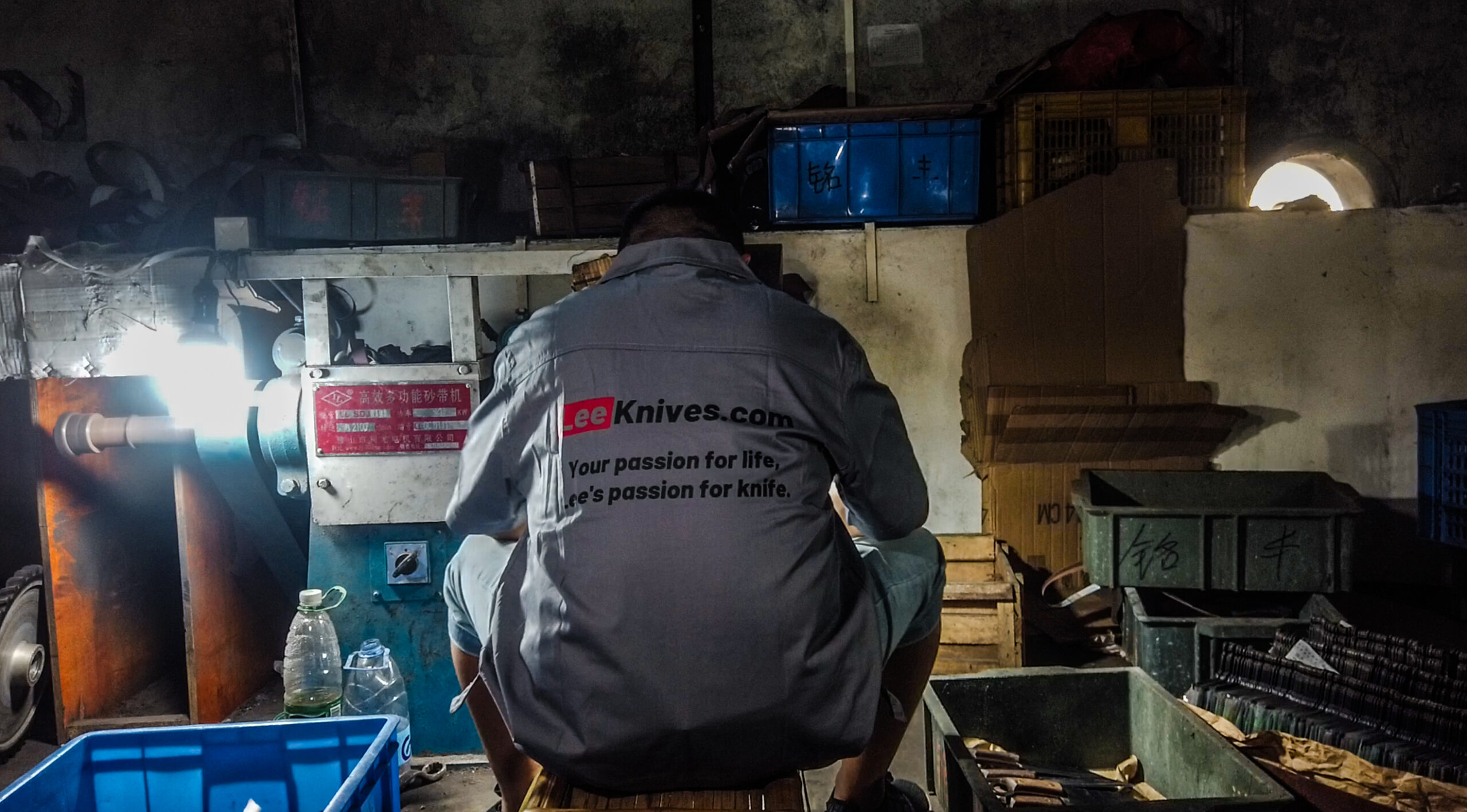
To achieve sustainable growth in the cutlery market, retailers must transition from being price-takers to brand-makers. Leeknives facilitates this evolution by offering the design flexibility and manufacturing scale required to compete with global heritage brands.
The following table outlines how partnering with Leeknives provides a superior strategic advantage over traditional distribution models by prioritizing brand control and profit potential:
| Feature | Brand Distribution | Leeknives (Private Label) |
|---|---|---|
| Brand Ownership | Reseller only | 100% Brand Equity |
| Profit Margins | Limited/Fixed | High (Factory Direct) |
| Product Customization | None (Standard SKUs) | Full Design Control |
| Market Competition | Compete on Price with Others | Unique, Exclusive Products |
| MOQ | Fixed/High (Retailer Tiers) | Flexible (Start from 50-200pcs) |
| Lead Time | 90+ Days (Inventory Dependent) | 45-60 Days (Direct Production) |
| Shipping & Cost | Higher (Standard Logistics) | Optimized Direct Freight |
While the differences above are structural, their real value lies in how they translate into day-to-day business performance:
1. Higher margins through cost control
With factory-direct production, you eliminate brand premiums and intermediary markups. More importantly, you can adjust materials, finishes, and packaging to match target cost points, allowing you to:
- Maintain consistent margins across different SKUs
- Introduce tiered pricing (entry to premium)
- Avoid margin erosion caused by price competition
2. Differentiation that reduces price competition
Instead of selling identical products, Leeknives enables you to create non-comparable SKUs through design and material customization.
This means:
- Customers evaluate your products on value—not just price
- Competitors cannot directly undercut you with the same offering
- Your conversion rate improves due to perceived uniqueness
3. Building brand equity that drives repeat sales
Private labeling shifts customer ownership from the manufacturer to you. With consistent branding across products and packaging, you can:
- Increase repeat purchase rates
- Strengthen brand recognition across channels
- Gradually introduce higher-margin products under the same brand
4. Pricing power and market positioning
Without MAP restrictions or market price anchoring, you gain full control over pricing strategy. This allows you to:
- Position products in premium or niche segments
- Run promotions without external constraints
- Optimize pricing based on channel (Amazon, retail, wholesale)
Looking for a reliable kitchen knife manufacturer?
Choosing the right manufacturer is critical for scaling your cutlery brand. As seen with Cangshan, success comes from balancing premium materials like Swedish and German steel with rigorous quality control and modern design capabilities.
For wholesalers and retailers looking to achieve similar performance-to-price ratios, finding a reliable partner in China is the most efficient path to market. You need a manufacturer that understands Western quality standards and offers flexible production options.
At Leeknives, we specialize in helping European and American brand owners through professional wholesale, OEM, and private label services. Our expertise in Chinese manufacturing ensures your products meet the highest industry benchmarks while protecting your margins.
Ready to elevate your inventory with high-performance kitchen tools? Request a free quote from Leeknives today and let us help you build a profitable cutlery line tailored to your specifications.
Buy Wholesale Knives and Start Scaling up with Us Today
Contact us and connect with a sales rep to get a free quote.
Frequently asked questions
Cangshan knives require hand washing only, are sharpened to a specific 16-degree angle, and come with lifetime warranty coverage against defects.
Are Cangshan knives dishwasher safe?
You should never put your Cangshan knives in the dishwasher. The hot water and steam can damage the heat treatment properties of the blade, which affects how well your knife cuts and holds its edge.
Dishwashers also move knives around during the cycle. This causes them to bump into other items and get damaged. The extended exposure to water and cleaning solutions may also cause rust to form on the blade.
You need to hand wash your knives with mild soap and water instead. Dry them immediately after washing to prevent any oxidation or rust spots from developing.
What is the correct sharpening angle for Cangshan knives?
All Cangshan knives are sharpened to a 16-degree angle on each side of the blade. This angle gives you a good balance between sharpness and durability for everyday kitchen tasks.
Your knife should stay sharp for 9 to 12 months with regular daily use. You can extend this time by using a honing steel on a weekly or monthly basis to keep the edge aligned.
When you need to sharpen your knife, you have several options. You can use a pull-through sharpener, a whetstone with a leather strop, or take your knives to a professional sharpening service.
A simple paper test helps you check if your blade needs attention. If the knife doesn’t easily slice through paper along its full length, it’s time to either hone or sharpen the edge.
What warranty does Cangshan offer?
Cangshan provides a lifetime warranty on their knives against manufacturing defects. This warranty covers issues with materials and workmanship that occur under normal use conditions.
The warranty does not cover damage from misuse, accidents, or normal wear and tear. Items like wooden knife blocks can become discolored or warped if exposed to liquids or harsh cleaners for extended periods, and these issues are not covered under the warranty.
You need to follow proper care instructions to keep your warranty valid. This means hand washing your knives, drying them immediately, and storing them properly when not in use.




 EN
EN  JA
JA  DE
DE