
Finding the right wholesale cookware supplier depends on what you’re selling and how quickly you need to restock. A retailer stocking cookware for store shelves has different needs from a restaurant buying commercial pots and pans or an Amazon seller testing new products.
We recommend choosing your sourcing channel before comparing suppliers. It determines your minimum order quantities, shipping costs, inventory availability, and how quickly you can replenish bestsellers.
In this guide, we compare 12 cookware wholesale suppliers and sourcing options across three channels: national online distributors, regional wholesalers, and China-direct sourcing. We’ll cover their product ranges, ordering requirements, shipping coverage, and the trade-offs worth considering before placing your first order.
Key Takeaways
- You can start with small orders. PGM Express offers one-carton minimums, while Restaurant Depot provides free membership for qualifying businesses and no minimum purchase requirements.
- Domestic distributors are better for quick restocking. National online suppliers and regional warehouses generally offer faster replenishment than importing directly from China.
- China-direct sourcing requires more coordination. You’ll need to account for freight, quality inspections, and customs compliance. Sourcing agents can help consolidate orders from multiple manufacturers.
- Consider private labeling as your business grows. Wholesale cookware is useful for testing demand, but OEM manufacturing becomes worth exploring when you need greater product differentiation and control over specifications.
Best Cookware Wholesale Distributors at a Glance
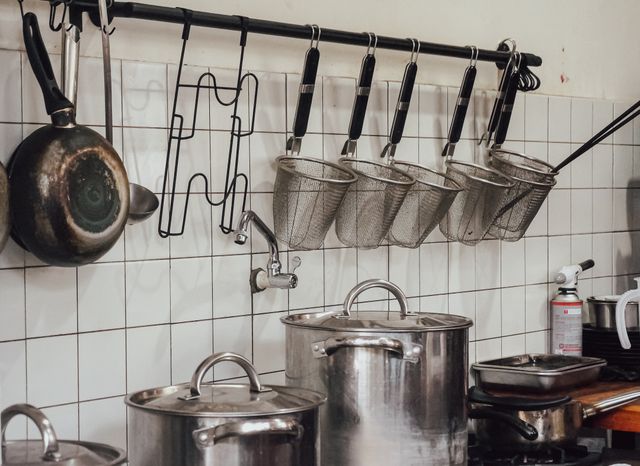
Not sure where to start? We’ve narrowed down the best wholesale cookware suppliers based on their product selection, ordering requirements, and sourcing advantages.
| Best for | Recommended supplier |
| Extensive online cookware selection | WebstaurantStore |
| Fast commercial cookware supply | KaTom |
| Asian cookware and kitchenware | KEY Company |
| Small wholesale orders (1 carton) | PGM Express |
| Nationwide cash-and-carry purchasing | Restaurant Depot |
| Pacific Northwest showrooms and local support | Bargreen Ellingson |
| Los Angeles import-district sourcing | Kitchen Depot |
| cookware shipments from China + US-stock restocking | LeeKnives |
| Managed China sourcing, QC, and consolidation | Nichesources |
| Low-MOQ factory-direct stainless cookware | Hanfa |
Our suggestion: If you’re testing new products, start with a domestic supplier offering small orders and quick replenishment. Once you’ve identified consistent sellers, compare China-direct sourcing to see whether the savings justify larger orders, shipping costs, and additional quality control.
Buy Wholesale Cookware and Start Scaling up with Us Today
Contact us and connect with a sales rep to get a free quote.
Three Ways to Buy Wholesale Cookware
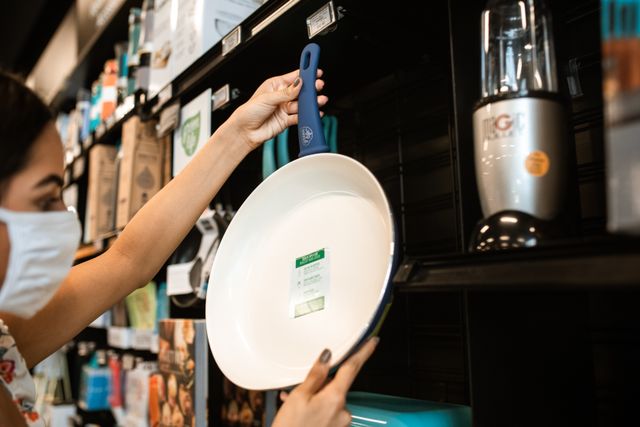
There are three main ways to source wholesale cookware: national online distributors, regional wholesalers, and China-direct suppliers. Each offers different advantages depending on your order volume, budget, and restocking needs.
| Channel | How it works | Minimums | Lead time | Best for |
| National online distributors | Order ready-stock cookware online, usually in cases or bulk quantities. | Often one case or no stated minimum. | Typically days for in-stock items. | Retailers, Amazon sellers, and restaurants needing regular restocks. |
| Regional cash & carry / import districts | Visit warehouses or wholesale showrooms, inspect products, and purchase available inventory. | Often low or no minimum; varies by supplier. | Same-day pickup for available stock. | Local retailers, restaurants, and buyers who prefer inspecting products. |
| China-direct sourcing | Purchase from factories or use sourcing agents to combine orders from multiple suppliers. | Varies widely, from small trial orders to container-scale purchases. | Usually several weeks, depending on production and freight. | Importers and established sellers looking for volume pricing. |
Which wholesale cookware channel should you choose?
For beginners, we recommend national online distributors. You can test different cookware products without committing to large orders. Domestic inventory also makes it easier to replenish popular products before they sell out.
Regional wholesalers are worth considering if you can visit their warehouses. For example, Los Angeles has an established kitchenware import district around Vernon, where buyers can compare products from multiple importers and inspect cookware before purchasing.
China-direct sourcing becomes more attractive as your order volumes increase. Factory pricing can be competitive, especially for larger shipments, but you’ll need to account for international freight, customs duties, food-contact compliance, and quality inspections.
If you’re buying smaller quantities from several Chinese factories, a sourcing agent can consolidate those orders into one shipment and coordinate quality checks.
Our recommendation: Start with domestic stock to validate demand, then compare the total landed cost of China-direct sourcing once you have predictable sales volumes. This helps you avoid tying up too much capital in inventory before knowing which cookware products will sell consistently.
List of wholesale cookware distributors
We’ve selected 12 cookware suppliers covering different purchasing needs, from established US distributors with ready-to-ship inventory to Chinese manufacturers offering factory-direct pricing.
Some specialize in commercial cookware for restaurants, while others cater to retailers, marketplace sellers, and importers. We’ve also included sourcing agents and factory-direct suppliers, clearly identifying their business models so you can compare them fairly.
If you're looking to purchase directly from factories, explore our cookware manufacturers guide. For private-label production, custom specifications, or your own cookware brand, see our custom cookware manufacturers guide.
Here’s how they compare.
| Distributor | Type | Location | Cookware depth | Minimums | Coverage | Best for |
| 1. WebstaurantStore | Online distributor | Pennsylvania, USA | Extensive commercial cookware | No stated minimum | Nationwide US | Large product selection |
| 2. KaTom | Online distributor | Tennessee, USA | Extensive commercial cookware | No stated minimum | Nationwide US | Fast commercial supply |
| 3. KEY Company | Wholesale distributor | California, USA | Asian cookware and appliances | Wholesale account required | Nationwide US | Asian kitchenware |
| 4. PGM Express | Online wholesaler | California, USA | Kitchenware and home goods | 1 carton | Nationwide US | Small orders |
| 5. Restaurant Depot | Cash-and-carry wholesaler | 100+ US warehouses | Commercial cookware and smallwares | No minimum purchase | Nationwide US | Walk-in wholesale buying |
| 6. Bargreen Ellingson | Regional dealer | Washington, USA | Commercial cookware and equipment | Not publicly listed | Western US and Canada | Showroom purchasing |
| 7. Kitchen Depot | Retail and wholesale importer | Los Angeles, USA | Broad kitchenware catalog | On request | LA and shipping | Import-district sourcing |
| 8. LeeKnives | Manufacturer and sourcing integrator | Yangjiang, China | Stock cookware and custom sourcing | 100–500 pieces | Global + US warehouse stock | Mixed knives and cookware |
| 9. Nichesources | Sourcing agent | China | Multiple cookware categories | Project-dependent | Global | Managed China sourcing |
| 10. Telamon | Manufacturer | Jinhua, China | Aluminum nonstick cookware | Around 1,000 sets | International | Large-volume cookware orders |
| 11. Raylon Enterprise | Trader with invested factories | Zhengzhou, China | Cast iron cookware | Varies | 30+ countries | Cast iron specialists |
| 12. Hanfa | Manufacturer | Chaozhou, China | Stainless steel cookware | From 2 sets on Alibaba | International | Low-MOQ factory sourcing |
Minimums and supplier details are based on the supplied October 2026 research. Confirm current stock, prices, shipping coverage, and account requirements directly before ordering.
National Online Cookware Distributors
These suppliers are a practical starting point if you want to purchase cookware in the US without managing international freight or customs clearance.
1. WebstaurantStore: Best for Overall Cookware Selection
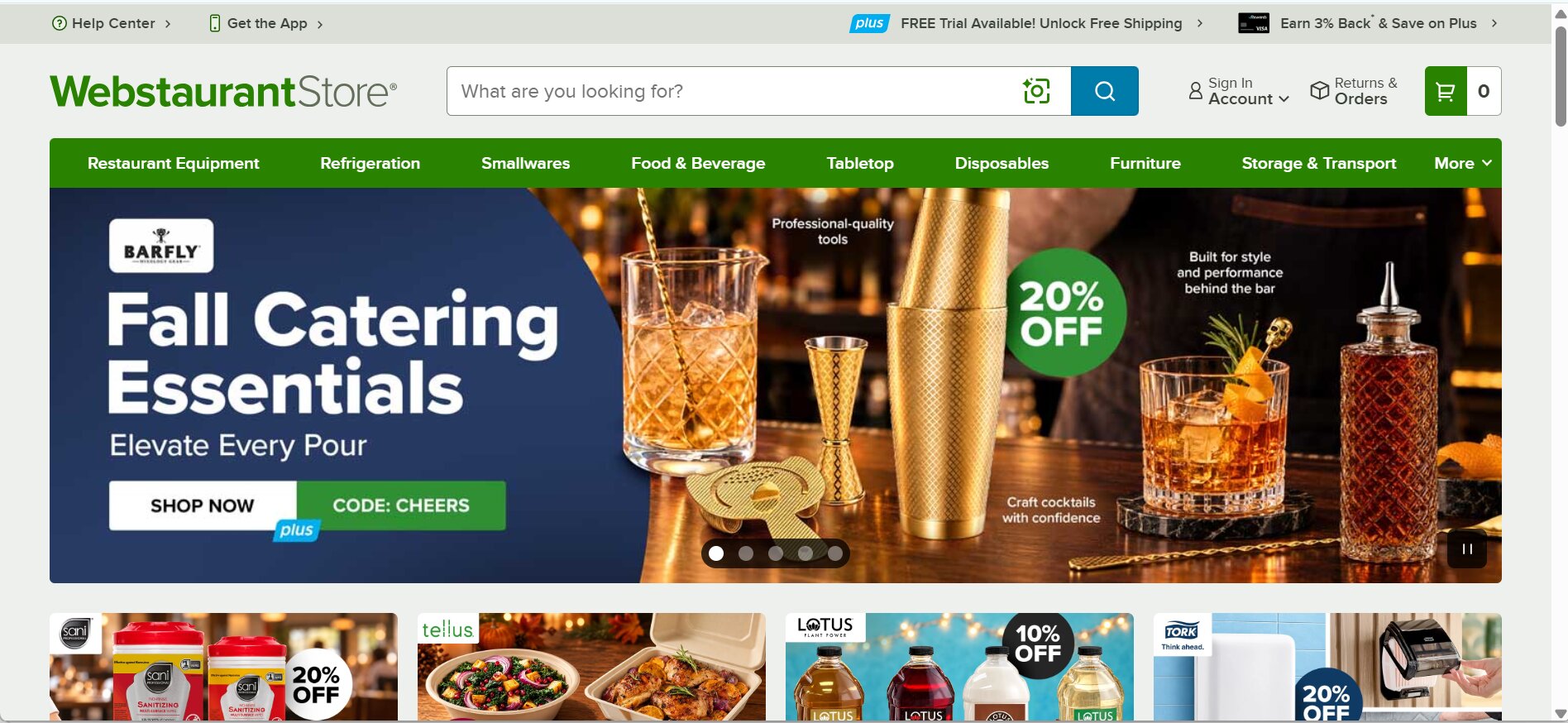
WebstaurantStore is one of the largest online restaurant-supply retailers in the US, offering more than 400,000 products across cookware, kitchen equipment, foodservice supplies, and restaurant essentials.
Its cookware selection includes commercial frying pans, saucepans, stockpots, baking equipment, and products from brands such as Vollrath alongside more affordable house brands.
The company operates six distribution centers across the US, allowing many in-stock products to ship within one business day.
Unlike traditional B2B wholesalers, WebstaurantStore doesn’t require a business license or paid membership to place an order. Buyers can also access quantity discounts on eligible products, making it useful for both small purchases and larger restaurant-supply orders.
For resellers, we recommend comparing its case-pack pricing with other suppliers before committing to recurring inventory purchases. The convenience of online ordering and fast fulfillment may come at a higher cost than buying directly from importers.
- Pros: Extensive product catalog, nationwide fulfillment, no membership requirement, quantity discounts.
- Cons: Not necessarily the lowest wholesale prices at scale; return shipping can be expensive.
- Ideal for: Restaurants, catering businesses, and retailers needing a broad selection of commercial cookware.
2. KaTom: Best for Fast Commercial Cookware Supply
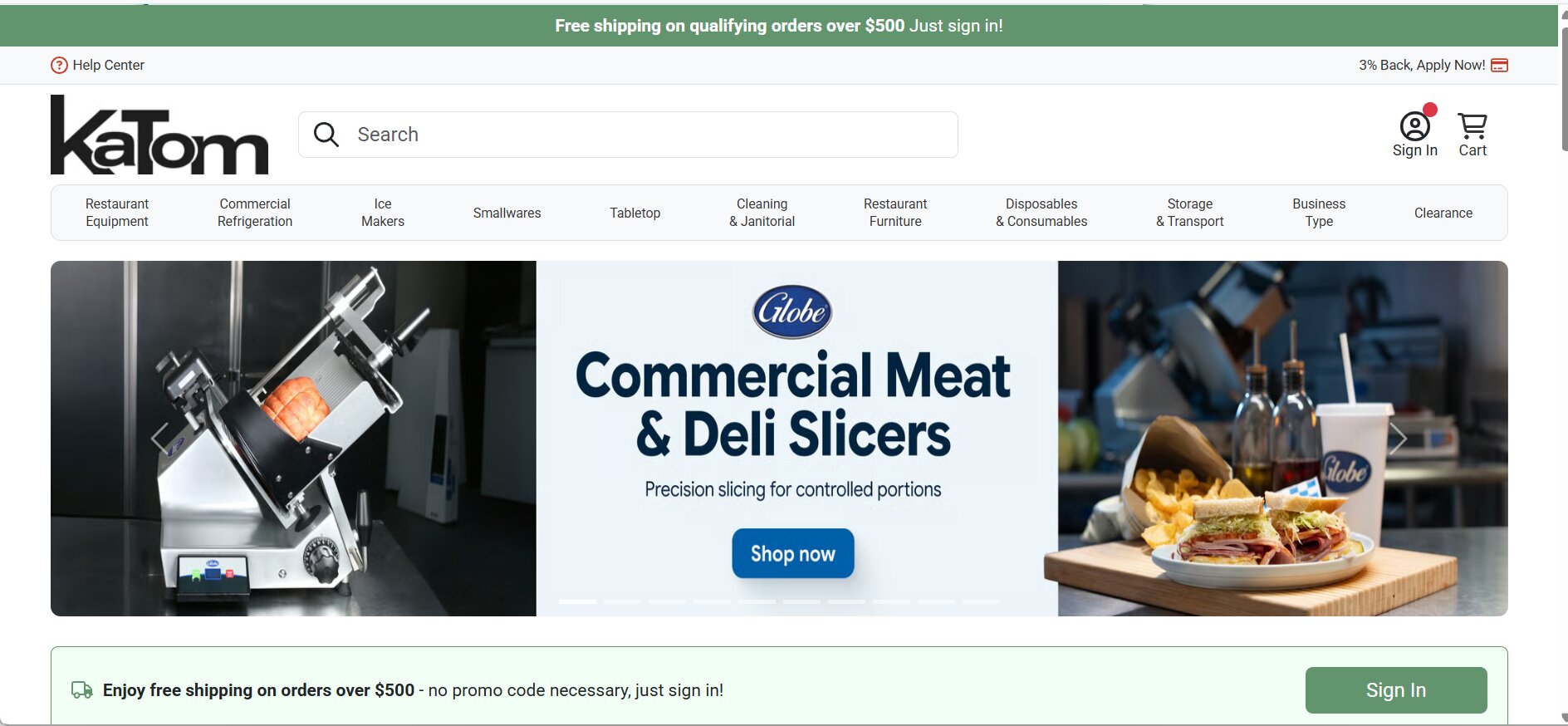
KaTom Restaurant Supply is a Tennessee-based restaurant equipment distributor founded in 1987. It offers more than 130,000 products, including cookware, foodservice equipment, and commercial kitchen supplies.
Its cookware catalog includes brands such as Vollrath, Carlisle, and its own MoTak line, covering everything from commercial pots and pans to kitchen accessories.
KaTom offers wholesale pricing without requiring membership, and many stocked products are available for shipment within one business day.
We consider KaTom especially useful for restaurant-supply buyers who need dependable access to established commercial brands. Compared with WebstaurantStore, its catalog is smaller, but it remains a strong alternative for comparing products, prices, and delivery options.
One consideration for retailers is packaging. Commercial cookware is often designed for professional kitchens, so not every product will have the retail-ready presentation expected in consumer stores.
- Pros: Strong commercial cookware selection, fast fulfillment on eligible items, established supplier, no membership requirement.
- Cons: Smaller catalog than WebstaurantStore; commercial products may lack retail-ready packaging.
- Ideal for: Restaurants, caterers, culinary schools, and commercial kitchen suppliers.
3. KEY Company: Best for Asian Kitchenware
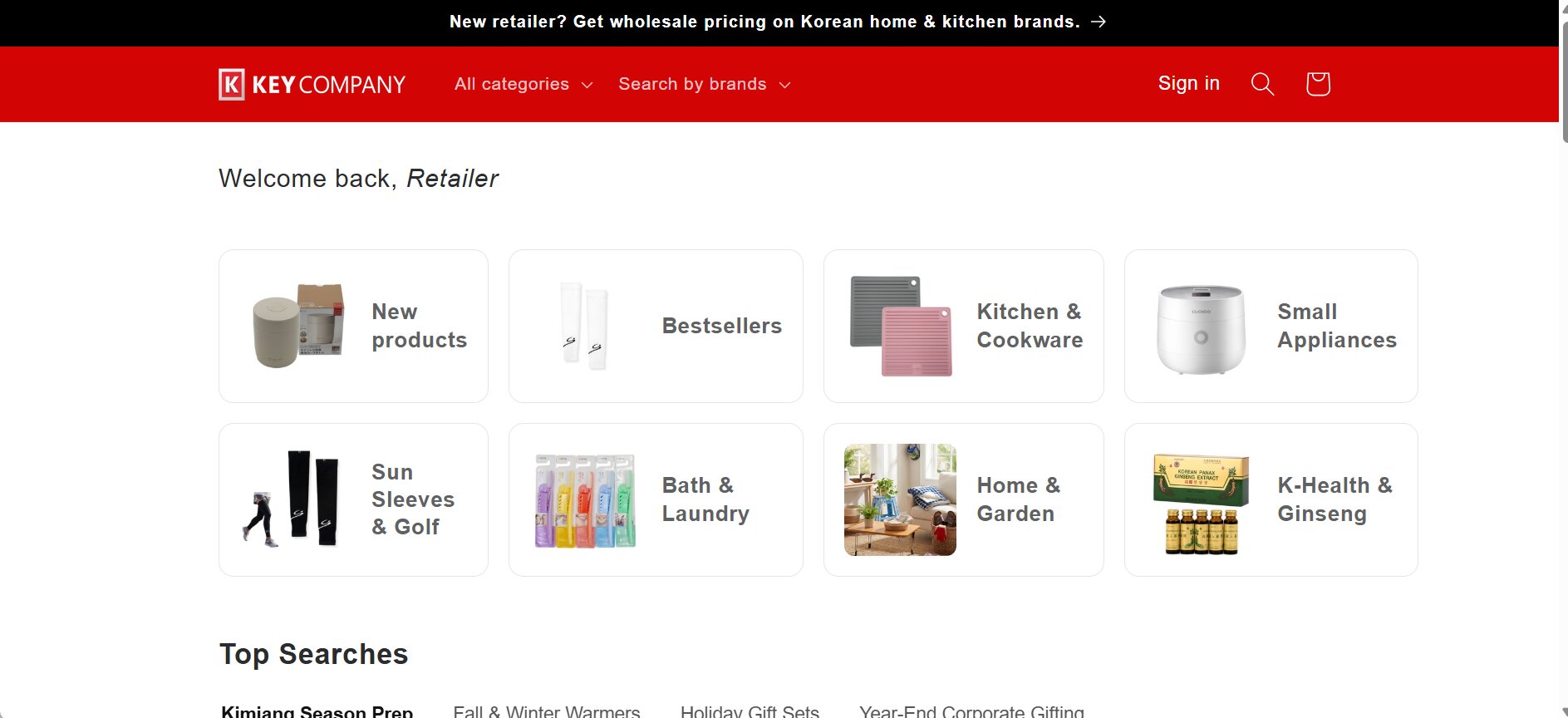
KEY Company is a California-based wholesale distributor specia
KEY Company is a California-based wholesale distributor specializing in Asian kitchenware, cookware, and household appliances.
Established in 1998, the company supplies retailers, Asian supermarkets, grocery stores, and ecommerce businesses throughout the US.
Its product assortment includes rice cookers, pressure cookers, cookware, kitchen accessories, and other household products commonly found in Asian kitchens.
This specialization is its biggest advantage. If you’re stocking Asian kitchenware, KEY Company offers a more focused assortment than general restaurant-supply distributors.
KEY operates through wholesale accounts, so buyers should confirm account approval requirements, case quantities, and available inventory before ordering.
We recommend checking whether your preferred products are consistently restocked, particularly if you’re planning to build an online catalog around specific cookware models.
- Pros: Specialized Asian kitchenware selection, established wholesale business, domestic distribution.
- Cons: Wholesale account approval required; narrower focus than general cookware suppliers.
- Ideal for: Asian grocery stores, specialty kitchenware retailers, and ecommerce sellers targeting Asian cooking products.
4. PGM Express: Best for Small Wholesale Orders
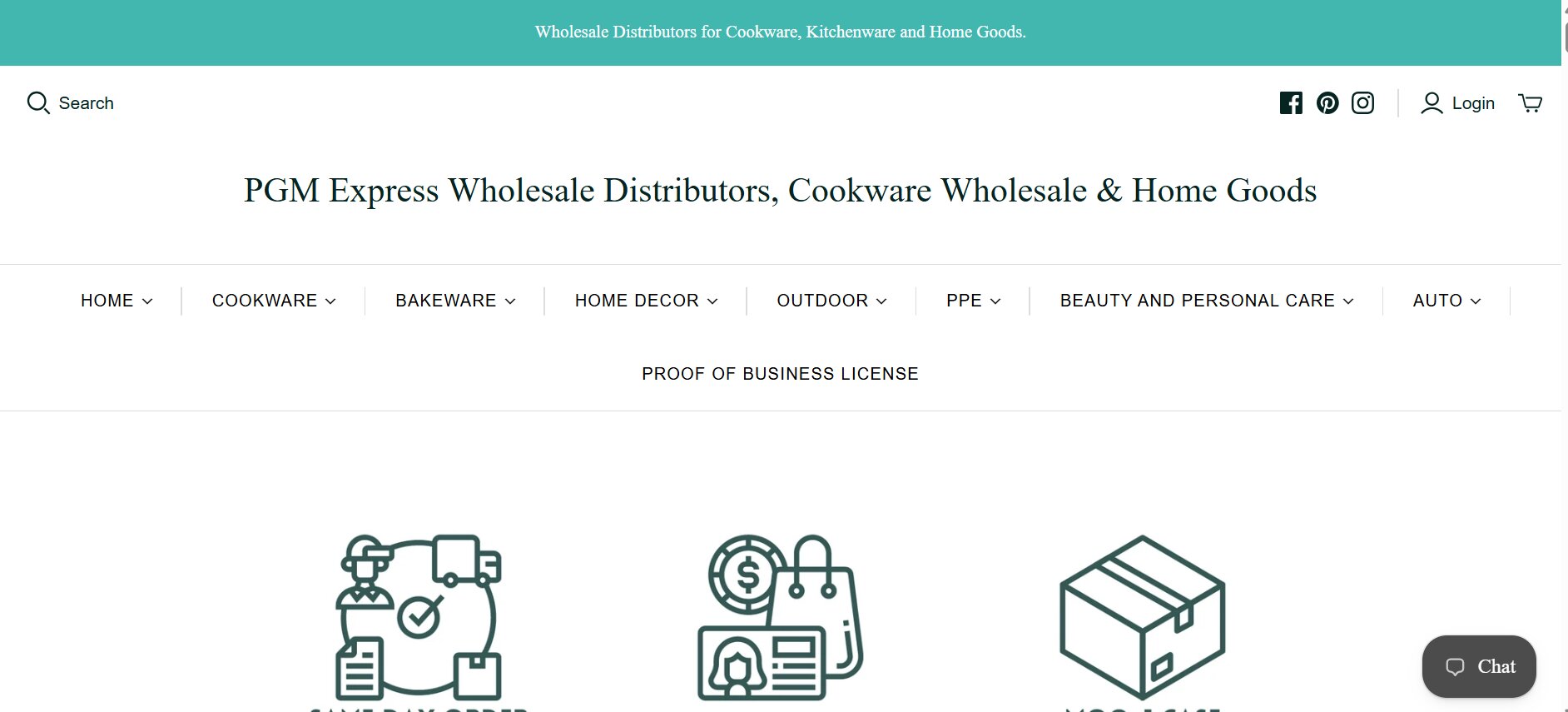
PGM Express is a US-based online wholesaler offering kitchenware, home goods, and other products for resale.
Its standout feature is a minimum order of just one carton per product, making it one of the more accessible options on our list for buyers testing new inventory.
The company doesn’t charge membership fees, although buyers need a business license to purchase wholesale. Orders ship nationwide through UPS.
For someone launching a cookware store, this approach can reduce the amount of money tied up in inventory. You can test a product in smaller quantities before committing to pallet-sized purchases.
However, PGM Express has a relatively limited publicly documented business profile compared with larger national distributors.
We’d recommend placing a test-carton order first to evaluate product quality, packaging, and fulfillment before scaling your purchases.
- Pros: One-carton minimums, no membership fee, nationwide shipping, accessible for smaller retailers.
- Cons: Limited publicly verifiable company information; less extensive cookware selection.
- Ideal for: New retailers, small ecommerce stores, and resellers testing cookware products.
Regional Cash & Carry and the Los Angeles Import District
Regional wholesalers are worth considering when you want to inspect cookware before purchasing or need immediate access to local inventory.
Some operate nationwide warehouse networks, while others focus on specific regions or wholesale districts.
5. Restaurant Depot: Best for Nationwide Cash-and-Carry Purchasing

Restaurant Depot operates more than 100 warehouse locations across the US, primarily serving restaurants, caterers, and other foodservice businesses.
Unlike traditional online distributors, Restaurant Depot uses a cash-and-carry model. Eligible businesses can register for free membership, visit a warehouse, and purchase available inventory without a minimum order requirement.
Its cookware selection includes commercial pots, pans, and kitchen tools, although cookware is only one part of its larger foodservice assortment.
The biggest advantage is immediate product access. If a restaurant needs replacement stockpots or a retailer wants to inspect available cookware before buying, a nearby Restaurant Depot warehouse can be convenient.
However, inventory varies by location, and the business primarily serves walk-in wholesale customers rather than operating as a conventional ship-to-store distributor.
- Pros: More than 100 US locations, free membership for qualifying businesses, no minimum purchase, immediate access to stocked products.
- Cons: Cookware is secondary to foodservice inventory; local selection varies; primarily a warehouse purchasing model.
- Ideal for: Restaurants, local retailers, caterers, and buyers needing same-day cookware purchases.
6. Bargreen Ellingson: Best for Regional Showrooms and Personal Service
Bargreen Ellingson is a family-owned restaurant equipment and supply distributor founded in 1959 and headquartered in Tacoma, Washington.
The company operates approximately 20 branches across the western US and Canada, serving restaurants, hotels, institutions, and commercial kitchens.
Its product range includes commercial cookware, kitchen equipment, dinnerware, glassware, and other foodservice essentials.
What makes Bargreen Ellingson different is its regional service model. Buyers can visit showrooms, work with sales representatives, and arrange local deliveries where available.
This can be particularly useful when sourcing cookware alongside larger kitchen equipment or when you prefer having a dedicated representative manage ongoing purchases.
The main limitation is geographic coverage. Buyers outside its established service areas may find national online distributors more convenient.
- Pros: Physical showrooms, experienced sales representatives, extensive foodservice selection, regional delivery options.
- Cons: Primarily serves western markets; minimum order requirements aren’t clearly published.
- Ideal for: Restaurants, hospitality buyers, and regional retailers seeking showroom access and supplier relationships.
7. Kitchen Depot: Best for Los Angeles Wholesale Kitchenware Sourcing

Kitchen Depot is a Los Angeles-based kitchenware supplier operating through both retail and wholesale channels.
Founded in 2008, the company carries more than 40,000 products and sources merchandise from Europe, India, China, and domestic US suppliers.
Its operations include a public retail location on San Fernando Road and a wholesale warehouse in Vernon, an established commercial and import-distribution area near Los Angeles.
For local cookware retailers, Kitchen Depot provides access to a broad assortment of imported kitchen products without requiring direct factory relationships.
We particularly like this sourcing model for buyers who want to inspect cookware, compare packaging, and evaluate products before placing larger orders.
However, wholesale pricing and minimums aren’t publicly standardized, so you’ll need to contact the company for purchasing terms.
- Pros: Extensive kitchenware assortment, direct-import products, retail and wholesale operations, access to LA’s import district.
- Cons: Wholesale terms require inquiry; most convenient for buyers based in Southern California.
- Ideal for: Los Angeles retailers, import-district buyers, and resellers sourcing mixed kitchenware inventory.
More cookware wholesalers in the Los Angeles import district
If you’re visiting the Los Angeles area to source cookware, Kitchen Depot isn’t your only option.
Other businesses worth investigating include Leaderware International, a kitchenware importer with hundreds of cookware listings; R&B Import Corp, an established family-owned importer; Fred 26 Importers, which distributes multiple consumer product brands; Golden Star Imports, a general merchandise wholesaler with thousands of SKUs; and Moka Wholesale, which specializes in stainless steel products. Cathay LA is also active in the area, although its business is primarily food distribution rather than cookware.
We recommend contacting each company before visiting to confirm its cookware assortment, wholesale account requirements, and whether warehouse visits are permitted.
China-Direct Cookware Suppliers
China-direct sourcing is worth considering when you need larger volumes, want to combine products from different manufacturers, or are looking for greater control over your supply chain.
However, these companies don’t all operate as traditional distributors. Some manufacture cookware directly, while others coordinate sourcing and fulfillment.
8. LeeKnives: Best for Mixed Knife and Cookware Wholesale Orders
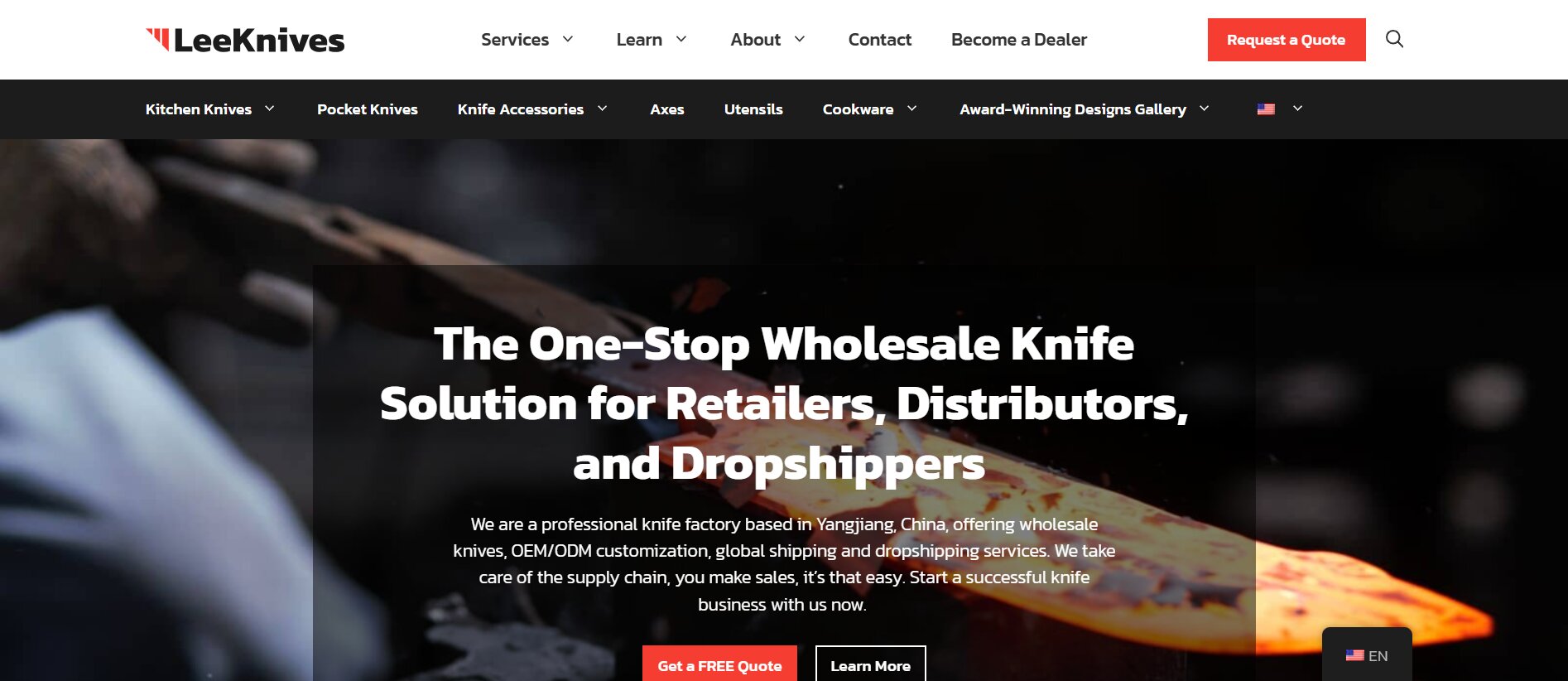
Full disclosure: LeeKnives is our company. We’re a kitchen knife manufacturer based in Yangjiang, China, and we also help businesses source wholesale cookware through our existing supplier network.
We’re not a broadline US cookware distributor offering hundreds of third-party brands. Instead, we focus on supplying kitchen knives and cookware through our ready-stock cookware catalog and custom sourcing programs.
Our wholesale minimums generally range from 100 to 500 pieces, depending on the product and order requirements.
One advantage we offer is our existing US inventory infrastructure. We operate our own Amazon business and maintain warehouse inventory in the US, allowing domestic replenishment within days for eligible catalog products that are already stocked.
For Amazon sellers, we’re also familiar with FBA preparation, product labeling, and carton specifications because these requirements are part of our own ecommerce operations.
Where we see the strongest fit is businesses selling both knives and cookware. Rather than coordinating separate shipments from multiple Chinese suppliers, buyers can work with us to consolidate suitable products into a single shipment.
We can also support businesses moving toward custom designs and private-label products through our OEM manufacturing services.
There are limitations to consider. Our US warehouse inventory covers selected catalog products, and larger custom cookware orders generally require sourcing and shipping from China.
- Pros: 100–500-piece MOQs, US-stock replenishment for eligible products, knife and cookware consolidation, Amazon logistics experience, OEM customization options.
- Cons: Limited US-stock assortment compared with national distributors; custom orders have longer international lead times.
- Ideal for: Kitchenware retailers, Amazon sellers, importers, and growing brands purchasing both knives and cookware.
If you’re exploring wholesale cookware or combining multiple kitchen products in one shipment, you can request a free sourcing quote.
9. Nichesources: Best for Managed Cookware Sourcing From China
Nichesources is a China-based sourcing agent helping businesses identify manufacturers, purchase products, manage quality inspections, and coordinate international shipments.
Unlike a traditional cookware distributor, Nichesources doesn’t operate primarily by reselling its own finished cookware inventory. Instead, it helps buyers source products from Chinese suppliers.
Its services include supplier identification, factory vetting, sampling, quality control, order consolidation, shipping coordination, and dropshipping support.
For cookware buyers, this can be particularly valuable when purchasing different products from multiple manufacturers.
For example, you might need stainless steel cookware from one supplier and cast iron products from another. A sourcing agent can coordinate the purchasing and inspection process, then arrange consolidated shipping where practical.
However, sourcing agents charge for their services, either separately or through the overall purchasing arrangement. You’ll need to compare the total landed cost against buying from domestic distributors or contacting factories directly.
We recommend clarifying exactly which services are included in your quotation, especially product inspections, freight arrangements, and handling damaged or defective goods.
- Pros: Supplier vetting, quality inspections, multi-supplier consolidation, logistics coordination, dropshipping support.
- Cons: Additional sourcing costs; final product availability and minimums depend on manufacturers.
- Ideal for: Ecommerce businesses and importers sourcing cookware from China without managing multiple factories independently.
Factory-Direct Wholesale Cookware From China
The final three suppliers differ from traditional distributors because they manufacture cookware or work directly with invested factories.
Buying factory-direct can reduce product costs at larger volumes, but you’ll generally take on more responsibility for freight, import compliance, quality inspections, and inventory planning.
For a broader comparison of custom production options, see our custom cookware manufacturers guide.
10. Telamon: Best for Bulk Aluminum Nonstick Cookware
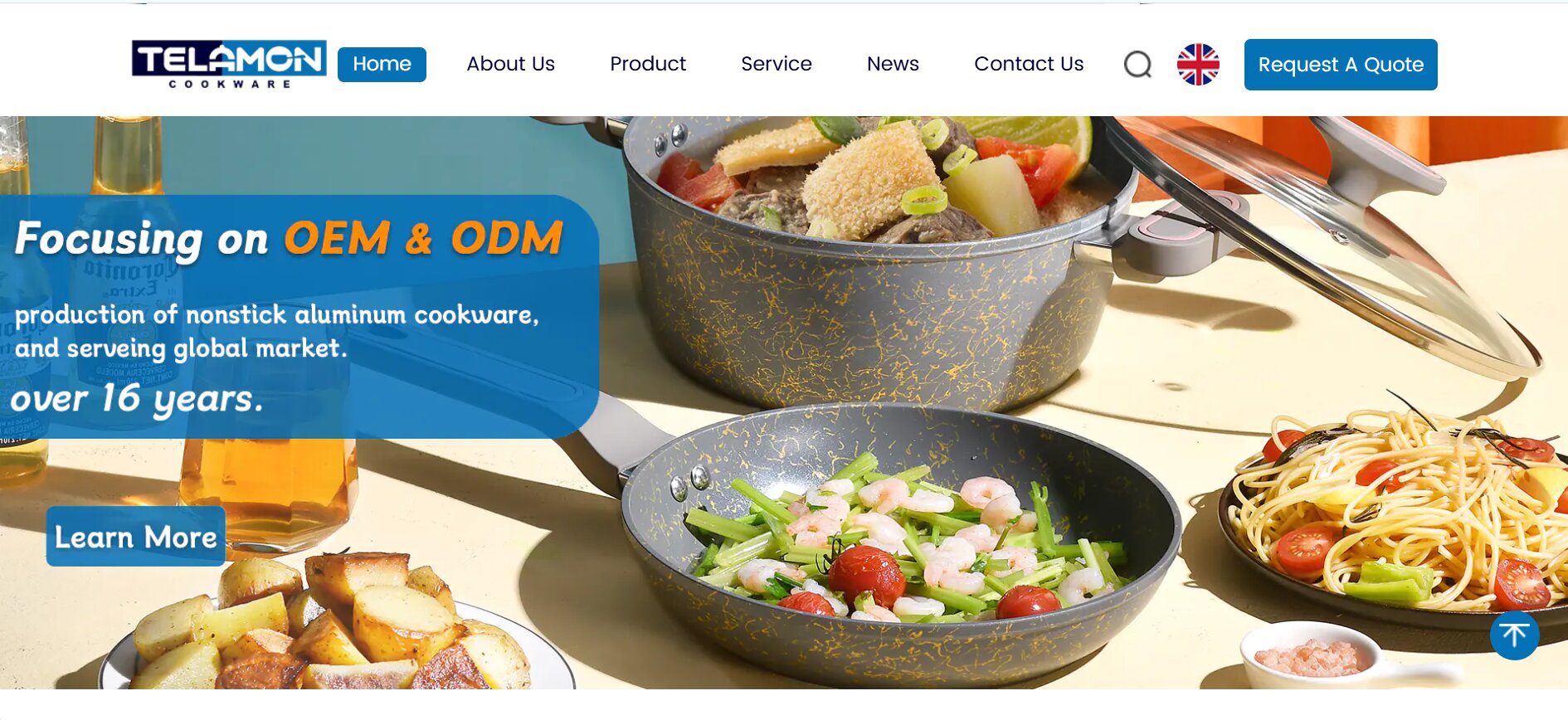
Telamon, also known as Zhejiang Changyuan Technology, is a cookware manufacturer based in Jinhua, Zhejiang Province, China.
Established in 2009, the company operates a reported 12,000-square-meter production facility with manufacturing capacity of approximately 450,000 pieces per month.
Its primary focus is aluminum nonstick cookware, including frying pans and cookware sets with granite-style coatings.
Telamon reports coating-related testing and factory audits, including LFGB/FDA-related testing and BSCI and ISO assessments. Buyers should request current documentation for the specific cookware and destination market.
Minimum orders are approximately 1,000 sets, making Telamon better suited to established importers than small retailers.
If you’re comparing aluminum cookware with cast iron alternatives, our guide to cast aluminum vs. cast iron cookware explains the practical differences.
- Pros: Specialized nonstick cookware production, substantial reported manufacturing capacity, factory-direct sourcing.
- Cons: High minimum orders; importers must manage freight, compliance, and quality verification.
- Ideal for: Established cookware importers and distributors purchasing aluminum cookware sets at volume.
11. Raylon Enterprise: Best for Cast Iron Cookware
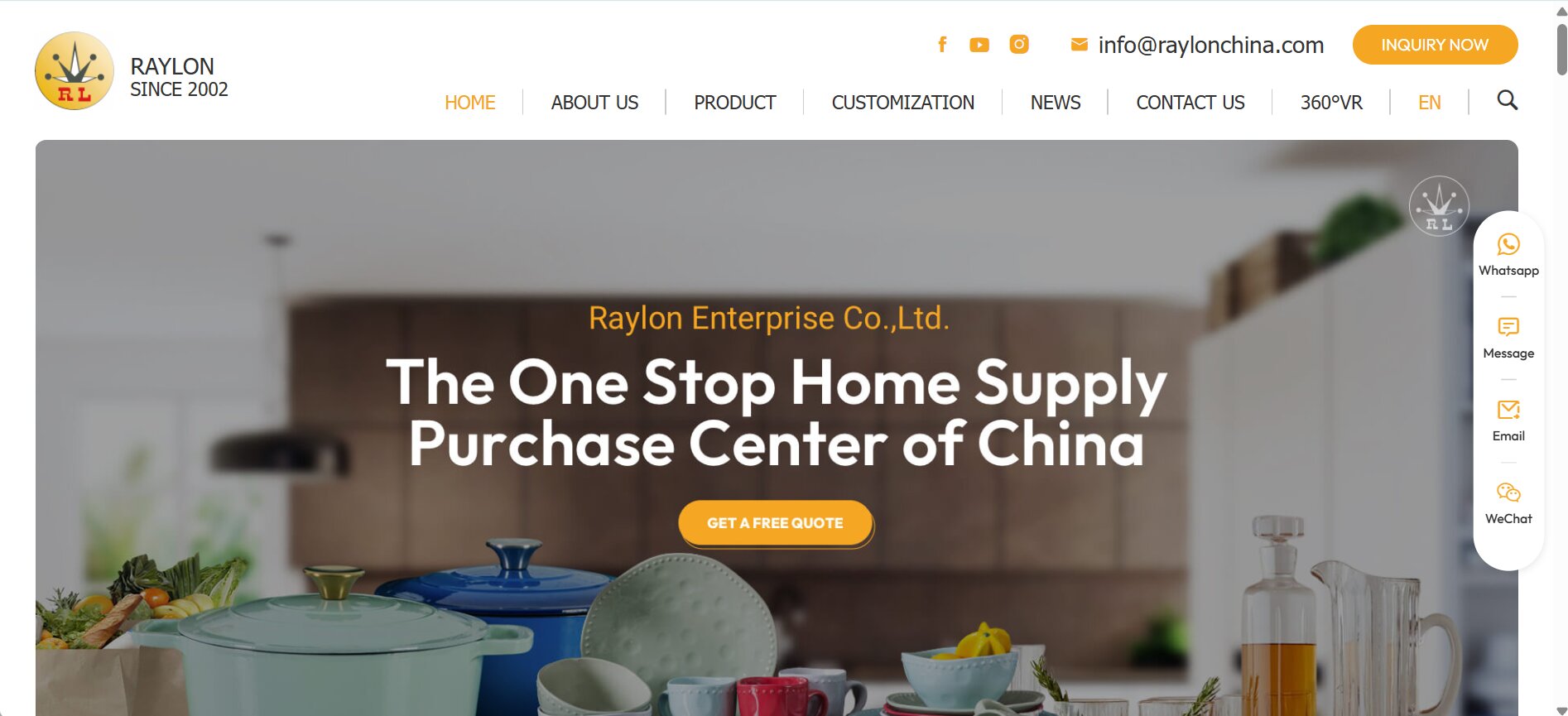
Raylon Enterprise is a Zhengzhou-based cookware trading and manufacturing business established in 2002, with investments in cast iron production facilities.
Its core products include pre-seasoned cast iron cookware, enameled cast iron products, and related kitchenware.
The company reports access to DISA casting technology, enamel production lines, and quality-management systems, alongside exports to more than 30 countries.
Raylon also publishes a list of major retail customers, but these relationships are self-reported and should be independently verified before relying on them as supplier credentials.
Its product specialization makes Raylon worth considering if you want to build a cookware assortment around cast iron rather than general kitchenware.
For product selection, our guides explain whether cast iron is naturally nonstick and what enameled cast iron cookware is.
- Pros: Specialized cast iron range, reported foundry investments, international export experience.
- Cons: Minimums vary; buyer references and manufacturing capabilities require verification.
- Ideal for: Cast iron cookware retailers, importers, and businesses sourcing enameled or pre-seasoned cookware.
12. Hanfa: Best for Low-MOQ Stainless Steel Cookware
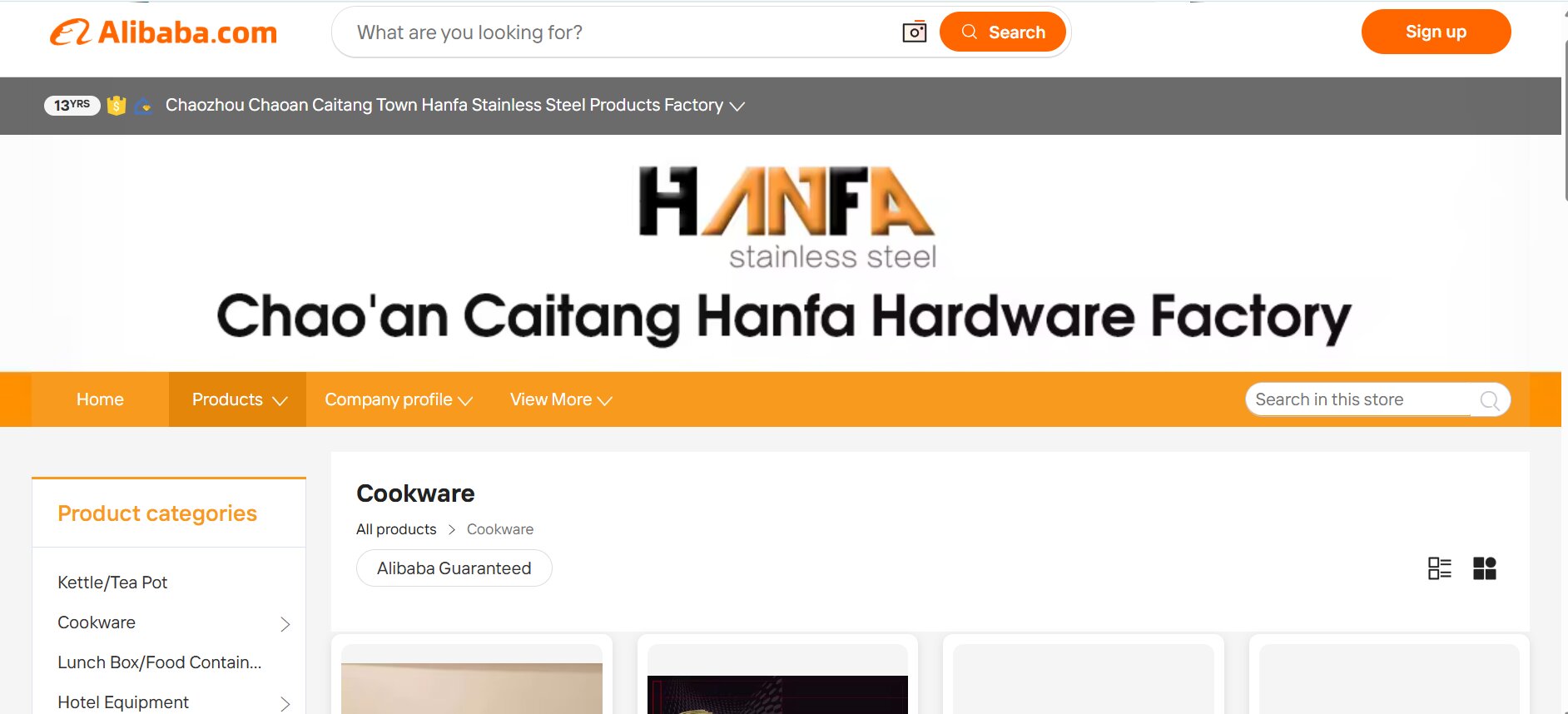
Hanfa is a stainless steel cookware manufacturer located in Caitang, Chaozhou, one of China’s established stainless steel manufacturing centers.
The company offers stainless steel cookware sets, stockpots, steamers, and related kitchen products through its Alibaba storefront.
Its most interesting feature is its comparatively low advertised minimum order quantity. Selected listings start at just two sets, although minimums vary by product and order specifications.
This makes Hanfa worth exploring for buyers who want to evaluate stainless steel cookware samples before placing larger factory-direct orders.
However, a two-set marketplace minimum doesn’t necessarily mean the same terms apply to bulk orders, customization, or private-label production.
We recommend requesting samples, confirming stainless steel grades, and checking relevant food-contact documentation before purchasing inventory for resale.
- Pros: Low advertised minimums on selected listings, stainless steel cookware specialization, direct manufacturer access.
- Cons: Product-specific minimums; quality documentation and large-order terms require verification.
- Ideal for: Small importers, cookware retailers testing suppliers, and businesses exploring direct stainless steel sourcing.
What to Confirm Before Your First Wholesale Cookware Order
Before placing a wholesale cookware order, we recommend checking more than just the quoted price. Inventory availability, resale permissions, and shipping terms can affect your profitability just as much as the product cost.
Here are seven things to confirm with your supplier.
1. Ready-stock inventory and replenishment times: Ask whether the cookware is physically available or needs to be ordered from a manufacturer. Request written confirmation of stock levels and how quickly your bestsellers can be replenished.
2. Case-pack sizes and volume discounts: A supplier might advertise attractive bulk pricing, but that price may only apply to pallet-sized orders. Confirm how many pieces come in each carton, the minimum purchase quantity, and the price breaks at different volumes.
3. Business license and membership requirements: Some suppliers sell to anyone, while others require a business license, resale certificate, or approved wholesale account. Check these requirements before building your product assortment around a supplier.
4. Returns and damaged goods: Cookware can arrive dented, scratched, or with damaged packaging. Ask who pays return freight, how quickly damage must be reported, and whether defective products qualify for refunds or replacements.
5. Brand authorization and MAP policies: If you’re reselling branded cookware on Amazon, confirm whether the supplier is an authorized distributor and can provide acceptable invoices or brand authorization letters. Some brands restrict third-party sellers or enforce Minimum Advertised Price (MAP) policies, which can limit promotional pricing. Supplier invoices alone don’t guarantee Amazon listing approval.
6. Quality inspections and order consolidation: For China-direct orders, establish who will inspect the products before shipment. We recommend requesting an inspection report using an agreed Acceptable Quality Limit (AQL) sampling plan, with clear criteria for defects. If you’re purchasing from multiple factories, confirm who will consolidate the goods and whether additional handling fees apply.
7. Food-contact compliance: Cookware intended for food preparation must meet the applicable requirements of your destination market. For imported products, clarify who provides material declarations, testing reports, and other compliance documents. As the importer, you may still carry legal responsibilities even when your supplier arranges testing.
For more information about cookware materials, testing, and potential safety concerns, read our guide on whether cookware made in China is safe.
Our recommendation: Request a written quotation covering product specifications, quantities, stock availability, shipping terms, and any additional fees. This makes it easier to compare suppliers based on the actual landed cost rather than an attractive headline price.
When to Graduate From Wholesale to Your Own Cookware Brand
Wholesale cookware is a practical way to start selling without investing heavily in product development. You can stock existing brands, test customer demand, and replenish inventory relatively quickly.
However, as your business grows, reselling the same products as your competitors can limit your margins and make it harder to stand out.
We recommend considering private-label or OEM cookware manufacturing when you start noticing these three signs:
- Repeated stockouts: Your best-selling cookware products regularly sell out, and you’re dependent on distributors to replenish them.
- Shrinking profit margins: Competition and Minimum Advertised Price (MAP) policies limit your pricing flexibility, making it harder to improve profitability.
- Unmet customer demands: Customers consistently request features, sizes, materials, or designs that aren’t available in your existing wholesale catalog.
With private labeling, you can sell cookware under your own brand, often using existing manufacturer designs. OEM production offers more control over product specifications, materials, features, and packaging.
The trade-off is a larger upfront commitment. Custom manufacturing generally involves higher minimum order quantities, longer lead times, product testing, and additional inventory planning.
Our recommendation: Don’t rush into custom manufacturing before validating demand. Start with wholesale products, identify your consistent bestsellers, and use that sales data to determine which cookware products are worth developing under your own brand.
When you’re ready, explore our custom cookware manufacturers guide to understand private-label and OEM options, or compare suppliers in our cookware manufacturers directory.
Buy Wholesale Cookware and Start Scaling up with Us Today
Contact us and connect with a sales rep to get a free quote.
Source kitchen products from LeeKnives
Looking for a reliable supplier to stock your cookware business? At LeeKnives, we help retailers, ecommerce sellers, and importers source ready-stock cookware and develop custom kitchen products without managing multiple suppliers.
Our wholesale catalog offers MOQs starting from 100–500 pieces, depending on the product. We can also consolidate knives and cookware into mixed shipments, helping you simplify sourcing and shipping from China.
For selected catalog products, we maintain US warehouse inventory to support faster domestic restocking. And when you’re ready to launch your own cookware brand, we can assist with private labeling and custom manufacturing.
Whether you’re testing a new product range or expanding an established kitchenware business, we’ll help you explore sourcing options that fit your requirements.
Request a free wholesale cookware quote with your product list and estimated quantities, or contact our team to discuss your sourcing needs.
Ready to get started? Request a quote from LeeKnives and we’ll help you evaluate your options.
Frequently Asked Questions About Wholesale Cookware
What’s the difference between a cookware distributor and a manufacturer?
A cookware distributor purchases finished products and resells them to businesses, while a manufacturer produces the cookware itself. Distributors are generally better for smaller orders and faster restocking, whereas manufacturers are worth considering for larger volumes or custom production.
Do I need a business
license to buy wholesale cookware?
Not always. WebstaurantStore allows purchases without a business license, while PGM Express requires one. Restaurant Depot offers free membership to qualifying businesses that provide the necessary credentials. Requirements vary by supplier, so check before registering.
What are typical minimum order quantities for wholesale cookware?
Wholesale cookware minimums range from individual products or single cartons to hundreds of pieces or full-container orders. PGM Express allows orders starting at one carton, while some China-direct suppliers require substantially larger quantities. The minimum depends on the supplier, product, and level of customization.
Can I resell branded
wholesale cookware on Amazon?
Yes, provided you meet Amazon’s requirements for the specific brand and product. Some brands are restricted and may require invoices from authorized distributors or a brand authorization letter. You should also check Minimum Advertised Price (MAP) policies and other resale restrictions before purchasing inventory.
Is importing cookware
directly from China cheaper than buying from US distributors?
Importing directly from China can offer lower unit costs, particularly for larger orders. However, international freight, customs duties, quality inspections, compliance testing, and consolidation fees can reduce those savings. Compare the total landed cost before deciding and review our guide on whether cookware made in China is safe for additional considerations.
Where can I buy wholesale cookware near me?
Start by searching for local restaurant-supply warehouses,
cash-and-carry wholesalers, and kitchenware import districts. Restaurant Depot operates more than 100 US warehouses, while areas such as Vernon in Los Angeles have multiple kitchenware importers. Check business eligibility, available
inventory, and walk-in purchasing policies before visiting.





 EN
 JA
 DE