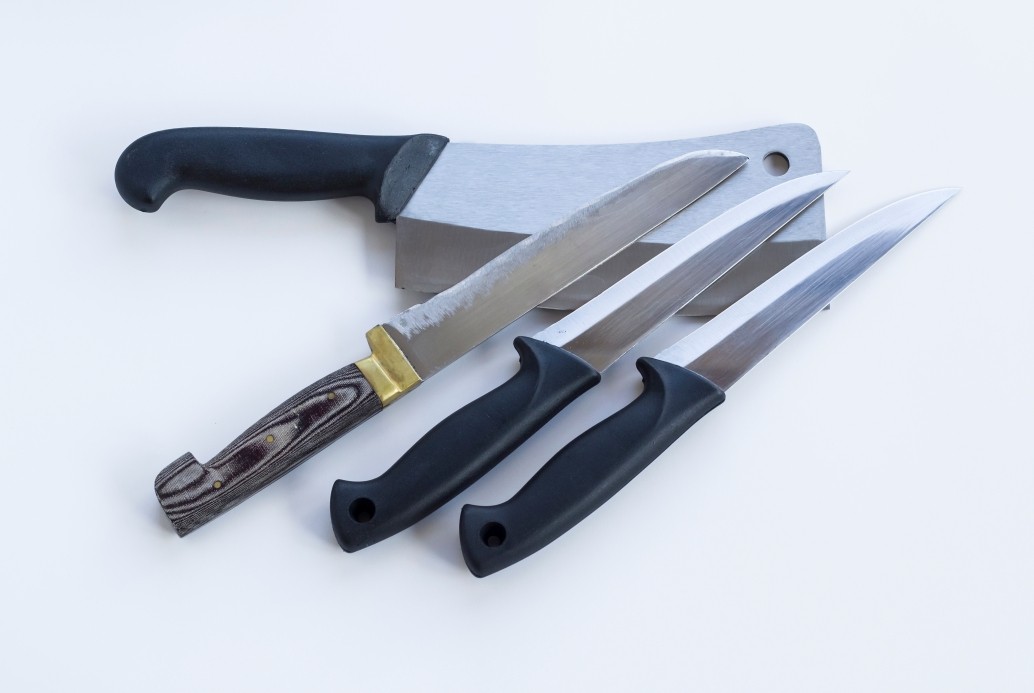
When buyers evaluate a knife, they usually start with blade steel, edge geometry, and handle material. But how the handle is built around the tang — what knife makers call handle coverage — is just as important. It determines the knife’s strength, balance, weight, repairability, and manufacturing cost.
We will walk through the four main coverage types from our knife structure encyclopedia — two-piece scales, one-piece handles, partial coverage, and naked tang — plus the important subtypes that appear in real product specifications.
Related reading: For handle shape and ergonomics, see our knife handle designs guide. For Japanese wa-handle shapes and materials, see Japanese wa handles and our broader Japanese knife handles guide. For fasteners and assembly methods, see knife handle assembly methods.
1. Two-Piece Scales
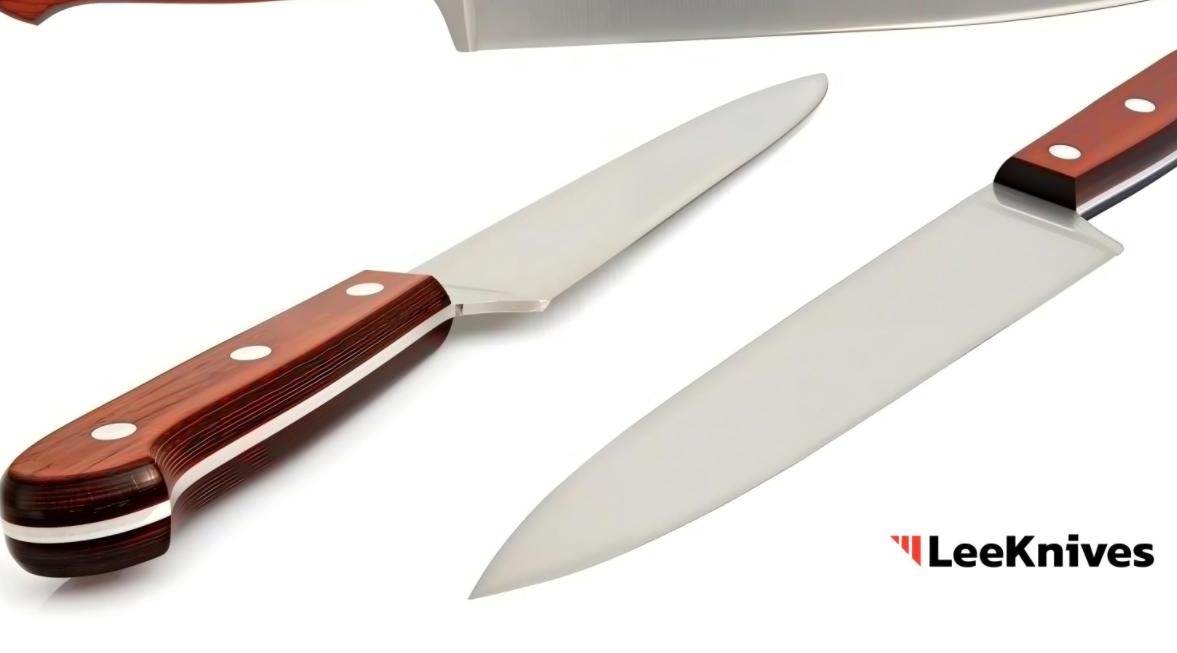
A knife scale is one of two handle panels attached to the sides of a full-width tang. The term “scales” always implies a matched pair; a single-piece handle is not called a scale. Together, the two scales form the visible grip surface of a full-tang knife.
How Scales Are Made
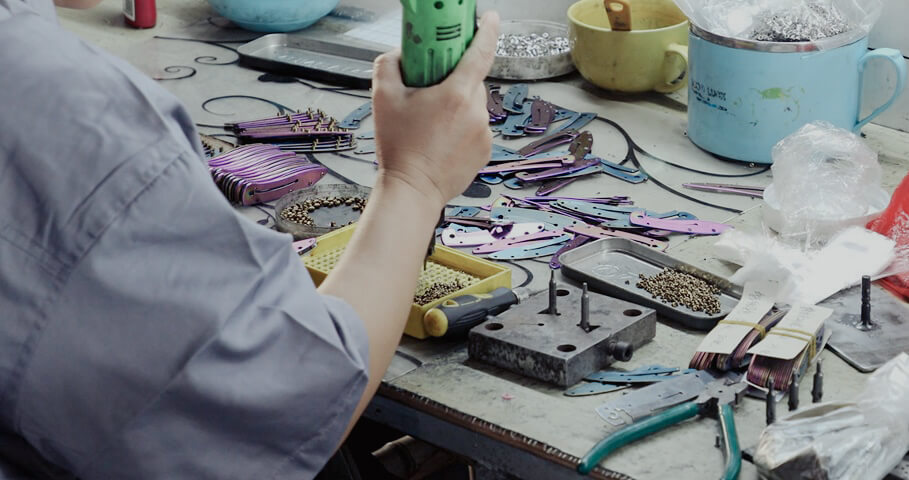
The tang profile is matched to the inner profile of the scales. Holes are drilled through the tang and both scales together — usually with CNC fixtures — so that pins or rivets stay perfectly aligned. The fasteners are then pressed in and ground flush with the handle surface.
Typical scale thicknesses:
- Folding knives: ~3 mm
- Compact fixed blades: 4–5 mm
- Full-size chef or outdoor knives: 6–8 mm
Common Scale Materials
| Material | Characteristics | Best For |
|---|---|---|
| G10 | Glass-fiber epoxy laminate; stable, waterproof, hard on tooling | EDC, tactical, outdoor |
| Micarta | Canvas/linen phenolic; textured, premium feel, absorbs oils | Bushcraft, premium kitchen knives |
| Carbon fiber | Lightweight, high-end, often bonded without drilling | Premium custom knives |
| Wood / Pakkawood | Warm look, traditional, requires sealing | Kitchen knives, kitchen knife sets |
| Bone / stag / horn | Decorative, natural variation | Collectibles, traditional designs |
For kitchen handle materials, see kitchen knife handles.
Pros and Cons of Scales
| Pros | Cons |
|---|---|
| Field-repairable; scales can be replaced | Requires precise hole alignment |
| Wide material choice | Visible fasteners unless adhesive-only |
| Strong clamping force across full tang | More labor than injection molding |
| Excellent balance for heavy-duty knives | G10/Micarta dust is abrasive during machining |
B2B / OEM Insight: Scale material is often the second-biggest cost driver after blade steel. Moving from pakkawood to standard G10 can add USD 0.50–1.50 per unit at mid-volume. Pin diameter is typically 4–6 mm for kitchen knives and 5–8 mm for survival knives. Scale thickness tolerance after machining should be within ±0.10–0.20 mm, and flushness between scale and tang spine within 0.10 mm on premium fixed blades.
2. One-Piece Handles & Integral Construction
A one-piece handle is a single, continuous body of handle material that surrounds the tang. This category includes hidden-tang handles, integral (monobloc) handles, and injection-overmolded handles.
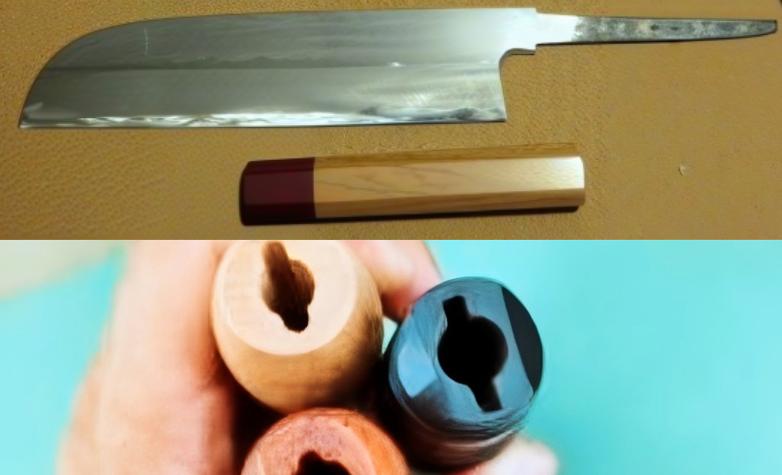
In a hidden-tang knife, the tang is fully enclosed within the handle material. The tang may be a narrow stick tang, a full-length narrow tang, or a wider encapsulated tang. What they share is that you cannot see steel from the outside.
Traditional Japanese wa-handles are the classic example. A narrow stick tang is heated and burned into a wooden handle block — usually magnolia, walnut, or ebony. The burn-in creates a tight friction fit, and modern production often adds epoxy for security. A collar called a kakumaki or fuchi — traditionally buffalo horn, sometimes metal — reinforces the blade-handle junction.
Common wa-handle shapes include octagonal, D-shape, oval, and shield-shaped.
For a complete guide to wa-handle sourcing and shapes, see Japanese knife handles.
Nordic puukko knives use a similar principle: a narrow tang passes through a birch or antler handle and is peened or threaded at the butt.
Integral / Monobloc Handles
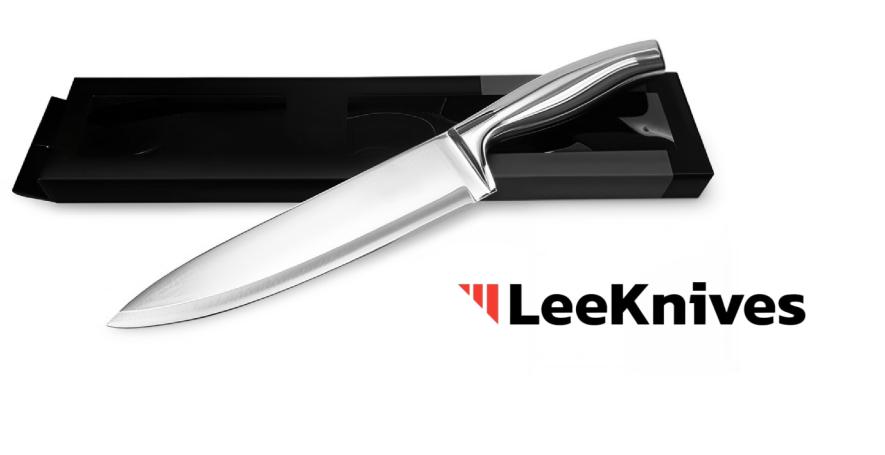
An integral handle is machined from the same solid billet as the blade and bolster. There is no seam between blade, bolster, and handle. This is one of the strongest and most expensive constructions because it eliminates every joint and weak point.
Pros
- Seamless, hygienic surface free of crevices that trap grease and bacteria
- No assembly joints create structural weak points; delivers maximum impact and torsional strength across all handle designs
- Enables clean, sculpted monolithic silhouettes with premium industrial styling
- Eliminates common failure modes: adhesive breakdown, timber splitting, and scale delamination
Cons
- Repair or aftermarket modification is not practical; any handle damage renders the full knife unusable
- High steel stock usage paired with lengthy 5-axis CNC machining inflates unit cost, restricting this construction to premium custom and collector knives
- Solid metal construction exhibits high thermal conductivity, leading to uncomfortably hot or cold grip surfaces; overall knife mass is substantially increased
- Manufacturing carries a high technical barrier requiring dedicated 5-axis machining centers, making scalable mass production unworkable for small-scale workshops
Launch Your Custom Knife Line Faster with LeeKnives
Complete OEM/ODM support—from design to final shipment—so you can focus on growth.
Backed by warehouses in the U.S. for fast, reliable delivery.
Injection-Overmolded Handles
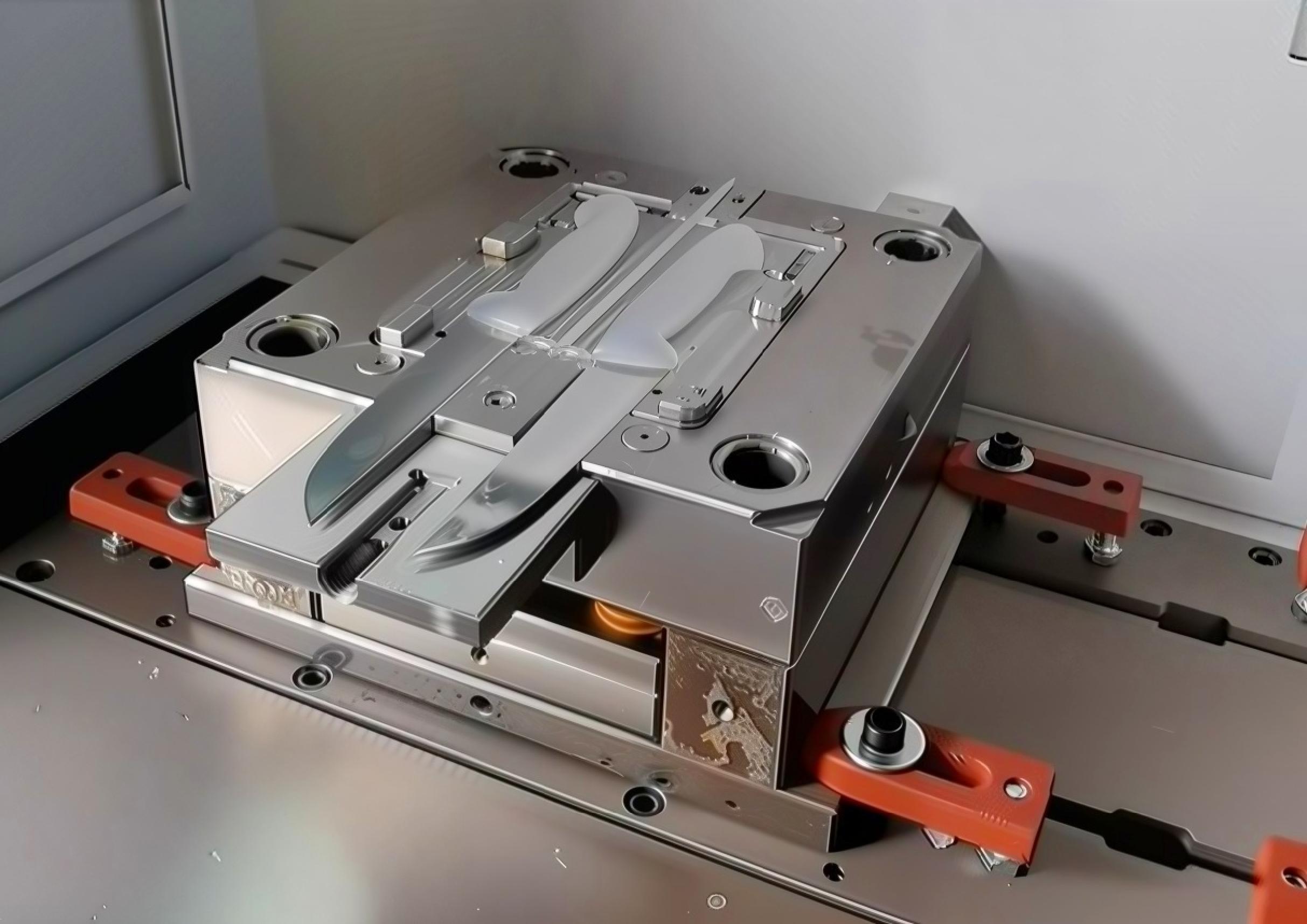
Molten polymer — PP, ABS, nylon, or glass-reinforced nylon (FRN) — is injected around a tang inside a steel mold. This is the cheapest per-unit method at volume but requires high upfront mold investment. It works best with partial or narrow tangs.
Pros and Cons of One-Piece Handles
| Pros | Cons |
|---|---|
| Seamless, hygienic surface | Harder to repair or replace |
| Lighter than full-tang scales | Hidden-tang strength depends on adhesive/fit |
| Allows organic sculptural shapes | Integral handles require 5-axis machining |
| Traditional aesthetics | Burn-in requires skilled labor for consistency |
B2B / OEM Insight: Injection overmolding becomes cost-efficient above roughly 10,000 units. Integral construction is usually reserved for premium or custom knives due to material waste and machining cost. Wa-handle burn-in requires the tang hole geometry to match the tang profile closely; over-burning weakens the wood.
3. Partial Coverage & Half-Tang Handles
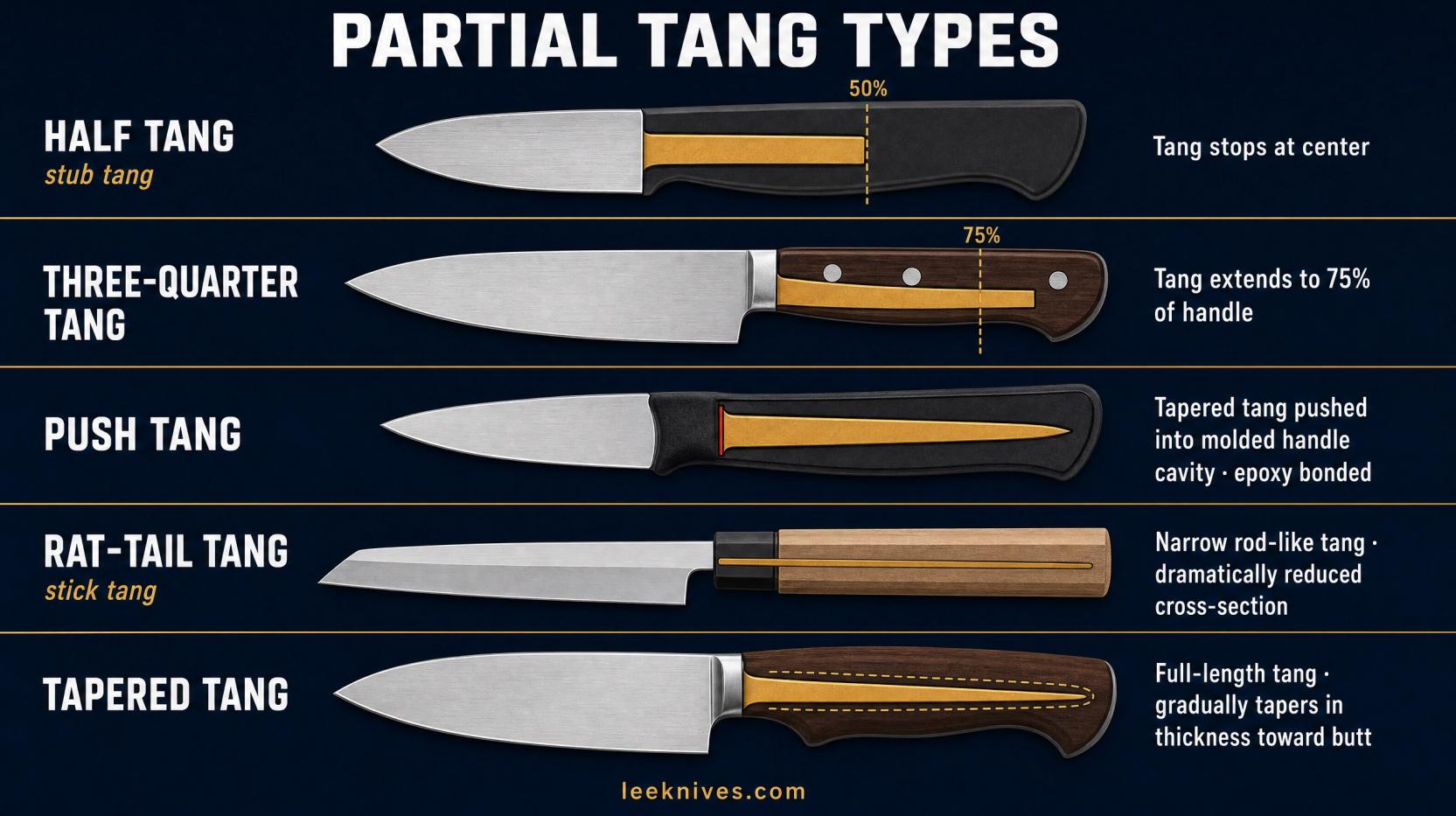
Partial coverage means the tang extends only partway into the handle, and the handle material covers that shortened metal core. This is not one design but a family of designs.
Common Partial-Tang Subtypes
| Subtype | Description | Best For |
|---|---|---|
| Half tang / stub tang | Tang ends near the middle of the handle; the handle material carries most of the load beyond that point. Common in stamped kitchen knives with molded plastic or composite handles. | Light-duty paring knives, budget consumer kitchen knives, display pieces where cost matters more than heavy-duty strength. |
| Three-quarter tang | Tang extends roughly 75% of handle length, offering better leverage and lateral stability than a half tang while still keeping rear weight low. | Mid-range chef knives, utility knives, and slicers that need a balance of strength, weight, and cost. |
| Push tang | Tapered tang is pressed into a premolded handle cavity and bonded with adhesive or epoxy. Fast to assemble and well-suited to high-volume stamping. | Stamped kitchen knives with injection-molded handles; mass-market SKUs where assembly speed and unit cost are critical. |
| Rat-tail tang / stick tang | Narrow rod-like tang runs most of the handle length but with a much reduced cross-section. Reduces steel weight and allows a slender handle profile. | Traditional Japanese wa-handled yanagiba and usuba, Nordic puukkos, decorative knives, and any design where lightness and tradition outweigh brute strength. |
| Tapered tang | Tang gradually narrows in thickness — and sometimes width — from blade to butt. Removes steel mass where it is least needed while keeping a full-length backbone. | Premium custom and semi-custom knives where balance, weight distribution, and craftsmanship are selling points. |
Where Partial Coverage Appears
- Budget stamped kitchen knives with plastic handles
- Traditional Japanese wa-handled yanagiba and usuba (see our Japanese kitchen knives collection)
- Lightweight paring and utility knives
- Decorative or display knives
Pros and Cons
| Pros | Cons |
|---|---|
| Lighter overall weight | Weak point where tang ends inside handle |
| Lower material cost | Less lateral and twisting strength |
| Blade-forward balance for precision slicing | Handle can loosen if adhesive fails |
| Design freedom for ergonomic handles | Not suitable for heavy chopping or batoning |
B2B / OEM Insight: Push-tang reliability depends almost entirely on surface preparation and epoxy quality. Rat-tail tangs should be avoided for heavy-duty SKUs; they are acceptable for decorative or light-use knives. Modern adhesives have improved partial-tang reliability, but a partial tang will still fail before a full tang under extreme stress.
Launch Your Custom Knife Line Faster with LeeKnives
Complete OEM/ODM support—from design to final shipment—so you can focus on growth.
Backed by warehouses in the U.S. for fast, reliable delivery.
4. Naked Tang / Exposed Tang Handles
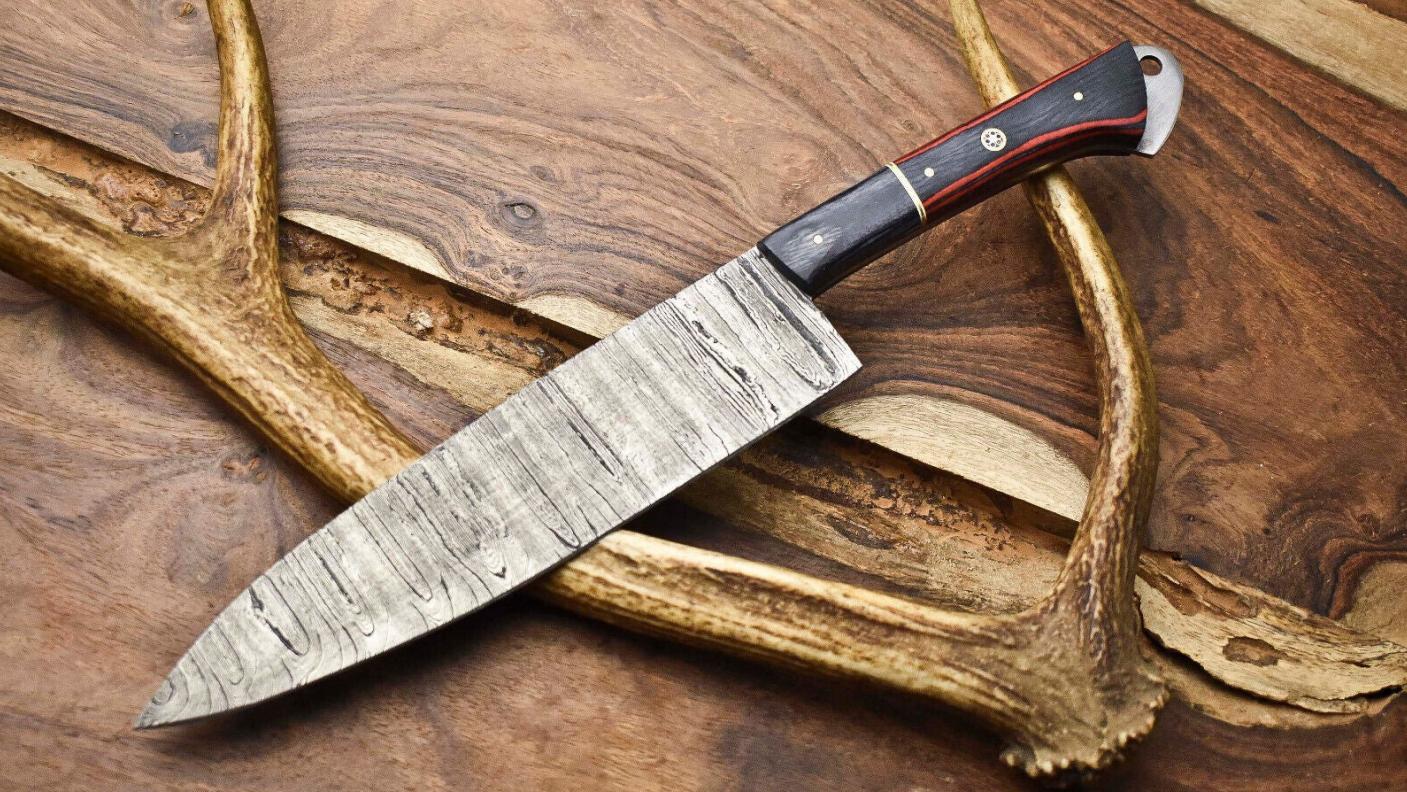
Naked tang means the tang is deliberately visible, protruding, or covered with only minimal handle material.
Subtypes of Exposed Tang
| Subtype | Description |
|---|---|
| Full exposed tang | Tang edges visible along the spine and sides between scales |
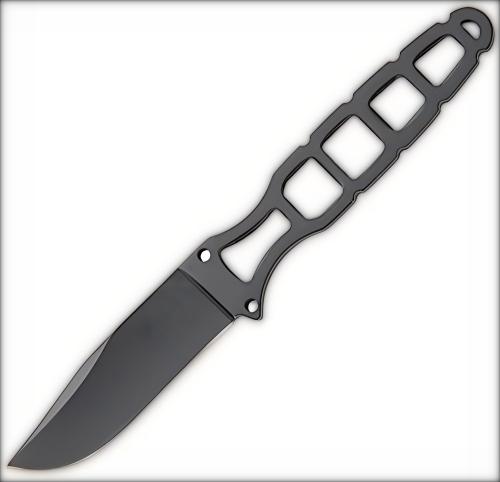
| Skeletonized tang | Full tang with holes or slots milled out to reduce weight |
| Extended tang | Tang protrudes past the handle butt to form a pommel, lanyard hole, or striking surface |
| Bare tang / paracord wrap | No scales; grip is cordage or bare metal |
Pros and Cons
| Pros | Cons |
|---|---|
| Maximum structural honesty | Can feel cold or hard in freezing conditions |
| Easy to clean and inspect | Less comfortable for extended use |
| Skeletonizing reduces weight while keeping full-tang strength | Skeleton holes create minor stress concentrators |
| Extended pommel adds utility | Exposed steel can corrode if not maintained |
B2B / OEM Insight: Exposed-tang aesthetics signal “toughness” in tactical and survival markets. Skeletonizing saves weight but should avoid the first inch near the blade, where stress is highest. Extended tangs require radiused edges and safe pommel geometry to pass safety testing.
Important Subtypes Not to Overlook
Encapsulated Tang
An encapsulated tang is a full-length tang fully surrounded by handle material. Unlike a hidden/stick tang, the encapsulated tang is usually close to the blade in width. The handle is molded or fitted around the tang rather than pushed onto a narrow rod.
This construction offers much of the strength of a full tang with a seamless, hidden appearance. It is common in outdoor knives and some premium kitchen knives. Bonding quality and void-free molding are the critical QC points.
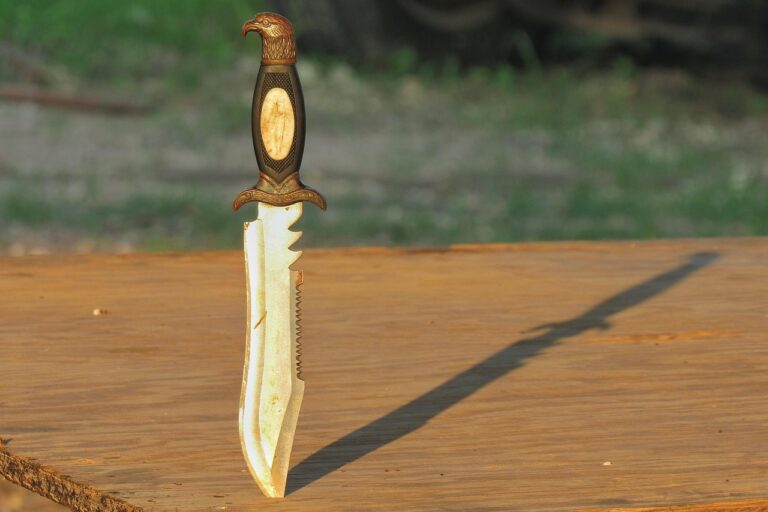
A button tang has its end hammered or forged into a flat, round “button” or mushroom shape that acts as a mechanical stop. This is a historical method common in traditional daggers, swords, and some ethnic knives.
Stacked Leather / Washer Handle
A stacked leather handle is made from many thin leather or fiber washers stacked on a stick or through tang and compressed under a pommel. It offers excellent grip and classic military aesthetics but can swell if soaked and requires maintenance.
| Factor | Full Tang (Scales) | Hidden Tang (One-Piece) | Partial Tang |
|---|---|---|---|
| Strength | Highest | High if well-fitted | Moderate to low |
| Weight | Heaviest | Light to moderate | Lightest |
| Balance | Centered / handle-neutral | Blade-forward or centered | Blade-forward |
| Cost to manufacture | Moderate | Low to very high* | Lowest |
| Repairability | Scales replaceable | Harder to repair | Often not repairable |
| Best for | Chef knives, survival, tactical | Traditional, premium handmade knives, lightweight | Light-duty, budget, precision slicers |
* Injection-molded one-piece handles are very cheap at volume; integral handles are very expensive.
B2B / OEM Insight: Full tang is the default choice for professional kitchen knives and heavy-duty outdoor knives because it distributes stress across the entire handle. Hidden tang is preferred when weight, tradition, or seamless aesthetics matter. Partial tang is viable only when the use case is light and the cost target is aggressive.
How Handle Coverage Affects Manufacturing & Cost
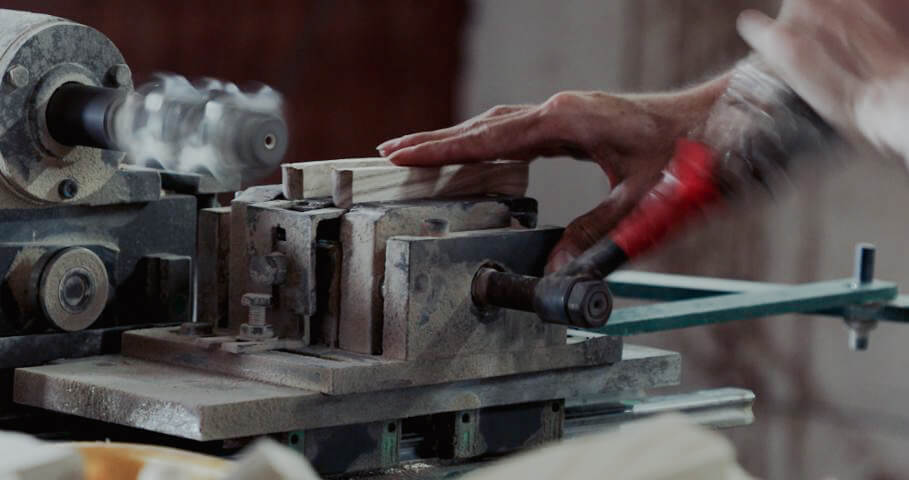
Choosing a coverage type is a manufacturing decision, not just a design one. Here is how the main options map to cost structure.
| Coverage Type | Typical Production Method | Cost Level | Best Volume |
|---|---|---|---|
| Two-piece scales | Forged full tang + CNC scale machining + riveting | Medium | 500–10,000 units |
| One-piece injection molded | Stamped blade + injection mold | Very low per unit | 10,000+ units |
| One-piece integral | Milled from single billet | Very high | Low volume / premium |
| Partial coverage | Stamped blade + push tang into molded handle | Low | High volume |
| Naked / skeletonized | Full tang with machining cutouts | Medium to high | Tactical / survival niche |
Cost drivers to watch:
- Material: G10 and Micarta cost more than pakkawood or injection plastic.
- Labor: Riveting, burn-in, and peening require skilled workers.
- Tooling: Injection molds and integral machining fixtures have high upfront cost.
- QC: Flushness, pin alignment, adhesive voids, and tang exposure must be controlled.
B2B / OEM Insight: For a mid-size full-tang kitchen knife, moving from pakkawood to G10 scales typically raises unit cost by USD 0.50–1.50. For orders above 10,000 units, injection overmolding usually beats mechanical assembly on total cost. For premium lines below 1,000 units, riveted scales or hidden-tang wa-handles are usually more economical than mold investment.
Conclusion
Handle coverage is one of the most underappreciated decisions in knife design. Whether you choose two-piece scales, a one-piece hidden tang, partial coverage, or a naked exposed tang, the decision shapes the knife’s strength, weight, balance, cost, and repairability.
For B2B buyers and brands, the right choice depends on three things: the intended use, the target price, and the production volume. Full-tang scales dominate professional kitchen and outdoor knives. One-piece handles — whether injection-molded for mass market or hand-burned wa-handles for premium lines — offer seamless aesthetics. Partial coverage keeps weight and cost down for light-duty knives. Naked tang designs signal durability in tactical markets.
At LeeKnives, we produce all of these constructions across our product lines, including kitchen knives, Chinese kitchen knives, Japanese kitchen knives, Western kitchen knives, specialty knives, handmade kitchen knives, kitchen knife sets, and pocket knives. If you need help specifying handle coverage, materials, and assembly methods for your product line, contact us for a custom manufacturing quote.
Frequent Asked Questions
What are the parts of a knife handle called?
A knife handle has several named parts, and the exact terms depend on the construction type:
- Handle / grip — the entire portion you hold.
- Scales / slabs — the two handle panels attached to the sides of a full tang. Only full-tang knives have scales.
- Tang — the extension of the blade steel inside the handle. It can be full, hidden, partial, or exposed.
- Bolster / guard — the thickened area between blade and handle that protects the hand and adds balance.
- Butt / pommel — the rear end of the handle.
- Pins / rivets / screws — fasteners that secure scales to the tang.
- Ferrule / collar (fuchi / kakumaki) — a reinforcing ring at the blade-handle junction, common on Japanese wa-handles.
- Spacer / liner — a thin material layer between scales and tang for fit, insulation, or aesthetics.
Related reading: For how handles are fastened, see knife handle assembly methods.
How thick should a knife handle be?
There is no single “perfect” handle thickness — it depends on hand size, knife type, and intended use. Based on common production specs and maker guidelines:
| Knife Type | Scale Thickness (per side) | Finished Total Thickness |
|---|---|---|
| Folding knives / EDC | ~3 mm | 8–10 mm |
| Compact fixed blades | 4–5 mm | 10–12 mm |
| Full-size chef knives | 6–8 mm | 13–16 mm |
| Heavy-duty outdoor / survival knives | 7–9 mm | 15–18 mm |
For precision kitchen work, thinner handles (12–14 mm total) allow faster rotation and control. For heavy chopping or users with larger hands, thicker handles (16–20 mm total) reduce fatigue and fill the palm. Most makers start with slightly oversized stock and contour down, because removing material is easier than adding it back.
OEM Insight: Handle thickness tolerance after machining should be within ±0.10–0.20 mm, and flushness between scale and tang spine within 0.10 mm on premium fixed blades. Consistency across a production run is critical for ergonomics and brand perception.
What is a good wood to use for a knife handle?
The best woods for knife handles are dense, tight-grained hardwoods or stabilized woods. Good production choices include:
- Walnut — easy to work, warm appearance, good for beginners and premium lines.
- Maple — pale, dense, takes stain and dye well; excellent for dyed or custom looks.
- Pakkawood — resin-impregnated wood laminate; very stable, waterproof, and common on kitchen knives.
- Rosewood / Cocobolo — naturally oily, moisture-resistant, popular for traditional and upscale designs.
- Desert Ironwood — extremely dense, resists rot, premium option for collector-grade knives.
- African Blackwood — very hard, stable, and virtually waterproof.
Avoid softwoods and open-grained woods (like untreated pine or red oak) unless they are stabilized, because they dent, crack, or trap moisture against the tang. For production knives, stabilized wood or pakkawood is preferred over natural hardwoods because it reduces warping, cracking, and warranty claims.
Related reading: See our complete guide to kitchen knife handles for material recommendations by knife style.
What materials make the best knife handles?
“Best” depends on the knife’s job, budget, and target user. The most common categories are:
| Material | Best For | Why |
|---|---|---|
| G10 | EDC, tactical, outdoor | Glass-fiber epoxy laminate; waterproof, stable, tough. |
| Micarta | Bushcraft, premium kitchen knives | Canvas/linen phenolic; textured, premium feel, improves with age. |
| Carbon fiber | Premium custom knives | Lightweight, high-end, often bonded without drilling. |
| Pakkawood | Kitchen knives, knife sets | Engineered wood-resin composite; stable, affordable, attractive. |
| FRN / injection plastic | Budget mass-market knives | Cheap at volume, light, consistent. |
| Aluminum / titanium | Tactical, modern designs | Strong, lightweight, industrial look. |
| Wood / stabilized wood | Traditional, warm aesthetics | Natural look; requires sealing or stabilization for durability. |
| Bone / stag / horn | Collectibles, traditional designs | Decorative, natural variation. |
For professional kitchen knives and heavy-duty outdoor knives, G10, Micarta, and stabilized wood are the safest bets. For budget high-volume lines, injection-molded FRN or pakkawood keeps cost down while maintaining consistency.
B2B / OEM Insight: Handle material is often the second-biggest cost driver after blade steel. Moving from pakkawood to standard G10 can add USD 0.50–1.50 per unit at mid-volume, while injection molding becomes cost-efficient above roughly 10,000 units. Match the material to the SKU’s price point, use case, and production volume.




 EN
EN  JA
JA  DE
DE