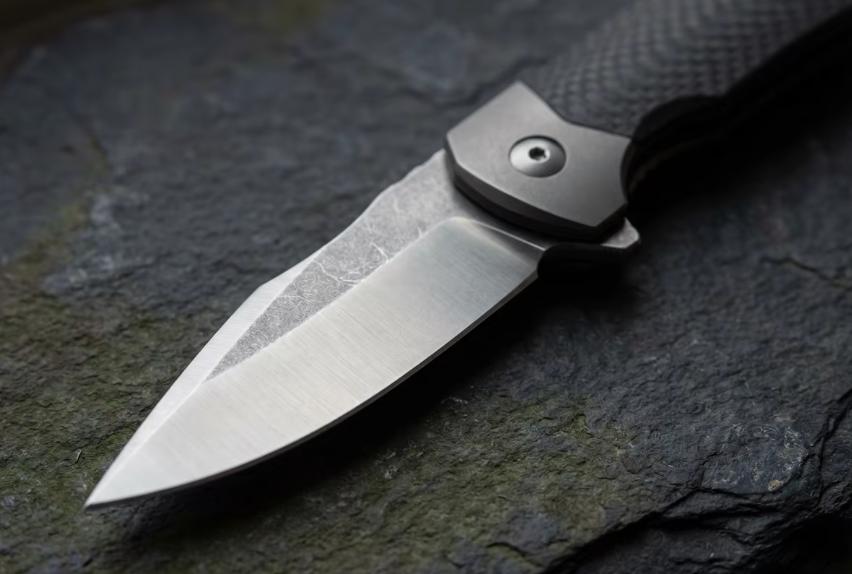
Choosing between Maxamet and MagnaCut for your next knife order? You’re not alone.
Both steels represent the pinnacle of modern metallurgy, yet they serve different purposes. Maxamet delivers exceptional edge retention but requires careful maintenance. MagnaCut balances performance with corrosion resistance, making it ideal for everyday carry.
For knife retailers and wholesalers, this isn’t just technical—it’s a business decision. The right choice depends on your customers and product positioning. This guide covers composition, performance, real-world use, pricing, and maintenance to help you choose the right steel—and explain it to your customers.
Maxamet vs MagnaCut: Steel Overview
Maxamet
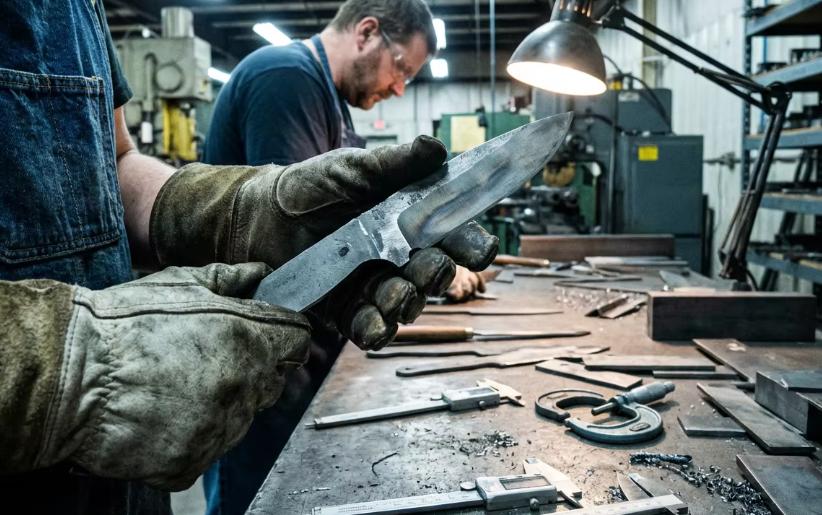
Maxamet is an ultra-high-hardness powder metallurgy tool steel developed by Carpenter Technology, designed for maximum edge retention and wear resistance. With a very high carbide content and typical hardness of 67–70 HRC, it can maintain sharpness significantly longer than most knife steels.
However, its lower chromium content means limited corrosion resistance, and the extreme hardness makes it more difficult to sharpen and less forgiving under impact.
MagnaCut
MagnaCut is a modern powder metallurgy stainless steel developed by Crucible Industries, engineered to achieve a balanced combination of toughness, edge retention, and corrosion resistance. Typically hardened to 60–63 HRC, it offers excellent real-world performance with strong resistance to rust and chipping.
Compared to Maxamet, it is easier to maintain and more versatile, making it suitable for a wide range of knife applications.
Chemical Composition: Maxamet vs MagnaCut
Understanding the chemical makeup of Maxamet and MagnaCut is crucial for appreciating their performance differences. The precise balance of elements dictates properties like hardness, toughness, and corrosion resistance. Chemical composition data presented below is sourced from zknives.com.
| Element | Maxamet | MagnaCut | Primary Function |
| Carbon (C) | 2.15% | 1.15% | Forms hard carbides for wear resistance |
| Chromium (Cr) | 4.75% | 10.7% | Provides corrosion resistance and hardenability |
| Tungsten (W) | 13.00% | — | Enhances hot hardness and wear resistance |
| Vanadium (V) | 6.00% | 4.00% | Creates extremely hard carbides for wear resistance |
| Cobalt (Co) | 10.00% | — | Increases hardness and heat resistance |
| Niobium (Nb) | — | 2.00% | Creates fine carbides, refines grain structure |
| Molybdenum (Mo) | — | 2.00% | Enhances strength and corrosion resistance |
| Nitrogen (N) | — | 0.20% | Boosts corrosion resistance without large carbides |
| Manganese (Mn) | 0.30% | 0.50% | Improves hardenability |
| Silicon (Si) | 0.25% | 0.40% | Deoxidizer, strengthens ferrite |
| Sulfur(S) | 0.07% | — | Improves machinability |
Maxamet vs MagnaCut: Head-to-Head Comparison
Properties Comparison Table
| Attribute | Maxamet | MagnaCut | Winner |
|---|---|---|---|
| Edge Retention | 9.5/10 | 7.5/10 | Maxamet |
| Toughness | 6/10 | 9/10 | MagnaCut |
| Corrosion Resistance | 3/10 | 9.5/10 | MagnaCut |
| Ease of Sharpening | 4/10 | 7.5/10 | MagnaCut |
| Hardness (HRC) | 67-70 | 60-63 | Maxamet |
Key Takeaway: Maxamet wins in pure edge retention. MagnaCut wins in versatility and ease of ownership.
Edge Retention
Winner: Maxamet
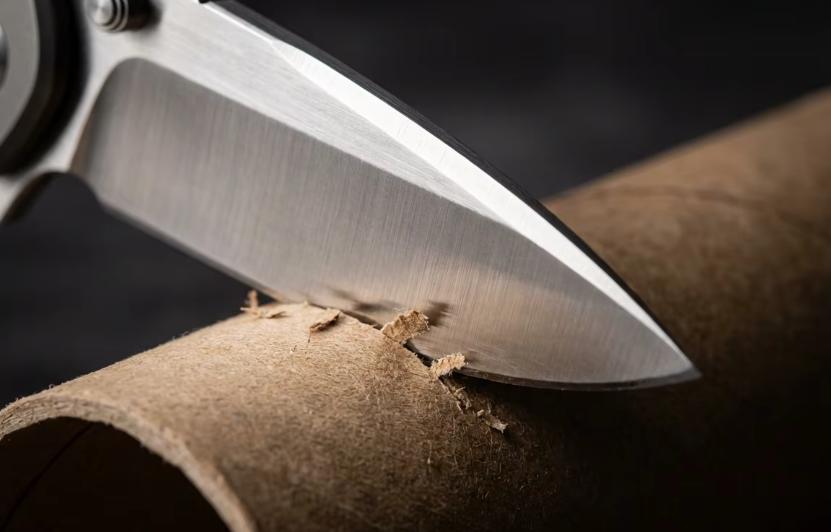
Maxamet maintains an edge 30-40% longer than MagnaCut in controlled CATRA testing. The higher carbide volume (from 6% vanadium and 13% tungsten) creates a more wear-resistant cutting edge.
- Maxamet: 67-70 HRC with exceptional carbide density
- MagnaCut: 60-63 HRC with balanced carbide structure
For B2B buyers: Choose Maxamet if your customers prioritize maximum edge life and are willing to maintain the blade properly.
Hardness & Heat Treatment
Winner: Depends on application
Maxamet operates at 67–70 HRC — among the hardest knife steels commercially available. This extreme hardness is what enables its edge retention advantage, but it also means the blade is more brittle and nearly impossible to field-sharpen.
According to the official Carpenter Technology datasheet, Maxamet can achieve HRC 70.0 at standard industrial tempering, while knife makers typically target 67–69 HRC for improved usability.
MagnaCut typically runs at 60–63 HRC, with most production knives targeting 61–63 HRC. This range delivers an optimal balance: hard enough for strong edge retention, tough enough to resist chipping under real-world use.
| Aspect | Maxamet | MagnaCut |
|---|---|---|
| Typical working hardness | 67–69 HRC | 60–63 HRC |
| Heat treatment complexity | Very high — tight temperature windows, atmosphere-controlled furnaces required | Moderate — responds well to standard equipment |
| Heat treater availability | Few accept it | Widely supported |
| Sensitivity to process error | High — small deviations cause brittleness | Forgiving across a broader soak range |
For B2B buyers: MagnaCut’s forgiving heat treatment means higher production consistency and fewer rejected blades. Maxamet requires specialized partners and tighter QC, which directly impacts lead time and unit cost.
Toughness
Winner: MagnaCut
MagnaCut delivers 38 ft-lbs of impact resistance at 62.5 HRC (longitudinal Charpy C-notch), compared to 25 ft-lbs for S35VN at 61 HRC — over 50% tougher, even at a higher hardness. This data is sourced from the official CPM MagnaCut datasheet published by Crucible/NSM.
- Maxamet: Suitable for slicing tasks; avoid impact work
- MagnaCut: Can handle chopping, batoning, and heavy-duty use
For B2B buyers: MagnaCut is the safer choice for EDC, hunting, and outdoor knives where impact resistance matters.
Corrosion Resistance
Winner: MagnaCut (by a large margin)
This is the most significant difference between the two steels.
| Test Condition | Maxamet | MagnaCut |
|---|---|---|
| Saltwater exposure | Rusts within hours | No visible corrosion |
| High humidity | Requires oiling | Stable without treatment |
| Acidic foods | Reacts quickly | Minimal reaction |
| Classification | Non-stainless | Premium stainless |
For B2B buyers: MagnaCut is essential for kitchen knives, marine applications, and customers in humid climates. Maxamet requires educated users who understand maintenance requirements.
Ease of Sharpening
Winner: MagnaCut
| Aspect | Maxamet | MagnaCut |
|---|---|---|
| Required abrasives | Diamond only | Diamond, ceramic, or Arkansas |
| Time to sharpen | 2-3× longer | Standard time |
| Edge polishability | Difficult | Good |
| User skill level | Advanced | Beginner-friendly |
For B2B buyers: Consider your end users. Maxamet suits experienced collectors and professionals. MagnaCut works for all skill levels.
Best Use Cases: When to Choose Each Steel
Maxamet: Ideal Applications
✅ Recommended For:
| Application | Why Maxamet Excels |
|---|---|
| Precision Cutting Tools | Maintains sharpness through extended slicing sessions |
| Professional Cutting Tools | Maintains sharpness through extended use |
| Collector/Enthusiast Knives | Premium steel appeals to knowledgeable buyers |
| Industrial Cutting Blades | Wear resistance reduces replacement frequency |
| Competition Knives | Edge-holding advantage in cutting contests |
Customer Profile:
- Experienced knife users who understand steel properties
- Collectors seeking premium materials
- Professionals who rely on their tools daily
- Enthusiasts willing to perform regular maintenance
Avoid Maxamet If:
- Your customers live in coastal/humid environments
- The knife will be used for food preparation without immediate cleaning
- End users lack knife maintenance knowledge
- Impact/chopping tasks are expected
MagnaCut: Ideal Applications
✅ Recommended For:
| Application | Why MagnaCut Excels |
|---|---|
| Everyday Carry (EDC) | Balanced performance with minimal maintenance |
| Hunting/Outdoor Knives | Toughness handles field tasks; stainless for easy cleaning |
| Kitchen/Chef Knives | Corrosion resistance for food-safe use |
| Diving/Marine Knives | Excellent saltwater resistance |
| Premium Folding Knives | Thin edges resist chipping; easy to maintain |
| Custom/Artisan Knives | Popular among makers; commands premium pricing |
Customer Profile:
- EDC enthusiasts seeking reliable daily users
- Outdoor adventurers (hunters, campers, hikers)
- Home cooks and professional chefs
- Coastal residents and marine workers
- Collectors who appreciate modern metallurgy
Avoid MagnaCut If:
- Budget is the primary concern (consider mid-range steels)
- Maximum edge retention is the only priority (consider Maxamet or similar)
Price & Cost Analysis for B2B Buyers

Raw Material Cost
Both are CPM powder steels, but Maxamet carries a significant material premium due to its high tungsten, cobalt, and vanadium content — originally developed for industrial tooling, not knives.
From our sourcing experience at LeeKnives, Maxamet raw stock typically costs 1.5–1.8× more than MagnaCut, with far fewer suppliers. MagnaCut is produced by Niagara Specialty Metals (NSM) and widely distributed; Maxamet requires direct ordering from Carpenter Technology at high minimums.
Manufacturing Cost
Maxamet is among the hardest steels to work at scale:
- Grinding: Belt consumption 1.5–2× higher than MagnaCut
- Heat treatment: Requires atmosphere-controlled conditions for 67–70 HRC; few contract heat treaters accept it
- Finishing: Diamond or CBN abrasives mandatory
MagnaCut grinds like CPM-4V and delivers consistent results at 60–63 HRC on standard equipment. In our production runs, Maxamet’s all-in blade cost runs roughly 2× that of MagnaCut.
Retail Price Benchmarks
Real market pricing (Blade HQ / KnifeCenter, 2025–2026):
| Model | MagnaCut Version | Maxamet Version |
|---|---|---|
| Spyderco PM2 | $220–$280 | $298–$398 |
| Spyderco Native 5 | $130–$215 | $175–$250 |
| Entry-level EDC (Hogue Deka, Ontario RAT, etc.) | $96–$160 | N/A — no budget options exist |
| Premium tier (Kershaw Livewire, Benchmade, etc.) | $180–$400 | Limited collector runs only |
MagnaCut covers a wider price spectrum ($96–$400+), while Maxamet is concentrated in the $250–$400 range with no entry-level options.
Supply Chain Risk
At SHOT Show 2026, Spyderco confirmed they are sunsetting all Maxamet SKUs — the steel has become “too expensive and too difficult to produce.” MagnaCut faces no such risk; NSM has expanded capacity and multiple distributors support blanket PO structures.
B2B Verdict
| Criterion | MagnaCut | Maxamet |
|---|---|---|
| Per-unit COGS | Lower | ~2× higher |
| Supply reliability | Stable | End-of-life |
| Market breadth | Outdoor, culinary, EDC, tactical | Collector niche only |
| Margin room | Wider | Compressed |
For any scalable B2B program, MagnaCut is the clear choice. Maxamet remains viable only for limited collector editions — but that window is closing fast.
Final Verdict: Maxamet vs MagnaCut
Both Maxamet and MagnaCut represent the pinnacle of modern knife steel technology—but they serve different purposes.
The Bottom Line
Choose Maxamet if:
- Maximum edge retention is your #1 priority
- You’re an experienced knife user who understands maintenance
- The knife will be used in dry, controlled environments
- You’re building a premium product line for enthusiasts
Choose MagnaCut if:
- You need a versatile, do-it-all steel
- Corrosion resistance matters (kitchen, marine, EDC)
- Your customers prefer low-maintenance blades
- You’re targeting the broadest possible market
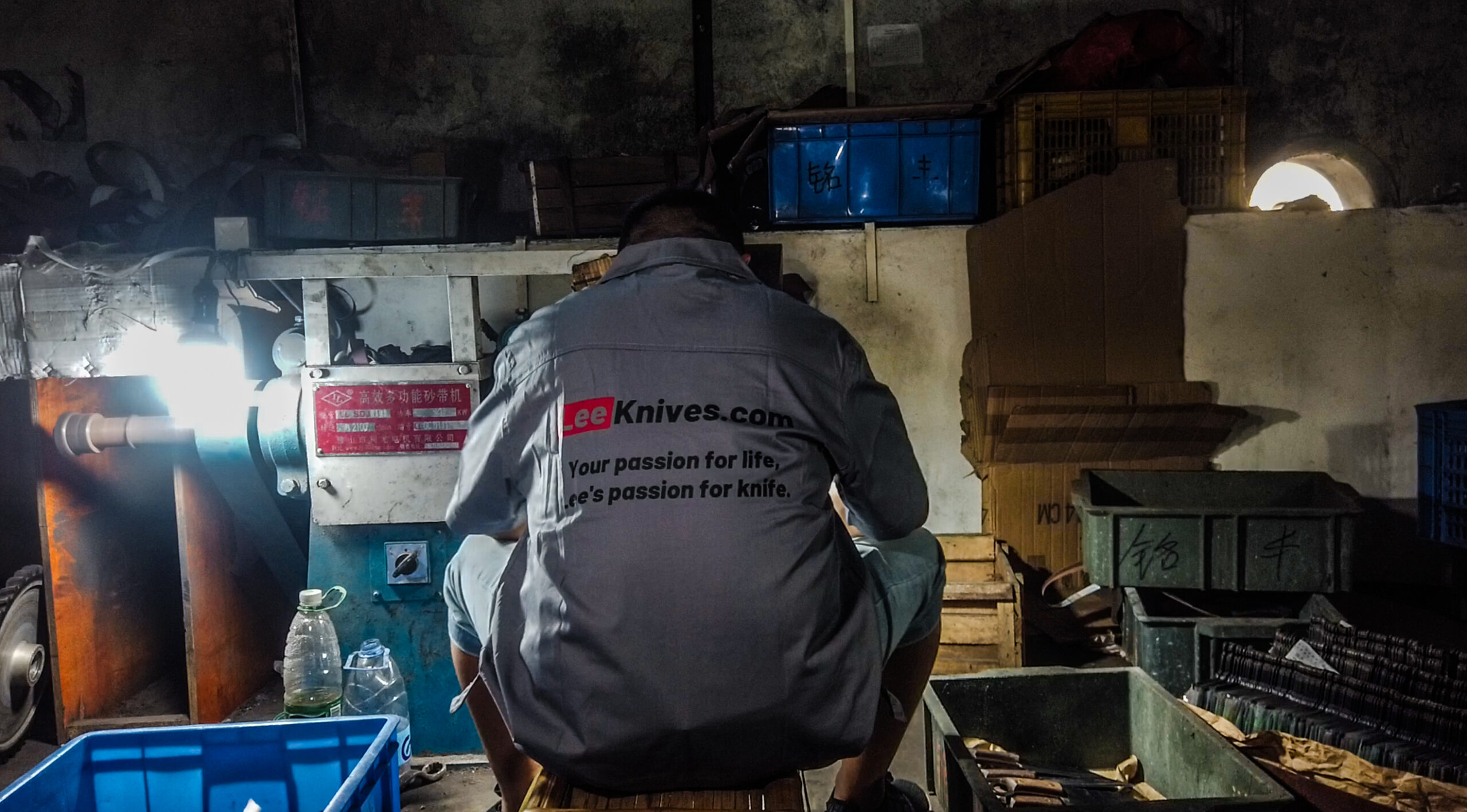
LeeKnives specializes in OEM/ODM knife manufacturing with expertise in both Maxamet and MagnaCut.
Our Services:
- ✅ Custom blade design and engineering
- ✅ Precision heat treatment (certified)
- ✅ Handle material customization (G10, Carbon Fiber, Titanium, Wood)
- ✅ Private label and custom packaging
- ✅ Quality inspection and testing
- ✅ Fast turnaround (30-45 days)
Why Partner with LeeKnives?
- 15+ years of knife manufacturing experience
- ISO 9001 certified production facility
- Flexible MOQ (starting from 50 pieces)
- Competitive factory-direct pricing
- Dedicated project management support
Start your custom knife project with LeeKnives and get a personalized quote in 24 hours. Click here to request a quote.
Launch Your Custom Knife Line Faster with LeeKnives
Complete OEM/ODM support—from design to final shipment—so you can focus on growth.
Backed by warehouses in the U.S. for fast, reliable delivery.
Frequently Asked Questions
Is Maxamet or MagnaCut better overall?
There’s no single “better” steel—it depends on your needs. Maxamet excels in edge retention but requires regular maintenance. MagnaCut offers balanced performance with excellent corrosion resistance. For most users, MagnaCut is the more practical choice. For maximum edge life, choose Maxamet.
Can Maxamet rust?
Yes. Maxamet contains only 4.75% chromium, classifying it as non-stainless steel. It will rust if exposed to moisture without proper care. Regular oiling and immediate drying after use are essential.
Is MagnaCut stainless steel?
Yes. MagnaCut contains 10.7% chromium and is specifically engineered for excellent corrosion resistance. It performs comparably to dedicated marine steels in saltwater exposure tests.
Can I use Maxamet for kitchen knives?
Yes, but with caveats. Maxamet holds an edge exceptionally well for food prep, but it requires immediate cleaning and drying after each use. For professional kitchens, MagnaCut is often the better choice due to its stainless properties.
Which steel offers better value for retail customers?
For most retail customers, MagnaCut offers better overall value due to:
- Lower maintenance costs (no special oils or diamond stones required)
- Longer blade life (no rust damage)
- Easier resale (broader market appeal)
- Higher customer satisfaction (fewer returns due to rust issues)




 EN
EN  JA
JA  DE
DE