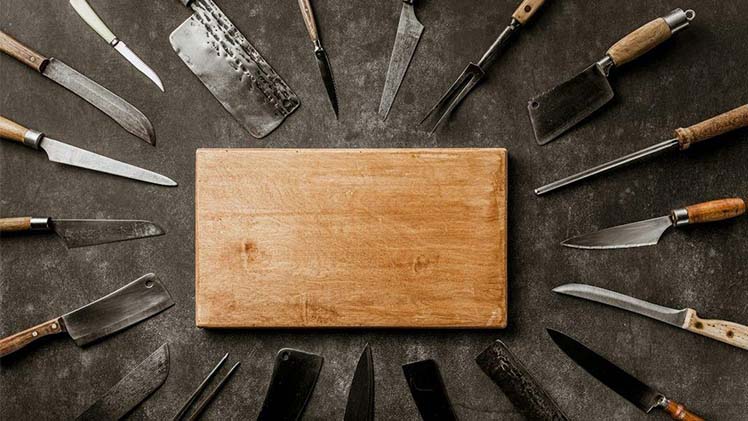
1084 is a common high‑carbon knife steel prized for easy heat treatment and solid toughness. It is widely used for forged blades, bushcraft knives and Damascus, yet it offers no stainless corrosion resistance.
So, what does that mean for your products? This guide explains its makeup, hardness, toughness, edge retention, and heat treatment. You’ll learn where 1084 works best and how to set clear care expectations.
What Is 1084 Steel?
1084 steel is a plain high-carbon grade named under the American AISI system. Its name helps you identify its makeup when comparing knife materials.
Here is what the grade tells you:
- The “10” identifies a plain carbon steel.
- The “84” means roughly 0.84% carbon by weight.
- UNS G10840 identifies this grade. According to the Zknives steel composition database, related grades include W-Nr 1.0616, AFNOR XC85, and BS 050A86. Check supplier specifications before substituting.
- Makers use 1084 for forging. Paired with 15N20, it forms the darker layers in pattern-welded Damascus steel after etching.
Overall, 1084 offers a straightforward starting point for knife production. However, confirm the supplied chemistry and heat-treatment guidance rather than relying on a grade name alone when you order steel.
1084 Steel Composition
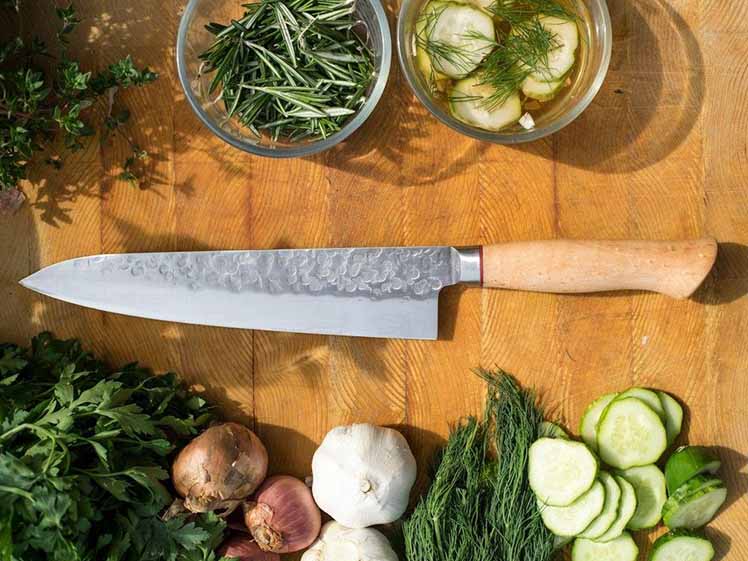
1084 steel has a simple makeup, with iron as its base. Published composition ranges for SAE/AISI 1084 are listed below. Confirm the applicable specification and actual batch chemistry with your supplier.
- Carbon: 0.80–0.93%.
- Manganese: 0.60–0.90%.
- Phosphorus:0.04% maximum.
- Sulfur: 0.05% maximum.
What 1084 Steel’s Composition Means for You
Carbon creates hardness, and manganese improves hardenability during quenching. Silicon appears only as a minor leftover from steelmaking. Critically, 1084 contains no intentional chromium, vanadium, or molybdenum alloy additions.
That chemistry leads to two defining traits for your knife line. First, it is not stainless and will rust without proper care. Second, its simple alloy makeup keeps heat treatment more forgiving compared to complex tool steels. Final blade performance still depends on the actual batch chemistry and your heat‑treatment schedule.
1084 Steel at a Glance
Use this overview to compare 1084 steel’s strengths with your customers’ needs.
| Property | Rating |
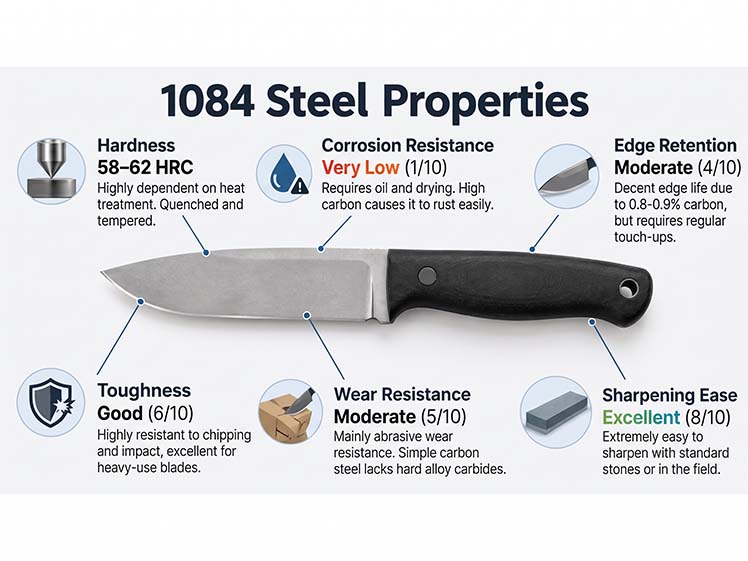
| Hardness | Finished blade can target 58–62 HRC |
| Corrosion resistance | Poor |
| Edge retention | Decent |
| Toughness | Good |
| Wear resistance | Moderate |
| Sharpening ease | Generally easy |
| Heat treatment | Relatively simple |
1084 delivers forgiving heat treatment and reliable toughness for outdoor, kitchen and Damascus blades. We provide OEM, ODM & private-label manufacturing with flexible MOQs and consistent batch quality.
1084 Steel Properties
1084 steel can suit knives that need a keen edge and straightforward upkeep. However, performance depends on heat treatment, blade shape, and how you use it. Look at these properties together rather than choosing by hardness alone.
Hardness of 1084 Steel
1084 gets hard enough for any cutting job: 58–62 HRC in normal production, and as high as 65 HRC straight out of the quench.
Where it lands in that range depends on the tempering temperature, as measured on the Rockwell hardness scale.
This degree of hardness is adequate for kitchen knives, hunting knives, and general cutting tools. It is not exceptional by modern powder steel standards, but it is near the practical ceiling for a simple carbon steel.
Corrosion Resistance and Patina
1084 lacks enough chromium to behave like stainless steel. Moisture, salt, and humid st1084 rusts — this is its weakest property, with no way around it.
With no chromium in its composition, it is not stainless in any sense and will develop red rust if left wet or stored in humid conditions.
The upside is that 1084 quickly develops a stable grey-blue patina that slows further rusting, and many carbon steel users value that look. For your customers, basic habits are enough: wipe the blade dry, apply a light coat of mineral oil, and follow standard carbon steel knife care practices.
1084 Edge Retention
1084 holds an edge respectably for a forging steel — mid-pack, better than 1075 or 1055, behind 1095 and far behind powder steels.
Its ability to take a very fine, keen edge at 60+ HRC helps it in slicing work.
Set expectations honestly, though: it cannot compete with 1095 at equal hardness, and it sits well below the powder metallurgy steels on any best pocket knife steels list. Among forging steels, its edge retention is mid-pack, acceptable for hard-use knives that prioritize toughness.
Toughness Under Impact
1084 is one of the toughest knife steels at its carbon level — this is its signature strength.
That is why bladesmiths trust it for choppers, camp knives, and blades that see batoning and impact.
Independent toughness testing by Knife Steel Nerds found that 1084 and 80CrV2 perform even better than their carbon content would predict, because almost no brittle carbide particles remain in the steel after hardening — and carbides are where cracks like to start.
For your product line, that translates to fewer chipped edges and fewer warranty claims on hard-use models.
Wear Resistance in Daily Cutting
Wear resistance is 1084’s most average property — fine for cutting, not built for abrasion.
With no hard alloy carbides, abrasion resistance comes almost entirely from the hardness of the steel itself.
For normal cutting tasks like food prep, game processing, and wood work, this is not a limitation. For highly abrasive materials such as cardboard in volume, fiber rope, or carpet, a higher-alloy steel will hold out longer.
1084 is one of the easiest knife steels to sharpen — a basic whetstone brings the edge back in minutes.
Its simple internal structure, free of hard carbide particles, means basic whetstones or field sharpeners restore the edge quickly, with no diamond abrasives required.
For end users, this offsets the modest edge retention: the edge comes back in minutes. For retailers, it makes 1084 knives an easy recommendation to customers who maintain their own blades, and our types of sharpening stones guide pairs naturally with these products.
Why 1084 Steel Is Easy to Heat Treat
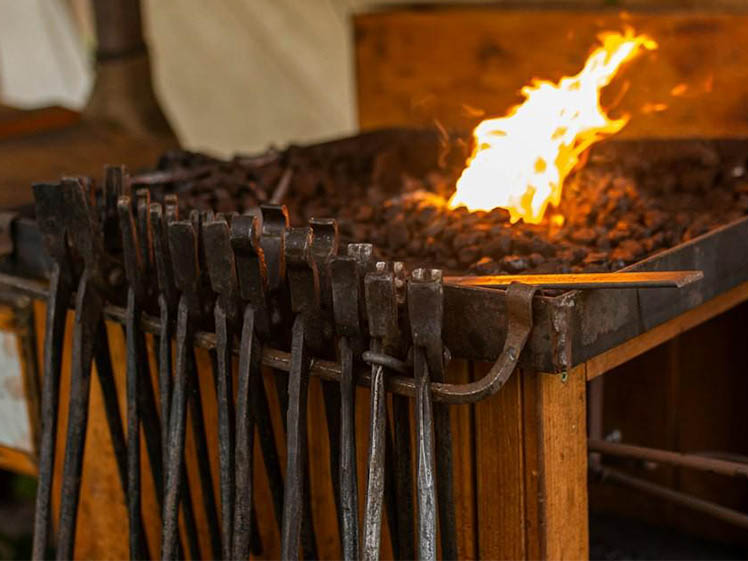
1084 steel is relatively easy to heat treat, especially after proper normalizing. Its staThanks to its balanced 0.84% carbon content, normalized 1084 dissolves carbon quickly at hardening temperature with no long soak. Once non‑magnetic (~815 °C / 1500 °F), it can be quenched in oil. Manganese delivers good hardenability, avoiding the cracking risk of water quenching.
It is regarded as one of the most forgiving steels for forge heat treatment. Standard cycle: heat to 815 °C, oil quench, two‑hour double temper at ~200 °C.
For production, it tolerates small temperature errors for better batch consistency.
Caveat: Annealed stock needs soak time; uneven forge heating will reduce toughness.
1084 delivers forgiving heat treatment and reliable toughness for outdoor, kitchen and Damascus blades. We provide OEM, ODM & private-label manufacturing with flexible MOQs and consistent batch quality.
1084 Steel vs 1095, 80CrV2, and 1075
Choosing between these carbon steels comes down to your intended use case, production equipment, maintenance expectations, and cost target. No single grade is universally better.
Side-by-Side Performance Comparison
表格
| Steel | Typical Hardness | Toughness | Edge Retention | Corrosion Resistance | Heat Treat Difficulty | Best For |
|---|---|---|---|---|---|---|
| 1084 | 58–62 HRC | Good | Moderate | Poor (no chromium) | Very low | Forged blades, bushcraft knives, Damascus billets, general-purpose knives |
| 1095 | 56–60 HRC (peak 64) | Fair | Good | Poor (no chromium) | Moderate | Precision slicing knives, kitchen chef knives, fine-edged blades |
| 80CrV2 | 58–60 HRC | Excellent | Good | Slightly better than plain carbon | Low | Heavy camp knives, choppers, survival blades, high-impact use |
| 1075 | 55–58 HRC | Very good | Moderate | Poor | Low | Large blades, machetes, axes, impact tools prioritizing toughness over hardness |
Note: These are general benchmarks. Actual performance varies significantly with heat treatment, blade geometry, and edge angle.
Quick Selection Guide
- Pick 1084 for forgiving forge heat treatment and balanced toughness, ideal for general-purpose or Damascus knives.
- Pick 1095 if you prioritize better edge retention for fine slicing and kitchen knives, and have controlled heat-treat equipment.
- Pick 80CrV2 when you need maximum toughness for heavy-use outdoor and chopping blades.
- Pick 1075 for large, impact-heavy tools where toughness matters more than peak hardness.
Pros for Your Product Line
- Simpler Processing: Properly prepared 1084 can respond well to a short forge-heating cycle. Still, do not assume every batch needs no hold time. Starting structure and temperature control affect results. Prove consistency with test pieces before scaling production.
- Useful Toughness: Independent testing found 1084 to be tough relative to its dissolved carbon level. That supports considering it for outdoor blades, but does not guarantee resistance to chipping, batoning damage, or misuse.
- Straightforward Sharpening: Customers can maintain the edge with ordinary whetstones. This suits buyers who prefer touch-ups to specialized sharpening equipment. Avoid promising a fixed sharpening time.
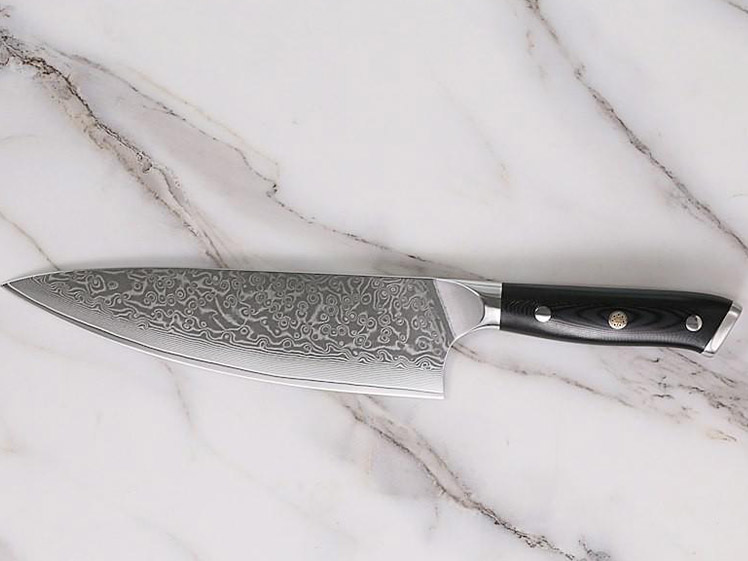
- Damascus Options: Makers commonly pair 1084 with 15N20 for contrasting etched layers. If you sell patterned blades, this gives you a use for the material. Check stock sizes and supplier quotes before assuming you’ll save money.
Cons to Plan Around
- Rust Care: 1084 is not stainless. Include drying and storage guidance, especially for humid climates. A patina or coating doesn’t eliminate the need for care.
- Limited Abrasive Cutting Life: Repeated cutting of cardboard or rope may favor a more wear-resistant grade. Compare finished blades under the same conditions rather than promising that one steel always stays sharp longer.
- Process Limits: Forge heating can produce uneven results. Easier treatment does not automatically mean lower scrap rates or fewer warranty claims.
- Positioning: If your buyers value a steel name, check demand before choosing 1084. Premium pricing needs support from design, finish, testing, and service, not unsupported claims about prestige.
Order samples, record hardness, and run cutting tests suited to your market. Then compare the cost per finished knife, including treatment, finishing, quality checks, and customer support. Choose the grade your process can deliver.
1084 delivers forgiving heat treatment and reliable toughness for outdoor, kitchen and Damascus blades. We provide OEM, ODM & private-label manufacturing with flexible MOQs and consistent batch quality.
What Is 1084 Steel Suitable For?
1084 steel suits several knife styles when you match the design to the task and explain the upkeep. Use these applications as starting points, then test finished blades before making claims.
- Kitchen Knives: Consider chef’s knives for buyers who enjoy carbon steel and accept patina. Include drying and storage instructions in the box.
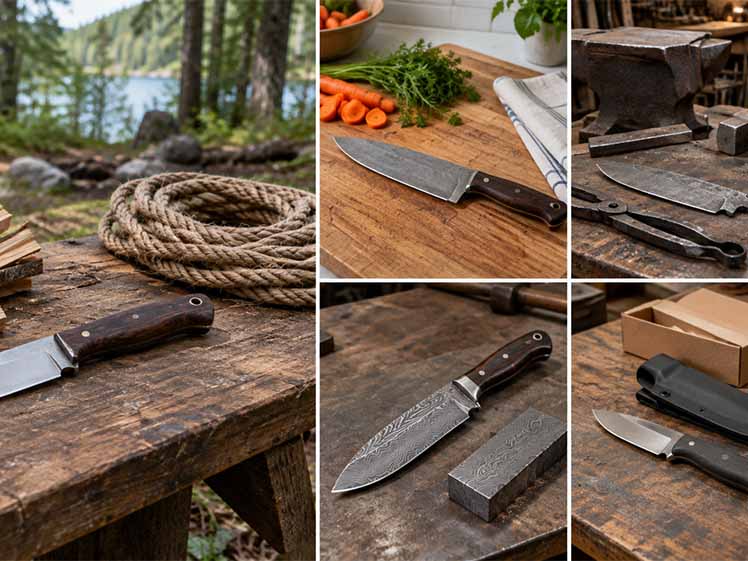
- Hunting and Outdoor Knives: Consider camp knives, bushcraft blades, and game-processing tools. Match edge thickness and heat treatment to the intended work.
- Forged and Custom Knives: 1084 can suit learning projects and small production runs. Our forged blades guide explains the process, but forging alone doesn’t guarantee better performance.
- Damascus Billets: Pairing 1084 with 15N20 produces contrasting dark and bright layers after etching. For your high-end line, this is where 1084 meets premium pricing.
- EDC and Utility Knives: Consider buyers who accept rust care and sharpening. Avoid limiting the grade to budget products. Design, artistry, and testing also shape value.
Frequently Asked Questions
Is 1084 steel good for knives?
Yes. 1084 steel suits outdoor knives, custom forged pieces, and carbon kitchen knives when heat treatment and blade design match the job. However, buyers must accept the need for rust care. Include clear instructions for washing, drying, and storage. If your customers want less upkeep, consider stainless steel instead. Even then, don’t promise dishwasher safety unless the finished knife manufacturer specifically allows it.
Does 1084 steel rust?
Yes. A wet 1084 blade can rust, especially around salt or high humidity. Do not promise a fixed rusting timeline, since exposure and surface condition vary. Tell customers to hand-wash, dry immediately, and apply food-grade mineral oil before storage. A patina may slow corrosion, but it does not replace care. Coated blades still need attention to exposed edges and scratches.
What is the difference between 1084 and 1095 steel?
1095 has a higher nominal carbon content than 1084 and can offer greater abrasive edge retention. Meanwhile, 1084 generally offers better toughness and needs less rapid quenching. However, heat treatment, hardness, and edge geometry affect the result. Compare finished blades under similar test conditions before choosing either grade.
Is 1084 steel easy to heat treat?
Yes, compared with many knife steels. Its low alloy content and useful hardenability make 1084 suitable for simple forge setups. However, starting structure, uneven heating, and overheating can affect results. Ask your supplier for the heat-treatment procedure, batch hardness records, and sampling method. Easy processing alone doesn’t prove low reject rates, consistent toughness, or fewer warranty claims.
Is 1084 steel for Damascus?
Yes. 1084 commonly pairs with 15N20 in pattern-welded Damascus, producing dark and bright layers after etching. Knife Steel Nerds examines this combination and its heat-treatment limits. When sourcing, ask for steel identities, billet origin, weld-quality checks, and hardness records. Layer count describes the pattern, not proven strength. Request finished samples before approving appearance, cutting performance, and care guidance for sale.
Conclusion: Is 1084 Steel Right for Your Knife Line?
1084 steel can fit your knife line when toughness, straightforward sharpening, and manageable heat treatment matter more than rust resistance. Independent testing supports its toughness, but reliable production still requires controlled heating and checks on finished blades.
Consider it for outdoor knives, forged customs, and Damascus products. It can also work for kitchen knives if customers accept the care. Premium positioning alone does not rule it out.
However, choose stainless steel if low upkeep is essential. Before deciding, compare supplier quotes, test samples, and review care needs. Your best choice depends on the finished knife and its users, not the grade alone.
Should You Consider Selling 1084 Knives?
Consider selling 1084 steel knives if your customers value easy sharpening and accept the need for rust care. Outdoor users, custom knife buyers, and carbon-steel cooks may be a good audience. However, check your sales data before assuming demand is growing.
Before adding a line, request samples and compare production, packaging, and return costs. For Damascus products, confirm the steels used and inspect both weld quality and finish. A pattern alone does not prove blade quality.
LeeKnives is located in Yangjiang City and offers custom manufacturing, packaging, and shipping services. Request a quote with your blade design, target hardness, order size, and testing requirements. Ask for documentation supporting material and heat-treatment claims before placing an order.
Related Reading:





 EN
 JA
 DE