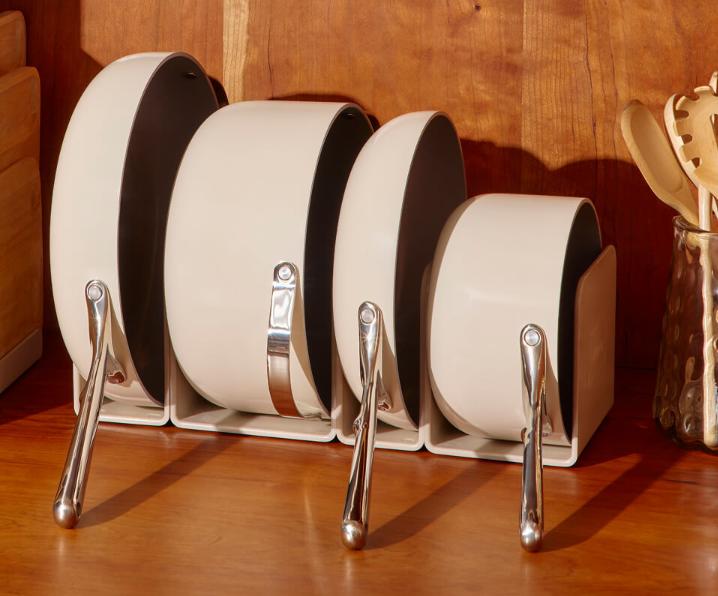
For retailers, distributors and e-commerce sellers curating cookware inventory, knowing a product’s manufacturing origin is a key sourcing decision, not just a detail. Caraway is one of the U.S.’s fastest-growing DTC cookware brands, recognized for its pastel aesthetics and “non-toxic” marketing.
But where is Caraway cookware actually manufactured, and what does this mean for you as a business buyer? This guide breaks down its manufacturing origins, partner factories, materials, certifications and consumer reviews to guide your informed, competitive purchasing choices.
Quick Answer: Caraway Cookware Is Made in China
Caraway cookware is designed in New York City but manufactured entirely in China, specifically in the Zhejiang province — one of the world’s largest cookware production hubs.
According to Caraway’s official FAQ: “Our founder designed Caraway in New York and vetted vendors worldwide… As a result, our products are all made in world-class factories based in China.”
This is consistent across their entire product line, including their signature ceramic-coated pans, bakeware sets, and food storage containers.
Who Manufactures Caraway Cookware?
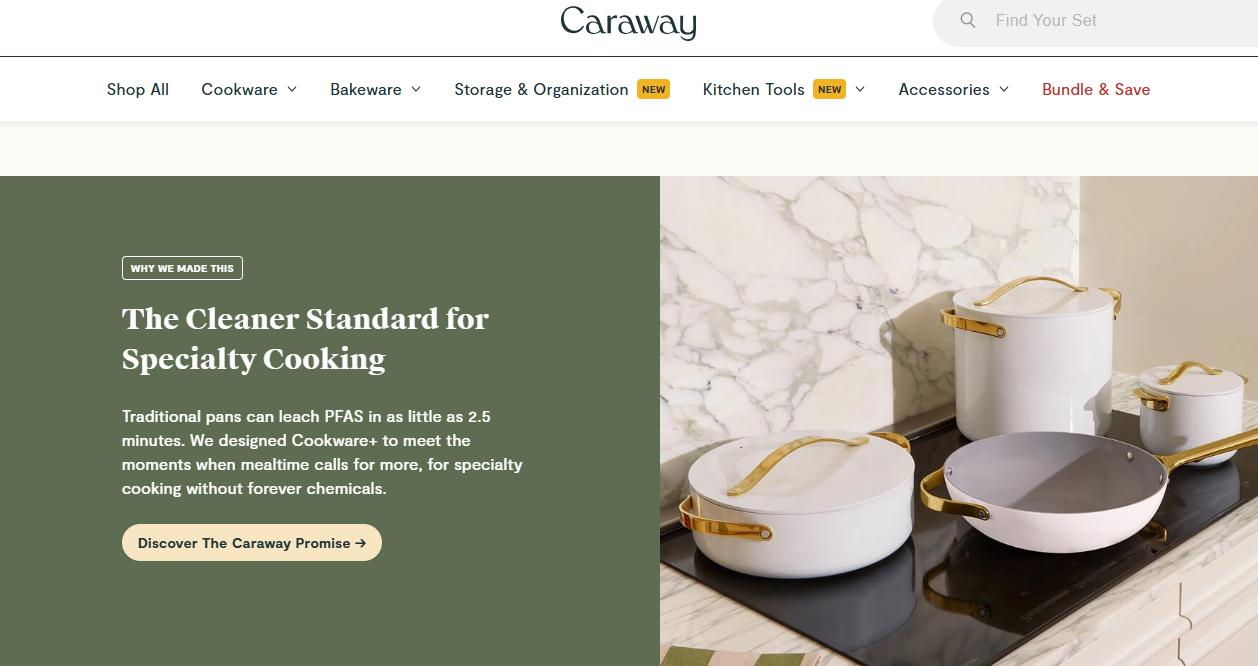
While Caraway doesn’t publicly name its factory partners on its website, U.S. Customs import records (accessible via platforms like ImportGenius) show that Caraway Home, Inc. had documented shipments from Zhejiang Supor Co., Ltd., based in Yuhuan, Zhejiang, China.
A representative bill of lading (FLXT00001291565A) dated December 22, 2021, confirms a shipment of 16,128 kg of cookware (HS Code 761510) from Supor to Caraway’s New York office.
As Caraway has not officially disclosed its manufacturing partners, and sourcing arrangements may have evolved since these records, Supor should be understood as a confirmed historical supplier based on available public data — not necessarily its sole or current manufacturer.
About Zhejiang Supor
- Location: Headquartered in Hangzhou, Zhejiang Province, with production sites in Yuhuan (Taizhou), Shaoxing, and Wuhan
- Scale: One of the largest cookware manufacturers in the world, publicly listed on the Shenzhen Stock Exchange
- Parent company: Majority-owned by Groupe SEB (France), the global giant behind Tefal, All-Clad, and WMF
- Capabilities: Supor operates advanced production lines for aluminum, stainless steel, and ceramic-coated cookware with full OEM/ODM services
For B2B buyers, this is significant: Caraway’s “world-class factory” is, in fact, one of the most established OEM manufacturers in the global cookware supply chain. The same production ecosystem that serves multinational brands also serves DTC startups like Caraway.
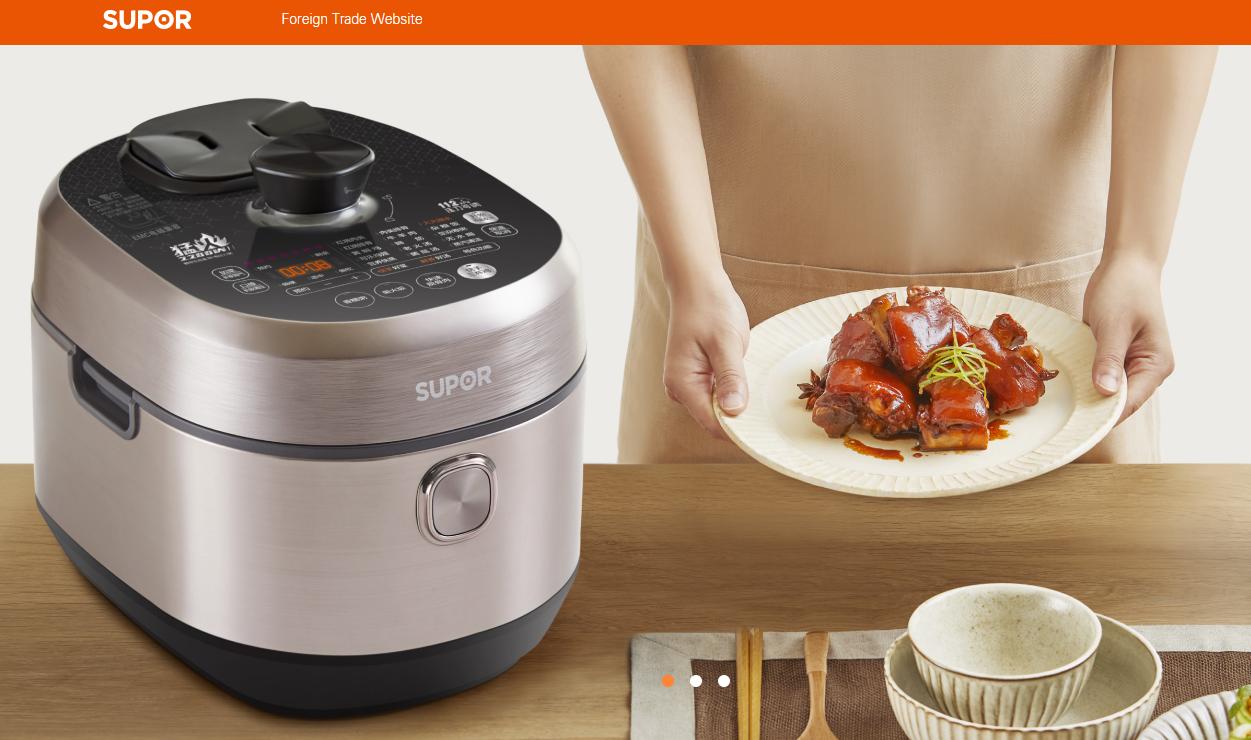
Industry Insight: Industry data indicates that China accounts for over 60% of global cookware export shipments (Volza Global Trade Data, 2025).
Within China, Zhejiang Province is one of the country’s dominant cookware production regions — anchored by clusters in Yongkang (known as the “Hardware Capital of China”), Yuhuan (home to Supor’s primary cookware manufacturing site), and the broader Taizhou–Shaoxing corridor.
Caraway sources from Zhejiang Supor, while HexClad is also manufactured in China. Other major DTC brands like GreenPan operate their own factory in Jiangmen, Guangdong — another key cookware manufacturing hub.
What Materials Does Caraway Use?
Understanding Caraway’s material stack is essential for B2B buyers comparing it against other brands in your inventory.
| Component | Material | Details |
|---|---|---|
| Pan body | Aluminum | Lightweight with excellent heat conductivity |
| Base plate | Stainless steel | Added for induction compatibility |
| Non-stick coating | Sol-gel ceramic (mineral-based) | Silica-based film; PFAS-free, PTFE-free |
| Bakeware body | Aluminized steel | Standard for oven-safe bakeware |
| Handles | 202 Stainless Steel | PVD (Physical Vapor Deposition) coating for color finish |
What Is Sol-Gel Ceramic Coating?
Unlike traditional PTFE (Teflon) coatings, Caraway uses a sol-gel derived ceramic coating. This is a silica-based, mineral-derived film applied to the aluminum body. It’s the same technology used by brands like GreenPan and Our Place.
Key trade-off for retailers to understand: Sol-gel ceramic is marketed as “healthier” (no PFAS chemicals), but it has a shorter functional lifespan than PTFE. Industry consensus and user feedback consistently indicate ceramic non-stick coatings lose effectiveness within 6–18 months of regular use — a critical factor for managing customer expectations and return rates.
Certifications and Safety Standards
Caraway invests heavily in third-party testing to support its “non-toxic” claims. Here’s what’s verified:
Regulatory Compliance
- FDA compliant — Meets U.S. food-contact material safety standards
- LFGB certified — Complies with Germany’s stringent food safety regulations (one of the strictest globally)
- California Proposition 65 — Certified compliant with California’s chemical safety guidelines
- California AB1200 — Under this disclosure law, Caraway reports that its 202 Stainless Steel handles contain nickel and chromium, while the ceramic cooking surfaces are free of these metals in migration tests
Ethical Manufacturing
- BSCI (Business Social Compliance Initiative) — Independent third-party audits of labor conditions
- SMETA (Sedex Member Ethical Trade Audit) — Covers labor standards, health & safety, and environmental practices
Third-Party Lab Testing
Caraway publishes toxicity reports from Light Labs, an independent testing facility, on their website.
In August 2025, the National Advertising Division (NAD) — a self-regulatory body under the BBB National Programs — reviewed Caraway’s marketing and found that while its “PFAS-free” claims were supported, it recommended Caraway discontinue comparative claims suggesting competitors’ cookware is toxic — a distinction the NAD determined Caraway had not adequately substantiated.
For B2B buyers: These certifications matter when you’re building a product catalog for health-conscious consumers. However, understand that “non-toxic” is a marketing term, not a regulatory classification. Having the lab reports and certifications on hand helps you answer customer questions confidently.
How Does Caraway Compare to Other DTC Cookware Brands?
If you’re stocking multiple cookware brands, this comparison helps you understand the competitive landscape:
| Brand | Manufacturing Location | Coating Type | Price Range (Set) | Key Differentiator |
|---|---|---|---|---|
| Caraway | China (Zhejiang) | Sol-gel ceramic | $395–$545 | Aesthetic branding, organized storage |
| Our Place | China & Thailand | Sol-gel ceramic | $250–$450 | Multi-functional design (Always Pan) |
| HexClad | China (designed in South Korea) | Stainless steel + PTFE hybrid | $300–$700 | Tri-ply hybrid with laser-etched pattern |
| GreenPan | China (Jiangmen) | Thermolon ceramic | $200–$500 | Owns its own factory; pioneers in ceramic |
| Made In | USA, France, Italy, China | Stainless steel / PTFE | $300–$600 | Multi-origin; “Made in USA” lines available |
| All-Clad | USA (Canonsburg, PA) | Stainless steel / PTFE | $500–$900 | Fully USA-manufactured; premium positioning |
Key takeaway: Most DTC cookware brands in the $200–$600 range manufacture in China’s Zhejiang or Guangdong provinces. Caraway is not an outlier — it follows the same sourcing model as its direct competitors. The differentiation is primarily in branding, coating technology, and go-to-market strategy.
What Real Consumers Are Saying
As a B2B buyer, consumer sentiment directly impacts your sell-through rates and return volumes. Here’s what we found across major platforms:
Reddit User Reviews
Reddit communities like cookware, Cooking, and BuyItForLife provide unfiltered consumer feedback:
- WhimsicalCancerian: “The consensus seems to be that these are not really nonstick pans, they are just gimmicky enough to attract people’s attention and money.”
- gayatri61: “I believe Caraway cookware is made in China, and yet it is priced as high as German, Belgium, French, and American made cookware.”
- UninfluencedReviews: “Sentiment about Caraway cookware is mixed but leans negative… ceramic nonstick generally doesn’t last any longer than standard options.”
- Cooking: Users frequently note that “ceramic coatings are essentially disposable” after a year of use, recommending stainless steel for long-term value.
Amazon Reviews
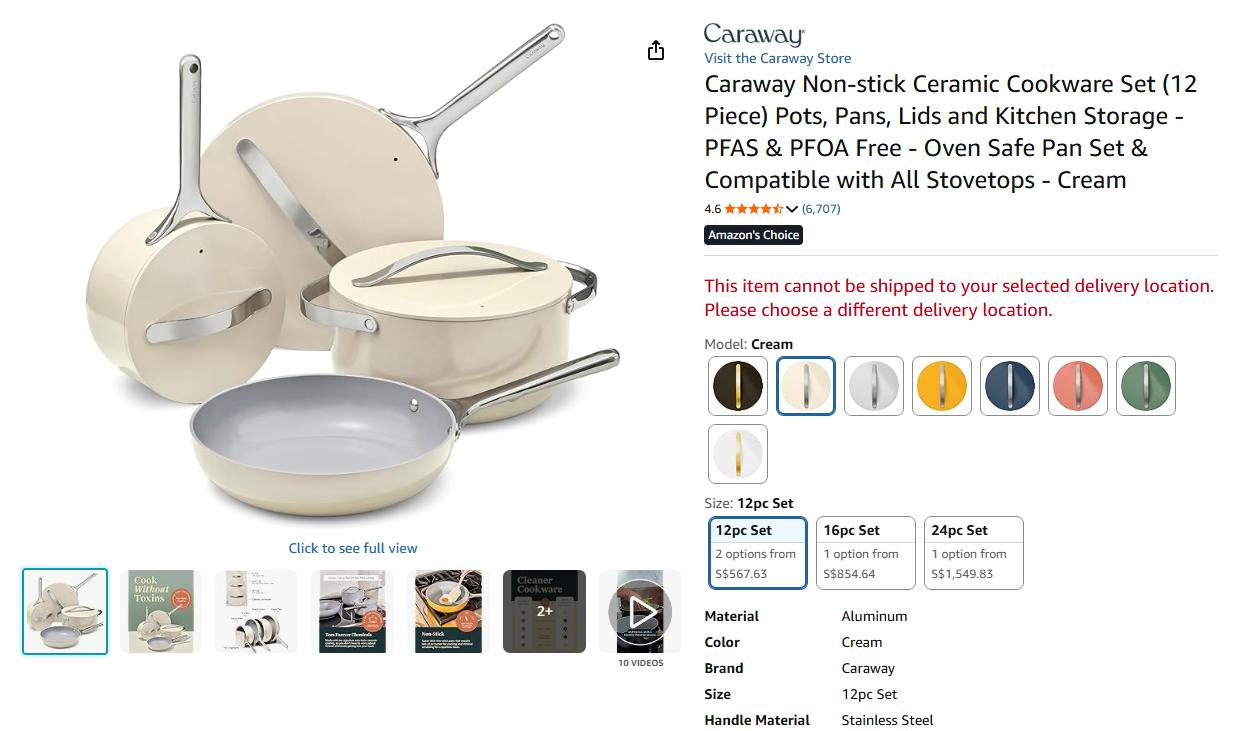
Caraway’s 12-piece set holds approximately a 4.6/5 rating on Amazon, but critical reviews reveal recurring themes:
- Coating durability: Multiple buyers report non-stick performance degrading within 3–6 months, even with hand-washing and low-heat use
- Exterior finish: The signature pastel colors are prone to staining from gas stovetop flames and chipping when pans contact each other
- Made in China surprise: Several reviewers expressed disappointment discovering the manufacturing origin given the premium price point
Trustpilot (4.8/5 Stars — With a Caveat)
Caraway holds a high Trustpilot score, but a notable pattern emerges: multiple users report being required to leave a review to activate their warranty, which may inflate early-use positive reviews before durability issues surface.
- “In order to activate the warranty you need to leave a review… I have not yet used this cookware.” — Trustpilot reviewer
BBB Complaints
Caraway has 30 complaints logged with the Better Business Bureau over the past three years, primarily related to customer service responsiveness and difficulty with returns/cancellations.
B2B Implication: If you’re retailing Caraway, set clear expectations with end consumers about ceramic coating lifespan. Consider pairing Caraway with care instruction cards or offering it alongside more durable stainless steel options to balance your product mix and reduce returns.
What This Means for Cookware Retailers and Distributors
1. The “Made in China” Conversation Is Evolving
The question “where is it made?” increasingly matters to end consumers — but not always in the way you’d expect. Modern buyers are less anti-China and more anti-opacity. Brands that openly communicate their manufacturing story (like Caraway does with its BSCI/SMETA certifications) tend to build more trust than those that avoid the conversation entirely.
Action item: If you sell cookware, proactively tell the manufacturing story. Transparency is a competitive advantage.
2. Ceramic Non-Stick Is a Trade-Off Category
Ceramic-coated cookware is a fast-growing segment driven by health-conscious consumers avoiding PFAS. However, the inherent trade-off — shorter coating lifespan compared to PTFE or bare stainless steel — creates a recurring replacement cycle that can be either a challenge (returns) or an opportunity (repeat purchases), depending on how you position it.
3. Sourcing Directly from the Same Region Could Be Your Advantage
Here’s the most important insight for B2B buyers: Caraway’s cookware comes from the same manufacturing ecosystem in Zhejiang, China that produces cookware for dozens of global brands.
If you’re considering building your own cookware brand or private-labeling ceramic-coated products, you can access the same factories, the same certifications, and the same materials — often at significantly lower costs.
Working with an established sourcing partner who has deep relationships in Chinese manufacturing hubs eliminates the risks Caraway’s early team had to navigate: factory vetting, quality control, MOQ negotiations, and compliance testing.
How to Source Quality Cookware and Kitchen Products from China
At LeeKnives, we’ve been operating from Yangjiang, Guangdong — another major kitchenware manufacturing hub in China — for over 30 years. While our expertise is in knives and cutlery, our understanding of China’s kitchen product supply chain gives us a unique perspective on what makes a reliable manufacturing partner.
What to Look for in a Chinese Cookware/Kitchenware Manufacturer
- Certifications: Demand FDA, LFGB, and Prop 65 compliance documentation. Ethical audits (BSCI/SMETA) are increasingly expected by Western retailers.
- Sample testing: Always request production samples and conduct independent lab tests before committing to bulk orders.
- Transparent communication: A good manufacturer will openly discuss materials, coating processes, and limitations — not just sell you on marketing claims.
- Flexible MOQs: For new brands testing the market, look for partners offering lower minimum order quantities with room to scale.
- Integrated logistics: Manufacturers with established export experience and fulfillment infrastructure (like warehouses in destination countries) dramatically simplify your supply chain.
Looking to build or expand your kitchen product line? LeeKnives offers OEM/ODM services and private labeling for knife, cookware, cutlery, and all kitchen accessories. With warehouses in China and the USA, we simplify the entire process from custom design to global delivery. Explore our one-stop kitchenware sourcing solutions and get a free quote today.
Wholesale & Custom Cast Iron Cookware, Straight From The Factory
Build your brand with a trusted OEM/ODM partner since 1993. Get your free quote today.
Frequently Asked Questions
Is Caraway cookware nonstick?
Yes, but it’s not a traditional nonstick pan. Caraway uses a sol-gel ceramic coating that releases food well when new, but unlike PTFE (Teflon), ceramic degrades faster — most users report reduced performance within 6–12 months of regular use. It’s best positioned as a healthy-cooking pan, not a high-durability nonstick.
Is Caraway cookware dishwasher safe?
No. Caraway recommends hand washing only. Dishwasher heat and detergents accelerate ceramic coating breakdown, shortening its already-limited lifespan. Hand washing with a soft sponge is the single most effective way to extend non-stick performance.
Does Caraway cookware contain lead or cadmium?
No. Independent testing by Light Labs confirms Caraway’s ceramic cooking surfaces are free of lead and cadmium migration. The cookware is also FDA-compliant, LFGB-certified, and California Prop 65 compliant.
Note: the stainless steel handles contain nickel and chromium (standard in food-grade steel), disclosed under California AB1200 — but this applies to the handle only, not the cooking surface.
Is Caraway cookware good quality?
It’s good, but coating durability is the weak point. Caraway is manufactured at Zhejiang Supor — one of the world’s largest certified cookware factories — with strong safety credentials (FDA, LFGB, BSCI, SMETA).
However, like all ceramic-coated pans, the non-stick surface typically degrades within 12–18 months. Build quality and aesthetics are solid; longevity of the coating is not.
Is Caraway cookware worth it?
Depends on your buyer’s priorities. At $395–$545 a set, you’re paying for branding, design, and included storage accessories — not manufacturing superiority. The cookware is made in China at the same factory tier as most DTC competitors.
For health-conscious, design-driven buyers who accept a 1–2 year replacement cycle, it’s worth it. For buyers seeking long-term value, stainless steel alternatives are a better fit.




 EN
EN  JA
JA  DE
DE