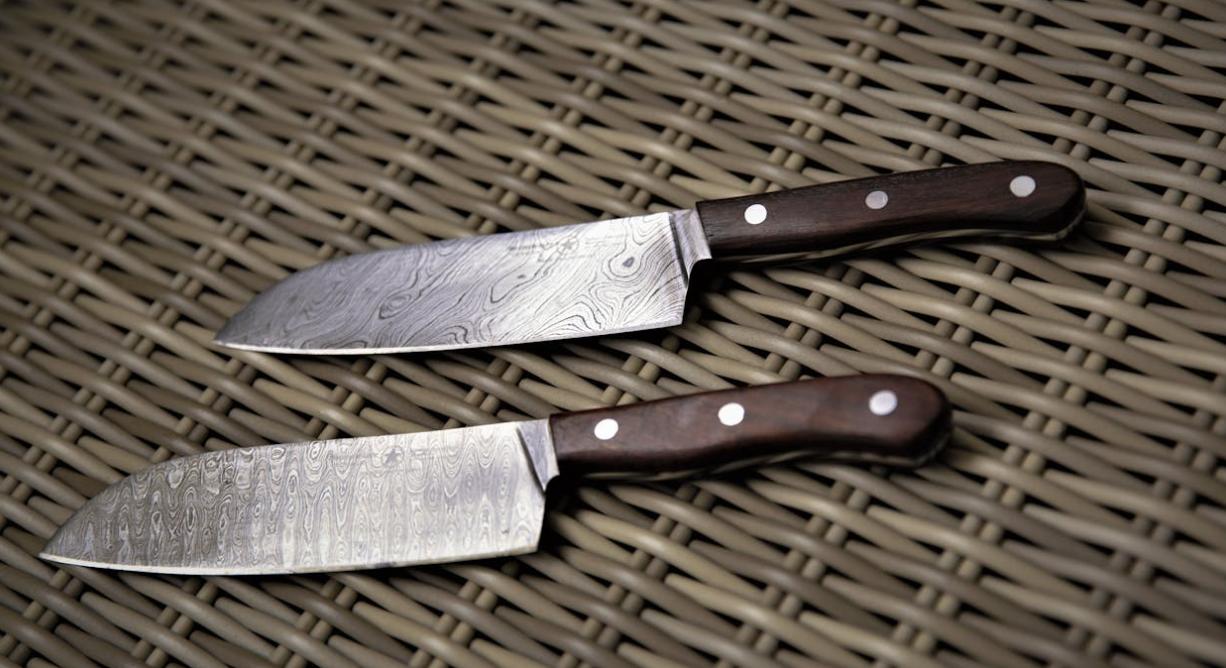
Damascus steel knives have become one of the highest-margin SKUs in the cutlery market — and sourcing the right manufacturer is where B2B buyers either build or lose that margin.
According to Grand View Research, the global knife market is projected to reach USD 7.79 billion by 2033 (CAGR of 6.4%), with Damascus knives consistently commanding retail markups of 3–5× over standard steel equivalents.
This guide covers what to look for in a Damascus knife manufacturer, the quality risks most buyers don’t ask about until it’s too late, and a curated breakdown of manufacturers by type — so you can match the right supplier to your business model before placing an order.
How to Choose the Right Damascus Knife Manufacturer
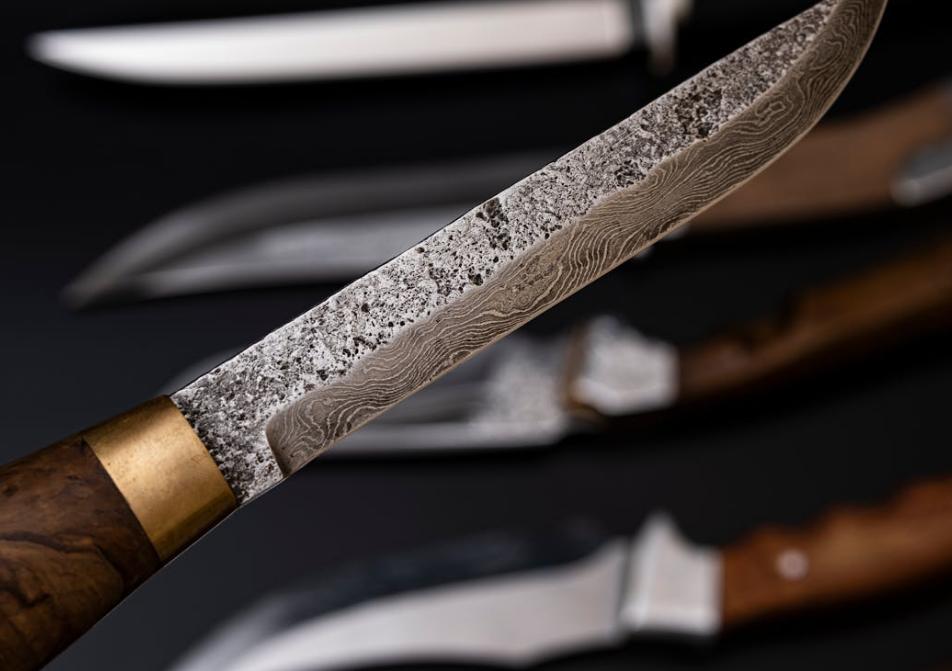
This section is the most important part of the guide. Choosing a damascus knife supplier is not a directory lookup — it is a strategic decision that depends on your business model, target market, and supply chain requirements.
Decision Framework: 4 Questions Before You Contact Any Supplier
1. What product category do you need?
Damascus kitchen knives (chef, gyuto, santoku, kiritsuke) and Damascus outdoor/hunting knives come from different factory types.
A factory specializing in kitchen knife OEM is not the same as a handmade damascus steel knife manufacturer producing fixed blades. Get this wrong and you will waste weeks on samples from the wrong supplier.
2. What is your business model?
Amazon seller, private-label brand, and wholesale distributor each have fundamentally different requirements around MOQ, lead time, and customization depth — covered in Part 4 of this guide.
3. Do you need OEM customization or catalog wholesale?
Catalog wholesale (ordering SKUs from a factory’s existing lineup) has low MOQ but no brand differentiation. OEM and custom Damascus knife factory production gives you pattern exclusivity, handle customization, and private-label packaging — but requires higher volume and longer lead times.
4. What is your target retail price point?
Your retail price determines the minimum acceptable core steel quality. At $80–$150 retail, 10Cr15CoMoV Damascus core is appropriate. At $150–$300+, the market expects VG-10-equivalent performance or above. Mismatching steel grade to price point is how brands get return rates.
Manufacturer Types: Understanding the Damascus Supply Chain
Not all Damascus knife manufacturers are the same type of business. Before evaluating suppliers, understand which category they belong to.
| Type | What They Produce | Best For |
|---|---|---|
| OEM Damascus factory (China) | Finished knives with full customization: blade, handle, pattern, packaging | Amazon sellers, private-label brands, knife retailers |
| Handmade Damascus workshop (China, Pakistan) | Hand-forged blades, unique patterns, artisan craftsmanship | Boutique brands, premium/luxury positioning |
| Volume wholesale manufacturer (China) | High-quantity catalog runs, knife sets, consistent SKUs | Distributors, bulk retail buyers |
| Premium OEM factory (Japan) | Japanese provenance, VG-10/SG2 core steels, high-end positioning | Brands targeting professional chef market |
| Damascus billet supplier (USA) | Raw Damascus steel billets only — not finished knives | Knife manufacturers who forge their own blades |
Common Risks When Sourcing Damascus Knives (What Buyers Don’t Ask Until It’s Too Late)
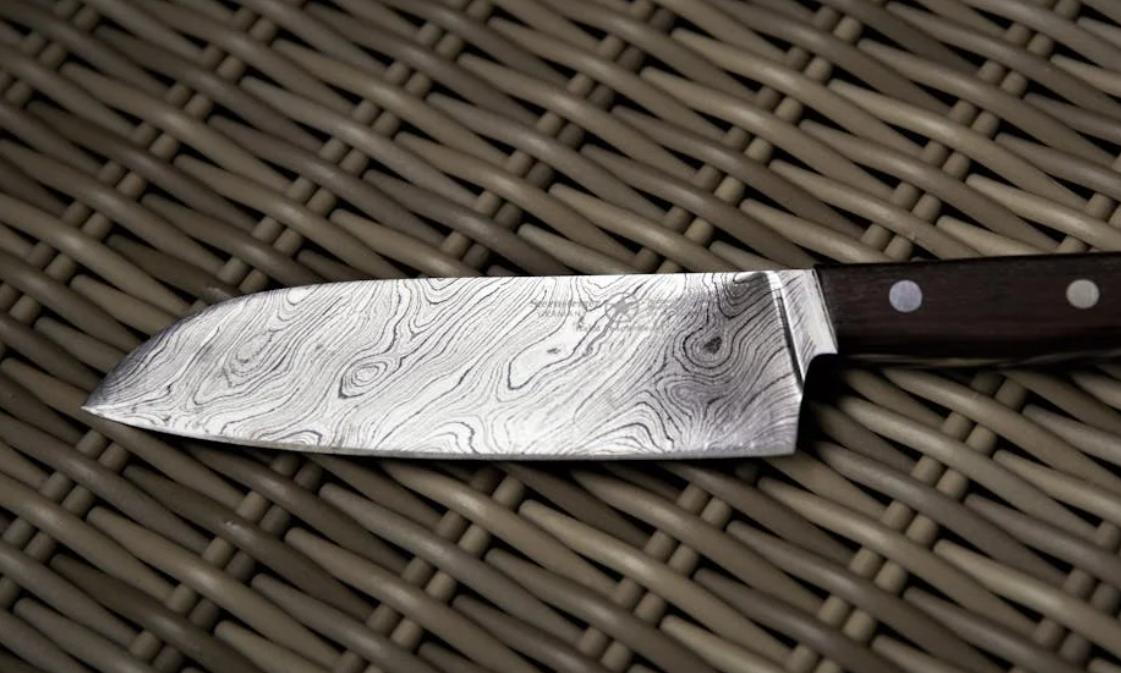
Western buyers have a well-founded skepticism about Damascus sourcing — and for good reason. Here are the four most common risks, and the questions that expose them before you sign an order.
Risk 1: Fake Damascus (Laser-Etched Stainless)
The most pervasive problem in wholesale. A laser-etched pattern on single-layer stainless looks identical to real Damascus in product photos.
To verify: sand the spine, apply ferric chloride — authentic Damascus reveals its layered pattern from within the steel; laser-etched steel shows discoloration without structure. Price signal: genuine Damascus at 5–8 FOB is not possible.
Risk 2: Misleading Layer Count
Layer count is a marketing number, not a quality metric. What matters is core steel grade and heat treatment. Always ask: “What is the core steel? What is the cladding steel?” A supplier who can only cite layer count has nothing else to sell you.
Risk 3: Inconsistent Heat Treatment
Factories without calibrated furnaces produce knives that look identical but perform variably — some too brittle, some too soft. Ask whether HRC testing is performed on every batch (not just samples), and whether heat treatment is done in-house or outsourced.
Risk 4: Delamination
Forge-welded layers that separate typically don’t appear until months of use — meaning your customer reviews absorb the damage. Request samples, perform a lateral stress test, and confirm pre-shipment QC specifically tests layer bonding integrity.
Red flag: A supplier who cannot specify the core steel grade is selling you an unverifiable product. Pattern aesthetics can be faked — steel specifications cannot.
Damascus Knife Manufacturers — By Type and Region
China OEM Damascus Knife Manufacturers (Kitchen Knives, Private Label, Wholesale)
China’s Yangjiang region in Guangdong Province is the world’s largest production hub for Damascus kitchen knives, producing an estimated 60–70% of the global volume.
The concentration of specialized steelworkers, forging equipment suppliers, and handle material manufacturers in a single district creates a supply chain ecosystem that no other region can match for scalability.
LeeKnives — Yangjiang, Guangdong (OEM & Custom Damascus Knife Factory)
Website: leeknives.com | Founded: 1993 | MOQ: Flexible (catalog wholesale available)
LeeKnives has operated from Yangjiang since 1993, making it one of the region’s most experienced custom Damascus knife factories. Production spans all major blade types — chef, gyuto, santoku, kiritsuke, nakiri, bunka — using 10Cr15CoMoV, 9Cr18MoV, and VG-10-grade core steels wrapped in multi-layer stainless Damascus cladding.
Core capability: OEM Damascus kitchen knives, handmade Damascus blades, private label, dropshipping. Unlike purely machine-assisted producers, LeeKnives employs experienced blacksmiths for hand-forged Damascus blades across stabilized wood, G10, and resin handle options.
B2B consideration: As a pure OEM/ODM operation with no proprietary consumer brand, there is no channel conflict risk. The factory also publishes a transparent 19-step manufacturing process with documented HRC hardness testing and ISO sharpness standards — a level of QC disclosure most Yangjiang factories will not provide.
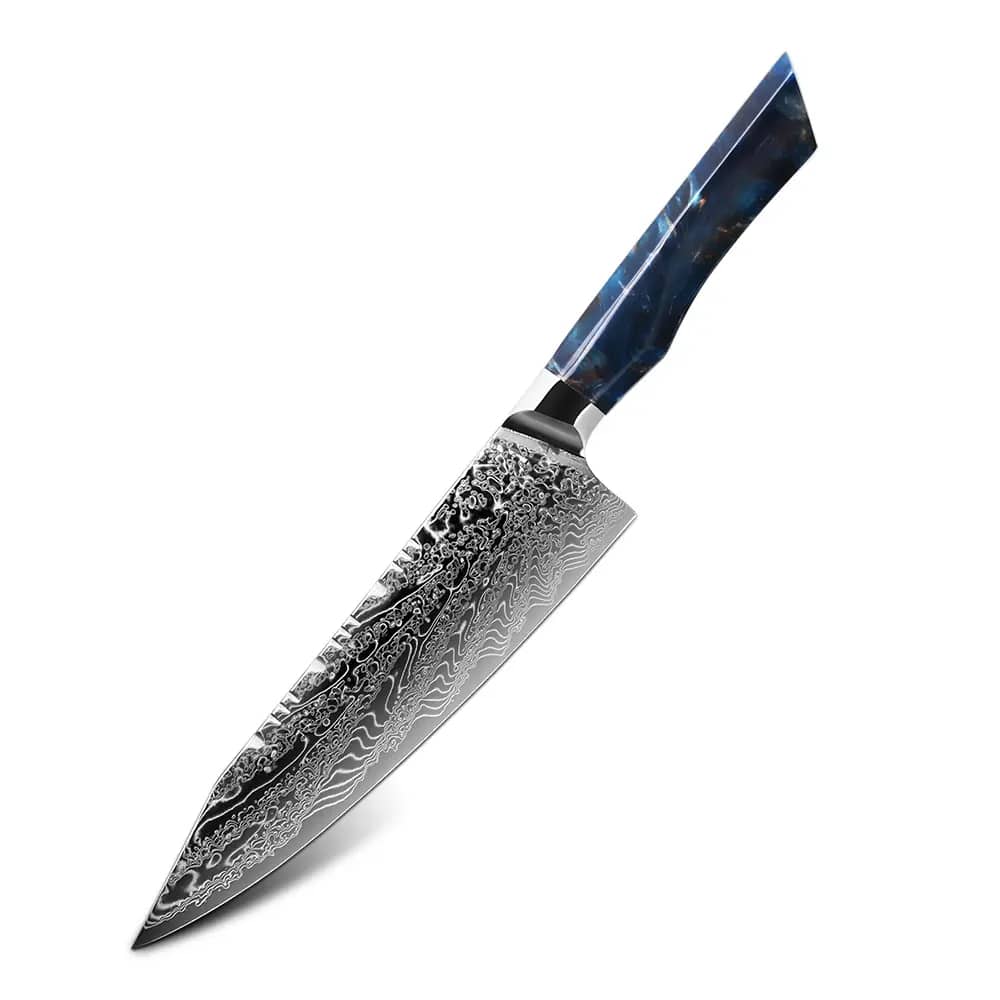
Damascus Clad 10Cr15CoMoV Resin Kiritsuke Gyuto 205 mm LKJGY10019
Hezhen — Yangjiang, Guangdong (OEM + Branded)
Founded: 2016 | Specialties: High-end Damascus kitchen knife sets, B2B OEM, retail-branded products
Hezhen produces layered Damascus knives under both a proprietary consumer brand and white-label OEM agreements. They are recognized for elaborate Damascus patterns and premium handle materials including olive wood, pakkawood, and resin-stabilized wood.
B2B consideration: Hezhen sells its own branded knives to North American and European retailers, which creates a potential channel conflict if you are building a regional brand. For buyers who want fully private-label Damascus sourcing without supplier brand competition, a dedicated OEM factory is the safer structural choice.
Shibazi — Yangjiang, Guangdong (Volume Damascus Production)
Specialties: High-volume Damascus kitchen knife sets, export OEM, consistent SKU runs
Shibazi is among China’s highest-volume knife manufacturers, with decades of production history in Yangjiang. Their Damascus line focuses on chef knives and knife sets at scale, making them a viable option for distributors and bulk retail buyers prioritizing price efficiency over customization depth.
Handmade Damascus Steel Knife Manufacturers
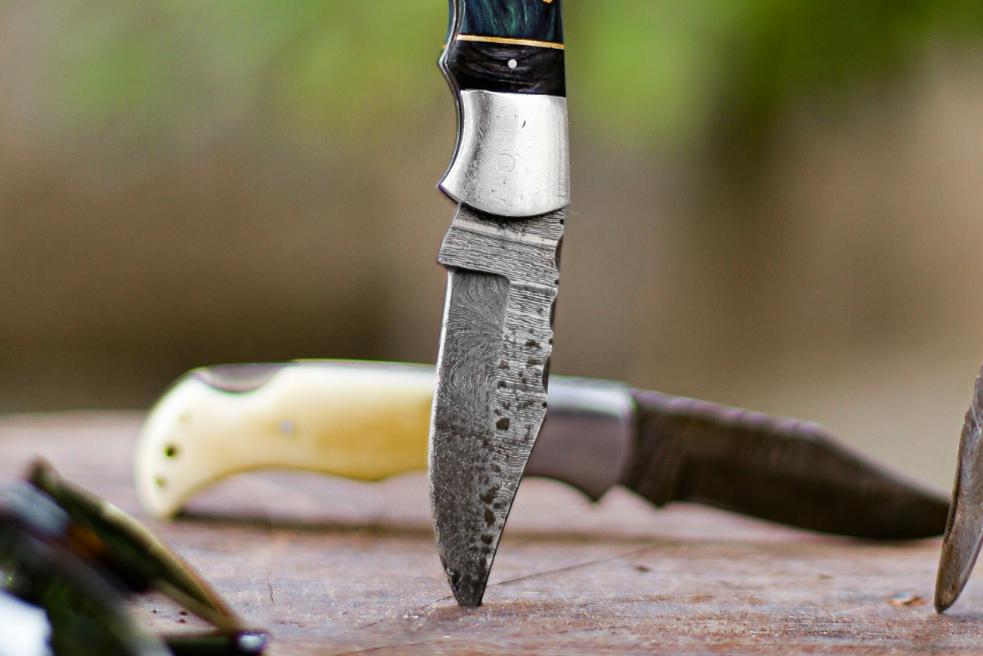
Handmade Damascus occupies the fastest-growing margin tier in the B2B Damascus market. Blades produced by skilled blacksmiths through hand-forging, pattern development, and individual acid etching carry a compelling authentic narrative — one that consumers pay a substantial premium for.
Brands selling handmade Damascus kitchen knives regularly achieve retail prices of $150–$400+, versus $60–$120 for machine-assisted production runs of equivalent steel quality.
What separates genuine handmade Damascus from machine-assisted production:
- Each blade has a unique, non-repeating pattern (machine production creates identical patterns across units)
- Pattern depth is three-dimensional — visible from multiple sanding angles
- Handle fitting is hand-done, with minor variation that confirms individual craftsmanship
- Lead times are longer: realistic production is 15–45 days depending on quantity
Key vetting questions for handmade Damascus suppliers:
- “How long have your blacksmiths been forging Damascus specifically?” — Damascus forging requires mastery of heating temperature by steel type, not just general blacksmithing experience.
- “Can you show us photos of individual blades at different stages of production?” — Authentic handmade workshops can show this easily.
- “What is the HRC specification for this blade?” — Handmade does not exempt a knife from hardness standards.
Sialkot, Pakistan — Handmade Damascus Hunting & Outdoor Knife Workshops
Key hub: Sialkot, Punjab, Pakistan | MOQ: 10–50 units typical | Price range: $6–$30 FOB
Sialkot has centuries of forge-welding tradition. Pakistani workshops are the dominant global source for handmade Damascus hunting knives, fixed blades, bowie knives, and outdoor EDC knives — and offer some of the lowest MOQs in the global Damascus market.
Standard pattern offerings: twist, ladder, raindrop, explosion patterns in carbon Damascus (1095/15N20).
Practical B2B notes: Quality control consistency varies significantly between workshops. Always request samples and verify steel grade claims independently. Pakistan is the right sourcing region for outdoor/hunting Damascus, custom Damascus billets, and low-MOQ boutique knife products — not for kitchen knife production at commercial scale.
Key hubs: Seki City (Gifu Prefecture), Sakai (Osaka Prefecture), Echizen (Fukui Prefecture)
Japanese Damascus knife manufacturing is defined by premium core steels: VG-10 (produced by Takefu Special Steel Co.) and SG2 (a powdered metallurgy steel with exceptional edge retention). Japanese-made Damascus chef knives represent the top tier of global retail positioning, with common retail prices of $200–$600+.
Notable production facilities:
- G-Sakai (Seki City) — OEM Damascus production with VG-10 core for international brands
- Takefu Knife Village (Echizen) — Cooperative of traditional bladesmiths; produces Damascus under artisan-production model
B2B reality check: Japanese OEM minimum orders are typically 500–1,000+ units. Lead times are significantly longer than Chinese production. Per-unit FOB costs are 3–5× Chinese equivalents. The “Made in Japan” provenance is a legitimate premium positioning tool — but the brand story must justify the price gap to your retail buyer.
For brands who want VG-10 performance at a more accessible price, Chinese Damascus production using 10Cr15CoMoV core steel delivers equivalent cutting metrics at substantially lower FOB cost.
Damascus Billet Suppliers — USA
These are raw material suppliers, not finished knife manufacturers. Relevant only if you are a knife maker who controls your own production.
Vegas Forge — Las Vegas, Nevada
Specialties: Damascus steel billets, stainless Damascus, Mokume-Gane, Damtanium, Zirmascus
Vegas Forge is widely considered the leading American Damascus billet manufacturer. They supply knifemakers, custom shops, and knife brands with premium OEM billets across pattern types. If you need an American-made Damascus material source for in-house blade production, Vegas Forge is the industry standard reference.
Baker Forge — USA
Specialties: Mosaic Damascus, pattern-welded billets, specialty Damascus for custom knifemakers
Baker Forge produces specialty mosaic Damascus and laminated billets for the custom knife market. Best suited for custom knifemakers who want unique pattern applications not available from standard billet suppliers.
Which Damascus Knife Manufacturer is Right for Your Business?
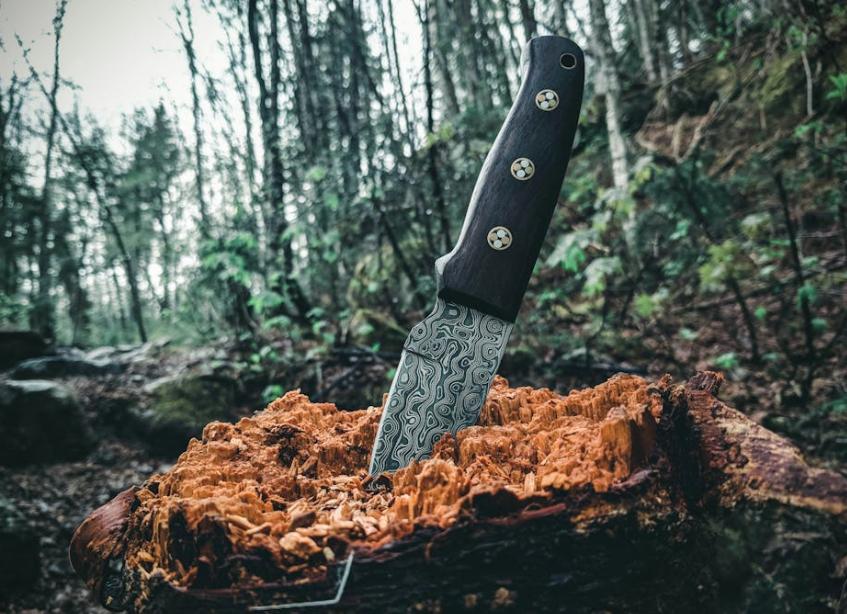
Your sourcing strategy should be driven by your business model, not by geography alone. Here is a direct mapping.
Amazon & E-Commerce Sellers
Primary needs: Low MOQ to test new SKUs, fast reorder turnaround, FBA-ready packaging, consistent product photography across units.
What to prioritize in a supplier:
- Catalog wholesale with existing photography assets
- Consistent pattern and handle finish across batches (critical for review consistency)
- Dropshipping or FBA prep capability
- Sample availability before commitment
Recommended manufacturer type: China OEM factory with catalog wholesale and dropshipping program.
Avoid: Handmade workshop sourcing for high-velocity SKUs — pattern variation acceptable for boutique but problematic for Amazon listing standardization.
If you are evaluating Damascus knife SKUs for your catalog, compare the full LeeKnives Damascus range before finalizing your supplier list.
Launch Your Custom Knife Line Faster with LeeKnives
Complete OEM/ODM support—from design to final shipment—so you can focus on growth.
Backed by warehouses in the U.S. for fast, reliable delivery.
Private Label & Brand Owners
Primary needs: OEM customization (handle material, logo engraving, pattern exclusivity), branded packaging, ability to differentiate from commodity listings, scalable production.
What to prioritize in a supplier:
- Genuine OEM depth: custom handle options, pattern development, private packaging
- No consumer brand that competes with your distribution channel
- Documented quality control with HRC testing records
- Production transparency (are they a factory or a trading company?)
Recommended manufacturer type: Dedicated OEM Damascus knife factory. Verify factory status: ask for factory registration documents and facility photos — trading companies often present as factories.
Wholesale Distributors & Knife Retailers
Primary needs: Stable supply chain with consistent restock cycles, broad SKU range, competitive per-unit pricing at volume, reliable delivery windows.
What to prioritize in a supplier:
- Volume production capacity with verified order history
- Payment terms and minimum order flexibility
- QC consistency across batches, not just first samples
- Proven export logistics to your market
Recommended manufacturer type: High-volume China OEM factory or established Damascus knife wholesale supplier with documented distributor relationships.
Primary needs: Differentiated product story, handmade authenticity, unique pattern and material options, premium retail positioning at $150–$400+.
What to prioritize in a supplier:
- Verified handmade production with blacksmith credentials
- Bespoke handle material options (stabilized wood, mammoth ivory, G10, etc.)
- Low or flexible MOQ for limited-edition runs
- Documented provenance for marketing narrative
Recommended manufacturer type: Handmade Damascus steel knife manufacturer — China (premium handmade kitchen) or Pakistan (outdoor/hunting).
Damascus Knife Sourcing Checklist
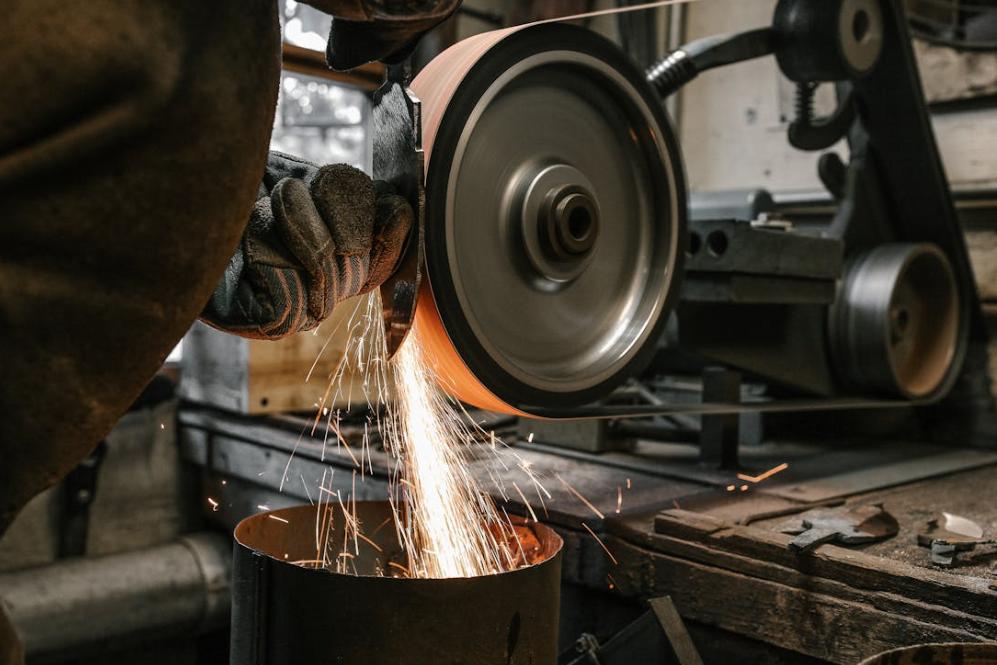
Before placing any wholesale or OEM order, verify these criteria with every supplier:
| Criteria | What to Ask | Why It Matters |
|---|---|---|
| Core steel grade | “What is the core steel? Provide a mill certificate.” | Core steel determines cutting performance — not layer count |
| Cladding material | “What steel is used for cladding layers?” | Cladding affects corrosion resistance and toughness |
| HRC hardness range | “What is the verified HRC? Do you test every batch?” | HRC 59–62 is the standard for quality Damascus kitchen knives |
| Pattern authenticity | Request acid-etched sample + field test with ferric chloride | Rules out laser-etched fakes |
| Delamination QC | “How do you test layer bonding pre-shipment?” | Delamination is invisible at delivery but catastrophic in use |
| Factory vs. trading company | Ask for factory registration + facility photos | Trading companies add margin and reduce your QC visibility |
| OEM depth | “What can be customized? Patterns, handles, packaging?” | Defines your brand differentiation ceiling |
| MOQ structure | Confirm catalog MOQ separately from OEM MOQ | OEM always carries higher minimums |
| Lead time | Standard production vs. custom OEM lead times | Critical for inventory planning |
| QC stages | “What are your pre-production, in-line, and final QC steps?” | Multi-stage QC reduces defect rate at delivery |
Red flag: A supplier who cannot or will not specify the core steel grade is selling you an unverifiable product. Pattern aesthetics can be faked — steel specifications are the one thing that cannot.
Damascus Knife Product Types — Stocking Guide for B2B Buyers
| Knife Type | Target Consumer | Typical Retail Range | Best Source Region | Margin Profile |
|---|---|---|---|---|
| Damascus chef knife (8″) | Professional chefs, serious home cooks | $80–$250 | China, Japan | High |
| Damascus gyuto / kiritsuke | Japanese knife enthusiasts | $100–$350 | China, Japan | High |
| Damascus santoku | Home kitchen market | $70–$180 | China | Medium–High |
| Damascus nakiri | Vegetable-focused cooks | $80–$200 | China | Medium–High |
| Damascus knife set (3–7 piece) | Gift buyers, home cooks | $180–$600 | China | High (per set) |
| Handmade Damascus kitchen knife | Premium & luxury segment | $150–$500+ | China (handmade OEM) | Very High |
| Damascus hunting / fixed blade | Outdoor enthusiasts, hunters | $40–$150 | Pakistan | Medium |
| Damascus pocket / folding knife | EDC collectors | $60–$200 | China, Pakistan | Medium–High |
Ready to Source Damascus Knives? Start with LeeKnives
LeeKnives has supplied Damascus knife wholesale and OEM orders from Yangjiang since 1993. Whether you need catalog wholesale SKUs to test the market or a fully customized private-label Damascus line, the factory supports both paths with no minimum brand commitment on catalog orders.
- Catalog wholesale — 100+ Damascus SKUs available for sampling and immediate ordering
- OEM & private label — Custom blade patterns, handle materials, logo engraving, and branded packaging
- Handmade Damascus — Hand-forged blades with unique patterns for premium and boutique positioning
- Dropshipping — FBA-ready fulfillment for e-commerce sellers
Request a sample or get a wholesale quote.
Launch Your Custom Knife Line Faster with LeeKnives
Complete OEM/ODM support—from design to final shipment—so you can focus on growth.
Backed by warehouses in the U.S. for fast, reliable delivery.
Frequently Asked Questions
What is the difference between 33-layer and 67-layer Damascus?
Layer count reflects how many times the billet was folded. More layers produce finer, more intricate patterns.
But layer count does not determine cutting performance — that is determined by the core steel grade and heat treatment quality. A 33-layer knife with a 10Cr15CoMoV core will outperform a 67-layer knife made with inferior steel.
How does Chinese Damascus quality compare to Japanese?
Premium Chinese Damascus factories — particularly those in Yangjiang using 10Cr15CoMoV core steel — produce knives that match or exceed mid-range Japanese Damascus in objective cutting performance metrics (HRC, edge retention, corrosion resistance).
Japanese Damascus commands a higher price based primarily on provenance and brand positioning, not always on proportional performance improvement.
What are realistic MOQs for Damascus knife wholesale?
For catalog wholesale from China: 50–100 units per SKU. For OEM/custom Damascus knife factory production: typically 200–500+ units. For Pakistani handmade workshops: 10–50 units. Japanese OEM: 500–1,000+ units.
How do I verify a Damascus knife sample is authentic before ordering at volume?
The field test: sand a section of the spine to remove the surface etch. Apply ferric chloride solution. Authentic pattern-welded Damascus reveals its layered structure again from within the steel.
Laser-etched fake Damascus shows discoloration but no internal pattern.
What is the typical lead time for custom Damascus knife OEM production?
After sample approval: 30–45 days for standard OEM runs from Chinese factories. Handmade Damascus batches: 15–45 days depending on complexity and quantity. Allow additional transit time for your market.
What core steel should I specify for my Damascus knife brand?
For mid-range positioning ($80–$180 retail): 10Cr15CoMoV or 9Cr18MoV core in stainless Damascus cladding. For premium positioning ($150–$300+ retail): VG-10 equivalent or Japanese VG-10.
For professional chef positioning: Japanese SG2 or above. For outdoor/hunting Damascus: carbon Damascus (1095/15N20) is appropriate and expected.




 EN
EN  JA
JA  DE
DE