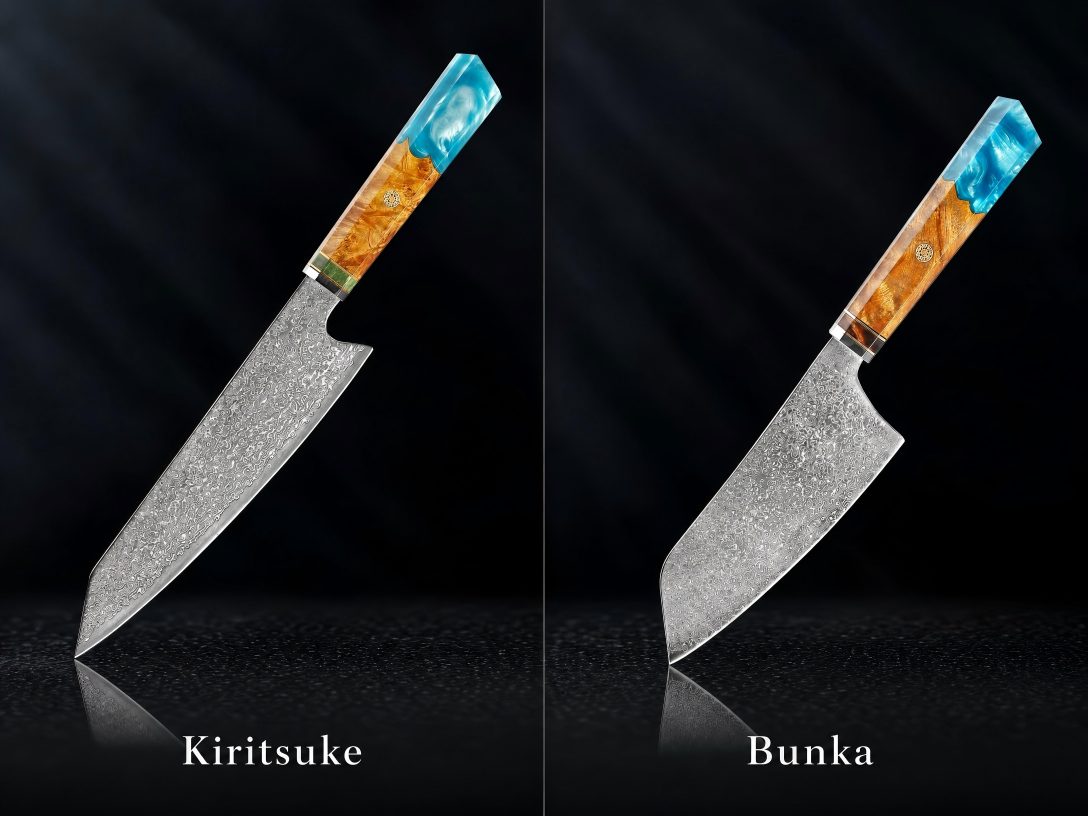
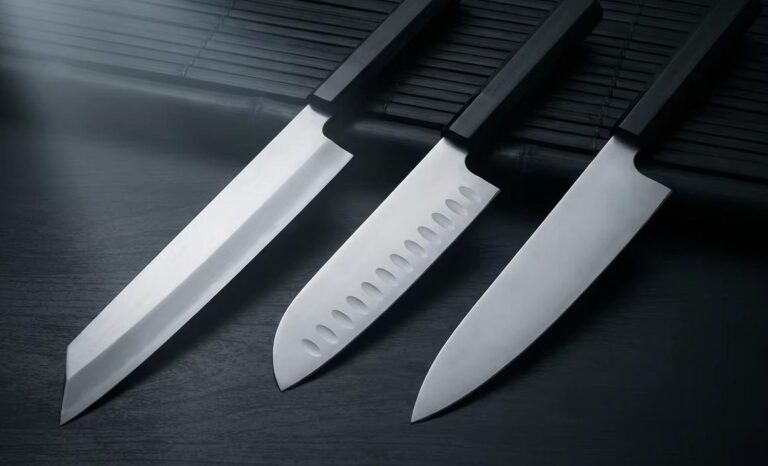
The kiritsuke and bunka are two of the most recognizable shapes in the world of Japanese kitchen knives, both defined by their striking K-tip.
The kiritsuke carries a long, assertive blade that is traditionally single-beveled and built for experienced hands. The bunka, by contrast, is a compact, double-beveled all-rounder that behaves like a santoku with attitude.
In this guide, we break down the real differences in size, bevel, edge profile, and cutting style, then show you exactly which knife suits which cook. Read to the end to find out which one deserves shelf space in your store.
Kiritsuke vs Bunka at a Glance
Before going deeper, here is the quick comparison of these two K-tip Japanese knives.
| Kiritsuke | Bunka | |
|---|---|---|
| Origin | Japan; traditional hybrid of the usuba and yanagiba | Japan; a pointed santoku variant (bunka-bocho) |
| Blade length | 210 – 270 mm (8 – 10.5 in) | 165 – 190 mm (6.5 – 7.5 in) |
| Tip shape | K-tip (reverse tanto) | K-tip (reverse tanto) |
| Bevel | Traditionally single bevel; modern versions double bevel | Almost always double bevel |
| Edge profile | Very flat, minimal belly | Flat with a slight belly |
| Blade height | Moderate | Tall, 50 – 55 mm, generous knuckle clearance |
| Best for | Push cutting, slicing, precision tip work | Push and tap chopping, all-purpose prep |
| Skill level | Intermediate to professional | Beginner-friendly |
| Typical steel | VG-10, SG2/R2, carbon steels, 60+ HRc | VG-10, AUS-10, SG2, 60+ HRc |
| Price range | $80 – $500+ | $40 – $300 |
What Is a Kiritsuke?
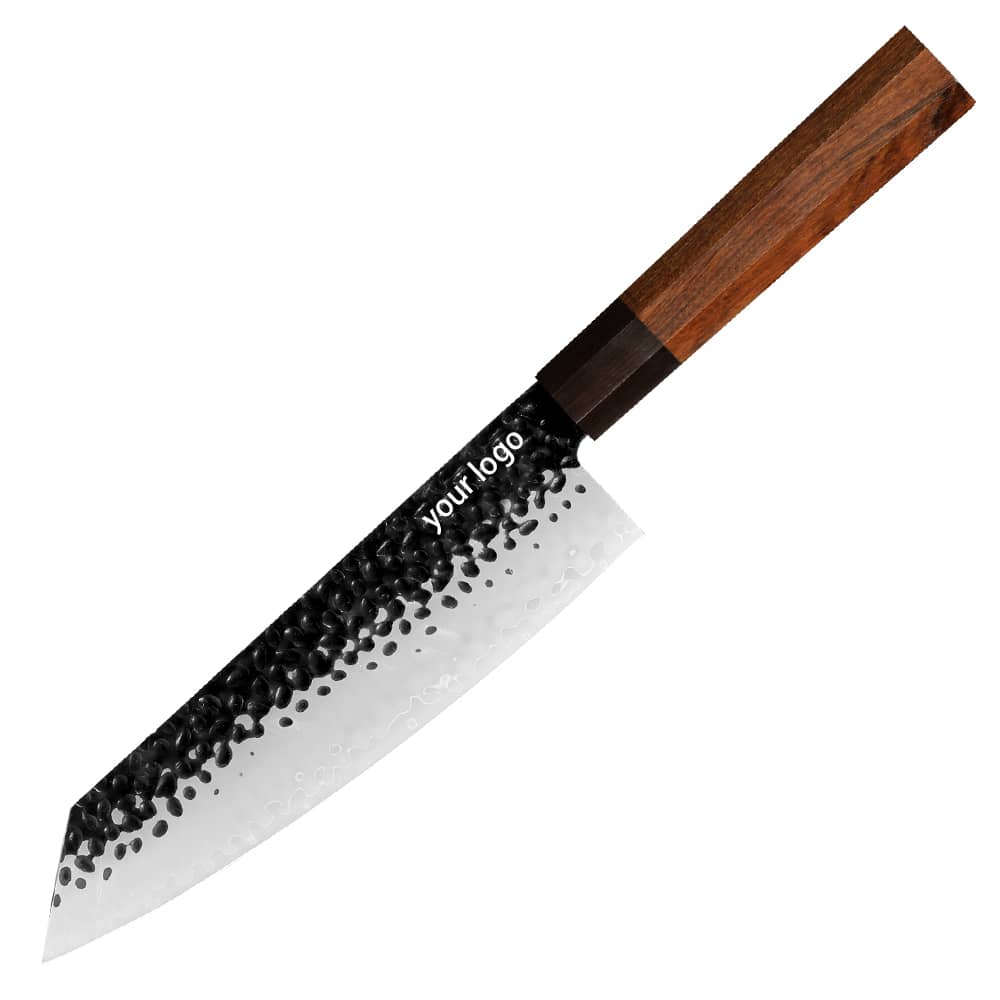
San Mai Octagonal Rosewood Wa Handle Kiritsuke 200 mm Hammered Finish
The kiritsuke is one of the most distinctive knife blade shapes to come out of Japan. Traditionally, it is a single-bevel blade that merges the straight-edged usuba for vegetables and the long yanagiba for slicing raw fish.
The old rule that only an executive chef may use one is more myth than fact, though the single-bevel grind does demand real technique — the asymmetrical edge makes the blade steer as it cuts.
Most kiritsuke knives you see today are a modern, double-bevel take on the shape: essentially a K-tip gyuto, typically 210 to 240 mm long. They keep the dramatic looks but behave like a Japanese chef’s knife, making them far more approachable.
For a full deep-dive on the blade's history, steel choices, and how to sell it, see our dedicated Kiritsuke guide.
What Is a Bunka?
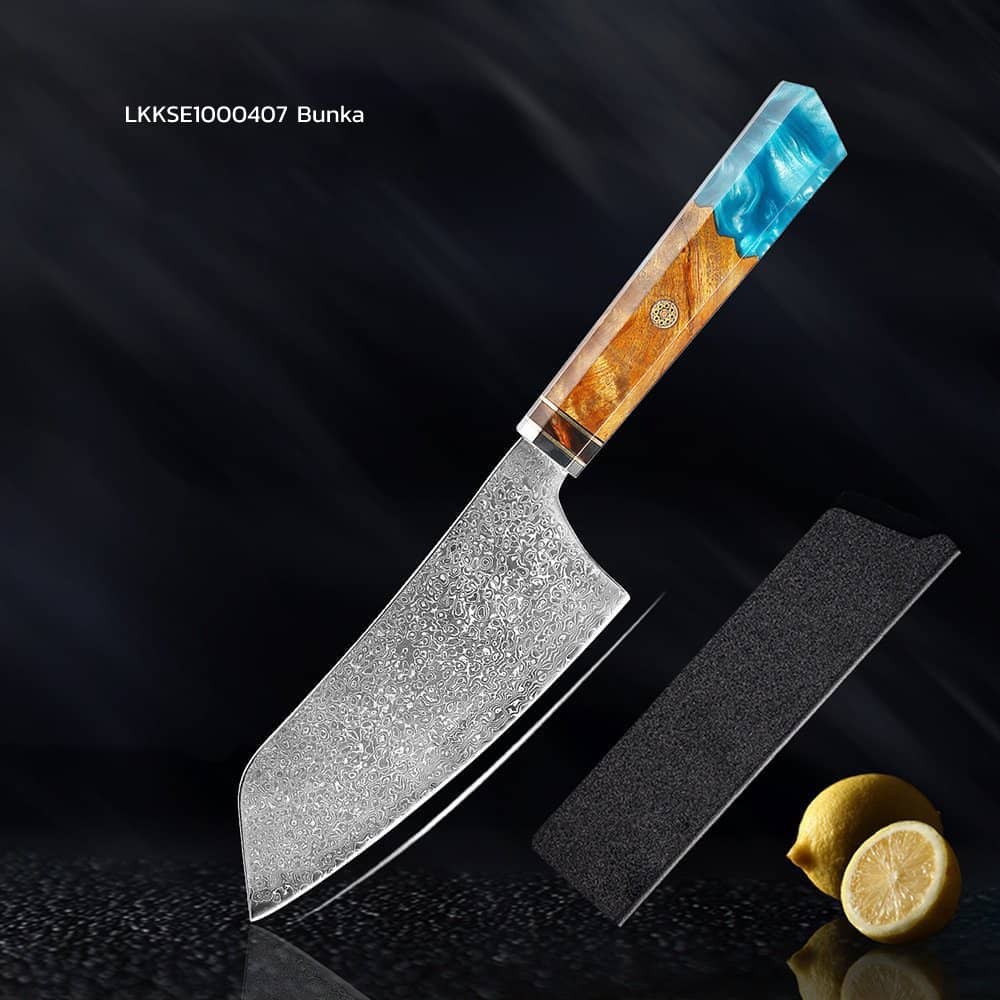
Damascus Clad 10Cr15CoMoV Stabilized Wood Wa Handle Kitchen Knife Set
The bunka, short for bunka-bocho (“culture knife”), is essentially a santoku with a K-tip grafted on. In Japan, the words bunka-bocho and santoku are often used interchangeably, and the two knives share the same DNA: a compact, tall, double-bevel blade designed as an all-purpose tool for meat, fish, and vegetables.
What sets the bunka apart is the combination of a tall blade — usually 50 to 55 mm at the heel — with that angled reverse tanto tip. The height gives cooks plenty of knuckle clearance for board work, while the tip handles detail jobs a standard santoku tip cannot reach.
For the full family picture — how the bunka compares to the santoku and the gyuto — see our dedicated Bunka vs Santoku vs Gyuto comparison.
Kiritsuke vs Bunka: The Key Differences
Numbers in a table only tell part of the story. These three differences decide how each knife actually behaves in a cook’s hand — and they explain most of the naming confusion your customers will bring into your store.
Blade Length and the 200 mm Dividing Line
Here is the open secret of the Japanese knife market: a modern bunka and a modern kiritsuke are often the exact same blade geometry sold under two names.
The informal dividing line sits around 200 to 210 mm. The same maker will label the 180 mm version a bunka and the 210 mm version a kiritsuke, with no other design change at all.
The practical advice for your customers is to buy the shape and size, not the name. If someone loves the K-tip look, the only real question is whether they want it in a compact 165 – 180 mm package or a full-length 210 – 240 mm one.
Single Bevel vs Double Bevel
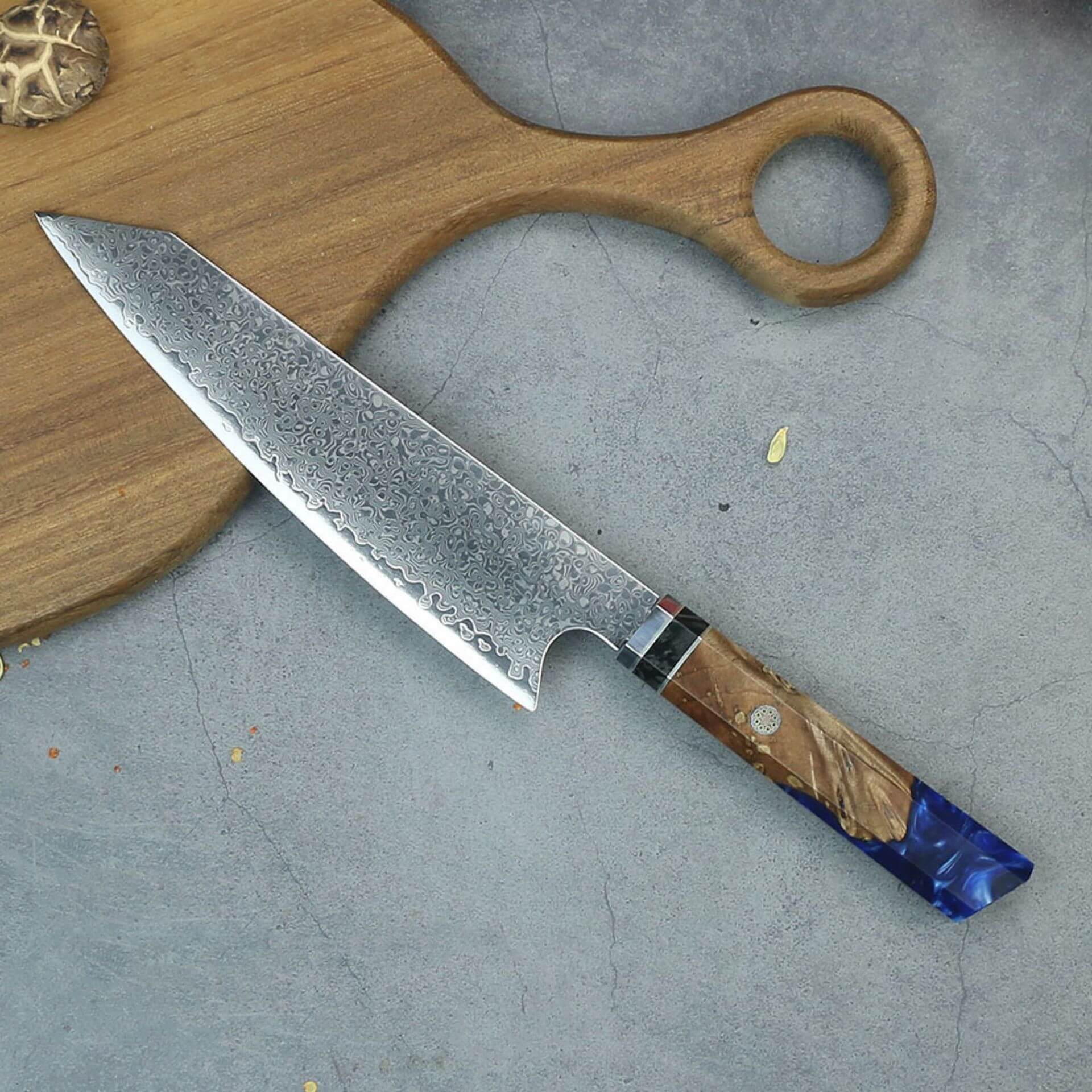
Damascus Clad 10Cr15CoMoV Stabilized Wood Wa Handle Kiritsuke Gyuto 205 mm
A traditional kiritsuke is single bevel, sharpened on one side only like a chisel. That geometry produces astonishingly clean cuts and effortless food release, but it pulls to one side and requires training to control. It is also almost always right-handed, which matters for left-handed customers.
The bunka, and nearly every modern K-tip gyuto, is double bevel — usually a 50/50 or 70/30 grind. Double bevels cut straight, sharpen easily on any whetstone, and forgive imperfect technique.
For a retail assortment, this is the single biggest reason bunkas sell to a much wider audience.
Edge Profile and Blade Height
The kiritsuke runs a notably flat edge with very little belly, which suits straight up-and-down and push-cutting motions. The bunka is also fairly flat, but most versions keep a subtle belly and a much taller blade.
Both knives are typically ground from hard steels rated 60+ on the Rockwell hardness scale, which is what keeps those flat edges razor sharp through a full prep session.
The bunka’s height does two extra jobs: it protects knuckles during fast board work, and it gives sliced vegetables more surface to release from — especially on hammered tsuchime finishes.
Cutting Techniques: Push Cut or Rock Chop?
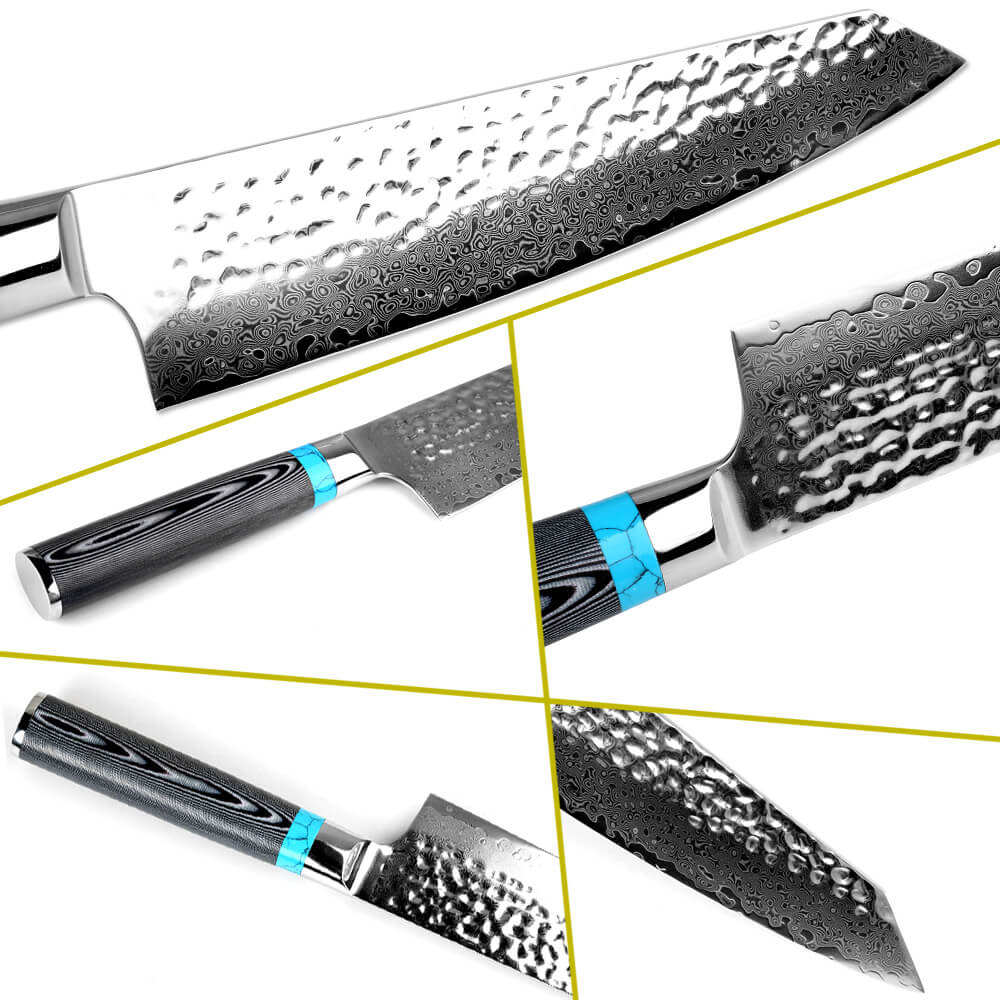
Damascus Clad 10Cr15CoMoV G10 Handle Kiritsuke Gyuto 197 mm Hammered Finish
Ask one question and the kiritsuke vs bunka debate mostly resolves itself: does the cook rock chop?
Rock chopping — the rolling Western motion where the tip stays on the board — needs a curved belly. The kiritsuke’s flat profile makes it one of the worst knives for that technique, and even the bunka only tolerates a gentle roll. Cooks raised on German knives will feel the difference immediately, as we cover in our Japanese vs German knives guide.
Both knives excel at push cuts and tap chops, where the blade lifts fully off the board and comes straight down. The bunka, with its tall blade and short stance, is a genuine workhorse for this style — think rapid vegetable prep at a professional station. The kiritsuke trades some of that speed for reach, shining at long slicing strokes through fish, boneless meat, and large produce.
The good news for your sales team: most home cooks who want these knives already push cut or tap chop. The flat profile is a selling point, not a compromise, as long as customers know what they are buying.
Launch Your Custom Knife Line Faster with LeeKnives
Complete OEM/ODM support—from design to final shipment—so you can focus on growth.
Backed by warehouses in the U.S. for fast, reliable delivery.
The K-Tip: Real Uses and Real Drawbacks
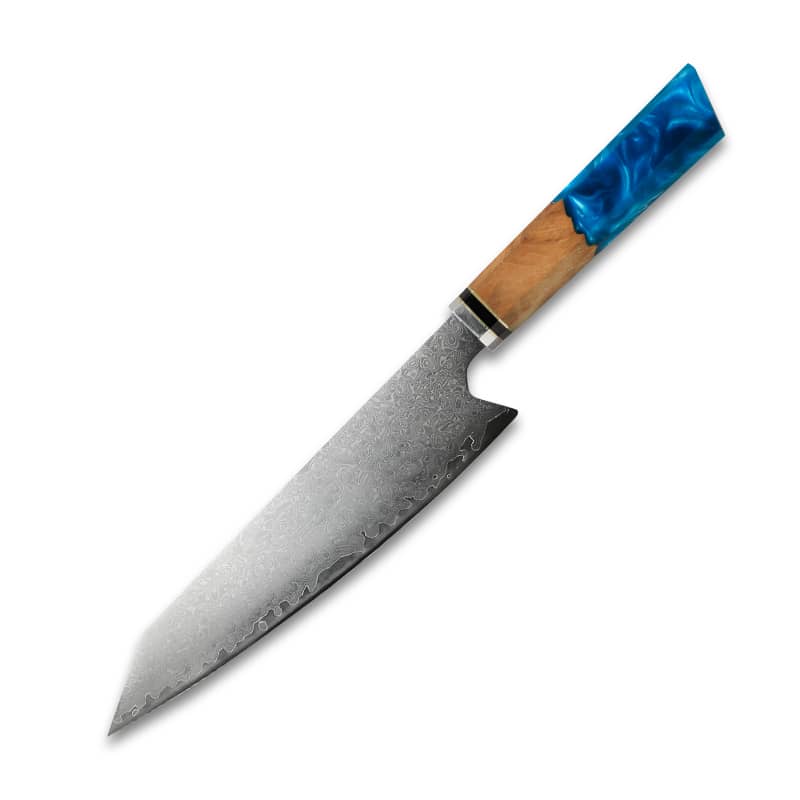
Damascus Clad 9Cr18Mov Stabilized Wood Wa Handle Kiritsuke Gyuto 210 mm
The angled K-tip is the reason people buy these knives, so it deserves an honest look. In skilled hands, the fine tip works like a scalpel for jobs a rounded tip fumbles:
- Scoring duck skin, pork belly, or fish before cooking
- Trimming silver skin and sinew from meat
- Deveining shrimp and other precision protein work
- Piercing and detail cuts for garnishes and decorative work
Now the part most reviews leave out. That tip is thin, hard, and brittle. Drop the knife or twist the tip in a cutting board, and it can chip. Repairing a broken K-tip means grinding the profile back several millimeters on stones — slow, skilled work that changes the blade’s geometry.
Customers should also know that a K-tip knife “feels” longer than its measured length, since the angled tip extends the effective reach.
None of this is a reason to avoid the shape. It is a reason to teach care habits at the point of sale and to point customers toward proper whetstone sharpening instead of pull-through sharpeners, which are brutal on fine tips.
Kiritsuke or Bunka: Which Should You Choose?
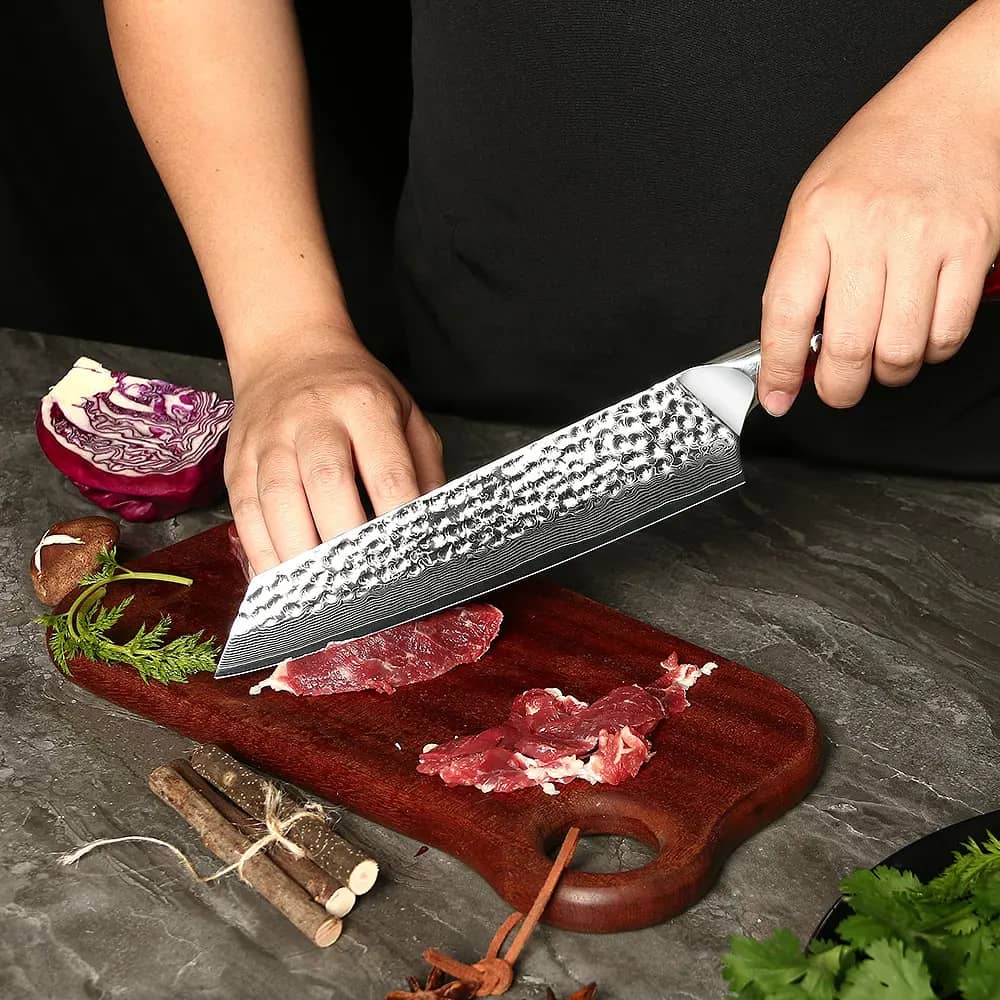
Damascus Clad 10Cr15CoMoV Rosewood Kiritsuke Gyuto 210 mm
The fastest way to answer this question is task by task. Use this matrix when advising customers.
| Kitchen task | Better knife |
|---|---|
| Fast vegetable prep, push and tap chopping | Bunka |
| Small kitchens and small cutting boards | Bunka |
| Slicing fish and boneless meat in long strokes | Kiritsuke |
| Breaking down whole poultry | Kiritsuke |
| Detail tip work (scoring, trimming, deveining) | Either — equal K-tip advantage |
| Rock chopping | Neither — suggest a Gyuto or chef’s knife |
| First Japanese knife for a beginner | Bunka |
| A statement piece for an enthusiast | Kiritsuke |
If a customer can only buy one, the decision comes down to experience and cutting style. Beginners and everyday home cooks get more value from the bunka: it is short, light, double-beveled, and forgiving, and it slots straight into the role a santoku already plays.
The natural upgrade path runs bunka first, then a double-bevel K-tip gyuto, and only then — for cooks who want the full traditional experience — a single-bevel kiritsuke.
Size is the other reality check. A 240 mm kiritsuke needs a large board and confident knife skills, and it can overwhelm a small apartment kitchen. A 165 – 180 mm bunka fits almost anywhere.
On steel, most bunkas and modern kiritsukes use hard stainless like VG-10 or SG2 at 60+ HRc, so customers get the same edge performance either way — our guide to the best steel for kitchen knives breaks those options down.
What This Means for Your Knife Store
These two knives play clearly different roles in an inventory. The bunka is your volume seller: an easy recommendation for santoku owners, a friendly first Japanese knife, and a natural add-on beside a Gyuto. Carry both 165 mm and 180 mm lengths to cover small kitchens and confident cooks.
The kiritsuke is your margin piece. It sells on looks and aspiration to enthusiasts who already own the basics, and the double-bevel K-tip gyuto versions will outsell traditional single bevels many times over in a home-cook market. Stock single-bevel kiritsukes only if your clientele includes working chefs or serious collectors.
Build Your Knife Lineup with LeeKnives
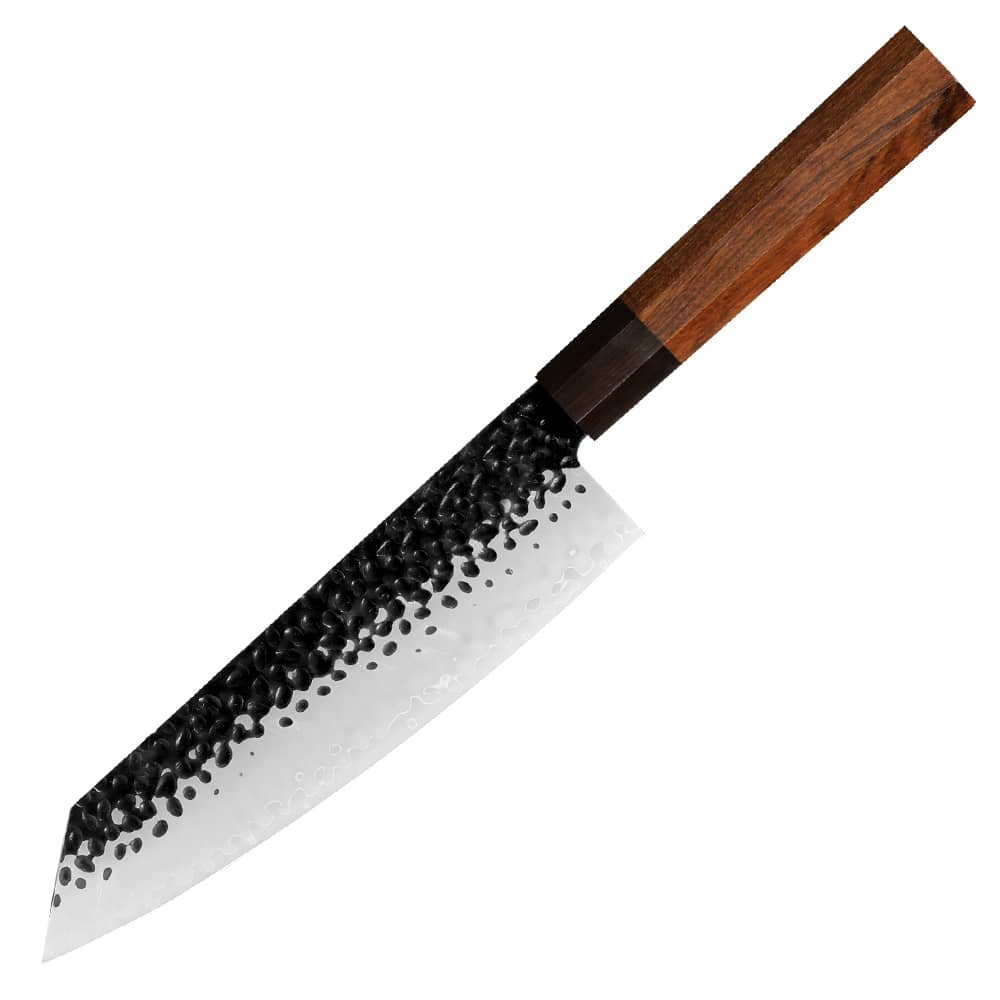
San Mai Octagonal Rosewood Wa Handle Kiritsuke 200 mm Hammered Finish
The kiritsuke vs bunka comparison comes down to length and experience level — and for retailers, that is good news. These two shapes share one design platform: the same K-tip profile, the same steels, and the same handle options, simply scaled from 165 mm up to 240 mm.
That makes them one of the easiest Japanese knife pairings to develop as a matching collection, with the bunka anchoring your entry tier and the kiritsuke carrying your premium shelf.
LeeKnives has spent over three decades crafting kitchen knives in Yangjiang City, and today we help North American retailers and wholesalers turn shapes like these into sellable product lines.
Whether you need an affordable bunka series, a premium kiritsuke range, or a matching K-tip set under your own brand, our OEM and ODM teams handle everything from blade geometry and steel selection to branded packaging.
Ready to add K-tip knives to your catalog? Request a free quote from LeeKnives — send us your target specs and price points, and our sales team will come back with samples and a wholesale plan tailored to your market.
Launch Your Custom Knife Line Faster with LeeKnives
Complete OEM/ODM support—from design to final shipment—so you can focus on growth.
Backed by warehouses in the U.S. for fast, reliable delivery.
Frequently Asked Questions
Do I need a bunka if I have a Gyuto?
Not necessarily — a Gyuto already covers all-purpose prep, and the bunka overlaps with it heavily. The bunka earns its place through its taller blade for knuckle clearance and its K-tip for detail work. Many cooks end up reaching for the bunka on quick jobs and saving the Gyuto for larger ingredients.
What size bunka knife is best?
For most home cooks, 165 mm is the sweet spot: nimble, board-friendly, and unintimidating. Cooks with larger hands or bigger cutting boards often prefer 180 mm, which adds reach without losing the bunka’s compact character.
Advise customers to match the blade to their cutting board — the knife should never be longer than the board is deep.
What’s the difference between a kiritsuke and a gyuto?
A modern kiritsuke is essentially a Gyuto with a K-tip, sharing the same length and double-bevel grind. The differences are the angled tip for precision work, a flatter edge profile, and the traditional single-bevel lineage the name carries.
Should I get a bunka or a santoku?
The bunka is a santoku variant, so the choice is mostly about the tip. If your customers do detail work — scoring, trimming, piercing — the bunka’s K-tip is genuinely useful.
If they want the simplest, most proven all-rounder, the classic santoku is hard to beat. Our santoku vs nakiri comparison covers the santoku family in more detail.
Can a bunka knife cut through bones?
No. Like most hard Japanese knives, bunkas use thin, hard steel rated 60+ HRc that chips when it hits bone, frozen food, or pits.
The bunka handles boneless meat, fish, and vegetables beautifully, but customers should reach for a cleaver or Western boning knife for anything with bones.
Are bunka knives worth the money?
Yes, for the right cook. A well-made bunka at $60 – $150 delivers the same hard-steel edge performance as knives twice its price, and the shape genuinely improves board work.
Very cheap bunkas under $30 often suffer from soft steel and poor grinds, so steer customers toward reputable makers — or a factory-direct line with verified heat treatment.
Are kiritsuke knives good for steak?
A kiritsuke slices cooked steak cleanly and looks dramatic doing it, but it is not a steak specialist. Its long, flat blade is designed for board work and fish, not table use.
For cutting steak at the table, customers want a dedicated steak knife; for slicing a rested roast in the kitchen, the kiritsuke works beautifully.




 EN
EN  JA
JA  DE
DE