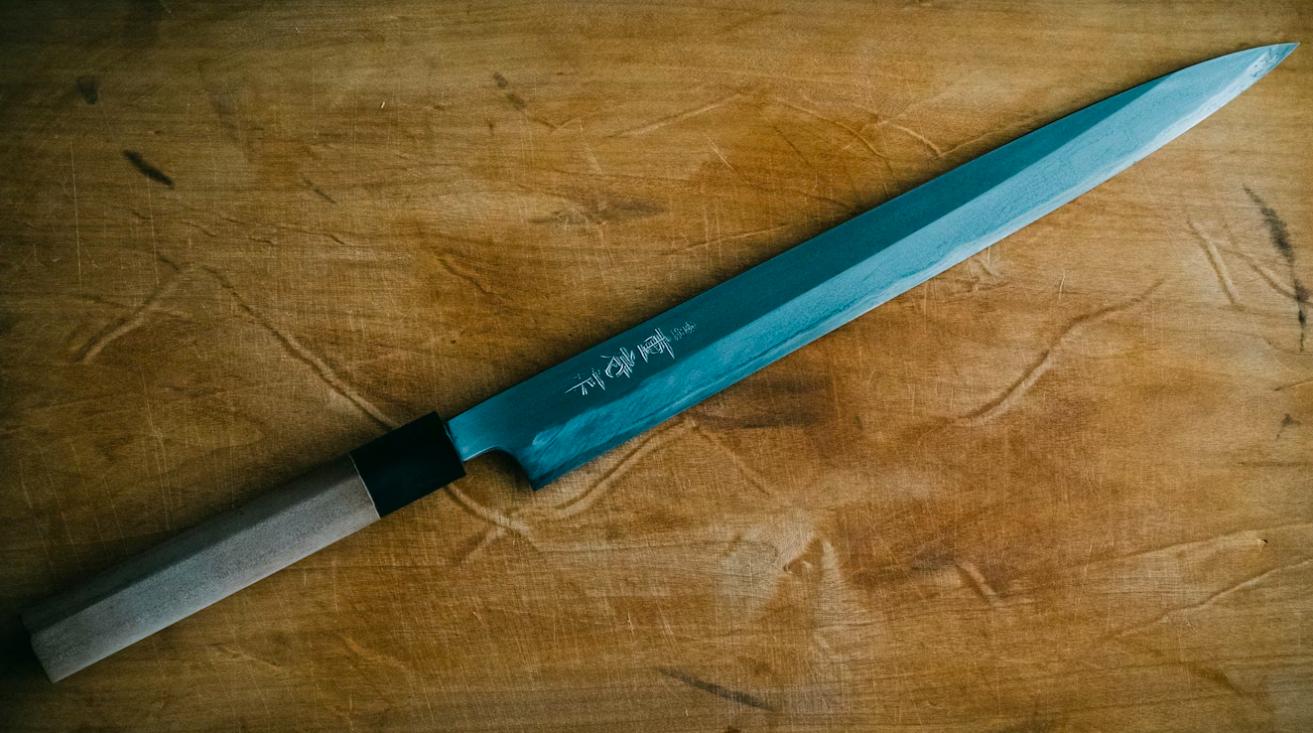
Japanese fish knives are precision tools designed for specialized seafood preparation. From the heavy-duty Deba for breaking down whole fish to the long, slender Yanagiba for sashimi slicing, each knife is crafted for a specific task in professional kitchens.
According to industry research from Grand View Research, the global kitchen knives market was valued at USD 1.76 billion in 2022 and is projected to reach USD 4.12 billion by 2030, reflecting growing demand for high-quality culinary tools.
This guide introduces the most common Japanese fish knife types, their key design features, and typical uses in seafood preparation, helping buyers, distributors, and culinary professionals better evaluate product options and source Japanese-style cutlery.
What are Japanese fish knives?
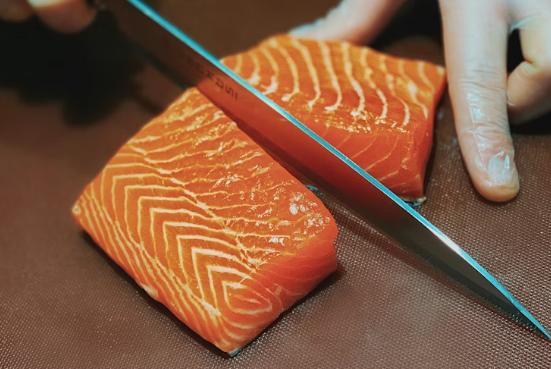
Japanese fish knives are specialized cutting tools engineered for the precise breaking down, filleting, and slicing of seafood. Unlike multi-purpose Western knives, this category consists of highly task-specific tools like the heavy Deba for butchery and the long Yanagiba for sashimi.
Distinctive features
- Rigid Construction: Japanese fish knives favor rigid blades over flexible designs, providing maximum control and cleaner cuts through dense fish tissue.
- Precision Edge Geometry: Traditional designs use a single-bevel edge for surgical accuracy, while double-bevel versions offer versatility for global markets.
- High Hardness: Typically forged to 60-65 HRC using high-carbon steel or premium stainless alloys, these blades maintain extreme sharpness for longer periods.
- Optimized Performance: Each knife type features a unique shape and edge angle tailored to specific stages of fish processing, from head removal to paper-thin slicing.
Overview of Japanese fish knife types
| Knife Type | Primary Use | Key Features | Length (mm) |
|---|---|---|---|
| Deba | Butchery & breaking down | Heavy, thick spine, single bevel | 165 – 210 |
| Unagisaki | Eel preparation | Specialized pointed tip | 150 – 210 |
| Honesuki | Boning & pin bone removal | Triangular, rigid, sturdy tip | 145 – 150 |
| Yanagiba | Sashimi & sushi slicing | Long, narrow, single bevel | 240 – 330 |
| Takobiki | Octopus slicing | Blunt/squared tip, Kanto style | 210 – 330 |
| Fuguhiki | Paper-thin fugu slicing | Ultra-thin, flexible yanagiba | 270 – 330 |
| Sujihiki | General slicing & trimming | Double bevel, narrow slicer | 240 – 300 |
| Gyuto | Multi-purpose prep | Double bevel, curved belly | 180 – 270 |
Japanese fish butchery knives
Japanese fish butchery requires specialized knives built for breaking down whole fish before any filleting or slicing begins. These heavy-duty blades handle the initial tasks of removing heads, cutting through bones, and separating large sections of fish with power and control.
Deba: The traditional butchering knife
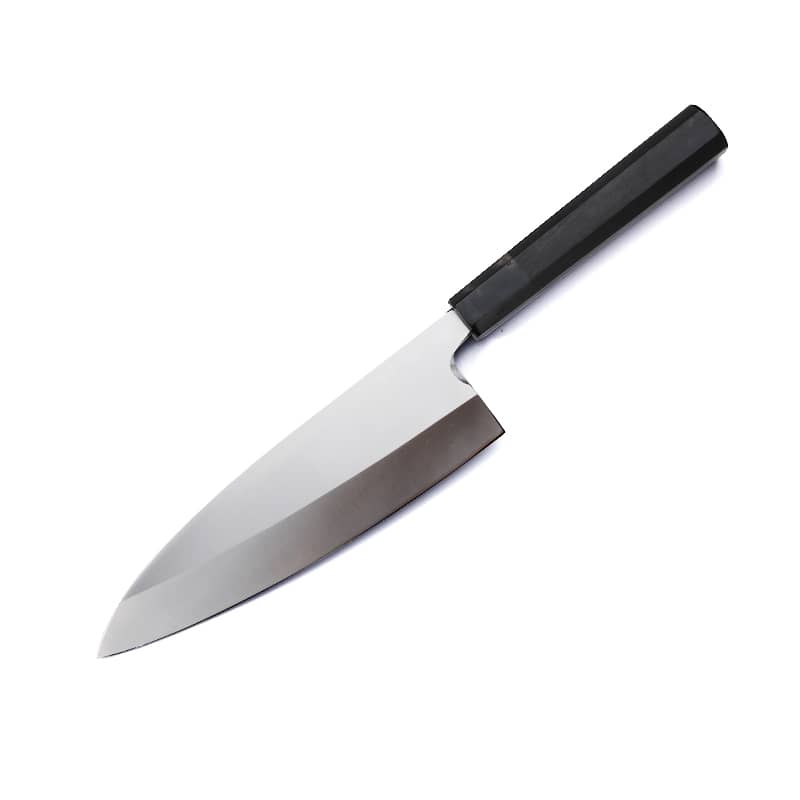
Originating from the Sakai region of Osaka during the Edo period, the Deba is one of the most iconic knives in the Japanese kitchen. Its name translates roughly to “pointed carving knife,” and it is built with a thick, heavy spine that provides the power needed to remove fish heads and cut through small bones without damaging the blade.
Despite its weight, the blade tapers to a fine point, allowing chefs to perform more delicate tasks such as filleting once the initial breakdown is complete.
- Blade length: 165mm to 210mm.
- Best for: Breaking down whole fish and cutting through heads or small bones.
- Useful on: Small to medium-sized fish and three-piece filleting methods.
- Butchery Build: Features a thick spine and weight concentrated near the tip for maximum chopping power.
Because fish sizes and preparation techniques vary widely, the Deba has evolved into several specialized variations designed for different tasks and fish types:
- Hon-Deba: The “true” deba, featuring the thickest and heaviest blade for heavy-duty butchery and large fish.
- Ko-deba: A small, maneuverable version (usually 100mm-120mm) ideal for processing small fish like sardines.
- Ai-Deba: A mid-weight, thinner variation that provides better balance for medium-sized fish preparation.
- Mioroshi Deba: A hybrid tool that combines the thickness of a deba with the length of a yanagiba for filleting and slicing.
Unagisaki: Specialized eel knife
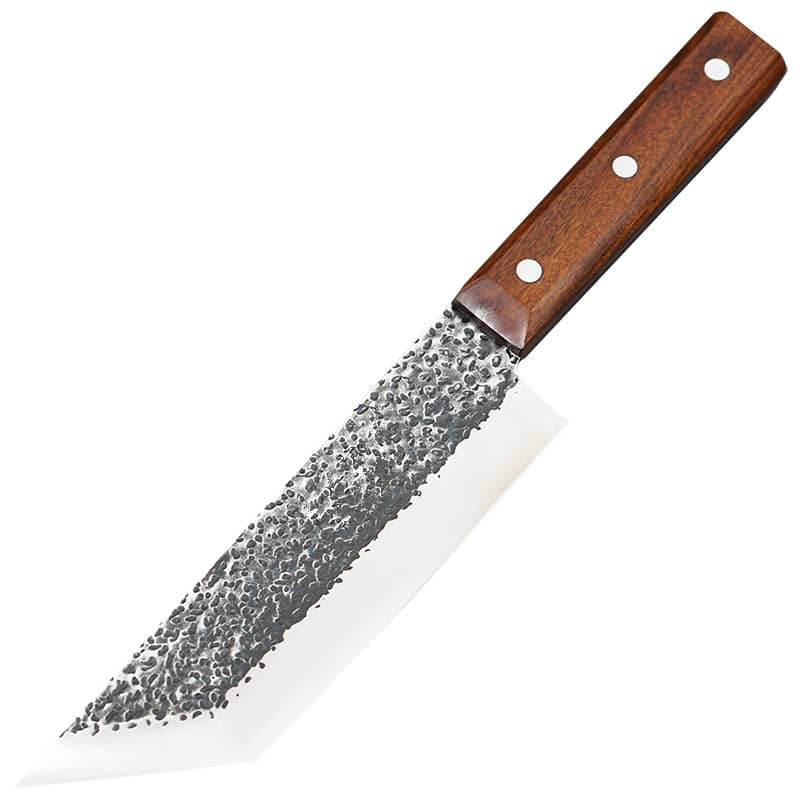
8Cr13MoV Rosewood Eel Knife 175 mm LKJUN10001
Preparing eel is a specialized craft in Japan, and the Unagisaki is the essential tool for this intricate task. These knives evolved into distinct regional shapes—the Edo-style from Tokyo features a rectangular blade with a sharp corner for piercing, while the Osaka-style has a triangular tip.
Because eels are exceptionally slippery, these knives are designed to be short and easy to maneuver, allowing the chef to split the fish from head to tail in one continuous motion.
- Blade length: 150mm to 210mm.
- Best for: Piercing, splitting, and deboning eel in confined spaces.
- Useful on: Eel (Unagi) preparation, particularly for dishes like kabayaki.
- Regional Variations: Available in different tip shapes, including the triangular Osaka-style and rectangular Tokyo-style.
Honesuki: Poultry and fish boning knife
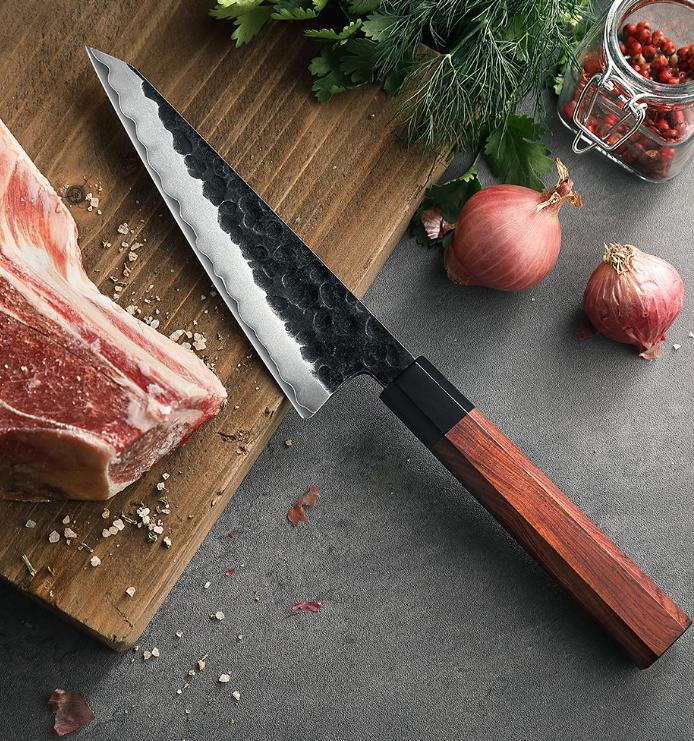
While often categorized as a poultry knife, the Honesuki’s stiff, triangular profile makes it an exceptional tool for deboning fish with tough skeletons. This Kanto-style blade originated in the butcher shops of Tokyo and is built to withstand contact with bone and cartilage that would chip a more delicate yanagiba.
Its unique geometry allows the tip to slip into tight joints easily, making it a favorite for processing larger species like yellowtail or salmon where precision is critical.
- Blade length: 145mm to 150mm.
- Best for: Boning tasks, removing pin bones, and navigating around joints or cartilage.
- Useful on: Poultry and larger fish species like yellowtail or salmon.
- Blade Geometry: Triangular, rigid blade with a reinforced tip for applying pressure without flexing.
Japanese sashimi knives
Japanese sashimi knives are single-beveled blades built for slicing raw fish with minimal tissue damage. The yanagiba handles most sashimi work, while the takobiki and fuguhiki serve specific needs like octopus preparation and ultra-thin fugu cuts.
Yanagiba: Traditional sashimi knife
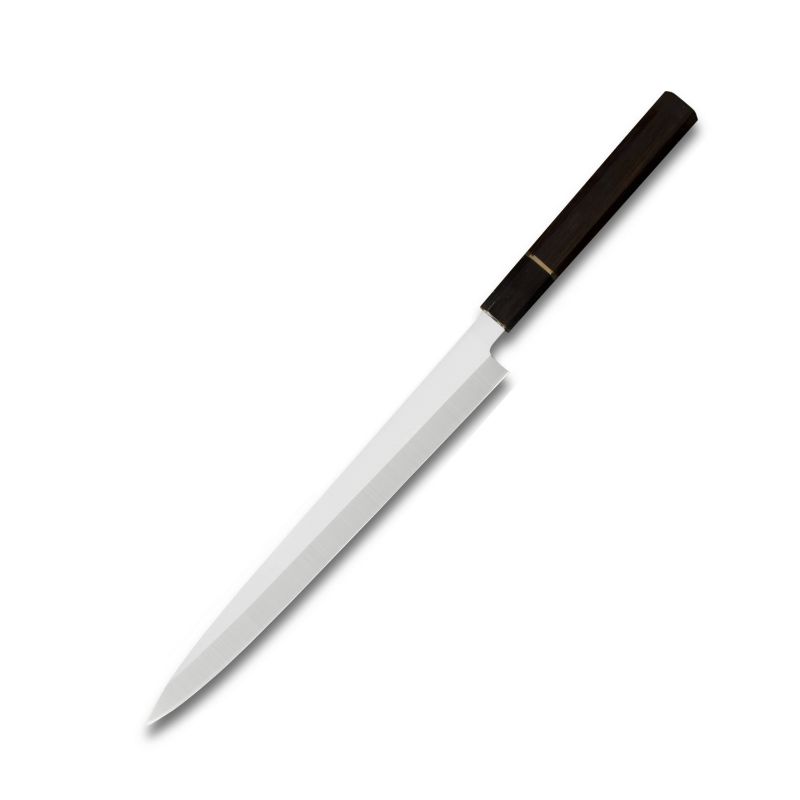
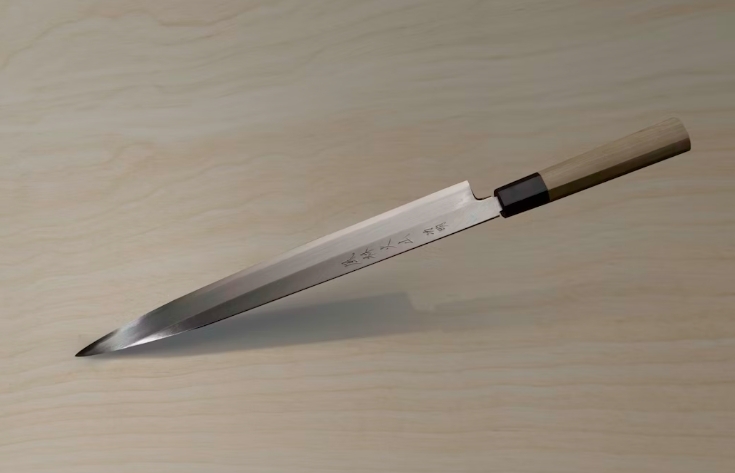
The Yanagiba, or “willow leaf blade,” is the quintessential tool of the Kansai region and the most vital knife for any sushi professional. Its long, slender design allows for the “pull-cut” technique, where the chef uses the entire length of the blade in a single motion to prevent bruising the delicate cells of the fish.
This preservation of texture ensures a glossy, smooth surface that enhances both the flavor and the visual presentation of high-grade sashimi.
- Blade length: 240mm to 330mm.
- Best for: Slicing raw fish for sashimi and sushi using single pulling strokes.
- Useful on: Filleted raw fish and skin removal.
- Slicing Precision: Long, narrow single-bevel edge (15-16 degrees) with a concave back to reduce friction.
Takobiki: The squared sashimi slicer
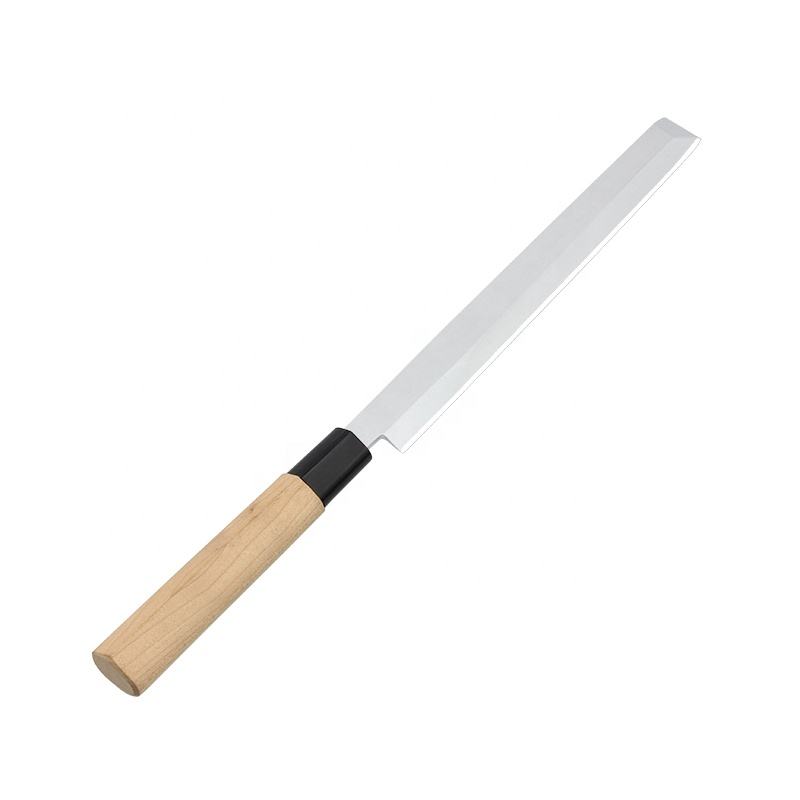
The Takobiki serves as the traditional Kanto (Tokyo) version of the sashimi knife, developed to perform the same slicing tasks as the Yanagiba but with a distinct regional geometry.
Historically, Tokyo’s crowded fish markets and cramped sushi stalls made the long, needle-like tip of a Yanagiba a safety risk; the Takobiki’s blunt, squared-off end was specifically designed to prevent accidental stabs in tight working quarters.
Beyond safety, the blade is thinner and flatter than its willow-shaped cousin, allowing for a different weight distribution that many chefs find superior for the precise handling of slippery proteins like octopus.
- Blade length: 210mm to 330mm.
- Best for: Long, flat slicing motions and maintaining even pressure across the entire blade.
- Useful on: Octopus (Tako), squid, and various white fish in Tokyo-style sushi preparation.
- Edge Profile: Features a completely straight cutting edge and squared tip, offering more contact area with the cutting board compared to the slightly curved Yanagiba.
Fuguhiki: Ultra-thin pufferfish knife
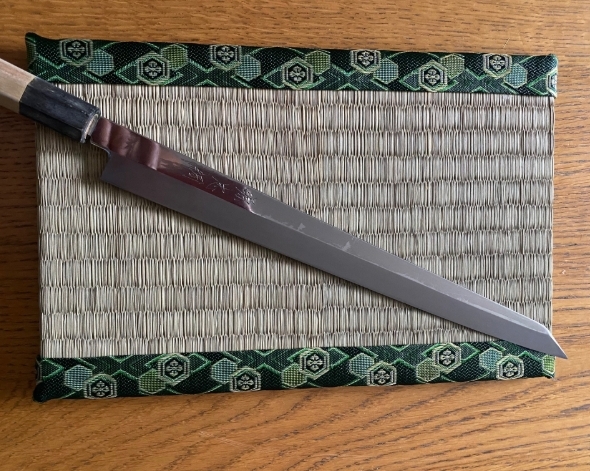
The Fuguhiki is designed exclusively for the preparation of fugu (pufferfish). Because fugu flesh is incredibly firm and elastic, it must be sliced into translucent, paper-thin pieces to be palatable, a task that requires a blade thinner and more flexible than a standard yanagiba.
Chefs undergo years of rigorous licensing to prepare this potentially toxic fish, and the Fuguhiki is the only tool capable of achieving the signature “chrysanthemum” plating style associated with this delicacy.
- Blade length: 270mm to 330mm.
- Best for: Slicing paper-thin cuts of fugu (pufferfish).
- Useful on: Pufferfish (fugu) preparation.
- Ultra-Thin Profile: Thinner and more flexible than a yanagiba with a significantly reduced spine thickness.
Other knives frequently used in fish preparation
While specialized fish knives handle most tasks, versatile slicing and trimming knives fill important gaps in your kitchen. The sujihiki offers precision slicing for both fish and meat, while the gyuto provides general-purpose functionality for occasional fish work.
Sujihiki: Western-style slicer
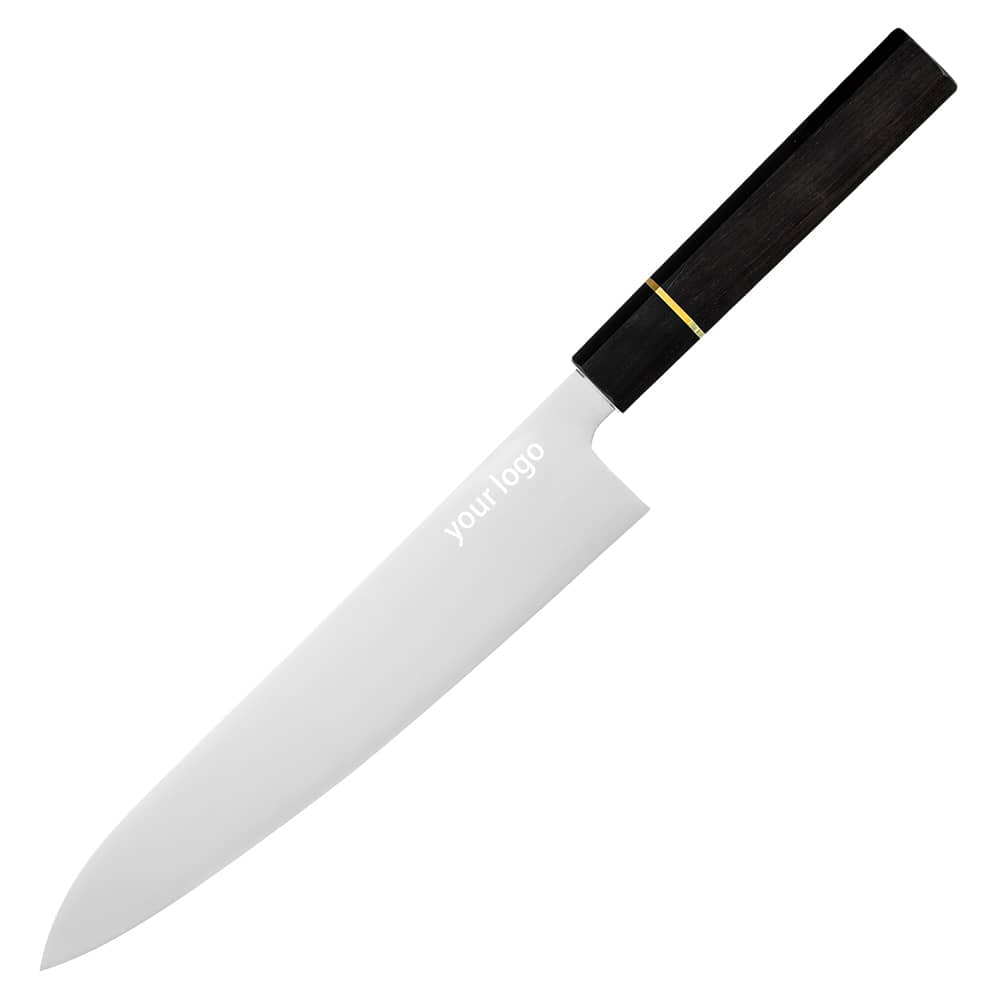
10Cr15CoMoV Clad Steel Stabilized Wood Handle Sujihiki 290 mm KKDA0237
The Sujihiki is essentially the Japanese version of a Western slicing or carving knife, offering a hybrid design that excels in multi-functional kitchens. While it lacks the single-bevel precision of a yanagiba, its double-bevel design makes it much more intuitive for cooks trained in Western techniques.
It is often preferred in busy commercial environments because it is typically made from stain-resistant steel, allowing it to handle both fish and meat without the risk of oxidation. The blade’s low profile and minimal surface area reduce friction, ensuring that delicate fish proteins are sliced rather than torn.
- Blade length: 240mm to 300mm.
- Best for: Long-stroke slicing, trimming portions, and carving large fillets.
- Useful on: Large fish fillets, boneless meats, and roast carving.
- Hybrid Geometry: Combines Japanese thinness with a Western double-bevel edge for effortless, symmetrical cutting.
Gyuto: All-purpose chef’s knife
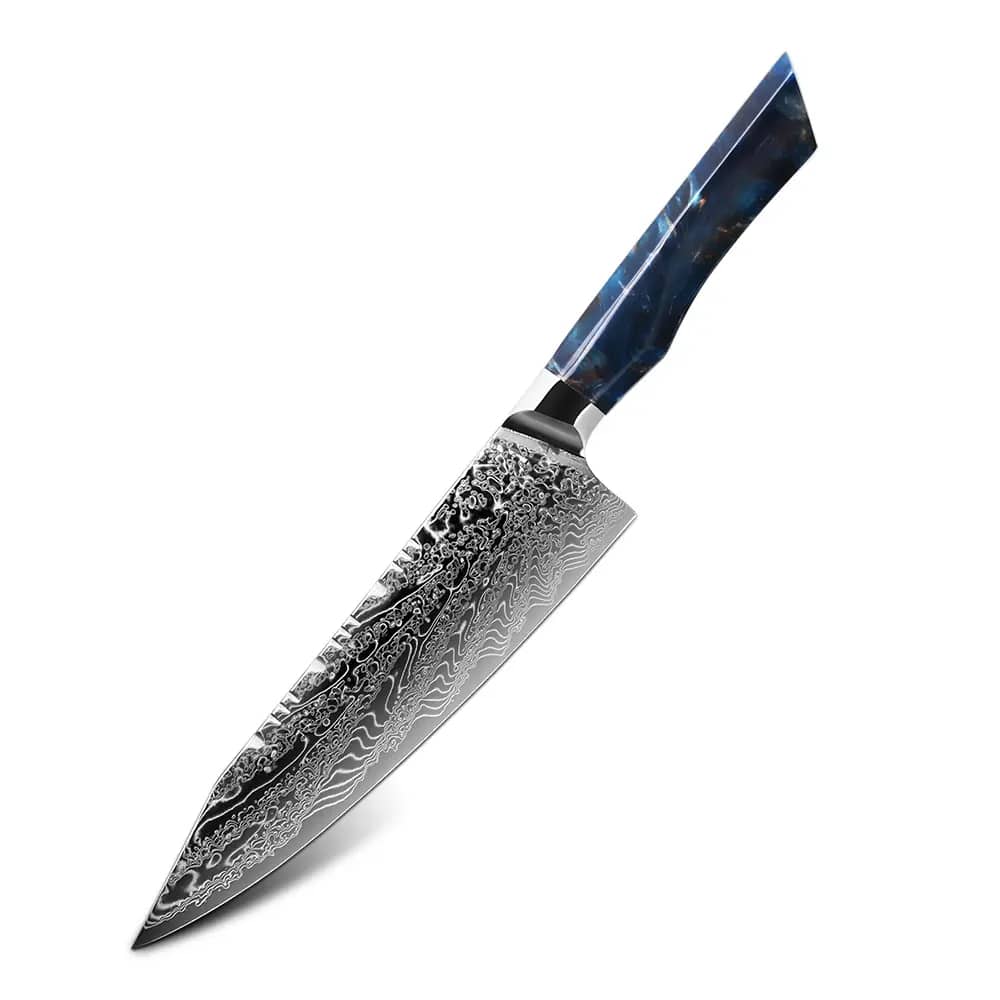
Damascus Clad 10Cr15CoMoV Resin Kiritsuke Gyuto 205 mm LKJGY10019
The gyuto serves as the primary all-purpose chef’s knife in the Japanese kitchen, with a name that literally translates to “cow sword.” Originally designed for butchering beef during the Meiji era, it has evolved into the most versatile tool for modern culinary tasks.
While it is not a specialized fish tool, its length and agility make it a capable substitute for a deba when dealing with small fish or for a sujihiki when portioning fillets. It is the ideal choice for home cooks or professional stations where space is limited and one knife must perform several roles.
- Blade length: 180mm to 270mm.
- Best for: Versatile multi-purpose preparation across all food groups.
- Useful on: Vegetables, proteins, and basic fish tasks like portioning steaks.
- Multi-functional Profile: Features a curved belly for rocking cuts and a sharp tip for precision trimming around bones.
Japanese fish knife vs. Western fillet knife
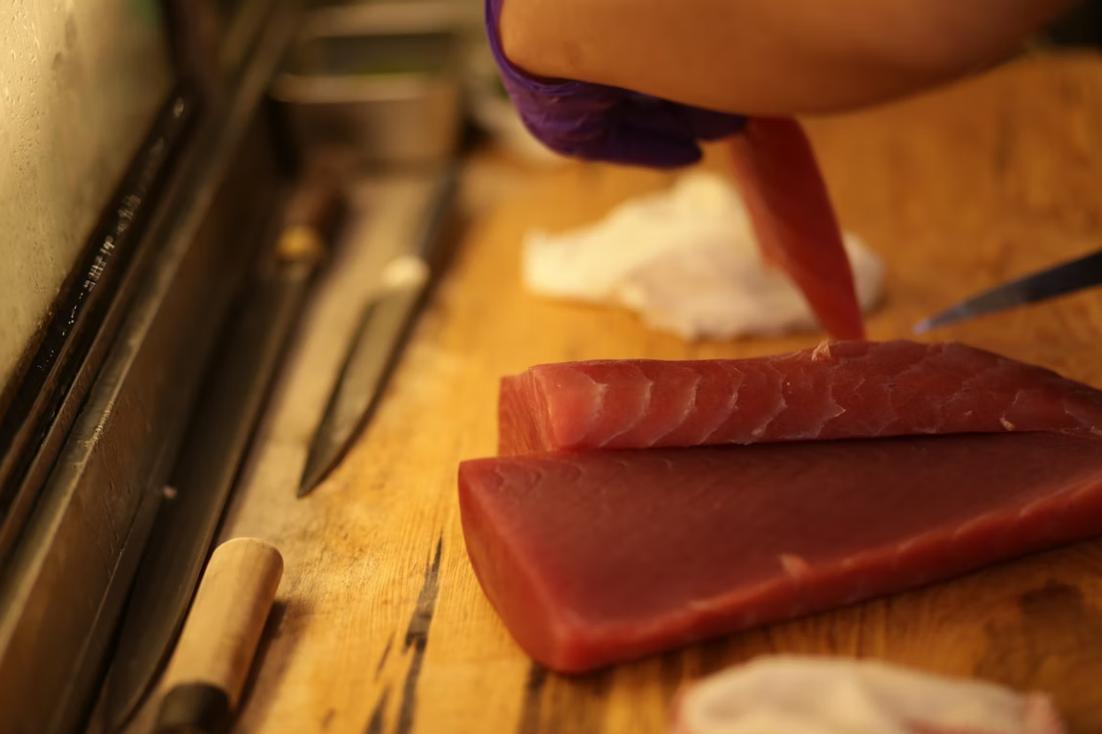
Japanese and Western fillet knives represent two distinct culinary philosophies regarding seafood preparation. While traditional Japanese knives prioritize rigidity and specialized geometry for clinical precision, Western fillet knives rely on flexibility to navigate around bones and skin.
Choosing between them depends on whether you prefer the clean, single-stroke accuracy of a single-bevel blade or the versatile, maneuverable feel of a thin, flexible Western slicer.
| Feature | Japanese Fish Knife | Western Fillet Knife |
|---|---|---|
| Blade Rigidity | Typically rigid and thick blades. | Thin, flexible blades that follow contours. |
| Edge Geometry | Single-bevel edge for surgical cuts. | Standard double-bevel symmetry. |
| Cutting Motion | Designed for clean, single-stroke pulls. | Supports back-and-forth sawing motion. |
| Specialization | Highly specialized (e.g., Deba, Yanagiba). | Multi-purpose tools for various sizes. |
| Weight & Balance | Heavier builds for chopping momentum. | Lightweight construction for agility. |
How to choose the right Japanese fish knife
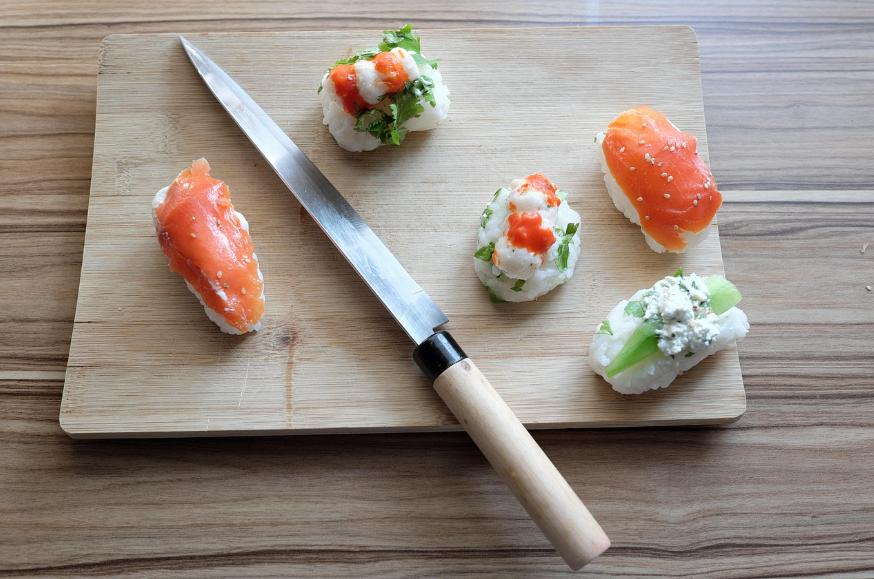
The right Japanese fish knife depends on whether you’re breaking down whole fish or slicing sashimi, the steel type that matches your maintenance habits, and a handle design that feels secure when wet.
Matching knife type to fish preparation task
Breaking Down Whole Fish: This task requires a heavy-duty blade like the deba. Professional restaurant chefs rely on its thick spine to navigate through tough fins and collars. Matching this specific task with a sturdy deba prevents edge damage and ensures efficiency in high-volume settings.
Precision Slicing and Skinning: For creating sashimi, the task demands a long, single-bevel blade like the yanagiba. Chefs and serious enthusiasts use these knives ranging from 240 to 330 mm to achieve smooth, glossy surfaces. The single-stroke pull cut is essential for maintaining the texture and appearance of premium raw fish.
General Filleting and Trimming: Casual hobbyists performing occasional prep might use versatile tools like a gyuto or petty knife. However, matching the task to specialized tools like a smaller deba or yanagiba significantly improves the final result. Selecting the right knife based on the specific preparation stage—breakdown versus slicing—ensures the best performance for every skill level.
Blade material, hardness, and edge retention
High-carbon steel options like aogami (blue steel) and shirogami (white steel) are traditional choices for Japanese fish knives. These hagane steels typically reach 60-65 HRC hardness, which helps them hold sharp edges longer than softer Western steel. The trade-off is they need regular oiling to prevent rust.
Stainless steel versions require less maintenance and resist corrosion better. Modern stainless formulas from reputable knife brands can still achieve good edge retention while tolerating humid environments. Carbon steel feels sharper on a stone and takes a finer edge, but stainless fits better into busy kitchens where oiling between services isn’t realistic.
Harder steel keeps its edge through repetitive cuts but chips more easily if twisted against bone. Softer steel tolerates rough handling better but needs resharpening more often.
Handle designs: Wa-handle vs. Western handle
A wa-handle is the traditional Japanese design with a lightweight, octagonal or D-shaped wood construction. This style reduces hand fatigue during long prep sessions and offers excellent control for detailed work. The lighter weight balances well with Japanese blade geometry.
Western handles feature a full tang with riveted scales, usually heavier and more substantial. They feel familiar if you’re used to chef knives from Europe or America. Western handles often include finger guards and curved grips that some cooks prefer when breaking down whole fish.
Wa-handle works best if you value precision and lighter weight. Western handle fits better if you want a more substantial grip or already own Western-style knives. Both can work when wet, but shape matters more than style—choose a handle that won’t slip when covered in fish oils and moisture.
How to use Japanese fish knives properly
Japanese fish knives need regular attention to perform well and last for years. Carbon steel requires oiling to prevent rust, while proper sharpening technique preserves the single-bevel geometry that makes these knives cut so cleanly.
Sharpening Japanese fish knives requires a dedicated whetstone approach to maintain their specific single-bevel geometry and high-hardness edges.
- Use appropriate grits: Start with a 1000-grit medium stone for maintenance and finish with 3000-6000 grit for a polished, razor-sharp edge.
- Manage the burr: Sharpen the beveled side until a burr forms, then lay the flat side against the stone for light passes to remove it.
- Preserve the concave back: Avoid aggressive sharpening on the hollowed backside to prevent flattening the geometry and increasing friction.
- Stone maintenance: Flatten your whetstone before use and soak water stones for 10-15 minutes, keeping the surface wet during the process.
- Avoid honing steels: Hard steel (60-65 HRC) can chip on steel rods; use ceramic rods or finishing stones for touch-ups instead.
Preventing oxidation and structural damage
Proper cleaning and moisture control are essential for protecting the integrity of high-carbon and stainless Japanese steel.
- Dry immediately: Always hand wash and dry knives right after use, focusing on the blade-to-handle transition area.
- Oil carbon steel: Apply a thin layer of camellia or food-safe mineral oil to prevent rust, especially in humid environments.
- Understand patina: Encourage the natural dark patina that protects carbon steel, but remove any red rust immediately to prevent pitting.
- No dishwashers: Avoid high heat and harsh detergents that can embrittle the steel or cause the edge to chip against other dishes.
Effective storage and maintenance habits
Safe storage protects the razor-sharp edges of your knives from physical impact and environmental damage.
- Use dedicated storage: Utilize wooden knife blocks, magnetic strips, or individual edge guards to prevent blade contact with other tools.
- Separate knife types: Store heavy deba knives away from thin yanagiba blades to prevent accidental chipping during handling.
- Inspect regularly: Check the edge for microscopic chips or rolls; address small issues early during routine sharpening.
- Correct usage habits: Avoid twisting the blade in bone or hitting hard surfaces, as hard Japanese steel is prone to brittle fracturing.
Finding the perfect Japanese fish knife for your business
Japanese fish knives are built around specific jobs rather than trying to do everything. A deba handles breakdown work through bones and collars. A yanagiba delivers clean sashimi slices. Each knife type matches a stage in fish preparation.
The right knife depends on what you actually do. If you break down whole fish regularly, a 150-180 mm deba makes sense. If you slice sashimi or sushi, a longer yanagiba works better. Many serious cooks end up with both because the tasks are different.
If you’re a wholesaler, retailer, or brand owner looking to source Japanese fish knife types for your business, working with a manufacturer that understands these details matters. Chinese factories now produce quality versions of traditional Japanese designs at competitive prices.
Ready to build your knife line? Request a quote to explore wholesale, OEM, and private label options that fit your market.
Frequently asked questions
Japanese fish knives come with specific design features that match different cutting tasks. The right choice depends on whether you need to break down whole fish or slice sashimi.
What is the best Japanese knife for cutting fish?
The best Japanese knife for cutting fish depends on what part of the process you’re doing. A deba knife works best for breaking down whole fish, removing heads, and cutting through small bones. For slicing sashimi, a yanagiba is the standard choice.
Most experienced cooks keep both knives in their kit. The deba knife handles breakdown work with its thick spine and sturdy build, while the yanagiba’s long, narrow blade creates clean slices with minimal drag.
If you only want one knife for general fish prep, a 150 to 180 millimeter deba offers good balance. It’s strong enough for most whole fish work but still manageable on a cutting board.
What is special about a fish knife?
Fish knives are built for specific tasks rather than general cutting. Many Japanese fish knives use single-bevel edges that create cleaner cuts and reduce tearing in delicate flesh.
The geometry makes the biggest difference. Japanese fish knives often feature edge angles around 15 to 16 degrees, which is sharper than the 20 to 25 degrees common on Western knives. That narrower angle produces a razor-sharp edge that glides through fish with less friction.
Single-bevel knives also include a concave backside that helps the blade release from sticky fish flesh. This hollowed back reduces drag during cuts, which matters when you’re working with soft or oily fish.
Is a yanagiba good for beginners?
A yanagiba can be challenging for beginners because it requires specific technique. The single-bevel design means the knife naturally pulls to one side during cuts, which takes practice to control.
Sharpening a yanagiba also demands more skill than maintaining a double-beveled knife. You need to work on both the beveled side and the flat back differently to keep the geometry correct.
Beginners often do better starting with a shorter blade around 240 millimeters rather than the longer 270 to 300 millimeter versions. A shorter knife feels more manageable while you’re learning proper slicing technique.
What is the difference between Yanagiba and Fuguhiki?
The fuguhiki is an ultra-thin version of the yanagiba designed specifically for slicing fugu, which is Japanese pufferfish. It creates paper-thin slices that are almost translucent.
A standard yanagiba has more blade thickness and weight, which makes it suitable for general sashimi work across different fish types. The fuguhiki sacrifices some stability for the ability to make extremely delicate cuts.
Most cooks only need a fuguhiki if they regularly prepare fugu or want to create the thinnest possible sashimi slices. For everyday sashimi prep, a regular yanagiba handles the job without the extra fragility.
Why are Yanagiba knives so expensive?
Yanagiba knives cost more because of the materials and construction methods used. Many are made from high-carbon steel that sits around 60 to 65 HRC hardness, which holds a sharp edge longer than softer steel.
The single-bevel grind requires more precise manufacturing than double-beveled knives. Creating the correct angle on one side while maintaining a proper concave back takes skilled work and more time.
Traditional forging methods and hand-finishing also add to the cost. Some yanagiba knives feature specialized steel types or Damascus patterns that increase both performance and price.
What knife do sushi chefs use?
Sushi chefs typically use both a deba and a yanagiba as their core fish knives. The deba breaks down whole fish while the yanagiba handles all the sashimi slicing.
Professional sushi chefs often choose yanagiba knives in the 270 to 300 millimeter range. This length allows them to complete each slice in one smooth pull stroke, which creates the cleanest cut surface.
Many sushi chefs also keep a petty knife around 120 to 150 millimeters for detail work like removing pin bones and trimming. These three knives cover most tasks in a traditional sushi kitchen.




 EN
EN  JA
JA  DE
DE