
The Chinese cleaver vs. chef knife question comes up whenever a customer shops for one knife to do it all. Both blades claim that role — but they get there very differently.
A chef knife is a narrow, curved blade built for the rocking chop: slicing vegetables, mincing herbs, trimming meat. A Chinese cleaver (cai dao) is a tall, flat blade built for push cuts: powering through big produce, crushing garlic, and scooping prep straight into the wok.
This guide compares their design, cutting motion, steel, and best uses — and shows which one your customers actually need.
Chinese Cleaver vs. Chef Knife at a Glance
The table below condenses the whole comparison into one reference. The sections that follow explain what the numbers mean in the hand.
| Chinese Cleaver (Cai Dao) | Chef Knife | |
|---|---|---|
| Primary role | All-purpose prep for Chinese and Asian cooking | All-purpose prep for Western cooking |
| Blade length | 7 – 8 in (175 – 200 mm) | 6 – 10 in (8 in most common) |
| Blade shape | Tall rectangle (90 – 100 mm), flat edge, no tip | Narrow with curved belly and pointed tip |
| Cutting action | Push cut, lift chop, scoop transfer | Rock chop, push cut, fine slicing |
| Weight | 280 – 360 g, blade-forward | 180 – 240 g, balanced |
| Typical steel | Carbon (traditional) or stainless, 56 – 62 HRc | Stainless or carbon, 56 – 62 HRc |
| Bone work | No (that is the gu dao, a different knife) | No |
| Price range | $20 – $200 (sweet spot under $60) | $25 – $300+ (wider premium range) |
| Best for | Asian cooking, heavy vegetable prep, stir-fry buyers | Every kitchen, every cuisine, first-knife buyers |
What Is a Chinese Cleaver?
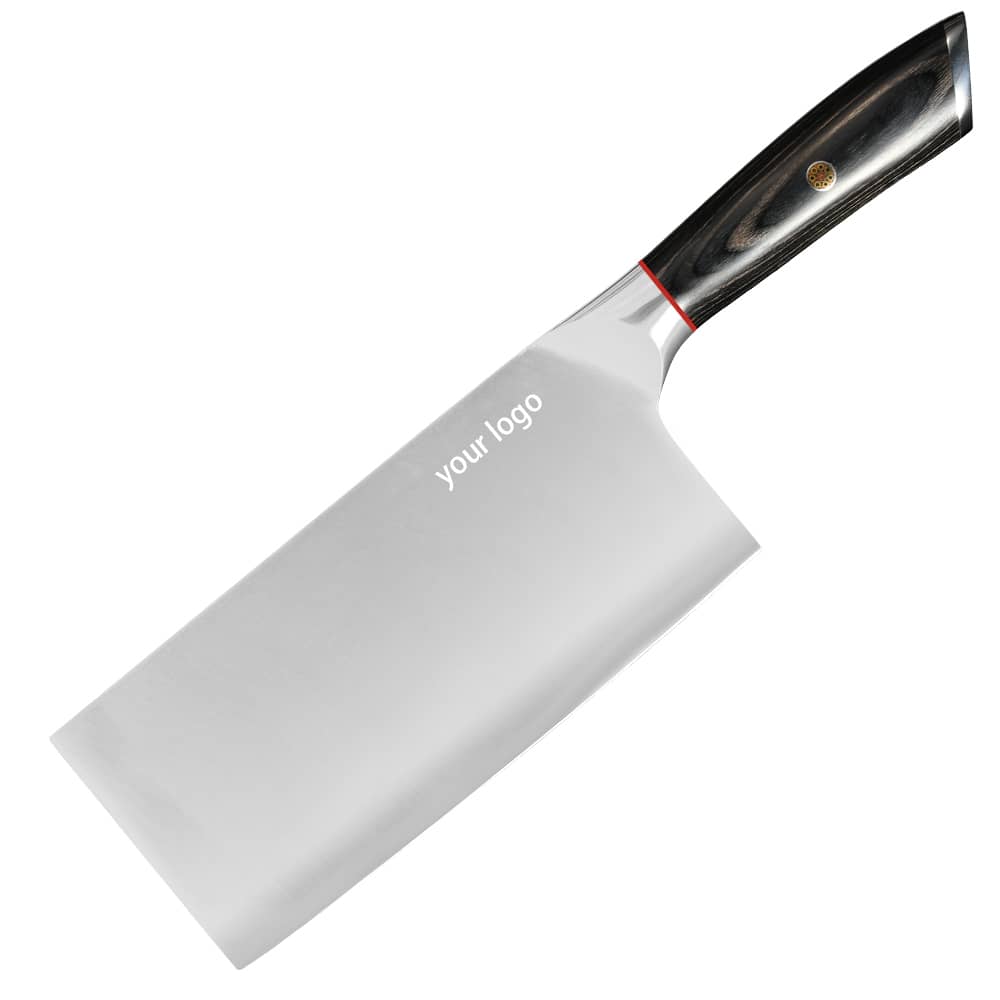
5Cr15MoV Pakkawood Chinese Vegetable Cleaver 207 mm
A Chinese cleaver is a tall, rectangular-bladed knife that serves as the standard all-purpose kitchen knife across China. Despite the name, the everyday version — the cai dao (菜刀, literally “vegetable knife”) — is a light, thin-edged precision tool, not a bone chopper.
Note that “Chinese cleaver” actually covers three tools:
- Pian dao (slicer): Thin and light, for slicing meat and vegetables — never bones.
- Zhan qie dao (all-purpose): The classic “one knife” of Chinese home kitchens; the front slices, the heel chops small bones.
- Gu dao (bone cleaver): A heavy chopper for splitting bones — the counterpart of the Western meat cleaver in our butcher knife vs. cleaver comparison.
Most customers asking for a “Chinese cleaver” want the first two — clearing up that confusion is your selling opportunity.
Pros
- Scoop and transfer: Wide blade moves chopped prep to the wok in one move
- Crush: Flattens garlic and ginger with the blade face
- Knuckle clearance: Tall face protects fingers and handles big produce
Cons
- No tip: Can’t pierce, score, or do fine detail work
- Learning curve: Takes about a week to feel natural
- No bones: Slicer types chip on any bone
What Is a Chef Knife?
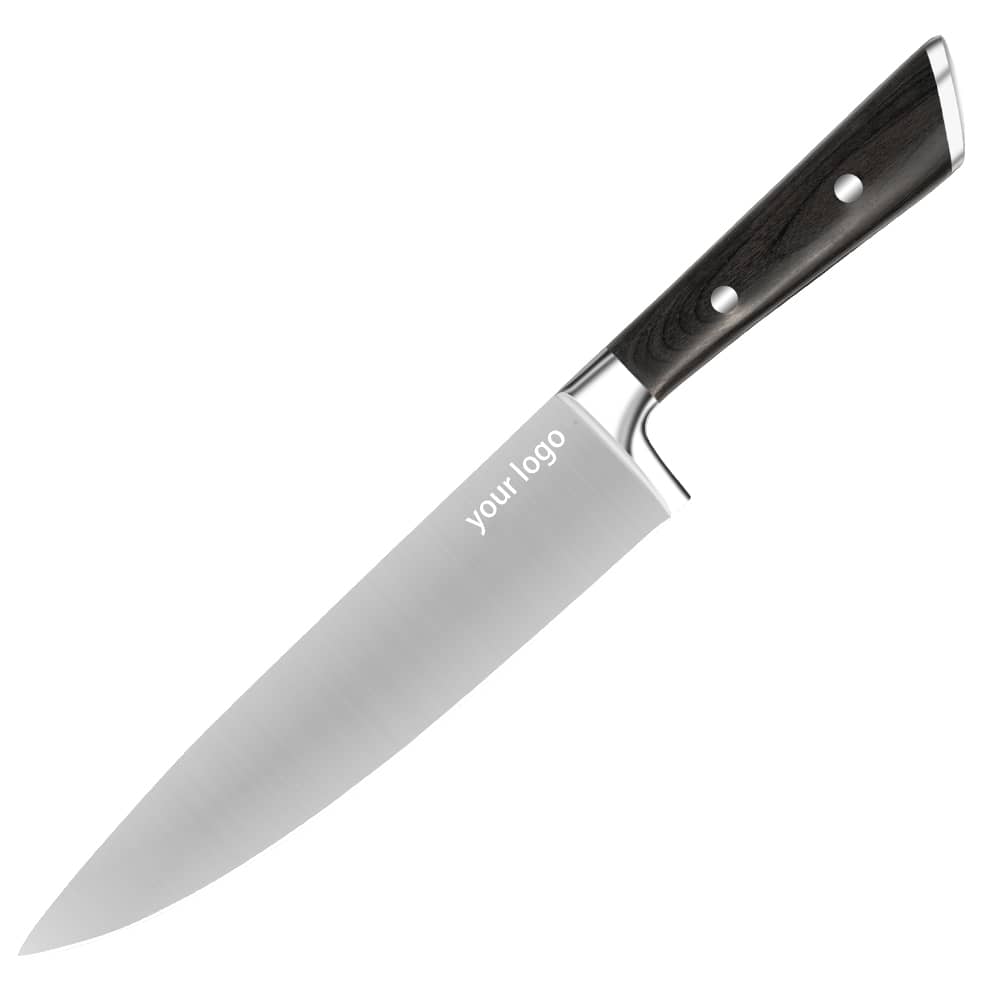
5Cr15MoV Pakkawood Chef Knife 148 mm
A chef knife is the generalist of the Western kitchen — and the single best-selling knife type worldwide. Its 6 to 10 inch blade curves from heel to a pointed tip, a geometry built around the rocking chop that handles everything from dicing onions to disjointing a chicken.
For retailers, this is the anchor product of any lineup: if a customer owns only one good knife, it is almost always a chef knife — a fact worth remembering when we get to stocking advice below.
Pros
- Forgiving: Rocking chop needs no learning curve
- Pointed tip: Handles piercing, trimming, and fine detail
- Variety: Widest range of steels, prices, and accessories
Cons
- No scooping: Narrow blade can’t transfer or crush
- Knuckle clearance: Fingers ride close to the board on tall produce
Chinese Cleaver vs. Chef Knife: The Key Differences
Put the two side by side and they are roughly the same length, similar steels, similar edge angles — and only about 80 to 120 grams apart in weight. The real differences are blade height and edge profile, and those two differences change everything about how each knife moves.
Core Purpose
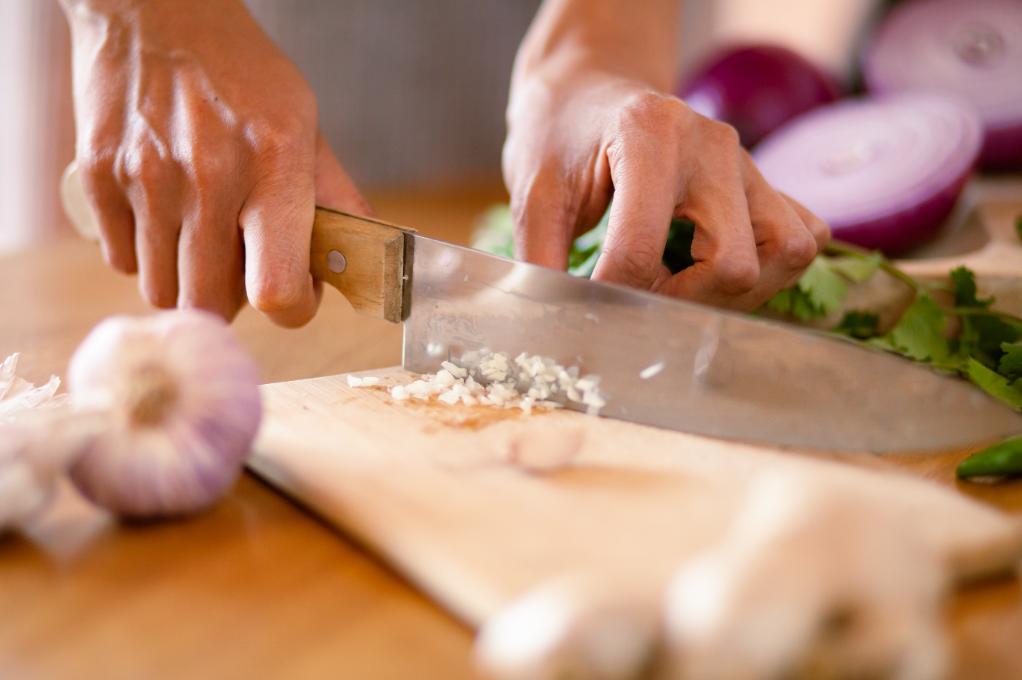
The verdict up front: both knives handle everyday ingredients — vegetables, boneless meat, fish, herbs — equally well. The cai dao wins on big, firm produce (cabbage, squash, melon), aromatics like garlic and ginger, and wok-bound prep; the chef knife wins on herb piles, meat trimming, and pointed-tip work.
Both answer the same question — one blade for daily prep — but differently: the cai dao’s tall face replaces other tools (scraper, garlic press, knuckle guard), while the chef knife’s tip extends cutting itself into detail work. The task matrix later in this guide maps out that trade-off job by job.
Blade Height and Shape
A cai dao stands 90 to 100 mm tall — nearly double the 45 to 50 mm of a chef knife. That height is functional, not cosmetic: it clears your knuckles above the board, keeps tall piles of food from toppling against the handle, and turns the blade face into a built-in bench scraper for moving chopped ingredients to the wok.
The chef knife trades that height for a pointed tip. Anything that uses the front few centimeters of the blade — piercing, scoring, trimming, detail work — favors the Western shape, because the cai dao effectively has no tip at all.
Cutting Motion
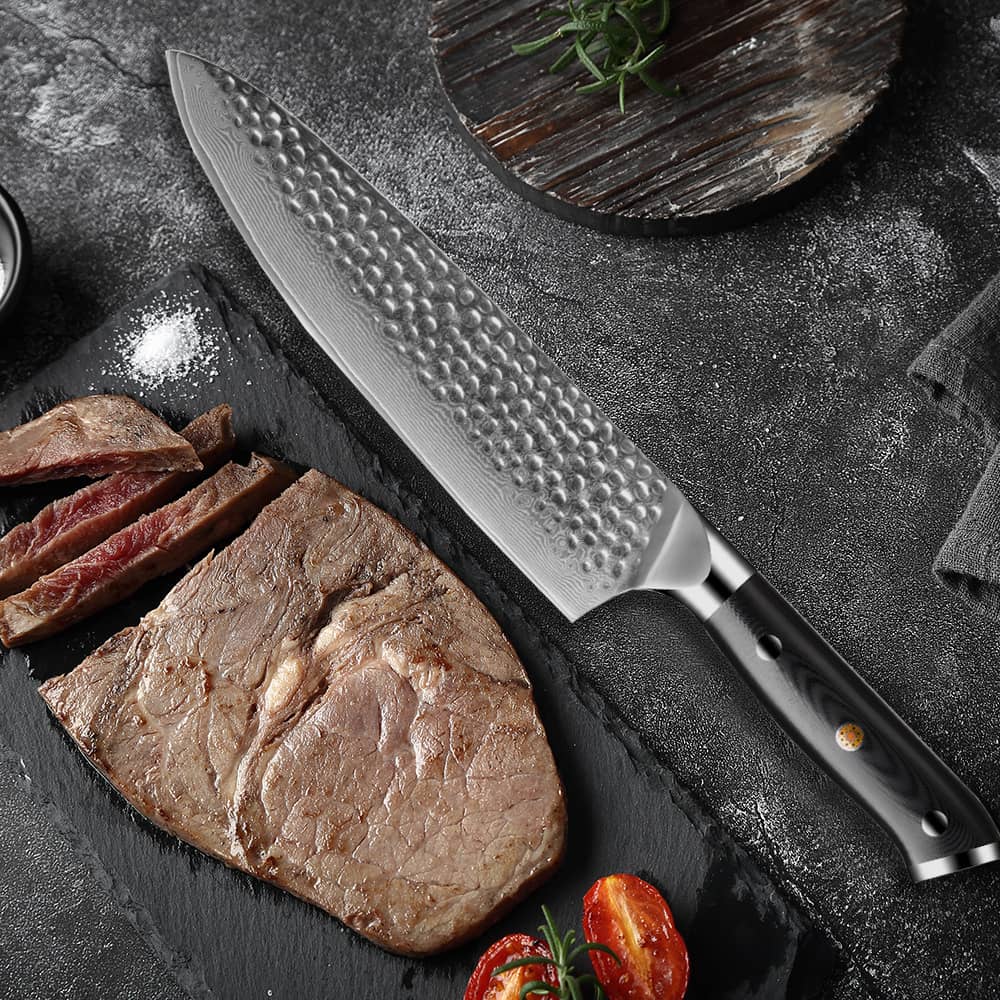
Damascus Clad 10Cr15CoMoV G10 Handle Chef Knife 200 mm
The chef knife is built around one motion: the rock chop, where the curved belly pivots on the board. It is the most forgiving motion for untrained hands, which is why it dominates Western home kitchens.
The cai dao uses two flatter motions. The push cut slides the blade forward and down through food in one stroke — the same physics as a santoku or nakiri.
The lift chop raises the blade fully off the board and drops it straight down, the rapid-fire motion you see in every Hong Kong noodle shop. Both reward the tall, flat blade; neither works well with a curved belly.
Weight and Balance
Here is the myth worth killing at the counter: a cai dao is not heavy. A typical 7-inch cai dao weighs 280 to 360 grams — about 80 to 120 grams more than an 8-inch chef knife, and closer to a heavy German chef knife than to anything else. The 400 to 600 gram monster buyers picture is the gu dao, a different tool entirely.
The balance differs, though. A cai dao carries its weight in the tall blade, which feels blade-heavy at first. Most cooks report about a week of daily use before the motion feels natural — and that week is the main reason Western buyers abandon one. Set that expectation at the point of sale and your return rate drops.
Steel, Hardness, and the Bone Question

Damascus Clad 10Cr15CoMoV Rosewood Chinese Chopping Knife 190 mm
Both knives typically run 56 to 62 on the Rockwell hardness scale, and here is the critical shared boundary: neither one can chop bones.
A thin, hard edge — whether on a cai dao or a chef knife — will chip on impact with bone, frozen food, or lobster shells. Bone work belongs to the gu dao or a Western meat cleaver with a thick spine and a steeper edge.
Traditional Chinese cleavers lean toward carbon steel — easy to sharpen to a razor edge, but it rusts without a wipe-down. Modern export versions increasingly use stainless grades like VG-10 equivalents. Our guide to the best steel for kitchen knives covers the trade-offs if customers ask.
Launch Your Custom Knife Line Faster with LeeKnives
Complete OEM/ODM support—from design to final shipment—so you can focus on growth.
Backed by warehouses in the U.S. for fast, reliable delivery.
Which Tasks Belong to Which Knife?
The fastest way to settle the Chinese cleaver vs. chef knife question is task by task. Use this matrix when advising customers.
| Kitchen task | Better knife |
|---|---|
| Everyday slicing and dicing | Tie — different motions, same result |
| Big produce (cabbage, squash, watermelon) | Chinese cleaver |
| Scooping and transferring chopped food | Chinese cleaver |
| Crushing garlic and ginger | Chinese cleaver |
| Mincing meat for dumpling filling | Chinese cleaver (two-handed, two knives) |
| Rock chopping piles of herbs | Chef knife |
| Fine tip work (trimming, scoring, deveining) | Chef knife |
| Disjointing a whole chicken | Chef knife (a boning knife is even better) |
| Chopping through bones | Neither — use a gu dao or meat cleaver |
One honest note from working kitchens and knife forums: cooks who switch to a cai dao report it quietly becomes their first knife within a few months — the scoop transfer alone changes how a stir-fry comes together.
But cooks who never give it the one-week adjustment almost always drift back to the chef knife.
For Your Customers: Which Knife to Recommend
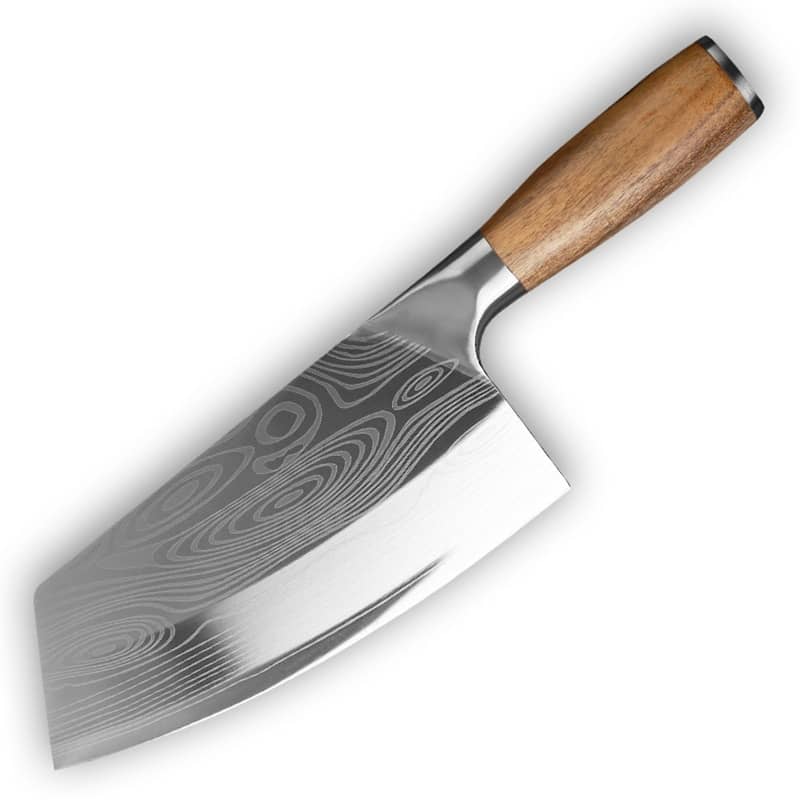
4Cr13 Rosewood Chinese Vegetable Cleaver 200 mm Laser
The simplest decision framework is cuisine, not skill. If a customer’s week is mostly stir-fries, dumplings, noodle bowls, and curries, the cai dao will do more work for them than a chef knife ever will.
If their week is roasts, pasta, and salads, the chef knife’s rocking motion and pointed tip fit better — with zero learning curve.
If a customer can only buy one and cooks across cuisines, the chef knife remains the safer default. The cai dao becomes a smart second knife — and frequently ends up the first — for anyone who preps lots of vegetables.
Practical buying notes worth passing on at the counter:
- Sell the slicer, not the chopper. The number-one buyer mistake is taking home a thick gu dao or Western meat cleaver and wondering why it wedges through tomatoes instead of slicing them. A proper cai dao is thin behind the edge.
- Cheap and carbon is a legitimate choice. Forum favorites like CCK and Shi Ba Zi cost $20 to $50 and out-perform their price; this is a tool category, not a showpiece. Carbon steel demands a dry-down habit — say so at the counter.
- Set the one-week expectation. The blade-heavy balance feels alien for the first few days. Customers who know this going in keep the knife; customers who don’t, return it.
- Flat edges are beginner-friendly to sharpen. The straight edge keeps a consistent contact line on a whetstone — no curving the wrist at the tip. Pair the sale with a honing rod and stone.
For Your Inventory: How to Stock Each Type

Damascus Clad 10Cr15CoMoV G10 Handle Chef Knife 200 mm
These two knives play different roles in an inventory. The chef knife is your volume seller and gateway product — it anchors starter sets and drives traffic across every price tier.
The Chinese cleaver is your growth category: Asian cooking’s popularity keeps expanding the buyer pool, competition on the shelf is still thin, and buyers who convert tend to become enthusiastic repeat customers.
Stock the cleaver family the way Chinese kitchens actually use it: a thin pian dao slicer as the hero SKU, an all-purpose zhan qie dao for the “one knife” buyer, and a heavy gu dao clearly labeled for bone work.
That three-tier lineup prevents the most common mismatch — a customer buying a bone chopper for vegetable prep — and gives commercial accounts (Chinese restaurants, Asian caterers) exactly the spec range they reorder.
Quick inventory rule of thumb: A 4:1 chef-to-cleaver ratio covers most general retail demand. If you serve a strong Asian restaurant trade or a community with high stir-fry cooking rates, tighten that to 2:1.
Source Chinese Cleavers and Chef Knives from LeeKnives
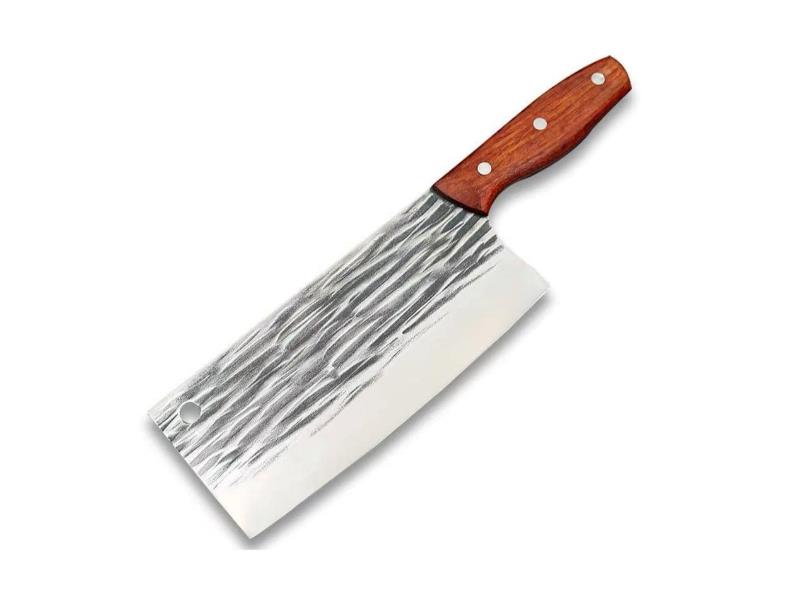
8Cr13MoV Rosewood Chinese Vegetable Cleaver 200 mm
For this matchup, sourcing geography matters: the cai dao was born in Chinese forges, and no supply chain knows it better.
LeeKnives operates from Yangjiang City — where Chinese cleavers have been made for generations — and builds the full cleaver family (pian dao slicers, all-purpose zhan qie dao, and gu dao bone choppers) alongside chef knives in matching steels, so your lineup can offer both “one knife” answers side by side.
Tell us the spec sheet your market expects — carbon or stainless blades, traditional round wood or full-tang G10 handles, target price tiers — and we will match it.
Our OEM service manufactures to your drawings, from custom blade geometry and steel to handle spec; our ODM service adapts our proven in-house designs to your brand and packaging.
And if speed matters more than customization, pick ready-made designs from our kitchen knife catalog or put your own label on them through our private label program.
Ready to quote Chinese cleavers and chef knives for your next buy? Send LeeKnives your specs for a free wholesale quote — samples and a stocking plan come back with it.
Launch Your Custom Knife Line Faster with LeeKnives
Complete OEM/ODM support—from design to final shipment—so you can focus on growth.
Backed by warehouses in the U.S. for fast, reliable delivery.
Frequently Asked Questions
Is a Chinese cleaver worth it?
Yes — if you cook Asian food or prep lots of vegetables regularly. A good cai dao costs $20 to $60, covers about 90% of daily cutting tasks, and its wide blade doubles as a scoop and garlic crusher. The only real cost is about a week of practice while the blade-forward balance starts to feel natural.
Can a Chinese cleaver cut bones?
It depends which one. The thin pian dao slicer cannot — its hard, fine edge will chip on any bone, just like a chef knife’s. The all-purpose zhan qie dao handles small chicken and fish bones with its thicker heel.
Only the heavy gu dao is built for real bone work like splitting ribs. Match the knife to the job, and when in doubt, keep bones away from the blade.
Which knife is best for everything?
No single knife is objectively best — but two designs have won the “one knife for everything” contest in their respective cuisines.
Western kitchens settled on the curved, pointed chef knife; Chinese kitchens settled on the tall, flat cai dao. If you genuinely want only one knife, pick the one that matches the cuisine you cook most.
Can a Chinese cleaver replace a chef knife?
For about 90% of home cooking, yes — after roughly a week of daily practice. A cai dao handles vegetables, fruit, boneless meat, fish, and herbs at least as well as a chef knife, and it scoops food off the board in one move.
Where it falls short is fine tip work and rock-chopping large piles of herbs, where the chef knife’s curved belly and pointed tip are faster.
Is a Chinese cleaver the same as a meat cleaver?
No — and this is the most expensive confusion in the category. The everyday Chinese cleaver (cai dao) is a thin, light precision slicer that will chip on bones.
A meat cleaver — including the Chinese gu dao — is a thick, heavy chopper built for bone work. They share a rectangular silhouette and almost nothing else.




 EN
EN  JA
JA  DE
DE