
Selling knives online may not be the next big trend. Still, it’s a sustainable niche with a variety of customers and products. You can go very broad and sell kitchen knives to home cooks or niche down and deliver blades for outdoor use to hunters.
With enough market research and an understanding of what appeals to your target customers, you can build a successful online store in no time. This detailed article is here to help you succeed in your online knife store business.
We’ll cover where you can sell knives, the types of blades allowed on major platforms, what makes a good product, and more.
What Does Selling Knives Online Involve?
Selling knives online involves choosing a sales channel, sourcing or making knives, listing products, and fulfilling customer orders. You can sell through established marketplaces, your own ecommerce website, or specialist knife communities. Your options depend on the type of knife, the platform’s policies, and applicable laws in your customers’ locations.
Quick Facts: Selling Knives Online in 2026
| Factor | What you need to know |
| Main sales channels | Online marketplaces, your own ecommerce store, and dedicated knife marketplaces |
| Platform restrictions | Kitchen knives generally face fewer restrictions. Pocket, automatic, and tactical knives face additional limitations. |
| Legal requirements | Age restrictions, business registration, and knife-specific laws vary by location. An 18+ age requirement applies in some jurisdictions, but isn’t universal. |
| Best starting point | Choose where you want to sell before investing in inventory. Platform policies can determine which knives you’re permitted to list. |
Which Type of Knife Seller Are You?
Before we get into the details, it’s worth identifying what you’re trying to accomplish. We’ve structured this guide around two common situations:
- Starting an online knife business? Follow the three steps below. We’ll cover choosing a sales channel, finding a manufacturer, and selecting knives your target customers actually want.
- Selling knives you already own? Whether you’re selling used pocket knives, antique blades, or an inherited collection, head to our Dedicated Knife Marketplaces and Communities section to compare your options.
The process is different for each, particularly when it comes to inventory, selling fees, and finding buyers.
Step one: Find a place to sell knives.

Selling knives online starts with picking the right places to list the products. Among the many marketplaces and eCommerce platforms, they all have advantages and disadvantages.
Some online marketplaces allow selling only certain types of knives, like kitchen knives. As someone trying to get pocket knives out there, going to these places and spending time building an online store doesn’t make sense. Creating the right online store for the products you’re permitted to sell on each platform is vital.
Here are the most prevalent places to sell knives online in 2026.
Where Should You Sell Knives Online? (2026 Comparison)
The best place to sell knives online depends on what you’re selling, how much control you want over your store, and the customers you’re trying to reach.
Marketplaces like Amazon and eBay give you access to established audiences, but you’ll have to work within their product restrictions and selling fees. Your own website gives you more flexibility, although attracting customers and arranging payment processing become your responsibility.
Here’s how the main selling channels compare.
| Selling channel | Knife types | Selling fees (2026, US) | Effort | Best for |
| Amazon | Kitchen knives and eligible outdoor knives | 15% in relevant categories; $0.99/item or $39.99/month selling plan | Medium | Established kitchen knife businesses |
| Etsy | Eligible handmade, custom, and vintage knives | $0.20 listing + 6.5% transaction + US payment processing | Medium | Independent makers and custom brands |
| eBay | Kitchen knives and permitted pocket/collectible knives | Typically 13.6% + 0.30-0.40/order | Low | Used knives and collectibles |
| WooCommerce | Lawful knife categories, subject to service-provider rules | Free plugin + hosting and payment processing | High | Independent knife brands |
| Shopify | Lawful knife categories, subject to payment restrictions | From $39/month; possible third-party payment fees | Medium | Branded online stores |
| Dedicated knife marketplaces | Varies; often used, custom, and EDC knives | Platform-specific commissions or seller fees | Low | Individual knife sellers |
| Knife forums and communities | Depends on community rules | Free or paid membership | Low–Medium | Collectors and enthusiasts |
| Facebook Marketplace | Edged-weapon restrictions; kitchen cutlery eligibility requires checking | Local pickup generally free; shipped-order fees vary | Low | Eligible local listings |
The 30-Second Decision: Which Channel Should You Choose?
If you’re still unsure, here’s where we’d suggest starting based on your knife category:
- Selling kitchen knives? Start with Amazon if you want marketplace exposure, or WooCommerce if you’re building your own brand.
- Selling handmade or custom knives? Consider Etsy for eligible handmade products or a dedicated knife marketplace for custom blades.
- Selling pocket, EDC, or tactical knives? Explore WooCommerce or specialist marketplaces. Confirm payment processor approval and local shipping laws before listing.
- Selling knives from your personal collection? KnifeMarket, r/Knife_Swap, or a knife consignment dealer may be more suitable than setting up a complete online store.
Our advice is to check product eligibility and payment processing before ordering inventory. A knife can be legal to own and sell but still violate a marketplace’s policies. Shopify Payments, for instance, restricts weapons-related businesses even when the underlying product is legal.
Online marketplaces
The easiest way to push your knives to the market is by listing them on online marketplaces. Creating a business profile and listing your products takes much less effort than building a dedicated business website. With millions of people visiting each marketplace daily, it’s the first ideal place to start for sellers with little resources to invest.
Here are the advantages and downsides of the leading online marketplaces for a knife business.
Amazon
Amazon is the most well-known marketplace, leading by far almost in all product categories.
Selling knives on Amazon is a bit tricky, though. You can’t list every blade on Amazon. Naturally, the prohibited types of knives aren’t accepted through the company’s FBA service. Stilettos, switchblades, and butterfly knives, to name a few, can’t be sold on Amazon, for example. However, Amazon US does allow kitchen knives, hunting knives, and certain other outdoor blades, with additional restrictions depending on the knife type and shipping destination.
Amazon is a proper place to hear your name, from chefs to paring knives. The downside to Amazon is that there is too much competition. Unless you plan on paying for ads to get your products in front of buyers, it will take some time before you get to sell.
Pros
- The largest eCommerce platform in the world, Amazon’s growth continues nonstop.
- The Fulfillment by Amazon service is a carefree way to let Amazon handle packaging and shipping on your behalf, but it comes with additional fees.
Cons
- You can only sell certain types of knives.
- It costs a lot to sell on Amazon. Sellers can pay up to 15 percent on every successful purchase in addition to other fees.
- The most competitive online marketplace, sellers often have to pay Amazon to get their products sponsored.
Etsy
Etsy is also an online marketplace focused on handmade and crafted goods. It allows products made or designed by sellers, certain vintage items, and other products that meet its creativity standards. As someone purchasing wholesale knives to resell without making or designing them yourself, you might find it hard to sell knives on Etsy.
Because this is the purpose of Etsy, to help people sell their crafted items, the buyers also look for the same. Most sellers on Etsy succeed with specific products that attract certain buyers. When you have the right products to list, you can rapidly grow, given good stock management.
Etsy is ideal if your knives meet its creativity standards and appeal to buyers looking for something distinctive. For example, a seller who creates an original Damascus steel kitchen knife design with a walnut handle may work with a manufacturing partner to produce it. However, the seller must disclose that production partner, and the knife must also comply with Etsy’s weapons policy.
Pros
- With about 87 million active buyers, Etsy is one of the largest eCommerce platforms.
- The buyers on Etsy usually know what they want to buy. You can be a top seller in specific products by researching what they find inviting.
Cons
- Etsy doesn’t allow the straightforward resale of mass-produced knives that don’t meet its creativity standards. It’s better suited to makers, original designers, and sellers of qualifying vintage items.
- Etsy has multiple fees the seller needs to pay. Each listing costs 20 cents, and every sale has a 6.5 percent transaction fee. Additionally, for US sellers, Etsy Payments charges 3 percent of the payment and 25 cents for every transaction.
eBay
eBay is a prominent online marketplace specializing more in consumer-to-consumer products. Businesses can also list their products, and both the buyers and eBay won’t put a distinction between the two.
Just like the other online marketplaces, there are many restrictions on certain types of knives. Kitchen knives on eBay US are permitted, and so are many kinds of pocket knives, but many others aren’t. The rules are considerably stricter on eBay UK, where most knives and bladed products are prohibited, with limited exceptions. You can see eBay’s knife policy here.
eBay has less competition in the knife space, but it’s proportional to the number of people visiting this online marketplace looking for knives. Since eBay is more appealing to people looking for consumer-to-consumer products, most blades don’t really fit in. For this reason, you might want to consider the time and effort you’ll put into building an eBay presence.
Pros
- eBay is available in many countries, spanning across the Americas, Europe, and Asia.
- It’s free to list up to 250 products every month.
Cons
- Knives aren’t as prevalent on eBay.
- For many categories on eBay US, the standard final value fee is 13.6 percent of the total sale plus $0.30 for orders of $10 or less, or $0.40 for orders above $10. Actual fees depend on the category, subscription, and seller account.
eBay
Which Online Platforms Allow Knife Sales in 2026?
Before investing in inventory, we suggest reviewing the knife policies of the platform you’re planning to use. A knife that’s legal to sell in your country may still be prohibited by an online marketplace.
Here’s how the major platforms handle different knife categories as of November 2026.
| Platform | What’s generally allowed | What’s restricted or prohibited | What sellers should know |
| Amazon US | Kitchen knives, hunting knives, and certain outdoor knives | Automatic, butterfly, gravity, stiletto, push, and disguised knives | Assisted-opening knives face additional geographic restrictions. |
| eBay US | Kitchen, hunting, and conventional pocket knives | Automatic, OTF, butterfly, gravity, and disguised knives, among others | Spring-assisted knives must meet specific manual-opening requirements. |
| eBay UK | Limited dining cutlery and specified exceptions | Most knives, including sharp kitchen and pocket knives | Age verification is required for eligible bladed items. |
| Etsy | Eligible culinary knives and other knives used as tools | Knives intended as weapons, including otherwise qualifying vintage items | Products must also meet Etsy’s creativity standards. |
| Shopify | Legal knife categories, subject to platform and provider terms | Illegal products; weapons-related categories may be ineligible for Shopify Payments | Check payment gateway approval before building your store. |
| Facebook Marketplace | Ordinary cutlery may be eligible, subject to Meta’s policies and review | Edged weapons, including combat and self-defense knives | Don’t assume culinary knives are automatically exempt. |
For Shopify, there’s another consideration. Its website-building platform can support businesses selling legal knives, but Shopify Payments restricts weapons-related businesses. Depending on your product range, you may need a third-party payment provider to accept customer payments.
We’d check three things before choosing a marketplace: whether your specific knife is permitted, whether customers in your target market can legally receive it, and whether the platform’s fees leave enough margin after shipping and fulfillment.
Create your website
As you can see, marketplaces can put restrictions on what you can and cannot sell. If the types of knives you want to sell aren’t allowed, your best bet is to create your website. However, eCommerce platforms can still put limitations on what you can sell. Creating your website through WordPress is the ideal solution if you don’t want to be bound to these restrictions.
A business website where you can sell your products is more than just a place without restrictions; it’s your storefront. Think of online marketplaces as malls where you rent a booth along with many others. Your efforts instantly become more for the customers’ attention to stand out in this crowded place.
It’s entirely different when you have a professionally designed website ranking on search engines. This is the store you own and operate freely, without any constraints. Although a business website takes more effort, there are easy ways to go about it. Here are your best options for creating a website for your online knife business.
WooCommerce
WooCommerce is a plugin of the most popular content management system, WordPress. You can easily create a website without coding and build your online store. WooCommerce is one of the best plugins for eCommerce to create an online store on a website run through WordPress.
Unlike Shopify and BigCommerce, WooCommerce gives you the most flexibility in designing your website and listing the products however you like. Additionally, you don’t pay as much for WooCommerce. Your total operating costs will be significantly less. However, you will be the one dealing with pretty much everything that goes into the website. For example, optimizing the themes to increase site speed.
Pros
- It’s free to use WooCommerce.
- You can customize everything the way you want.
- Unlike Shopify or BigCommerce, you have complete control of the website.
Cons
- Despite being free, many advanced extensions come with a cost.
- WooCommerce works the best with other eCommerce plugins that can affect your website badly.
- You will have to handle hosting, site speed, and other technicalities.
Shopify
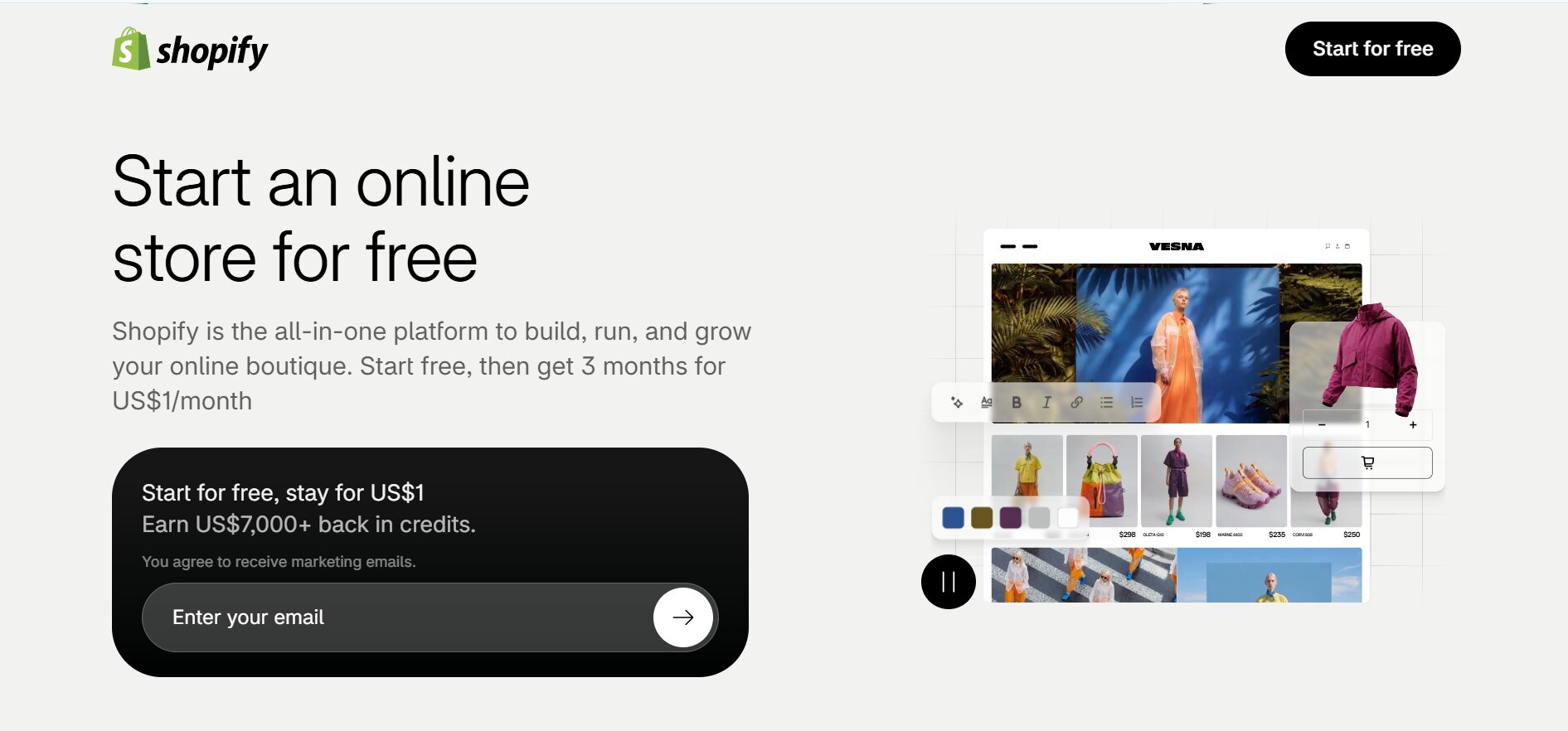
Shopify is an eCommerce platform that allows you to build your website. Unlike WordPress, it’s a dedicated place for businesses looking to sell their products online.
You can create a website for your business through Shopify, and they will handle the technical side of things, like hosting it. Shopify gives the necessary tools to make your online shop attractive to search engines. In many ways, it’s similar to creating your website with WordPress. The difference is Shopify is dedicated to eCommerce only and is mostly hassle-free for beginners.
As for selling knives, Shopify itself doesn’t impose a blanket ban on legal knives. However, Shopify Payments, its built-in payment processor, restricts weapons-related businesses. Depending on your knife category, you may need an approved third-party payment gateway to accept orders. We suggest confirming payment eligibility before investing in a Shopify store.
Pros
- Shopify gives you more control over your eCommerce business by letting you create your personalized website with your own domain.
- The fees are reasonably priced, from $39 to $399 a month billed monthly (or $29 to $299 per month billed annually), and you won’t find yourself looking for extra features at first. The more sales you generate, it will be more attractive to upgrade, and you won’t mind the extra you’re paying.
Cons
- It takes more to set up a proper online store on Shopify. Compared to simply listing your products on an online marketplace, you’ll need to invest more time and effort.
- Although fees are fair for what you get, they can get significantly higher than others mentioned in this article.
BigCommerce

BigCommerce works the same as Shopify. It lets you create your online shop and hosts it for you. Its Core, Growth, and Scale plans currently have the same base subscription prices as Shopify’s comparable plans. However, BigCommerce also charges additional fees when merchants use certain external payment providers.
Many of the tools you need to operate your website are already built-in. You don’t need to install applications to make your sales website stand out. However, this can also be a downside. BigCommerce doesn’t have as many customizable features. Additionally, there isn’t a significant difference between various store themes.
Where BigCommerce stands out is its sales features. You can include so many things about the listed products. The best part is everything is built-in and straightforward. There is a slight learning curve to it. Still, once you get through the basics, you’ll be able to operate your online business effortlessly. There’s also a drag-and-drop builder to make it easier.
Pros
- There is multi-currency support for international sales.
- BigCommerce charges no additional platform transaction fee when using its eligible embedded payment providers, although payment processing fees still apply.
- Pretty much everything you need to operate your online knife store is built-in.
Cons
- It has a learning curve to get the most out of every feature.
- The features aren’t as customizable if you’re looking for something specific.
Can You Accept Online Payments When Selling Knives?
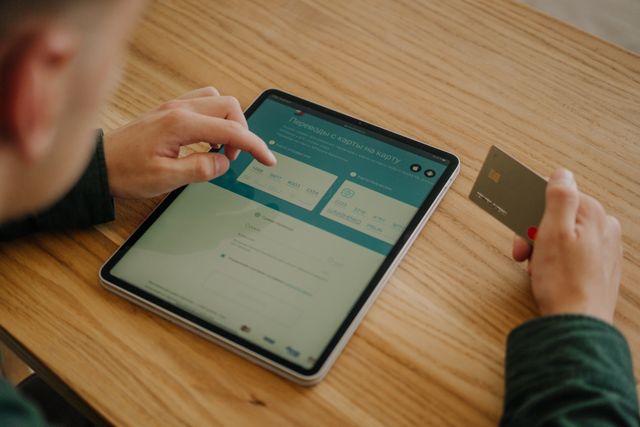
One thing we always suggest checking before launching a knife store is whether your payment processor will support your products.
Services like PayPal and Stripe have restrictions on weapons and certain knives. PayPal’s acceptable use policy specifically restricts transactions involving certain weapons or knives regulated under applicable law. Stripe also places weapons-related businesses under its prohibited or restricted business rules.
Even if your knives are legal to sell, processing payments can become difficult if your product range falls outside a provider’s policies. That can lead to rejected applications, interrupted payments, or account restrictions.
Before launching, we’d suggest confirming your exact knife categories with the payment provider and obtaining approval where required. If standard processors won’t support your business, look for a specialist payment provider that explicitly accepts your products and target markets.
Also, compare processing fees, settlement schedules, and reserve requirements. These can make a noticeable difference to your cash flow, especially when you’re holding wholesale inventory.
Other options
Building an online store isn’t for everyone. If you don’t want to do it yourself, you can contract it to someone else. Though this will have a significantly higher initial cost, you’ll be happy that a professional does it for you.
Knife forums
There is no better place to find customers that gathered together for a common attraction. The abundance of knife forums with 5,000 to 50,000 users are ideal places to start selling knives.
However, just like online marketplaces, there might be restrictions on what and if you can sell. For example, one of the most visited knife-related forums, BladeForums.com, only allows paid members to sell, a Gold membership costs $40 a year as of 2026. Even if you’re not reluctant to pay, knife forums are still great research sources to understand what people look for in the blades they would purchase.
The disadvantage of knife forums is that most people look for unique blades. If you don’t have a product that stands out above others, your chances of making sales are very slim.
Facebook Marketplace
Facebook is the largest social media platform, with over 3 billion users as of Meta’s last official count. Ever since Facebook introduced a marketplace, it’s been an attractive place to begin for sellers just starting.
Similar to Amazon, you can only list culinary knives on Facebook Marketplace. Some users find a “loophole” by listing expensive knife sheats with exact measurements for the blade and handle it can fit. Still, Facebook Marketplace isn’t a sustainable place to sell knives. That’s, of course, unless you list kitchen knives.
The best part about Facebook Marketplace is the algorithm promotes the nearby products listed. There’s a high chance that someone in your city will see your knives on their front page. You can utilize this more than just for selling purposes. Encouraging them to visit your shop or redirecting them to your website and other social channels are effective marketing methods.
Pros
- People nearby are more likely to see your listings, increasing brand awareness in your local area.
- There are no fees for listing products and getting in touch with buyers.
Cons
- The products listed aren’t nationwide. When buyers enter a keyword, they first see the ones closest to them.
- Facebook Marketplace buyers prefer seeing you in person and the product, then purchasing more than paying online.
- If you sell with shipping through Facebook checkout, Meta charges a 10 percent selling fee, with a minimum of $0.80 per order, as of 2026. Local pickup sales don’t incur a Marketplace selling fee.
Sellura+1
Dedicated Knife Marketplaces and Communities
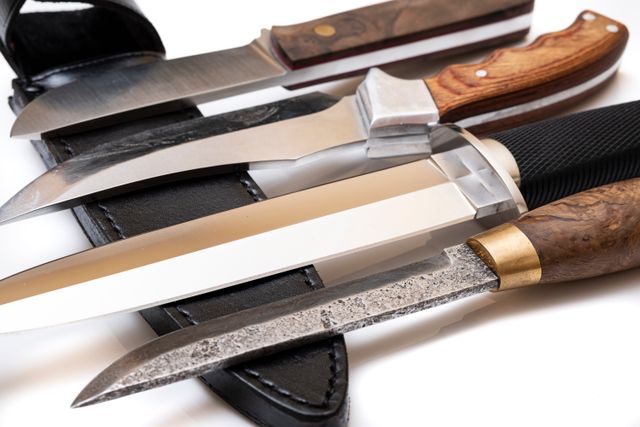
If you’re wondering where to sell used knives, antique knives, or pieces from your personal collection, dedicated knife marketplaces are worth considering.
These platforms attract people who already know what they’re looking for. Someone searching for a discontinued Benchmade model or a custom folding knife is more likely to appreciate its condition, blade steel, and collectibility than a general marketplace buyer.
We’ve divided the options into three groups based on how much work you want to handle yourself.
1. Dedicated knife marketplaces
These platforms let you create listings, set prices, and sell directly to interested buyers.
| Marketplace | How it works | Selling fees (2026) | Best for |
| KnifeMarket | Peer-to-peer marketplace with Stripe-supported escrow and buyer protection | Free listing; $8 below $115, then tiered fees from 7% to 4.5% | Used and production knives, particularly first-time sellers |
| BladeBinge | US-based knife marketplace with integrated shipping and payments | Free listing; seller keeps 90.5% of the sale price | US sellers of EDC, custom, and collectible knives |
KnifeMarket has an advantage for sellers concerned about payment security. The buyer’s payment is held in escrow until the order reaches the required delivery or confirmation stage. However, it prohibits certain blades, including OTF knives, daggers, and disguised knives, under its payment-provider rules.
BladeBinge is another option for sellers who prefer a dedicated knife audience. Its integrated shipping system links shipment tracking to payment processing, so sellers must follow the platform’s shipping requirements.
2. Knife forums and enthusiast communities
If you already participate in knife-collecting communities, you may be able to find buyers without paying traditional marketplace commissions.
| Community | How it works | Cost to sell | Best for |
| r/Knife_Swap | Reddit community where members list and negotiate knife sales | No listing fee; PayPal Goods & Services typically costs around 3–4% | Experienced sellers and enthusiast buyers |
| BladeForums Exchange | Community classifieds with membership-based selling privileges | Gold membership: $40/year | Collectors selling personally owned knives |
These communities rely heavily on seller reputation and transparent listings.
BladeForums has separate membership rules for personal sellers, knifemakers, and commercial dealers. If you’re regularly sourcing wholesale knives for resale, a Gold membership isn’t sufficient; you’ll need the appropriate Dealer membership.
3. Knife consignment services and direct buyers
Don’t want to photograph, list, negotiate, and ship every knife yourself? Consignment services can handle much of the selling process for you.
A direct buyer is another option if you’d rather sell a collection in one transaction.
| Service | How it works | Selling costs | Best for |
| LuvThemKnives | Consignment service specializing in pre-owned knives | Unpublished; community reports suggest around 10% plus shipping. Confirm directly. | Pre-owned knives and hands-off selling |
| SellYourKnife USA | Specialist dealer handling collectible and limited-edition knives | Quote required | Premium folding and limited-edition knives |
| Arizona Custom Knives | Consignment dealer that photographs, lists, and sells your knives | 25% commission; minimum estimated item value $200 | Higher-value custom and collectible knives |
| SMKW Sell Us Your Knives | Purchases eligible collections directly for resale | No selling commission; you receive an agreed purchase offer | Inherited collections or multiple collectible knives |
Arizona Custom Knives, for example, pays sellers 75% of the final selling price and handles product photography and listings. It also asks sellers not to submit individual knives with an estimated market value below $200.
Smoky Mountain Knife Works takes a different approach. It purchases collections outright, which can save you the trouble of finding individual buyers. However, it pays below retail because it needs room to resell the knives, and it doesn’t purchase used kitchen cutlery.
A few precautions before selling:
- Take clear photographs of the actual knife, including any scratches, modifications, or damage. For community sales, follow the timestamp-photo requirements.
- Use payment methods with appropriate buyer and seller protections. PayPal Goods & Services offers dispute protections, subject to its terms and product eligibility.
- Check whether the platform allows your specific knife and whether shipping it to the buyer is legal.
- If a marketplace has no published fees and you can’t find credible community feedback about it, avoid sending valuable knives before verifying how the transaction works.
For a single used knife, we’d start by comparing dedicated marketplaces and enthusiast communities. If you’re selling an entire collection, getting a consignment estimate and a direct purchase offer can help you decide whether the convenience is worth the lower payout.
Step two: Find a knife manufacturer
Unless you’re forging blades yourself, you first need to find a manufacturer to craft the products for you. Basically, you’ll need to find a supplier to wholesale knives for you. You can then put your profit on top and sell them at a price you see fit.
When you look for a knife manufacturer, you become a client before you get to be a seller. There are many factors to consider for finding the ideal manufacturer. Shipping, private labeling, and your specific demands from the products, among many others, will determine which manufacturer is the right one.
Do You Want to Become a Knife Dealer or Build Your Own Brand?

There’s another option worth considering before choosing a manufacturer. If you want to resell knives from established brands rather than develop your own product line, you’ll need to apply as an authorized dealer through the brand or its distributor.
The requirements are different, including dealer approval, resale documents, and restrictions on where you can list their products. We’ve covered that process separately in our guide on how to become a knife dealer.
Here is a short rundown of the services LeeKnives offers.
- OEM and ODM: Design the blades you’re anticipating to sell yourself, or let us craft them based on the needs of your target customers.
- Transparency: There are no middlemen between us. You order, we manufacture and ship directly to you or your customers.
- Personal support: You won’t get automated emails from us regarding your inquiries. All our customer representatives are well-trained and here to help one-on-one.
- Global shipping: We ship globally to every corner of the world. It’s up to you to choose how you get the products, by air, sea, train, or express.
- Quality assurance: Founded in 1993, LeeKnives has a rich history of forging blades with multi-step quality checks to ensure every blade is up to our standards.
We also offer our services to those who dropship. There is no minimum order quantity, and we’ll handle the packaging and shipping.
A supplier is more than just a manufacturer
Any knife manufacturer can forge blades. That’s what they do, after all. What concerns you should be more than just the quality of the knives. How the products get to you, customizing options, like putting your logo on the blades, the ability to ship directly to customers, and so on, should also be considerations.
In our usual OEM process, we first create a visual representation of the product based on the given blade design, specific requirements, and the materials provided by our clients. We can also do these on your behalf, ensuring optimal designs and materials for your audience.
Once the product is determined, we calculate the price based on quantity, customization, materials, and the expected turnaround time. Upon agreeing on the details, we ship a test product and let you review the final product. From there, manufacturing is sped up if everything is as you imagined, and send the products through our leading freight providers.
The process of OEM knife manufacturing is as straightforward as that. This service, combined with everything else we provide, such as warehousing options, shipping directly to customers, and never-ending support, can exponentially help your business.
What Documents Do You Need to Buy Wholesale Knives?

Before contacting suppliers, make sure your business paperwork is ready. In the US, wholesalers may ask for business registration details and a seller’s permit or resale certificate, depending on your state and the transaction. A valid resale certificate generally allows qualifying inventory purchases without paying sales tax upfront.
If you’re sourcing knives from established brands, ask about their resale policies too. Some brands restrict sales on Amazon or eBay, while others enforce minimum advertised price (MAP) policies. You should understand these conditions before investing in inventory.
What to Send a Knife Wholesaler
I’m starting an online knife store selling [knife category] through [website or marketplace].
Do you approve of online-only dealers? Please send your dealer application, required resale documents, opening-order minimum, wholesale price list, marketplace restrictions, and warranty and return terms.
Do you offer dropshipping, or will I need to hold inventory?
We suggest sending this inquiry to several suppliers before comparing quotations. Pay attention to their minimum order quantities, product specifications, shipping arrangements, and whether they can provide samples.
For a more detailed breakdown of supplier verification, pricing, and ordering, see our guide on how to buy knives wholesale.
Step three: Choose the right product to sell
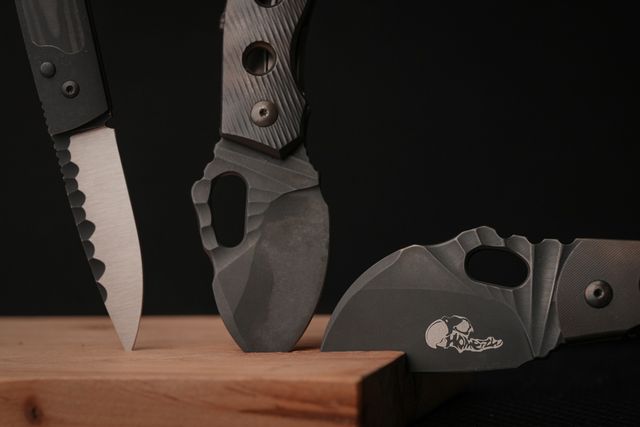
Whether kitchen knives, pocket knives, hunting knives, or any other, they come in great variety. It’s best first to identify what type of knife to sell and choose the right products according to what the buyers expect from them.
There is much to go over about designing the right product for your target customers. Here are a few critical points to keep in mind before coming up with a blade design.
User preferences are everything
There is no one size fits all knife. Every user has preferences based on their previous experiences, what they cut, and how they cut. These make users shape an idea about what makes an ideal knife in their heads.
Understanding what the potential customers need and their preferences is the only way to convince them to believe in your products.
For example, professional chefs overutilize their knives compared to a home cook. A knife that keeps its sharp edge for hours without losing any practicality would be more appealing than a simple knife that does the job for these users.
Another example would be durability. A frequent camper spending time outdoors and using a pocket knife to create wood chips to start a fire will need something tougher than an average knife. When knife blades cut through dense objects, they become susceptible to chipping. A not-so-tough pocket knife can easily chip on the user, becoming a waste of money.
Knife steel
The knife’s traits mainly come from the steel used for manufacturing the blade. Thanks to the wide variety of knife steel available, it’s not all that difficult to find the proper knife steel for your target customers.
There is suitable knife steel for the needs of every user. It comes down to the seller or manufacturer to determine the suitable steel. For example, soft knife steel with 54 to 56 HRc on the Rockwell hardness scale is incredibly tough while providing acceptable edge retention. Knife steel like this is more appropriate for users utilizing knives heavily.
For complete beginners, here are important notes about knife steel.
- There are two primary knife steels: carbon steel and stainless steel. Carbon steel is usually sharper and easier to sharpen but isn’t as corrosion-resistant as stainless steel.
- Usually, the more carbon steel has, the harder it is. Likewise, the more chromium it has, the better it resists rusting. However, the carbon and chromium ratio also matters. Simply increasing carbon and chromium won’t produce steel with extremely high hardness and corrosion resistance.
- Steel with high hardness – 60 HRc and above – tends to have better edge retention, meaning they stay sharp for longer. At the same time, they aren’t as durable, and the brittleness can open the door for chips.
- Steel with low hardness is usually tough with better durability. Knife steel like this is a better fit for blades that will undergo heavy use, such as cutting through bones or dense objects. The downside is they get dull much more quickly.
Learn more about different knife steels from here.
Handle material and design
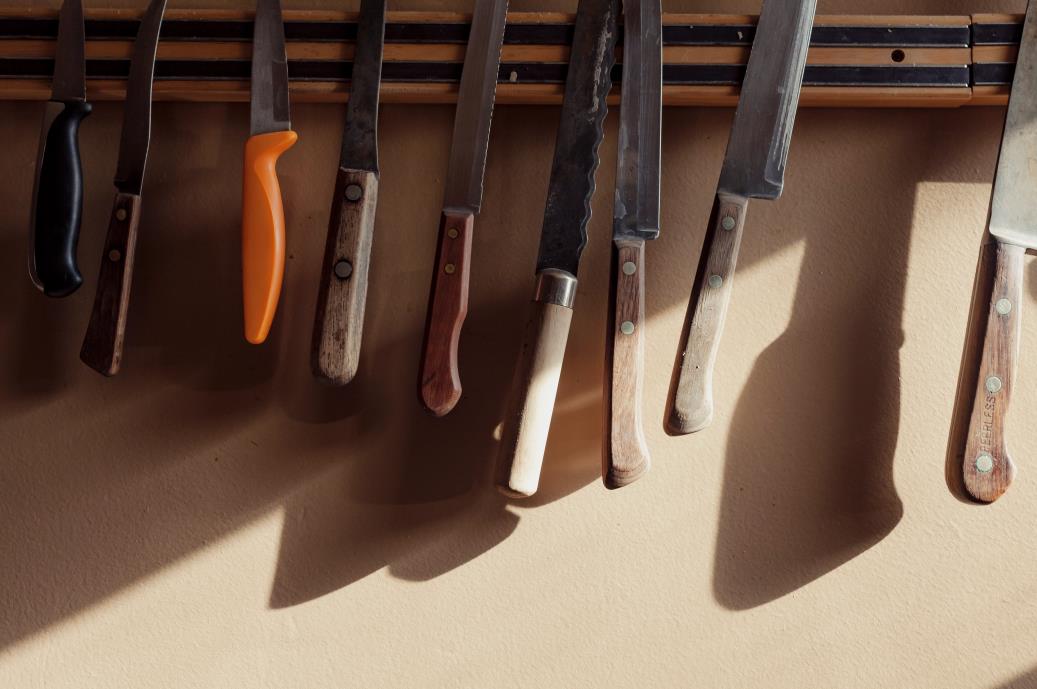
Deciding the blade material and shape doesn’t finish a knife. The handle material and design are just as important.
There are several different materials used for making knife handles. Wood, composite, and plastic are the most popular choices. Durability, ability to resist moisture, the balance it gives to the knife, and comfort are the primary areas to think about knife handles.
Read this detailed article on different knife handle materials.
Blade design
Along with the blade’s dimensions, choosing an optimally developed design is critical. The blade design primarily comes down to how the user cuts with it. For example, some cooks chop foods down by rocking the blade; some use push cutting techniques, and some use just the end of the edge.
Chopping and mincing foods by rocking the blade is more popular with western cooks. The Japanese cooks favor the latter. Naturally, designing a western chef’s knife with a straight edge won’t allow rocking the blade as there is no curvature. Attention to these small yet crucial details can tell a lot about how you can deliver the most suitable product to your customers.
Kitchen knife handles

For most kitchen knives, there are two types of handles: the western handle and the Japanese wa-handle. Both have their differences, and considering the popularity of Japanese kitchen knives outside of Japan, it’s common to see them equipped with western handles.
The same can’t be said for western-style kitchen knives. It’s rare to see one fitted with a Japanese wa-handle.
Pocket knife handles
There is more variety in pocket knife handles. In addition to the handle materials mentioned above, titanium, micarta, aluminum, and carbon fiber are popular with pocket knives.
Like the materials, there are many types of handles for pocket knives. The way the blade retracts or folds down influences the handle design. There are also many details that can be added to pocket knife handles, like a belt clip or checkered pattern for a firm grip.
The best type of knives to sell
When thinking about knives, people think differently. The first knife that comes to your mind might be a kitchen knife, but for someone outdoors all the time, it’s probably a pocket knife they can utilize for everything.
Because they are such general tools, there isn’t a single best knife to sell online. It comes down to you, the seller, deciding first on the type of knife to sell.
Are you planning to sell pocket knives or kitchen knives? Once the answer to this question is out of the way, you can then determine the features users prefer and design a product that fits them.
Legal Basics for Selling Knives Online (2026)
Selling knives online is legal in many markets, but you must follow the laws governing knife types, buyer age, and delivery. Here’s a general checklist as of November 2026, not legal advice.
US business licensing: There’s no general federal license specifically for selling knives. However, you may need business registration, a state seller’s permit, and local approvals. Check these requirements before launching.
US switchblade restrictions: The Federal Switchblade Act restricts introducing, transporting, or distributing automatic knives in interstate commerce, with statutory exceptions. Certain spring-assisted knives are exempt. Check our guide to switchblades before listing them.
State and local laws: A knife permitted in your state might be restricted in your customer’s location. Check the buyer’s state and local rules, particularly for automatic knives, blade types, and age restrictions.
Age restrictions: Don’t assume 18 is the universal minimum age for knife purchases in the US. Requirements vary by jurisdiction and knife category. Verify applicable rules and implement age checks where required.
UK online sales: Selling most knives to under-18s is prohibited, with limited exceptions. Under the Offensive Weapons Act 2019, online sellers need appropriate age-verification and delivery arrangements to establish a due-diligence defense.
UK changes in 2026: The Crime and Policing Act 2026, incorporating Ronan’s Law measures, introduces stronger identity checks and bulk-sale reporting requirements. Some provisions were not yet in force, so sellers should check commencement dates before updating their procedures.
Platform and shipping policies: Amazon, eBay, and other marketplaces can restrict knives that are otherwise legal to sell. Check their listing rules, payment policies, and carrier requirements before accepting orders.
For international sales, we’d also verify import restrictions in the destination country before offering shipping.
Research laws
Every country has specific laws on knives, especially pocket knives. For example, in the UK, people can only carry knives up to 3 inches of blade length in public. Anything above that requires a good reason.
Naturally, most people in the UK favor knives with a blade size that doesn’t exceed the legal limit. Not saying that people won’t purchase anything lengthier than 3 inches, but blades within the limit set by law will be more attractive.
Tips on selling knives online

Now that we’ve gone over the principal details, here are minor yet essential tips that can significantly impact your online knife business.
Get yourself out there
Sure, you have an online business but getting yourself heard around your family and friends is essentially free marketing. You can also go out in your local area and talk with people that might be interested in your knives.
The more people know about the existence of your store, the higher the chances of selling. You can also do product demonstrations in front of people to exhibit the best qualities of your knives.
Snapping good photos
Regardless of where you’re posting the knives, whether your business website or a marketplace, it’s vital for the photos to look crisp.
Pay attention to the light, angles, and background, and put something for people to figure out the size of the blade in the photo, like a ruler. While you’re at it, add a video of the knife doing some work. Cut a piece of paper or mince some herbs fast to show the knife’s sharpness.
Watch your stock
The eCommerce platforms and marketplaces mentioned in this article have built-in inventory management. However, keep track of your inventory separately to have everything in front of you at once. You’ll know immediately if certain products are selling faster and when to resupply.
You can look for dedicated inventory management software or use Excel or Google Sheets to keep track of your supply. Although you’re likely to pay for inventory management software, it’s worth it.
Grow your online presence
Get on all the social media platforms available. List your products on Pinterest, post the pictures and videos on Instagram, and create a poll on Twitter to get insights from your customers.
Although you may not be allowed to sell your products on some of them, it’s good to have a professional-looking page. You can get in touch with people on social media and lead them to your store or answer questions about the products.
Ask for reviews
If you’re selling on online marketplaces, the customer reviews matter by a large margin. It’s the way for the algorithm to tell if your product is satisfying the users or not. Yet, so many buyers leave without a review.
Ask all of your customers to leave an honest review to catch improvements and better understand what your customers enjoy.
Buy your domain
Even if you’re not so reluctant to create a website, we recommend purchasing a proper domain name for your business. For just $10 to $15 annually, you get to secure your online storefront’s name.
You might be tempted to say, why pay for something you won’t be using just yet. The primary reason is not that it stays ready, but because of the tech companies with unethical intentions to grab the desired domain name before you. Since the only way to get it back is to purchase it from them, you’ll end up paying hundreds, if not thousands more.
Takeaway
Selling knives online is competitive. Many users have specific things in mind that they look for in knife blades. Keeping up with the trends and identifying the needs of your target customers is the only way to a successful online store.
Listing your products on the appropriate marketplaces, creating a website, and growing a social media presence is just the start. Perhaps, it’s also the easiest part. Growing a thriving online knife store requires a lot of market research and understanding your target customer’s needs.
The chances are you will need to present them with the products that provide the right features. Contact us today and see our service on this to find out what we have to offer.
Frequently Asked Questions About Selling Knives Online
Are you allowed to sell knives online?
Yes, you can legally sell many types of knives online, provided you comply with the laws and platform policies that apply to your business.
Kitchen knives generally face fewer restrictions than automatic, tactical, or concealed blades. However, legality also depends on where you’re shipping and who you’re selling to.
Before opening your store, we’d suggest checking three things: your local selling requirements, restrictions in the buyer’s location, and your chosen marketplace’s knife policy. These are separate requirements, and complying with one doesn’t automatically satisfy the others.
Can you sell knives on Facebook Marketplace?
Facebook Marketplace restricts edged weapons, so you shouldn’t treat it as a reliable channel for selling pocket, hunting, or tactical knives.
Ordinary kitchen cutlery may be treated differently, but sellers should verify whether their specific products comply with Meta’s current commerce policies.
If you’re building a knife business, we’d choose a marketplace that explicitly permits your products rather than risk repeated listing removals. You can also compare specialist knife marketplaces that cater to collectors and enthusiasts.
What is the best website to sell knives?
The best website depends on your knife category and whether you’re running a business or selling personal items.
For kitchen knife businesses, Amazon offers access to a large established audience, while WooCommerce gives you more control over branding and customer relationships. Etsy is worth considering for qualifying handmade or original-design knives.
If you’re selling a personal collection, specialist platforms such as KnifeMarket or BladeBinge may be more suitable.
We’d compare platform eligibility, total selling fees, and buyer demand before deciding. A larger marketplace isn’t necessarily the right place for every knife.
Where can I sell second-hand or antique knives?
You can sell eligible second-hand and antique knives through dedicated knife marketplaces, collector communities, or consignment dealers.
For individual sales, consider KnifeMarket, BladeBinge, or r/Knife_Swap. If you have valuable custom knives, a consignment service such as Arizona Custom Knives may be worth investigating.
Before choosing, compare recent completed sales for similar models and conditions. Antique status doesn’t automatically exempt a knife from weapons restrictions, so verify the platform’s rules as well.
For larger collections, requesting both a consignment estimate and a direct purchase offer can help you compare the potential proceeds.
Can you sell knives on Shopify?
Yes, Shopify can support stores selling legal knives, but payment processing may be a challenge.
Shopify Payments restricts weapons-related businesses, so some knife sellers need an approved third-party payment gateway. Even if Shopify allows your storefront, that doesn’t guarantee you’ll be able to accept payments for every knife category.
Before subscribing, we’d suggest contacting payment providers with your intended product range and target countries. Confirm approval, transaction fees, and settlement terms first. This is especially important if you plan to sell hunting, tactical, or automatic knives.
Is selling knives online profitable?
Selling knives online can be profitable, but your margins depend on sourcing costs, selling fees, shipping, returns, and customer acquisition.
For example, a knife sold for $60 with $25 in product costs, $9 in marketplace fees, and $6 in fulfillment costs leaves $20 before advertising, returns, and overhead. That’s a hypothetical example, not an industry-average margin.
We’d calculate these costs before choosing a product. If you’re building a private-label business, factory-direct sourcing may improve your margins, but you’ll also need to account for minimum order quantities, sampling, and inventory investment.
How do I become a knife dealer?
To become an authorized knife dealer, you’ll generally need to apply through a knife brand or distributor and meet its business requirements.
These may include business registration, resale documentation, an opening order, and agreement to marketplace restrictions or minimum advertised price policies.
We’d start by identifying brands that serve your target customers, then compare their dealer requirements before purchasing inventory.
For a detailed explanation of the application process, read our guide on how to become a knife dealer.
What should I ask a knife wholesaler before ordering?
Before placing your first wholesale knife order, we’d suggest asking about minimum order quantities, sample availability, materials, quality checks, shipping costs, and warranty terms.
Also confirm whether the supplier allows marketplace resale, supports custom branding, or offers dropshipping. For established brands, ask about dealer approval and advertised pricing restrictions.
A supplier should be able to explain these requirements before you commit to inventory. Our guide on how to buy knives wholesale covers the complete sourcing process.






 EN
 JA
 DE