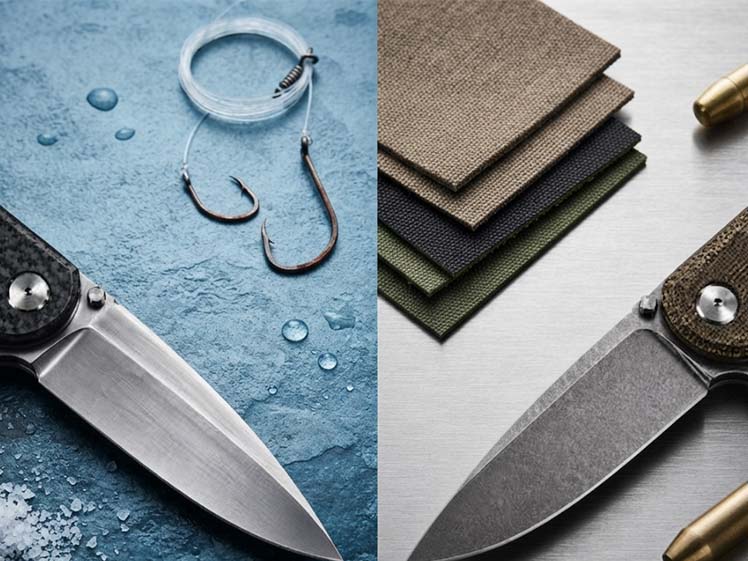
LC200N vs MagnaCut is an important material decision for knife brands that want to avoid mismatched inventory, warranty claims, and customer disappointment.
In corrosion testing by Knife Steel Nerds, LC200N ranks among the highest-performing knife steels ever measured, and MagnaCut performs at a very high level as well. Their main difference is design intent: LC200N is engineered for extreme corrosion resistance first, while MagnaCut is engineered for a balanced combination of toughness, wear resistance, and stainless behavior.
This comparison breaks down LC200N vs MagnaCut corrosion resistance, toughness, hardness, edge retention, sharpening, cost, and OEM purchasing requirements, so you can specify the right steel for your next knife project.
Quick Answer: LC200N vs MagnaCut
When comparing LC200N and MagnaCut, you are looking at two top-tier stainless steels that solve different problems for your buyers.
| Performance Factor | LC200N | CPM MagnaCut |
| Primary Advantage | Extreme corrosion resistance | Balanced premium performance |
| Typical Knife Hardness | 58–60 HRC | 60–64 HRC (most knives run 61–63 HRC) |
| Corrosion Resistance | Excellent in severe saltwater exposure | Excellent for sweat, rain, humidity, and normal outdoor use |
| Edge Retention | Moderate | High |
| Toughness | High | Very high for a stainless PM steel |
| Field Sharpening | Easy | Moderate; diamond or quality ceramic abrasives help |
| Best Product Category | Dive, fishing, marine, rescue, humid-climate knives | Premium EDC, outdoor, hunting, tactical, utility knives |
| Best Buyer Profile | Customers exposed to saltwater and wet storage | Customers seeking longer working edge life and all-round performance |
Choose LC200N when your target customers fish, dive, work around boats, carry tools in damp tackle boxes, or live in harsh coastal environments. Its core advantage is exceptional resistance to saltwater-related rust and pitting.
Choose MagnaCut if your customers want a premium everyday pocket knife. It stays sharp longer for cardboard cutting, rope work, outdoor tasks, food preparation, hunting, or utility use.
Many knife brands benefit from offering both:
- LC200N for marine, fishing, rescue, or coastal-use collection.
- MagnaCut for flagship EDC, outdoor, tactical, and premium folding knives.
This lets you create separate types of knives around real customer environments rather than forcing one steel to do an everyday job.
LC200N vs MagnaCut Composition Comparison
A proper steel comparison starts with chemistry. The alloy design explains why LC200N performs so well in saltwater conditions and why MagnaCut can offer higher wear resistance without sacrificing stainless performance.
| Element | LC200N / Cronidur 30 | CPM MagnaCut | Why It Matters in Knife Steel |
| Carbon (C) | 0.25–0.35% | 1.15% | Supports hardness and martensite formation; higher carbon can support wear resistance but may reduce corrosion resistance if chromium carbides form. |
| Chromium (Cr) | 14.0–16.0% | 10.70% | Provides stainless behavior when enough chromium remains available in the steel matrix. |
| Nitrogen (N) | 0.30–0.50% | 0.20% | Supports hardness and corrosion resistance while helping preserve free chromium. |
| Molybdenum (Mo) | 0.85–1.10% | 2.00% | Improves hardenability, pitting resistance, and high-temperature performance during heat treatment. |
| Vanadium (V) | — | 4.00% | Forms hard carbides that improve wear resistance and edge retention. |
| Niobium (Nb) | — | 2.00% | Forms fine carbides and helps MagnaCut achieve wear resistance without relying on chromium carbides. |
| Nickel (Ni) | Up to 0.50% | — | Can contribute to toughness and corrosion behavior in some alloy systems. |
| Manganese (Mn) | Up to 1.0% | — | Supports hardenability and steelmaking behavior. |
Data sources: Cronidur 30 / LC200N technical data; Crucible CPM MagnaCut data sheet (PDF). LC200N is also known as Cronidur 30 and Z-FiNit. Exact composition limits can vary by technical datasheet and regional designation.
LC200N achieves its corrosion performance through a high-nitrogen alloy design. Rather than relying heavily on carbon, it uses nitrogen to support hardness while leaving more chromium available for corrosion resistance.
MagnaCut takes a different approach. Its powder-metallurgy design uses vanadium and niobium carbides for wear resistance while eliminating chromium carbide formation. This keeps chromium in solution, which is why MagnaCut can offer strong corrosion resistance despite having less total chromium than LC200N.
What Is LC200N Steel?
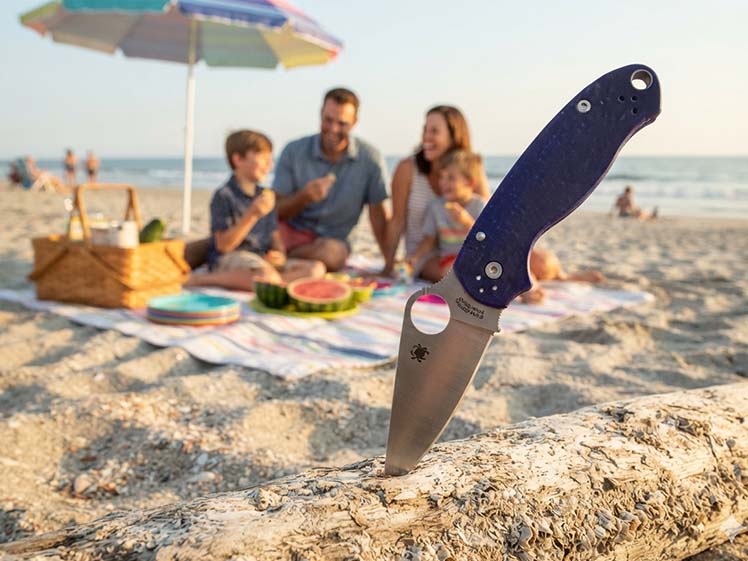
LC200N is a specialized high-nitrogen stainless steel originally engineered for aerospace ball bearings. Commercial cutlery brands later adopted it for extreme-moisture pocket tools. You will also see this alloy sold under the trade names Cronidur 30 and Z-FiNit.
Traditional hard steels rely on carbon. Carbon creates hardness, but it also traps chromium inside carbides, leaving less chromium available to stop rust. LC200N solves this problem by replacing some carbon with nitrogen. Nitrogen hardens the steel while leaving free chromium available to block rust and pitting.
For knife brands, LC200N is best understood as a corrosion-first steel rather than a maximum edge-retention steel. It is especially useful when customers are likely to expose the knife to saltwater, sweat, wet storage, bait residue, fish blood, damp sheaths, or humid coastal air.
For wholesale buyers, LC200N provides these strengths:
- High resistance to rust and pitting in marine and humid environments.
- High toughness that helps reduce fine edge chipping.
- Easy field touch-ups with ceramic rods, pocket sharpeners, or basic stones.
- Practical hardness in the 58–60 HRC range.
- Strong suitability for thin edge geometry in corrosion-focused knife designs.
LC200N does not offer the same wear resistance as carbide-rich powder-metallurgy steels. Its edge life is closer to lower-carbide stainless steels such as AEB-L and 14C28N than to MagnaCut, 20CV, or S90V.
Launch Your Custom Knife Line Faster with LeeKnives
Complete OEM/ODM support—from design to final shipment—so you can focus on growth.
Backed by warehouses in the U.S. for fast, reliable delivery.
What Is CPM MagnaCut Steel?
CPM MagnaCut is a modern powder-metallurgy stainless steel for cutlery, designed byCPM MagnaCut is a modern powder-metallurgy stainless steel designed specifically for cutlery by metallurgist Dr. Larrin Thomas, who documented the alloy’s development and test data in his technical breakdown of CPM MagnaCut. Unlike conventional tool steels adapted from industrial tooling, it solves a classic trade-off: it delivers the toughness and wear resistance of non-stainless alloys without sacrificing rust protection.
Many premium stainless steels offer strong wear resistance but sacrifice toughness. Other steels are tough but do not hold an edge as long. MagnaCut was designed to bring together high toughness, strong edge retention, and high corrosion resistance in one knife-focused alloy.
Its nominal composition includes:
- Carbon (C): 1.15%
- Chromium (Cr): 10.7%
- Vanadium (V): 4.0%
- Niobium (Nb): 2.0%
- Molybdenum (Mo): 2.0%
- Nitrogen (N): 0.20%
According to the Crucible CPM MagnaCut data sheet, MagnaCut at 62.5 HRC recorded:
- 38 ft-lbs in Charpy C-notch longitudinal impact testing, and 30 ft-lbs at 64 HRC.
- 135% CATRA edge retention relative to 440C ESR.
These figures should be interpreted carefully. They come from specific laboratory conditions, hardness levels, specimen orientations, and heat-treatment protocols. A finished knife can perform differently depending on blade geometry, edge angle, heat treatment, grind, thickness, and intended use.
For retailers and knife brands building a flagship collection, MagnaCut offers clear advantages:
- Longer edge life during cardboard cutting, rope work, plastic packaging, hunting, and abrasive utility tasks.
- High toughness for a premium stainless PM steel.
- Strong resistance to sweat, rain, humid storage, and normal outdoor exposure.
- The ability to support thin, efficient cutting edges when the knife is properly heat treated.
- Strong marketing value for premium EDC and enthusiast-grade knife lines.
To compare it with another well-known premium stainless steel, read LeeKnives’ guide to MagnaCut vs S35VN.
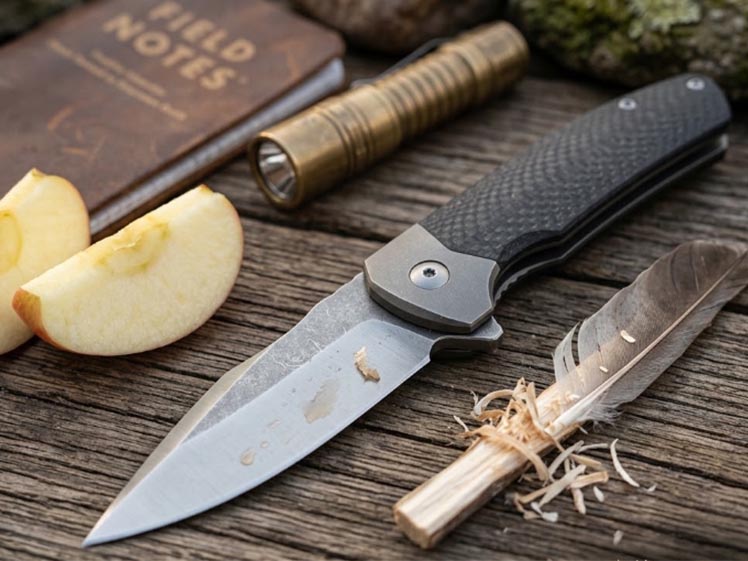
LC200N vs MagnaCut: Quantified Performance Comparison
The table below uses manufacturer data and Knife Steel Nerds’ comparative testing. It should guide specification and positioning decisions, not replace testing of your own production samples.
| Property | LC200N | CPM MagnaCut | Purchasing Interpretation |
|---|---|---|---|
| Typical Knife Hardness | 58–60 HRC | 60–64 HRC (61–63 most common) | MagnaCut can generally support higher hardness for stronger edge life. |
| CATRA Edge Retention | Lower than MagnaCut; KSN places it near AEB-L and 14C28N in wear resistance. | 135% of 440C ESR at 62.5 HRC (Crucible data). | MagnaCut is more suitable for customers who cut abrasive materials frequently. |
| Toughness | High; KSN describes it as similar to AEB-L and 14C28N. | 38 ft-lbs Charpy C-notch at 62.5 HRC; 30 ft-lbs at 64 HRC (Crucible data). | Both are tough stainless options; MagnaCut provides unusually high toughness at higher hardness. |
| Corrosion Resistance | Top-tier; effectively rust-proof in saltwater testing. | Excellent; no visible corrosion in 72-hour 1% saltwater spray testing, though LC200N remains the stronger choice for prolonged immersion. | LC200N is the safer option for constant saltwater exposure. |
| Sharpening Difficulty | Easy to moderate | Moderate | LC200N is easier for quick field touch-ups; MagnaCut rewards better sharpening tools. |
| Material Category | Pressurized electroslag-remelted (PESR) high-nitrogen stainless steel | Powder-metallurgy stainless steel | MagnaCut usually carries a higher raw-material and processing cost. |
| Best Use | Marine, dive, fishing, rescue, humidity-focused knives | Premium EDC, outdoor, hunting, tactical, utility knives | Build separate product lines around customer environment and use pattern. |
Data sources: Crucible CPM MagnaCut data sheet; Knife Steel Nerds steel testing. Compare CATRA percentages only when using the same test methodology and reference baseline.A percentages only when you use the same test methodology and reference baseline.
Corrosion Resistance: LC200N Is the Marine Specialist
Both steels resist rust at a level far above conventional stainless cutlery steels. For a typical buyer who carries a knife while hiking or hunting, MagnaCut provides more than enough protection. Most owners only need to wipe the blade after use.
However, LC200N is the clear winner for the ocean. In saltwater testing, LC200N showed no rust even under severe exposure. MagnaCut also performs exceptionally well—it showed no visible corrosion in 72-hour 1% saltwater spray testing—but LC200N retains the edge for prolonged immersion, wet storage, and constant salt spray.
This makes LC200N vs MagnaCut corrosion resistance a top priority for people working on boats or docks. Avoid calling any knife “rust-proof,” though. Even a high-performance knife steel can stain if it sits in blood or acids for too long. Tell your customers these blades are “engineered for saltwater.”
Edge Retention: MagnaCut Holds a Working Edge Longer
In the comparison for edge life, MagnaCut wins. Its fine vanadium and niobium carbides act like microscopic teeth, helping the blade cut through rope or cardboard far longer. Its CATRA rating is comparable to S35VN at similar hardness.
LC200N is softer and has fewer of these hard carbides. It will dull faster if someone cuts abrasive materials like thick plastic or carpet all day.
However, this softness is a plus for some users. An angler on a moving boat can restore a dull LC200N edge in seconds with a simple pocket stone.
Toughness: Both Steels Resist Chipping Well
Toughness describes how well a blade handles impact without cracking or chipping. Both steels have a very fine microstructure, which makes them highly resistant to edge damage. LC200N is notably resilient; its edge tends to roll slightly under overload rather than chip out, which is easier to repair in the field.
MagnaCut surprises many experts: even at 62.5 HRC it recorded 38 ft-lbs in Charpy C-notch testing—far tougher than older premium stainless steels like 20CV at comparable hardness. If your customers use their knives for heavy camp chores, MagnaCut gives them high strength without a brittle edge.
Because both steels resist rust so well, maintenance is mostly about keeping the edge sharp and cleaning away contaminants after use.
LC200N is one of the easiest premium steels to sharpen. A basic field sharpener works perfectly. This is vital for rescue workers who need a sharp edge immediately and do not have time for a professional setup.
MagnaCut is a PM steel with hard vanadium carbides. It stays sharp longer, but sharpening goes faster with diamond or quality ceramic stones. It suits customers who prefer to sharpen once a month rather than once a week.
For serrated blades, LC200N is a strong choice: the teeth resist chipping when sawing through rope, and the corrosion resistance protects the serration roots, where moisture tends to collect.
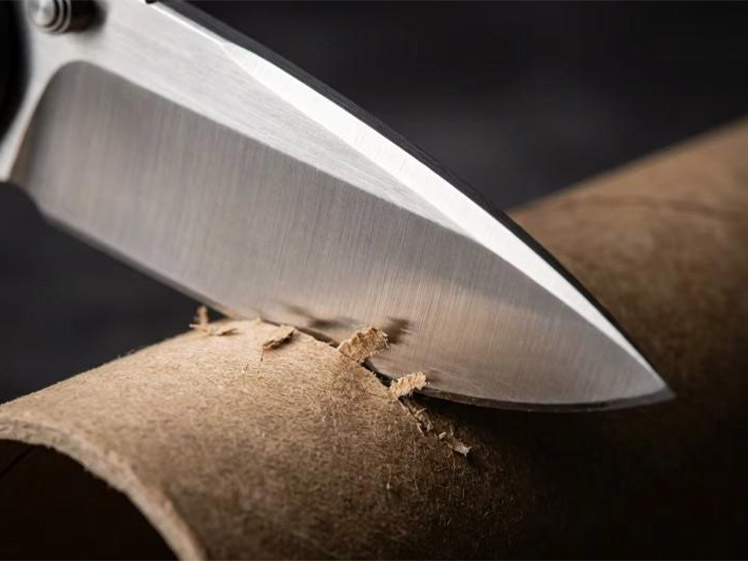
Which Steel Should Retailers and Distributors Choose?
The right choice depends on customer environment, expected cutting tasks, pricing strategy, and product-line positioning.
Choose LC200N for a Specialist Marine Collection
Pick LC200N if your customers spend their time on the water. Salt water is a knife killer. It can eat through standard metal in just a few days.
LC200N steel is the best choice for:
- Dive knives stored with wet gear.
- Fishing knives kept in damp tackle boxes.
- Saltwater boating tools.
- Coastal rescue knives.
- Humid-climate work knives.
- Food-prep or marine-use knives that need frequent rinsing.
When developing a marine knife line, specify corrosion-resistant components across the entire knife. A highly corrosion-resistant blade alone cannot protect a product if the pivot, screws, pocket clip, liner, spring, or sheath hardware corrodes first.
Always ask your wholesale knife manufacturer for stainless hardware and non-absorbent handles to match the blade.
Choose MagnaCut for your high-end EDC, hunting, or tactical lines.
This high-performance knife steel fits buyers who want a blade that stays sharp through hours of frequent work. A warehouse worker cutting cartons, a hunter dressing game, a camper preparing kindling, or an EDC collector opening packages will usually value MagnaCut’s edge retention and balanced performance.
Because MagnaCut steel carries a premium material story, the rest of the knife should match that positioning. Pair it with reliable locking hardware, controlled heat treatment, consistent edge geometry, durable handle materials, and a finish that supports the intended corrosion-resistance claim.
Offer Both to Help More Customers
Carrying both steels helps you serve different customer habits and environments without forcing one material to do every job:
| Customer Type | Better Steel Choice | Main Reason |
| Boat owners and divers | LC200N | Best fit for severe saltwater exposure |
| Fishing and coastal users | LC200N | Strong corrosion resistance and easy maintenance |
| Daily office carry | MagnaCut | Longer edge life for common EDC tasks |
| Campers and hunters | MagnaCut | Strong balance of toughness, edge retention, and stainless performance |
| Warehouse and utility users | MagnaCut | Better resistance to abrasive cutting wear |
| Customers in humid regions | LC200N or MagnaCut | Choose LC200N for saltwater exposure; MagnaCut for higher cutting endurance |
Segmenting a catalog by user environment reduces avoidable returns. Customers are less likely to complain about edge retention when they bought a corrosion-first marine knife, and less likely to complain about rust when they bought a properly specified premium EDC knife for their climate and use pattern.
What to Specify When Ordering LC200N or MagnaCut Knives
Slapping a premium steel name on a blade does not guarantee premium performance. When placing wholesale orders for LC200N or MagnaCut knives, you must give your factory exact specifications to protect your brand’s reputation.
Get the Heat Treatment Right
For LC200N, use one consistent specification throughout the project: a typical knife hardness range of 58–60 HRC, with a recommended bulk-order target of 59–60 HRC when that range fits the blade design and intended use.
For MagnaCut, 60–63 HRC is common for the best knife steel, though the optimum target depends on blade thickness, intended edge geometry, customer use, and factory heat-treatment capability.
Ask your supplier for:
- Target Hardness Rockwell C (HRC) and acceptable tolerance range.
- Heat-treatment cycle summary.
- Hardness test method and test-point location.
- Sample hardness report.
- Batch-level quality-control process.
- Retained sample policy in case of warranty claims.
Never ask a factory to maximize hardness without considering toughness and edge geometry. A higher HRC number is not automatically better if it compromises the intended knife function or increases breakage risk.
Match the Blade Shape to the Steel
The knife shape should match what the steel does best. Think about your customer’s daily life. If they carry a premium EDC knife, a thin, fine edge works great for slicing. MagnaCut is perfect for this because it stays sharp through many cuts.
If you are building a tool for a rescue boat, a thicker edge with a blunt tip is safer. LC200N is the right choice here. It can handle salt spray and the impact of heavy work.
Before production:
- Order a prototype.
- Test it on cardboard, rope, packaging straps, wood, fishing line, or other relevant materials.
- Test it in the intended moisture environment.
- Inspect for edge rolling, chipping, corrosion, pivot wear, loose hardware, and handle swelling.
- Confirm the sample meets the marketing claims you plan to make.
Build a Knife That Won’t Rust Anywhere
A highly corrosion-resistant LC200N blade is useless if the pivot screw rusts shut after one fishing trip. The entire knife needs to fight the elements.
Tell your manufacturer to use:
- Titanium or marine-grade stainless steel hardware and pocket clips.
- Ceramic ball bearings or phosphor bronze washers.
- Non-absorbent handle materials like G10, FRN, or titanium.
- Kydex or injection-molded sheaths with proper drainage ports.
- Avoid leather sheaths for wet marine storage, because leather can trap moisture and contaminants against the blade.
Plan Your Brand Story and MOQ
Plan premium steel projects. Confirm material availability, blade-stock format, MOQ, sample lead time, heat-treatment capacity, and replacement-material availability before announcing a launch date.
For LC200N, build the brand story around saltwater resilience, marine reliability, fishing, diving, rescue readiness, and low-maintenance ownership.
For MagnaCut, build the story around premium EDC performance, balanced toughness, longer edge life, corrosion resistance, and controlled heat treatment.
Final Verdict
Comparing LC200N vs MagnaCut shows that both steels have a clear place in your catalog.
LC200N is the better specialist steel for dive knives, fishing knives, saltwater tools, coastal rescue products, and any knife expected to face repeated marine exposure. MagnaCut is the better premium all-rounder for EDC, outdoor, hunting, tactical, and utility knives, offering a stronger balance of high hardness, high toughness, excellent corrosion resistance, and longer edge retention.
The right choice depends on how your customers use their knives. Need help turning either steel into a production-ready knife collection? Explore LeeKnives’ OEM knife manufacturing services or request a quote for your next project.
FAQs
Is LC200N tougher than MagnaCut?
Both steels are tough for stainless cutlery steels, but they behave differently at the edge. LC200N is more forgiving under overload—its edge tends to roll rather than chip, which is easier to repair in the field. MagnaCut combines higher hardness with unusually high toughness for a powder-metallurgy stainless steel (38 ft-lbs Charpy C-notch at 62.5 HRC per Crucible data). For wet, hard-use tools, LC200N’s forgiveness is an advantage; for general hard use, MagnaCut’s toughness-to-hardness ratio is the stronger package.
Does MagnaCut hold an edge longer than LC200N?
Yes. In CATRA edge-retention testing, MagnaCut performs at roughly 135% of 440C ESR at 62.5 HRC, comparable to S35VN, while LC200N sits closer to AEB-L and 14C28N. For abrasive cutting—rope, cardboard, packaging—MagnaCut holds a working edge significantly longer. The trade-off is that LC200N is faster to restore on simple field sharpeners.
Is MagnaCut good for EDC pocket knives?
Yes. MagnaCut is one of the best current choices for everyday carry. It resists rust from pocket carry and humid climates, holds an edge through daily cutting tasks, and is tough enough to resist chipping under normal use. When evaluating MagnaCut vs LC200N for an EDC line, MagnaCut is the better default unless your customers live or work directly on the water.
Why are MagnaCut stainless steel knives more expensive?
MagnaCut is produced using powder-metallurgy processing, and the material requires controlled heat treatment and premium production practices to achieve its intended performance. Final pricing also depends on blade size, stock thickness, grinding time, handle materials, locking mechanism, finishing, order quantity, factory location, MOQ, and quality-control requirements.
Which steel is better for serrated blades?
LC200N is a strong choice for serrated dive, fishing, and rescue knives because corrosion resistance matters greatly in saltwater conditions, and its tougher edge behavior protects serration teeth from chipping. MagnaCut is a strong option for serrated utility knives that will cut abrasive straps, packaging, and rope for extended periods. Choose based on the cutting environment first: saltwater favors LC200N; extended abrasive cutting favors MagnaCut.





 EN
EN  JA
JA  DE
DE