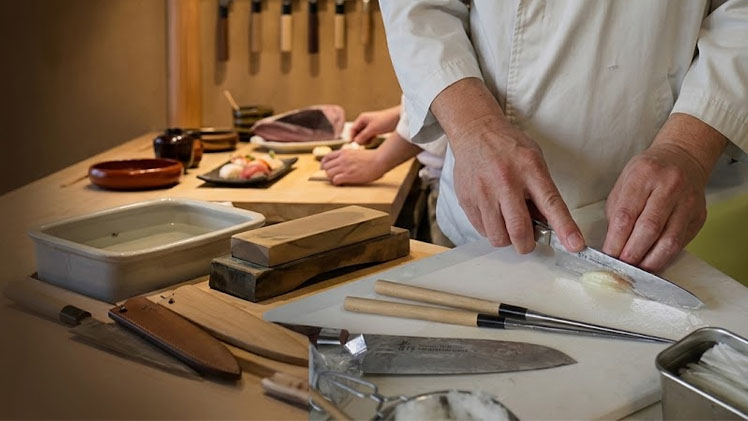
Sourcing custom blades overseas often feels like a frustrating guessing game. Thankfully, you have a few clear paths to find a factory that will stamp your logo on razor-sharp steel.
You can stock finished blades through Japanese knife wholesale programs. You can also partner with large Japanese knife manufacturers in Seki for custom factory runs.
Alternatively, for small batches, a traditional Sakai coordinator can help you forge 5 to 10 special knives. Chinese factories offer a faster, lower-stress route to get Japanese steel without the long wait.
This guide maps every option. You’ll learn who makes what, their wait times, and how to contact them safely.
Key Takeaways
- Big brands stay closed. Famous names like Global, Miyabi, and Shun sell through their distribution channels. They don’t accept private-label work from outside buyers.
- Order sizes vary. Your minimum order depends on the partner you choose. Some Seki knife corporations require at least 300 pieces, while Sakai coordinator Takahashikusu accepts custom-branded runs starting at 5-10 knives.
- You control the design. When you place a custom order, you can choose the steel, such as VG-10, SG2, or Aogami. You also select the handle style, like a traditional Wa or a riveted Western grip, and finalize the logo engraving and packaging.
- Where the forging happens. Most production takes place in the towns of Seki (Gifu) and Tosa (Kochi). These busy workshops often manufacture blades sold under well-known Sakai brand names.
- Explore flexible alternatives. If you prioritize low order minimums and fast delivery over a “Made in Japan” label, Chinese factories in Yangjiang offer a practical route.
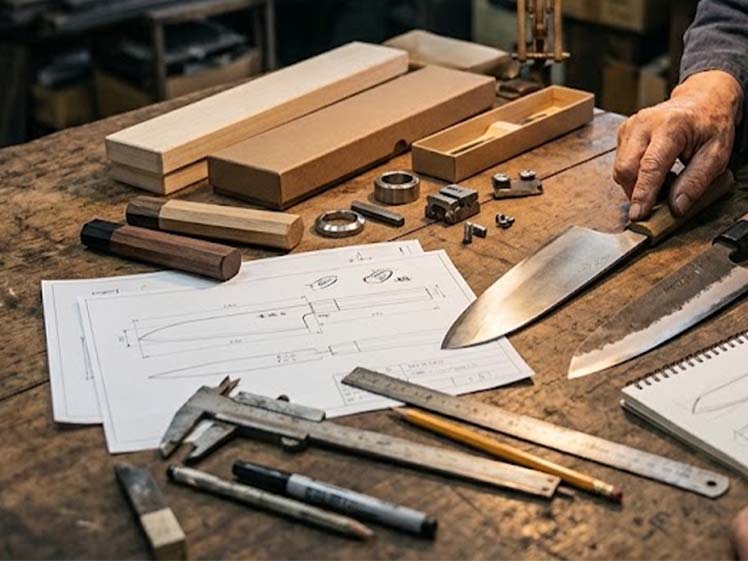
What “Japanese Knife Manufacturer” Means for a B2B Buyer
Searching for overseas blade suppliers often feels confusing because companies operate differently. When you look for a partner, you will encounter 4 distinct types of Japanese knife manufacturers.
- Brand Houses: Companies like Kai, Global, and Masamoto design and sell their own product lines. They focus on building their own brand, not yours.
- OEM Factories: These large facilities build blades to your specifications. With them, you fully control the design, logo, and packaging.
- Coordinators: Common in Sakai, these trading firms serve as your single point of contact. They manage a network of independent artisan forges, sharpeners, and handle makers, assembling your final order seamlessly.
- Cooperatives: Groups like Takefu Knife Village function as shared collaborative workshops. In these spaces, independent master blacksmiths work together under a collective label.
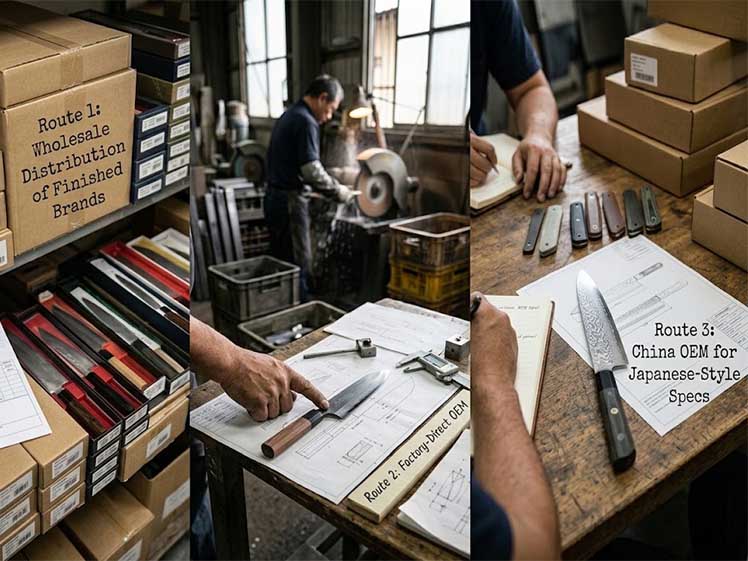
These businesses fit into three main buying paths:
- Wholesale distribution of finished Japanese brands.
- Factory-direct OEM in Japan.
- Chinese OEM production of Japanese-style knives.
One Vocabulary Note: OEM means the factory builds to your spec; ODM means you rebrand the factory’s existing design; wholesale means buying finished catalog stock in bulk.
Most established factories offer some combination of all three. Our guide to OEM knife manufacturers breaks down the models in detail.
Where Japanese Knives Are Made: The Sourcing Map
When searching for Japanese kitchen knife manufacturers, you quickly realize a factory’s location tells you what it can build. Let’s explore the key knife-making regions of Japan:
- Seki (Gifu Prefecture): Start here for volume and private label work. Seki is Japan’s main OEM engine. These factories mix laser cutting and automated heat treatments with careful hand finishing. They also offer English-language sales desks and global shipping experience.
- Sakai (Osaka): This historic city creates traditional single-bevel knives for pro chefs. Trading firms organize a unique network where different specialists forge, sharpen, and fit handles. You get a rich craftsmanship story for small batches, though export packaging is less standardized.
- Tsubame-Sanjo (Niigata): This busy metalworking center produces famous brands like Tojiro and Global. It provides excellent industrial consistency, especially stainless steel.
- Takefu / Echizen (Fukui): Working as an artisan cooperative, this area crafts hand-forged blades using modern powdered steels. It works best for small, premium product lines.
If you are choosing a Japanese knife for your own kitchen rather than a supplier for your business, our guide to Japanese chef knife brands covers the consumer angle.
Japanese Knife Manufacturers by Sourcing Fit
When you evaluate Japanese kitchen knife makers, you should group them by their sourcing fit:
Japanese Knife Brands for Wholesale and Distribution
Start with these companies when you want to sell an existing brand. Before discussing custom products, ask about dealer access, regional distribution, and resale terms.
1. KAI Corporation: Shun Brand Distribution
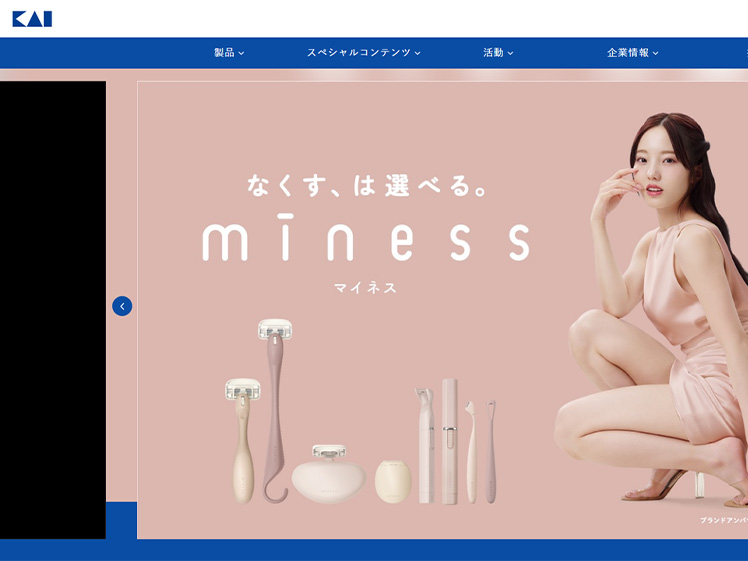
KAI began in Seki in 1908. Today, its group covers kitchen knives, grooming tools, and medical cutting products. For your sourcing plan, treat Shun as an established-brand opportunity rather than an advertised private-label service.
- Location: Seki, Gifu
- Product Focus: Kitchen knives, razors, and personal care tools.
- OEM & Wholesale Policy: They sell finished brands through official distributors; no private-label program.
- Best for: Retailers who need a recognized premium Japanese brand.
- Limitations: You can’t build your own Seki City Japan knives. Regional distributors control the pricing and territory rules.
2. Yoshikin: Global Knives
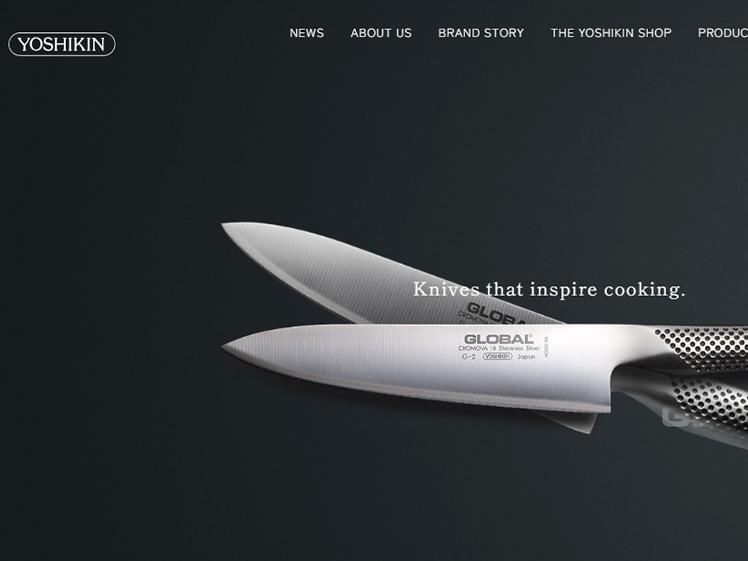
Yoshikin makes Global, the all-stainless knife brand known for its dimpled handles. Its official materials describe stainless hollow handles. For the Classic G-2, the official US product page specifies CROMOVA 18 blade steel and a sand-filled hollow handle for balance.
- Location: Tsubame, Niigata
- Product Focus: Mid-to-premium, all-stainless knives featuring the famous dimpled handle, and CROMOVA 18 steel.
- OEM & Wholesale Policy: They operate as a closed brand house. You can only buy through official distribution.
- Best for: Stores targeting design-conscious home cooks.
- Limitations: No customization. Their unique design is their entire identity.
3. Misono: Professional Kitchen Knives
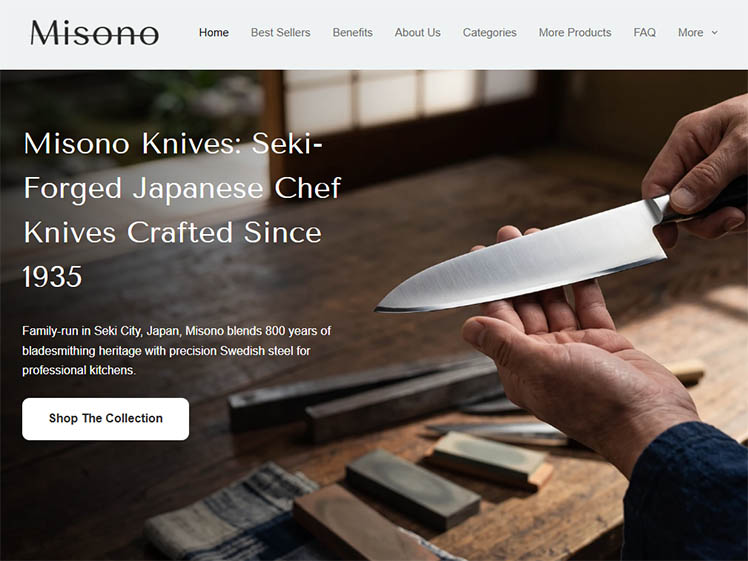
Misono is based in Seki. Its official site lists the UX10 range, while specialist retailers identify that range as using Swedish stainless steel. This makes Misono worth considering for chef-focused retail and restaurant supply.
- Location: Seki, Gifu
- Product Focus: Western-style professional kitchen blades, like the popular UX10 line.
- OEM & Wholesale Policy: They sell under their own name. No OEM services.
- Best for: Restaurant supply stores and professional chef channels.
- Limitations: Strong brand equity among chefs means limited room for buyer branding. Treat Misono as a distribution line, not a manufacturing partner.
Japanese Knife OEM Suppliers and Project Contacts
These businesses deserve closer attention if you aim to sell knives under your own name. However, distinguish a confirmed OEM service from a Japanese knife company.
4. Seki Corporation: A Published Private-Label Entry Point
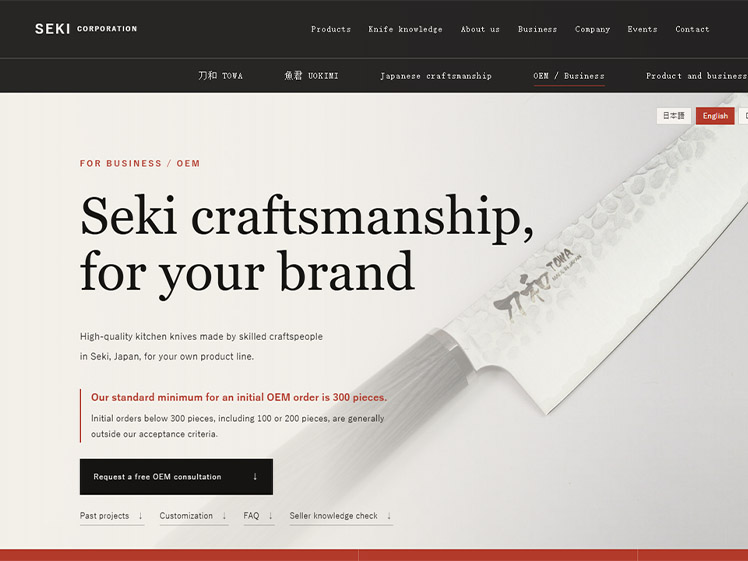
Seki Corporation advertises Japanese kitchen knife OEM and private-label services. Its English page states that initial orders generally start at 300 pieces. Its company profile lists wholesale, direct sales, maintenance, and overseas trade.
- Location: Seki, Gifu
- Product Focus: Everything from premium Damascus blades to resin-handled bakery knives.
- OEM & Wholesale policy: They offer a full OEM program. You get custom logos, boxes, and handle colors. They require a strict 300-piece minimum for your first order. Expect a 4 to 6 month lead time once you confirm the details.
- Best for: New brands needing a structured, English-friendly factory.
- Limitations: They reject small orders under 300 pieces. You must customize their existing blade shapes rather than inventing new ones from scratch.
5. Takahashikusu: Small Custom-Branded Orders
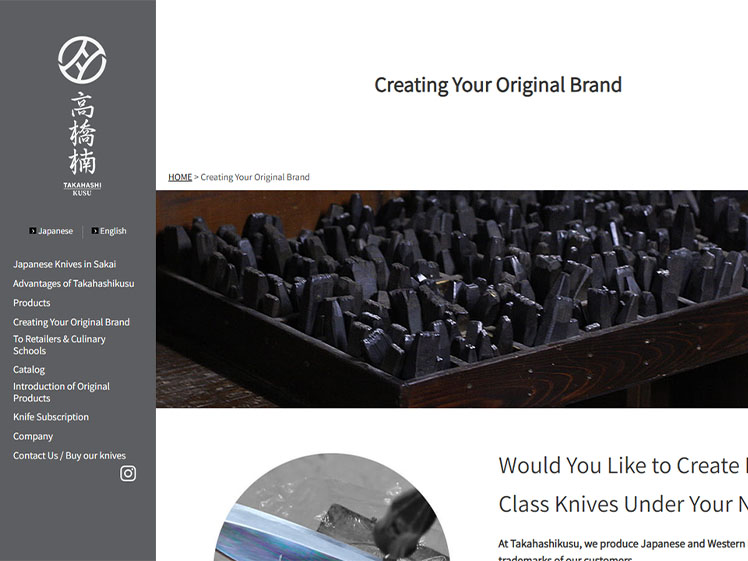
Takahashikusu offers Japanese and Western knives under customers’ trademarks. You can discuss steel, edge, and handle choices. It also works with Western knife makers in Seki, Takefu, and Tsubame-Sanjo.
- Location: Sakai, Osaka
- Product Focus: Traditional Japanese knives, including water-honyaki and mirror-finished blades, ebony handles, silver collar rings, and premium Western styles.
- OEM & wholesale Policy: This trading house coordinates with local artisans to build Sakai knives under your trademark. They offer the lowest entry point available. You can order as few as 5 to 10 pieces for Japanese styles and 12 pieces for Western styles.
- Best for: Boutique shops and gift programs that need genuine Sakai craftsmanship in small batches.
- Limitations: Hand-forged work means delivery dates are rough estimates, not guarantees. Expect a longer, expect to take 4-6 months, more hands-on communication process.
6. Ono Knife: Confirmed OEM Manufacturing
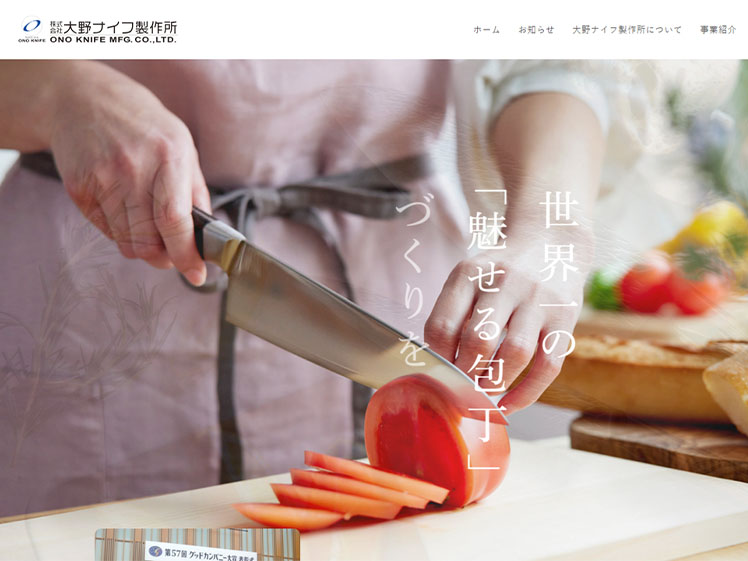
Ono Knife’s official company history dates its start to 1916 in Seki. Its current business materials describe an integrated OEM service covering development, design, material sourcing, manufacturing, and quality control. Its contact page welcomes OEM inquiries.
- Location: Seki, Gifu
- Product Focus: VG-10 and SG2 powdered steel blades featuring special ice-hardening treatments.
- OEM & Wholesale Policy: They do OEM work for overseas brands, but handle each inquiry individually.
- Best for: Brands wanting a highly technical steel story.
- Limitations: They provide no English OEM documents online. You must contact them to scope your project.
7. Tojiro: Brand Supply With OEM History
Tojiro manufactures knives in Tsubame, Niigata. Its official site currently directs English-speaking buyers to a contact form while the website is being renewed.
- Location: Tsubame, Niigata
- Product Focus: High-value stainless knives, best known for the VG-10 DP series.
- OEM & Wholesale Policy: They mostly distribute their own brand. Approach them with a strict, ready-to-go spec sheet for OEM talks.
- Best for: Importers wanting a proven, fairly priced Japanese line.
- Limitations: Tojiro’s strength is its brand value. Deep customization is difficult to secure.
8. Marusho Industry: Mcusta and Zanmai
Marusho’s official store identifies its Seki office and factory. It lists Mcusta pocket knives, Zanmai kitchen knives, and Silky scissors as its main products. Use Zanmai when discussing its kitchen knife range rather than grouping every product under Mcusta.
- Location: Seki, Gifu
- Product Focus: Laser-cut, hand-finished premium kitchen and folding knives.
- OEM & Wholesale Policy: They have done OEM work before, but keep terms private.
- Best for: High-end, design-focused collaboration projects.
- Limitations: Mcusta invests heavily in pushing the Mcusta brand globally. You must clearly define how your private label stays separate from their main line.
9. Kitasho: Kanetsune Kitchen and Outdoor Knives
Kitasho owns Kanetsune and is based in Seki. Its official profile says the company was established in 1964, with the family making and wholesaling cutlery since 1930. Its range includes kitchen knives, outdoor knives, scissors, and other cutting tools.
- Location: Seki, Gifu
- Product Focus: Mid-range kitchen, hunting, and outdoor blades.
- OEM & Wholesale Policy: They produce OEM across all categories but don’t publish their terms.
- Best for: Buyers seeking mid-range volume who already have a local agent.
- Limitations: They lack strong English-language support. You will likely need a trading company to bridge the gap.
Artisan Japanese Knife Houses for Specialist Retail
These names can support a specialist assortment. Still, buying their branded products and commissioning your own line are separate opportunities.
10. Aoki Hamono: Sakai Takayuki
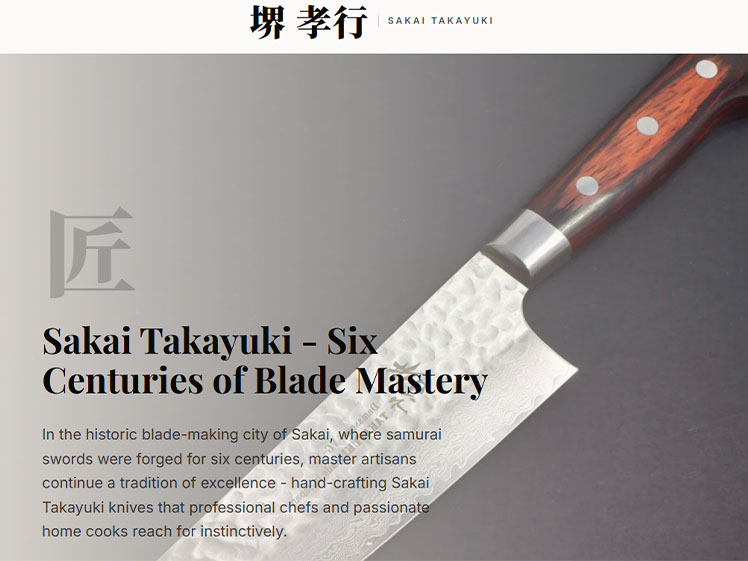
The best-known Sakai maker internationally, with a range spanning accessible stainless workhorses to hand-forged honyaki blades, a lineage tied to Sakai’s six centuries of blade craft.
- Location: Sakai, Osaka
- Product Focus: Traditional single-bevel and modern kitchen knives.
- OEM & Wholesale Policy: They focus on wholesale distribution. They offer very little OEM flexibility.
- Best for: Retailers who want the trusted Sakai name on their shelves.
- Limitations: Because they distribute widely, you cannot easily stand out just by carrying them.
11. Masamoto Sohonten: Traditional Professional Knives
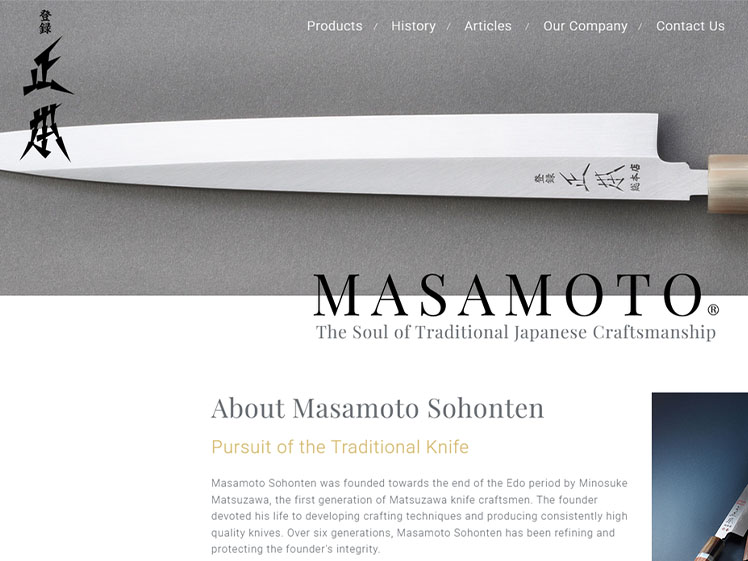
A Tokyo cutlery house with roots in the late Edo period, regarded as the reference standard for professional sashimi knives.
- Location: Tokyo
- Product Focus: Professional sashimi knives and the famous KS gyuto.
- OEM & Wholesale Policy: They sell only their own brand. They do zero OEM work.
- Best for: Elite culinary retail channels.
- Limitations: This is a prestige distribution line with tight supply. View them as a rare retail item, not a factory partner.
12. Shigefusa: A Specialist Retail Prospect
A Sanjo forge run by the Izuka family, producing what collectors consider some of Japan’s finest hand-forged kitchen knives.
- Location: Sanjo, Niigata
- Product Focus: Extremely rare, hand-forged carbon steel blades.
- OEM & Wholesale Policy: None. They allocate tiny batches to established retailers. Multi-year waitlists are normal.
- Best for: Setting a reference standard for top-tier craft.
- Limitations: Don’t include them in your sourcing plan. You can’t order from them.
Japanese Knife Cooperatives and Sourcing Platforms
A shared workshop and a sourcing platform serve different roles. Check who makes the knife, who invoices you, and who handles defects.
13. Takefu Knife Village: Independent Makers in Echizen
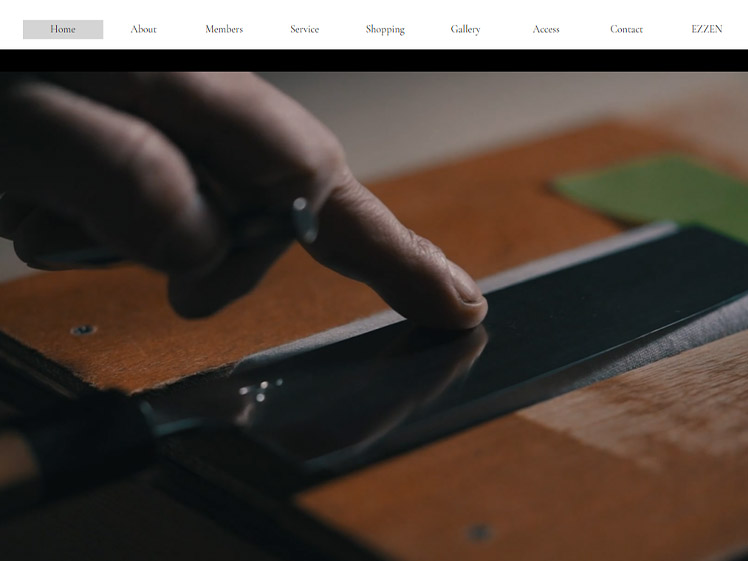
A shared-workshop cooperative in Echizen, Fukui, where independent smiths, including names like Takamura, produce under their own marks and collective lines.
- Location: Echizen, Fukui
- Product Focus: Hand-forged double-bevel knives using modern powdered steels.
- OEM & Wholesale Policy: They do accept small custom projects. Terms are negotiated case by case.
- Best for: Brands wanting a genuine, named-artisan story for small batches.
- Limitations: A cooperative is not a single factory. Export logistics and batch consistency require careful management on the Japan side.
14. G.Sakai: Kitchen and Outdoor OEM Experience
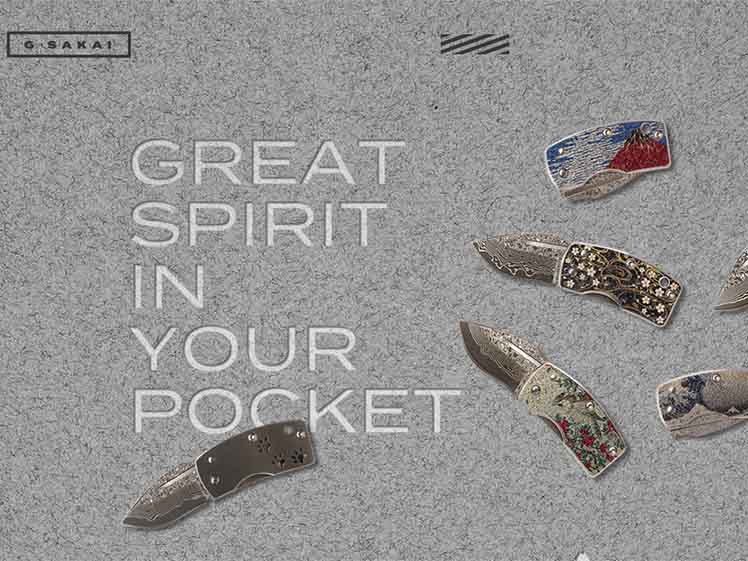
G.Sakai develops and manufactures pocket knives and kitchen knives in Seki. Its export-facing company history also includes OEM projects for customers worldwide.
- Location: Seki, Gifu
- Product Focus: Kitchen, outdoor, and folding everyday-carry (EDC) blades.
- OEM & Wholesale Policy: They take international OEM work but keep terms private.
- Best for: Brands selling both kitchen gear and outdoor tools.
- Limitations: Selling across categories means they lack the pure kitchen focus of other Seki factories.
15. Monoya Connect: Managed Private-Label Projects
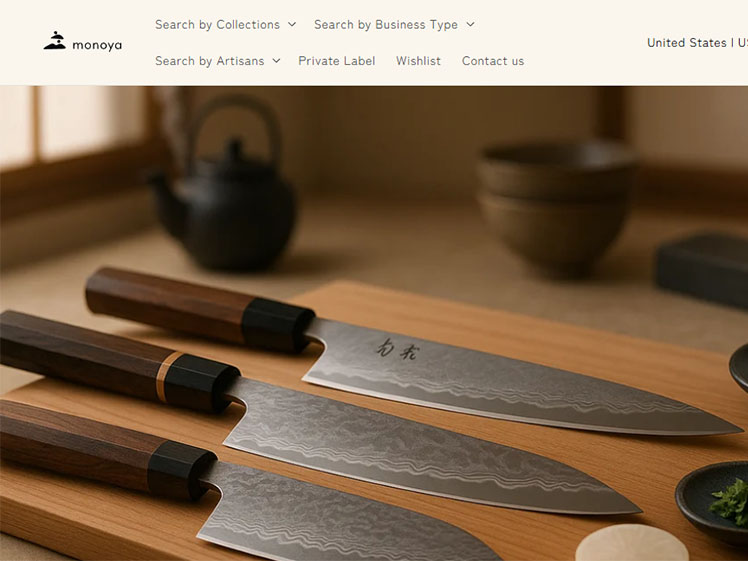
Monoya Connect explicitly offers private-label, OEM, and wholesale connections with Japanese makers. Its stated scope includes hospitality and kitchenware.
- Location: Japan (network model)
- Product Focus: Bespoke kitchenware built by a network of artisan makers.
- OEM & Wholesale Policy: High-end hospitality brands wanting authentic goods without building factory relationships from scratch.
- Best for: Hospitality brands and retailers that want a managed, design-led artisan program without building Japan-side relationships from scratch.
- Limitations: Adding a coordinator layer increases your final unit cost.
Comparing the Top Japanese Knife Manufacturers
| Manufacturer | Region | Type | OEM / Private Label | Published MOQ & Lead Time | Best For |
| Kai (Shun) | Seki | Brand house | No, distribution only | Distributor terms | Recognized premium brand resale |
| Yoshikin (Global) | Tsubame | Brand house | No, closed brand | Distributor terms | Design-led retail |
| Misono | Seki | Brand house | Not published | Distributor terms | Professional channels |
| Seki Corporation | Seki | OEM factory | Yes, full program | 300 pcs; 4–6 months | Structured first OEM project |
| Takahashikusu | Sakai | Coordinator | Yes, customer trademark | 5–10 pcs (JP) / 12 pcs (Western); confirmed per order | Very small custom batches |
| Ono Knife | Seki | OEM factory | Yes, terms by inquiry | Not published | Powdered-steel private label |
| Tojiro | Tsubame | Brand house / factory | Not published | Not published | Value-benchmark brand line |
| Marusho (Mcusta) | Seki | Brand house / factory | Yes, terms by inquiry | Not published | Design-led collaborations |
| Kitasho (Kanetsune) | Seki | OEM factory | Yes, terms by inquiry | Not published | Mid-range volume (with agent) |
| Aoki Hamono | Sakai | Artisan house | Limited | Distributor terms | Sakai-name professional retail |
| Masamoto Sohonten | Tokyo | Brand house | No | Distributor terms | High-end sashimi knife channel |
| Shigefusa | Sanjo | Artisan forge | No | Allocation only | Reference point, not sourcing |
| Takefu Knife Village | Echizen | Cooperative | Small-batch, per project | Per project | Named-artisan story lines |
| G.Sakai | Seki | OEM factory | Yes, terms by inquiry | Not published | Cross-category (kitchen + EDC) |
| Monoya Connect | Network | Coordinator platform | Yes, per project | Per project | Managed artisan programs |
The published quantity figures above come from Seki Corporation and Takahashikusu. They are not industry-wide minimums.
Choosing the right factory ultimately depends on your immediate business goals. If you need scale, speed, and standard export packaging, focus your search on industrial Japanese knife manufacturers located in Seki.
If you want a rich, traditional story and are willing to accept longer wait times and smaller runs, contact the artisan coordinators in Sakai.
The Three Sourcing Routes for Japanese Knife Manufacturers
Choosing the right factory is only half the battle. You also must choose the right sourcing route. The path you select determines the costs and friction you will absorb.
Route 1: Wholesale Distribution of Finished Brands
The easiest path is buying catalog stock. You purchase established brands through official wholesale programs and resell them.
This channel offers strict structure. For example, Chubo Knives runs a tiered bulk discount program for restaurant openings and retailers. You get 10% off orders over $1,000, 15% off over $2,500, and 20% off over $5,000. Alternatively, the Japanese Knife Store runs a wholesale catalog with a low $200 minimum order.
There, a VG-10 Damascus santoku wholesales for roughly $89 to $103 per piece. You typically retail that blade for double.
Japan-based exporters like Seisuke Knife also supply traditional brands to overseas shops. However, their shared wholesale program, Japanny, is currently closed to new accounts. This shows how easily these channels run out of capacity.
- What You Gain: Immediate stock, zero development time, and authentic Japanese brands.
- What You Lose: Zero product differentiation. You pay retail-level unit costs and depend completely on the distributor’s inventory.
Route 2: Factory-Direct OEM with Japanese Knife Manufacturers
This route fits buyers who want to build their own brand on Japanese manufacturing. Here is how it works behind closed doors:
- Understand Where Capacity Sits: Industry experts know that OEM production concentrates in Seki and Tosa. These regions build knives that sell under famous Sakai brand names. The same VG-10 33-layer Damascus gyuto can appear under multiple labels. Often, only the heat treatment and finishing specs change. Always ask potential partners about their heat treatment standards, not just the steel name.
- Write Like a Buyer: A short, clear English spec sheet gets answers. A long, enthusiastic fan email does not. Include the product type (e.g., a 210 mm gyuto), target steel, target quantity, target price band, and your market. Expect a week between replies.
- Use an Intermediary When Needed: Many Seki and Sakai factories lack English sales desks. Trading companies, known as shosha, handle the language, payment, and quality control for a small margin. Coordinators like Takahashikusu go further by organizing artisan workshops under one service. This coordination makes a tiny 5-piece custom order possible.
- Meet Suppliers in Person: If you want to meet makers face-to-face, attend the Seki Cutlery Festival on October 10 and 11, 2026. You can also visit the Tokyo International Gift Show in early September 2026, which features major cutlery exhibitors. For desk research, use JETRO and prefectural industry directories to find suppliers capable of exporting.
- Sample Everything First: Always buy samples before committing to a production run. Verify the steel grade and check the hardness consistency. A reputable factory will provide the HRC range in writing. Inspect the grind symmetry, edge finish, and handle fit. The sample sets the standard for your final mass production.
Route 3: China OEM for Japanese-Style Specs
The third route offers a practical alternative. You can skip Japanese knife makers and use Chinese factories in Yangjiang.
These factories routinely produce Japanese-style profiles, such as gyuto, santoku, and nakiri. They use materials like VG-10, AUS-10, and layered Damascus steel. They offer full OEM and private-label Japanese knife programs.
Minimum orders stay low, usually between 100 and 500 pieces. Lead times move fast, often wrapping up in 30 to 60 days. They also provide established English-language export desks to simplify communication.
You give up the “Made in Japan” label and the traditional craft story. However, you keep the spec-level product. You can also get the same steel designations, geometries, and construction methods with much less friction.
Launch Your Custom Knife Line Faster with LeeKnives
Complete OEM/ODM support—from design to final shipment—so you can focus on growth.
Backed by warehouses in the U.S. for fast, reliable delivery.
Japan Direct vs. China OEM vs. Brand Wholesale: Making Your Choice
You have three clear choices when sourcing blades. The right path depends on your timeline, budget, and how much you value the country of origin.
| Feature | Brand Wholesale (Japan) | Japan Factory OEM | China OEM (Japanese Spec) |
| Brand Story | Established brand equity | “Made in Japan” on your brand | Your brand, no Japan label |
| Unit Cost | High (10–20% bulk discounts) | High (hand work, premium materials) | Low to mid (industrial scale) |
| Typical Minimum | $200–$1,000 order value | 5–10 pcs (coordinator) to 300 pcs (industrial) | 100–500 pcs |
| Lead Time | In-stock, ships in days | 4–6 months typical; artisan work longer | 30–60 days production |
| Customization | None | Steel, handle, logo, packaging | Full: geometry, steel, handle, packaging |
| Communication | Easy (retail channel) | Slow; often via trading company | Established English sales desks |
| Best-Fit Buyer | Retailer wanting proven brands now | Brand builder needing “Made in Japan” | Brand builder prioritizing cost & flexibility |
To understand the scale of the third option, look at the data. China exported $1.66 billion worth of knives in 2024. This accounts for 51.5% of all global knife exports. The Yangjiang manufacturing cluster alone handles roughly 70% of that national output.
This region’s OEM ecosystem is covered in depth in our guide to Chinese knife manufacturers, and the logistics side in our guide to importing knives from China.
Your decision is straightforward. If you need recognized brands this quarter, buy wholesale. If the “Made in Japan” stamp defines your business, you must accept the longer waits and work directly with a Japanese factory.
However, if your customers buy based on blade design, steel specs, and everyday value, China OEM delivers the same product architecture with much less friction.
How to Vet a Knife Manufacturer Safely
No matter which sourcing route you pick, you must verify your partners carefully. Use this practical checklist to protect your business and your budget:
- Get the steel grade in writing. Demand exact names like VG-10 or AUS-10. Ignore vague marketing terms like “high-carbon stainless.” For large orders, always ask for official mill certificates.
- Check the hardness range. Premium Japanese-style blades usually hit an HRC rating of 58 to 62. If a factory refuses to state an HRC range in writing, it likely cannot control its heat-treatment process.
- Inspect multiple samples. Never trust just one single blade. Check several samples for grind symmetry, handle fit, and out-of-the-box sharpness to ensure true batch consistency.
- Clarify the minimums. Ask whether the minimum order quantity applies per design or to the total order. Additionally, define the exact deposit and balance payment terms upfront.
- Verify food-contact compliance. Ask for actual laboratory test reports, not just printed logos. You need FDA compliance to enter the US market safely. For Europe and Germany, you must meet the much stricter LFGB standard, which tests for chemical migration and ensures the metal doesn’t alter food taste or odor.
- Test their communication. Pay attention to how fast they reply to your initial inquiry. A slow response now often predicts slow answers during a future production crisis.
- Review their export history. Ask which global markets they currently supply and request verifiable references.
- Protect your designs. If you pay for custom tools or unique shapes, clarify exactly who owns the intellectual property. Ensure the factory cannot legally sell your design to other brands.
Following these strict rules removes guesswork from your sourcing journey. By testing everything from steel hardness to email response times, you build a reliable, profitable supply chain.
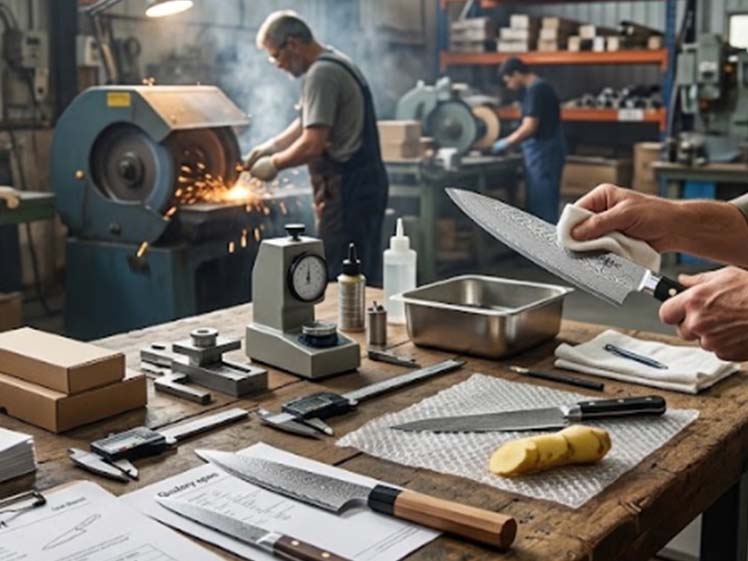
Working with LeeKnives: Japanese-Style Knives, OEM Flexibility
If Route 3 fits your business best, Chinese factories offer a highly practical path. LeeKnives has crafted blades in Yangjiang since 1993. They build Japanese-style kitchen knives, including the traditional gyuto and santoku, using authentic VG-10 and AUS-10 Damascus steel.
When you work with a partner like this, you gain several helpful advantages:
- Accessible Minimums: Start with just a 200-piece order. You can always test physical samples before starting mass production.
- Total Control: You fully customize the blade geometry, handle material, logo stamp, and retail box.
- Smooth Logistics: They ship globally and use a US-based warehouse to speed up your final delivery.
- Clear Communication: One dedicated account manager guides your project from the first email to the final shipment.
If you want premium blade specs without traditional factory delays, this setup removes everyday friction and protects your cash flow.
Which Route Fits Your Business Best?
Your final choice depends completely on what your brand needs to succeed right now.
- Retailers Needing Famous Brands: If you want recognized Japanese names on your shelves this quarter, choose Route 1. Wholesale programs like Chubo’s tiered discounts or the $200 minimum at Japanese Knife Store give you authentic stock instantly. You trade brand differentiation for speed.
- Brands Needing “Made in Japan”: If the origin story is your main pitch, take Route 2. To test the market with just 5 to 10 pieces, use a Sakai coordinator like Takahashikusu.
- Story-Driven Artisan Projects: If you want premium blades from named master blacksmiths, work with Sakai artisan houses or the Takefu Knife Village cooperative. You’ll need to negotiate these tiny batches per project, so build extra patience into your timeline.
- Startups Needing Speed and Control: If you want fully custom Japanese-style blades with low minimums, take Route 3. Chinese OEM factories deliver exact steel specs in just 30 to 60 days.
Our guide to private label knife manufacturers covers the model in detail.
Frequently Asked Questions
Do Japanese knife manufacturers offer OEM or private label?
Yes, but they choose partners carefully. Industrial factories in Seki run large programs. Some Seki knife corporations require a 300-piece minimum and need 4-6 months. Meanwhile, Sakai coordinators like Takahashikusu handle custom-branded orders starting at just 5-10 pieces. However, famous brands like Global, Shun, and Masamoto sell only finished retail products and offer no private-label options for outside buyers.
What is the typical MOQ for Japanese knife OEM?
Your minimum order quantity varies widely by supplier. You can order as few as 5-10 knives through a Sakai coordinator like Takahashikusu. Industrial manufacturers in Seki require at least 300 pieces. Artisan cooperatives like Takefu Knife Village set custom minimums per project. Alternatively, wholesale programs for finished retail brands start much lower, often requiring only a $200 initial order value.
Where to buy wholesale knives for resale?
To stock finished Japanese brands, you should use official wholesale programs. Chubo Knives offers tiered discounts of 10-20% on orders over $1,000. Additionally, the Japanese Knife Store offers a standard catalog program with a $200 minimum. If you want to sell knives under your own brand name, you must choose an OEM route using a Japanese factory, a coordinator, or a Chinese manufacturer.
How long does production take with a Japanese knife manufacturer?
When you order industrial OEM blades in Japan, expect a 4- to 6-month wait after confirming your exact specifications. This aligns with Seki Corporation’s published timelines. Hand-forged artisan work takes much longer, often stretching from several months to years. By contrast, Chinese OEM factories usually finish producing Japanese-style knives within 30 to 60 days after you approve the physical sample.
Where are Shun knives made?
Kai Corporation makes Shun knives in Seki City, Japan. They launched this famous brand in 2002 specifically for international markets. Seki has been Japan’s cutlery capital for centuries, with skilled workers and specialized workshops. Today, it remains the country’s largest knife-manufacturing cluster, blending traditional blade geometry with modern industrial production techniques to craft reliable tools for chefs worldwide.
What customization options are available for an OEM Japanese knife?
When placing an OEM order, you fully customize the tool. You select the exact blade steel, such as VG-10, SG2, or traditional carbon options like Aogami. You also pick either a classic wooden Wa handle or a riveted Western grip. Finally, you choose laser engraving or tang stamping for your logo, along with custom presentation boxes. Each factory confirms the exact options and minimums.
Is it cheaper to source Japanese-style knives from China?
Yes, sourcing Japanese kitchen knives from China lowers your unit costs, minimums, and wait times. Chinese factories in Yangjiang forge popular shapes like gyuto and santoku using authentic VG-10 Damascus steel. They typically require smaller orders of 100 to 500 pieces and finish production in 30 to 60 days. You lose the “Made in Japan” stamp, but you keep the exact blade specifications and performance.
Build Your Japanese Knife Line with LeeKnives
Whether you want to test a single private-label santoku or build a complete kitchen set, your factory should perfectly match your timeline and budget. LeeKnives has forged blades in Yangjiang since 1993. We offer a highly practical alternative to traditional Japanese factories.
With our wholesale knife service, you always test physical samples before we start mass production. You can also customize blade steel, handle shape, and retail packaging. Once production wraps up, we fulfill your orders from our US-based warehouse to save you valuable time.
Share your product specifications, target order size, and delivery deadlines. We will review your details and send back clear pricing, minimum order options, and a realistic manufacturing schedule.




 EN
 JA
 DE