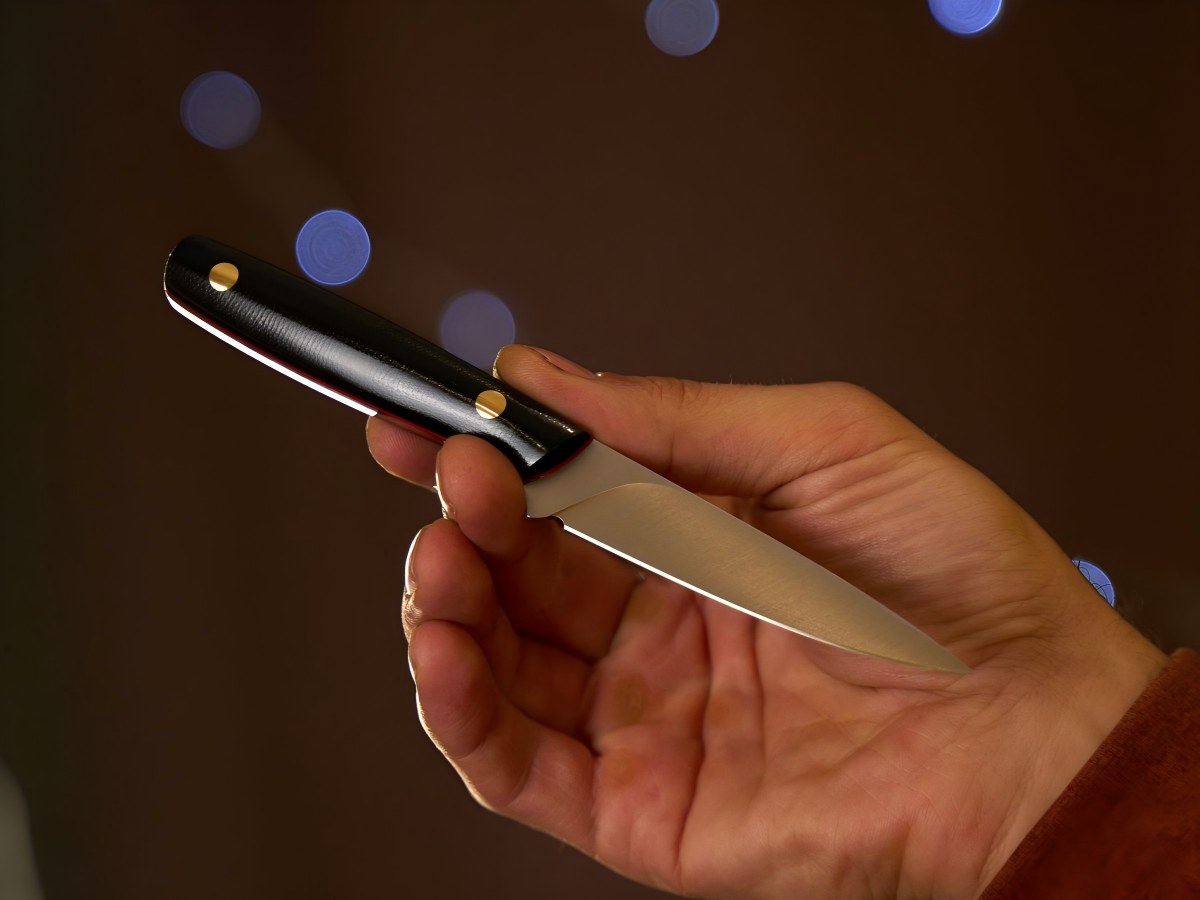
The petty knife and the paring knife are the most commonly confused small kitchen knives.
Both are compact and nimble, but they were designed for fundamentally different jobs: the paring knife is a Western in-hand specialist for peeling, coring, and detail work, while the petty is Japan’s mini chef’s knife, built for quick prep on the cutting board.
This guide breaks down the real differences — size, blade shape, steel, and cutting style — so you can help your customers pick the right blade, or stock both as complementary SKUs.
Petty Knife vs. Paring Knife at a Glance
Before going deeper, here is the quick comparison of these two small kitchen knives.
| Petty Knife | Paring Knife | |
|---|---|---|
| Origin | Japan | Europe |
| Blade length | 80 – 150 mm (3 – 6 in) | 60 – 100 mm (2.5 – 4 in) |
| Blade profile | Taller, triangular, slight belly curve | Narrow, slim, straight edge |
| Primary cutting style | On the cutting board | In hand, off the board |
| Typical steel | Hard Japanese steel, 60+ HRc | Softer Western stainless, 54 – 58 HRc |
| Edge angle | ~12 – 15° per side | ~18 – 20° per side |
| Best for | Board work too small for a chef’s knife | Peeling, coring, and detail work in hand |
| Price range | $40 – $200+ | $10 – $50 |
What Is a Petty Knife?
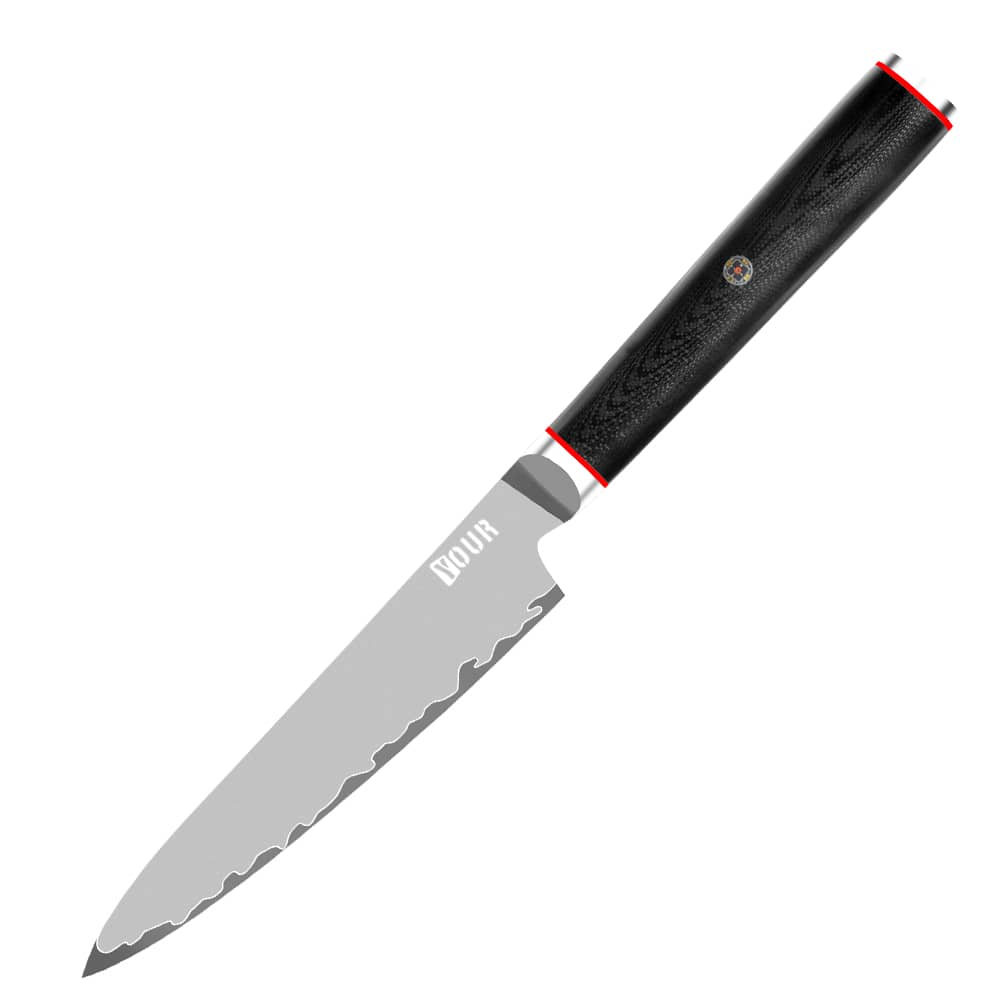
San Mai G10 Petty Knife 130 mm
The petty knife is the Japanese answer to small-scale prep work. It borrows its blade design from the Gyuto, shrunk down to a compact package, which is why many cooks describe it as a mini chef’s knife. Blade lengths usually run from 80 to 150 mm, with 120 – 150 mm being the most popular range.
Unlike Western small knives, the petty follows Japanese knifemaking philosophy: thin, hard steel ground to a low angle, often with an asymmetric edge and an optional Wa-handle (octagonal Japanese handle). This design traces back to the Meiji-era adaptation of Western utility knives, refined for minimal-resistance cutting on a board.
Because it follows Japanese knifemaking tradition, the petty is thinner, harder, and sharper than Western small knives. For a full breakdown of its features, history, and uses, read our complete petty knife guide. Here, we’ll focus on what matters for the comparison.
What Is a Paring Knife?
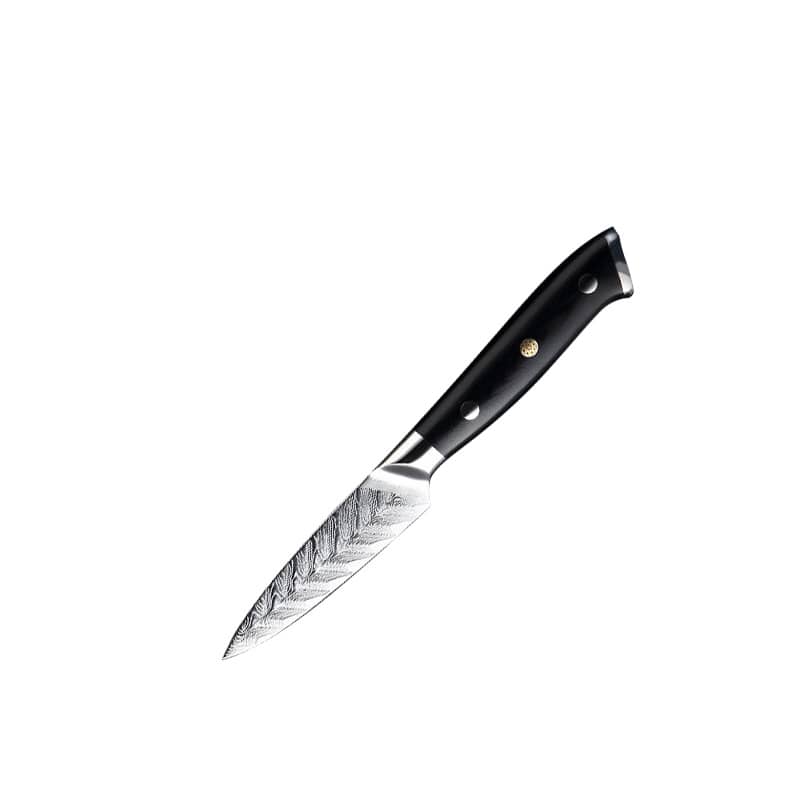
Damascus Clad 10Cr15CoMoV G10 Handle Paring Knife 125 mm
The paring knife is the smallest knife in the Western kitchen lineup, with a short blade of 2.5 to 4 inches. It’s built for precision work where control matters more than power: peeling, coring, trimming, and garnishing.
Unlike most kitchen knives, it follows the French couteau d’office tradition and is designed to work off the cutting board.
It comes in several blade styles, including spear point, sheep’s foot, and the curved bird’s beak. For a full breakdown of paring knife styles and how they compare to utility knives, see our utility knife vs. paring knife guide.
Petty Knife vs. Paring Knife: The Key Differences
Numbers alone don’t tell the story. These four differences decide how each knife actually behaves in a cook’s hand.
Blade Size and Weight
The petty knife is the bigger of the two. Most petties measure 120 to 150 mm, while paring knives sit at 60 to 100 mm. Weight follows the same pattern: a typical 130 mm petty weighs around 50 to 80 grams, and a paring knife often comes in under 60 grams.
That extra length is what pushes the petty onto the cutting board. A 150 mm petty can halve cherry tomatoes or mince a shallot in a few strokes, jobs where a 3-inch paring knife simply runs out of edge.
Blade Shape and Height
This is the difference most comparison articles miss. The petty has a taller, triangular blade with a gentle belly curve, while the paring knife is narrow and mostly straight. The petty’s height gives the cook knuckle clearance on the board and supports a light rocking motion.
The paring knife’s slim, straight profile is deliberate. A straight edge stays in full contact with rounded ingredients when you rotate them in your hand, which is exactly what peeling requires.
One caveat for your customers: very short, low-profile petties can feel cramped with a pinch grip, so taller petties tend to earn better reviews from serious cooks.
In-Hand Work vs. Board Work
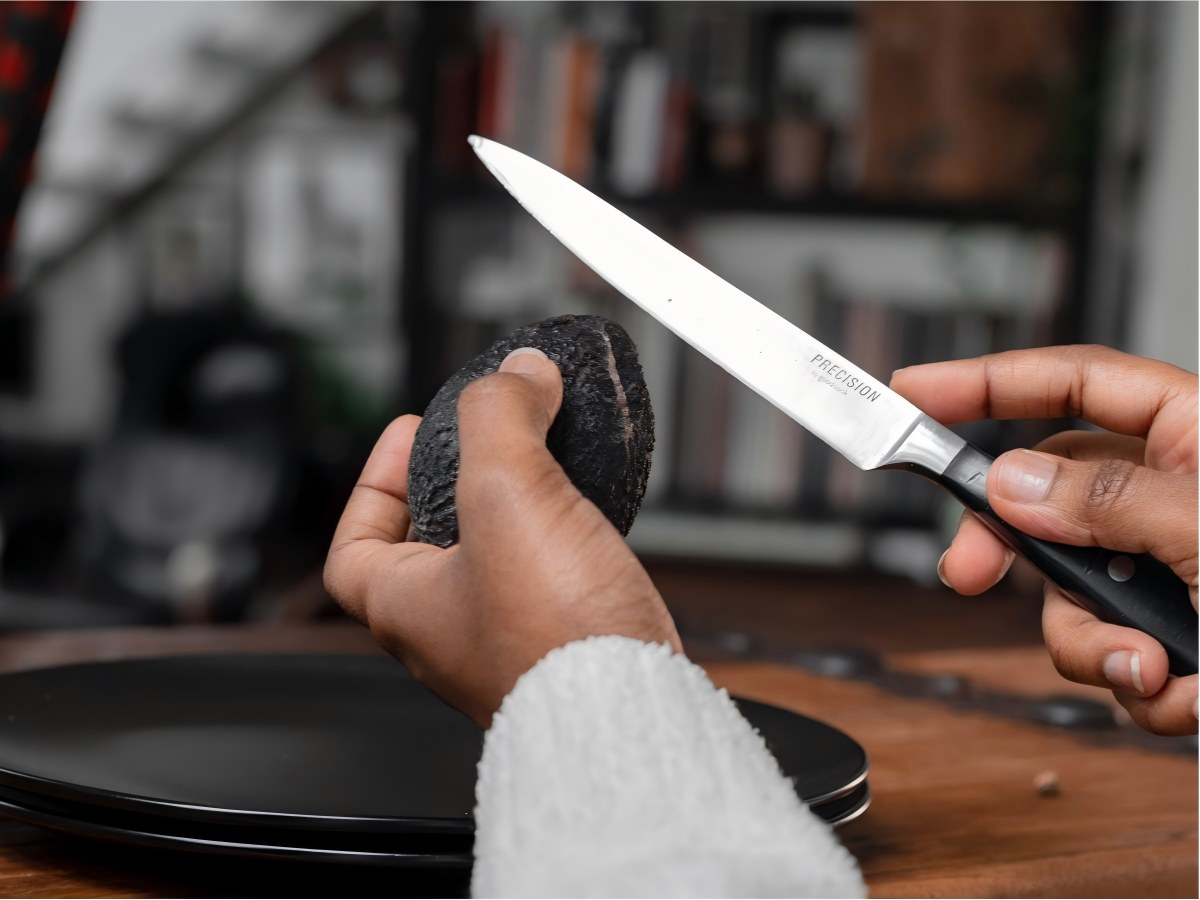
Ask professional cooks how they separate these knives, and you won’t hear measurements. You’ll hear one rule: the paring knife works in the hand, and the petty works on the board.
The paring knife shines where the ingredient moves and the knife stays almost still. Peeling an apple, segmenting an orange, deveining shrimp, or cutting a tourné all happen in the air.
The petty works the opposite way: the ingredient sits on the board, and the knife does the traveling. Trimming silver skin from a tenderloin, breaking down a whole chicken, or slicing citrus into wedges are petty jobs.
Steel, Hardness, and Edge Geometry
| Dimension | Petty Knife | Paring Knife |
|---|---|---|
| Typical Steel | VG-10, SG2, Aogami/Shirogami | 1.4116, X50CrMoV15 |
| Hardness | 60+ HRC | 54 – 58 HRC |
| Edge Angle | ~12 – 15° per side | ~18 – 20° per side |
| Edge Symmetry | Often asymmetric | Symmetric |
Premium Japanese kitchen knives typically use proprietary high-carbon or powder metallurgy steels developed by mills such as Hitachi Metals’ Yasugi Special Steel (e.g., White Paper, Blue Paper series) and Takefu Special Steel (e.g., VG-10, SG2/R2), commonly heat-treated to 60+ HRC.
Most petty knives are forged from hard Japanese steels rated 60 HRc and above, ground to roughly 12 – 15 degrees per side. Most paring knives use softer Western stainless steel at 54 – 58 HRc with an 18 – 20 degree edge. The result is a real performance split your customers will notice.
The petty cuts sharper and holds its edge far longer, but the hard blade can chip if it’s twisted or used on bones and pits. The paring knife is tougher and more forgiving, which is why cooks don’t worry about digging out an avocado pit with one.
One more practical note: carbon steel petties react with acidic fruit and can discolor it, so stainless is the safer recommendation for citrus-heavy work. You can read more about these trade-offs in our guide to the best steel for kitchen knives.
Launch Your Custom Knife Line Faster with LeeKnives
Complete OEM/ODM support—from design to final shipment—so you can focus on growth.
Backed by warehouses in the U.S. for fast, reliable delivery.
Petty Knife or Paring Knife: Which Should You Choose?
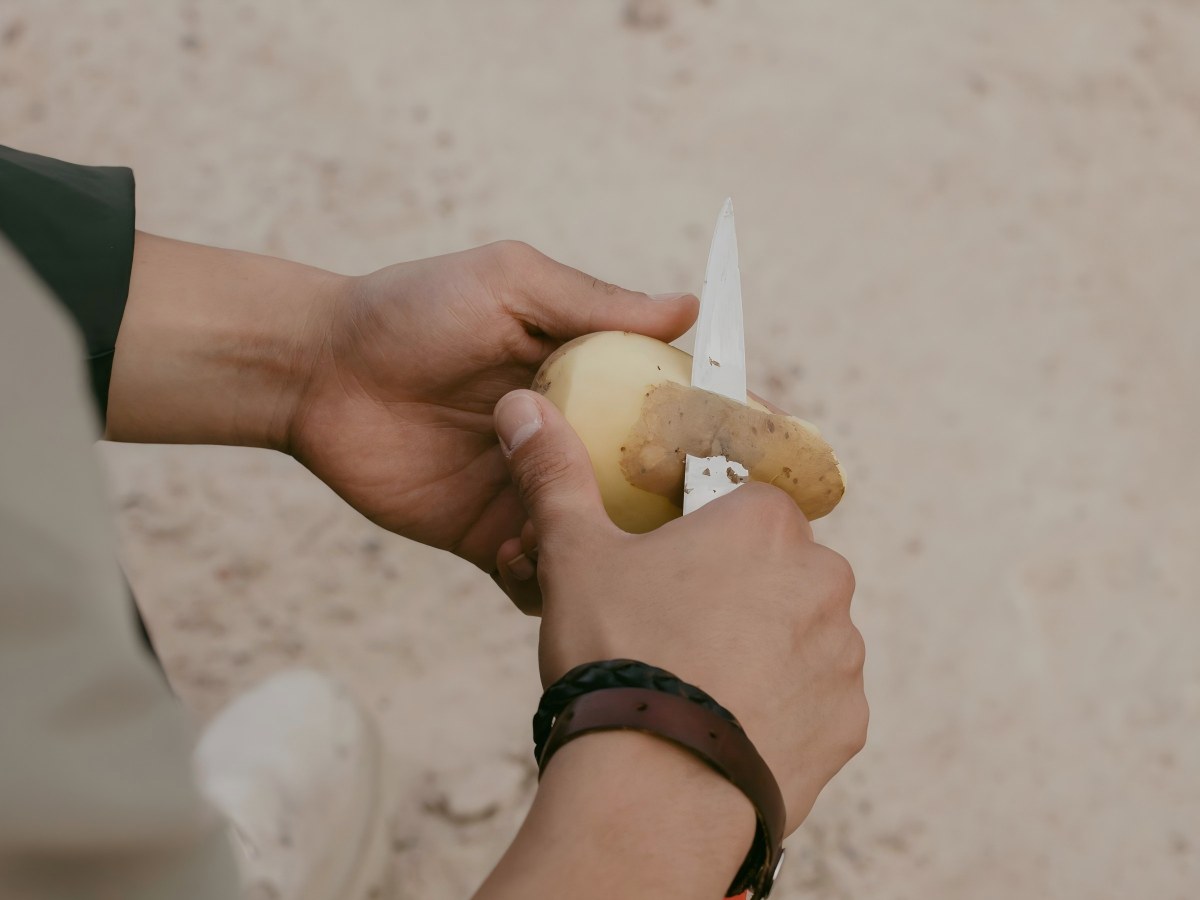
The fastest way to answer this question is task by task. Use this matrix when advising customers.
| Kitchen task | Better knife |
|---|---|
| Peeling apples or potatoes in hand | Paring knife |
| Segmenting or supreming citrus | Paring knife |
| Deveining shrimp | Paring knife |
| Garnishes and tourné cuts | Paring knife (bird’s beak) |
| Mincing a shallot or garlic clove | Petty knife |
| Halving cherry tomatoes | Petty knife |
| Trimming silver skin from meat | Petty knife |
| Breaking down a whole chicken | Petty knife |
| Slicing a sandwich or bagel | Petty knife |
If a customer can only buy one, the decision comes down to their cutting style. Cooks who do most prep in hand should take the 3-inch paring knife.
Cooks who work on the board get far more value from a 150 mm petty, which is why so many owners call it their most reached-for knife.
Can they replace each other? For board work, a 150 mm petty covers roughly 80% of paring tasks — but the paring knife’s in-hand design makes it irreplaceable for peeling, coring, and detail work in the air.
The honest answer for a serious kitchen: both. For a budget shopper: start with the paring knife if they peel in hand, or the petty if they prep on a board.
There’s also a budget angle worth sharing. A paring knife is a low-stakes tool, and an inexpensive stamped model performs at 95% of a premium one.
The petty is where better steel actually pays off, since its edge does real board work every day. Ideally, a serious cook ends up with both.
What This Means for Your Knife Store
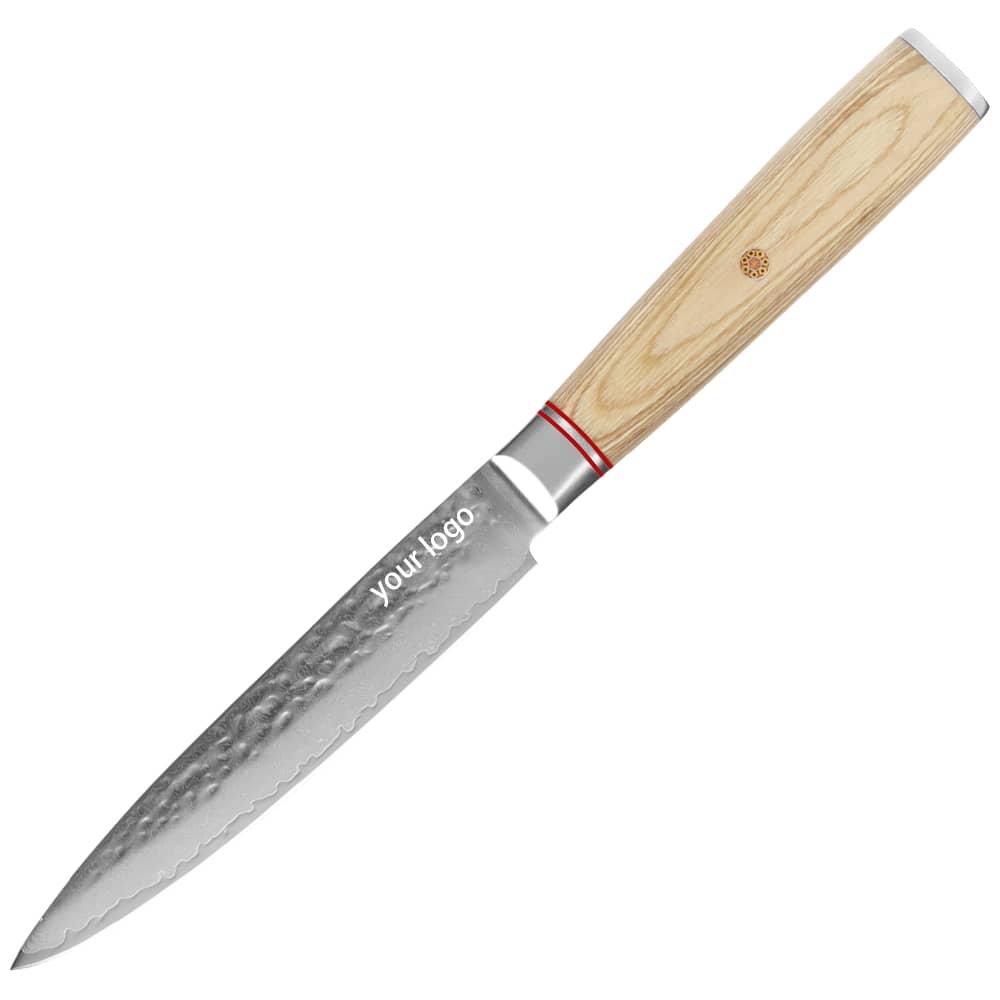
Damascus Pakkawood Handmade Petty Knife 203 mm Hammered Finish
These two knives play different roles in your inventory too. The paring knife is a high-turnover essential: cheap to stock, easy to explain, and one of the first add-ons customers grab with a chef’s knife. The petty is your margin and upsell piece, especially when positioned as the natural partner to a Gyuto.
Set Configuration and Market Positioning
The pairing logic differs by culinary tradition. A Japanese kitchen set typically centers on a Gyuto plus a petty (120 – 150 mm) as the secondary blade. A Western set centers on a chef’s knife plus a paring knife, sometimes with a utility knife in between.
Match the set logic to your target market. North American home cooks often expect a paring knife in the block, while enthusiasts and professional buyers increasingly look for the Gyuto-petty combination.
According to Grand View Research, the global knife market is projected to reach USD 7.79 billion by 2033 at 6.4% CAGR. The 3–6 inch segment — where petty knives sit — leads growth at 7.1%. Stocking petty knives now positions your inventory ahead of that curve.
Length and Profile Selection
For petty knives, carry at least two lengths, such as 80 mm and 135 – 150 mm, to cover both the paring-replacement crowd and the mini-chef’s-knife crowd. Favor taller blade profiles in your premium line, since knuckle clearance is the most common complaint about budget petties.
For paring knives, stock the classic 3.5-inch spear point as the default, and add a bird’s beak (tourné) variant for culinary professionals. The bird’s beak commands a higher margin despite its small size because it serves a niche that no other knife fills.
Margin, MOQ, and Customization
From an OEM perspective, the paring knife is the lower-risk entry point: simpler heat treatment, standard Western handles, and shorter production cycles.
The petty knife introduces complexity — asymmetric grinding, harder steel heat treatment, and optional Wa-handle construction — which justifies a higher price point and longer lead time, but also delivers significantly better margins.
Stock Petty and Paring Knives Your Customers Will Love with LeeKnives
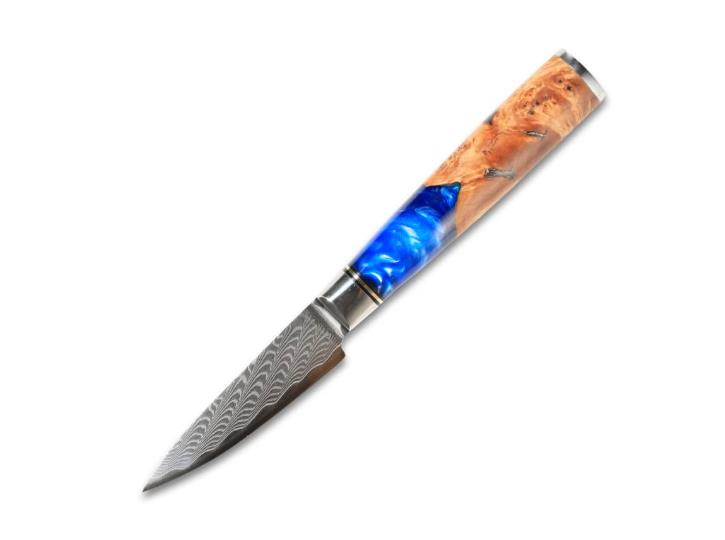
Damascus Clad 9Cr18Mov Oval Stabilized Wood Petty/Paring Knife 80 mm
The petty knife vs. paring knife comparison comes down to where the cutting happens: the paring knife is the in-hand specialist, while the petty is a board knife that covers everything too small for a chef’s knife.
For most cooks, the honest answer is both — which makes these two knives a natural pairing in your store’s inventory.
Stocking them is just as straightforward. LeeKnives is a knife manufacturer based in Yangjiang City with over 30 years of experience crafting blades.
We supply countless North American knife stores and wholesalers with petty knives, paring knives, and complete kitchen knife lines, all fully customizable through our OEM services.
Contact us to request a free quote, and our sales team will help you build a small-knife selection your customers will reach for every day.
Launch Your Custom Knife Line Faster with LeeKnives
Complete OEM/ODM support—from design to final shipment—so you can focus on growth.
Backed by warehouses in the U.S. for fast, reliable delivery.
Frequently Asked Questions
Is a petty knife just a Japanese paring knife?
No. While both are small knives, they were designed for different cutting philosophies. The paring knife is an in-hand precision tool rooted in French tradition; the petty is a board-work mini chef’s knife rooted in Japanese knifemaking. They are not interchangeable.
Is a petty knife essential in the kitchen?
Strictly speaking, no — a chef’s knife and a paring knife can cover most tasks. But the petty fills the awkward gap between them so well that many cooks use it more than any other knife. If your customers cook daily and prep on a board, it’s close to essential.
What are the only three kitchen knives you need?
Most professionals agree on a chef’s knife (or Gyuto), a small knife, and a serrated bread knife. That trio handles over 95% of home cooking. The petty and paring knife both compete for that small-knife slot, which is exactly the decision this article helps with.
Can you use a petty knife for everything?
No. A petty handles small and medium ingredients beautifully, but it lacks the length and weight for large produce, big cuts of meat, or heavy chopping. Think of it as a second main knife that partners with a chef’s knife, not a replacement for one.
Is a santoku a petty knife?
No. The santoku is a full-size all-purpose knife, usually 165 to 180 mm long, and serves as a primary kitchen knife. The petty is a much smaller companion blade. They share a Japanese heritage, but they sit at opposite ends of the size range.
How do you sharpen a petty knife?
Use a whetstone and hold a fairly low angle, around 12 – 15 degrees per side for Japanese blades. The hard steel takes a fine edge quickly, and a few minutes of routine maintenance keeps it razor sharp.




 EN
EN  JA
JA  DE
DE